Rigveda 1.187: To Food and drink
Introduction
Rigveda 1.187 is a hymn of 11 verses addressed to Food and drink. It stands in book (maṇḍala) 1, a collection of hymns by many families of poets. The Rigveda is the oldest collection of Sanskrit hymns, composed in the second half of the second millennium BCE and handed down orally for many centuries before it was written down.
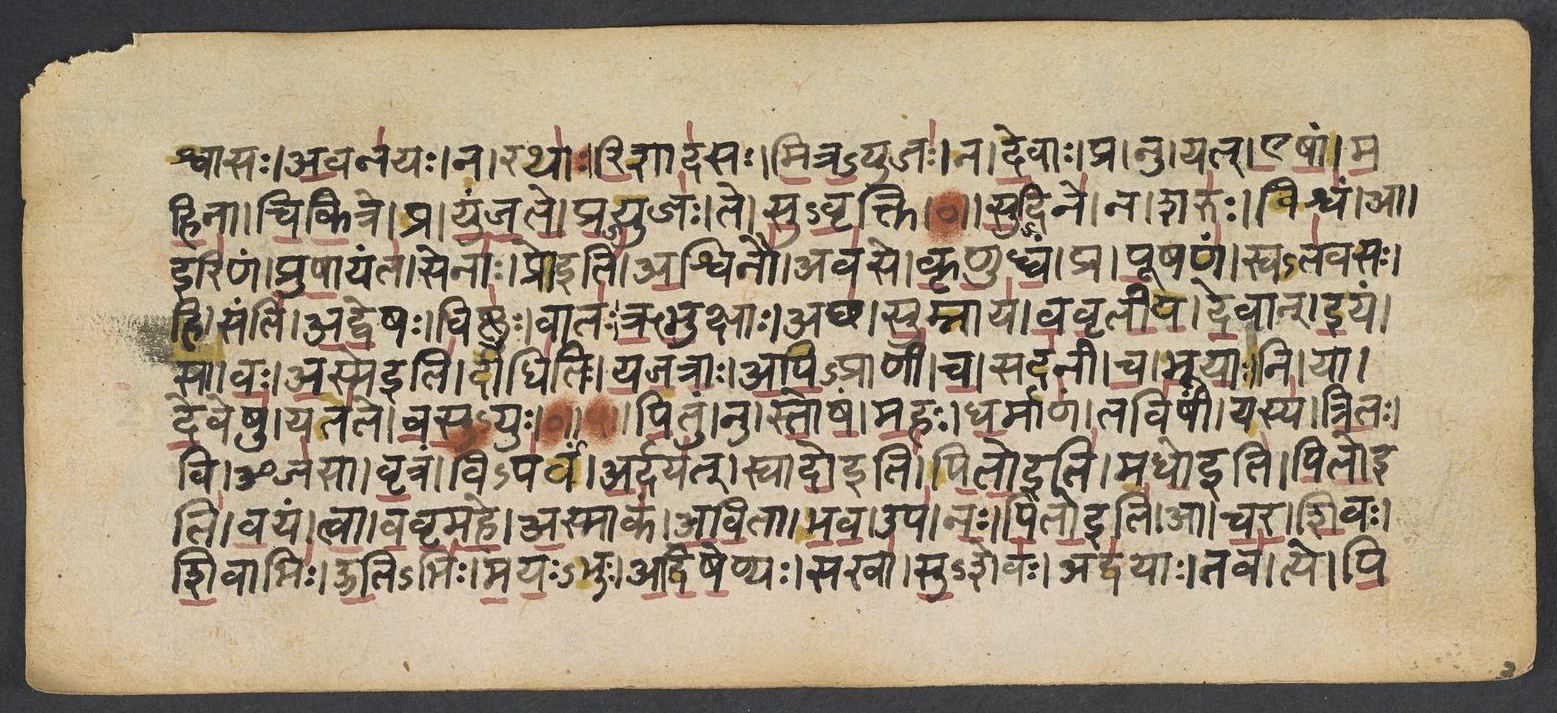
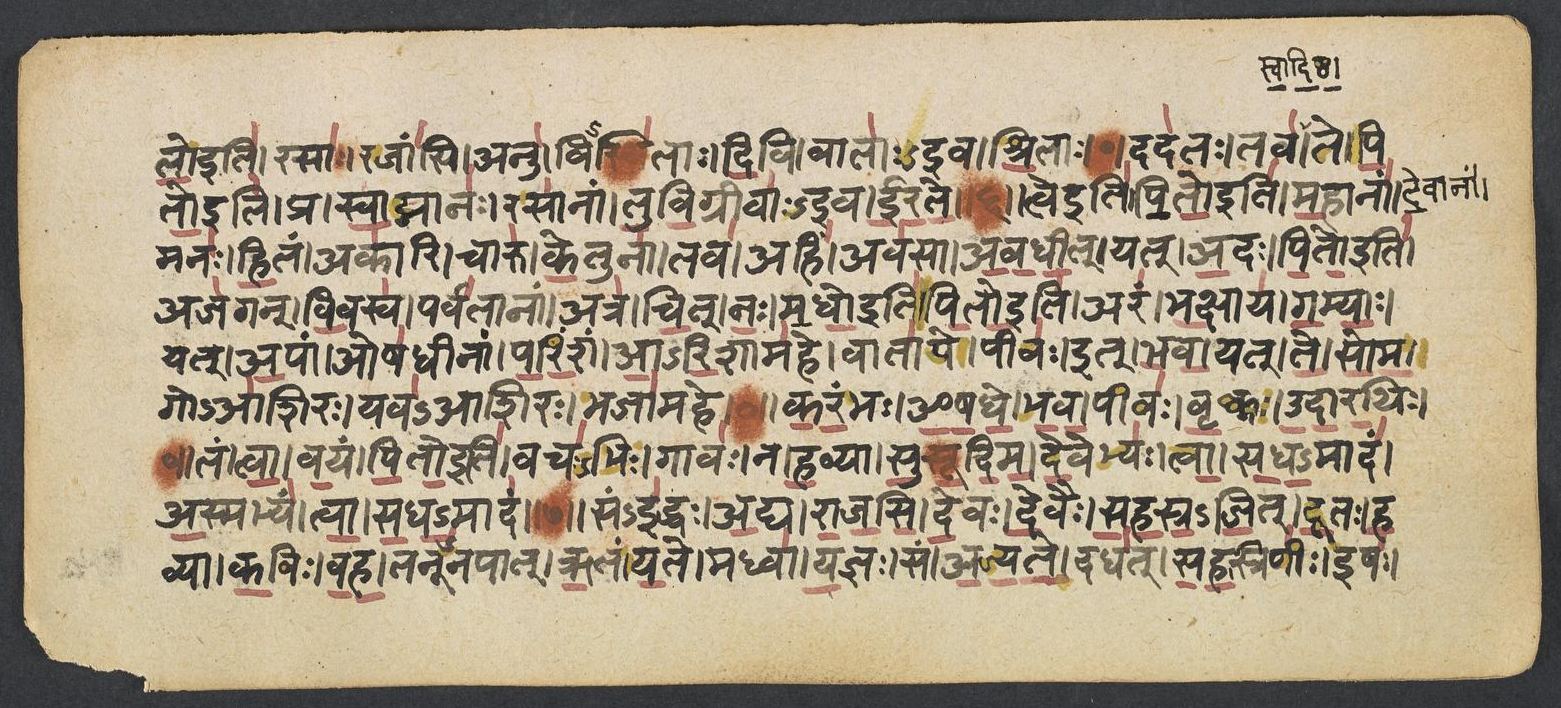
The manuscript shown is Penn Ms. Coll. 390 Item 41 (University of Pennsylvania), an undated paper manuscript of the padapāṭha (the word-by-word recitation text, in which every word is written separately and compounds are split) of the whole Ṛgveda in Devanāgarī, 884 leaves in fascicles, 7-9 lines to the page, accents in red; this hymn stands on fol. 145v-146r. Each section below gives the verses that end on one page; the page boundaries were read on the images (the opening words of every page), not counted out. Where the manuscript is a padapāṭha (the word-by-word recitation text), the section shows Aufrecht's continuous (saṃhitā) text first and, as the edition text, the padapāṭha of the same verses, which is the form written on the page.
How was this verified? (Provenance)
Where on the image
Penn Ms. Coll. 390 Item 41, fol. 145v (numbered 3v by the scribe) (OPenn image 147, upper leaf). Checked on the image: the Rigveda text on this page begins in RV 1.186.8 ‹-pṛṣat-aśvāsaḥ vanayaḥ na rathāḥ›. The next page with Rigveda text, fol. 146r (numbered 4r by the scribe), begins in RV 1.187.4 ‹-pito iti rasāḥ rajāṃsi›. Verses 1.187.1-3 end on this page.
1pi̱tuṁ nu sto̍ṣam ma̱ho dha̱rmāṇa̱ṁ tavi̍ṣīm | yasya̍ tri̱to vy oja̍sā vṛ̱traṁ vipa̍rvam a̱rdaya̍t ||
2svādo̍ pito̱ madho̍ pito va̱yaṁ tvā̍ vavṛmahe | a̱smāka̍m avi̱tā bha̍va ||
3upa̍ naḥ pita̱v ā ca̍ra śi̱vaḥ śi̱vābhi̍r ū̱tibhi̍ḥ | ma̱yo̱bhur a̍dviṣe̱ṇyaḥ sakhā̍ su̱śevo̱ adva̍yāḥ ||
Compare: Padapāṭha (word-by-word text written in the manuscript; Sansknet e-text via GRETIL)
1pitum | nu | stoṣam | mahaḥ | dharmāṇam | taviṣīm | yasya | tritaḥ | vi | ojasā | vṛtram | vi-parvam | ardayat
2svādo iti | pito iti | madho iti | pito iti | vayam | tvā | vavṛmahe | asmākam | avitā | bhava
3upa | naḥ | pito iti | ā | cara | śivaḥ | śivābhiḥ | ūti-bhiḥ | mayaḥ-bhuḥ | adviṣeṇyaḥ | sakhā | su-śevaḥ | advayāḥ
1Now will I glorify Food that upholds great strength, By whose invigorating power Trita rent Vr̥itra limb from limb.
2O pleasant Food, O Food of meath, thee have we chosen for our own, So be our kind protector thou.
3Come hitherward to us, O Food, auspicious with auspicious help, Health-bringing, not unkind, a dear and guileless friend.
Where on the image
Penn Ms. Coll. 390 Item 41, fol. 146r (numbered 4r by the scribe) (OPenn image 147, lower leaf). Checked on the image: the Rigveda text on this page begins in RV 1.187.4 ‹-pito iti rasāḥ rajāṃsi›. The next page with Rigveda text, fol. 146v (numbered 4v by the scribe), begins in RV 1.188.3 ‹ājuhvānaḥ naḥ īḍyaḥ devān›. Verses 1.187.4-11 end on this page; 1.187.4 begins on fol. 145v (numbered 3v by the scribe).
4tava̱ tye pi̍to̱ rasā̱ rajā̱ṁsy anu̱ viṣṭhi̍tāḥ | di̱vi vātā̍ iva śri̱tāḥ ||
5tava̱ tye pi̍to̱ dada̍ta̱s tava̍ svādiṣṭha̱ te pi̍to | pra svā̱dmāno̱ rasā̍nāṁ tuvi̱grīvā̍ iverate ||
6tve pi̍to ma̱hānā̍ṁ de̱vānā̱m mano̍ hi̱tam | akā̍ri̱ cāru̍ ke̱tunā̱ tavāhi̱m ava̍sāvadhīt ||
7yad a̱do pi̍to̱ aja̍gan vi̱vasva̱ parva̍tānām | atrā̍ cin no madho pi̱to 'ra̍m bha̱kṣāya̍ gamyāḥ ||
8yad a̱pām oṣa̍dhīnām pari̱ṁśam ā̍ri̱śāma̍he | vātā̍pe̱ pīva̱ id bha̍va ||
9yat te̍ soma̱ gavā̍śiro̱ yavā̍śiro̱ bhajā̍mahe | vātā̍pe̱ pīva̱ id bha̍va ||
10ka̱ra̱mbha o̍ṣadhe bhava̱ pīvo̍ vṛ̱kka u̍dāra̱thiḥ | vātā̍pe̱ pīva̱ id bha̍va ||
11taṁ tvā̍ va̱yam pi̍to̱ vaco̍bhi̱r gāvo̱ na ha̱vyā su̍ṣūdima | de̱vebhya̍s tvā sadha̱māda̍m a̱smabhya̍ṁ tvā sadha̱māda̍m ||
Compare: Padapāṭha (word-by-word text written in the manuscript; Sansknet e-text via GRETIL)
4tava | tye | pito iti | rasāḥ | rajāṃsi | anu | vi-sthitāḥ | divi | vātāḥ-iva | śṛitāḥ
5tava | tye | pito iti | dadataḥ | tava | svādiṣṭha | te | pito iti | pra | svādmānaḥ | rasānām | tuvigrīvāḥ-iva | īrate
6tve | pito iti | mahānām | devānām | manaḥ | hitam | akāri | cāru | ketunā | tava | ahim | avasā | avadhīt
7yat | adaḥ | pito iti | ajagan | vivasva | parvatānām | atra | cit | naḥ | madho iti | pito iti | aram | bhakṣāya | gamyāḥ
8yat | apām | oṣadhīnām | pariṃśam | āriśāmahe | vātāpe | pīvaḥ | it | bhava
9yat | te | soma | go--āśiraḥ | yava-āśiraḥ | bhajāmahe | vātāpe | pīvaḥ | it | bhava
10karambhaḥ | oṣadhe | bhava | pīvaḥ | vṛkkaḥ | udārathiḥ | vātāpe | pīvaḥ | it | bhava
11tvam | tvā | vayam | pito iti | vacaḥ-bhiḥ | gāvaḥ | na | havyā | susūdima | devebhyaḥ | tvā | sadha-mādam | asmabhyam | tvā | sdha-mādam
4These juices which, O Food, are thine throughout the regions are diffused. like winds they have their place in heaven.
5These gifts of thine, O Food, O Food most sweet to taste, These savours of thy juices work like creatures that have mighty necks.
6In thee, O Food, is set the spirit of great Gods. Under thy flag brave deeds were done he slew the Dragon with thy help.
7If thou be gone unto the splendour of the clouds, Even from thence, O Food of meath, prepared for our enjoyment, come.
8Whatever morsel we consume from waters or from plants of earth, O Soma, wax thou fat thereby.
9What Soma, we enjoy from thee in milky food or barley-brew, Vâtâpi, grow thou fat thereby.
10O Vegetable, Cake of meal, he wholesome, firm, and strengthening: Vâtâpi, grow thou fat thereby.
11O Food, from thee as such have we drawn forth with lauds, like cows, our sacrificial gifts, From thee who banquetest with Gods, from thee who banquetest with us.
Notes
- Sanskrit: Aufrecht's edition (1877) with the Vedic accents, as entered by van Nooten and Holland (GRETIL).
- English: Ralph T. H. Griffith, The Hymns of the Rigveda (1889-1892; 2nd ed. 1896-1897), from the VedaWeb digital text; OCR slips in that text were corrected against the printed 2nd edition (data/sources/rigveda/griffith_errata.json).
- Padapāṭha (edition text): Sansknet e-text via GRETIL (CC BY-NC-SA 4.0).
Cite
Sources
- Source: Penn Ms. Coll. 390 Item 41 (undated (catalogued with Penn's 18th-19th c. Vedic manuscripts)), OPenn, Public Domain Mark + Aufrecht's accented text (GRETIL) + Griffith's English (VedaWeb) (holding institution)
- Critical edition: Aufrecht (1877), accented e-text via GRETIL
← previous · → next · v cycle view · l back to library