Rigveda 1.188: Apri hymn
Introduction
Rigveda 1.188 is a hymn of 11 verses addressed to Apri hymn. It stands in book (maṇḍala) 1, a collection of hymns by many families of poets. The Rigveda is the oldest collection of Sanskrit hymns, composed in the second half of the second millennium BCE and handed down orally for many centuries before it was written down.
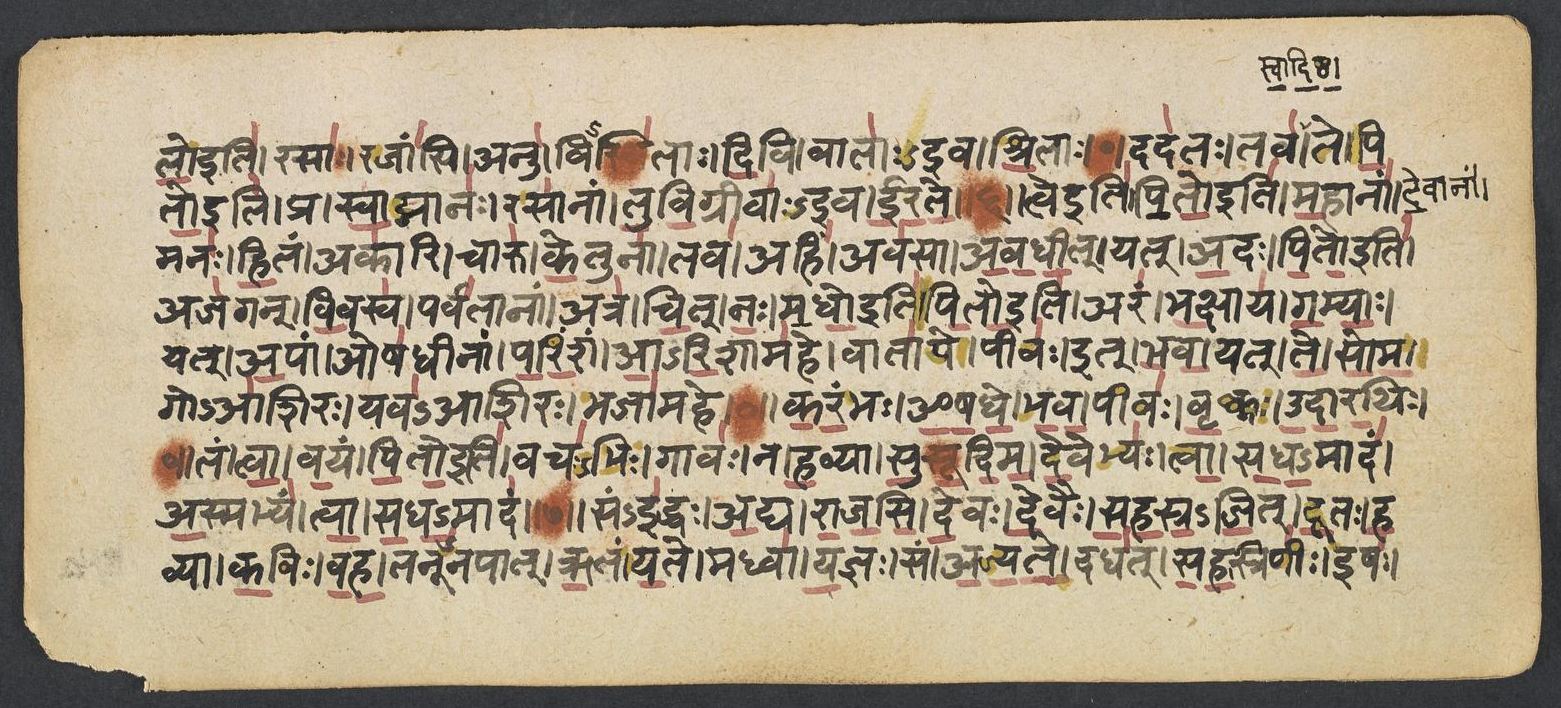
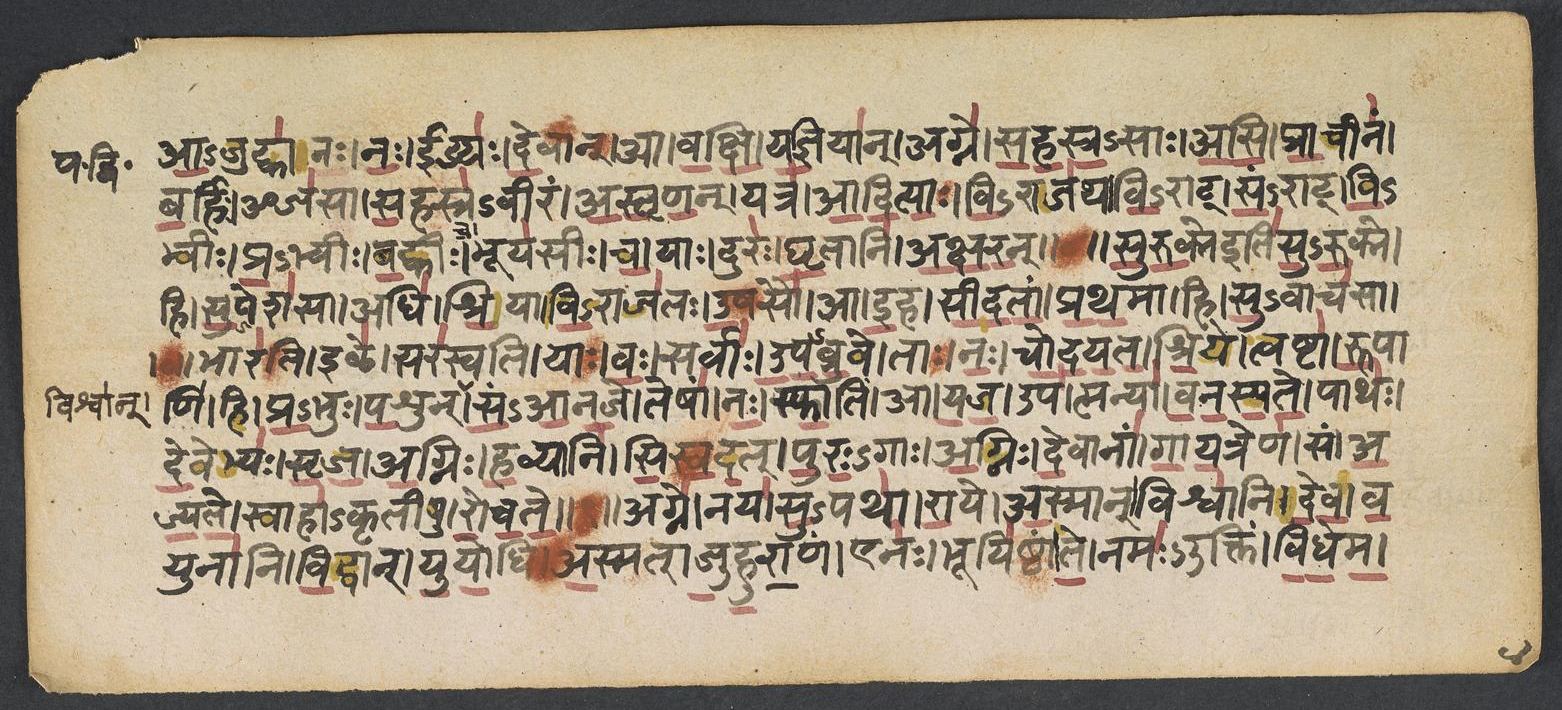
The manuscript shown is Penn Ms. Coll. 390 Item 41 (University of Pennsylvania), an undated paper manuscript of the padapāṭha (the word-by-word recitation text, in which every word is written separately and compounds are split) of the whole Ṛgveda in Devanāgarī, 884 leaves in fascicles, 7-9 lines to the page, accents in red; this hymn stands on fol. 146r-146v. Each section below gives the verses that end on one page; the page boundaries were read on the images (the opening words of every page), not counted out. Where the manuscript is a padapāṭha (the word-by-word recitation text), the section shows Aufrecht's continuous (saṃhitā) text first and, as the edition text, the padapāṭha of the same verses, which is the form written on the page.
How was this verified? (Provenance)
Where on the image
Penn Ms. Coll. 390 Item 41, fol. 146r (numbered 4r by the scribe) (OPenn image 147, lower leaf). Checked on the image: the Rigveda text on this page begins in RV 1.187.4 ‹-pito iti rasāḥ rajāṃsi›. The next page with Rigveda text, fol. 146v (numbered 4v by the scribe), begins in RV 1.188.3 ‹ājuhvānaḥ naḥ īḍyaḥ devān›. Verses 1.188.1-2 end on this page.
1sami̍ddho a̱dya rā̍jasi de̱vo de̱vaiḥ sa̍hasrajit | dū̱to ha̱vyā ka̱vir va̍ha ||
2tanū̍napād ṛ̱taṁ ya̱te madhvā̍ ya̱jñaḥ sam a̍jyate | dadha̍t saha̱sriṇī̱r iṣa̍ḥ ||
Compare: Padapāṭha (word-by-word text written in the manuscript; Sansknet e-text via GRETIL)
1sam-iddhaḥ | adya | rājasi | devaḥ | devaiḥ | sahasra-jit | dūtaḥ | havyā | kaviḥ | vaha
2tanū-napāt | ṛtam | yate | madhvā | yajñaḥ | sam | ajyate | dadhat | sahasriṇīḥ | iṣaḥ
1WINNER of thousands, kindled, thou shinest a God with Gods to-day. Bear our oblations, envoy, Sage.
2Child of Thyself the sacrifice is for the righteous blent with meath, Presenting viands thousandfold.
Where on the image
Penn Ms. Coll. 390 Item 41, fol. 146v (numbered 4v by the scribe) (OPenn image 148, upper leaf). Checked on the image: the Rigveda text on this page begins in RV 1.188.3 ‹ājuhvānaḥ naḥ īḍyaḥ devān›. The next page with Rigveda text, fol. 147r (numbered 5r by the scribe), begins in RV 1.189.2 ‹agne tvam pāraya navyaḥ›. Verses 1.188.3-11 end on this page.
3ā̱juhvā̍no na̱ īḍyo̍ de̱vām̐ ā va̍kṣi ya̱jñiyā̍n | agne̍ sahasra̱sā a̍si ||
4prā̱cīna̍m ba̱rhir oja̍sā sa̱hasra̍vīram astṛṇan | yatrā̍dityā vi̱rāja̍tha ||
5vi̱rāṭ sa̱mrāḍ vi̱bhvīḥ pra̱bhvīr ba̱hvīś ca̱ bhūya̍sīś ca̱ yāḥ | duro̍ ghṛ̱tāny a̍kṣaran ||
6su̱ru̱kme hi su̱peśa̱sādhi̍ śri̱yā vi̱rāja̍taḥ | u̱ṣāsā̱v eha sī̍datām ||
7pra̱tha̱mā hi su̱vāca̍sā̱ hotā̍rā̱ daivyā̍ ka̱vī | ya̱jñaṁ no̍ yakṣatām i̱mam ||
8bhāra̱tīḻe̱ sara̍svati̱ yā va̱ḥ sarvā̍ upabru̱ve | tā na̍ś codayata śri̱ye ||
9tvaṣṭā̍ rū̱pāṇi̱ hi pra̱bhuḥ pa̱śūn viśvā̍n samāna̱je | teṣā̍ṁ naḥ sphā̱tim ā ya̍ja ||
10upa̱ tmanyā̍ vanaspate̱ pātho̍ de̱vebhya̍ḥ sṛja | a̱gnir ha̱vyāni̍ siṣvadat ||
11pu̱ro̱gā a̱gnir de̱vānā̍ṁ gāya̱treṇa̱ sam a̍jyate | svāhā̍kṛtīṣu rocate ||
Compare: Padapāṭha (word-by-word text written in the manuscript; Sansknet e-text via GRETIL)
3ājuhvānaḥ | naḥ | īḍyaḥ | devān | ā | vakṣi | yajñiyān | agne | sahasra-sāḥ | asi
4prācīnam | barhiḥ | ojasā | sahasra-vīram | astṛṇan | yatra | ādityāḥ | vi-rājatha
5virāṭ | samrāṭ | vibhvīḥ | pra-bhvīḥ | bahvīḥ | ca | bhūyasīḥ | ca | yāḥ | duraḥ | ghṛtāni | akṣaran
6surukmeitisu-rukme | hi | su-peśasā | adhi | śriyā | vi-rājataḥ | uṣasau | ā | iha | sīdatām
7prathamā | hi | su-vācasā | hotārā | daivyā | kavī iti | yajñam | naḥ | yakṣatām | imam
8bhārati | iḷe | sarasvati | yāḥ | vaḥ | sarvāḥ | upa-bruve | tāḥ | naḥ | codayata | śriye
9tvaṣṭā | rūpāṇi | hi | pra-bhuḥ | paśūn | viśvān | sam-ānaje | teṣām | naḥ sphātim | ā | yaja
10upa | tmanyā | vanaspate | pāthaḥ | devebhyaḥ | sṛja | agniḥ | havyāni | sisvadat
11puraḥ-gāḥ | agniḥ | devānām | gāyatreṇa | sam | ajyate | svāhākṛtīṣu | rocate
3Invoked and worthy of our praise bring Gods whose due is sacrifice: Thou, Agni, givest countless gifts.
4To seat a thousand Heroes they eastward have strewn the grass with might, Whereon, Âdityas, ye shine forth.
5The sovran all-imperial Doors, wide, good, many and manifold, Have poured their streams of holy oil.
6With gay adornment, fair to see, in glorious beauty shine they forth: Let Night and Morning rest them here.
7Let these two Sages first of all, heralds divine and eloquent, Perform for us this sacrifice.
8You I address, Sarasvatî, and Bhâratî, and Iḷâ, all: Urge ye us on to glorious fame.
9Tvashṭar the Lord hath made all forms and all the cattle of the field Cause them to multiply for us.
10Send to the Gods, Vanaspati, thyself, the sacrificial draught: Let Agni make the oblations sweet.
11Agni, preceder of the Gods, is honoured with the sacred song: He glows at offerings blest with Hail!
Notes
- Sanskrit: Aufrecht's edition (1877) with the Vedic accents, as entered by van Nooten and Holland (GRETIL).
- English: Ralph T. H. Griffith, The Hymns of the Rigveda (1889-1892; 2nd ed. 1896-1897), from the VedaWeb digital text; OCR slips in that text were corrected against the printed 2nd edition (data/sources/rigveda/griffith_errata.json).
- Padapāṭha (edition text): Sansknet e-text via GRETIL (CC BY-NC-SA 4.0).
Cite
Sources
- Source: Penn Ms. Coll. 390 Item 41 (undated (catalogued with Penn's 18th-19th c. Vedic manuscripts)), OPenn, Public Domain Mark + Aufrecht's accented text (GRETIL) + Griffith's English (VedaWeb) (holding institution)
- Critical edition: Aufrecht (1877), accented e-text via GRETIL
← previous · → next · v cycle view · l back to library