Rigveda 1.189: To Agni
Introduction
Rigveda 1.189 is a hymn of 8 verses addressed to Agni. It stands in book (maṇḍala) 1, a collection of hymns by many families of poets. The Rigveda is the oldest collection of Sanskrit hymns, composed in the second half of the second millennium BCE and handed down orally for many centuries before it was written down.
The manuscript shown is Penn Ms. Coll. 390 Item 41 (University of Pennsylvania), an undated paper manuscript of the padapāṭha (the word-by-word recitation text, in which every word is written separately and compounds are split) of the whole Ṛgveda in Devanāgarī, 884 leaves in fascicles, 7-9 lines to the page, accents in red; this hymn stands on fol. 146v-147v. Each section below gives the verses that end on one page; the page boundaries were read on the images (the opening words of every page), not counted out. Where the manuscript is a padapāṭha (the word-by-word recitation text), the section shows Aufrecht's continuous (saṃhitā) text first and, as the edition text, the padapāṭha of the same verses, which is the form written on the page.
How was this verified? (Provenance)
Where on the image
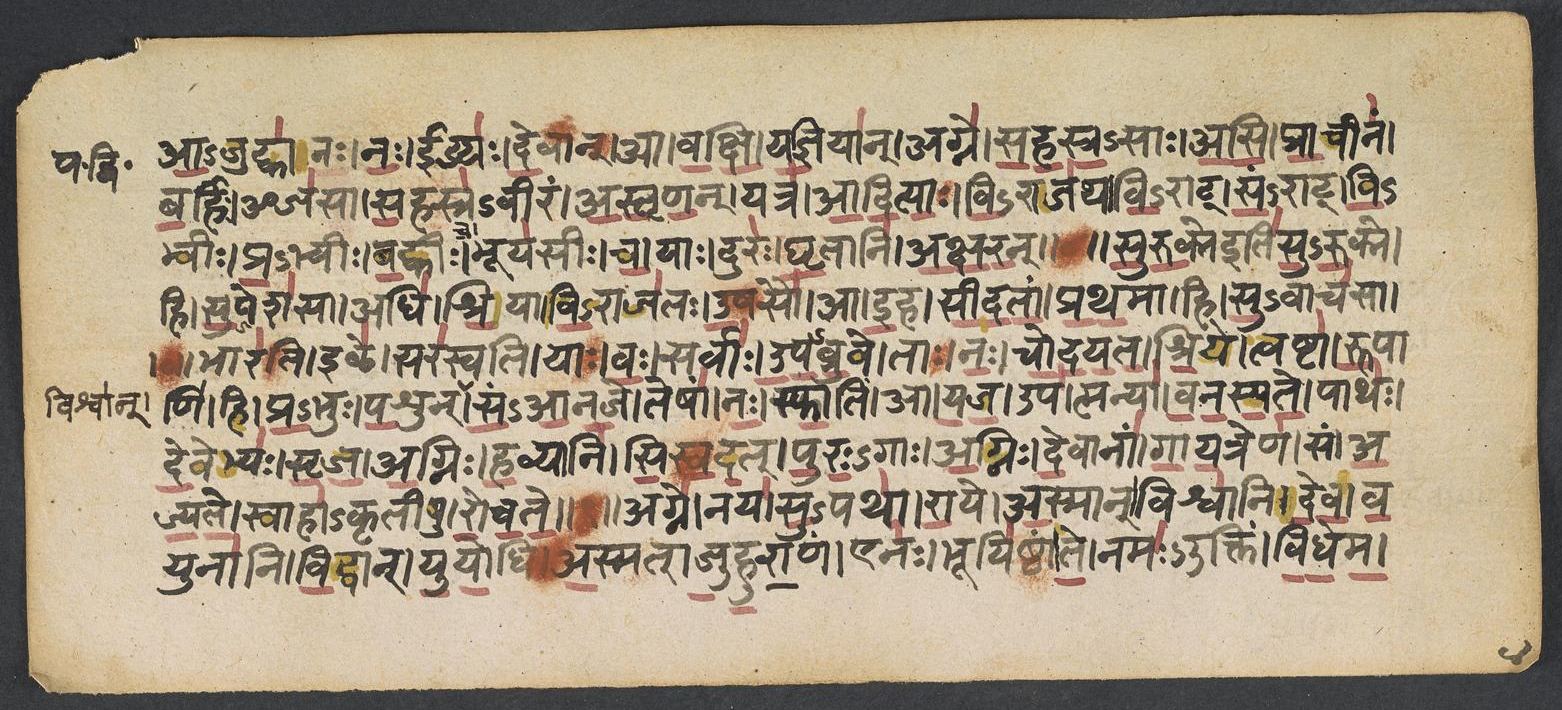
Penn Ms. Coll. 390 Item 41, fol. 146v (numbered 4v by the scribe) (OPenn image 148, upper leaf). Checked on the image: the Rigveda text on this page begins in RV 1.188.3 ‹ājuhvānaḥ naḥ īḍyaḥ devān›. The next page with Rigveda text, fol. 147r (numbered 5r by the scribe), begins in RV 1.189.2 ‹agne tvam pāraya navyaḥ›. Verse 1.189.1 ends on this page.
1agne̱ naya̍ su̱pathā̍ rā̱ye a̱smān viśvā̍ni deva va̱yunā̍ni vi̱dvān | yu̱yo̱dhy a1̱̍smaj ju̍hurā̱ṇam eno̱ bhūyi̍ṣṭhāṁ te̱ nama̍üktiṁ vidhema ||
Compare: Padapāṭha (word-by-word text written in the manuscript; Sansknet e-text via GRETIL)
1agne | naya | su-pathā | rāye | asmān | viśvāni | deva | vayunāni | vidvān | yuyodhi | asmat | juhurāṇam | enaḥ | bhūyiṣṭhām | te | namaḥ-uktim | vidhema
1BY goodly paths lead us to riches, Agni, God who knowest every sacred duty. Remove the sin that makes us stray and wander. most ample adoration will we bring thee.
Where on the image
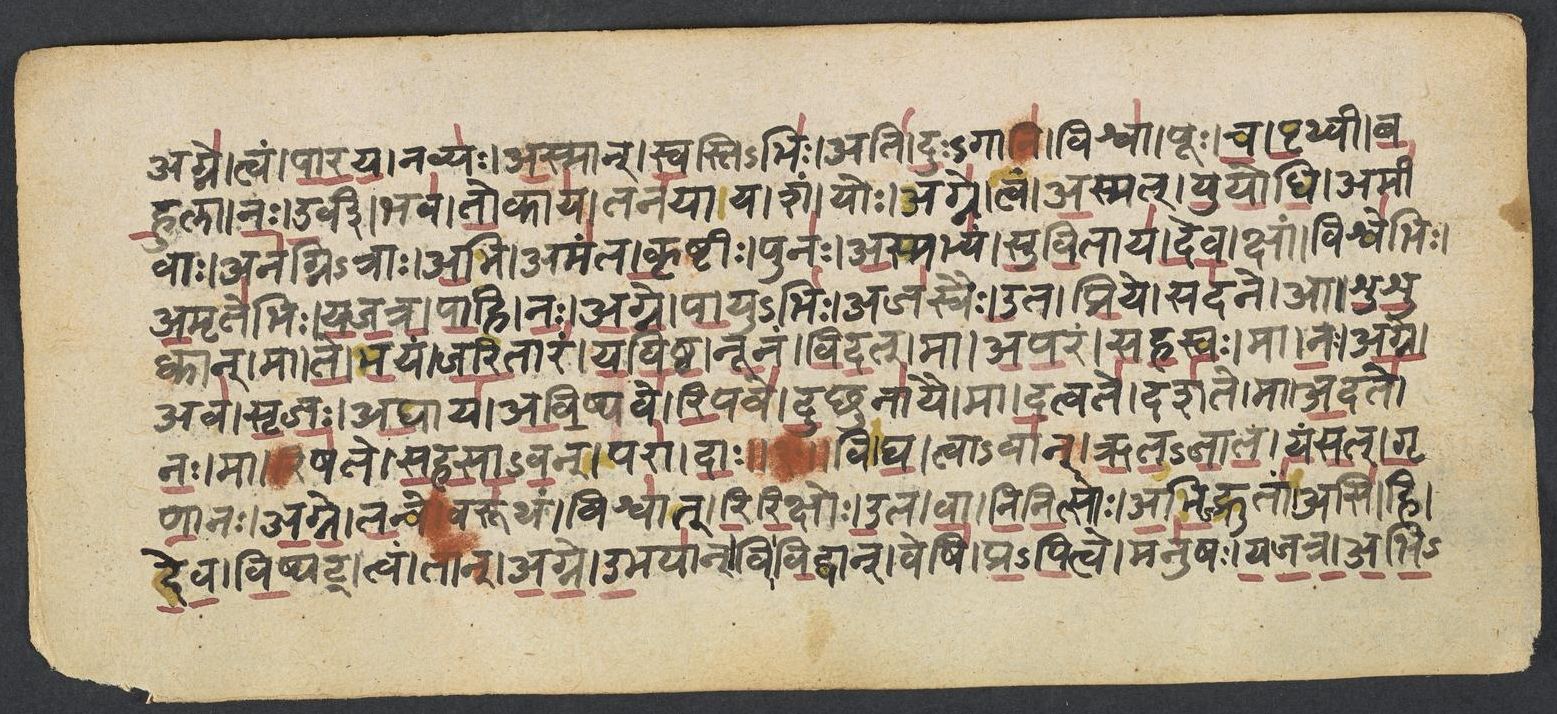
Penn Ms. Coll. 390 Item 41, fol. 147r (numbered 5r by the scribe) (OPenn image 148, lower leaf). Checked on the image: the Rigveda text on this page begins in RV 1.189.2 ‹agne tvam pāraya navyaḥ›. The next page with Rigveda text, fol. 147v (numbered 5v by the scribe), begins in RV 1.189.7 ‹-abhi-pitve manave śāsyaḥ bhūḥ›. Verses 1.189.2-6 end on this page.
2agne̱ tvam pā̍rayā̱ navyo̍ a̱smān sva̱stibhi̱r ati̍ du̱rgāṇi̱ viśvā̍ | pūś ca̍ pṛ̱thvī ba̍hu̱lā na̍ u̱rvī bhavā̍ to̱kāya̱ tana̍yāya̱ śaṁ yoḥ ||
3agne̱ tvam a̱smad yu̍yo̱dhy amī̍vā̱ ana̍gnitrā a̱bhy ama̍nta kṛ̱ṣṭīḥ | puna̍r a̱smabhya̍ṁ suvi̱tāya̍ deva̱ kṣāṁ viśve̍bhir a̱mṛte̍bhir yajatra ||
4pā̱hi no̍ agne pā̱yubhi̱r aja̍srair u̱ta pri̱ye sada̍na̱ ā śu̍śu̱kvān | mā te̍ bha̱yaṁ ja̍ri̱tāra̍ṁ yaviṣṭha nū̱naṁ vi̍da̱n māpa̱raṁ sa̍hasvaḥ ||
5mā no̍ a̱gne 'va̍ sṛjo a̱ghāyā̍vi̱ṣyave̍ ri̱pave̍ du̱cchunā̍yai | mā da̱tvate̱ daśa̍te̱ mādate̍ no̱ mā rīṣa̍te sahasāva̱n parā̍ dāḥ ||
6vi gha̱ tvāvā̍m̐ ṛtajāta yaṁsad gṛṇā̱no a̍gne ta̱nve̱3̱̍ varū̍tham | viśvā̍d riri̱kṣor u̱ta vā̍ nini̱tsor a̍bhi̱hrutā̱m asi̱ hi de̍va vi̱ṣpaṭ ||
Compare: Padapāṭha (word-by-word text written in the manuscript; Sansknet e-text via GRETIL)
2agne | tvam | pāraya | navyaḥ | asmān | svasti-bhiḥ | ati | duḥ-gāṇi | viśvā | pūḥ | ca | pṛthvī | bahulā | naḥ | urvī | bhava | tokāya | tanayāya | śam | yoḥ
3agne | tvam | asmat | yuyodhi | amīvāḥ | anagni-trāḥ | abhi | amanta | kṛṣṭīḥ | punaḥ | asmabhyam | suvitāya | deva | kṣām | viśvebhiḥ | amṛtebhiḥ | yajatra
4pāhi | naḥ | agne | pāyu-bhiḥ | ajasraiḥ | uta | priye | sadane | ā | śuśukvaan | mā | te | bhayam | jaritāram | yaviṣṭha | nūnam | vidat | mā | aparam | sahasvaḥ
5mā | naḥ | agne | ava | sṛjaḥ | aghāya | aviṣyave | ripave | ducchunāyai | mā | datvate | daśate | mā | adate | naḥ | mā | rīṣate | sahasāvan | parā | dāḥ
6vi | gha | tvāvān | ṛta-jāta | yaṃsat | gṛṇanaḥ | agne | tanve | varūtham | viśvāt | ri rikṣoḥ | uta | vā | ninitsoḥ | abhi-hrutām | asi | hi | deva | viṣpaṭ
2Lead us anew to happiness, O Agni; lead us beyond all danger and affliction. Be unto us a wide broad ample castle bless, prosper on their way our sons and offspring.
3Far from us, Agni, put thou all diseases let them strike lands that have no saving Agni. God, make our home again to be a blessing, with all the Immortal Deities, O Holy.
4Preserve us, Agni, with perpetual succour, refulgent in the dwelling which thou lovest. O Conqueror, most youthful, let no danger touch him who praises thee to-day or after.
5Give not us up a prey to sin, O Agni, the greedy enemy that brings us trouble; Not to the fanged that bites, not to the toothless: give not us up, thou Conqueror, to the spoiler.
6Such as thou art, born after Law, O Agni when lauded give protection to our bodies, From whosoever would reproach or injure: for thou, God, rescuest from all oppression.
Where on the image
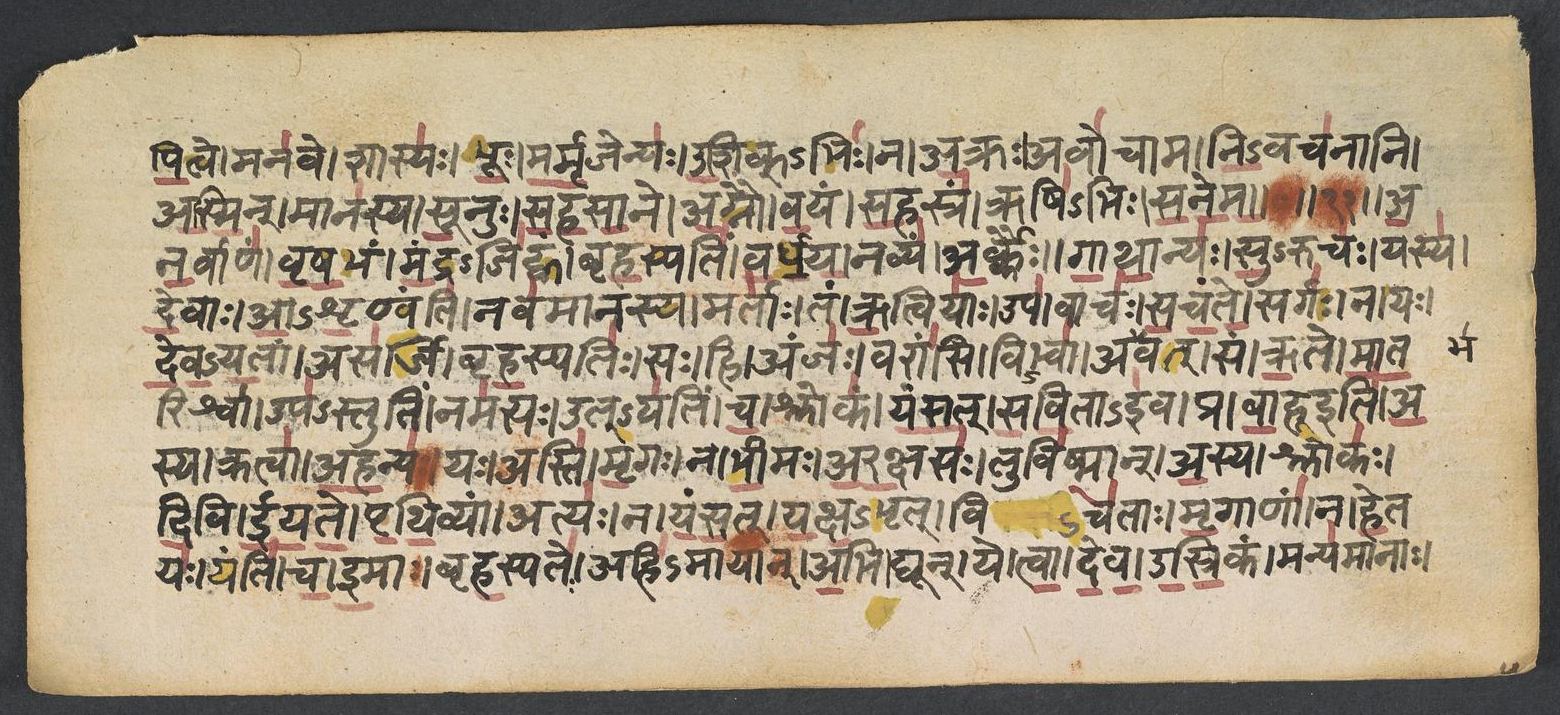
Penn Ms. Coll. 390 Item 41, fol. 147v (numbered 5v by the scribe) (OPenn image 149, upper leaf). Checked on the image: the Rigveda text on this page begins in RV 1.189.7 ‹-abhi-pitve manave śāsyaḥ bhūḥ›. The next page with Rigveda text, fol. 148r (numbered 6r by the scribe), begins in RV 1.190.5 ‹pāpāḥ bhadram upa-jīvanti pajrāḥ›. Verses 1.189.7-8 end on this page; 1.189.7 begins on fol. 147r (numbered 5r by the scribe).
7tvaṁ tām̐ a̍gna u̱bhayā̱n vi vi̱dvān veṣi̍ prapi̱tve manu̍ṣo yajatra | a̱bhi̱pi̱tve mana̍ve̱ śāsyo̍ bhūr marmṛ̱jenya̍ u̱śigbhi̱r nākraḥ ||
8avo̍cāma ni̱vaca̍nāny asmi̱n māna̍sya sū̱nuḥ sa̍hasā̱ne a̱gnau | va̱yaṁ sa̱hasra̱m ṛṣi̍bhiḥ sanema vi̱dyāme̱ṣaṁ vṛ̱jana̍ṁ jī̱radā̍num ||
Compare: Padapāṭha (word-by-word text written in the manuscript; Sansknet e-text via GRETIL)
7tvam | tām | agne | ubhayān | vi | vidvān | veṣi | pra-pitve | manuṣaḥ | yajatra | abhi-pitve | manave | śāsyaḥ | bhūḥ | marmṛjenyaḥ | uśik-bhiḥ | na | akraḥ
8avocāma | ni-vacanāni | asmin | mānasya | sūnuḥ | sahasāne | agnau | vayam | sahasram | ṛṣi-bhiḥ | sanema | vidyāma | iṣam | vṛjanam | jīra-dānum
7Thou, well discerning both these classes, comest to men at early morn, O holy Agni. Be thou obedient unto man at evening, to be adorned, as keen, by eager suitors.
8To him have we addressed our pious speeches, I, Mâna's son, to him victorious Agni. May we gain countless riches with the sages. May we find strengthening food in full abundance.
Notes
- Sanskrit: Aufrecht's edition (1877) with the Vedic accents, as entered by van Nooten and Holland (GRETIL).
- English: Ralph T. H. Griffith, The Hymns of the Rigveda (1889-1892; 2nd ed. 1896-1897), from the VedaWeb digital text; OCR slips in that text were corrected against the printed 2nd edition (data/sources/rigveda/griffith_errata.json).
- Padapāṭha (edition text): Sansknet e-text via GRETIL (CC BY-NC-SA 4.0).
Cite
Sources
- Source: Penn Ms. Coll. 390 Item 41 (undated (catalogued with Penn's 18th-19th c. Vedic manuscripts)), OPenn, Public Domain Mark + Aufrecht's accented text (GRETIL) + Griffith's English (VedaWeb) (holding institution)
- Critical edition: Aufrecht (1877), accented e-text via GRETIL
← previous · → next · v cycle view · l back to library