Rigveda 1.190: To Brihaspati
Introduction
Rigveda 1.190 is a hymn of 8 verses addressed to Brihaspati. It stands in book (maṇḍala) 1, a collection of hymns by many families of poets. The Rigveda is the oldest collection of Sanskrit hymns, composed in the second half of the second millennium BCE and handed down orally for many centuries before it was written down.
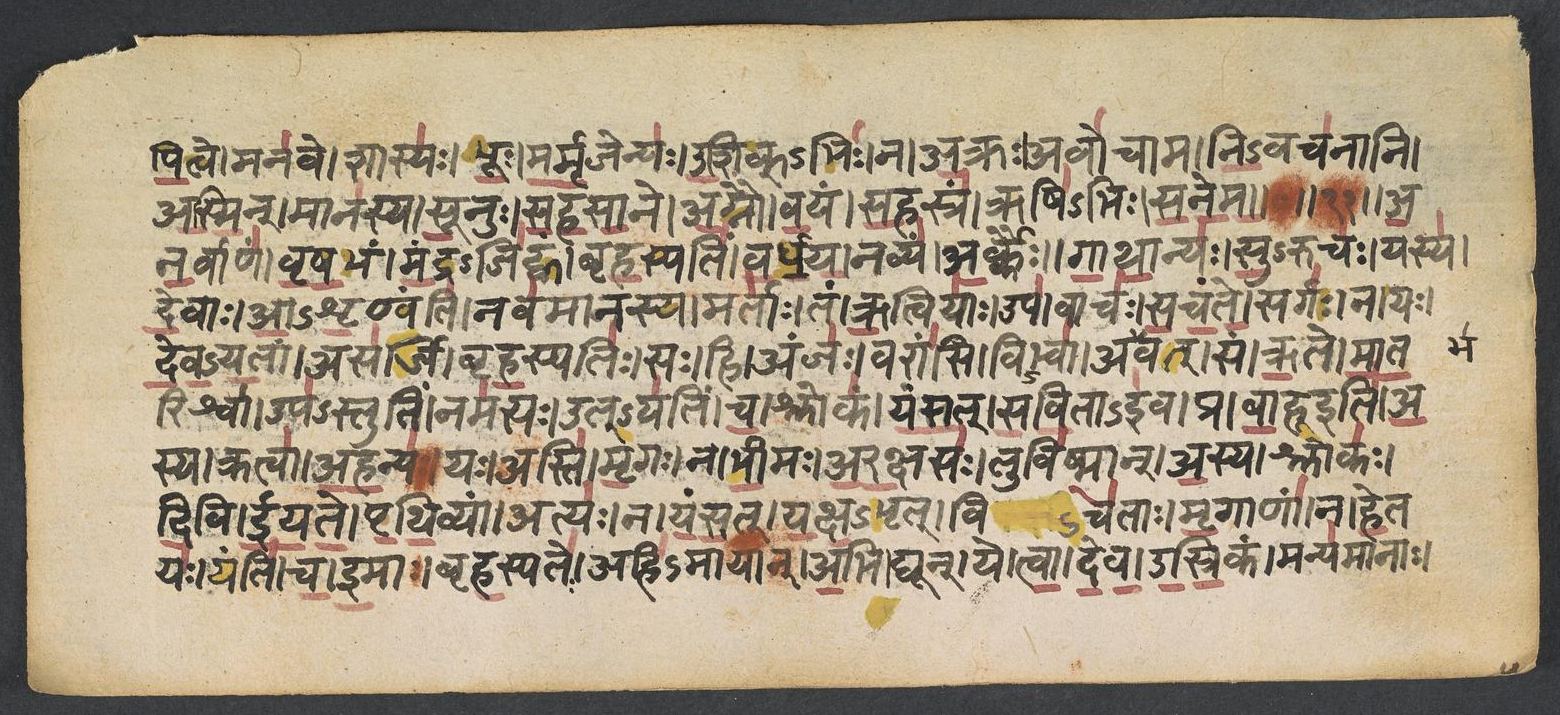
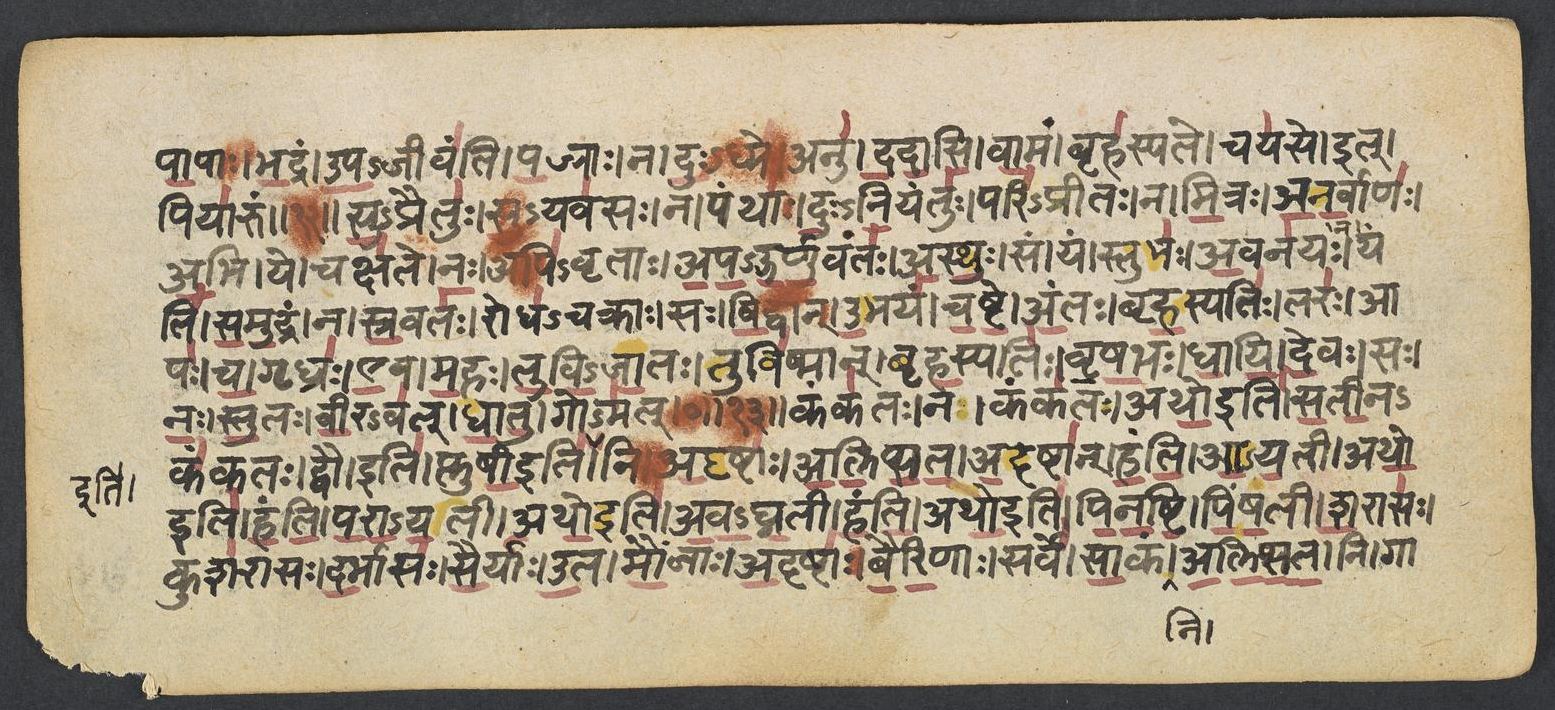
The manuscript shown is Penn Ms. Coll. 390 Item 41 (University of Pennsylvania), an undated paper manuscript of the padapāṭha (the word-by-word recitation text, in which every word is written separately and compounds are split) of the whole Ṛgveda in Devanāgarī, 884 leaves in fascicles, 7-9 lines to the page, accents in red; this hymn stands on fol. 147v-148r. Each section below gives the verses that end on one page; the page boundaries were read on the images (the opening words of every page), not counted out. Where the manuscript is a padapāṭha (the word-by-word recitation text), the section shows Aufrecht's continuous (saṃhitā) text first and, as the edition text, the padapāṭha of the same verses, which is the form written on the page.
How was this verified? (Provenance)
Where on the image
Penn Ms. Coll. 390 Item 41, fol. 147v (numbered 5v by the scribe) (OPenn image 149, upper leaf). Checked on the image: the Rigveda text on this page begins in RV 1.189.7 ‹-abhi-pitve manave śāsyaḥ bhūḥ›. The next page with Rigveda text, fol. 148r (numbered 6r by the scribe), begins in RV 1.190.5 ‹pāpāḥ bhadram upa-jīvanti pajrāḥ›. Verses 1.190.1-4 end on this page.
1a̱na̱rvāṇa̍ṁ vṛṣa̱bham ma̱ndraji̍hva̱m bṛha̱spati̍ṁ vardhayā̱ navya̍m a̱rkaiḥ | gā̱thā̱nya̍ḥ su̱ruco̱ yasya̍ de̱vā ā̍śṛ̱ṇvanti̱ nava̍mānasya̱ martā̍ḥ ||
2tam ṛ̱tviyā̱ upa̱ vāca̍ḥ sacante̱ sargo̱ na yo de̍vaya̱tām asa̍rji | bṛha̱spati̱ḥ sa hy añjo̱ varā̍ṁsi̱ vibhvābha̍va̱t sam ṛ̱te mā̍ta̱riśvā̍ ||
3upa̍stuti̱ṁ nama̍sa̱ udya̍tiṁ ca̱ śloka̍ṁ yaṁsat savi̱teva̱ pra bā̱hū | a̱sya kratvā̍ha̱nyo̱3̱̍ yo asti̍ mṛ̱go na bhī̱mo a̍ra̱kṣasa̱s tuvi̍ṣmān ||
4a̱sya śloko̍ di̱vīya̍te pṛthi̱vyām atyo̱ na ya̍ṁsad yakṣa̱bhṛd vice̍tāḥ | mṛ̱gāṇā̱ṁ na he̱tayo̱ yanti̍ ce̱mā bṛha̱spate̱r ahi̍māyām̐ a̱bhi dyūn ||
Compare: Padapāṭha (word-by-word text written in the manuscript; Sansknet e-text via GRETIL)
1anarvāṇam | vṛṣabham | mandra-jihvam | bṛhaspatim | vardhaya | navyam | arkaiḥ | gāthānyaḥ | su-rucaḥ | yasya | devāḥ | āśṛṇvanti | navamānasya | matārḥ
2tam | ṛtviyāḥ | upa | vācaḥ | sacante | sargaḥ | na | yaḥ | deva-yatām | asarji | bṛhaspatiḥ | saḥ | hi | añjaḥ | varāṃsi | vi-bhvā | abhavat | sam | ṛte | mātariśvā
3upa-stutim | namasaḥ | ut-yatim | ca | ślokam | yaṃsat | savitāiva | pra | bāhū iti | asya | kratvā | ahanyaḥ | yaḥ | asti | mṛgaḥ | na | bhīmaḥ | arakṣasaḥ | tuvi ṣmān
4asya | ślokaḥ | divi | īyate | pṛthivyām | atyaḥ | na | yaṃsat | yakṣa-bhṛt | vi-cetāḥ | mṛgāṇām | na | hetayaḥ | yanti | ca | imāḥ | bṛhaspateḥ | ahi-māyān | abhi | dyūn
1GLORIFY thou Br̥ihaspati, the scatheless, who must be praised with hymns, sweet-tongued and mighty, To whom as leader of the song, resplendent, worthy of lauds, both Gods and mortals listen.
2On him wait songs according to the season even as a stream of pious men set moving. Br̥ihaspati-for helaid out the expanses- was, at the sacrifice, vast Mâtariṣvan.
3The praise, the verse that offers adoration, may he bring forth, as the Sun sends his arms out, He who gives daily light through this God's wisdom, strong as a dread wild beast, and inoffensive.
4His song of praise pervades the earth and heaven – let the wise worshipper draw it, like a courser. These of Br̥ihaspati, like hunters' arrows, go to the skies that change their hue like serpents.
Where on the image
Penn Ms. Coll. 390 Item 41, fol. 148r (numbered 6r by the scribe) (OPenn image 149, lower leaf). Checked on the image: the Rigveda text on this page begins in RV 1.190.5 ‹pāpāḥ bhadram upa-jīvanti pajrāḥ›. The next page with Rigveda text, fol. 148v (numbered 6v by the scribe), begins in RV 1.191.4 ‹-go--sthe asadan ni mṛgāsaḥ›. Verses 1.190.5-8 end on this page; 1.190.5 begins on fol. 147v (numbered 5v by the scribe).
5ye tvā̍ devosri̱kam manya̍mānāḥ pā̱pā bha̱dram u̍pa̱jīva̍nti pa̱jrāḥ | na dū̱ḍhye̱3̱̍ anu̍ dadāsi vā̱mam bṛha̍spate̱ caya̍sa̱ it piyā̍rum ||
6su̱praitu̍ḥ sū̱yava̍so̱ na panthā̍ durni̱yantu̱ḥ pari̍prīto̱ na mi̱traḥ | a̱na̱rvāṇo̍ a̱bhi ye cakṣa̍te̱ no 'pī̍vṛtā aporṇu̱vanto̍ asthuḥ ||
7saṁ yaṁ stubho̱ 'vana̍yo̱ na yanti̍ samu̱draṁ na sra̱vato̱ rodha̍cakrāḥ | sa vi̱dvām̐ u̱bhaya̍ṁ caṣṭe a̱ntar bṛha̱spati̱s tara̱ āpa̍ś ca̱ gṛdhra̍ḥ ||
8e̱vā ma̱has tu̍vijā̱tas tuvi̍ṣmā̱n bṛha̱spati̍r vṛṣa̱bho dhā̍yi de̱vaḥ | sa na̍ḥ stu̱to vī̱rava̍d dhātu̱ goma̍d vi̱dyāme̱ṣaṁ vṛ̱jana̍ṁ jī̱radā̍num ||
Compare: Padapāṭha (word-by-word text written in the manuscript; Sansknet e-text via GRETIL)
5ye | tvā | deva | usrikam | manyamānāḥ | pāpāḥ | bhadram | upa-jīvanti | pajrāḥ | na | duḥ-dhye | anu | dadāsi | vāmam | bṛhaspate | cayase | it | piyārum
6sup-raituḥ | su-yavasaḥ | na | panthā | duḥ-niyantuḥ | pari-prītaḥ | na | mitraḥ | anarvāṇaḥ | abhi | ye | cakṣate | naḥ | api-vṛtāḥ | apaūrṇuvantaḥ | asthuḥ
7sam | yam | stubhaḥ | avanayaḥ | na | yanti | samudram | na | sravataḥ | rodha-cakrāḥ | saḥ | vidvān | ubhayam | caṣṭe | antaḥ | bṛhaspatiḥ | taraḥ | āpaḥ | ca | gṛdhraḥ
8eva | mahaḥ | tuvi-jātaḥ | tuviṣmān | bṛhaspatiḥ | vṛṣabhaḥ | dhāya | deviḥ | saḥ | naḥ | stutaḥ | vīra-vat | dhātu | go--mat | vidyāma | iṣam | vṛjanam | jīra-dānum
5Those, God, who count thee as a worthless bullock, and, wealthy sinners, live on thee the Bounteous,– On fools like these no blessing thou bestowest: Br̥ihaspati, thou punishest the spiteful.
6Like a fair path is he, where grass is pleasant, though hard to win, a Friend beloved most early. Those who unharmed by enemies behold us, while: they would make them bare, stood closely compassed.
7He to whom songs of praise go forth like torrents, as rivers eddying under banks flow sea-ward- Br̥ihaspati the wise, the eager, closely looks upon both, the waters and the vessel.
8So hath Br̥ihaspati, great, strong and mighty, the God exceeding powerful, been brought hither. May he thus lauded give us kine and horses. May we find strengthening food in full abundance.
Notes
- Sanskrit: Aufrecht's edition (1877) with the Vedic accents, as entered by van Nooten and Holland (GRETIL).
- English: Ralph T. H. Griffith, The Hymns of the Rigveda (1889-1892; 2nd ed. 1896-1897), from the VedaWeb digital text; OCR slips in that text were corrected against the printed 2nd edition (data/sources/rigveda/griffith_errata.json).
- Padapāṭha (edition text): Sansknet e-text via GRETIL (CC BY-NC-SA 4.0).
Cite
Sources
- Source: Penn Ms. Coll. 390 Item 41 (undated (catalogued with Penn's 18th-19th c. Vedic manuscripts)), OPenn, Public Domain Mark + Aufrecht's accented text (GRETIL) + Griffith's English (VedaWeb) (holding institution)
- Critical edition: Aufrecht (1877), accented e-text via GRETIL
← previous · → next · v cycle view · l back to library