Rigveda 1.191: Against venomous animals
Introduction
Rigveda 1.191 is a hymn of 16 verses addressed to against venomous animals. It stands in book (maṇḍala) 1, a collection of hymns by many families of poets. The Rigveda is the oldest collection of Sanskrit hymns, composed in the second half of the second millennium BCE and handed down orally for many centuries before it was written down.
The manuscript shown is Penn Ms. Coll. 390 Item 41 (University of Pennsylvania), an undated paper manuscript of the padapāṭha (the word-by-word recitation text, in which every word is written separately and compounds are split) of the whole Ṛgveda in Devanāgarī, 884 leaves in fascicles, 7-9 lines to the page, accents in red; this hymn stands on fol. 148r-149r. Each section below gives the verses that end on one page; the page boundaries were read on the images (the opening words of every page), not counted out. Where the manuscript is a padapāṭha (the word-by-word recitation text), the section shows Aufrecht's continuous (saṃhitā) text first and, as the edition text, the padapāṭha of the same verses, which is the form written on the page.
How was this verified? (Provenance)
Where on the image
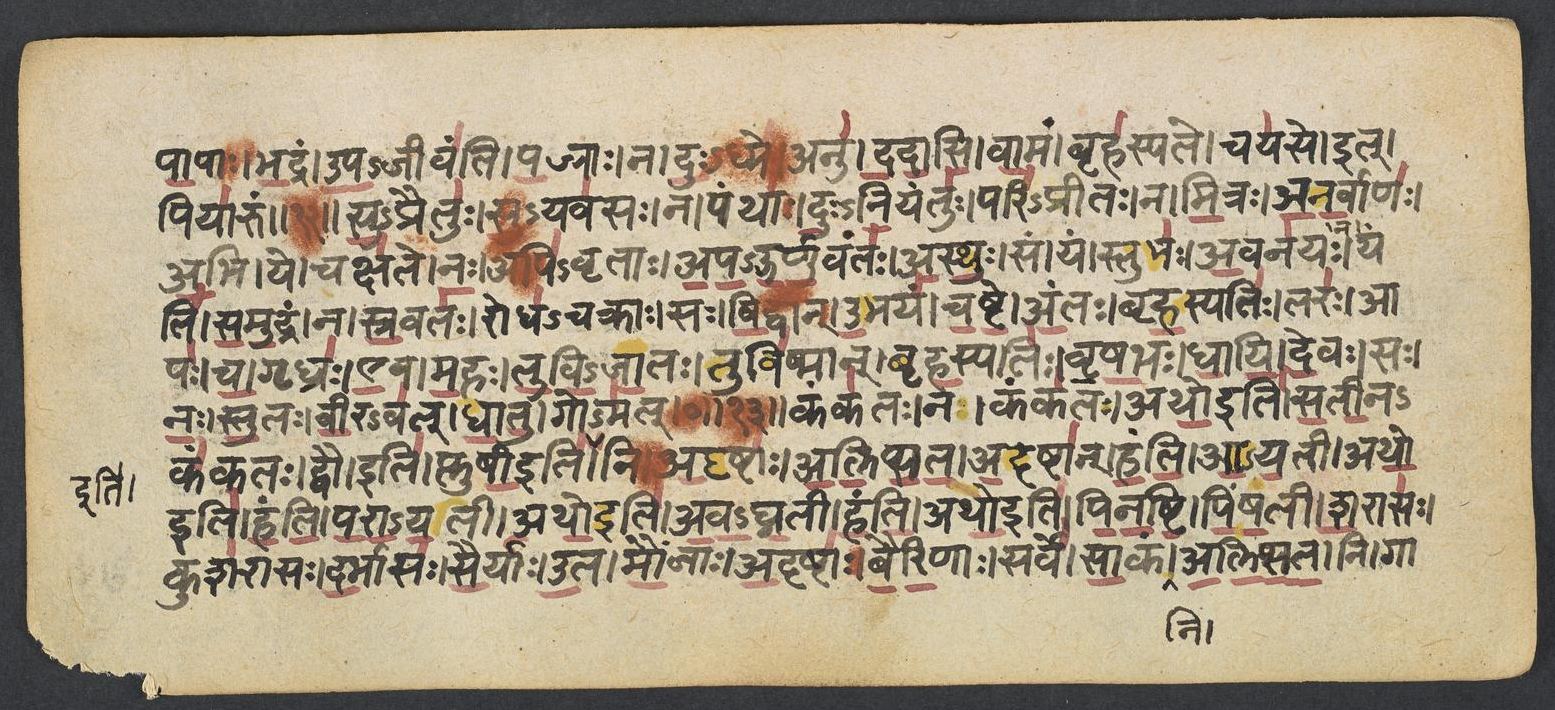
Penn Ms. Coll. 390 Item 41, fol. 148r (numbered 6r by the scribe) (OPenn image 149, lower leaf). Checked on the image: the Rigveda text on this page begins in RV 1.190.5 ‹pāpāḥ bhadram upa-jīvanti pajrāḥ›. The next page with Rigveda text, fol. 148v (numbered 6v by the scribe), begins in RV 1.191.4 ‹-go--sthe asadan ni mṛgāsaḥ›. Verses 1.191.1-3 end on this page.
1kaṅka̍to̱ na kaṅka̱to 'tho̍ satī̱naka̍ṅkataḥ | dvāv iti̱ pluṣī̱ iti̱ ny a1̱̍dṛṣṭā̍ alipsata ||
2a̱dṛṣṭā̍n hanty āya̱ty atho̍ hanti parāya̱tī | atho̍ avaghna̱tī ha̱nty atho̍ pinaṣṭi piṁṣa̱tī ||
3śa̱rāsa̱ḥ kuśa̍rāso da̱rbhāsa̍ḥ sai̱ryā u̱ta | mau̱ñjā a̱dṛṣṭā̍ vairi̱ṇāḥ sarve̍ sā̱kaṁ ny a̍lipsata ||
Compare: Padapāṭha (word-by-word text written in the manuscript; Sansknet e-text via GRETIL)
1kaṅkataḥ | na | kaṅkataḥ | atho iti | satīna-kaṅkataḥ | dvau | iti | pluṣī iti | iti | ni | adṛṣṭāḥ | alipsata
2adṛṣṭān | hanti | āyatī | atho iti | hanti | parāyatī | atho iti | ava-ghnatī | hanti | atho iti | pinaṣṭi | piṃṣatī
3śarāsaḥ | kuśarāsaḥ | darbhāsaḥ | sairyāḥ | uta | mauñjāḥ | adṛṣṭāḥ | vairiṇāḥ | sarve | sākam | ni | alipsata
1VENOMOUS, slightly venomous, or venomous aquatic worm,– Both creatures, stinging, unobserved, with poison have infected me.
2Coming, it kills the unobserved; it kills them as it goes away, It kills them as it drives them off, and bruising bruises them to death.
3Ṣaragrass, Darbha, Kuṣara, and Sairya, Munja, Vîraṇa, Where all these creatures dwell unseen, with poison have infected me.
Where on the image
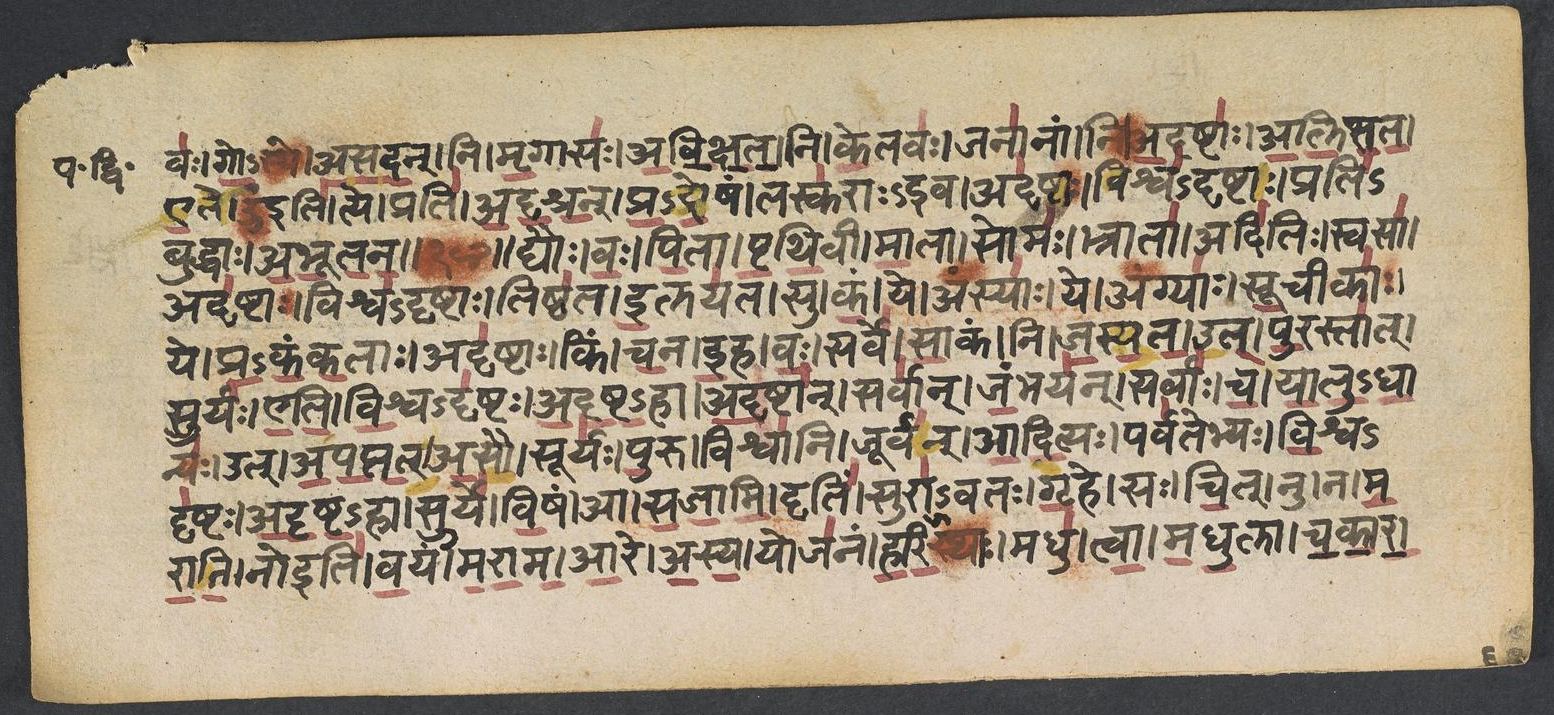
Penn Ms. Coll. 390 Item 41, fol. 148v (numbered 6v by the scribe) (OPenn image 150, upper leaf). Checked on the image: the Rigveda text on this page begins in RV 1.191.4 ‹-go--sthe asadan ni mṛgāsaḥ›. The next page with Rigveda text, fol. 149r (numbered 7r by the scribe), begins in RV 1.191.11 ‹iyattikā śakuntikā sakā jaghāsa›. Verses 1.191.4-10 end on this page; 1.191.4 begins on fol. 148r (numbered 6r by the scribe).
4ni gāvo̍ go̱ṣṭhe a̍sada̱n ni mṛ̱gāso̍ avikṣata | ni ke̱tavo̱ janā̍nā̱ṁ ny a1̱̍dṛṣṭā̍ alipsata ||
5e̱ta u̱ tye praty a̍dṛśran prado̱ṣaṁ taska̍rā iva | adṛ̍ṣṭā̱ viśva̍dṛṣṭā̱ḥ prati̍buddhā abhūtana ||
6dyaur va̍ḥ pi̱tā pṛ̍thi̱vī mā̱tā somo̱ bhrātādi̍ti̱ḥ svasā̍ | adṛ̍ṣṭā̱ viśva̍dṛṣṭā̱s tiṣṭha̍te̱laya̍tā̱ su ka̍m ||
7ye aṁsyā̱ ye aṅgyā̍ḥ sū̱cīkā̱ ye pra̍kaṅka̱tāḥ | adṛ̍ṣṭā̱ḥ kiṁ ca̱neha va̱ḥ sarve̍ sā̱kaṁ ni ja̍syata ||
8ut pu̱rastā̱t sūrya̍ eti vi̱śvadṛ̍ṣṭo adṛṣṭa̱hā | a̱dṛṣṭā̱n sarvā̍ñ ja̱mbhaya̱n sarvā̍ś ca yātudhā̱nya̍ḥ ||
9ud a̍paptad a̱sau sūrya̍ḥ pu̱ru viśvā̍ni̱ jūrva̍n | ā̱di̱tyaḥ parva̍tebhyo vi̱śvadṛ̍ṣṭo adṛṣṭa̱hā ||
10sūrye̍ vi̱ṣam ā sa̍jāmi̱ dṛti̱ṁ surā̍vato gṛ̱he | so ci̱n nu na ma̍rāti̱ no va̱yam ma̍rāmā̱re a̍sya̱ yoja̍naṁ hari̱ṣṭhā madhu̍ tvā madhu̱lā ca̍kāra ||
Compare: Padapāṭha (word-by-word text written in the manuscript; Sansknet e-text via GRETIL)
4ni | gāvaḥ | go--sthe | asadan | ni | mṛgāsaḥ | avikṣata | ni | ketavaḥ | janānām | ni | adṛṣṭāḥ | alipsata
5ete | oṃ iti | tye | prati | adṛśran | pra-doṣam | taskarāḥ-iva | adṛṣṭāḥ | viśva-dṛśṭāḥ | prati-buddhāḥ | abhūtana
6dyauḥ | vaḥ | pitā | pṛthivī | mātā | somaḥ | bhrātā | aditiḥ | svasā | adṛṣṭāḥ | viśva-dṛṣṭāḥ | tiṣṭhata | ilayata | su | kam
7ye | aṃsyāḥ | ye | aṅgyāḥ | sūcīkāḥ | ye | pra-kaṅkatāḥ | adṛṣṭāḥ | kim | cana | iha | vaḥ | sarve | sākam | ni | jasyata
8ut | purastāt | sūryaḥ | eti | viśva-dṛṣṭaḥ | adṛṣṭa-hā | adṛṣṭan | savārn | jambhayan | sarvāḥ | ca | yātu-dhānyaḥ
9ut | apaptat | asau | sūryaḥ | puru | viśvāni | jūrvan | ādityaḥ | parvatebhyaḥ | viśva-dṛṣṭaḥ | adṛṣṭa-hā
10sūrye | viṣam | ā | sajāmi | dṛtim | surāvataḥ | gṛhe | saḥ | cit | nu | na | marāt i | no iti | vayam | marāma | āre | asya | yojanam | hari-sthāḥ | madhu | tvā | madhulā | cakāra
4The cows had settled in their stalls, the beasts of prey had sought their lairs, Extinguished were the lights of men, when things unseen infected me.
5Or these, thesereptiles, are observed, like lurking thieves at evening time. Seers of all, themselves unseen: be therefore very vigilant.
6Heaven is your Sire, your Mother Earth, Soma your Brother, Aditi Your Sister: seeing all, unseen, keep still and dwell ye happily.
7Biters of shoulder or of limb, with needle-stings, most venomous, Unseen, whatever ye may be, vanish together and be gone.
8Slayer of things unseen, the Sun, beheld of all, mounts, eastward, up, Consuming all that are not seen, and evil spirits of the night.
9There hath the Sun-God mounted up, who scorches much and everything. Even the Âditya from the hills, all-seen, destroying things unseen.
10I hang the poison in the Sun, a wine-skin in a vintner's house, He will not die, nor shall we die: his path is far: he whom Bay Horses bear hath turned thee to sweet meath.
Where on the image
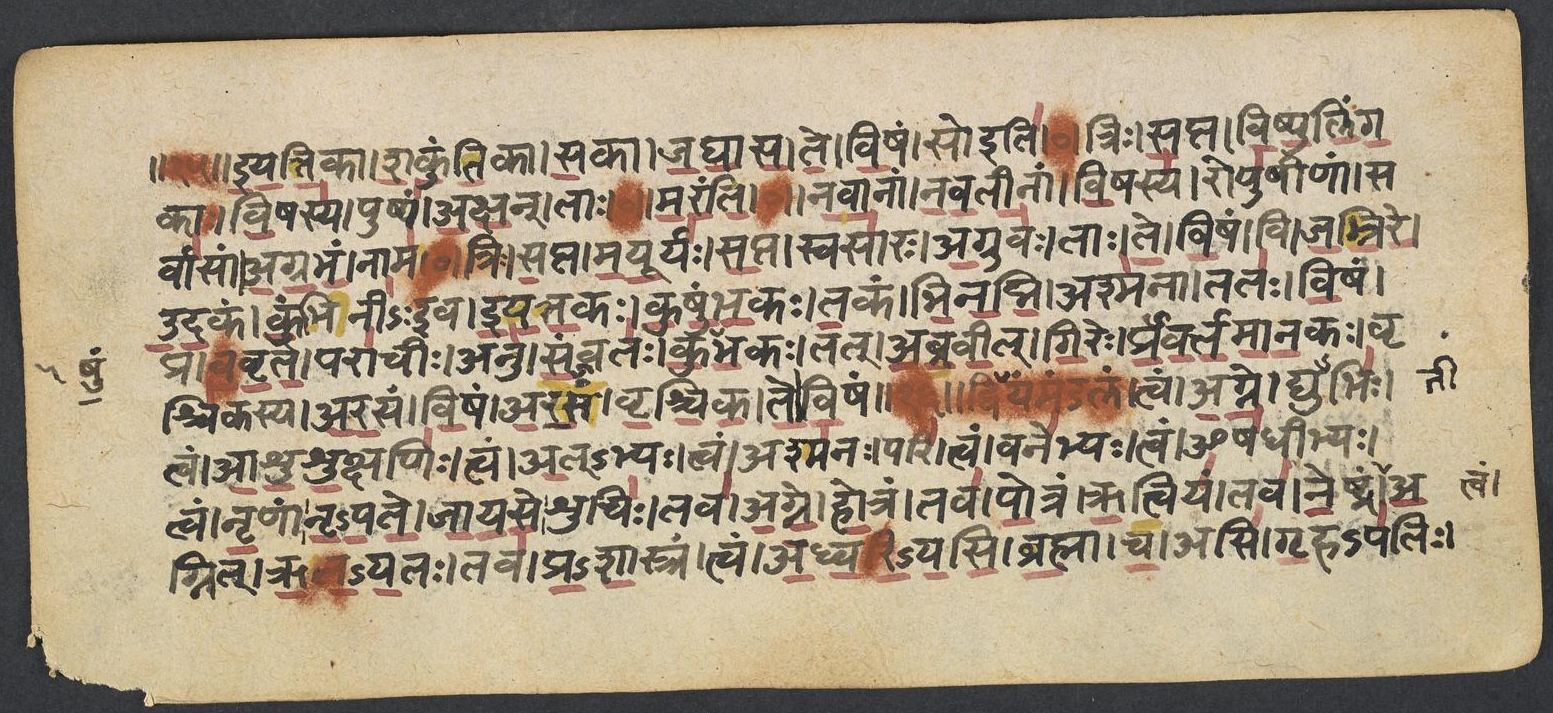
Penn Ms. Coll. 390 Item 41, fol. 149r (numbered 7r by the scribe) (OPenn image 150, lower leaf). Checked on the image: the Rigveda text on this page begins in RV 1.191.11 ‹iyattikā śakuntikā sakā jaghāsa›. The next page with Rigveda text, fol. 149v (numbered 7v by the scribe), begins in RV 2.1.2 ‹ca naḥ dame›. Verses 1.191.11-16 end on this page.
11i̱ya̱tti̱kā śa̍kunti̱kā sa̱kā ja̍ghāsa te vi̱ṣam | so ci̱n nu na ma̍rāti̱ no va̱yam ma̍rāmā̱re a̍sya̱ yoja̍naṁ hari̱ṣṭhā madhu̍ tvā madhu̱lā ca̍kāra ||
12triḥ sa̱pta vi̍ṣpuliṅga̱kā vi̱ṣasya̱ puṣya̍m akṣan | tāś ci̱n nu na ma̍ranti̱ no va̱yam ma̍rāmā̱re a̍sya̱ yoja̍naṁ hari̱ṣṭhā madhu̍ tvā madhu̱lā ca̍kāra ||
13na̱vā̱nāṁ na̍vatī̱nāṁ vi̱ṣasya̱ ropu̍ṣīṇām | sarvā̍sām agrabha̱ṁ nāmā̱re a̍sya̱ yoja̍naṁ hari̱ṣṭhā madhu̍ tvā madhu̱lā ca̍kāra ||
14triḥ sa̱pta ma̍yū̱rya̍ḥ sa̱pta svasā̍ro a̱gruva̍ḥ | tās te̍ vi̱ṣaṁ vi ja̍bhrira uda̱kaṁ ku̱mbhinī̍r iva ||
15i̱ya̱tta̱kaḥ ku̍ṣumbha̱kas ta̱kam bhi̍na̱dmy aśma̍nā | tato̍ vi̱ṣam pra vā̍vṛte̱ parā̍cī̱r anu̍ sa̱ṁvata̍ḥ ||
16ku̱ṣu̱mbha̱kas tad a̍bravīd gi̱reḥ pra̍vartamāna̱kaḥ | vṛści̍kasyāra̱saṁ vi̱ṣam a̍ra̱saṁ vṛ̍ścika te vi̱ṣam ||
Compare: Padapāṭha (word-by-word text written in the manuscript; Sansknet e-text via GRETIL)
11iyattikā | śakuntikā | sakā | jaghāsa | te | viṣam | so iti | cit | nu | na | marāti | no iti | vayam | marāma | āre | asya | yojanam | hari-sthāḥ | madhu | tvā | madhulā | cakāra
12triḥ | sapta | viṣpuliṅgakāḥ | viṣasya | puṣyam | akṣan | tāḥ | cit | nu | na | maranti | no iti | vayam | marāma | āre | asya | yojanam | hari-sthāḥ | madhu | tvā | madhulā | cakāra
13navānām | navatīnām | viṣasya | ropuṣīṇām | sarvāsām | agrabham | nāma | āre | asya | yojanam | hari-sthāḥ | madhu | tvā | madhulā | cakāra
14triḥ | sapta | mayūryaḥ | sapta | svasāraḥ | agruvaḥ | tāḥ | te | viṣam | vi | jabhrire | udakam | kumbhinīḥ-iva
15iyattakaḥ | kuṣumbhakaḥ | takam | bhinadmi | aśmanā | tataḥ | viṣam | pra | vavṛte | parācīḥ | anu | sam-vataḥ
16kuṣumbhakaḥ | tat | abravīt | gireḥ | pra-vartamānakaḥ | vṛścikasya | arasam | viṣam | arasam | vṛścika | te | viṣam
11This little bird, so very small, hath swallowed all thy poison up. She will not die, nor shall we die: his path is far: he whom Bay Horses bear hath turned thee to sweet meath.
12The three-times-seven bright sparks of fire have swallowed up the poison's strength. They will not die, nor shall we die: his path is far: he whom Bay Horses bear hath turned thee to sweet meath.
13Of ninety rivers and of nine with power to stay the venom's course,– The names of all I have secured: his path is far: he whom Bay Horses bear hath turned thee to sweet meath.
14So have the peahens three-times-seven, so have the maiden Sisters Seven Carried thy venom far away, as girls bear water in their jars.
15The poison-insect is so small; I crush the creature with a stone. I turn the poison hence away, departed unto distant lands.
16Forth issuing from the mountain's side the poison-insect spake and said: The scorpion's venom hath no strength Scorpion, thy venom is but weak.
Notes
- Sanskrit: Aufrecht's edition (1877) with the Vedic accents, as entered by van Nooten and Holland (GRETIL).
- English: Ralph T. H. Griffith, The Hymns of the Rigveda (1889-1892; 2nd ed. 1896-1897), from the VedaWeb digital text; OCR slips in that text were corrected against the printed 2nd edition (data/sources/rigveda/griffith_errata.json).
- Padapāṭha (edition text): Sansknet e-text via GRETIL (CC BY-NC-SA 4.0).
Cite
Sources
- Source: Penn Ms. Coll. 390 Item 41 (undated (catalogued with Penn's 18th-19th c. Vedic manuscripts)), OPenn, Public Domain Mark + Aufrecht's accented text (GRETIL) + Griffith's English (VedaWeb) (holding institution)
- Critical edition: Aufrecht (1877), accented e-text via GRETIL
← previous · → next · v cycle view · l back to library