Rigveda 2.1: To Agni
Introduction
Rigveda 2.1 is a hymn of 16 verses addressed to Agni. It stands in book (maṇḍala) 2, the family book of Gṛtsamada. The Rigveda is the oldest collection of Sanskrit hymns, composed in the second half of the second millennium BCE and handed down orally for many centuries before it was written down.
The manuscript shown is Penn Ms. Coll. 390 Item 41 (University of Pennsylvania), an undated paper manuscript of the padapāṭha (the word-by-word recitation text, in which every word is written separately and compounds are split) of the whole Ṛgveda in Devanāgarī, 884 leaves in fascicles, 7-9 lines to the page, accents in red; this hymn stands on fol. 149r-150v. Each section below gives the verses that end on one page; the page boundaries were read on the images (the opening words of every page), not counted out. Where the manuscript is a padapāṭha (the word-by-word recitation text), the section shows Aufrecht's continuous (saṃhitā) text first and, as the edition text, the padapāṭha of the same verses, which is the form written on the page.
How was this verified? (Provenance)
Where on the image
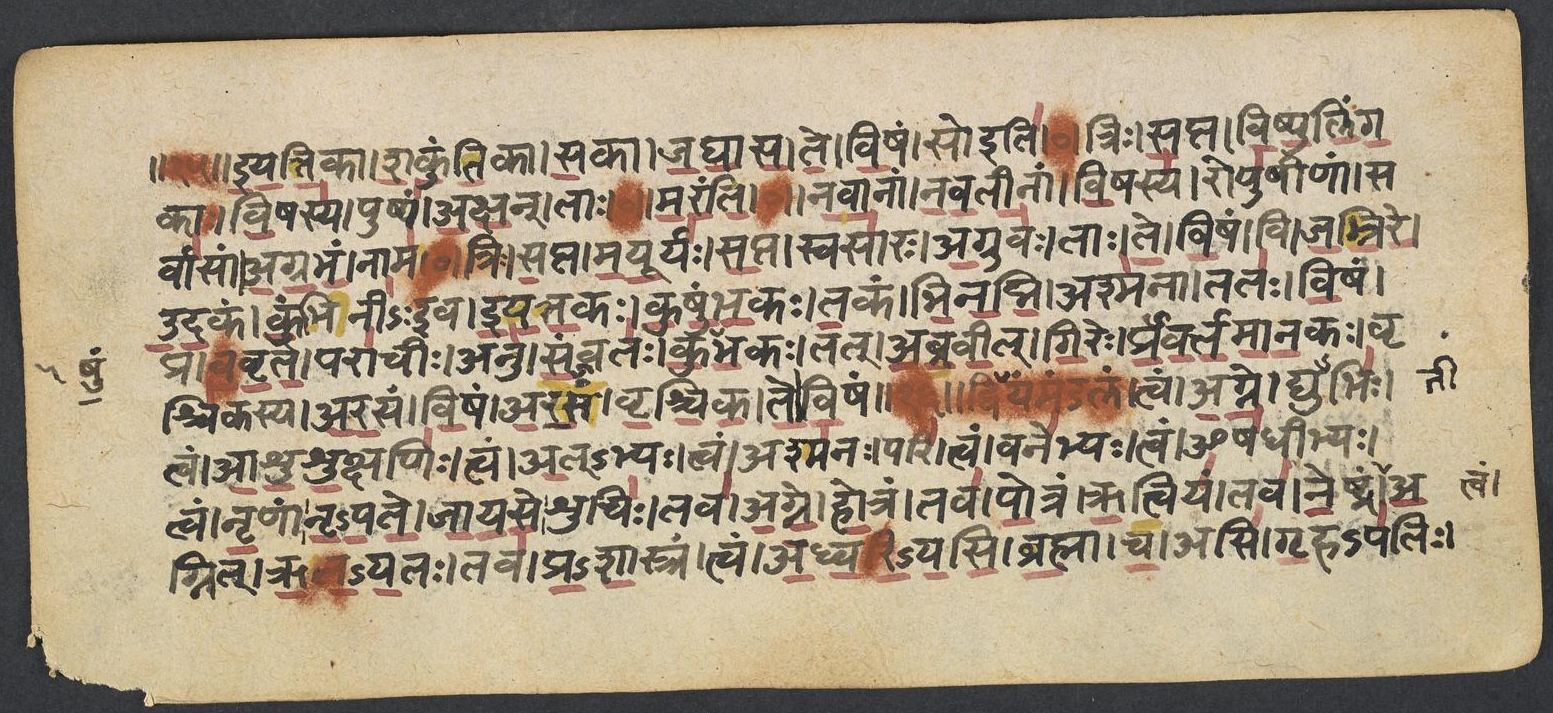
Penn Ms. Coll. 390 Item 41, fol. 149r (numbered 7r by the scribe) (OPenn image 150, lower leaf). Checked on the image: the Rigveda text on this page begins in RV 1.191.11 ‹iyattikā śakuntikā sakā jaghāsa›. The next page with Rigveda text, fol. 149v (numbered 7v by the scribe), begins in RV 2.1.2 ‹ca naḥ dame›. Verse 2.1.1 ends on this page.
1tvam a̍gne̱ dyubhi̱s tvam ā̍śuśu̱kṣaṇi̱s tvam a̱dbhyas tvam aśma̍na̱s pari̍ | tvaṁ vane̍bhya̱s tvam oṣa̍dhībhya̱s tvaṁ nṛ̱ṇāṁ nṛ̍pate jāyase̱ śuci̍ḥ ||
Compare: Padapāṭha (word-by-word text written in the manuscript; Sansknet e-text via GRETIL)
1tvam | agne | dyu-bhiḥ | tvam | āśuśukṣaṇiḥ | tvam | at-bhyaḥ | tvam | aśmanaḥ | pari | tvam | vanebhyaḥ | tvam | oṣadhībhyaḥ | tvam | nṛṇām | nṛ-pate | jāyase | śuciḥ
1THOU, Agni, shining in thy glory through the days, art brought to life from out the waters, from the stone: From out the forest trees and herbs that grow on ground, thou, Sovran Lord of men art generatad (sic) pure.
Where on the image
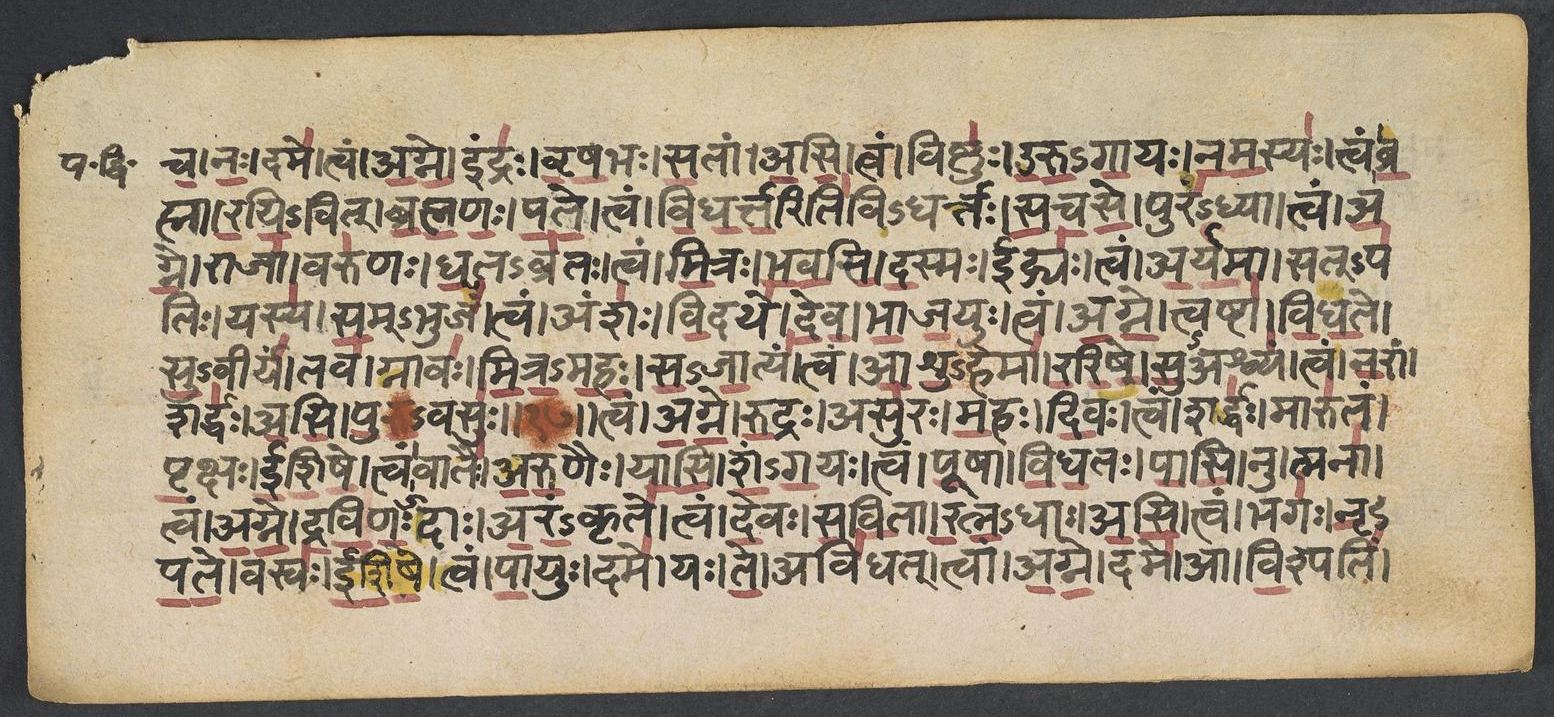
Penn Ms. Coll. 390 Item 41, fol. 149v (numbered 7v by the scribe) (OPenn image 151, upper leaf). Checked on the image: the Rigveda text on this page begins in RV 2.1.2 ‹ca naḥ dame›. The next page with Rigveda text, fol. 150r (numbered 8r by the scribe), begins in RV 2.1.8 ‹viśaḥ tvām rājānam su-vidatram›. Verses 2.1.2-7 end on this page; 2.1.2 begins on fol. 149r (numbered 7r by the scribe).
2tavā̍gne ho̱traṁ tava̍ po̱tram ṛ̱tviya̱ṁ tava̍ ne̱ṣṭraṁ tvam a̱gnid ṛ̍tāya̱taḥ | tava̍ praśā̱straṁ tvam a̍dhvarīyasi bra̱hmā cāsi̍ gṛ̱hapa̍tiś ca no̱ dame̍ ||
3tvam a̍gna̱ indro̍ vṛṣa̱bhaḥ sa̱tām a̍si̱ tvaṁ viṣṇu̍r urugā̱yo na̍ma̱sya̍ḥ | tvam bra̱hmā ra̍yi̱vid bra̍hmaṇas pate̱ tvaṁ vi̍dhartaḥ sacase̱ pura̍ṁdhyā ||
4tvam a̍gne̱ rājā̱ varu̍ṇo dhṛ̱tavra̍ta̱s tvam mi̱tro bha̍vasi da̱sma īḍya̍ḥ | tvam a̍rya̱mā satpa̍ti̱r yasya̍ sa̱mbhuja̱ṁ tvam aṁśo̍ vi̱dathe̍ deva bhāja̱yuḥ ||
5tvam a̍gne̱ tvaṣṭā̍ vidha̱te su̱vīrya̱ṁ tava̱ gnāvo̍ mitramahaḥ sajā̱tya̍m | tvam ā̍śu̱hemā̍ rariṣe̱ svaśvya̱ṁ tvaṁ na̱rāṁ śardho̍ asi purū̱vasu̍ḥ ||
6tvam a̍gne ru̱dro asu̍ro ma̱ho di̱vas tvaṁ śardho̱ māru̍tam pṛ̱kṣa ī̍śiṣe | tvaṁ vātai̍r aru̱ṇair yā̍si śaṁga̱yas tvam pū̱ṣā vi̍dha̱taḥ pā̍si̱ nu tmanā̍ ||
7tvam a̍gne draviṇo̱dā a̍ra̱ṁkṛte̱ tvaṁ de̱vaḥ sa̍vi̱tā ra̍tna̱dhā a̍si | tvam bhago̍ nṛpate̱ vasva̍ īśiṣe̱ tvam pā̱yur dame̱ yas te 'vi̍dhat ||
Compare: Padapāṭha (word-by-word text written in the manuscript; Sansknet e-text via GRETIL)
2tava | agne | hotram | tava | potram | ṛtviyam | tava | neṣṭram | tvam | agnit | ṛta-yataḥ | tava | pra-śāstram | tvam | adhvari-yasi | brahmā | ca | asi | gṛṭha-patiḥ | ca | naḥ | dame
3tvam | agne | indraḥ | vṛṣabhaḥ | satām | asi | tvam | viṣṇuḥ | uru-gāyaḥ | namasyaḥ | tvam | brahmā | rayi-vit | brahmaṇaḥ | pate | tvam | vidhartaritivi-dhartaḥ | sacase | puram-dhyā
4tvam | agne | rājā | varuṇaḥ | dhṛta-vrataḥ | tvam | mitraḥ | bhavasi | dasmaḥ | īḍyaḥ | tvam | aryamā | sat-patiḥ | yasya | sam-bhujam | tvam | aṃśaḥ | vidathe | deva | bhājayuḥ
5tvam | agne | tvaṣṭā | vidhate | su-vīryam | tava | gnāvaḥ | mitra-mahaḥ | sa-jātyam | tvam | āśu-hemā | rariṣe | su-aśvyam | tvam | narām | śardhaḥ | asi | puru-vasuḥ
6tvam | agne | rudraḥ | asuraḥ | mahaḥ | divaḥ | tvam | śardhaḥ | mārutam | pṛkṣaḥ | īśiṣe | tvam | vātaiḥ | aruṇaiḥ | yāsi | śam-gayaḥ | tvam | pūṣā | vidhataḥ | pāsi | nu | tmanā
7tvam | agne | draviṇaḥ-dāḥ | aram-kṛte | tvam | devaḥ | savitā | ratna-dhāḥ | asi | tvam | bhagaḥ | nṛ-pate | vasvaḥ | īśiṣe | tvam | pāyuḥ | dame | yaḥ | te | avidhat
2Thine is the Herald's task and Cleanser's duly timed; Leader art thou, and Kindler for the pious man. Thou art Director, thou the ministering Priest: thou art the Brahman, Lord and Master in our home.
3Hero of Heroes, Agni! Thou art Indra, thou art Vishṇu of the Mighty Stride, adorable: Thou, Brahmaṇaspati, the Brahman finding wealth: thou, O Sustainer, with thy wisdom tendest us.
4Agni, thou art King Varuṇa whose laws stand fast; as Mitra, Wonder-Worker, thou must be implored. Aryaman, heroes' Lord, art thou, enrich ing all, and liberal Anṣa in the synod, O thou God.
5Thou givest strength, as Tvashṭar, to the worshipper: thou wielding Mitra's power hast kinship with the Dames. Thou, urging thy fleet coursers, givest noble steeds: a host of heroes art thou with great store of wealth.
6Rudra art thou, the Asura of mighty heaven: thou art the Maruts' host, thou art the Lord of food, Thou goest with red winds: bliss hast thou in thine home. As Pûshan thou thyself protectest worshippers.
7Giver of wealth art thou to him who honours thee; thou art God Savitar, granter of precious things. As Bhaga, Lord of men! thou rulest over wealth, and guardest in his house him who hath served thee well.
Where on the image
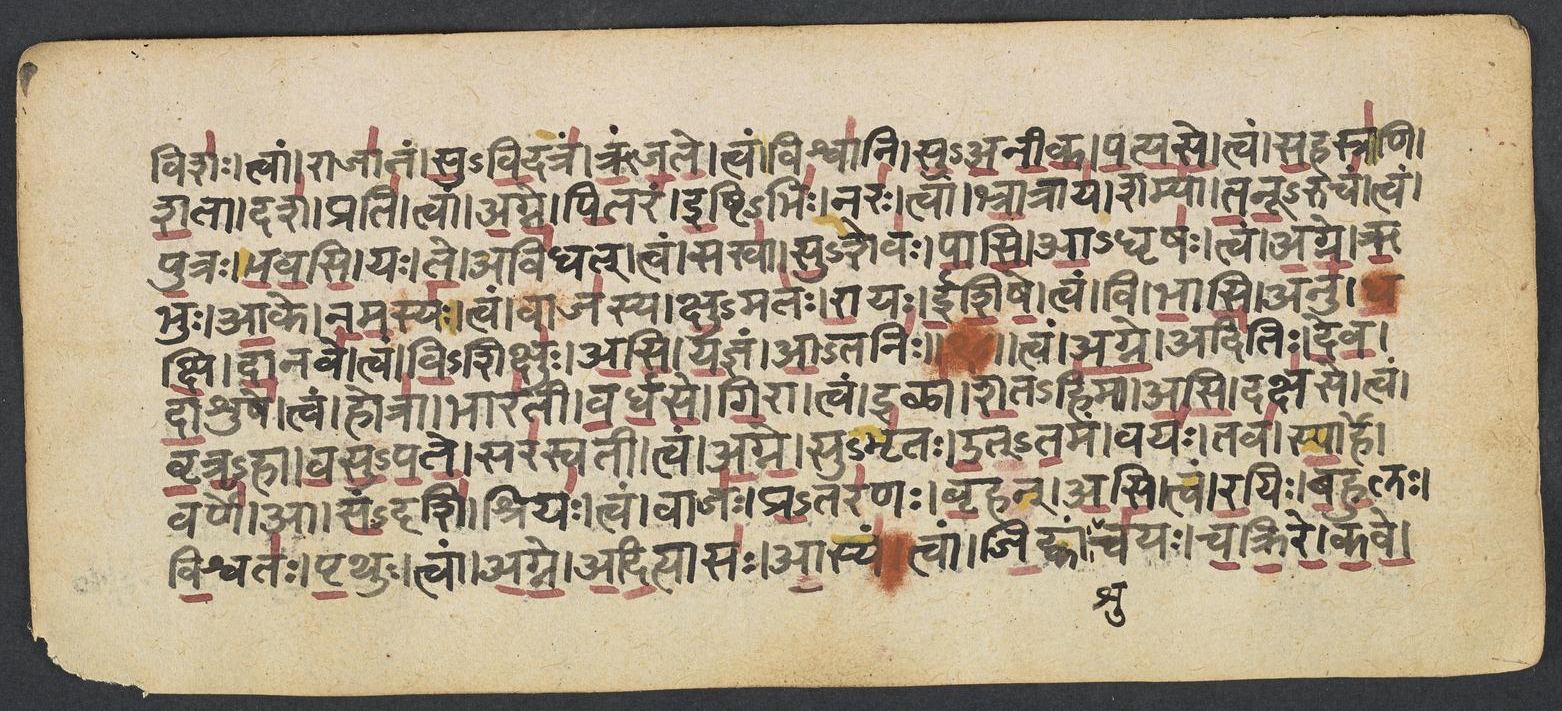
Penn Ms. Coll. 390 Item 41, fol. 150r (numbered 8r by the scribe) (OPenn image 151, lower leaf). Checked on the image: the Rigveda text on this page begins in RV 2.1.8 ‹viśaḥ tvām rājānam su-vidatram›. The next page with Rigveda text, fol. 150v (numbered 8v by the scribe), begins in RV 2.1.13 ‹tvām rāti-sācaḥ adhvareṣu saścire›. Verses 2.1.8-12 end on this page; 2.1.8 begins on fol. 149v (numbered 7v by the scribe).
8tvām a̍gne̱ dama̱ ā vi̱śpati̱ṁ viśa̱s tvāṁ rājā̍naṁ suvi̱datra̍m ṛñjate | tvaṁ viśvā̍ni svanīka patyase̱ tvaṁ sa̱hasrā̍ṇi śa̱tā daśa̱ prati̍ ||
9tvām a̍gne pi̱tara̍m i̱ṣṭibhi̱r nara̱s tvām bhrā̱trāya̱ śamyā̍ tanū̱ruca̍m | tvam pu̱tro bha̍vasi̱ yas te 'vi̍dha̱t tvaṁ sakhā̍ su̱śeva̍ḥ pāsy ā̱dhṛṣa̍ḥ ||
10tvam a̍gna ṛ̱bhur ā̱ke na̍ma̱sya1̱̍s tvaṁ vāja̍sya kṣu̱mato̍ rā̱ya ī̍śiṣe | tvaṁ vi bhā̱sy anu̍ dakṣi dā̱vane̱ tvaṁ vi̱śikṣu̍r asi ya̱jñam ā̱tani̍ḥ ||
11tvam a̍gne̱ adi̍tir deva dā̱śuṣe̱ tvaṁ hotrā̱ bhāra̍tī vardhase gi̱rā | tvam iḻā̍ śa̱tahi̍māsi̱ dakṣa̍se̱ tvaṁ vṛ̍tra̱hā va̍supate̱ sara̍svatī ||
12tvam a̍gne̱ subhṛ̍ta utta̱maṁ vaya̱s tava̍ spā̱rhe varṇa̱ ā sa̱ṁdṛśi̱ śriya̍ḥ | tvaṁ vāja̍ḥ pra̱tara̍ṇo bṛ̱hann a̍si̱ tvaṁ ra̱yir ba̍hu̱lo vi̱śvata̍s pṛ̱thuḥ ||
Compare: Padapāṭha (word-by-word text written in the manuscript; Sansknet e-text via GRETIL)
8tvām | agne | dame | ā | viśpatim | viśaḥ | tvām | rājānam | su-vidatram | ṛñjate | tvam | viśvāni | su-anīka | patyase | tvam | sahasrāṇi | śatā | daśa | prati
9tvām | agne | pitaram | iṣṭi-bhiḥ | naraḥ | tvām | bhrātrāya | śamyā | tanū-rucam | tvam | putraḥ | bhavasi | yaḥ | te | avidhat | tvam | sakhā | su-śevaḥ | pāsi | ādhṛṣaḥ
10tvam | agne | ṛbhuḥ | āke | namasyaḥ | tvam | vājasya | kṣu-mataḥ | rāyaḥ | īśiṣe | tvam | vi | bhāsi | anu | dhakṣi | dāvane | tvam | vi-śikṣuḥ | asi | yajñam | ātaniḥ
11tvam | agne | aditiḥ | deva | dāśuṣe | tvam | hotrā | bhāratī | vardhase | girā | tvam | iḷā | śata-himā | asi | dakṣase | tvam | vṛtra-hā | vasu-pate | sarasvatī
12tvam | agne | su-bhṛtaḥ | ut-tamam | vayaḥ | tava | spārhe | varṇe | ā | sam-dṛśi | śriyaḥ | tvam | vājaḥ | pra-taraṇaḥ | bṛhan | asi | tvam | rayiḥ | bahulaḥ | viśvataḥ | pṛthuḥ
8To thee, the people's Lord within the house, the folk press forward to their King most graciously inclined. Lord of the lovely look, all things belong to thee: ten, hundred, yea, a thousand are outweighed by thee.
9Agni, men seek thee as a Father with their prayers, win thee, bright-formed, to brotherhood with holy act. Thou art a Son to him who duly worships thee, and as a trusty Friend thou guardest from attack.
10A R̥ibhu art thou, Agni, near to be adored thou art the Sovran Lord of foodful spoil and wealth. Thou shinest brightly forth, thou burnest to bestow: pervading sacrifice, thou lendest us thine help.
11Thou, God, art Aditi to him who offers gifts: thou, Hotrâ Bhâratî, art strengthened by the song. Thou art the hundred-wintered Iḷâ to give strength, Lord of Wealth! Vr̥itra-slayer and Sarasvatî.
12Thou, Agni, cherished well, art highest vital power; in thy delightful hue are glories visible. Thou art the lofty might that furthers each design: thou art wealth manifold, diffused on every side.
Where on the image
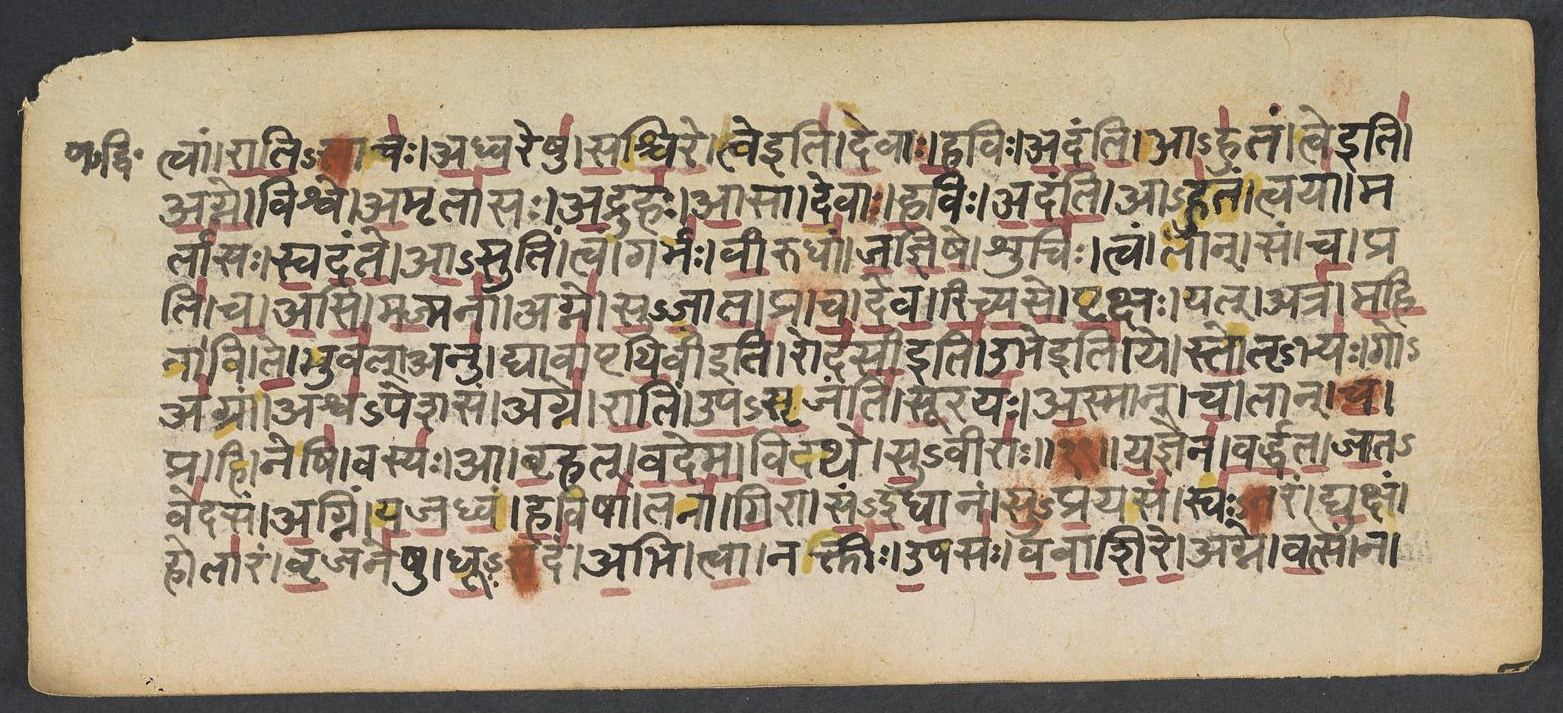
Penn Ms. Coll. 390 Item 41, fol. 150v (numbered 8v by the scribe) (OPenn image 152, upper leaf). Checked on the image: the Rigveda text on this page begins in RV 2.1.13 ‹tvām rāti-sācaḥ adhvareṣu saścire›. The next page with Rigveda text, fol. 151r (numbered 9r by the scribe), begins in RV 2.2.2 ‹svasareṣu dhenavaḥ divaḥ-iva it›. Verses 2.1.13-16 end on this page; 2.1.13 begins on fol. 150r (numbered 8r by the scribe).
13tvām a̍gna ādi̱tyāsa̍ ā̱sya1̱̍ṁ tvāṁ ji̱hvāṁ śuca̍yaś cakrire kave | tvāṁ rā̍ti̱ṣāco̍ adhva̱reṣu̍ saścire̱ tve de̱vā ha̱vir a̍da̱nty āhu̍tam ||
14tve a̍gne̱ viśve̍ a̱mṛtā̍so a̱druha̍ ā̱sā de̱vā ha̱vir a̍da̱nty āhu̍tam | tvayā̱ martā̍saḥ svadanta āsu̱tiṁ tvaṁ garbho̍ vī̱rudhā̍ṁ jajñiṣe̱ śuci̍ḥ ||
15tvaṁ tān saṁ ca̱ prati̍ cāsi ma̱jmanāgne̍ sujāta̱ pra ca̍ deva ricyase | pṛ̱kṣo yad atra̍ mahi̱nā vi te̱ bhuva̱d anu̱ dyāvā̍pṛthi̱vī roda̍sī u̱bhe ||
16ye sto̱tṛbhyo̱ goa̍grā̱m aśva̍peśasa̱m agne̍ rā̱tim u̍pasṛ̱janti̍ sū̱raya̍ḥ | a̱smāñ ca̱ tām̐ś ca̱ pra hi neṣi̱ vasya̱ ā bṛ̱had va̍dema vi̱dathe̍ su̱vīrā̍ḥ ||
Compare: Padapāṭha (word-by-word text written in the manuscript; Sansknet e-text via GRETIL)
13tvām | agne | ādityāsaḥ | āsyam | tvām | jihvām | śucayaḥ | cakrire | kave | tvām | rāti-sācaḥ | adhvareṣu | saścire | tve iti | devāḥ | haviḥ | adanti | āhutam
14tve iti | agne | viśve | amṛtāsaḥ | adruhaḥ | āsā | devāḥ | haviḥ | adanti | āhutam | tvayā | martāsaḥ | svadante | āsutim | tvam | garbhaḥ | vīrudhām | jajñiṣe | śuciḥ
15tvam | tān | sam | ca | prati | ca | asi | majmanā | agne | su-jāta | pra | ca | deva | ri cyase | pṛkṣaḥ | yat | atra | mahinā | vi | te | bhuvat | anu | dyāvāpṛthivī iti | rodasī iti | ubhe iti
16ye | stotṛ-bhyaḥ | go--agrām | aśva-peśasam | agne | rātim | upa-sṛjanti | sūrayaḥ | asmān | ca | tān | ca | pra | hi | neṣi | vasyaḥ | ā | bṛhat | vadema | vidathe | su-vīrāḥ
13Thee, Agni, have the Âdityas taken as their mouth; the Bright Ones have made thee, O Sage, to be their tongue. They who love offerings cling to thee at solemn rites: by thee the Gods devour the duly offered food.
14By thee, O Agni, all the Immortal guileless Gods eat with thy mouth the oblation that is offered them. By thee do mortal men give sweetness to their drink. Bright art thou born, the embryo of the plants of earth.
15With these thou art united, Agni; yea thou, God of noble birth, surpassest them in majesty, Which, through the power of good, here spreads abroad from thee, diffused through both the worlds, throughout the earth and heaven.
16The princely worshippers who send to those who sing thy praise, O Agni, guerdon graced with kine and steeds,– Lead thou both these and us forward to higher bliss. With brave men in the assembly may we speak aloud.
Notes
- Sanskrit: Aufrecht's edition (1877) with the Vedic accents, as entered by van Nooten and Holland (GRETIL).
- English: Ralph T. H. Griffith, The Hymns of the Rigveda (1889-1892; 2nd ed. 1896-1897), from the VedaWeb digital text; OCR slips in that text were corrected against the printed 2nd edition (data/sources/rigveda/griffith_errata.json).
- Padapāṭha (edition text): Sansknet e-text via GRETIL (CC BY-NC-SA 4.0).
Cite
Sources
- Source: Penn Ms. Coll. 390 Item 41 (undated (catalogued with Penn's 18th-19th c. Vedic manuscripts)), OPenn, Public Domain Mark + Aufrecht's accented text (GRETIL) + Griffith's English (VedaWeb) (holding institution)
- Critical edition: Aufrecht (1877), accented e-text via GRETIL
← previous · → next · v cycle view · l back to library