Rigveda 1.22: Diverse gods
Introduction
Rigveda 1.22 is a hymn of 21 verses addressed to diverse gods. It stands in book (maṇḍala) 1, a collection of hymns by many families of poets. The Rigveda is the oldest collection of Sanskrit hymns, composed in the second half of the second millennium BCE and handed down orally for many centuries before it was written down.
The manuscript shown is Penn Ms. Coll. 390 Item 41 (University of Pennsylvania), an undated paper manuscript of the padapāṭha (the word-by-word recitation text, in which every word is written separately and compounds are split) of the whole Ṛgveda in Devanāgarī, 884 leaves in fascicles, 7-9 lines to the page, accents in red; this hymn stands on fol. 11r-12r. Each section below gives the verses that end on one page; the page boundaries were read on the images (the opening words of every page), not counted out. Where the manuscript is a padapāṭha (the word-by-word recitation text), the section shows Aufrecht's continuous (saṃhitā) text first and, as the edition text, the padapāṭha of the same verses, which is the form written on the page.
How was this verified? (Provenance)
Where on the image
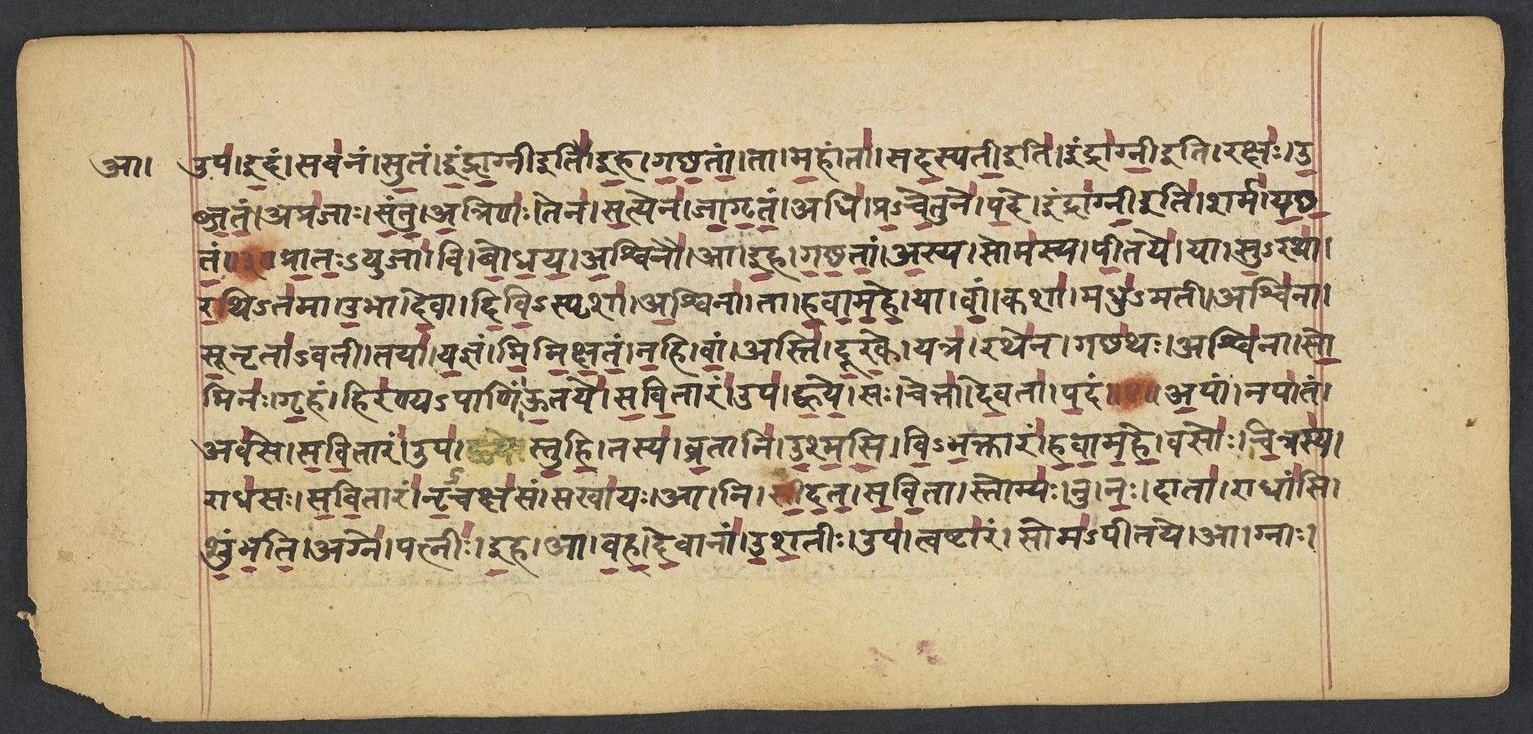
Penn Ms. Coll. 390 Item 41, fol. 11r (OPenn image 12, lower leaf). Checked on the image: the Rigveda text on this page begins in RV 1.21.4 ‹upa idam savanam sutam›. The next page with Rigveda text, fol. 11v, begins in RV 1.22.10 ‹agne iha avase hotrām›. Verses 1.22.1-9 end on this page.
1prā̱ta̱ryujā̱ vi bo̍dhayā̱śvinā̱v eha ga̍cchatām | a̱sya soma̍sya pī̱taye̍ ||
2yā su̱rathā̍ ra̱thīta̍mo̱bhā de̱vā di̍vi̱spṛśā̍ | a̱śvinā̱ tā ha̍vāmahe ||
3yā vā̱ṁ kaśā̱ madhu̍ma̱ty aśvi̍nā sū̱nṛtā̍vatī | tayā̍ ya̱jñam mi̍mikṣatam ||
4na̱hi vā̱m asti̍ dūra̱ke yatrā̱ rathe̍na̱ gaccha̍thaḥ | aśvi̍nā so̱mino̍ gṛ̱ham ||
5hira̍ṇyapāṇim ū̱taye̍ savi̱tāra̱m upa̍ hvaye | sa cettā̍ de̱vatā̍ pa̱dam ||
6a̱pāṁ napā̍ta̱m ava̍se savi̱tāra̱m upa̍ stuhi | tasya̍ vra̱tāny u̍śmasi ||
7vi̱bha̱ktāra̍ṁ havāmahe̱ vaso̍ś ci̱trasya̱ rādha̍saḥ | sa̱vi̱tāra̍ṁ nṛ̱cakṣa̍sam ||
8sakhā̍ya̱ ā ni ṣī̍data savi̱tā stomyo̱ nu na̍ḥ | dātā̱ rādhā̍ṁsi śumbhati ||
9agne̱ patnī̍r i̱hā va̍ha de̱vānā̍m uśa̱tīr upa̍ | tvaṣṭā̍ra̱ṁ soma̍pītaye ||
Compare: Padapāṭha (word-by-word text written in the manuscript; Sansknet e-text via GRETIL)
1prātaḥ-yujā | vi | bodhaya | aśvinau | ā | iha | gacchatām | asya | somasya | pītaye
2yā | su-rathā | rathi-tamā | ubhā | devā | divi-spṛśā | aśvinā | tā | havāmahe
3yā | vām | kaśā | madhu-matī | aśvinā | sūnṛtāvatī | tayā | yajñam | mimikṣatam
4nahi | vām | asti | dūrake | yatra | rathena | gacchathaḥ | aśvinā | sominaḥ | gṛham
5hiraṇya-pāṇim | ūtaye | savitāram | upa | hvaye | saḥ | cettā | devatā | padam
6apām | napātam | avase | savitāram | upa | stuhi | tasya | vratāni | uśmasi
7vi-bhaktāram | havāmahe | vasoḥ | citrasya | rādhasaḥ | savitāram | nṛ-cakṣasam
8sakhāyaḥ | ā | ni | sīdata | savitā | stomyaḥ | nu | naḥ | dātā | rādhāṃsi | śumbhati
9agne | patnīḥ | iha | ā | vaha | devānām | uśatīḥ | upa | tvaṣṭāram | soma-pītaye
1WAKEN the Aṣvin Pair who yoke their car at early morn: may they Approach to drink this Soma juice.
2We call the Aṣvins Twain, the Gods borne in a noble car, the best Of charioteers, who reach the heavens.
3Dropping with honey is your whip, Aṣvins, and full of pleasantness Sprinkle therewith the sacrifice.
4As ye go thither in your car, not far, O Aṣvins, is the home Of him who offers Soma juice.
5For my protection I invoke the golden-handed Savitar. He knoweth, as a God, the place.
6That he may send us succour, praise the Waters' Offspring Savitar: Fain are we for his holy ways.
7We call on him, distributer of wondrous bounty and of wealth, On Savitar who looks on men.
8Come hither, friends, and seat yourselves Savitar, to be praised by us, Giving good gifts, is beautiful.
9O Agni, hither bring to us the willing Spouses of the Gods, And Tvashṭar, to the Soma draught.
Where on the image
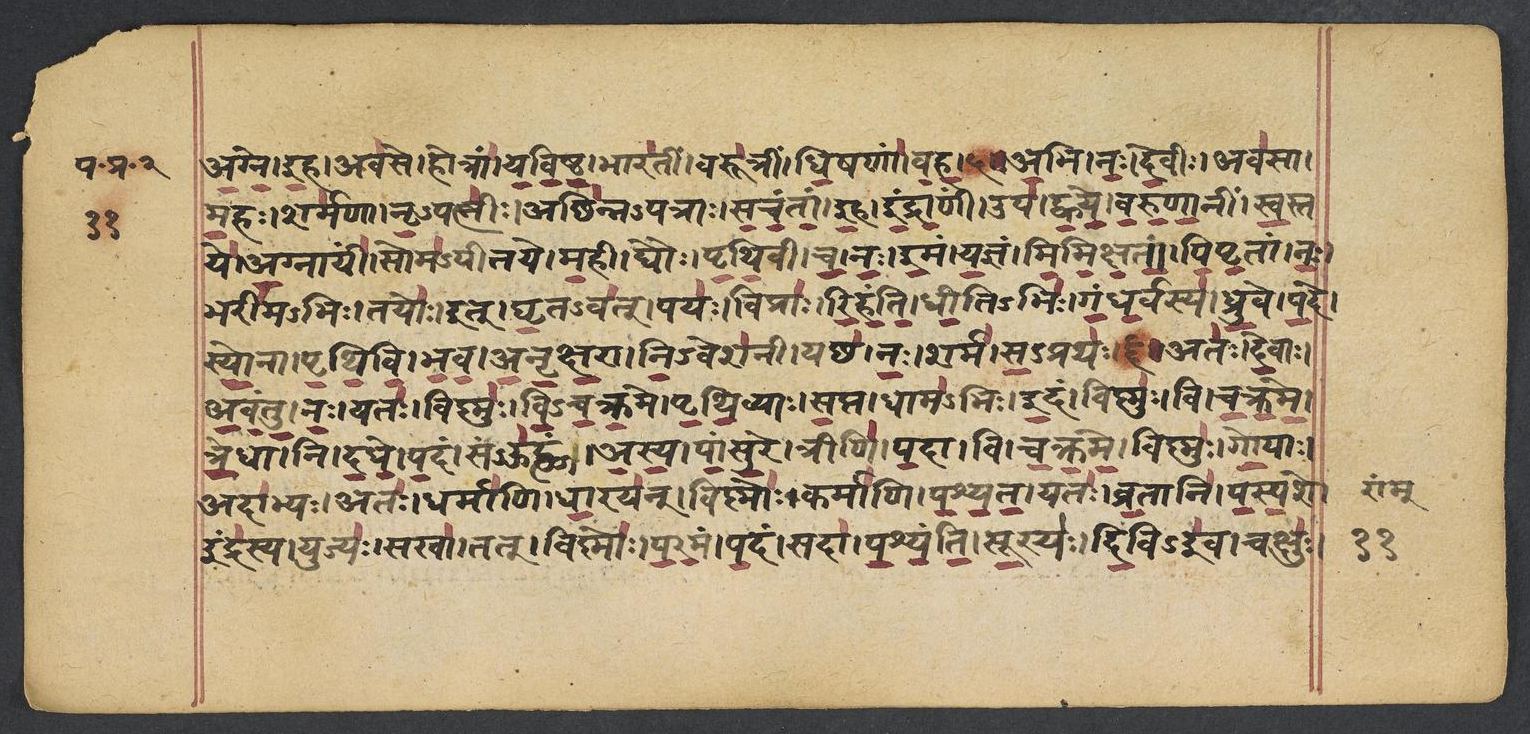
Penn Ms. Coll. 390 Item 41, fol. 11v (OPenn image 13, upper leaf). Checked on the image: the Rigveda text on this page begins in RV 1.22.10 ‹agne iha avase hotrām›. The next page with Rigveda text, fol. 12r, begins in RV 1.22.20 ‹ātatam›. Verses 1.22.10-19 end on this page; 1.22.10 begins on fol. 11r.
10ā gnā a̍gna i̱hāva̍se̱ hotrā̍ṁ yaviṣṭha̱ bhāra̍tīm | varū̍trīṁ dhi̱ṣaṇā̍ṁ vaha ||
11a̱bhi no̍ de̱vīr ava̍sā ma̱haḥ śarma̍ṇā nṛ̱patnī̍ḥ | acchi̍nnapatrāḥ sacantām ||
12i̱hendrā̱ṇīm upa̍ hvaye varuṇā̱nīṁ sva̱staye̍ | a̱gnāyī̱ṁ soma̍pītaye ||
13ma̱hī dyauḥ pṛ̍thi̱vī ca̍ na i̱maṁ ya̱jñam mi̍mikṣatām | pi̱pṛ̱tāṁ no̱ bharī̍mabhiḥ ||
14tayo̱r id ghṛ̱tava̱t payo̱ viprā̍ rihanti dhī̱tibhi̍ḥ | ga̱ndha̱rvasya̍ dhru̱ve pa̱de ||
15syo̱nā pṛ̍thivi bhavānṛkṣa̱rā ni̱veśa̍nī | yacchā̍ na̱ḥ śarma̍ sa̱pratha̍ḥ ||
16ato̍ de̱vā a̍vantu no̱ yato̱ viṣṇu̍r vicakra̱me | pṛ̱thi̱vyāḥ sa̱pta dhāma̍bhiḥ ||
17i̱daṁ viṣṇu̱r vi ca̍krame tre̱dhā ni da̍dhe pa̱dam | samū̍ḻham asya pāṁsu̱re ||
18trīṇi̍ pa̱dā vi ca̍krame̱ viṣṇu̍r go̱pā adā̍bhyaḥ | ato̱ dharmā̍ṇi dhā̱raya̍n ||
19viṣṇo̱ḥ karmā̍ṇi paśyata̱ yato̍ vra̱tāni̍ paspa̱śe | indra̍sya̱ yujya̱ḥ sakhā̍ ||
Compare: Padapāṭha (word-by-word text written in the manuscript; Sansknet e-text via GRETIL)
10ā | gnāḥ | agne | iha | avase | hotrām | yaviṣṭha | bhāratīm | varūtrīm | dhiṣaṇām | vaha
11abhi | naḥ | devīḥ | avasā | mahaḥ | śarmaṇā | nṛ-patnīḥ | acchinna-patrāḥ | sacantām
12iha | indrāṇīm | upa | hvaye | varuṇānīm | svastaye | agnāyīm | soma-pītaye
13mahī | dyauḥ | pṛthivī | ca | naḥ | imam | yajñam | mimikṣatām | pipṛtām | naḥ | bharīma-bhiḥ
14tayoḥ | it | ghṛta-vat | payaḥ | viprāḥ | rihanti | dhīti-bhiḥ | gandharvasya | dhruve | pade
15syonā | pṛthivi | bhava | anṛkṣarā | ni-veśanī | yaccha | naḥ | śarma | sa-prathaḥ
16ataḥ | devāḥ | avantu | naḥ | yataḥ | viṣṇuḥ | vi-cakrame | pṛthivyāḥ | sapta | dhāma-bhiḥ
17idam | viṣṇuḥ | vi | cakrame | tredhā | ni | dadhe | padam | sam-ūḷham | asya | pāṃsure
18trīṇi | padā | vi | cakrame | viṣṇuḥ | gopāḥ | adābhyaḥ | ataḥ | dharmāṇi | dhārayan
19viṣṇoḥ | karmāṇi | paśyata | yataḥ | vratāni | paspaśe | indrasya | yujyaḥ | sakhā
10Most youthful Agni, hither bring their Spouses, Hotrâ, Bhâratî, Varûtrî, Dhishaṇâ, for aid.
11Spouses of Heroes, Goddesses, with whole wings may they come to us With great protection and with aid.
12Indrâṇî, Varuṇânî, and Agnayi hither I invite, For weal, to drink the Soma juice.
13May Heaven and Earth, the Mighty Pair, bedew for us our sacrifice, And feed us full with nourishments.
14Their water rich with fatness, there in the Gandharva's steadfast place, The singers taste through sacred songs.
15Thornless be thou, O Earth, spread wide before us for a dwelling-place: Vouchsafe us shelter broad and sure.
16The Gods be gracious unto us even from the place whence Vishṇu strode Through the seven regions of the earth!
17Through all this world strode Vishṇu; thrice his foot he planted, and the whole Was gathered in his footstep's dust.
18Vishṇu, the Guardian, he whom none deceiveth, made three steps; thenceforth Establishing his high decrees.
19Look ye on Vishṇu's works, whereby the Friend of Indra, close-allied, Hath let his holy ways be seen.
Where on the image
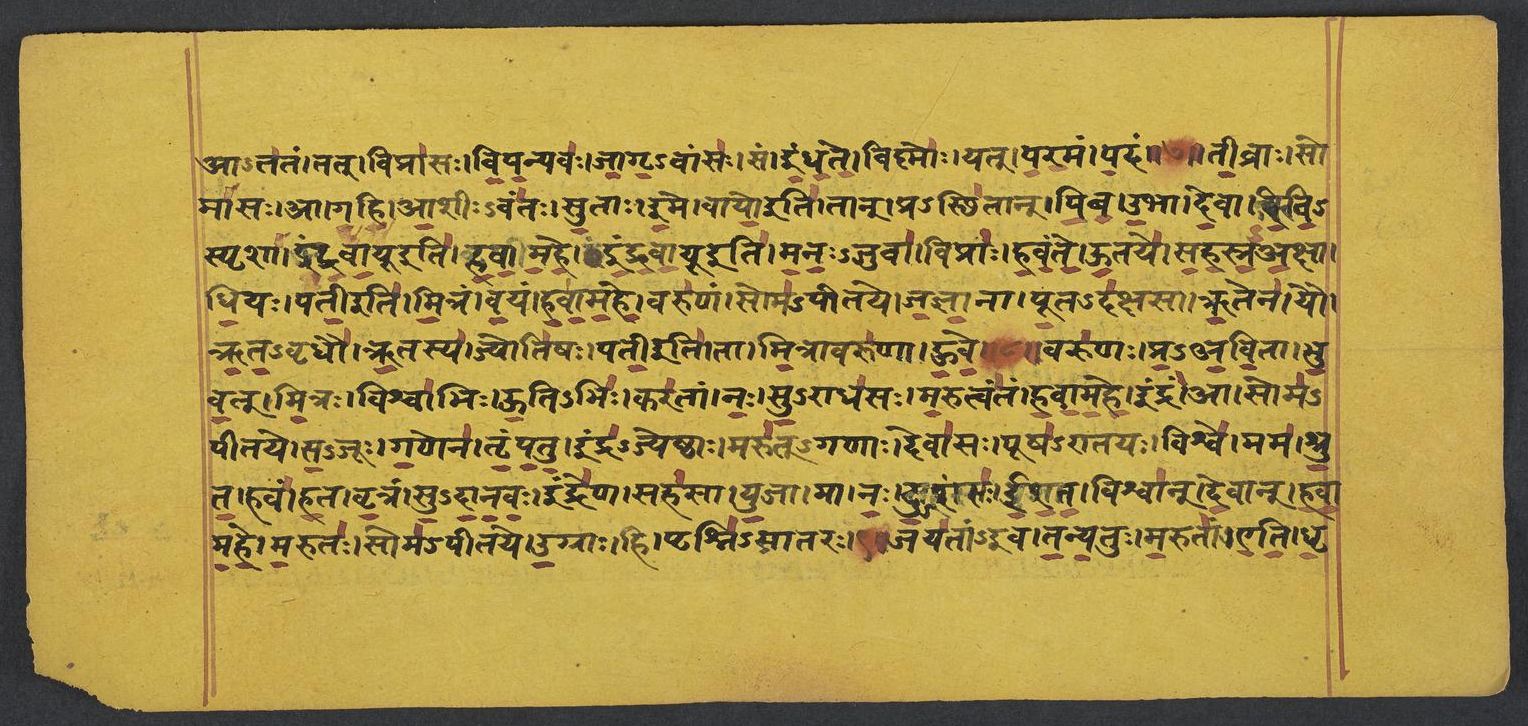
Penn Ms. Coll. 390 Item 41, fol. 12r (OPenn image 13, lower leaf). Checked on the image: the Rigveda text on this page begins in RV 1.22.20 ‹ātatam›. The next page with Rigveda text, fol. 12v, begins in RV 1.23.11 ‹-dhṛṣṇu-yā yat śubham yāthana›. Verses 1.22.20-21 end on this page; 1.22.20 begins on fol. 11v.
20tad viṣṇo̍ḥ para̱mam pa̱daṁ sadā̍ paśyanti sū̱raya̍ḥ | di̱vī̍va̱ cakṣu̱r āta̍tam ||
21tad viprā̍so vipa̱nyavo̍ jāgṛ̱vāṁsa̱ḥ sam i̍ndhate | viṣṇo̱r yat pa̍ra̱mam pa̱dam ||
Compare: Padapāṭha (word-by-word text written in the manuscript; Sansknet e-text via GRETIL)
20tat | viṣṇoḥ | paramam | padam | sadā | paśyanti | sūrayaḥ | divi-iva | cakṣuḥ | ātatam
21tat | viprāsaḥ | vipanyavaḥ | jāgṛ-vāṃsaḥ | sam | indhate | viṣṇoḥ | yat | paramam | padam
20The princes evermore behold that loftiest place where Vishṇu is, Laid as it were an eye in heaven.
21This, Vishṇu's station most sublime, the singers, ever vigilant, Lovers of holy song, light up.
Notes
- Sanskrit: Aufrecht's edition (1877) with the Vedic accents, as entered by van Nooten and Holland (GRETIL).
- English: Ralph T. H. Griffith, The Hymns of the Rigveda (1889-1892; 2nd ed. 1896-1897), from the VedaWeb digital text; OCR slips in that text were corrected against the printed 2nd edition (data/sources/rigveda/griffith_errata.json).
- Padapāṭha (edition text): Sansknet e-text via GRETIL (CC BY-NC-SA 4.0).
Cite
Sources
- Source: Penn Ms. Coll. 390 Item 41 (undated (catalogued with Penn's 18th-19th c. Vedic manuscripts)), OPenn, Public Domain Mark + Aufrecht's accented text (GRETIL) + Griffith's English (VedaWeb) (holding institution)
- Critical edition: Aufrecht (1877), accented e-text via GRETIL
← previous · → next · v cycle view · l back to library