Rigveda 1.23: Diverse gods
Introduction
Rigveda 1.23 is a hymn of 24 verses addressed to diverse gods. It stands in book (maṇḍala) 1, a collection of hymns by many families of poets. The Rigveda is the oldest collection of Sanskrit hymns, composed in the second half of the second millennium BCE and handed down orally for many centuries before it was written down.
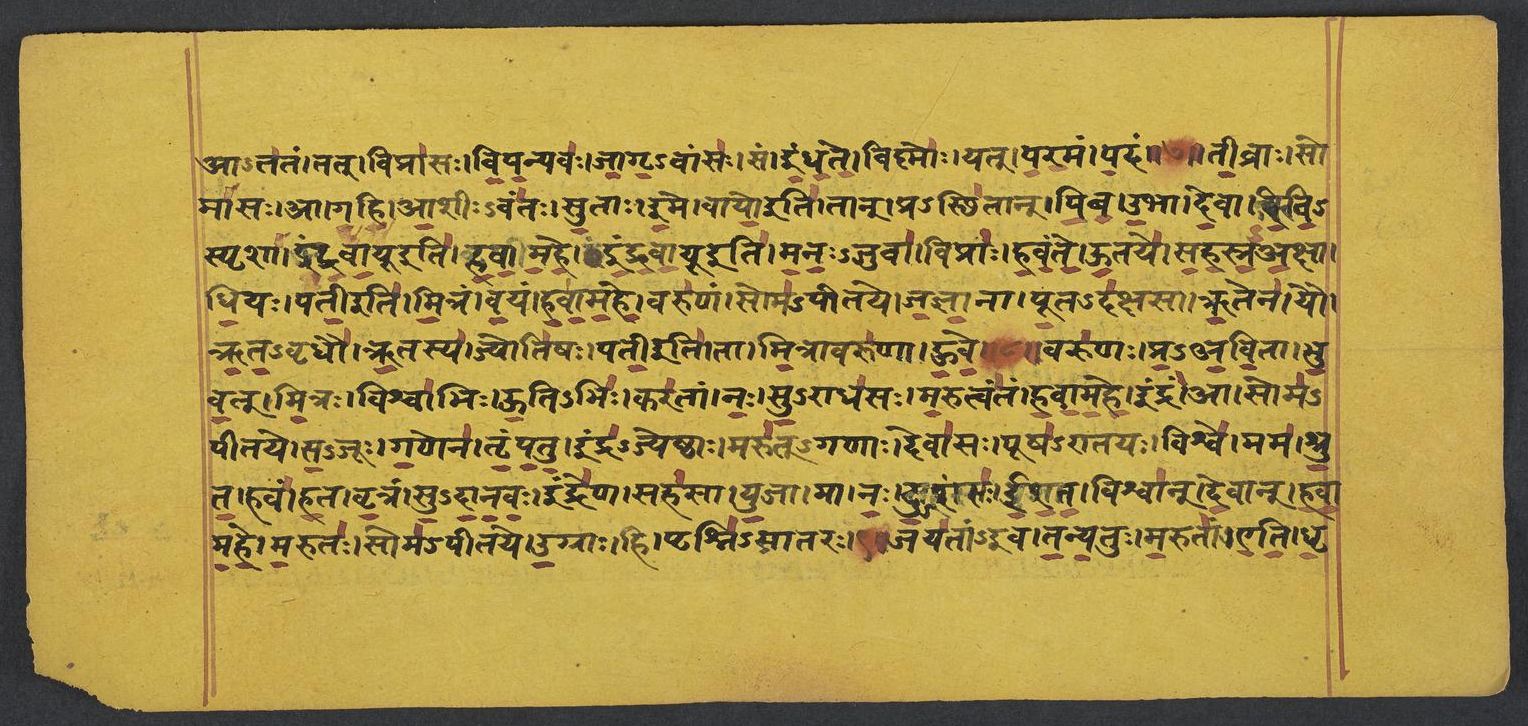
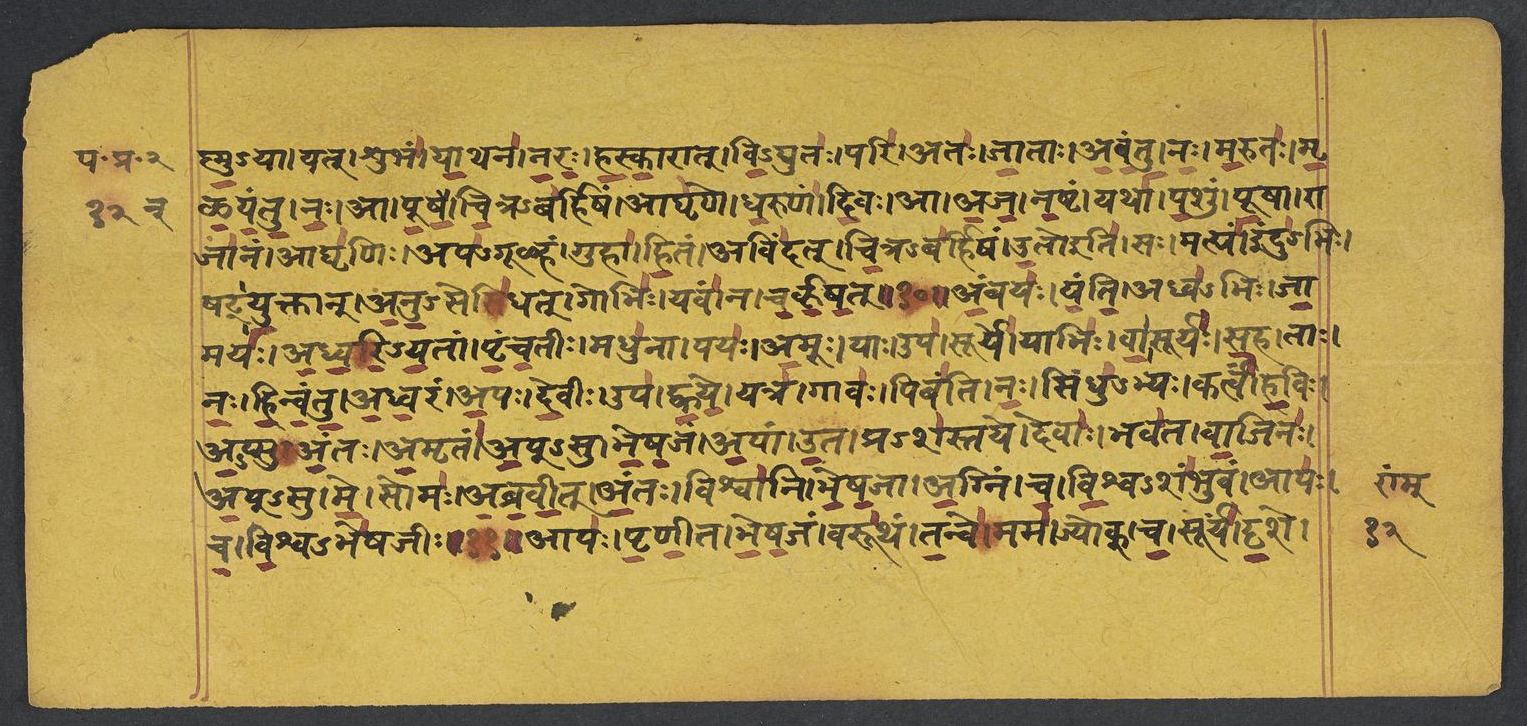
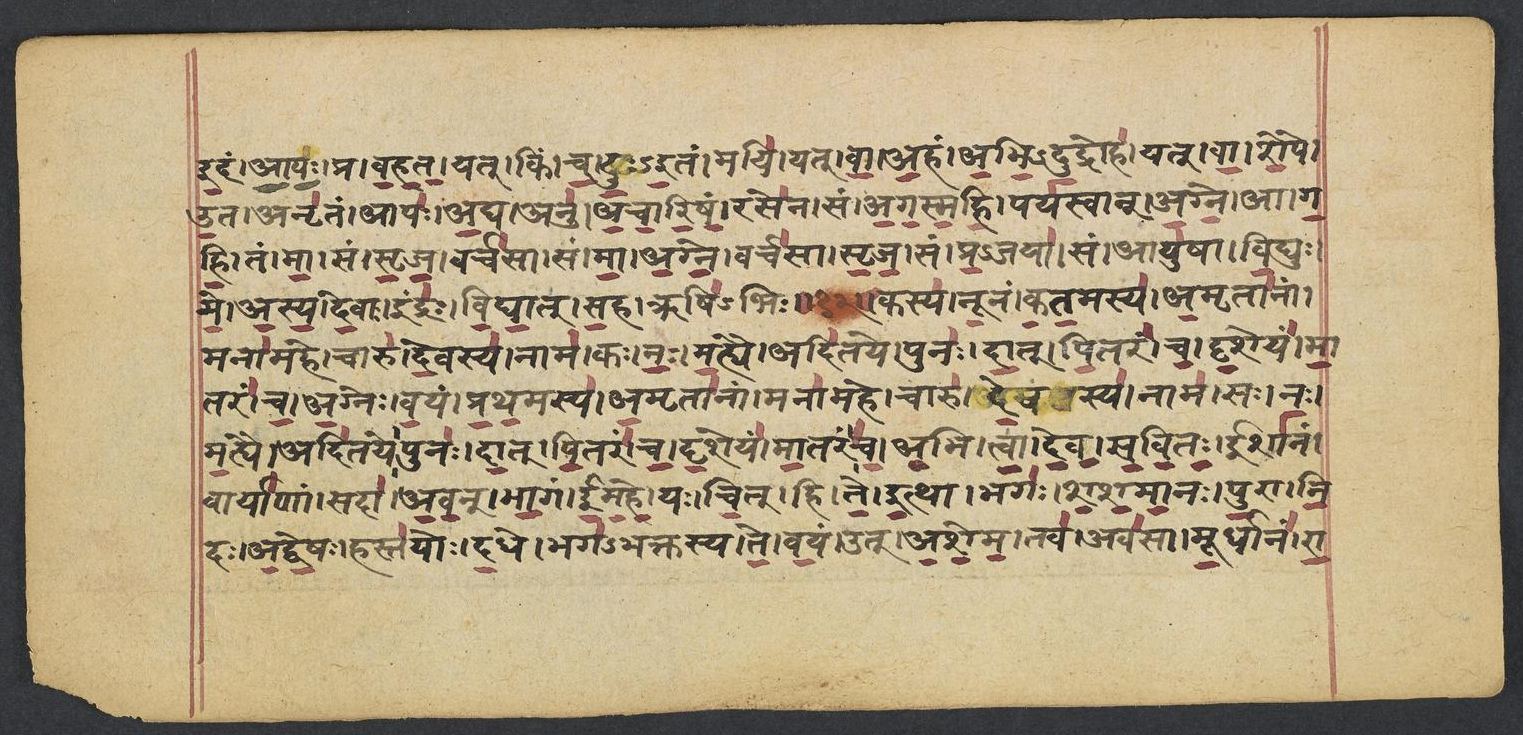
The manuscript shown is Penn Ms. Coll. 390 Item 41 (University of Pennsylvania), an undated paper manuscript of the padapāṭha (the word-by-word recitation text, in which every word is written separately and compounds are split) of the whole Ṛgveda in Devanāgarī, 884 leaves in fascicles, 7-9 lines to the page, accents in red; this hymn stands on fol. 12r-13r. Each section below gives the verses that end on one page; the page boundaries were read on the images (the opening words of every page), not counted out. Where the manuscript is a padapāṭha (the word-by-word recitation text), the section shows Aufrecht's continuous (saṃhitā) text first and, as the edition text, the padapāṭha of the same verses, which is the form written on the page.
How was this verified? (Provenance)
Where on the image
Penn Ms. Coll. 390 Item 41, fol. 12r (OPenn image 13, lower leaf). Checked on the image: the Rigveda text on this page begins in RV 1.22.20 ‹ātatam›. The next page with Rigveda text, fol. 12v, begins in RV 1.23.11 ‹-dhṛṣṇu-yā yat śubham yāthana›. Verses 1.23.1-10 end on this page.
1tī̱vrāḥ somā̍sa̱ ā ga̍hy ā̱śīrva̍ntaḥ su̱tā i̱me | vāyo̱ tān prasthi̍tān piba ||
2u̱bhā de̱vā di̍vi̱spṛśe̍ndravā̱yū ha̍vāmahe | a̱sya soma̍sya pī̱taye̍ ||
3i̱ndra̱vā̱yū ma̍no̱juvā̱ viprā̍ havanta ū̱taye̍ | sa̱ha̱srā̱kṣā dhi̱yas patī̍ ||
4mi̱traṁ va̱yaṁ ha̍vāmahe̱ varu̍ṇa̱ṁ soma̍pītaye | ja̱jñā̱nā pū̱tada̍kṣasā ||
5ṛ̱tena̱ yāv ṛ̍tā̱vṛdhā̍v ṛ̱tasya̱ jyoti̍ṣa̱s patī̍ | tā mi̱trāvaru̍ṇā huve ||
6varu̍ṇaḥ prāvi̱tā bhu̍van mi̱tro viśvā̍bhir ū̱tibhi̍ḥ | kara̍tāṁ naḥ su̱rādha̍saḥ ||
7ma̱rutva̍ntaṁ havāmaha̱ indra̱m ā soma̍pītaye | sa̱jūr ga̱ṇena̍ tṛmpatu ||
8indra̍jyeṣṭhā̱ maru̍dgaṇā̱ devā̍sa̱ḥ pūṣa̍rātayaḥ | viśve̱ mama̍ śrutā̱ hava̍m ||
9ha̱ta vṛ̱traṁ su̍dānava̱ indre̍ṇa̱ saha̍sā yu̱jā | mā no̍ du̱ḥśaṁsa̍ īśata ||
10viśvā̍n de̱vān ha̍vāmahe ma̱ruta̱ḥ soma̍pītaye | u̱grā hi pṛśni̍mātaraḥ ||
Compare: Padapāṭha (word-by-word text written in the manuscript; Sansknet e-text via GRETIL)
1tīvrāḥ | somāsaḥ | ā | gahi | āśīḥ-vantaḥ | sutāḥ | ime | vāyo iti | tān | pra-sthitān | piba
2ubhā | devā | divi-spṛśā | indravāyū iti | havāmahe | asya | somasya | pītaye
3indravāyū iti | manaḥ-juvā | viprāḥ | havante | ūtaye | sahasra-akṣā | dhiyaḥ | patī iti
4mitram | vayam | havāmahe | varuṇam | soma-pītaye | jajñānā | pūta-dakṣasā
5ṛtena | yau | ṛta-vṛdhau | ṛtasya | jyotiṣaḥ | patī iti | tā | mitrāvaruṇā | huve
6varuṇaḥ | pra-avitā | bhuvat | mitraḥ | viśvābhiḥ | ūti-bhiḥ | karatām | naḥ | su-rādhasaḥ
7marutvantam | havāmahe | indram | ā | soma-pītaye | sa-jūḥ | gaṇena | tṛmpatu
8indra-jyeṣṭhāḥ | marut-gaṇāḥ | devāsaḥ | pūṣa-rātayaḥ | viśve | mama | śruta | havam
9hata | vṛtram | su-dānava | indreṇa | sahasā | yujā | mā | naḥ | duḥ-śaṃsaḥ | īśata
10vviśvān | devān | havāmahe | marutaḥ | soma-pītaye | ugrāḥ | hi | pṛśni-mātaraḥ
1STRONG are the Somas; come thou nigh; these juices have been mixt with milk: Drink, Vâyu, the presented draughts.
2Both Deities who touch the heaven, Indra and Vâyu we invoke To drink of this our soma juice.
3The singers' for their aid, invoke Indra and Vâyu, swift as mind, The thousand-eyed, the Lords of thought.
4Mitra and Varuṇa, renowned as Gods of consecrated might, We call to drink the Soma juice.
5Those who by Law uphold the Law, Lords of the shining light of Law, Mitra I call, and Varuṇa.
6Let Varuṇa be our chief defence, let Mitra guard us with all aids Both make us rich exceedingly.
7Indra, by Maruts girt, we call to drink the Soma juice: may he Sate him in union with his troop.
8Gods, Marut hosts whom Indra leads, distributers of Pûshan's gifts, Hearken ye all unto my cry.
9With conquering Indra for ally, strike Vr̥itra down, ye bounteous Gods Let not the wicked master us.
10We call the Universal Gods, and Maruts to the Soma draught, For passing strong are Pr̥iṣni's Sons.
Where on the image
Penn Ms. Coll. 390 Item 41, fol. 12v (OPenn image 14, upper leaf). Checked on the image: the Rigveda text on this page begins in RV 1.23.11 ‹-dhṛṣṇu-yā yat śubham yāthana›. The next page with Rigveda text, fol. 13r, begins in RV 1.23.22 ‹idam āpaḥ pra vahata›. Verses 1.23.11-21 end on this page; 1.23.11 begins on fol. 12r.
11jaya̍tām iva tanya̱tur ma̱rutā̍m eti dhṛṣṇu̱yā | yac chubha̍ṁ yā̱thanā̍ naraḥ ||
12ha̱skā̱rād vi̱dyuta̱s pary ato̍ jā̱tā a̍vantu naḥ | ma̱ruto̍ mṛḻayantu naḥ ||
13ā pū̍ṣañ ci̱traba̍rhiṣa̱m āghṛ̍ṇe dha̱ruṇa̍ṁ di̱vaḥ | ājā̍ na̱ṣṭaṁ yathā̍ pa̱śum ||
14pū̱ṣā rājā̍na̱m āghṛ̍ṇi̱r apa̍gūḻha̱ṁ guhā̍ hi̱tam | avi̍ndac ci̱traba̍rhiṣam ||
15u̱to sa mahya̱m indu̍bhi̱ḥ ṣaḍ yu̱ktām̐ a̍nu̱seṣi̍dhat | gobhi̱r yava̱ṁ na ca̍rkṛṣat ||
16a̱mbayo̍ ya̱nty adhva̍bhir jā̱mayo̍ adhvarīya̱tām | pṛ̱ñca̱tīr madhu̍nā̱ paya̍ḥ ||
17a̱mūr yā upa̱ sūrye̱ yābhi̍r vā̱ sūrya̍ḥ sa̱ha | tā no̍ hinvantv adhva̱ram ||
18a̱po de̱vīr upa̍ hvaye̱ yatra̱ gāva̱ḥ piba̍nti naḥ | sindhu̍bhya̱ḥ kartva̍ṁ ha̱viḥ ||
19a̱psv a1̱̍ntar a̱mṛta̍m a̱psu bhe̍ṣa̱jam a̱pām u̱ta praśa̍staye | devā̱ bhava̍ta vā̱jina̍ḥ ||
20a̱psu me̱ somo̍ abravīd a̱ntar viśvā̍ni bheṣa̱jā | a̱gniṁ ca̍ vi̱śvaśa̍mbhuva̱m āpa̍ś ca vi̱śvabhe̍ṣajīḥ ||
21āpa̍ḥ pṛṇī̱ta bhe̍ṣa̱jaṁ varū̍thaṁ ta̱nve̱3̱̍ mama̍ | jyok ca̱ sūrya̍ṁ dṛ̱śe ||
Compare: Padapāṭha (word-by-word text written in the manuscript; Sansknet e-text via GRETIL)
11jayatām-iva | tanyatuḥ | marutām | eti | dhṛṣṇu-yā | yat | śubham | yāthana | naraḥ
12haskārāt | vi-dyutaḥ | pari | ataḥ | jātāḥ | avantu | naḥ | marutaḥ | mṛḷayantu | naḥ
13ā | pūṣan | citra-barhiṣam | āghṛṇe | dharuṇam | divaḥ | ā | aja | naṣṭam | yathā | paśum
14pūṣā | rājānam | āghṛṇiḥ | apa-gūḷham | guhā | hitam | avindat | citra-barhiṣam
15uto iti | saḥ | mahyam | indu-bhiḥ | ṣaṭ | yuktān | anu-sesidhat | gobhiḥ | yavam | na | carkṛṣat
16ambayaḥ | yanti | adhva-bhiḥ | jāmayaḥ | adhvari-yatām | pṛñcatīḥ | madhunā | payaḥ
17amūḥ | yāḥ | upa | sūrye | yābhiḥ | vā | sūryaḥ | saha | tāḥ | naḥ | hinvantu | adhvaram
18apaḥ | devīḥ | upa | hvaye | yatra | gāvaḥ | pibanti | naḥ | sindhu-bhyaḥ | kartvam | haviḥ
19ap-su | antaḥ | amṛtam | ap-su | bheṣajam | apām | uta | pra-śastaye | devāḥ | bhavata | vājinaḥ
20ap-su | me | somaḥ | abravīt | antaḥ | viśvāni | bheṣajā | agnim | ca | viśva-śambhuvam | āpaḥ | ca | viśva-bheṣajīḥ
21āpaḥ | pṛṇīta | bheṣajam | varūtham | tanve | mama | jyok | ca | sūryam | dṛśe
11Fierce comes the Maruts' thundering voice, like that of conquerors, when ye go Forward to victory, O Men.
12Born of the laughing lightning. may the Maruts guard us everywhere May they be gracious unto Us.
13Like some lost animal, drive to us, bright Pûshan, him who bears up heaven, Resting on many-coloured grass.
14Pûshan the Bright has found the King, concealed and bidden in a cave, Who rests on grass of many hues.
15And may he. duly bring to me the six bound closely, through these drops, As one who ploughs with steers brings corn.
16Along their paths the Mothers go, Sisters of priestly ministrants, Mingling their sweetness with the milk.
17May Waters gathered near the Sun, and those wherewith the Sun is joined, Speed forth this sacrifice of ours.
18I call the Waters, Goddesses, wherein our cattle quench their thirst; Oblations to the Streams be given.
19Amrit is in the Waters in the Waters there is healing balm Be swift, ye Gods, to give them praise.
20Within the Waters-Soma thus hath told me-dwell all balms that heal, And Agni, he who blesseth all. The Waters hold all medicines.
21O Waters, teem with medicine to keep my body safe from harm, So that I long may see the Sun.
Where on the image
Penn Ms. Coll. 390 Item 41, fol. 13r (OPenn image 14, lower leaf). Checked on the image: the Rigveda text on this page begins in RV 1.23.22 ‹idam āpaḥ pra vahata›. The next page with Rigveda text, fol. 13v, begins in RV 1.24.5 ‹-rāyaḥ ārabhe›. Verses 1.23.22-24 end on this page.
22i̱dam ā̍pa̱ḥ pra va̍hata̱ yat kiṁ ca̍ duri̱tam mayi̍ | yad vā̱ham a̍bhidu̱droha̱ yad vā̍ śe̱pa u̱tānṛ̍tam ||
23āpo̍ a̱dyānv a̍cāriṣa̱ṁ rase̍na̱ sam a̍gasmahi | paya̍svān agna̱ ā ga̍hi̱ tam mā̱ saṁ sṛ̍ja̱ varca̍sā ||
24sam mā̍gne̱ varca̍sā sṛja̱ sam pra̱jayā̱ sam āyu̍ṣā | vi̱dyur me̍ asya de̱vā indro̍ vidyāt sa̱ha ṛṣi̍bhiḥ ||
Compare: Padapāṭha (word-by-word text written in the manuscript; Sansknet e-text via GRETIL)
22idam | āpaḥ | pra | vahata | yat | kim | ca | duritam | mayi | yat | vā | aham | abhi-dudroha | yat | vā | śepe | uta | anṛtam
23āpaḥ | adya | anu | acāriṣam | rasena | sam | agasmahi | payasvān | agne | ā | gahi | tam | mā | sam | sṛja | varcasā
24sam | mā | agne | varcasā | sṛja | sam | pra-jayā | sam | āyuṣā | vidyuḥ | me | asya | devāḥ | indraḥ | vidyāt | saha | ṛṣi-bhiḥ
22Whatever sin is found in me, whatever evil I have wrought. If I have lied or falsely sworn, Waters, remove it far from me.
23The Waters I this day have sought, and to their moisture have we come: O Agni, rich in milk, come thou, and with thy splendour cover me.
24Fill me with splendour, Agni; give offspring and length of days; the Gods Shall know me even as I am, and Indra with the R̥ishis, know.
Notes
- Sanskrit: Aufrecht's edition (1877) with the Vedic accents, as entered by van Nooten and Holland (GRETIL).
- English: Ralph T. H. Griffith, The Hymns of the Rigveda (1889-1892; 2nd ed. 1896-1897), from the VedaWeb digital text; OCR slips in that text were corrected against the printed 2nd edition (data/sources/rigveda/griffith_errata.json).
- Padapāṭha (edition text): Sansknet e-text via GRETIL (CC BY-NC-SA 4.0).
Cite
Sources
- Source: Penn Ms. Coll. 390 Item 41 (undated (catalogued with Penn's 18th-19th c. Vedic manuscripts)), OPenn, Public Domain Mark + Aufrecht's accented text (GRETIL) + Griffith's English (VedaWeb) (holding institution)
- Critical edition: Aufrecht (1877), accented e-text via GRETIL
← previous · → next · v cycle view · l back to library