Rigveda 1.24: To Agni, Savitri and Varuna
Introduction
Rigveda 1.24 is a hymn of 15 verses addressed to Agni, Savitri and Varuna. It stands in book (maṇḍala) 1, a collection of hymns by many families of poets. The Rigveda is the oldest collection of Sanskrit hymns, composed in the second half of the second millennium BCE and handed down orally for many centuries before it was written down.
The manuscript shown is Penn Ms. Coll. 390 Item 41 (University of Pennsylvania), an undated paper manuscript of the padapāṭha (the word-by-word recitation text, in which every word is written separately and compounds are split) of the whole Ṛgveda in Devanāgarī, 884 leaves in fascicles, 7-9 lines to the page, accents in red; this hymn stands on fol. 13r-14r. Each section below gives the verses that end on one page; the page boundaries were read on the images (the opening words of every page), not counted out. Where the manuscript is a padapāṭha (the word-by-word recitation text), the section shows Aufrecht's continuous (saṃhitā) text first and, as the edition text, the padapāṭha of the same verses, which is the form written on the page.
How was this verified? (Provenance)
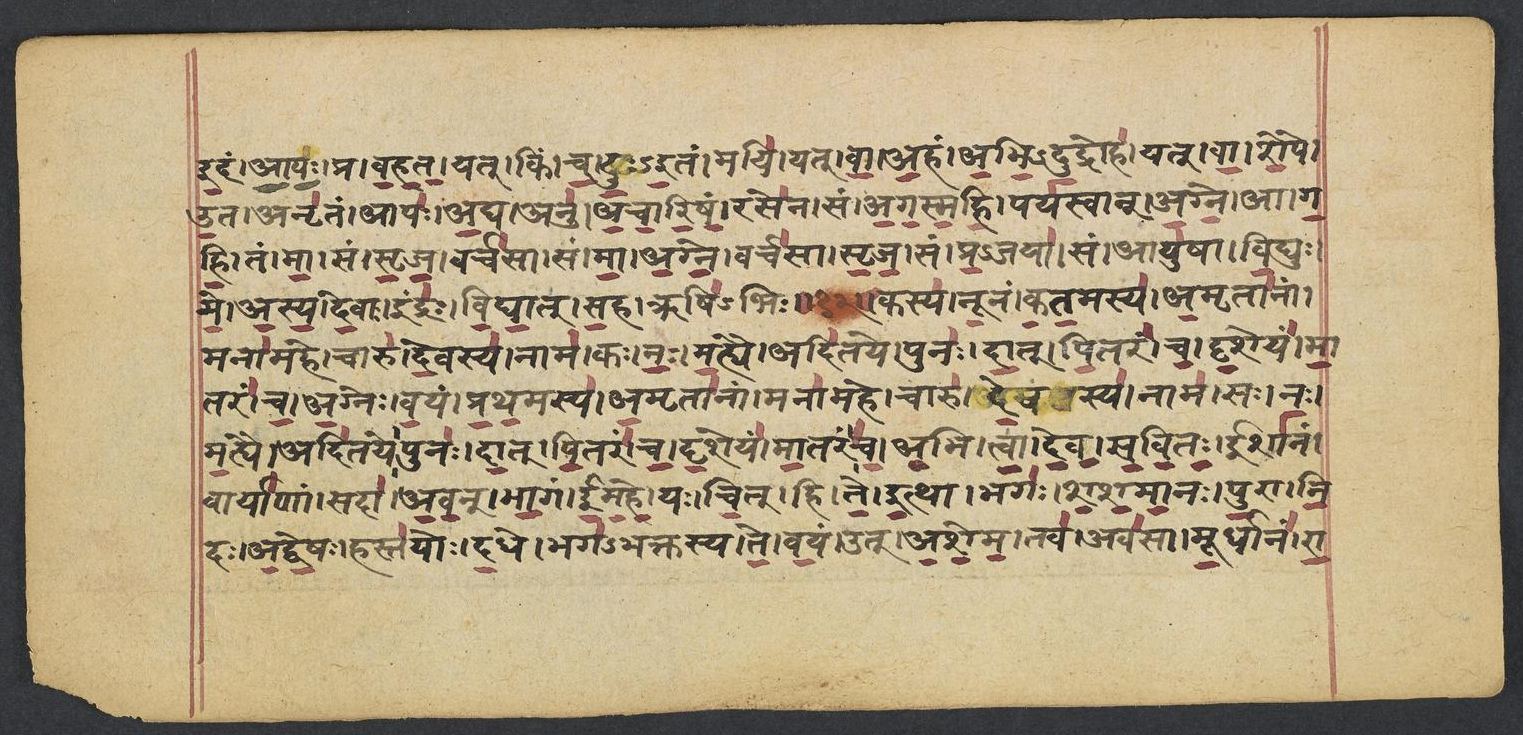
Where on the image
Penn Ms. Coll. 390 Item 41, fol. 13r (OPenn image 14, lower leaf). Checked on the image: the Rigveda text on this page begins in RV 1.23.22 ‹idam āpaḥ pra vahata›. The next page with Rigveda text, fol. 13v, begins in RV 1.24.5 ‹-rāyaḥ ārabhe›. Verses 1.24.1-4 end on this page.
1kasya̍ nū̱naṁ ka̍ta̱masyā̱mṛtā̍nā̱m manā̍mahe̱ cāru̍ de̱vasya̱ nāma̍ | ko no̍ ma̱hyā adi̍taye̱ puna̍r dāt pi̱tara̍ṁ ca dṛ̱śeya̍m mā̱tara̍ṁ ca ||
2a̱gner va̱yam pra̍tha̱masyā̱mṛtā̍nā̱m manā̍mahe̱ cāru̍ de̱vasya̱ nāma̍ | sa no̍ ma̱hyā adi̍taye̱ puna̍r dāt pi̱tara̍ṁ ca dṛ̱śeya̍m mā̱tara̍ṁ ca ||
3a̱bhi tvā̍ deva savita̱r īśā̍na̱ṁ vāryā̍ṇām | sadā̍van bhā̱gam ī̍mahe ||
4yaś ci̱d dhi ta̍ i̱tthā bhaga̍ḥ śaśamā̱naḥ pu̱rā ni̱daḥ | a̱dve̱ṣo hasta̍yor da̱dhe ||
Compare: Padapāṭha (word-by-word text written in the manuscript; Sansknet e-text via GRETIL)
1kasya | nūnam | katamasya | amṛtānām | manāmahe | cāru | devasya | nāma | kaḥ | naḥ | mahyai | aditaye | punaḥ | dāt | pitaram | ca | dṛśeyam | mātaram | ca
2agneḥ | vayam | prathamasya | amṛtānām | manāmahe | cāru | devasya | nāma | saḥ | naḥ | mahyai | aditaye | punaḥ | dāt | pitaram | ca | dṛśeyam | mātaram | ca
3abhi | tvā | deva | savitaḥ | īśānam | vāryāṇām | sadā | avan | bhāgam | īmahe
4yaḥ | cit | hi | te | itthā | bhagaḥ | śaśamānaḥ | purā | nidaḥ | adveṣaḥ | hastayoḥ | dadhe
1WHO now is he, what God among Immortals, of whose auspicious name we may bethink us? Who shall to mighty Aditi restore us, that I may see my Father and my Mother?
2Agni the God the first among the Immortals, – of his auspicious name let us bethink us. He shall to mighty Aditi restore us, that I may see my Father and my Mother.
3To thee, O Savitar, the Lord of precious things, who helpest us Continually, for our share we come-
4Wealth, highly lauded ere reproach hath fallen on it, which is laid, Free from all hatred, in thy hands
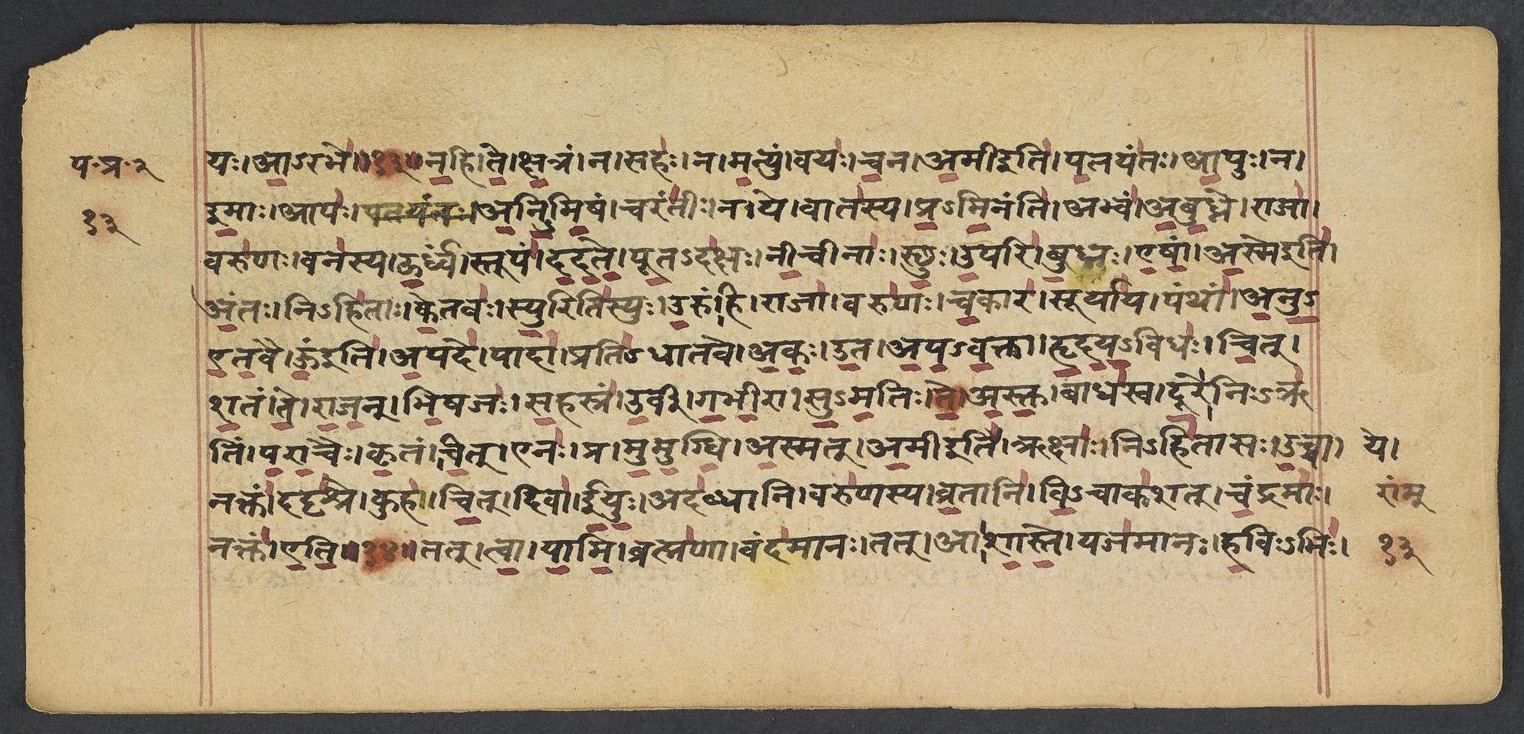
Where on the image
Penn Ms. Coll. 390 Item 41, fol. 13v (OPenn image 15, upper leaf). Checked on the image: the Rigveda text on this page begins in RV 1.24.5 ‹-rāyaḥ ārabhe›. The next page with Rigveda text, fol. 14r, begins in RV 1.24.11 ‹-haviḥ-bhiḥ aheḷamānaḥ varuṇa iha›. Verses 1.24.5-10 end on this page; 1.24.5 begins on fol. 13r.
5bhaga̍bhaktasya te va̱yam ud a̍śema̱ tavāva̍sā | mū̱rdhāna̍ṁ rā̱ya ā̱rabhe̍ ||
6na̱hi te̍ kṣa̱traṁ na saho̱ na ma̱nyuṁ vaya̍ś ca̱nāmī pa̱taya̍nta ā̱puḥ | nemā āpo̍ animi̱ṣaṁ cara̍ntī̱r na ye vāta̍sya prami̱nanty abhva̍m ||
7a̱bu̱dhne rājā̱ varu̍ṇo̱ vana̍syo̱rdhvaṁ stūpa̍ṁ dadate pū̱tada̍kṣaḥ | nī̱cīnā̍ḥ sthur u̱pari̍ bu̱dhna e̍ṣām a̱sme a̱ntar nihi̍tāḥ ke̱tava̍ḥ syuḥ ||
8u̱ruṁ hi rājā̱ varu̍ṇaś ca̱kāra̱ sūryā̍ya̱ panthā̱m anve̍ta̱vā u̍ | a̱pade̱ pādā̱ prati̍dhātave 'kar u̱tāpa̍va̱ktā hṛ̍dayā̱vidha̍ś cit ||
9śa̱taṁ te̍ rājan bhi̱ṣaja̍ḥ sa̱hasra̍m u̱rvī ga̍bhī̱rā su̍ma̱tiṣ ṭe̍ astu | bādha̍sva dū̱re nirṛ̍tim parā̱caiḥ kṛ̱taṁ ci̱d ena̱ḥ pra mu̍mugdhy a̱smat ||
10a̱mī ya ṛkṣā̱ nihi̍tāsa u̱ccā nakta̱ṁ dadṛ̍śre̱ kuha̍ ci̱d dive̍yuḥ | ada̍bdhāni̱ varu̍ṇasya vra̱tāni̍ vi̱cāka̍śac ca̱ndramā̱ nakta̍m eti ||
Compare: Padapāṭha (word-by-word text written in the manuscript; Sansknet e-text via GRETIL)
5bhaga-bhaktasya | te | vayam | ut | aśema | tava | avasā | mūrdhānam | rāyaḥ | ārabhe
6nahi | te | kṣatram | na | sahaḥ | na | manyum | vayaḥ | cana | amī iti | patayantaḥ | āpuḥ | na | imāḥ | āpaḥ | ani-miṣam | carantīḥ | na | ye | vātasya | pra-minanti | abhvam
7abudhne | rājā | varuṇaḥ | vanasya | ūrdhvam | stūpam | dṛte | pūta-dakṣaḥ | nīcīnāḥ | sthuḥ | upari | budhnaḥ | eṣām | asme iti | antaḥ | ni-hitāḥ | ketavaḥ | syuritisyuḥ
8urum | hi | rājā | varuṇaḥ | cakāra | sūryāya | panthām | anu-etavai | oṃ iti | apade | pādā | prati-dhātave | akaḥ | uta | apa-vaktā | hṛdaya-vidhaḥ | cit
9śatam | te | rājan | bhiṣajaḥ | sahasram | urvī | gabhīrā | su-matiḥ | te | astu | bādhasva | dūre | niḥ-ṛtim | parācaiḥ | kṛtam | cit | enaḥ | pra | mumugdhi | asmat
10amī iti | ye | ṛkṣāḥ | ni-hitāsaḥ | uccā | naktam | dṛdaśre | kuha | cit | divā | īyuḥ | adabdhāni | varuṇasya | vratāni | vi-cākaśat | candramāḥ | naktam | eti
5Through thy protection may we come to even the height of affluence Which Bhaga hath dealt out to us.
6Ne'er have those birds that fly through air attained to thy high dominion or thy might or spirit; Nor these the waters that flow on for ever, nor hills, abaters of the wind's wild fury.
7Varuṇa, King, of hallowed might, sustaineth erect the Tree's stem in the baseless region. Its rays, whose root is high above, stream downward. Deep may they sink within us, and be hidden.
8King Varuṇa hath made a spacious pathway, a pathway for the Sun wherein to travel. Where no way was he made him set his footstep, and warned afar whate'er afflicts the spirit.
9A hundred balms are thine, O King, a thousand; deep and wide-reaching also be thy favours. Far from us, far away drive thou Destruction. Put from us e'en the sin we have committed.
10Whither by day depart the constellations that shine at night, set high in heaven above us? Varuṇa's holy laws remain unweakened, and through the night the Moon moves on in splendor
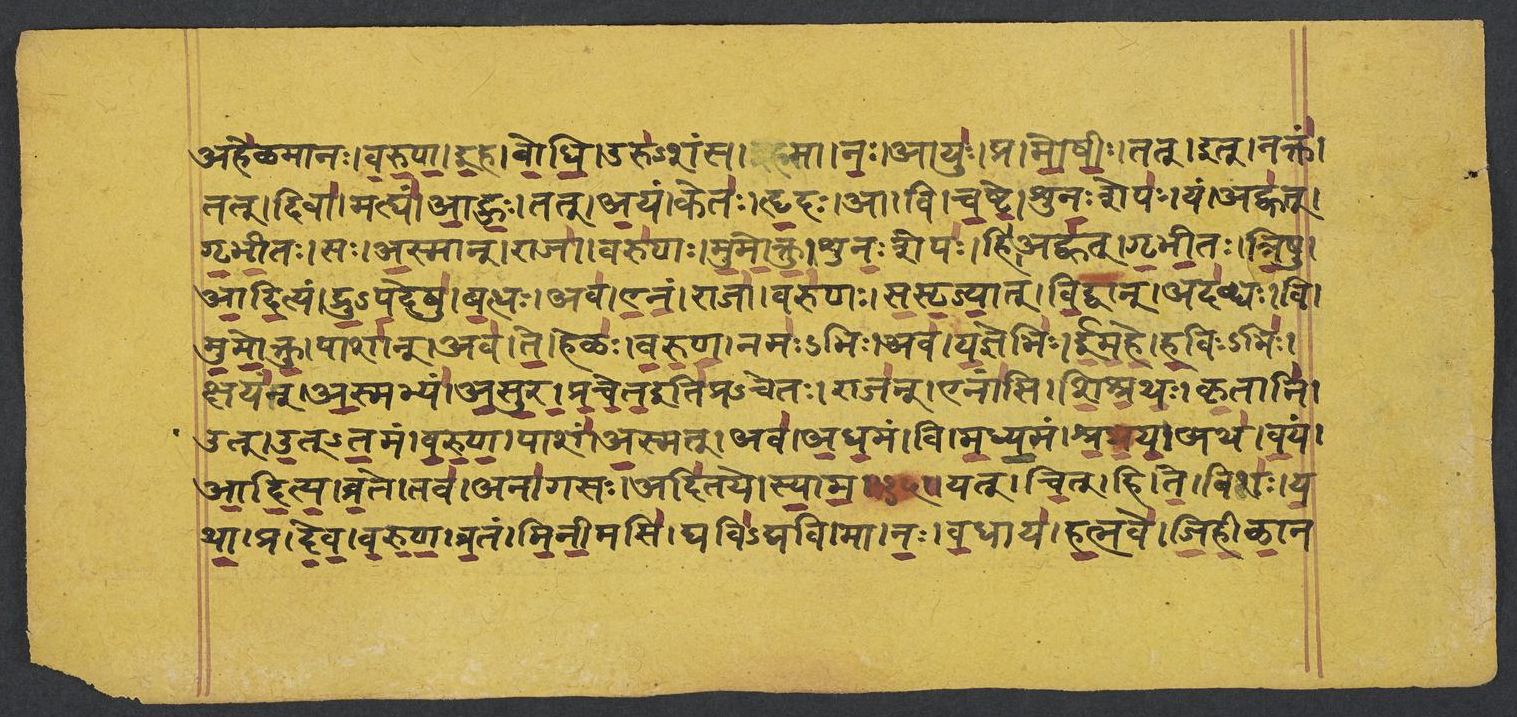
Where on the image
Penn Ms. Coll. 390 Item 41, fol. 14r (OPenn image 15, lower leaf). Checked on the image: the Rigveda text on this page begins in RV 1.24.11 ‹-haviḥ-bhiḥ aheḷamānaḥ varuṇa iha›. The next page with Rigveda text, fol. 14v, begins in RV 1.25.2 ‹-jihīḷānasya rīradhaḥ mā hṛṇānasyamanyave›. Verses 1.24.11-15 end on this page; 1.24.11 begins on fol. 13v.
11tat tvā̍ yāmi̱ brahma̍ṇā̱ vanda̍māna̱s tad ā śā̍ste̱ yaja̍māno ha̱virbhi̍ḥ | ahe̍ḻamāno varuṇe̱ha bo̱dhy uru̍śaṁsa̱ mā na̱ āyu̱ḥ pra mo̍ṣīḥ ||
12tad in nakta̱ṁ tad divā̱ mahya̍m āhu̱s tad a̱yaṁ keto̍ hṛ̱da ā vi ca̍ṣṭe | śuna̱ḥśepo̱ yam ahva̍d gṛbhī̱taḥ so a̱smān rājā̱ varu̍ṇo mumoktu ||
13śuna̱ḥśepo̱ hy ahva̍d gṛbhī̱tas tri̱ṣv ā̍di̱tyaṁ dru̍pa̱deṣu̍ ba̱ddhaḥ | avai̍na̱ṁ rājā̱ varu̍ṇaḥ sasṛjyād vi̱dvām̐ ada̍bdho̱ vi mu̍moktu̱ pāśā̍n ||
14ava̍ te̱ heḻo̍ varuṇa̱ namo̍bhi̱r ava̍ ya̱jñebhi̍r īmahe ha̱virbhi̍ḥ | kṣaya̍nn a̱smabhya̍m asura pracetā̱ rāja̱nn enā̍ṁsi śiśrathaḥ kṛ̱tāni̍ ||
15ud u̍tta̱maṁ va̍ruṇa̱ pāśa̍m a̱smad avā̍dha̱maṁ vi ma̍dhya̱maṁ śra̍thāya | athā̍ va̱yam ā̍ditya vra̱te tavānā̍gaso̱ adi̍taye syāma ||
Compare: Padapāṭha (word-by-word text written in the manuscript; Sansknet e-text via GRETIL)
11tat | tvā | yāmi | brahmaṇā | vandamānaḥ | tat | ā | śāste | yajamānaḥ | haviḥ-bhiḥ | aheḷamānaḥ | varuṇa | iha | bodhi | uru-śaṃsa | mā | naḥ | āyuḥ | pra | moṣīḥ
12tat | it | naktam | tat | divā | mahyam | āhuḥ | tat | ayam | ketaḥ | hṛdaḥ | ā | vi | caṣṭe | śunaḥśepaḥ | yam | ahvat | gṛbhītaḥ | saḥ | asmān | rājā | varuṇaḥ | mumoktu
13śunaḥśepaḥ | hi | ahvat | gṛbhītaḥ | triṣu | ādityam | dru-padeṣu | baddhaḥ | ava | enam | rājā | varuṇaḥ | sasṛjyāt | vidvān | adabdhaḥ | vi | mumoktu | pāsān
14ava | te | heḷaḥ | varuṇa | namaḥ-bhiḥ | ava | yajñebhiḥ | īmahe | haviḥ-bhiḥ | kṣayan | asmabhyam | asura | pracetaitipra-cetaḥ | rājan | enāṃsi | śiśrathaḥ | kṛtāni
15ut | ut-tamam | varuṇa | pāśam | asmat | ava | adhamam | vi | madhyayamam | śrathaya | atha | vayam | āditya | vrate | tava | anāgasaḥ | aditaye | syāma
11I ask this of thee with my prayer adoring; thy worshipper craves this with his oblation. Varuṇa, stay thou here and be not angry; steal not our life from us, O thou Wide-Ruler.
12Nightly and daily this one thing they tell me, this too the thought of mine own heart repeateth. May he to whom prayed fettered Ṣunaḥṣepa, may he the Sovran Varuṇa release us.
13Bound to three pillars captured Ṣunaḥṣepa thus to the Âditya made his supplication. Him may the Sovran Varuṇa deliver, wise, ne'er deceived, loosen the bonds that bind him.
14With bending down, oblations, sacrifices, O Varuṇa, we deprecate thine anger: Wise Asura, thou King of wide dominion, loosen the bonds of sins by us committed.
15Loosen the bonds, O Varuṇa, that hold me, loosen the bonds above, between, and under. So in thy holy law may we made sinless belong to Aditi, O thou Âditya.
Notes
- Sanskrit: Aufrecht's edition (1877) with the Vedic accents, as entered by van Nooten and Holland (GRETIL).
- English: Ralph T. H. Griffith, The Hymns of the Rigveda (1889-1892; 2nd ed. 1896-1897), from the VedaWeb digital text; OCR slips in that text were corrected against the printed 2nd edition (data/sources/rigveda/griffith_errata.json).
- Padapāṭha (edition text): Sansknet e-text via GRETIL (CC BY-NC-SA 4.0).
Cite
Sources
- Source: Penn Ms. Coll. 390 Item 41 (undated (catalogued with Penn's 18th-19th c. Vedic manuscripts)), OPenn, Public Domain Mark + Aufrecht's accented text (GRETIL) + Griffith's English (VedaWeb) (holding institution)
- Critical edition: Aufrecht (1877), accented e-text via GRETIL
← previous · → next · v cycle view · l back to library