Rigveda 1.25: To Varuna
Introduction
Rigveda 1.25 is a hymn of 21 verses addressed to Varuna. It stands in book (maṇḍala) 1, a collection of hymns by many families of poets. The Rigveda is the oldest collection of Sanskrit hymns, composed in the second half of the second millennium BCE and handed down orally for many centuries before it was written down.
The manuscript shown is Penn Ms. Coll. 390 Item 41 (University of Pennsylvania), an undated paper manuscript of the padapāṭha (the word-by-word recitation text, in which every word is written separately and compounds are split) of the whole Ṛgveda in Devanāgarī, 884 leaves in fascicles, 7-9 lines to the page, accents in red; this hymn stands on fol. 14r-15r. Each section below gives the verses that end on one page; the page boundaries were read on the images (the opening words of every page), not counted out. Where the manuscript is a padapāṭha (the word-by-word recitation text), the section shows Aufrecht's continuous (saṃhitā) text first and, as the edition text, the padapāṭha of the same verses, which is the form written on the page.
How was this verified? (Provenance)
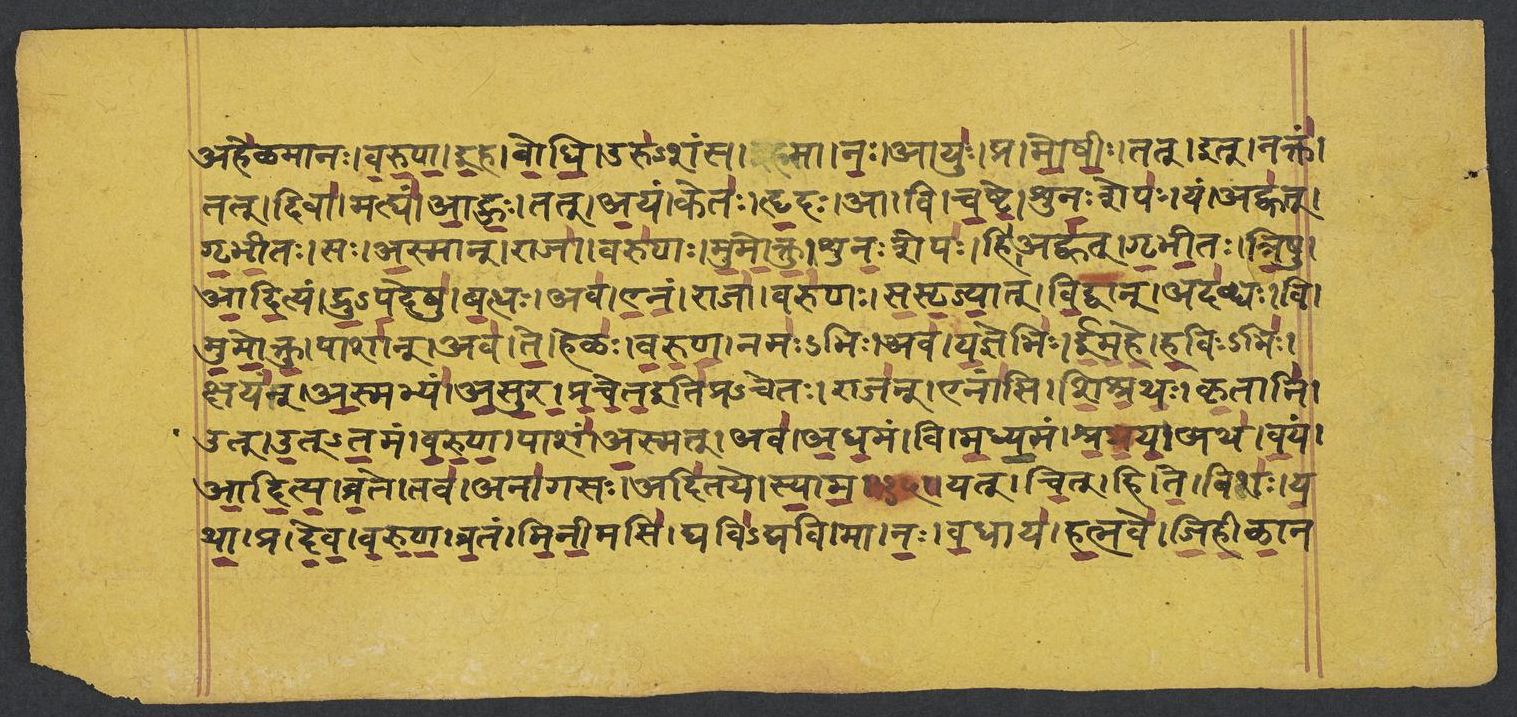
Where on the image
Penn Ms. Coll. 390 Item 41, fol. 14r (OPenn image 15, lower leaf). Checked on the image: the Rigveda text on this page begins in RV 1.24.11 ‹-haviḥ-bhiḥ aheḷamānaḥ varuṇa iha›. The next page with Rigveda text, fol. 14v, begins in RV 1.25.2 ‹-jihīḷānasya rīradhaḥ mā hṛṇānasyamanyave›. Verse 1.25.1 ends on this page.
1yac ci̱d dhi te̱ viśo̍ yathā̱ pra de̍va varuṇa vra̱tam | mi̱nī̱masi̱ dyavi̍-dyavi ||
Compare: Padapāṭha (word-by-word text written in the manuscript; Sansknet e-text via GRETIL)
1yat | cit | hi | te | viśaḥ | yathā | pra | deva | varuṇa | vratam | minīmasi | dyavi-dyavi
1WHATEVER law of thine, O God, O Varuṇa, as we are men, Day after day we violate.
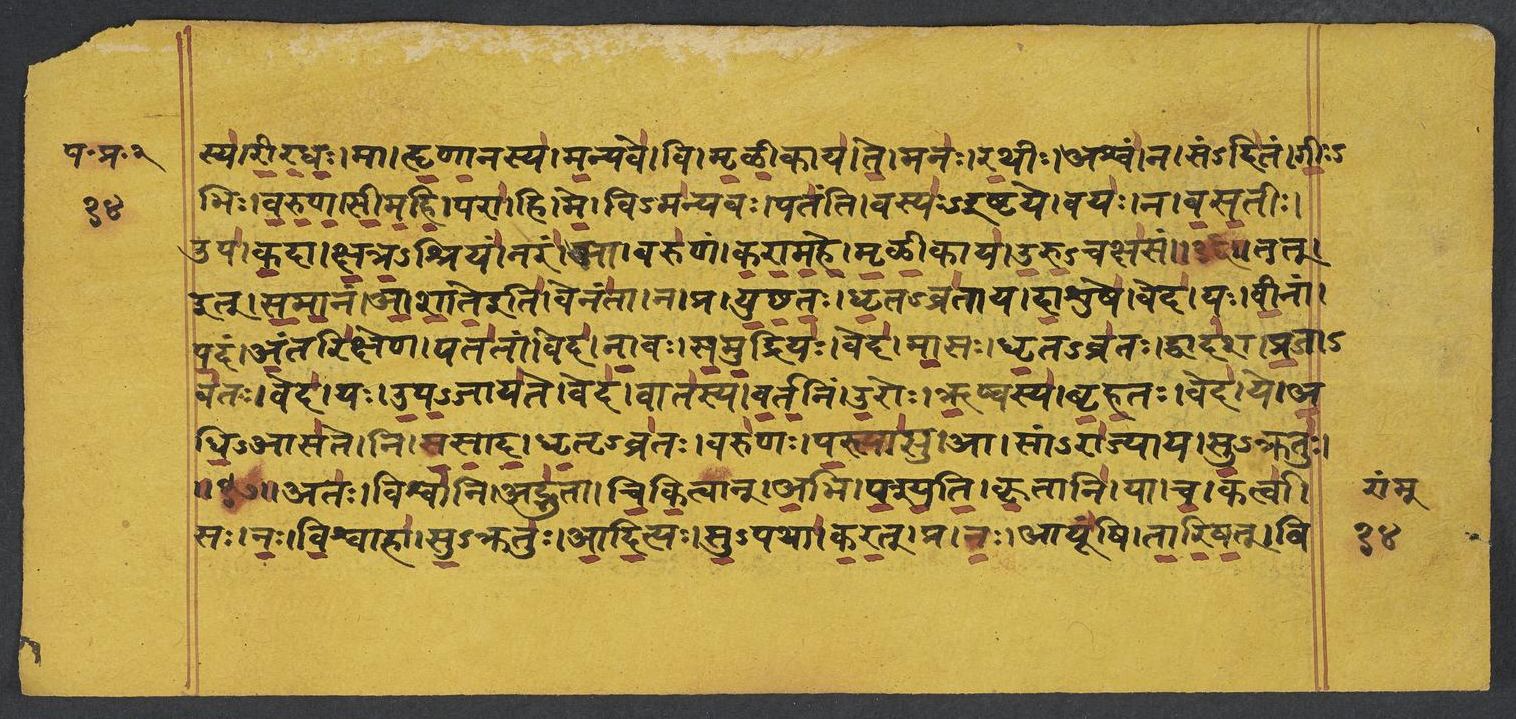
Where on the image
Penn Ms. Coll. 390 Item 41, fol. 14v (OPenn image 16, upper leaf). Checked on the image: the Rigveda text on this page begins in RV 1.25.2 ‹-jihīḷānasya rīradhaḥ mā hṛṇānasyamanyave›. The next page with Rigveda text, fol. 15r, begins in RV 1.25.13 ‹bibhrat drāpim hiraṇyayam varuṇaḥ›. Verses 1.25.2-12 end on this page; 1.25.2 begins on fol. 14r.
2mā no̍ va̱dhāya̍ ha̱tnave̍ jihīḻā̱nasya̍ rīradhaḥ | mā hṛ̍ṇā̱nasya̍ ma̱nyave̍ ||
3vi mṛ̍ḻī̱kāya̍ te̱ mano̍ ra̱thīr aśva̱ṁ na saṁdi̍tam | gī̱rbhir va̍ruṇa sīmahi ||
4parā̱ hi me̱ vima̍nyava̱ḥ pata̍nti̱ vasya̍ïṣṭaye | vayo̱ na va̍sa̱tīr upa̍ ||
5ka̱dā kṣa̍tra̱śriya̱ṁ nara̱m ā varu̍ṇaṁ karāmahe | mṛ̱ḻī̱kāyo̍ru̱cakṣa̍sam ||
6tad it sa̍mā̱nam ā̍śāte̱ vena̍ntā̱ na pra yu̍cchataḥ | dhṛ̱tavra̍tāya dā̱śuṣe̍ ||
7vedā̱ yo vī̱nām pa̱dam a̱ntari̍kṣeṇa̱ pata̍tām | veda̍ nā̱vaḥ sa̍mu̱driya̍ḥ ||
8veda̍ mā̱so dhṛ̱tavra̍to̱ dvāda̍śa pra̱jāva̍taḥ | vedā̱ ya u̍pa̱jāya̍te ||
9veda̱ vāta̍sya varta̱nim u̱ror ṛ̱ṣvasya̍ bṛha̱taḥ | vedā̱ ye a̱dhyāsa̍te ||
10ni ṣa̍sāda dhṛ̱tavra̍to̱ varu̍ṇaḥ pa̱styā̱3̱̍sv ā | sāmrā̍jyāya su̱kratu̍ḥ ||
11ato̱ viśvā̱ny adbhu̍tā ciki̱tvām̐ a̱bhi pa̍śyati | kṛ̱tāni̱ yā ca̱ kartvā̍ ||
12sa no̍ vi̱śvāhā̍ su̱kratu̍r ādi̱tyaḥ su̱pathā̍ karat | pra ṇa̱ āyū̍ṁṣi tāriṣat ||
Compare: Padapāṭha (word-by-word text written in the manuscript; Sansknet e-text via GRETIL)
2mā | naḥ | vadhāya | hatnave | jihīḷānasya | rīradhaḥ | mā | hṛṇānasyamanyave
3vi | mṛḷīkāya | te | manaḥ | rathīḥ | aśvam | na | sam-ditam | gīrbhiḥ | varuṇa | sīmahi
4parā | hi | me | vi-manyavaḥ | patanti | vasyaḥ-iṣṭaye | vayaḥ | na | vasatīḥ | upa
5kadā | kṣatra-śriyam | naram | ā | varuṇam | karāmahe | mṛḷīkāya | uru-cakṣasam
6tat | it | samānam | āśāteiti | venantā | na | pra | yucchataḥ | dhṛta-vratāya | dāśuṣe
7veda | yaḥ | vīnām | padam | antarikṣeṇa | patatām | veda | nāvaḥ | samudriyaḥ
8veda | māsaḥ | dhṛta-vrataḥ | dvādaśa | prajāvataḥ | veda | yaḥ | upa-jāyate
9veda | vātasya | vartanim | uroḥ | ṛṣvasya | bṛhataḥ | veda | ye | adhi-āsate
10ni | sasāda | dhṛta-vrataḥ | varuṇaḥ | pastyāsu | ā | sām-rājyāya | su-kratuḥ
11ataḥ | viśvāni | adbhutā | cikitvān | abhi | paśyati | kṛtāni | yā | ca | kartvā
12saḥ | naḥ | viśvāhā | su-kratuḥ | ādityaḥ | su-pathā | karat | pra | naḥ | āyūṃṣi | tāriṣat
2give us not as a prey to death, to be destroyed by thee in wrath, To thy fierce anger when displeased.
3To gain thy mercy, Varuṇa, with hymns we bind thy heart, as binds The charioteer his tethered horse.
4They flee from me dispirited, bent only on obtaining wealth, As to their nests the birds of air.
5When shall we bring, to be appeased, the Hero, Lord of warrior might, Him, the far-seeing Varuṇa?
6This, this with joy they both accept in common: never do they fail The ever-faithful worshipper.
7He knows the path of birds that fly through heaven, and, Sovran of the sea, He knows the ships that are thereon.
8True to his holy law, he knows the twelve moons with their progeny: He knows the moon of later birth.
9He knows the pathway of the wind, the spreading, high, and mighty wind He knows the Gods who dwell above.
10Varuṇa, true to holy law, sits down among his people; he, Most wise, sits there to govern all.
11From thence perceiving he beholds all wondrous things, both what hath been, And what hereafter will be done.
12May that Âditya, very -wise, make fair paths for us all our days: May lie prolong our lives for us.
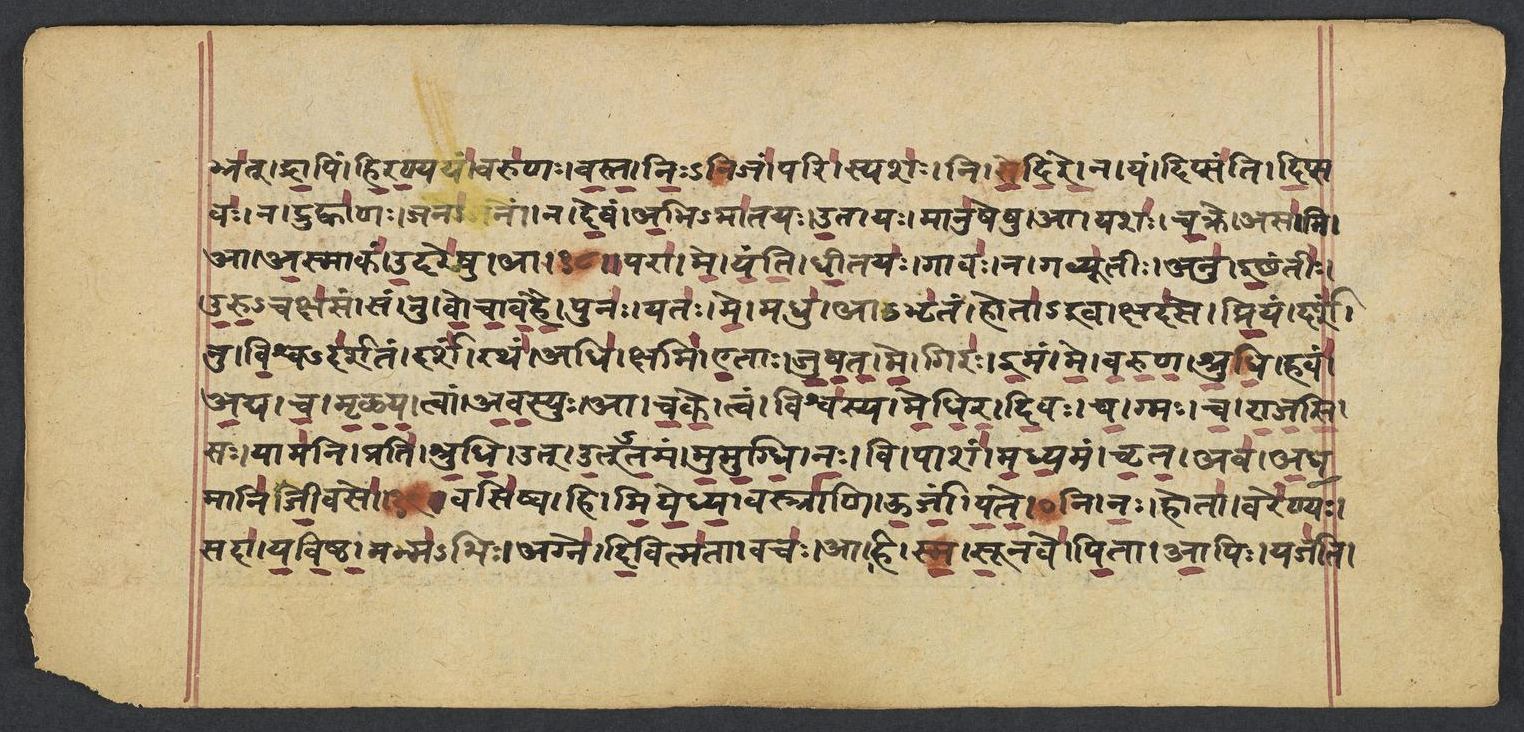
Where on the image
Penn Ms. Coll. 390 Item 41, fol. 15r (OPenn image 16, lower leaf). Checked on the image: the Rigveda text on this page begins in RV 1.25.13 ‹bibhrat drāpim hiraṇyayam varuṇaḥ›. The next page with Rigveda text, fol. 15v, begins in RV 1.26.3 ‹āpaye sakhā sakhye vareṇyaḥ›. Verses 1.25.13-21 end on this page.
13bibhra̍d drā̱piṁ hi̍ra̱ṇyaya̱ṁ varu̍ṇo vasta ni̱rṇija̍m | pari̱ spaśo̱ ni ṣe̍dire ||
14na yaṁ dipsa̍nti di̱psavo̱ na druhvā̍ṇo̱ janā̍nām | na de̱vam a̱bhimā̍tayaḥ ||
15u̱ta yo mānu̍ṣe̱ṣv ā yaśa̍ś ca̱kre asā̱my ā | a̱smāka̍m u̱dare̱ṣv ā ||
16parā̍ me yanti dhī̱tayo̱ gāvo̱ na gavyū̍tī̱r anu̍ | i̱cchantī̍r uru̱cakṣa̍sam ||
17saṁ nu vo̍cāvahai̱ puna̱r yato̍ me̱ madhv ābhṛ̍tam | hote̍va̱ kṣada̍se pri̱yam ||
18darśa̱ṁ nu vi̱śvada̍rśata̱ṁ darśa̱ṁ ratha̱m adhi̱ kṣami̍ | e̱tā ju̍ṣata me̱ gira̍ḥ ||
19i̱mam me̍ varuṇa śrudhī̱ hava̍m a̱dyā ca̍ mṛḻaya | tvām a̍va̱syur ā ca̍ke ||
20tvaṁ viśva̍sya medhira di̱vaś ca̱ gmaś ca̍ rājasi | sa yāma̍ni̱ prati̍ śrudhi ||
21ud u̍tta̱mam mu̍mugdhi no̱ vi pāśa̍m madhya̱maṁ cṛ̍ta | avā̍dha̱māni̍ jī̱vase̍ ||
Compare: Padapāṭha (word-by-word text written in the manuscript; Sansknet e-text via GRETIL)
13bibhrat | drāpim | hiraṇyayam | varuṇaḥ | vasta | niḥ-nijam | pari | spaśaḥ | ni | sedire
14na | yam | dipsanti | dipsavaḥ | na | druhvāṇaḥ | janānām | na | devam | abhi-mātayaḥ
15uta | yaḥ | mānuṣeṣu | ā | yaśaḥ | cakre | asāmi | ā | asmākam | udareṣu | ā
16parāḥ | me | yanti | dhītayaḥ | gāvaḥ | na | gavyūtīḥ | anu | icchantīḥ | uru-cakṣasam
17sam | nu | vocāvahai | punaḥ | yataḥ | me | madhu | ābhṛtam | hotāiva | kṣadase | priyam
18darśam | nu | viśva-darśatam | darśam | ratham | adhi | kṣami | etāḥ | juṣata | me | giraḥ
19imam | me | varuṇa | śrudhi | havam | adya | ca | mṛḷaya | tvām | avasyuḥ | ā | cakre
20tvam | viśvasya | medhira | divaḥ | ca | gmaḥ | ca | rājasi | saḥ yāmani | prati | śrudhi
21ut | ut-tamam | mumugdhi | naḥ | vi | pāśam | madhyamañ cṛta | ava | adhamāni | jīvase
13Varuṇa, wearing golden mail, hath clad him in a shining robe. His spies are seated round about.
14The God whom enemies threaten not, nor those who tyrannize o'er men, Nor those whose minds are bent on wrong.
15He who gives glory to mankind, not glory that is incomplete, To our own bodies giving it.
16Yearning for the wide-seeing One, my thoughts move onward unto him, As kine unto their pastures move.
17Once more together let us speak, because my meath is brought: priest-like Thou eatest what is dear to thee.
18Now saw I him whom all may see, I saw his car above the earth: He hath accepted these my songs.
19Varuṇa, hear this call of mine: be gracious unto us this day Longing for help I cried to thee.
20Thou, O wise God, art Lord of all, thou art the King of earth and heaven Hear, as thou goest on thy way.
21Release us from the upper bond, untie the bond between, and loose The bonds below, that I may live.
Notes
- Sanskrit: Aufrecht's edition (1877) with the Vedic accents, as entered by van Nooten and Holland (GRETIL).
- English: Ralph T. H. Griffith, The Hymns of the Rigveda (1889-1892; 2nd ed. 1896-1897), from the VedaWeb digital text; OCR slips in that text were corrected against the printed 2nd edition (data/sources/rigveda/griffith_errata.json).
- Padapāṭha (edition text): Sansknet e-text via GRETIL (CC BY-NC-SA 4.0).
Cite
Sources
- Source: Penn Ms. Coll. 390 Item 41 (undated (catalogued with Penn's 18th-19th c. Vedic manuscripts)), OPenn, Public Domain Mark + Aufrecht's accented text (GRETIL) + Griffith's English (VedaWeb) (holding institution)
- Critical edition: Aufrecht (1877), accented e-text via GRETIL
← previous · → next · v cycle view · l back to library