Rigveda 1.26: To Agni
Introduction
Rigveda 1.26 is a hymn of 10 verses addressed to Agni. It stands in book (maṇḍala) 1, a collection of hymns by many families of poets. The Rigveda is the oldest collection of Sanskrit hymns, composed in the second half of the second millennium BCE and handed down orally for many centuries before it was written down.
The manuscript shown is Penn Ms. Coll. 390 Item 41 (University of Pennsylvania), an undated paper manuscript of the padapāṭha (the word-by-word recitation text, in which every word is written separately and compounds are split) of the whole Ṛgveda in Devanāgarī, 884 leaves in fascicles, 7-9 lines to the page, accents in red; this hymn stands on fol. 15r-15v. Each section below gives the verses that end on one page; the page boundaries were read on the images (the opening words of every page), not counted out. Where the manuscript is a padapāṭha (the word-by-word recitation text), the section shows Aufrecht's continuous (saṃhitā) text first and, as the edition text, the padapāṭha of the same verses, which is the form written on the page.
How was this verified? (Provenance)
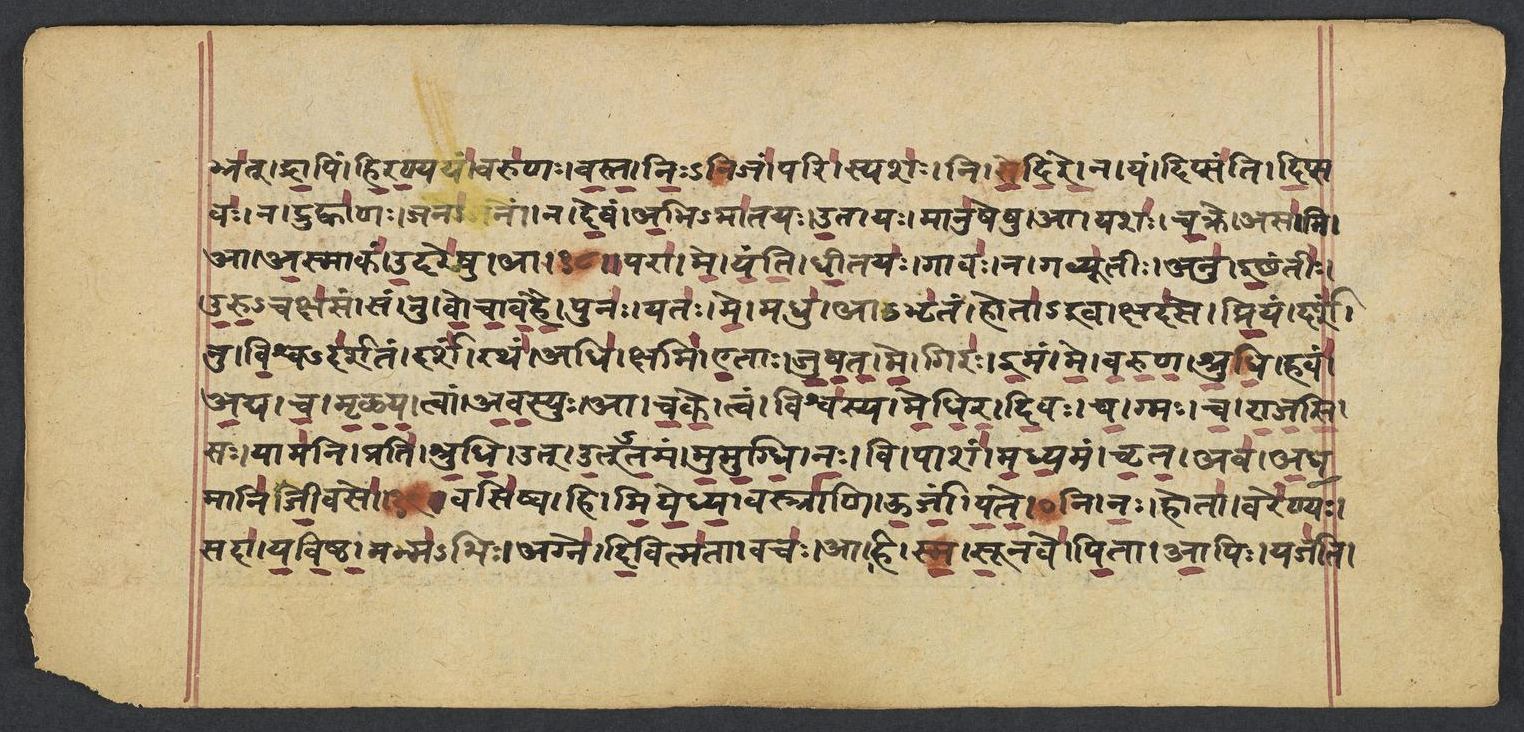
Where on the image
Penn Ms. Coll. 390 Item 41, fol. 15r (OPenn image 16, lower leaf). Checked on the image: the Rigveda text on this page begins in RV 1.25.13 ‹bibhrat drāpim hiraṇyayam varuṇaḥ›. The next page with Rigveda text, fol. 15v, begins in RV 1.26.3 ‹āpaye sakhā sakhye vareṇyaḥ›. Verses 1.26.1-2 end on this page.
1vasi̍ṣvā̱ hi mi̍yedhya̱ vastrā̍ṇy ūrjām pate | semaṁ no̍ adhva̱raṁ ya̍ja ||
2ni no̱ hotā̱ vare̍ṇya̱ḥ sadā̍ yaviṣṭha̱ manma̍bhiḥ | agne̍ di̱vitma̍tā̱ vaca̍ḥ ||
Compare: Padapāṭha (word-by-word text written in the manuscript; Sansknet e-text via GRETIL)
1vasiṣva | hi | miyedhya | vastrāṇi | ūrjām | pate | saḥ | imam | naḥ | adhvaram | yaja
2ni | naḥ | hotā | vareṇyaḥ | sadā | yaviṣṭha | manma-bhiḥ | agne | divitmatā | vacaḥ
1O WORTHY of oblation, Lord of prospering powers, assume thy robes, And offer this our sacrifice.
2Sit ever to be chosen, as our Priest., most youthful, through our hymns, O Agni, through our heavenly word.
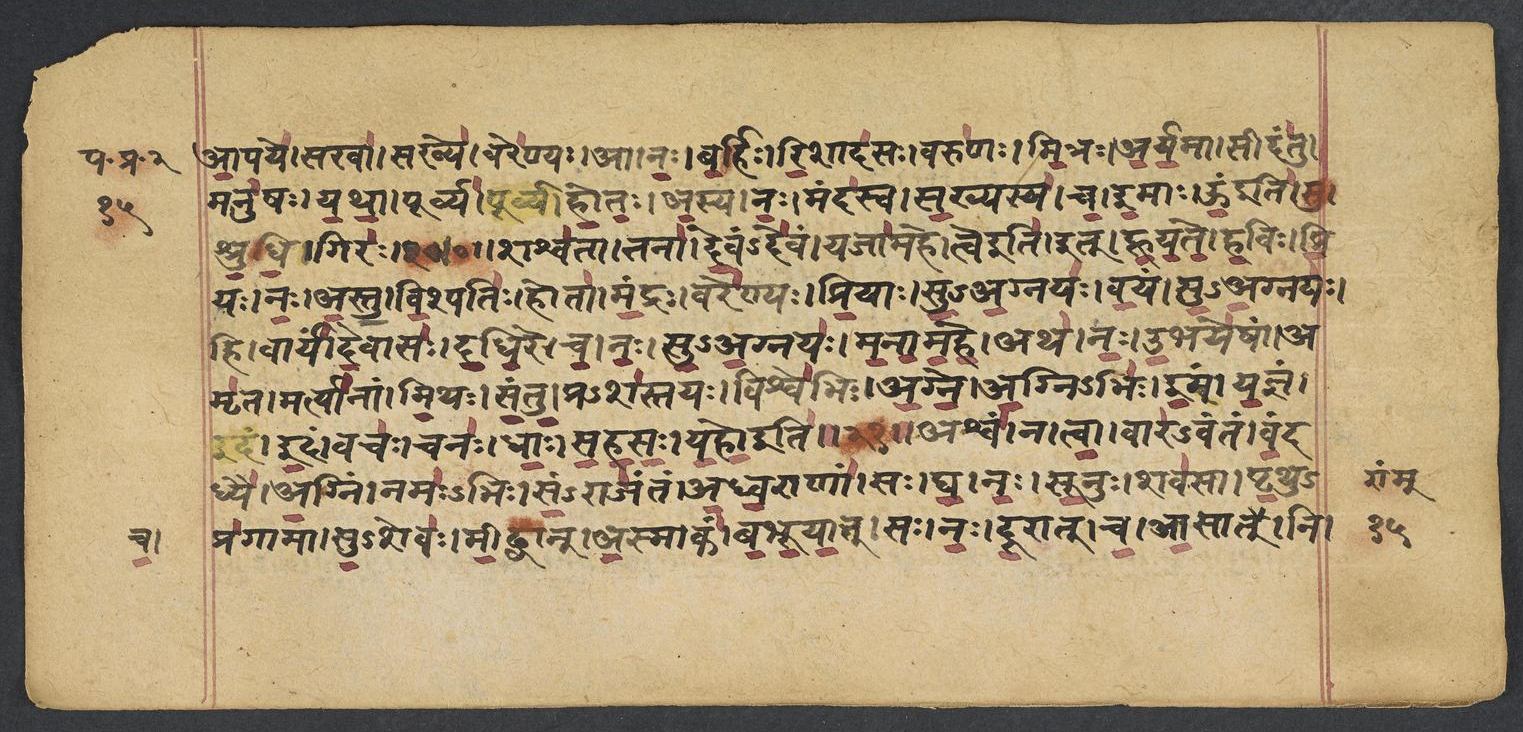
Where on the image
Penn Ms. Coll. 390 Item 41, fol. 15v (OPenn image 17, upper leaf). Checked on the image: the Rigveda text on this page begins in RV 1.26.3 ‹āpaye sakhā sakhye vareṇyaḥ›. The next page with Rigveda text, fol. 16r, begins in RV 1.27.3 ‹martyāt agha-yoḥ pāhi sadam›. Verses 1.26.3-10 end on this page; 1.26.3 begins on fol. 15r.
3ā hi ṣmā̍ sū̱nave̍ pi̱tāpir yaja̍ty ā̱paye̍ | sakhā̱ sakhye̱ vare̍ṇyaḥ ||
4ā no̍ ba̱rhī ri̱śāda̍so̱ varu̍ṇo mi̱tro a̍rya̱mā | sīda̍ntu̱ manu̍ṣo yathā ||
5pūrvya̍ hotar a̱sya no̱ manda̍sva sa̱khyasya̍ ca | i̱mā u̱ ṣu śru̍dhī̱ gira̍ḥ ||
6yac ci̱d dhi śaśva̍tā̱ tanā̍ de̱vaṁ-de̍va̱ṁ yajā̍mahe | tve id dhū̍yate ha̱viḥ ||
7pri̱yo no̍ astu vi̱śpati̱r hotā̍ ma̱ndro vare̍ṇyaḥ | pri̱yāḥ sva̱gnayo̍ va̱yam ||
8sva̱gnayo̱ hi vārya̍ṁ de̱vāso̍ dadhi̱re ca̍ naḥ | sva̱gnayo̍ manāmahe ||
9athā̍ na u̱bhaye̍ṣā̱m amṛ̍ta̱ martyā̍nām | mi̱thaḥ sa̍ntu̱ praśa̍stayaḥ ||
10viśve̍bhir agne a̱gnibhi̍r i̱maṁ ya̱jñam i̱daṁ vaca̍ḥ | cano̍ dhāḥ sahaso yaho ||
Compare: Padapāṭha (word-by-word text written in the manuscript; Sansknet e-text via GRETIL)
3ā | hi | sma | sūnave | pitā | āpiḥ | yajati | āpaye | sakhā | sakhye | vareṇyaḥ
4ā | naḥ | barhiḥ | riśādasaḥ | varuṇaḥ | mitraḥ | aryamā | sīdantu | manuṣaḥ | yathā
5pūrvya | hotaḥ | asya | naḥ | mandasva | sakhyasya | ca | imāḥ | oṃ iti | su | śrudhī | giraḥ
6yat | cit | hi | śaśvatā | tanā | devam-devam | yajāmahe | tve iti | it | hūyate | haviḥ
7priyaḥ | naḥ | astu | viśpatiḥ | hotām | mandraḥ | vareṇyaḥ | priyāḥ | su-agnayaḥ | vayam
8su-agnayaḥ | hi | vāryam | devāsaḥ | dadhire | ca | naḥ | su-agnayaḥ | manāmahe
9atha | naḥ | ubhayeṣām | amṛta | martyānām | mithaḥ | santu | pra-śastayaḥ
10viśvebhiḥ | agne | agni-bhiḥ | imam | yajñam | idam | vacaḥ | canaḥ | dhāḥ | sahasa | yaho iti
3For here a Father for his son, Kinsman for kinsman worshippeth, And Friend, choice-worthy, for his friend.
4Fiere let the foe-destroyers sit, Varuṇa, Mitra, Aryaman, Like men, upon our sacred grass.
5O ancient Herald, be thou glad in this our rite and fellowship: Hearken thou well to these our songs.
6Whate'er in this perpetual course we sacrifice to God and God, That gift is offered up in thee
7May he be our dear household Lord, Priest, pleasant and, choice-worthy may We, with bright fires, be dear to him.
8The Gods, adored with brilliant fires. have granted precious wealth to us So, with bright fires, we pray to thee.
9And, O Immortal One, so may the eulogies of mortal men Belong to us and thee alike.
10With all thy fires, O Agni, find pleasure in this our sacrifice, And this our speech, O Son of Strength.
Notes
- Sanskrit: Aufrecht's edition (1877) with the Vedic accents, as entered by van Nooten and Holland (GRETIL).
- English: Ralph T. H. Griffith, The Hymns of the Rigveda (1889-1892; 2nd ed. 1896-1897), from the VedaWeb digital text; OCR slips in that text were corrected against the printed 2nd edition (data/sources/rigveda/griffith_errata.json).
- Padapāṭha (edition text): Sansknet e-text via GRETIL (CC BY-NC-SA 4.0).
Cite
Sources
- Source: Penn Ms. Coll. 390 Item 41 (undated (catalogued with Penn's 18th-19th c. Vedic manuscripts)), OPenn, Public Domain Mark + Aufrecht's accented text (GRETIL) + Griffith's English (VedaWeb) (holding institution)
- Critical edition: Aufrecht (1877), accented e-text via GRETIL
← previous · → next · v cycle view · l back to library