Rigveda 1.27: To Agni
Introduction
Rigveda 1.27 is a hymn of 13 verses addressed to Agni. It stands in book (maṇḍala) 1, a collection of hymns by many families of poets. The Rigveda is the oldest collection of Sanskrit hymns, composed in the second half of the second millennium BCE and handed down orally for many centuries before it was written down.
The manuscript shown is Penn Ms. Coll. 390 Item 41 (University of Pennsylvania), an undated paper manuscript of the padapāṭha (the word-by-word recitation text, in which every word is written separately and compounds are split) of the whole Ṛgveda in Devanāgarī, 884 leaves in fascicles, 7-9 lines to the page, accents in red; this hymn stands on fol. 15v-16v. Each section below gives the verses that end on one page; the page boundaries were read on the images (the opening words of every page), not counted out. Where the manuscript is a padapāṭha (the word-by-word recitation text), the section shows Aufrecht's continuous (saṃhitā) text first and, as the edition text, the padapāṭha of the same verses, which is the form written on the page.
How was this verified? (Provenance)
Where on the image
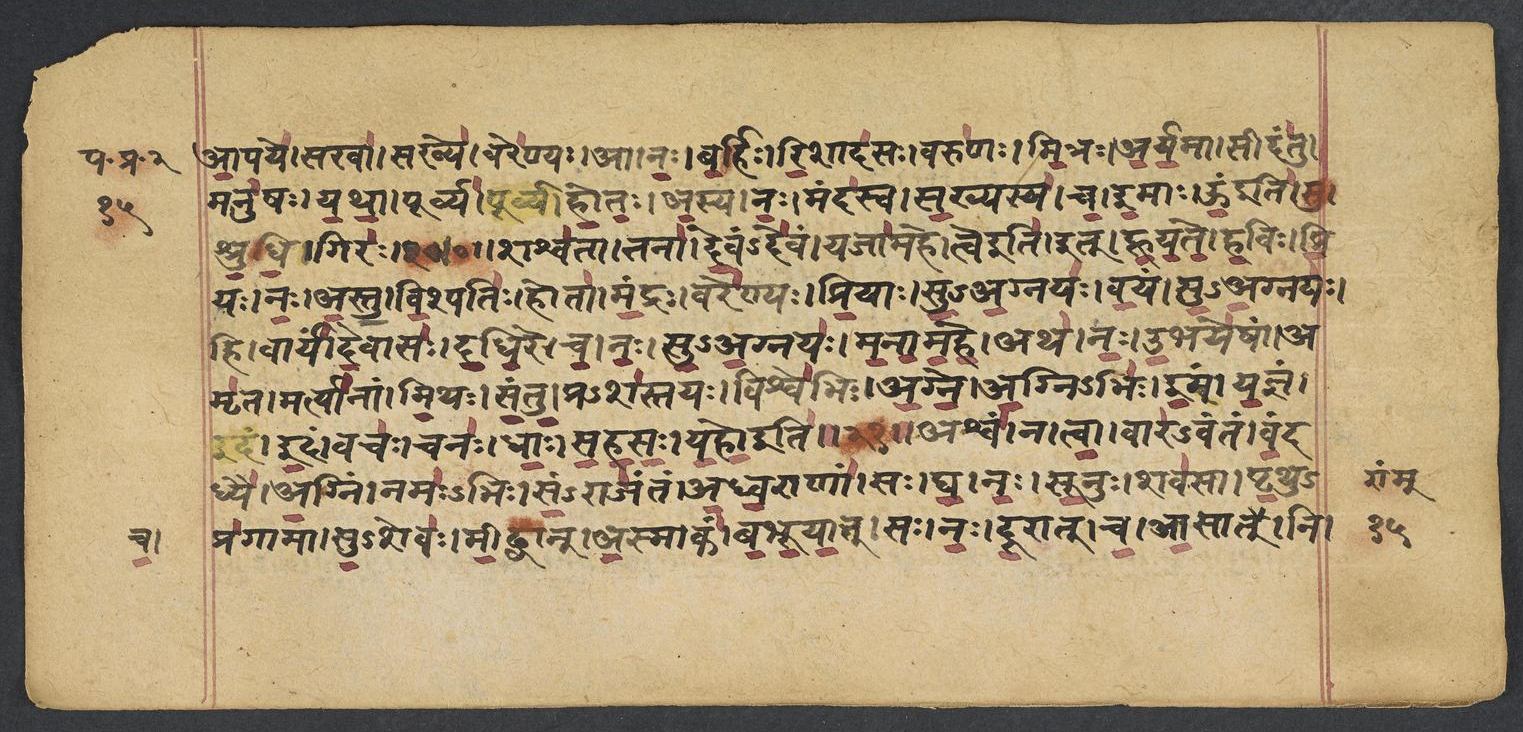
Penn Ms. Coll. 390 Item 41, fol. 15v (OPenn image 17, upper leaf). Checked on the image: the Rigveda text on this page begins in RV 1.26.3 ‹āpaye sakhā sakhye vareṇyaḥ›. The next page with Rigveda text, fol. 16r, begins in RV 1.27.3 ‹martyāt agha-yoḥ pāhi sadam›. Verses 1.27.1-2 end on this page.
1aśva̱ṁ na tvā̱ vāra̍vantaṁ va̱ndadhyā̍ a̱gniṁ namo̍bhiḥ | sa̱mrāja̍ntam adhva̱rāṇā̍m ||
2sa ghā̍ naḥ sū̱nuḥ śava̍sā pṛ̱thupra̍gāmā su̱śeva̍ḥ | mī̱ḍhvām̐ a̱smāka̍m babhūyāt ||
Compare: Padapāṭha (word-by-word text written in the manuscript; Sansknet e-text via GRETIL)
1aśvam | na | tvā | vāra-vantam | vandadhyai | agnim | namobhiḥ | sam-rājantam | adhvarāṇām
2saḥ | gha | naḥ | sūnuḥ | śavasā | pṛthu-pragāmā | su-śevaḥ | mīḍhavān | asmākam | babhūyāt
1WITH worship will I glorify thee, Agni, like a long-tailed steed, Imperial Lord of sacred rites.
2May the far-striding Son of Strength, bringer of great felicity, Who pours his gifts like rain, be ours.
Where on the image
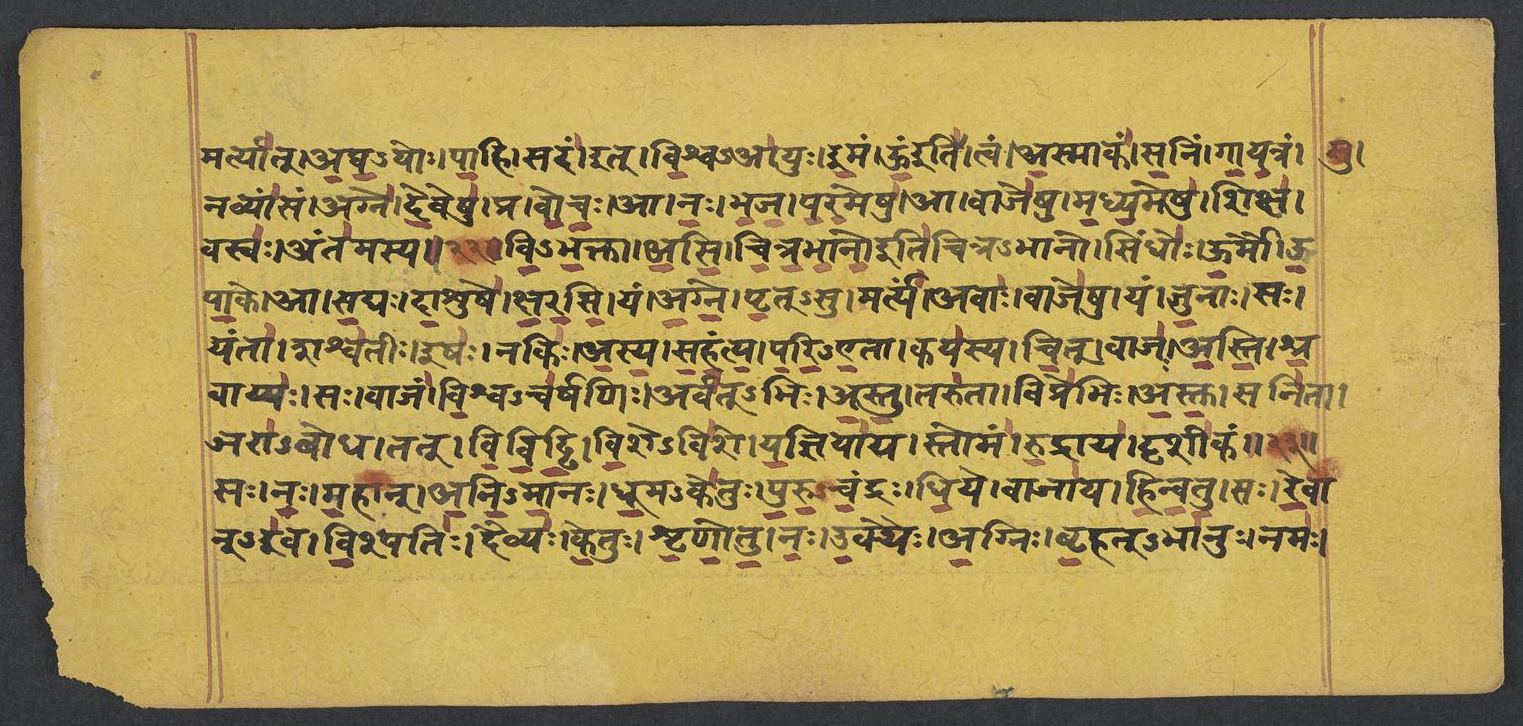
Penn Ms. Coll. 390 Item 41, fol. 16r (OPenn image 17, lower leaf). Checked on the image: the Rigveda text on this page begins in RV 1.27.3 ‹martyāt agha-yoḥ pāhi sadam›. The next page with Rigveda text, fol. 16v, begins in RV 1.27.13 ‹mahat-bhyaḥ namaḥ arbhakebhyaḥ namaḥ›. Verses 1.27.3-12 end on this page; 1.27.3 begins on fol. 15v.
3sa no̍ dū̱rāc cā̱sāc ca̱ ni martyā̍d aghā̱yoḥ | pā̱hi sada̱m id vi̱śvāyu̍ḥ ||
4i̱mam ū̱ ṣu tvam a̱smāka̍ṁ sa̱niṁ gā̍ya̱traṁ navyā̍ṁsam | agne̍ de̱veṣu̱ pra vo̍caḥ ||
5ā no̍ bhaja para̱meṣv ā vāje̍ṣu madhya̱meṣu̍ | śikṣā̱ vasvo̱ anta̍masya ||
6vi̱bha̱ktāsi̍ citrabhāno̱ sindho̍r ū̱rmā u̍pā̱ka ā | sa̱dyo dā̱śuṣe̍ kṣarasi ||
7yam a̍gne pṛ̱tsu martya̱m avā̱ vāje̍ṣu̱ yaṁ ju̱nāḥ | sa yantā̱ śaśva̍tī̱r iṣa̍ḥ ||
8naki̍r asya sahantya parye̱tā kaya̍sya cit | vājo̍ asti śra̱vāyya̍ḥ ||
9sa vāja̍ṁ vi̱śvaca̍rṣaṇi̱r arva̍dbhir astu̱ taru̍tā | vipre̍bhir astu̱ sani̍tā ||
10jarā̍bodha̱ tad vi̍viḍḍhi vi̱śe-vi̍śe ya̱jñiyā̍ya | stoma̍ṁ ru̱drāya̱ dṛśī̍kam ||
11sa no̍ ma̱hām̐ a̍nimā̱no dhū̱make̍tuḥ puruśca̱ndraḥ | dhi̱ye vājā̍ya hinvatu ||
12sa re̱vām̐ i̍va vi̱śpati̱r daivya̍ḥ ke̱tuḥ śṛ̍ṇotu naḥ | u̱kthair a̱gnir bṛ̱hadbhā̍nuḥ ||
Compare: Padapāṭha (word-by-word text written in the manuscript; Sansknet e-text via GRETIL)
3saḥ | naḥ | dūrāt | ca | āsāt | ca | ni | martyāt | agha-yoḥ | pāhi | sadam | it | viśva-āyuḥ
4imam | oṃ iti | su | tvam | asmākam | sanim | gāyatram | navyāṃsam | agne | deveṣu | pra | vocaḥ
5ā | naḥ | bhaja | parameṣu | ā | vājeṣu | madhyameṣu | śikṣā | vasvaḥ | antamasya
6vi-bhaktā | asi | citrabhāno iticitra-bhāno | sindhoḥ | ūrmau | upāke | ā | sadyaḥ | dāśuṣe | kṣarasi
7yam | agne | pṛt-su | martyam | avāḥ | vājeṣu | yam | junāḥ | saḥ | yantā | śaśvatīḥ | iṣaḥ
8nakiḥ | asya | sahantya | pari-etā | kayasya | cit | vājaḥ | asti | śravāyyaḥ
9saḥ | vājam | viśva-carṣaṇiḥ | arvat-bhiḥ | astu | tarutā | viprebhiḥ | astu | sanitā
10jarābodha | tat | viviḍḍhi | viśe--viśe | yajñiyāya | stomam | rudrāya | dṛśīkam
11saḥ | naḥ | mahān | ani-mānaḥ | dhūma-ketuḥ | puru-candraḥ | dhiye | vājāya | hinvatu
12saḥ | revān-iva | viśpatiḥ | daivyaḥ | ketuḥ | śṛṇotu | naḥ | ukthaiḥ | agniḥ | bṛhat-bhānuḥ
3Lord of all life, from near; from far, do thou, O Agni evermore Protect us from the sinful man.
4O Agni, graciously announce this our oblation to the Gods, And this our newest song of praise.
5Give us a share of strength most high, a share of strength that is below, A share of strength that is between.
6Thou dealest gifts, resplendent One; nigh, as with waves of Sindhu, thou Swift streamest to the worshipper.
7That man is lord of endless strength whom thou protectest in the fight, Agni, or urgest to the fray.
8Him, whosoever he may be, no man may vanquish, mighty One: Nay, very glorious power is his.
9May he who dwells with all mankind bear us with war-steeds through the fight, And with the singers win the spoil.
10Help, thou who knowest lauds, this work, this eulogy to Rudra, him Adorable in every house.
11May this our God, great, limitless, smoke-bannered excellently bright, Urge us to strength and holy thought.
12Like some rich Lord of men may he, Agni the banner of the Gods, Refulgent, hear us through our lauds.
Where on the image
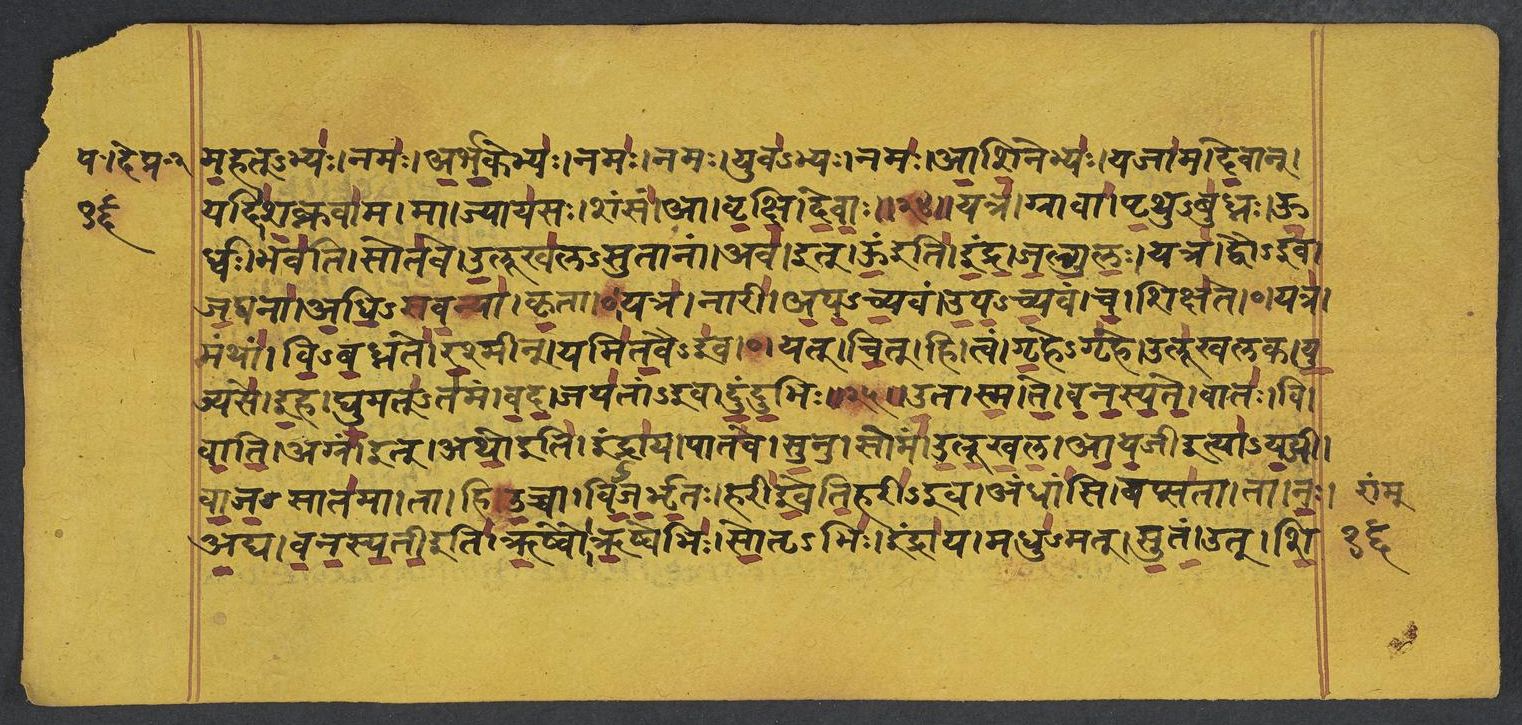
Penn Ms. Coll. 390 Item 41, fol. 16v (OPenn image 18, upper leaf). Checked on the image: the Rigveda text on this page begins in RV 1.27.13 ‹mahat-bhyaḥ namaḥ arbhakebhyaḥ namaḥ›. The next page with Rigveda text, fol. 17r, begins in RV 1.28.9 ‹-śiṣṭam camvoḥ bhara somam›. Verse 1.27.13 ends on this page; 1.27.13 begins on fol. 16r.
13namo̍ ma̱hadbhyo̱ namo̍ arbha̱kebhyo̱ namo̱ yuva̍bhyo̱ nama̍ āśi̱nebhya̍ḥ | yajā̍ma de̱vān yadi̍ śa̱knavā̍ma̱ mā jyāya̍sa̱ḥ śaṁsa̱m ā vṛ̍kṣi devāḥ ||
Compare: Padapāṭha (word-by-word text written in the manuscript; Sansknet e-text via GRETIL)
13namaḥ | mahat-bhyaḥ | namaḥ | arbhakebhyaḥ | namaḥ | yuvabhyaḥ | namaḥ | āśinebhyaḥ | yajāma | devān | yadi | śaknavāma | mā | jyāyasaḥ | śaṃsam | ā | vṛkṣi | devāḥ
13Glory to Gods, the mighty and the lesser glory to Gods the younger and the elder! Let us, if we have power, pay the God worship: no better prayer than this, ye Gods, acknowledge.
Notes
- Sanskrit: Aufrecht's edition (1877) with the Vedic accents, as entered by van Nooten and Holland (GRETIL).
- English: Ralph T. H. Griffith, The Hymns of the Rigveda (1889-1892; 2nd ed. 1896-1897), from the VedaWeb digital text; OCR slips in that text were corrected against the printed 2nd edition (data/sources/rigveda/griffith_errata.json).
- Padapāṭha (edition text): Sansknet e-text via GRETIL (CC BY-NC-SA 4.0).
Cite
Sources
- Source: Penn Ms. Coll. 390 Item 41 (undated (catalogued with Penn's 18th-19th c. Vedic manuscripts)), OPenn, Public Domain Mark + Aufrecht's accented text (GRETIL) + Griffith's English (VedaWeb) (holding institution)
- Critical edition: Aufrecht (1877), accented e-text via GRETIL
← previous · → next · v cycle view · l back to library