Rigveda 1.3: To Asvins, Indra, all the gods and Sarasvati
Introduction
Rigveda 1.3 is a hymn of 12 verses addressed to Asvins, Indra, all the gods and Sarasvati. It stands in book (maṇḍala) 1, a collection of hymns by many families of poets. The Rigveda is the oldest collection of Sanskrit hymns, composed in the second half of the second millennium BCE and handed down orally for many centuries before it was written down.
The manuscript shown is Penn Ms. Coll. 390 Item 41 (University of Pennsylvania), an undated paper manuscript of the padapāṭha (the word-by-word recitation text, in which every word is written separately and compounds are split) of the whole Ṛgveda in Devanāgarī, 884 leaves in fascicles, 7-9 lines to the page, accents in red; this hymn stands on fol. 2r-2v. Each section below gives the verses that end on one page; the page boundaries were read on the images (the opening words of every page), not counted out. Where the manuscript is a padapāṭha (the word-by-word recitation text), the section shows Aufrecht's continuous (saṃhitā) text first and, as the edition text, the padapāṭha of the same verses, which is the form written on the page.
How was this verified? (Provenance)
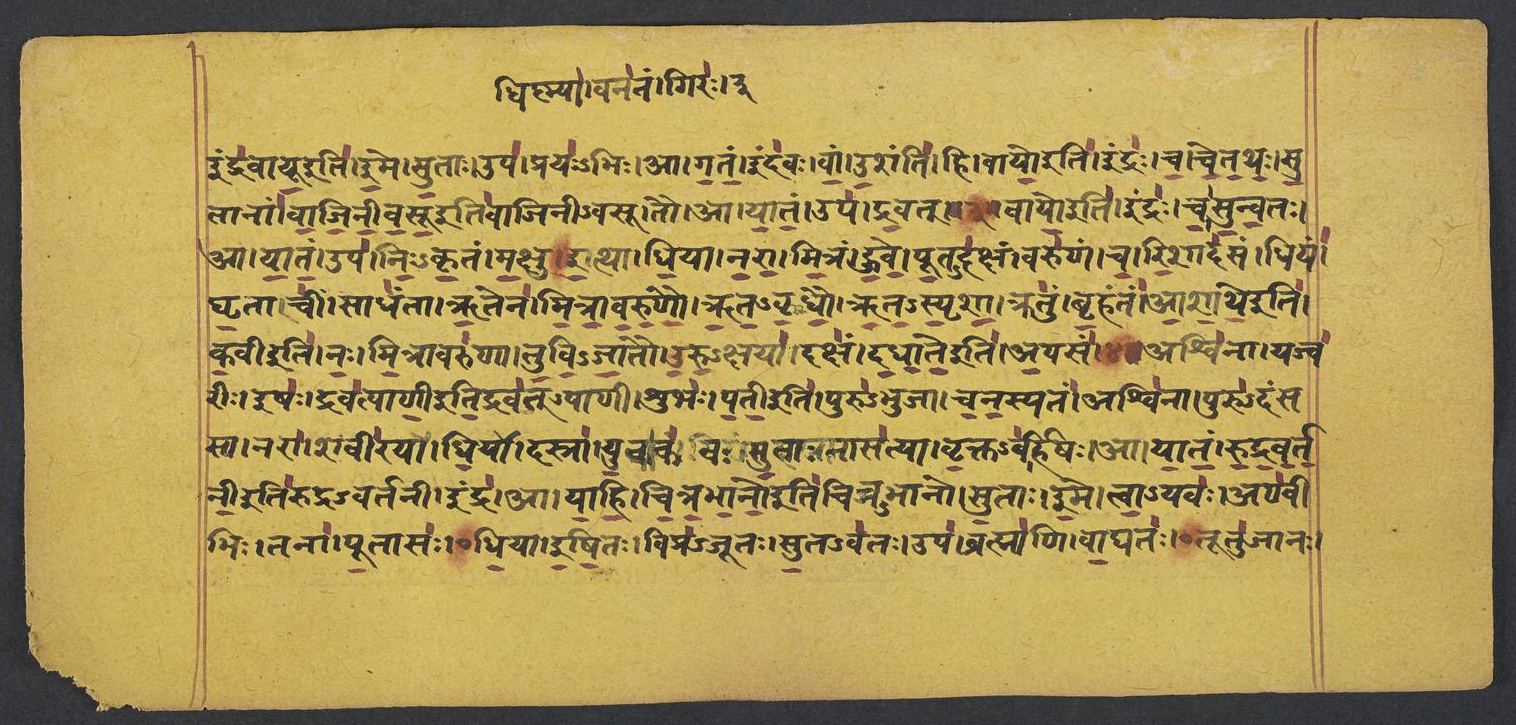
Where on the image
Penn Ms. Coll. 390 Item 41, fol. 2r (OPenn image 3, lower leaf). Checked on the image: the Rigveda text on this page begins in RV 1.2.4 ‹indravāyūiti ime sutāḥ upa›. The next page with Rigveda text, fol. 2v, begins in RV 1.3.6 ‹upa brahmāṇi hari-vaḥ sute›. Verses 1.3.1-5 end on this page.
1aśvi̍nā̱ yajva̍rī̱r iṣo̱ drava̍tpāṇī̱ śubha̍s patī | puru̍bhujā cana̱syata̍m ||
2aśvi̍nā̱ puru̍daṁsasā̱ narā̱ śavī̍rayā dhi̱yā | dhiṣṇyā̱ vana̍ta̱ṁ gira̍ḥ ||
3dasrā̍ yu̱vāka̍vaḥ su̱tā nāsa̍tyā vṛ̱ktaba̍rhiṣaḥ | ā yā̍taṁ rudravartanī ||
4indrā yā̍hi citrabhāno su̱tā i̱me tvā̱yava̍ḥ | aṇvī̍bhi̱s tanā̍ pū̱tāsa̍ḥ ||
5indrā yā̍hi dhi̱yeṣi̱to vipra̍jūtaḥ su̱tāva̍taḥ | upa̱ brahmā̍ṇi vā̱ghata̍ḥ ||
Compare: Padapāṭha (word-by-word text written in the manuscript; Sansknet e-text via GRETIL)
1aśvinā | yajvarīḥ | iṣaḥ | dravatpāṇī itidravat-pāṇī | śubhaḥ | patī iti | puru-bhujā | canasyatam
2aśvinā | puru-daṃsasā | narā | śavīrayā | dhiyā | dhiṣṇyā | vanatam | giraḥ
3dasrā | yuvākavaḥ | sutāḥ | nāsatyā | vṛkta-barhiṣaḥ | ā | yātam | rudravartanī itirudra-vartanī
4indra | ā | yāhi | citrabhāno iticitra-bhāno | sutāḥ | ime | tvāyavaḥ | aṇvībhiḥ | tanā | pūtāsaḥ
5indra | ā | yāhi | dhiyā | iṣitaḥ | vipra-jūtaḥ | suta-vataḥ | upa | brahmāṇi | vāghataḥ
1YE Aṣvins, rich in treasure, Lords of splendour, having nimble hands, Accept the sacrificial food.
2Ye Aṣvins, rich in wondrous deeds, ye heroes worthy of our praise, Accept our songs with mighty thought.
3Nisatyas, wonder-workers, yours are these libations with clipt grass: Come ye whose paths are red with flame.
4O Indra marvellously bright, come, these libations long for thee, Thus by fine fingers purified.
5Urged by the holy singer, sped by song, come, Indra, to the prayers, Of the libation-pouring priest.
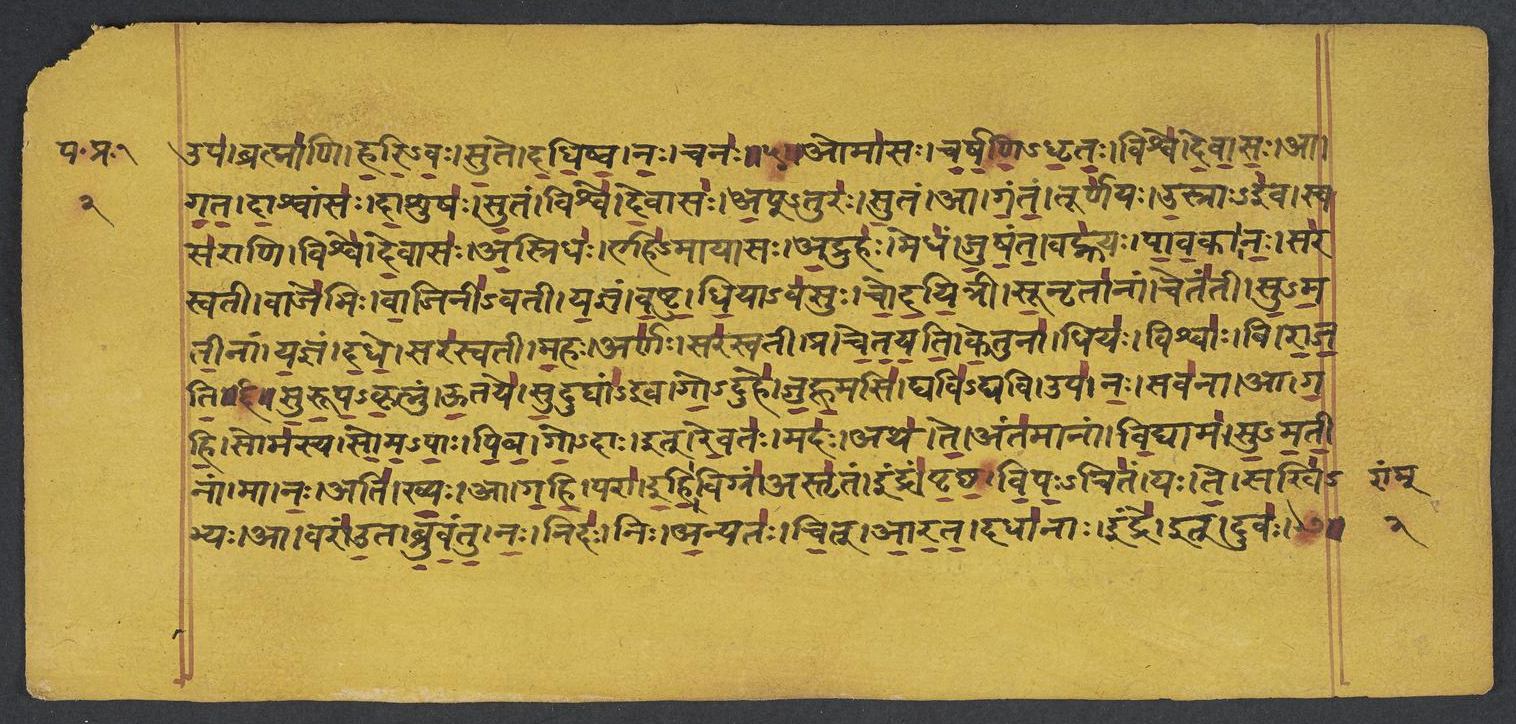
Where on the image
Penn Ms. Coll. 390 Item 41, fol. 2v (OPenn image 4, upper leaf). Checked on the image: the Rigveda text on this page begins in RV 1.3.6 ‹upa brahmāṇi hari-vaḥ sute›. The next page with Rigveda text, fol. 3r, begins in RV 1.4.6 ‹uta naḥ subhagān ariḥ›. Verses 1.3.6-12 end on this page; 1.3.6 begins on fol. 2r.
6indrā yā̍hi̱ tūtu̍jāna̱ upa̱ brahmā̍ṇi harivaḥ | su̱te da̍dhiṣva na̱ś cana̍ḥ ||
7omā̍saś carṣaṇīdhṛto̱ viśve̍ devāsa̱ ā ga̍ta | dā̱śvāṁso̍ dā̱śuṣa̍ḥ su̱tam ||
8viśve̍ de̱vāso̍ a̱ptura̍ḥ su̱tam ā ga̍nta̱ tūrṇa̍yaḥ | u̱srā i̍va̱ svasa̍rāṇi ||
9viśve̍ de̱vāso̍ a̱sridha̱ ehi̍māyāso a̱druha̍ḥ | medha̍ṁ juṣanta̱ vahna̍yaḥ ||
10pā̱va̱kā na̱ḥ sara̍svatī̱ vāje̍bhir vā̱jinī̍vatī | ya̱jñaṁ va̍ṣṭu dhi̱yāva̍suḥ ||
11co̱da̱yi̱trī sū̱nṛtā̍nā̱ṁ ceta̍ntī sumatī̱nām | ya̱jñaṁ da̍dhe̱ sara̍svatī ||
12ma̱ho arṇa̱ḥ sara̍svatī̱ pra ce̍tayati ke̱tunā̍ | dhiyo̱ viśvā̱ vi rā̍jati ||
Compare: Padapāṭha (word-by-word text written in the manuscript; Sansknet e-text via GRETIL)
6indra | ā | yāhi | tūtujānaḥ | upa | brahmāṇi | hari-vaḥ | sute | dadhiṣva | naḥ | canaḥ
7omāsaḥ | carṣaṇi-dhṛtaḥ | viśve | devāsaḥ | ā | gata | dāśvāṃsaḥ | dāśuṣaḥ | sutam
8viśve | devāsaḥ | ap-turaḥ | sutam | ā | ganta | tūrṇayaḥ | usrāḥ-iva | svasarāṇi
9viśve | devāsaḥ | asridhaḥ | ehi-māyāsaḥ | adruhaḥ | medham | juṣanta | vahnayaḥ
10pāvakā | naḥ | sarasvatī | vājebhiḥ | vājinī-vatī | yajñam | vaṣṭu | dhiyāvasuḥ
11codayitrī | sūnṛtānām | cetantī | su-matīnām | yajñam | dadhe | sarasvatī
12mahaḥ | arṇaḥ | sarasvatī | pra | cetayati | ketunā | dhiyaḥ | viśvāḥ | vi | rājati
6Approach, O Indra, hasting thee, Lord of Bay Horses, to the prayers. In our libation take delight.
7Ye Viṣvedevas, who protect, reward, and cherish men, approach Your worshipper's drink-offering.
8Ye Viṣvedevas, swift at work, come hither quickly to the draught, As milch-kine hasten to their stalls.
9The Viṣvedevas, changing shape like serpents, fearless, void of guile, Bearers, accept the sacred draught
10Wealthy in spoil, enriched with hymns, may bright Sarasvatî desire, With eager love, our sacrifice.
11Inciter of all pleasant songs, inspirer o all gracious thought, Sarasvatî accept our rite
12Sarasvatî, the mighty flood,– she with be light illuminates, She brightens every pious thought.
Notes
- Sanskrit: Aufrecht's edition (1877) with the Vedic accents, as entered by van Nooten and Holland (GRETIL).
- English: Ralph T. H. Griffith, The Hymns of the Rigveda (1889-1892; 2nd ed. 1896-1897), from the VedaWeb digital text; OCR slips in that text were corrected against the printed 2nd edition (data/sources/rigveda/griffith_errata.json).
- Padapāṭha (edition text): Sansknet e-text via GRETIL (CC BY-NC-SA 4.0).
Cite
Sources
- Source: Penn Ms. Coll. 390 Item 41 (undated (catalogued with Penn's 18th-19th c. Vedic manuscripts)), OPenn, Public Domain Mark + Aufrecht's accented text (GRETIL) + Griffith's English (VedaWeb) (holding institution)
- Critical edition: Aufrecht (1877), accented e-text via GRETIL
← previous · → next · v cycle view · l back to library