Rigveda 1.30: To Indra, final verses Asvins and Usas
Introduction
Rigveda 1.30 is a hymn of 22 verses addressed to Indra, final verses Asvins and Usas. It stands in book (maṇḍala) 1, a collection of hymns by many families of poets. The Rigveda is the oldest collection of Sanskrit hymns, composed in the second half of the second millennium BCE and handed down orally for many centuries before it was written down.
The manuscript shown is Penn Ms. Coll. 390 Item 41 (University of Pennsylvania), an undated paper manuscript of the padapāṭha (the word-by-word recitation text, in which every word is written separately and compounds are split) of the whole Ṛgveda in Devanāgarī, 884 leaves in fascicles, 7-9 lines to the page, accents in red; this hymn stands on fol. 17r-18r. Each section below gives the verses that end on one page; the page boundaries were read on the images (the opening words of every page), not counted out. Where the manuscript is a padapāṭha (the word-by-word recitation text), the section shows Aufrecht's continuous (saṃhitā) text first and, as the edition text, the padapāṭha of the same verses, which is the form written on the page.
How was this verified? (Provenance)
Where on the image
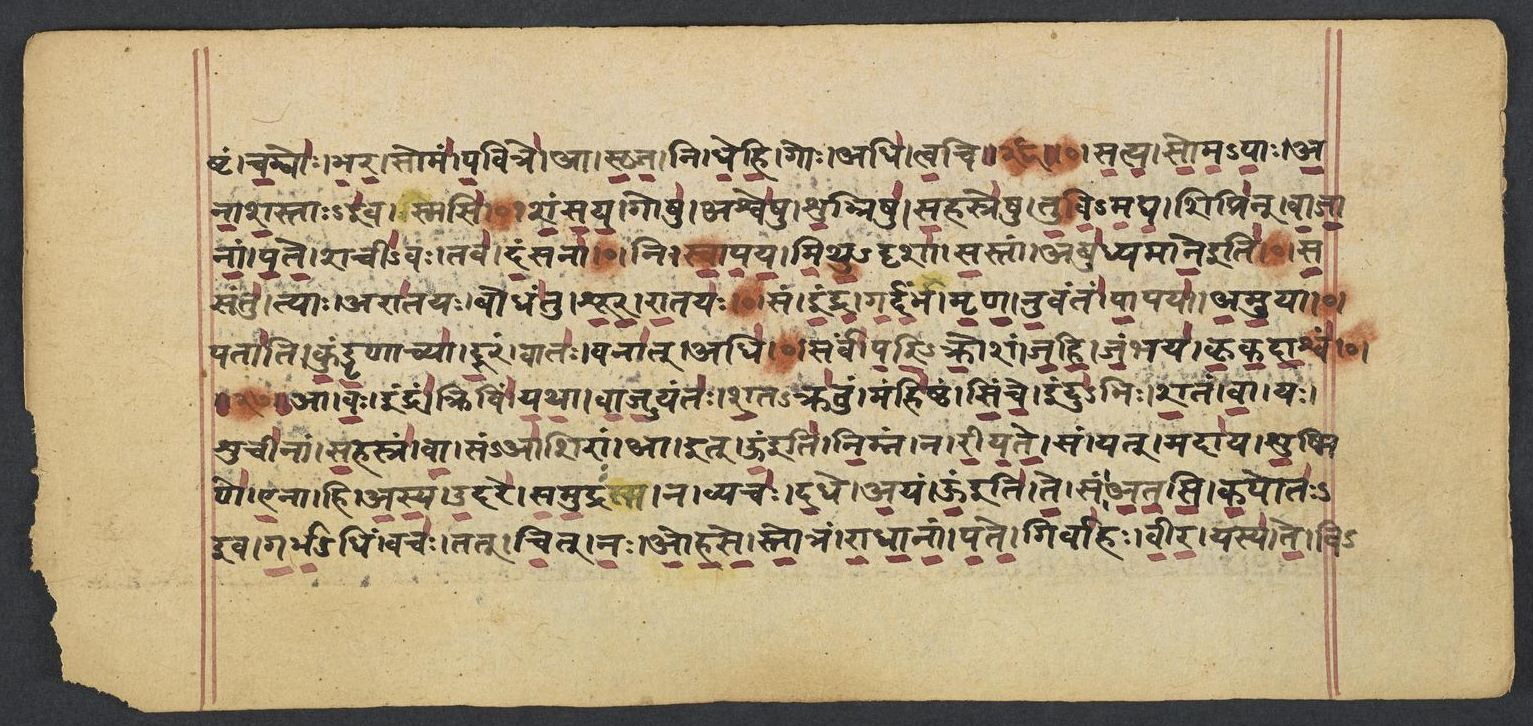
Penn Ms. Coll. 390 Item 41, fol. 17r (OPenn image 18, lower leaf). Checked on the image: the Rigveda text on this page begins in RV 1.28.9 ‹-śiṣṭam camvoḥ bhara somam›. The next page with Rigveda text, fol. 17v, begins in RV 1.30.5 ‹-vi-bhūtiḥ astu sunṛtā›. Verses 1.30.1-4 end on this page.
1ā va̱ indra̱ṁ krivi̍ṁ yathā vāja̱yanta̍ḥ śa̱takra̍tum | maṁhi̍ṣṭhaṁ siñca̱ indu̍bhiḥ ||
2śa̱taṁ vā̱ yaḥ śucī̍nāṁ sa̱hasra̍ṁ vā̱ samā̍śirām | ed u̍ ni̱mnaṁ na rī̍yate ||
3saṁ yan madā̍ya śu̱ṣmiṇa̍ e̱nā hy a̍syo̱dare̍ | sa̱mu̱dro na vyaco̍ da̱dhe ||
4a̱yam u̍ te̱ sam a̍tasi ka̱pota̍ iva garbha̱dhim | vaca̱s tac ci̍n na ohase ||
Compare: Padapāṭha (word-by-word text written in the manuscript; Sansknet e-text via GRETIL)
1ā | vaḥ | indram | krivim | yathā | vāja-yantaḥ | śata-kratum | maṃhiṣṭhaṃsiñce | indu-bhiḥ
2śatam | vā | yaḥ | śucīnām | sahasram | vā | sam-āśirām | ā | it | oṃ iti | nimnam | na | rīyate
3sam | yat | madāya | śuṣmiṇe | enā | hi | asya | udare | samudraḥ | na | vyacaḥ | dadhe
4ayam | oṃ iti | te | sam | atasi | kapotaḥ-iva | garbha-dhim | vacaḥ | tat | cit | naḥ | ohase
1WE seeking strength with Soma-drops fill full your Indra like a well, Most liberal, Lord of Hundred Powers,
2Who lets a hundred of the pure, a thousand of the milk-blent draughts Flow, even as down a depth, to him;
3When for the strong, the rapturous joy he in this manner hath made room Within his belly, like the sea.
4This is thine own. Thou drawest near, as turns a pigeon to his mate: Thou carest too for this our prayer.
Where on the image
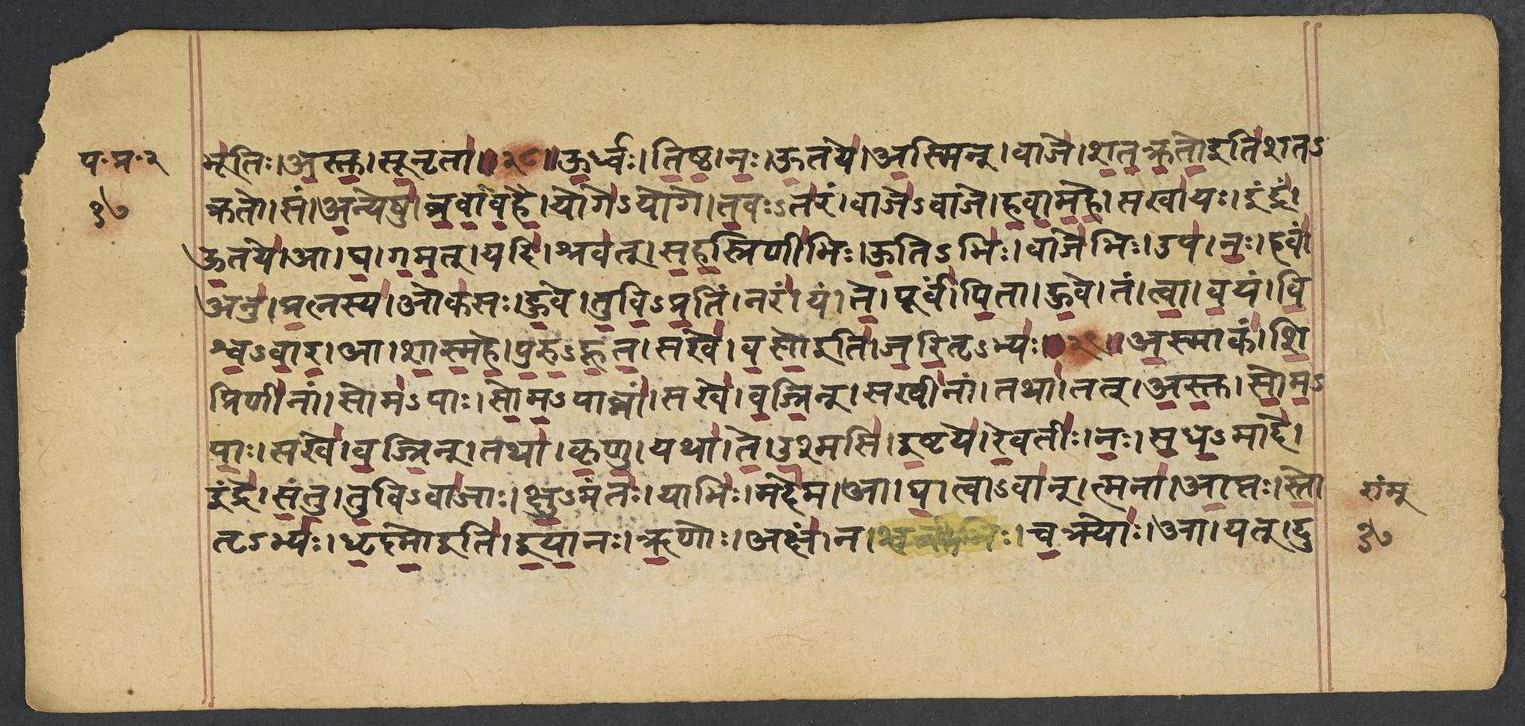
Penn Ms. Coll. 390 Item 41, fol. 17v (OPenn image 19, upper leaf). Checked on the image: the Rigveda text on this page begins in RV 1.30.5 ‹-vi-bhūtiḥ astu sunṛtā›. The next page with Rigveda text, fol. 18r, begins in RV 1.30.15 ‹-duvaḥ śatakrato itiśata-krato ā›. Verses 1.30.5-14 end on this page; 1.30.5 begins on fol. 17r.
5sto̱traṁ rā̍dhānām pate̱ girvā̍ho vīra̱ yasya̍ te | vibhū̍tir astu sū̱nṛtā̍ ||
6ū̱rdhvas ti̍ṣṭhā na ū̱taye̱ 'smin vāje̍ śatakrato | sam a̱nyeṣu̍ bravāvahai ||
7yoge̍-yoge ta̱vasta̍ra̱ṁ vāje̍-vāje havāmahe | sakhā̍ya̱ indra̍m ū̱taye̍ ||
8ā ghā̍ gama̱d yadi̱ śrava̍t saha̱sriṇī̍bhir ū̱tibhi̍ḥ | vāje̍bhi̱r upa̍ no̱ hava̍m ||
9anu̍ pra̱tnasyauka̍so hu̱ve tu̍vipra̱tiṁ nara̍m | yaṁ te̱ pūrva̍m pi̱tā hu̱ve ||
10taṁ tvā̍ va̱yaṁ vi̍śvavā̱rā śā̍smahe puruhūta | sakhe̍ vaso jari̱tṛbhya̍ḥ ||
11a̱smāka̍ṁ śi̱priṇī̍nā̱ṁ soma̍pāḥ soma̱pāvnā̍m | sakhe̍ vajri̱n sakhī̍nām ||
12tathā̱ tad a̍stu somapā̱ḥ sakhe̍ vajri̱n tathā̍ kṛṇu | yathā̍ ta u̱śmasī̱ṣṭaye̍ ||
13re̱vatī̍r naḥ sadha̱māda̱ indre̍ santu tu̱vivā̍jāḥ | kṣu̱manto̱ yābhi̱r made̍ma ||
14ā gha̱ tvāvā̱n tmanā̱ptaḥ sto̱tṛbhyo̍ dhṛṣṇav iyā̱naḥ | ṛ̱ṇor akṣa̱ṁ na ca̱kryo̍ḥ ||
Compare: Padapāṭha (word-by-word text written in the manuscript; Sansknet e-text via GRETIL)
5stotram | rādhānām | pate | girvāhaḥ | vīra | yasya | te | vi-bhūtiḥ | astu | sunṛtā
6ūrdhvaḥ | tiṣṭha | naḥ | ūtaye | asmin | vāje | śatakrato itiśata-krato | sam | anyeṣu | bravāvahai
7yoge--yoge | tavaḥ-taram | vāje--vāje | havāmahe | sakhāyaḥ | indram | ūtaye
8ā | gha | gamat | yadi | śravat | sahasriṇībhiḥ | ūti-bhiḥ | vājebhiḥ | upa | naḥ | havam
9anu | pratnasya | okasaḥ | huve | tuvi-pratim | naram | yam | te | pūrvam | pitā | huve
10tam | tvā | vayam | viśva-vāra | ā | śāsmahe | puru-hūta | sakhe | vaso iti | jaritṛ-bhyaḥ
11asmākam | śipriṇīnām | soma-pāḥ | soma-pāvnām | sakhe | vajrin | sakhīnām
12tathā | tat | astu | soma-pāḥ | sakhe | vajrin | tathā | kṛṇu | yathā | te | uśmasi | iṣṭaye
13revatīḥ | naḥ | sadha-māde | indre | santu | tuvi-vājāḥ | kṣu-mantaḥ | yābhiḥ | madema
14ā | gha | tvāvān | tmanā | āptaḥ | stotṛ-bhyaḥ | dhṛṣṇo iti | iyānaḥ | ṛṇoḥ | akṣam | na | cakryoḥ
5O Hero, Lord of Bounties, praised in hymns, may power and joyfulness Be his who sings the laud to thee.
6Lord of a Hundred Powers, stand up to lend us succour in this fight In others too let us agree.
7In every need, in every fray we call as friends to succour us Indra the mightiest of all.
8If he will hear us let him come with succour of a thousand kinds, And all that strengthens, to our call.
9I call him mighty to resist, the Hero of our ancient home, Thee whom my sire invoked of old.
10We pray to thee, O much-invoked, rich in all precious gifts, O Friend, Kind God to those who sing thy praise.
11O Soma-drinker, Thunder-armed, Friend of our lovely-featured dames And of our Soma-drinking friends.
12Thus, Soma-drinker, may it be; thus, Friend, who wieldest thunder, act To aid each wish as we desire.
13With Indra splendid feasts be ours, rich in all strengthening things wherewith, Wealthy in food, we may rejoice.
14Like thee, thyself, the singers' Friend, thou movest, as it were, besought, Bold One, the axle of the car.
Where on the image
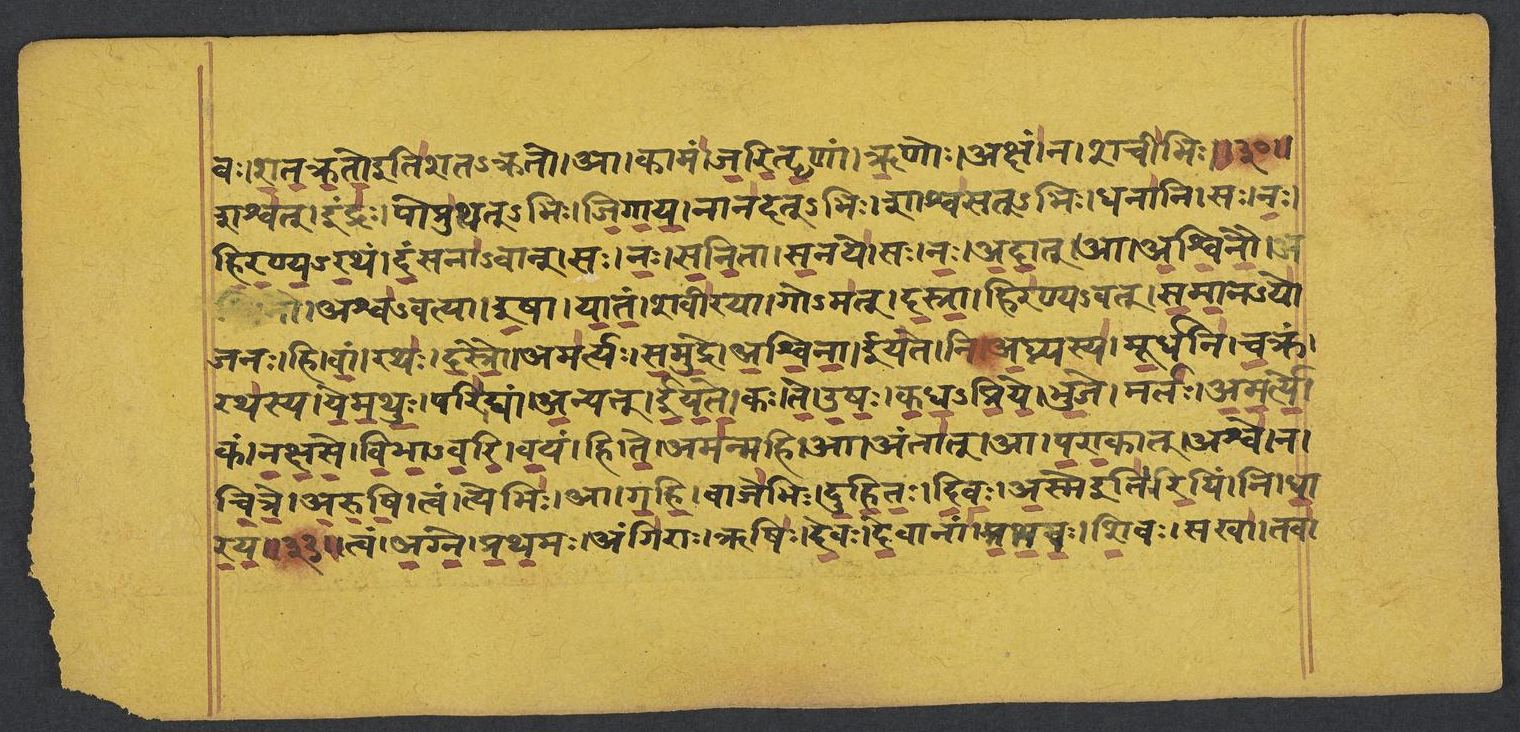
Penn Ms. Coll. 390 Item 41, fol. 18r (OPenn image 19, lower leaf). Checked on the image: the Rigveda text on this page begins in RV 1.30.15 ‹-duvaḥ śatakrato itiśata-krato ā›. The next page with Rigveda text, fol. 18v, begins in RV 1.31.1 ‹vrate kavayaḥ vidmanāapasaḥ ajāyanta›. Verses 1.30.15-22 end on this page; 1.30.15 begins on fol. 17v.
15ā yad duva̍ḥ śatakrata̱v ā kāma̍ṁ jaritṝ̱ṇām | ṛ̱ṇor akṣa̱ṁ na śacī̍bhiḥ ||
16śaśva̱d indra̱ḥ popru̍thadbhir jigāya̱ nāna̍dadbhi̱ḥ śāśva̍sadbhi̱r dhanā̍ni | sa no̍ hiraṇyara̱thaṁ da̱ṁsanā̍vā̱n sa na̍ḥ sani̱tā sa̱naye̱ sa no̍ 'dāt ||
17āśvi̍nā̱v aśvā̍vatye̱ṣā yā̍ta̱ṁ śavī̍rayā | goma̍d dasrā̱ hira̍ṇyavat ||
18sa̱mā̱nayo̍jano̱ hi vā̱ṁ ratho̍ dasrā̱v ama̍rtyaḥ | sa̱mu̱dre a̍śvi̱neya̍te ||
19ny a1̱̍ghnyasya̍ mū̱rdhani̍ ca̱kraṁ ratha̍sya yemathuḥ | pari̱ dyām a̱nyad ī̍yate ||
20kas ta̍ uṣaḥ kadhapriye bhu̱je marto̍ amartye | kaṁ na̍kṣase vibhāvari ||
21va̱yaṁ hi te̱ ama̍nma̱hy āntā̱d ā pa̍rā̱kāt | aśve̱ na ci̍tre aruṣi ||
22tvaṁ tyebhi̱r ā ga̍hi̱ vāje̍bhir duhitar divaḥ | a̱sme ra̱yiṁ ni dhā̍raya ||
Compare: Padapāṭha (word-by-word text written in the manuscript; Sansknet e-text via GRETIL)
15ā | yat | duvaḥ | śatakrato itiśata-krato | ā | kāmam | jaritṝṇām | ṛṇoḥ | akṣam | na | śacībhiḥ
16śaśvat | indraḥ | popruthat-bhiḥ | jagāya | nānadat-bhiḥ | śāśvasat-bhiḥ | dhanāni | saḥ | naḥ | hiraṇya-ratham | daṃsanāvān | saḥ | naḥ | sanitā | sanaye | saḥ | naḥ | adāt
17ā | aśvinau | aśva-vatyā | iṣā | yātam | śavīrayā | go--mat | dasrā | hiraṇya-vat
18samāna-yojanaḥ | hi | vām | rathaḥ | dasrau | amartyaḥ | samudre | aśvinā | īyate
19ni | aghnyasya | mūrdhani | cakram | rathasya | yemathuḥ | pari | dyām | anyat | īyate
20kaḥ | te | uṣaḥ | kadha-priye | bhuje | martaḥ | amartye | kam | nakṣase | vibhā-vari
21vayam | hi | te | amanmahi | ā | antāt | ā | parākāt | aśve | na | citre | aruṣi
22tvam | tyebhiḥ | ā | gahi | vājebhiḥ | duhitaḥ | divaḥ | asme iti | rayim | ni | dhāraya
15That, Ṣatakratu, thou to grace and please thy praisers, as it were, Stirrest the axle with thy strength.
16With champing, neighing loudly-snorting horses Indra hath ever won himself great treasures A car of gold hath he whose deeds are wondrous received from us, and let us too receive it.
17Come, Aṣvins, with enduring strength wealthy in horses and in kine, And gold, O ye of wondrous deeds.
18Your chariot yoked for both alike, immortal, ye of mighty acts, Travels, O Aṣvins, in the sea.
19High on the forehead of the Bull one chariot wheel ye ever keep, The other round the sky revolves.
20What mortal, O immortal Dawn, enjoyeth thee? Where lovest thou? To whom, O radiant, dost thou go?
21For we have had thee in our thoughts whether anear or far away, Red-hued and like a dappled mare.
22Hither, O Daughter of the Sky, come thou with these thy strengthenings, And send thou riches down to us.
Notes
- Sanskrit: Aufrecht's edition (1877) with the Vedic accents, as entered by van Nooten and Holland (GRETIL).
- English: Ralph T. H. Griffith, The Hymns of the Rigveda (1889-1892; 2nd ed. 1896-1897), from the VedaWeb digital text; OCR slips in that text were corrected against the printed 2nd edition (data/sources/rigveda/griffith_errata.json).
- Padapāṭha (edition text): Sansknet e-text via GRETIL (CC BY-NC-SA 4.0).
Cite
Sources
- Source: Penn Ms. Coll. 390 Item 41 (undated (catalogued with Penn's 18th-19th c. Vedic manuscripts)), OPenn, Public Domain Mark + Aufrecht's accented text (GRETIL) + Griffith's English (VedaWeb) (holding institution)
- Critical edition: Aufrecht (1877), accented e-text via GRETIL
← previous · → next · v cycle view · l back to library