Rigveda 1.31: To Agni
Introduction
Rigveda 1.31 is a hymn of 18 verses addressed to Agni. It stands in book (maṇḍala) 1, a collection of hymns by many families of poets. The Rigveda is the oldest collection of Sanskrit hymns, composed in the second half of the second millennium BCE and handed down orally for many centuries before it was written down.
The manuscript shown is Penn Ms. Coll. 390 Item 41 (University of Pennsylvania), an undated paper manuscript of the padapāṭha (the word-by-word recitation text, in which every word is written separately and compounds are split) of the whole Ṛgveda in Devanāgarī, 884 leaves in fascicles, 7-9 lines to the page, accents in red; this hymn stands on fol. 18r-20r. Each section below gives the verses that end on one page; the page boundaries were read on the images (the opening words of every page), not counted out. Where the manuscript is a padapāṭha (the word-by-word recitation text), the section shows Aufrecht's continuous (saṃhitā) text first and, as the edition text, the padapāṭha of the same verses, which is the form written on the page.
How was this verified? (Provenance)
Where on the image
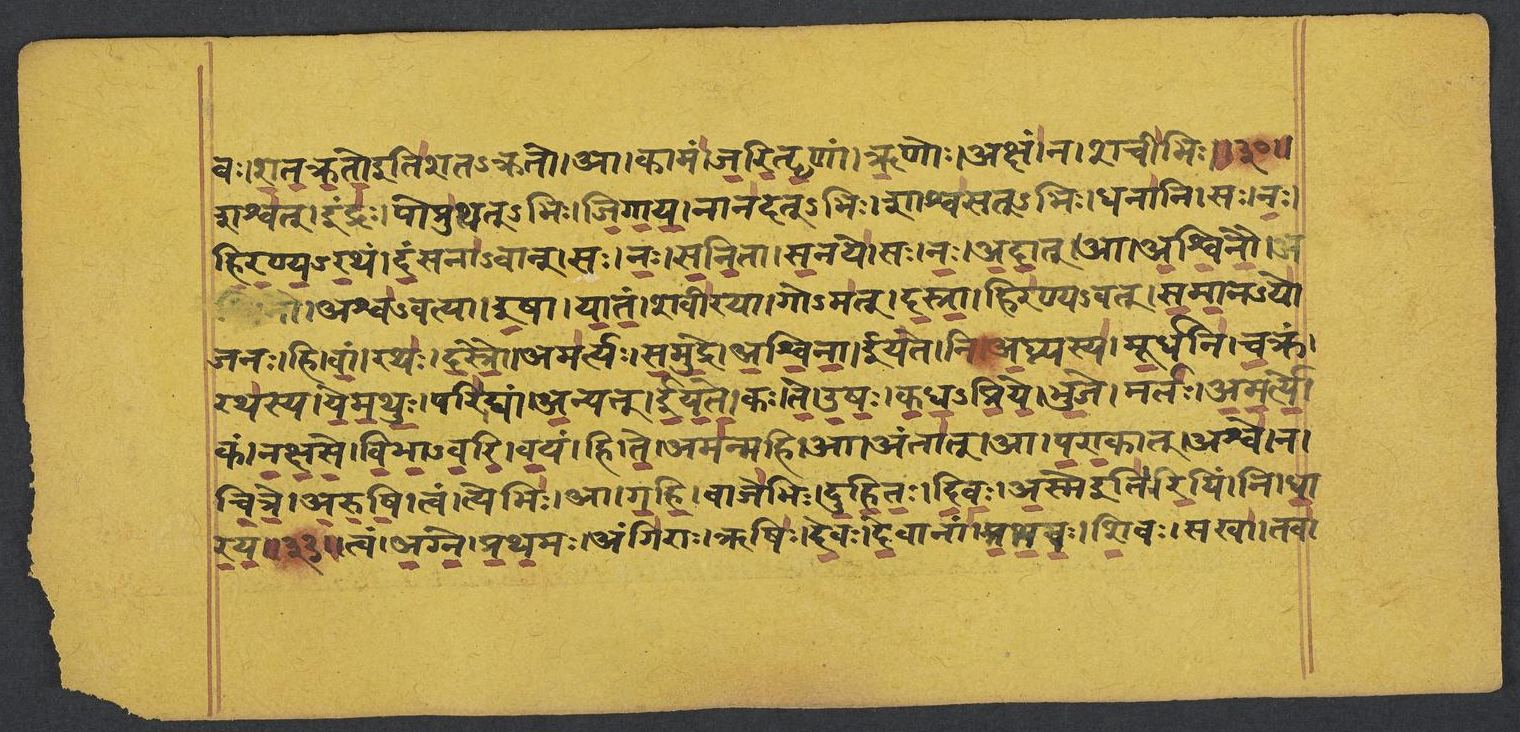
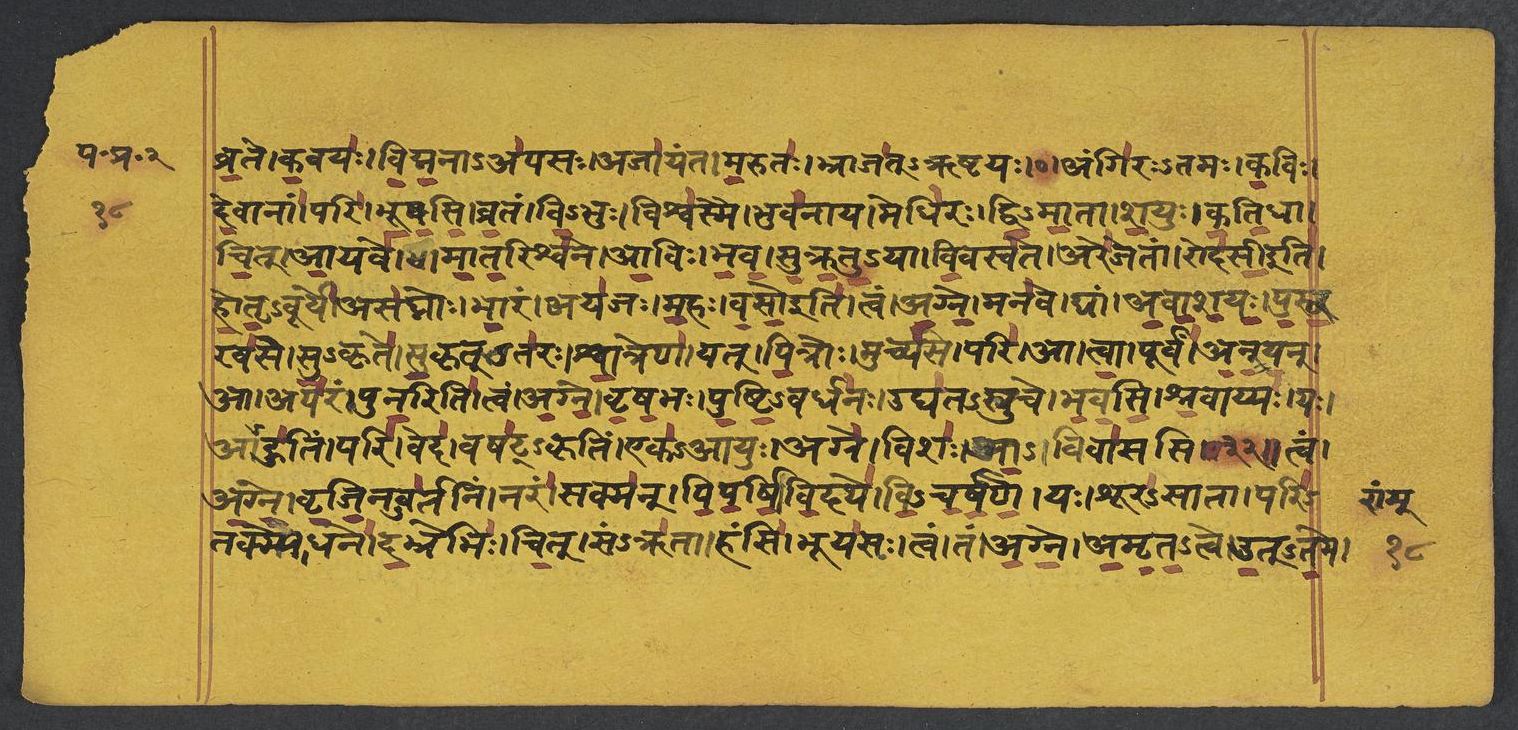
Penn Ms. Coll. 390 Item 41, fol. 18v (OPenn image 20, upper leaf). Checked on the image: the Rigveda text on this page begins in RV 1.31.1 ‹vrate kavayaḥ vidmanāapasaḥ ajāyanta›. The next page with Rigveda text, fol. 19r, begins in RV 1.31.7 ‹martam dadhāsi śravase dive--dive›. Verses 1.31.1-6 end on this page; 1.31.1 begins on fol. 18r.
1tvam a̍gne pratha̱mo aṅgi̍rā̱ ṛṣi̍r de̱vo de̱vānā̍m abhavaḥ śi̱vaḥ sakhā̍ | tava̍ vra̱te ka̱vayo̍ vidma̱nāpa̱so 'jā̍yanta ma̱ruto̱ bhrāja̍dṛṣṭayaḥ ||
2tvam a̍gne pratha̱mo aṅgi̍rastamaḥ ka̱vir de̱vānā̱m pari̍ bhūṣasi vra̱tam | vi̱bhur viśva̍smai̱ bhuva̍nāya̱ medhi̍ro dvimā̱tā śa̱yuḥ ka̍ti̱dhā ci̍d ā̱yave̍ ||
3tvam a̍gne pratha̱mo mā̍ta̱riśva̍na ā̱vir bha̍va sukratū̱yā vi̱vasva̍te | are̍jetā̱ṁ roda̍sī hotṛ̱vūrye 'sa̍ghnor bhā̱ram aya̍jo ma̱ho va̍so ||
4tvam a̍gne̱ mana̍ve̱ dyām a̍vāśayaḥ purū̱rava̍se su̱kṛte̍ su̱kṛtta̍raḥ | śvā̱treṇa̱ yat pi̱tror mucya̍se̱ pary ā tvā̱ pūrva̍m anaya̱nn āpa̍ra̱m puna̍ḥ ||
5tvam a̍gne vṛṣa̱bhaḥ pu̍ṣṭi̱vardha̍na̱ udya̍tasruce bhavasi śra̱vāyya̍ḥ | ya āhu̍ti̱m pari̱ vedā̱ vaṣa̍ṭkṛti̱m ekā̍yu̱r agre̱ viśa̍ ā̱vivā̍sasi ||
6tvam a̍gne vṛji̱nava̍rtani̱ṁ nara̱ṁ sakma̍n piparṣi vi̱dathe̍ vicarṣaṇe | yaḥ śūra̍sātā̱ pari̍takmye̱ dhane̍ da̱bhrebhi̍ś ci̱t samṛ̍tā̱ haṁsi̱ bhūya̍saḥ ||
Compare: Padapāṭha (word-by-word text written in the manuscript; Sansknet e-text via GRETIL)
1tvam | agne | prathamāḥ | aṅgirā | ṛṣiḥ | devaḥ | devānām | abhavaḥ | śivaḥ | sakhā | tava | vrate | kavayaḥ | vidmanāapasaḥ | ajāyanta | marutaḥ | bhrājat-ṛṣṭayaḥ
2tvam | agne | prathamaḥ | aṅgiraḥ-tamaḥ | kaviḥ | devānām | pari | bhūṣasi | vratam | vi-bhuḥ | viśvasmai | bhuvanāya | medhiraḥ | dvi-mātā | śayuḥ | katidhā | cit | āyave
3tvam | agne | prathamaḥ | mātariśvane | āviḥ | bhava | sukratū-yā | vivasvate | arejetām | rodasī iti | hotṛ-vūrye | asaghnoḥ | bhāram | ayajaḥ | mahaḥ | vaso iti
4tvam | agne | manave | dyām | avāśayaḥ | purūravase | su-kṛte | sukṛt-taraḥ | śvātreṇa | yat | pitroḥ | mucyase | pari | ā | tvā | pūrvam | anayan | ā | aparam | punariti
5tvam | agne | vṛṣabhaḥ | puṣṭi-vardhanaḥ | udyata-sruce | bhavasi | śravāyyaḥ | yaḥ | āhutim | pari | veda | vaṣaṭ-kṛtim | eka-āyuḥ | agne | viśaḥ | āvivāsasi
6tvam | agne | vṛjina-vartanim | naram | sakman | piparṣi | vidathe | vi-carṣaṇe | yaḥ | śūra-sātā | pari-takmye | dhane | dabhrebhiḥ | cit | sam-ṛtā | haṃsi | bhūyasaḥ
1Thou, Agni, wast the earliest Angiras, a Seer; thou wast, a God thyself, the Gods' auspicious Friend. After thy holy ordinance the Maruts, sage, active through wisdom, -with their glittering spears, were born.
2O Agni, thou, the best and earliest Angiras, fulfillest as a Sage the holy law of Gods. Sprung from two mothers, wise, through all existence spread, resting in many a place for sake of living man.
3To Mâtariṣvan first thou, Agni, wast disclosed, and to Vivasvan through thy noble inward power. Heaven and Earth, Vasu! shook at the choosing of the Priest: the burthen thou didst bear, didst worship mighty Gods.
4Agni thou madest heaven to thunder for mankind; thou, yet more pious, for pious Purûravâs. When thou art rapidly freed from thy parents, first eastward they bear thee round, and, after, to the west.
5Thou, Agni, art a Bull who makes our store increase, to be invoked by him who lifts the ladle up. Well knowing the oblation with the hallowing word, uniting all who live, thou lightenest first our folk
6Agni, thou savest in the synod when pursued e'en him, farseeing One! who walks in evil ways. Thou, when the heroes fight for spoil which men rush, round, slayest in war the many by the hands of few.
Where on the image
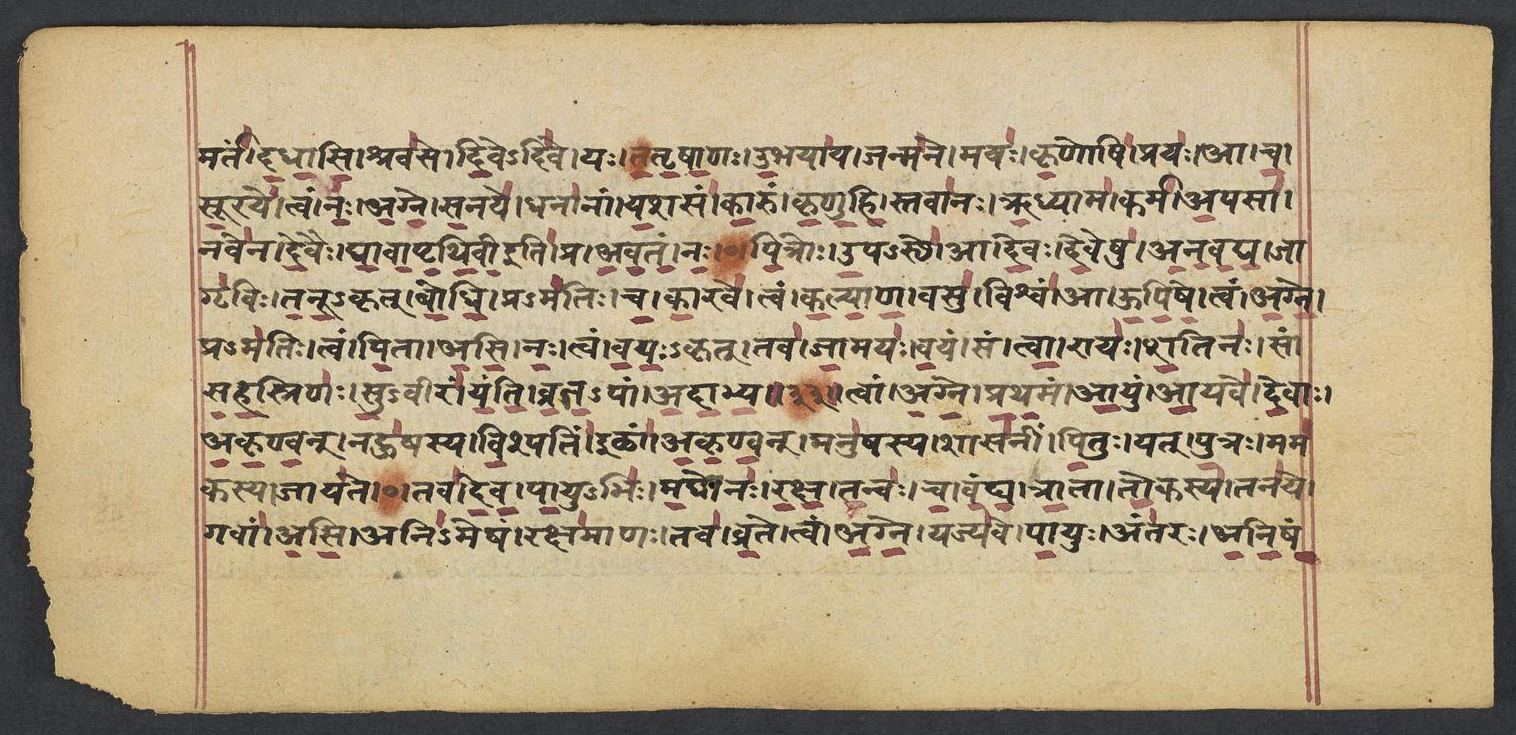
Penn Ms. Coll. 390 Item 41, fol. 19r (OPenn image 20, lower leaf). Checked on the image: the Rigveda text on this page begins in RV 1.31.7 ‹martam dadhāsi śravase dive--dive›. The next page with Rigveda text, fol. 19v, begins in RV 1.31.13 ‹-aniṣaṅgāya catuḥ-akṣaḥ idhyase yaḥ›. Verses 1.31.7-12 end on this page; 1.31.7 begins on fol. 18v.
7tvaṁ tam a̍gne amṛta̱tva u̍tta̱me marta̍ṁ dadhāsi̱ śrava̍se di̱ve-di̍ve | yas tā̍tṛṣā̱ṇa u̱bhayā̍ya̱ janma̍ne̱ maya̍ḥ kṛ̱ṇoṣi̱ praya̱ ā ca̍ sū̱raye̍ ||
8tvaṁ no̍ agne sa̱naye̱ dhanā̍nāṁ ya̱śasa̍ṁ kā̱ruṁ kṛ̍ṇuhi̱ stavā̍naḥ | ṛ̱dhyāma̱ karmā̱pasā̱ nave̍na de̱vair dyā̍vāpṛthivī̱ prāva̍taṁ naḥ ||
9tvaṁ no̍ agne pi̱tror u̱pastha̱ ā de̱vo de̱veṣv a̍navadya̱ jāgṛ̍viḥ | ta̱nū̱kṛd bo̍dhi̱ prama̍tiś ca kā̱rave̱ tvaṁ ka̍lyāṇa̱ vasu̱ viśva̱m opi̍ṣe ||
10tvam a̍gne̱ prama̍ti̱s tvam pi̱tāsi̍ na̱s tvaṁ va̍ya̱skṛt tava̍ jā̱mayo̍ va̱yam | saṁ tvā̱ rāya̍ḥ śa̱tina̱ḥ saṁ sa̍ha̱sriṇa̍ḥ su̱vīra̍ṁ yanti vrata̱pām a̍dābhya ||
11tvām a̍gne pratha̱mam ā̱yum ā̱yave̍ de̱vā a̍kṛṇva̱n nahu̍ṣasya vi̱śpati̍m | iḻā̍m akṛṇva̱n manu̍ṣasya̱ śāsa̍nīm pi̱tur yat pu̱tro mama̍kasya̱ jāya̍te ||
12tvaṁ no̍ agne̱ tava̍ deva pā̱yubhi̍r ma̱ghono̍ rakṣa ta̱nva̍ś ca vandya | trā̱tā to̱kasya̱ tana̍ye̱ gavā̍m a̱sy ani̍meṣa̱ṁ rakṣa̍māṇa̱s tava̍ vra̱te ||
Compare: Padapāṭha (word-by-word text written in the manuscript; Sansknet e-text via GRETIL)
7tvam | tam | agne | amṛta-tve | ut-tame | martam | dadhāsi | śravase | dive--dive | yaḥ | tatṛṣāṇaḥ | ubhayāya | janmane | mayaḥ | kṛṇoṣi | prayaḥ | ā | ca | sūraye
8tvam | naḥ | agne | sanaye | dhanānām | yaśasam | kārum | kṛṇuhi | stavānaḥ | ṛdhyāma | karma | apasā | navena | devaiḥ | dyāvāpṛthivī iti | pra | avatam | naḥ
9tvam | naḥ | agne | pitroḥ | upa-sthe | ā | devaḥ | deveṣu | anavadya | jāgṛviḥ | tanū-kṛt | bodhi | pra-matiḥ | ca | kārave | tvam | kalyāṇa | vasu | viśvam | ā | ūpiṣe
10tvam | agne | pra-matiḥ | tvam | pitā | asi | naḥ | tvam | vayaḥ-kṛt | tavajāmayaḥ | vayam | sam | tvā | rāyaḥ | śatinaḥ | sam | sahasriṇaḥ | suvīram | yanti | vrata-pām | adābhya
11tvām | agne | prathamam | āyum | āyave | devāḥ | akṛṇvan | nahuṣasya | viśpatim | iḷām | akṛṇvan | manuṣasya | śāsanīm | pituḥ | yat | putraḥ | mamakasya | jāyate
12tvam | naḥ | agne | tava | deva | pāyu-bhiḥ | maghonaḥ | rakṣa | tanvaḥ | ca | vandya | trātā | tokasya | tanaye | gavām | asi | ani-meṣam | rakṣamāṇaḥ | tava | vrate
7For glory, Agni, day by day, thou liftest up the mortal man to highest immortality, Even thou who yearning for both races givest them great bliss, and to the prince grantest abundant food.
8O Agni, highly lauded, make our singer famous that he may win us store of riches: May we improve the rite with new performance. O Earth and Heaven, with all the Gods, protect us.
9O blameless Agni lying in thy Parents' lap, a God among the Gods, be watchful for our good. Former of bodies, be the singer's Providence: all good things hast thou sown for him, auspicious One!
10Agni, thou art our Providence, our Father thou – we are thy brethren and thou art our spring of life. in thee, rich in good heroes, guard of high decrees, meet hundred, thousand treasures, O infallible!
11Thee, Agni, have the Gods made the first living One for living man, Lord of the house of Nahusha. Iḷâ they made the teacher of the sons of men, what time a Son was born to the father of my race.
12Worthy to be revered, O Agni, God, preserve our wealthy patrons with thy succours, and ourselves. Guard of our seed art thou, aiding our cows to bear, incessantly protecting in thy holy way.
Where on the image
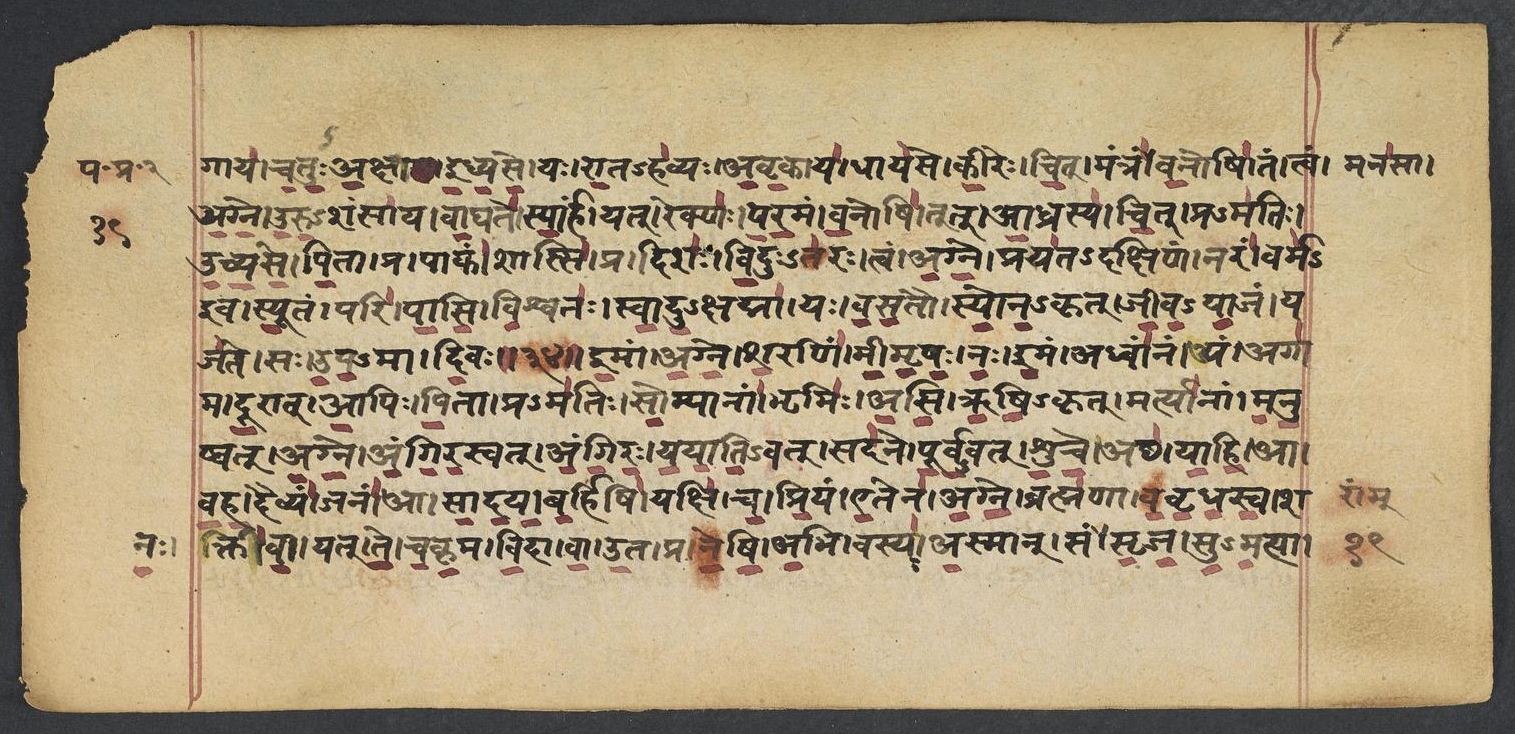
Penn Ms. Coll. 390 Item 41, fol. 19v (OPenn image 21, upper leaf). Checked on the image: the Rigveda text on this page begins in RV 1.31.13 ‹-aniṣaṅgāya catuḥ-akṣaḥ idhyase yaḥ›. The next page with Rigveda text, fol. 20r, begins in RV 1.31.18 ‹-su-matyā vāja-vatyā›. Verses 1.31.13-17 end on this page; 1.31.13 begins on fol. 19r.
13tvam a̍gne̱ yajya̍ve pā̱yur anta̍ro 'niṣa̱ṅgāya̍ catura̱kṣa i̍dhyase | yo rā̱taha̍vyo 'vṛ̱kāya̱ dhāya̍se kī̱reś ci̱n mantra̱m mana̍sā va̱noṣi̱ tam ||
14tvam a̍gna uru̱śaṁsā̍ya vā̱ghate̍ spā̱rhaṁ yad rekṇa̍ḥ para̱maṁ va̱noṣi̱ tat | ā̱dhrasya̍ ci̱t prama̍tir ucyase pi̱tā pra pāka̱ṁ śāssi̱ pra diśo̍ vi̱duṣṭa̍raḥ ||
15tvam a̍gne̱ praya̍tadakṣiṇa̱ṁ nara̱ṁ varme̍va syū̱tam pari̍ pāsi vi̱śvata̍ḥ | svā̱du̱kṣadmā̱ yo va̍sa̱tau syo̍na̱kṛj jī̍vayā̱jaṁ yaja̍te̱ sopa̱mā di̱vaḥ ||
16i̱mām a̍gne śa̱raṇi̍m mīmṛṣo na i̱mam adhvā̍na̱ṁ yam agā̍ma dū̱rāt | ā̱piḥ pi̱tā prama̍tiḥ so̱myānā̱m bhṛmi̍r asy ṛṣi̱kṛn martyā̍nām ||
17ma̱nu̱ṣvad a̍gne aṅgira̱svad a̍ṅgiro yayāti̱vat sada̍ne pūrva̱vac chu̍ce | accha̍ yā̱hy ā va̍hā̱ daivya̱ṁ jana̱m ā sā̍daya ba̱rhiṣi̱ yakṣi̍ ca pri̱yam ||
Compare: Padapāṭha (word-by-word text written in the manuscript; Sansknet e-text via GRETIL)
13tvam | agne | yajyave | pāyuḥ | antaraḥ | aniṣaṅgāya | catuḥ-akṣaḥ | idhyase | yaḥ | rāta-havyaḥ | avṛkāya | dhāyase | kīreḥ | cit | mantram | manasā | vanoṣi | tam
14tvam | agne | uru-śaṃsāya | vāghate | spārham | yat | rekṇaḥ | paramam | vanoṣi | tat | ādhrasya | cit | pra-matiḥ | ucyase | pitā | pra | pākam | śāssi | pra | diśaḥ | viduḥ-ṭaraḥ
15tvam | agne | prayata-dakṣiṇam | naram | varma-iva | syūtam | pari | pāsi | viśvataḥ | svādu-kṣadmā | yaḥ | vasatau | syona-kṛt | jīva-yājam | yajate | saḥ | upa-mā | divaḥ
16imām | agne | śaraṇim | mīmṛṣaḥ | naḥ | imam | adhvānam | yam | agāma | dūrāt | āpiḥ | pitā | pra-matiḥ | somyānām | bhṛmiḥ | asi | ṛṣi-kṛt | martyānām
17manuṣvat | agne | aṅgirasvat | aṅgiraḥ | yayāti-vat | sadane | pūrva-vat | śuce | accha | yāhi | ā | vaha | daivyam | janam | ā | sādaya | barhiṣi | yakṣi | ca | priyam
13Agni, thou art a guard close to the pious man; kindled art thou, four-eyed! for him who is unarmed. With fond heart thou acceptest e'en the poor man's prayer, when he hath brought his gift to gain security.
14Thou, Agni gainest for the loudly-praising priest the highest wealth, the object of a man's desire. Thou art called Father, caring even for the weak, and wisest, to the simple one thou teachest lore.
15Agni, the man who giveth guerdon to the priests, like well-sewn armour thou guardest on every side. He who with grateful food shows kindness in his house, an offerer to the living, is the type of heaven.
16Pardon, we pray, this sin of ours, O Agni, -- the path which we have trodden, widely straying, Dear Friend and Father, caring for the pious, who speedest nigh and who inspirest mortals.
17As erst to Manus, to Yayâti, Angiras, so Angiras! pure Agni! come thou to our hall Bring hither the celestial host and seat them here upon the sacred grass, and offer what they love.
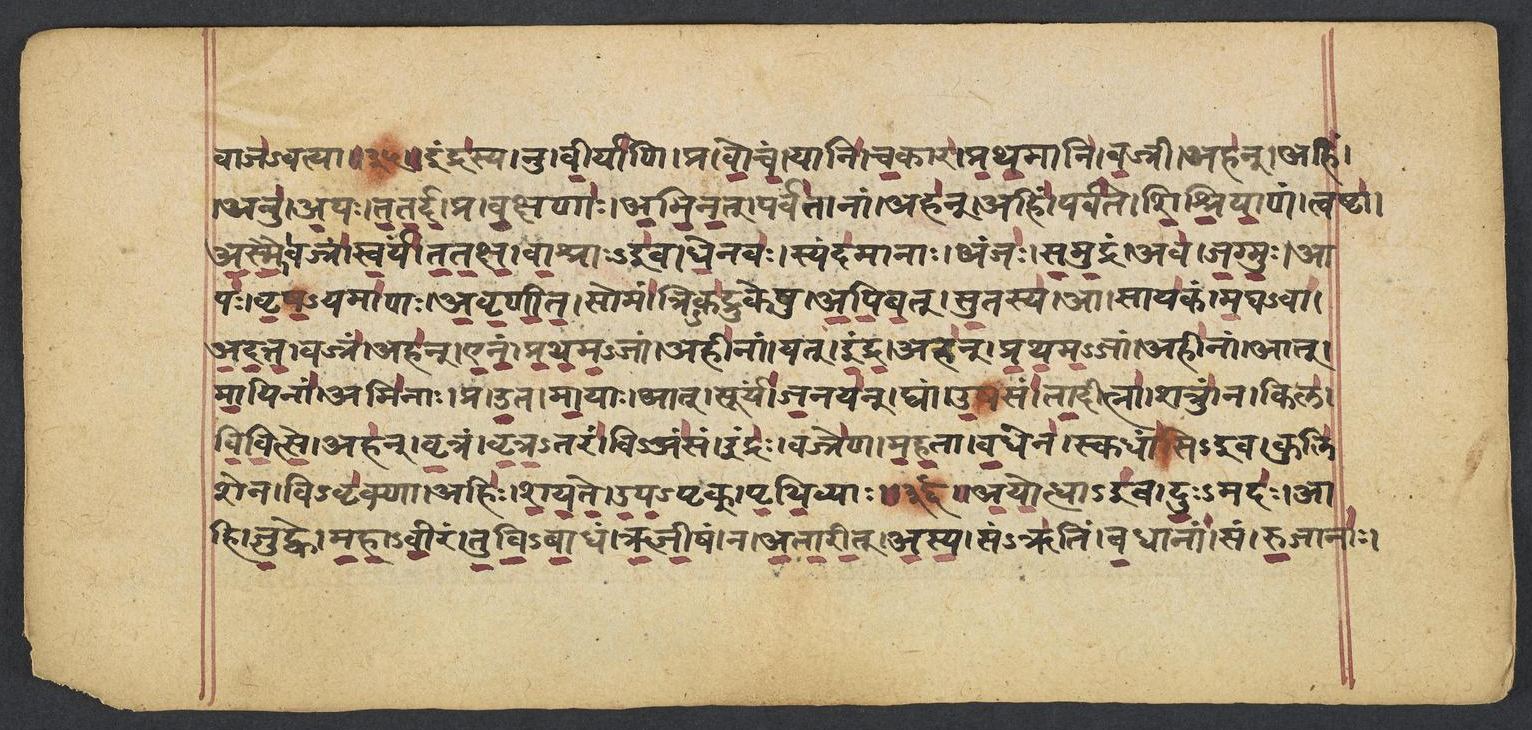
Where on the image
Penn Ms. Coll. 390 Item 41, fol. 20r (OPenn image 21, lower leaf). Checked on the image: the Rigveda text on this page begins in RV 1.31.18 ‹-su-matyā vāja-vatyā›. The next page with Rigveda text, fol. 20v, begins in RV 1.32.6 ‹pipiṣe indra-śatruḥ›. Verse 1.31.18 ends on this page; 1.31.18 begins on fol. 19v.
18e̱tenā̍gne̱ brahma̍ṇā vāvṛdhasva̱ śaktī̍ vā̱ yat te̍ cakṛ̱mā vi̱dā vā̍ | u̱ta pra ṇe̍ṣy a̱bhi vasyo̍ a̱smān saṁ na̍ḥ sṛja suma̱tyā vāja̍vatyā ||
Compare: Padapāṭha (word-by-word text written in the manuscript; Sansknet e-text via GRETIL)
18etena | agne | brahmaṇā | vavṛdhasva | śaktī | vā | yat | te | cakṛma | vidā | vā | uta | pra | neṣi | abhi | vasyaḥ | asmān | sam | naḥ | sṛja | su-matyā | vāja-vatyā
18By this our prayer be thou, O Agni, strengthened, prayer made by us after our power and knowledge. Lead thou us, therefore, to increasing riches; endow us with thy strength-bestowing favour.
Notes
- Sanskrit: Aufrecht's edition (1877) with the Vedic accents, as entered by van Nooten and Holland (GRETIL).
- English: Ralph T. H. Griffith, The Hymns of the Rigveda (1889-1892; 2nd ed. 1896-1897), from the VedaWeb digital text; OCR slips in that text were corrected against the printed 2nd edition (data/sources/rigveda/griffith_errata.json).
- Padapāṭha (edition text): Sansknet e-text via GRETIL (CC BY-NC-SA 4.0).
Cite
Sources
- Source: Penn Ms. Coll. 390 Item 41 (undated (catalogued with Penn's 18th-19th c. Vedic manuscripts)), OPenn, Public Domain Mark + Aufrecht's accented text (GRETIL) + Griffith's English (VedaWeb) (holding institution)
- Critical edition: Aufrecht (1877), accented e-text via GRETIL
← previous · → next · v cycle view · l back to library