Rigveda 1.51: To Indra
Introduction
Rigveda 1.51 is a hymn of 15 verses addressed to Indra. It stands in book (maṇḍala) 1, a collection of hymns by many families of poets. The Rigveda is the oldest collection of Sanskrit hymns, composed in the second half of the second millennium BCE and handed down orally for many centuries before it was written down.
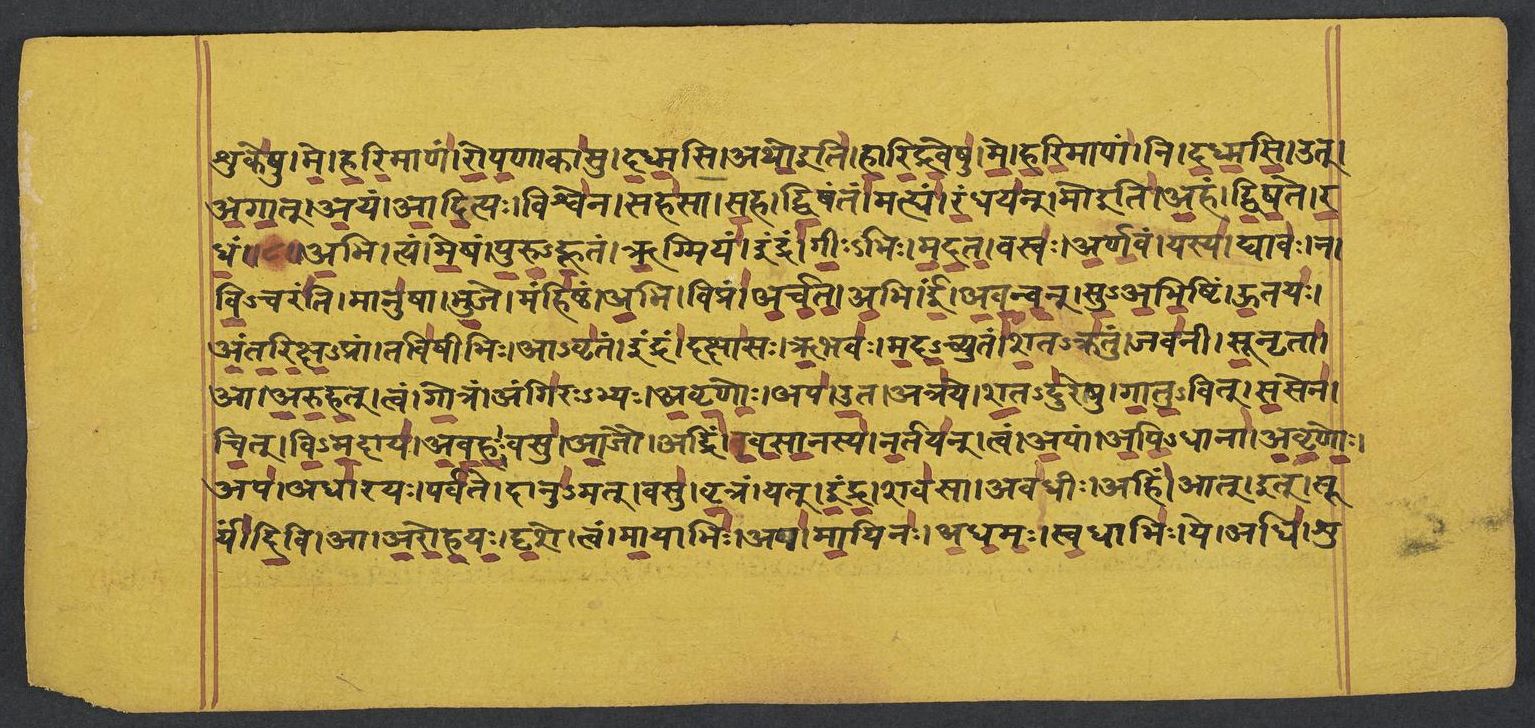
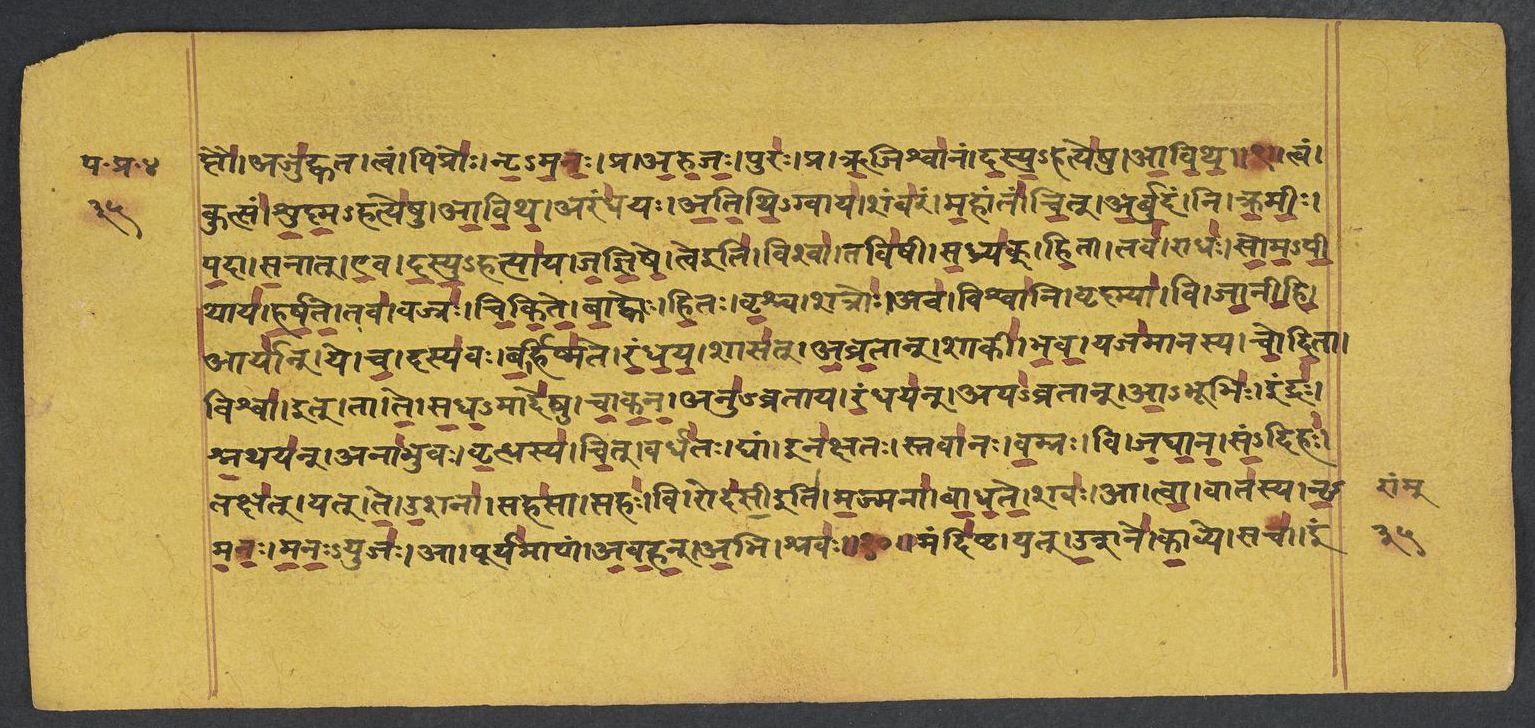
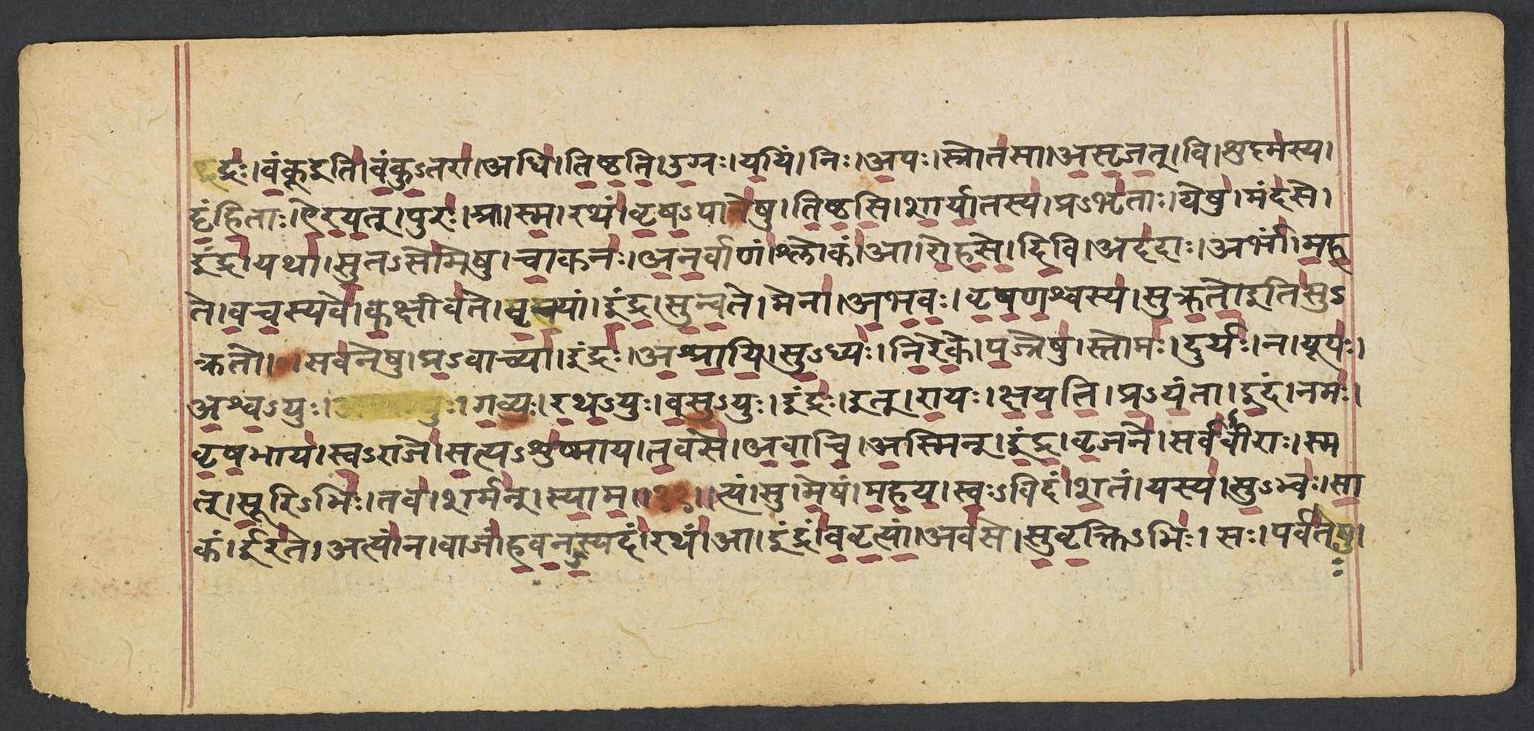
The manuscript shown is Penn Ms. Coll. 390 Item 41 (University of Pennsylvania), an undated paper manuscript of the padapāṭha (the word-by-word recitation text, in which every word is written separately and compounds are split) of the whole Ṛgveda in Devanāgarī, 884 leaves in fascicles, 7-9 lines to the page, accents in red; this hymn stands on fol. 35r-36r. Each section below gives the verses that end on one page; the page boundaries were read on the images (the opening words of every page), not counted out. Where the manuscript is a padapāṭha (the word-by-word recitation text), the section shows Aufrecht's continuous (saṃhitā) text first and, as the edition text, the padapāṭha of the same verses, which is the form written on the page.
How was this verified? (Provenance)
Where on the image
Penn Ms. Coll. 390 Item 41, fol. 35r (OPenn image 36, lower leaf). Checked on the image: the Rigveda text on this page begins in RV 1.50.12 ‹śukeṣu me harimāṇam ropaṇākāsu›. The next page with Rigveda text, fol. 35v, begins in RV 1.51.5 ‹-śuptau ajuhvata tvam piproḥ›. Verses 1.51.1-4 end on this page.
1a̱bhi tyam me̱ṣam pu̍ruhū̱tam ṛ̱gmiya̱m indra̍ṁ gī̱rbhir ma̍datā̱ vasvo̍ arṇa̱vam | yasya̱ dyāvo̱ na vi̱cara̍nti̱ mānu̍ṣā bhu̱je maṁhi̍ṣṭham a̱bhi vipra̍m arcata ||
2a̱bhīm a̍vanvan svabhi̱ṣṭim ū̱tayo̍ 'ntarikṣa̱prāṁ tavi̍ṣībhi̱r āvṛ̍tam | indra̱ṁ dakṣā̍sa ṛ̱bhavo̍ mada̱cyuta̍ṁ śa̱takra̍tu̱ṁ java̍nī sū̱nṛtāru̍hat ||
3tvaṁ go̱tram aṅgi̍robhyo 'vṛṇo̱r apo̱tātra̍ye śa̱tadu̍reṣu gātu̱vit | sa̱sena̍ cid vima̱dāyā̍vaho̱ vasv ā̱jāv adri̍ṁ vāvasā̱nasya̍ na̱rtaya̍n ||
4tvam a̱pām a̍pi̱dhānā̍vṛṇo̱r apādhā̍raya̱ḥ parva̍te̱ dānu̍ma̱d vasu̍ | vṛ̱traṁ yad i̍ndra̱ śava̱sāva̍dhī̱r ahi̱m ād it sūrya̍ṁ di̱vy āro̍hayo dṛ̱śe ||
Compare: Padapāṭha (word-by-word text written in the manuscript; Sansknet e-text via GRETIL)
1abhi | tyam | meṣam | puru-hūtam | ṛgmiyam | indram | gīḥ-bhiḥ | madata | vasvaḥ | arṇavam | yasya | dyāvaḥ | na | vi-caranti | mānuṣā | bhuje | maṃhiṣṭham | abhi | vipram | arcata
2abhi | īm | avanvan | su-abhiṣṭim | ūtayaḥ | antarikṣa-prām | taviṣībhiḥ | āvṛtam | indram | dakṣāsaḥ | ṛbhavaḥ | mada-cyutam | śata-kratum | javanī | sūnṛtā | ā | aruhat
3tvam | gotram | aṅgiraḥ-bhyaḥ | avṛṇoḥ | apa | uta | atraye | śata-dureṣu | gātu-vit | sasena | cit | vi-madāya | avahaḥ | vasu | ājau | adrim | vavasānasya | nataryan
4tvam | apām | api-dhānā | avṛṇoḥ | apa | adhāraya | parvate | dānu-mat | vasu | vṛtram | yat | indra | śavasā | avadhīḥ | ahim | āt | it | sūryam | divi | ā | arohayaḥ | dṛśe
1MAKE glad with songs that Ram whom many men invoke, worthy of songs of praise, Indra, the sea of wealth; Whose gracious deeds for men spread like the heavens abroad: sing praise to him the Sage, most liberal for our good.
2As aids the skilful R̥ibhus yearned to Indra strong to save, who fills mid-air, encompassed round with might, Rushing in rapture; and -o'er Ṣatakratu came the gladdening shout that urged him on to victory.
3Thou hast disclosed the kine's stall for the Angirases, and made a way for Atri by a hundred doors. On Vimada thou hast bestowed both food and wealth, making thy bolt dance in the sacrificer's fight.
4Thou hast unclosed the prisons of the waters; thou hast in the mountain seized the treasure rich in gifts. When thou hadst slain with might the dragon Vr̥itra, thou, Indra, didst raise the Sun in heaven for all to see.
Where on the image
Penn Ms. Coll. 390 Item 41, fol. 35v (OPenn image 37, upper leaf). Checked on the image: the Rigveda text on this page begins in RV 1.51.5 ‹-śuptau ajuhvata tvam piproḥ›. The next page with Rigveda text, fol. 36r, begins in RV 1.51.11 ‹vaṅkūiti vaṅku-tarā adhi tiṣṭhat›. Verses 1.51.5-10 end on this page; 1.51.5 begins on fol. 35r.
5tvam mā̱yābhi̱r apa̍ mā̱yino̍ 'dhamaḥ sva̱dhābhi̱r ye adhi̱ śuptā̱v aju̍hvata | tvam pipro̍r nṛmaṇa̱ḥ prāru̍ja̱ḥ pura̱ḥ pra ṛ̱jiśvā̍naṁ dasyu̱hatye̍ṣv āvitha ||
6tvaṁ kutsa̍ṁ śuṣṇa̱hatye̍ṣv āvi̱thāra̍ndhayo 'tithi̱gvāya̱ śamba̍ram | ma̱hānta̍ṁ cid arbu̱daṁ ni kra̍mīḥ pa̱dā sa̱nād e̱va da̍syu̱hatyā̍ya jajñiṣe ||
7tve viśvā̱ tavi̍ṣī sa̱dhrya̍g ghi̱tā tava̱ rādha̍ḥ somapī̱thāya̍ harṣate | tava̱ vajra̍ś cikite bā̱hvor hi̱to vṛ̱ścā śatro̱r ava̱ viśvā̍ni̱ vṛṣṇyā̍ ||
8vi jā̍nī̱hy āryā̱n ye ca̱ dasya̍vo ba̱rhiṣma̍te randhayā̱ śāsa̍d avra̱tān | śākī̍ bhava̱ yaja̍mānasya codi̱tā viśvet tā te̍ sadha̱māde̍ṣu cākana ||
9anu̍vratāya ra̱ndhaya̱nn apa̍vratān ā̱bhūbhi̱r indra̍ḥ śna̱thaya̱nn anā̍bhuvaḥ | vṛ̱ddhasya̍ ci̱d vardha̍to̱ dyām ina̍kṣata̱ḥ stavā̍no va̱mro vi ja̍ghāna sa̱ṁdiha̍ḥ ||
10takṣa̱d yat ta̍ u̱śanā̱ saha̍sā̱ saho̱ vi roda̍sī ma̱jmanā̍ bādhate̱ śava̍ḥ | ā tvā̱ vāta̍sya nṛmaṇo mano̱yuja̱ ā pūrya̍māṇam avahann a̱bhi śrava̍ḥ ||
Compare: Padapāṭha (word-by-word text written in the manuscript; Sansknet e-text via GRETIL)
5tvam | māyābhiḥ | apa | māyinaḥ | adhamaḥ | svadhābhiḥ | ye | adhi | śuptau | ajuhvata | tvam | piproḥ | nṛ-manaḥ | pra | arujaḥ | puraḥ | pra | ṛjiścānam | dasyu-hatyeṣu | āvitha
6tvam | kutsam | śuṣṇa-hatyeṣu | āvitha | arandhayaḥ | atithi-gvāya | śambaram | mahāntam | cit | arbudam | ni | kramīḥ | padā | sanāt | eva | dasyu-hatyāya | jajñiṣe
7tve iti | viśvā | taviṣī | sadhryak | hitā | tava | rādhaḥ | soma-pīthāya | harṣate | tava | vajraḥ | cikite | bāhvoḥ | hitaḥ | vṛśca | śatroḥ | ava | viśvāni | vṛṣṇyā
8vi | jānīhi | āryān | ye | ca | dasyavaḥ | barhiṣmate | randhaya | śāsat | avratān | śākī | bhava | yajamānasya | coditā | viśvā | it | tā | te | sadha-mādeṣu | cākana
9anu-vratāya | randhayan | apa-vratān | ābhūbhiḥ | indraḥ | śnathayan | anābhuvaḥ | vṛddhasya | cit | vardhataḥ | dyām | inakṣataḥ | stavānaḥ | vamraḥ | vi | jaghāna | sam-dihaḥ
10takṣat | yat | te | uśanā | sahasā | sahaḥ | vi | rodasī iti | majmanā | bādhate | śavaḥ | ā | tvā | vātasya | nṛ-manaḥ | manaḥ-yujaḥ | ā | pūryamāṇam | avahan | abhi | śravaḥ
5With wondrous might thou blewest enchanter fiends away, with powers celestial those who called on thee in jest. Thou, hero-hearted, hast broken down Pipru's forts, and helped R̥ijiṣvan when the Dasyus were struck dead.
6Thou savedst Kutsa when Ṣushṇa was smitten down; to Âtithigva gavest Ṣambara for a prey. E'en mighty Arbuda thou troddest under foot: thou from of old wast born to strike the Dasyus dead.
7All power and might is closely gathered up in thee; thy bounteous spirit joys in drinking Soma juice. Known is the thunderbolt that lies within thine arms: rend off therewith all manly prowess of our foe.
8Discern thou well Aryas and Dasyus; punishing the lawless give them up to him whose grass is strewn. Be thou the sacrificer's strong encourager all these thy deeds are my delight at festivals.
9Indra gives up the lawless to the pious man, destroying by the Strong Ones those who have no strength. Vamra when glorified destroyed the gathered piles of the still waxing great one who would reach the heaven.
10The might which Uṣanâ hath formed for thee with might rends in its greatness and with strength both worlds apart. O Hero-souled, the steeds of Vâta, yoked by thought, have carried thee to fame while thou art filled with power.
Where on the image
Penn Ms. Coll. 390 Item 41, fol. 36r (OPenn image 37, lower leaf). Checked on the image: the Rigveda text on this page begins in RV 1.51.11 ‹vaṅkūiti vaṅku-tarā adhi tiṣṭhat›. The next page with Rigveda text, fol. 36v, begins in RV 1.52.2 ‹na dharuṇeṣu acyutaḥ sahasram-ūtiḥ›. Verses 1.51.11-15 end on this page; 1.51.11 begins on fol. 35v.
11mandi̍ṣṭa̱ yad u̱śane̍ kā̱vye sacā̱m̐ indro̍ va̱ṅkū va̍ṅku̱tarādhi̍ tiṣṭhati | u̱gro ya̱yiṁ nir a̱paḥ srota̍sāsṛja̱d vi śuṣṇa̍sya dṛṁhi̱tā ai̍raya̱t pura̍ḥ ||
12ā smā̱ ratha̍ṁ vṛṣa̱pāṇe̍ṣu tiṣṭhasi śāryā̱tasya̱ prabhṛ̍tā̱ yeṣu̱ manda̍se | indra̱ yathā̍ su̱taso̍meṣu cā̱kano̍ 'na̱rvāṇa̱ṁ śloka̱m ā ro̍hase di̱vi ||
13ada̍dā̱ arbhā̍m maha̱te va̍ca̱syave̍ ka̱kṣīva̍te vṛca̱yām i̍ndra sunva̱te | menā̍bhavo vṛṣaṇa̱śvasya̍ sukrato̱ viśvet tā te̱ sava̍neṣu pra̱vācyā̍ ||
14indro̍ aśrāyi su̱dhyo̍ nire̱ke pa̱jreṣu̱ stomo̱ duryo̱ na yūpa̍ḥ | a̱śva̱yur ga̱vyū ra̍tha̱yur va̍sū̱yur indra̱ id rā̱yaḥ kṣa̍yati praya̱ntā ||
15i̱daṁ namo̍ vṛṣa̱bhāya̍ sva̱rāje̍ sa̱tyaśu̍ṣmāya ta̱vase̍ 'vāci | a̱sminn i̍ndra vṛ̱jane̱ sarva̍vīrā̱ḥ smat sū̱ribhi̱s tava̱ śarma̍n syāma ||
Compare: Padapāṭha (word-by-word text written in the manuscript; Sansknet e-text via GRETIL)
11mandiṣṭa | yat | uśane | kāvye | sacā | indraḥ | vaṅkūiti | vaṅku-tarā | adhi | tiṣṭhat i | ugraḥ | yayim | niḥ | apaḥ | srotasā | asṛjat | vi | śuṣṇasya | dṛṃhitāḥ | airayat | puraḥ
12ā | sma | ratham | vṛṣa-pāneṣu | tiṣṭhasi | śāryātasya | pra-bhṛtāḥ | yeṣu | mandase | indra | yathā | suta-someṣu | cākanaḥ | anarvāṇam | ślokam | ā | rohase | divi
13adadāḥ | arbhām | mahate | vacasyave | kakṣīvate | vṛcayām | indra | sunvate | menā | abhavaḥ | vṛṣaṇaśvasya | sukrato itisu-krato | viśvā | it | tā | te | savaneṣu | pra-vācyā
14indraḥ | aśrāyi | su-dhyaḥ | nireke | pajreṣu | stomaḥ | duryaḥ | na | yūpaḥ | aśva-yuḥ | gavyuḥ | ratha-yuḥ | vasu-yuḥ | indraḥ | it | rāyaḥ | kṣayati | pra-yantā
15idam | namaḥ | vṛṣabhāya | sva-rāje | satya-śuṣmāya | tavase | avāci | asmin | indra | vṛjane | sarva-vīrāḥ | smat | sūri-bhiḥ | tava | śarman | syāma
11When Indra hath rejoiced with Kâvya Uṣanâ, he mounts his steeds who swerve wider and wider yet. The Strong hath loosed his bolt with the swift rush of rain, and he hath rent in pieces Ṣushṇa's firmbuilt forts.
12Thou mountest on thy car amid strong Soma draughts: Ṣâryâta brought thee those in which thou hast delight. Indra, when thou art pleased with men whose Soma flows thou risest to unchallenged glory in the sky.
13To old Kaksivin, Soma-presser, skilled in song, O Indra, thou didst give the youthful Vr̥ichayâ. Thou, very wise, wast Menâ, Vrishaṇaṣva's child: those deeds of thine must all be told at Soma feasts.
14The good man's refuge in his need is Indra, firm as a doorpost, praised among the Pajras. Indra alone is Lord of wealth, the Giver, lover of riches, chariots, kine, and horses.
15To him the Mighty One, the self-resplendent, verily strong and great, this praise is uttered. May we and all the heroes, with the princes, be, in this fray, O Indra, in thy keeping.
Notes
- Sanskrit: Aufrecht's edition (1877) with the Vedic accents, as entered by van Nooten and Holland (GRETIL).
- English: Ralph T. H. Griffith, The Hymns of the Rigveda (1889-1892; 2nd ed. 1896-1897), from the VedaWeb digital text; OCR slips in that text were corrected against the printed 2nd edition (data/sources/rigveda/griffith_errata.json).
- Padapāṭha (edition text): Sansknet e-text via GRETIL (CC BY-NC-SA 4.0).
Cite
Sources
- Source: Penn Ms. Coll. 390 Item 41 (undated (catalogued with Penn's 18th-19th c. Vedic manuscripts)), OPenn, Public Domain Mark + Aufrecht's accented text (GRETIL) + Griffith's English (VedaWeb) (holding institution)
- Critical edition: Aufrecht (1877), accented e-text via GRETIL
← previous · → next · v cycle view · l back to library