Rigveda 1.52: To Indra
Introduction
Rigveda 1.52 is a hymn of 15 verses addressed to Indra. It stands in book (maṇḍala) 1, a collection of hymns by many families of poets. The Rigveda is the oldest collection of Sanskrit hymns, composed in the second half of the second millennium BCE and handed down orally for many centuries before it was written down.
The manuscript shown is Penn Ms. Coll. 390 Item 41 (University of Pennsylvania), an undated paper manuscript of the padapāṭha (the word-by-word recitation text, in which every word is written separately and compounds are split) of the whole Ṛgveda in Devanāgarī, 884 leaves in fascicles, 7-9 lines to the page, accents in red; this hymn stands on fol. 36r-37v. Each section below gives the verses that end on one page; the page boundaries were read on the images (the opening words of every page), not counted out. Where the manuscript is a padapāṭha (the word-by-word recitation text), the section shows Aufrecht's continuous (saṃhitā) text first and, as the edition text, the padapāṭha of the same verses, which is the form written on the page.
How was this verified? (Provenance)
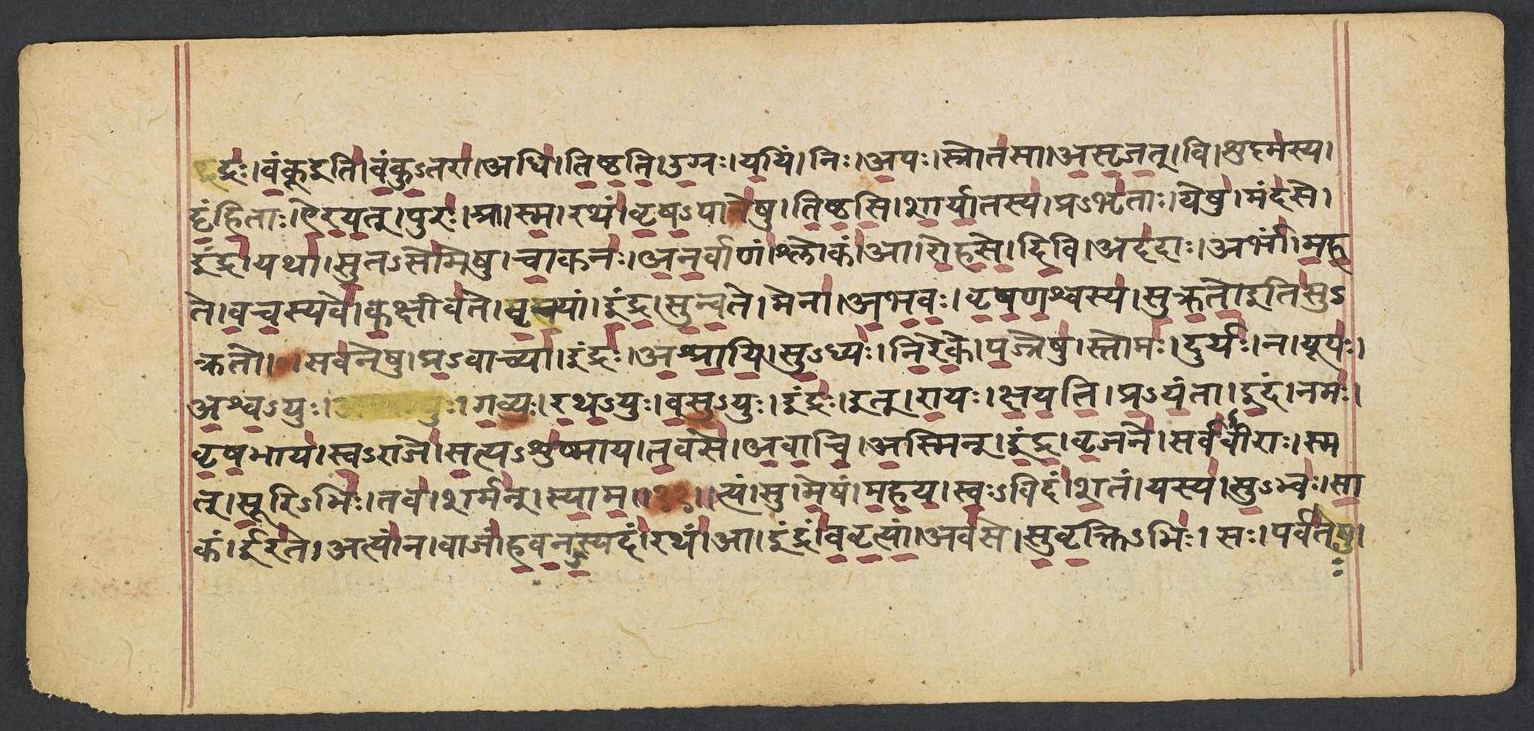
Where on the image
Penn Ms. Coll. 390 Item 41, fol. 36r (OPenn image 37, lower leaf). Checked on the image: the Rigveda text on this page begins in RV 1.51.11 ‹vaṅkūiti vaṅku-tarā adhi tiṣṭhat›. The next page with Rigveda text, fol. 36v, begins in RV 1.52.2 ‹na dharuṇeṣu acyutaḥ sahasram-ūtiḥ›. Verse 1.52.1 ends on this page.
1tyaṁ su me̱ṣam ma̍hayā sva̱rvida̍ṁ śa̱taṁ yasya̍ su̱bhva̍ḥ sā̱kam īra̍te | atya̱ṁ na vāja̍ṁ havana̱syada̱ṁ ratha̱m endra̍ṁ vavṛtyā̱m ava̍se suvṛ̱ktibhi̍ḥ ||
Compare: Padapāṭha (word-by-word text written in the manuscript; Sansknet e-text via GRETIL)
1tyam | su | meṣam | mahaya | svaḥ-vidam | śatam | yasya | su-bhvaḥ | sākam | īrate | atyam | na | vājam | havana-syadam | ratham | ā | indram | vavṛtyām | avase | suvṛkti-bhiḥ
1I GLORIFY that Ram who finds the light of heaven, whose hundred nobly-natured ones go forth with him. With hymns may I turn hither Indra to mine aid,– the Car which like a strong steed hasteth to the call.
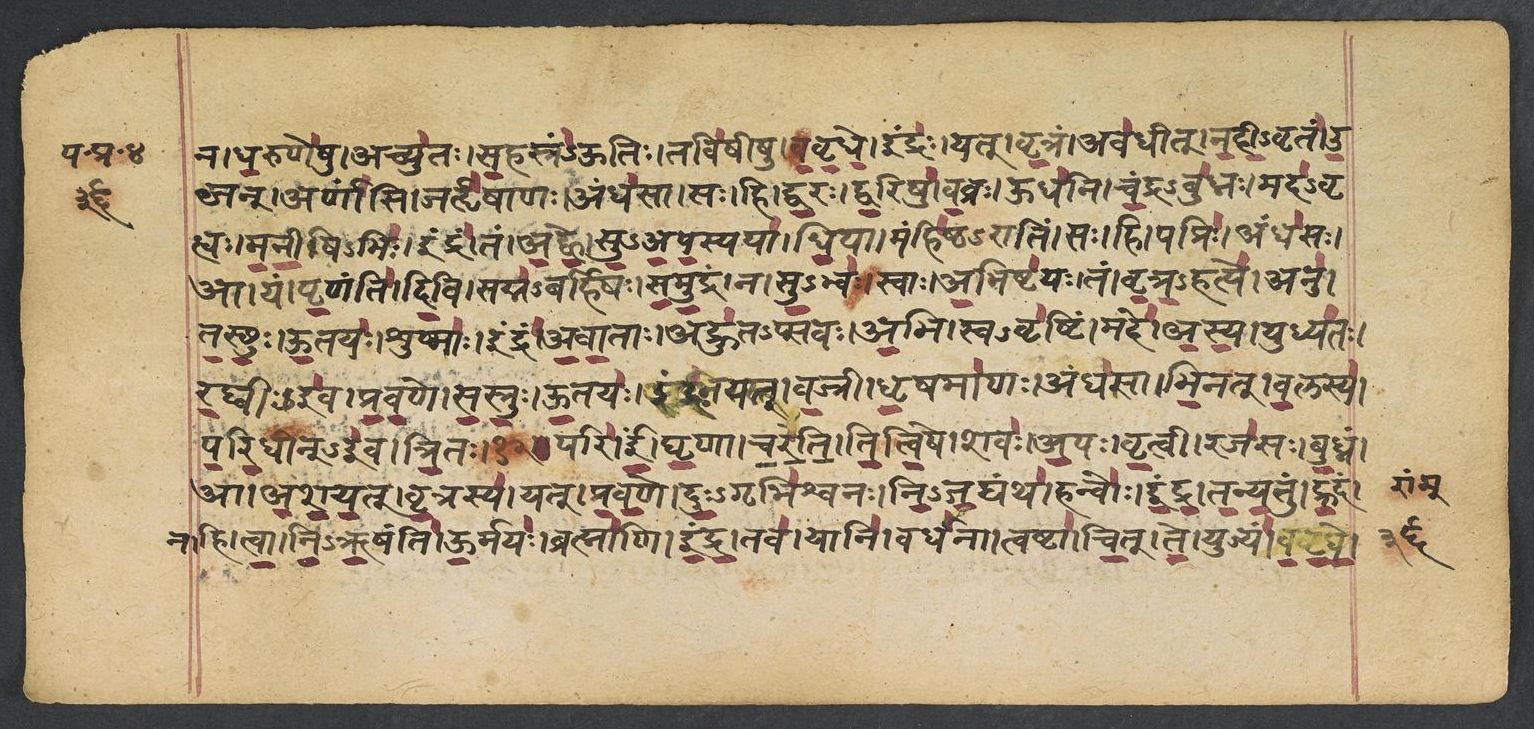
Where on the image
Penn Ms. Coll. 390 Item 41, fol. 36v (OPenn image 38, upper leaf). Checked on the image: the Rigveda text on this page begins in RV 1.52.2 ‹na dharuṇeṣu acyutaḥ sahasram-ūtiḥ›. The next page with Rigveda text, fol. 37r, begins in RV 1.52.7 ‹-vavṛdhe śavaḥ tatakṣa vajram›. Verses 1.52.2-6 end on this page; 1.52.2 begins on fol. 36r.
2sa parva̍to̱ na dha̱ruṇe̱ṣv acyu̍taḥ sa̱hasra̍mūti̱s tavi̍ṣīṣu vāvṛdhe | indro̱ yad vṛ̱tram ava̍dhīn nadī̱vṛta̍m u̱bjann arṇā̍ṁsi̱ jarhṛ̍ṣāṇo̱ andha̍sā ||
3sa hi dva̱ro dva̱riṣu̍ va̱vra ūdha̍ni ca̱ndrabu̍dhno̱ mada̍vṛddho manī̱ṣibhi̍ḥ | indra̱ṁ tam a̍hve svapa̱syayā̍ dhi̱yā maṁhi̍ṣṭharāti̱ṁ sa hi papri̱r andha̍saḥ ||
4ā yam pṛ̱ṇanti̍ di̱vi sadma̍barhiṣaḥ samu̱draṁ na su̱bhva1̱̍ḥ svā a̱bhiṣṭa̍yaḥ | taṁ vṛ̍tra̱hatye̱ anu̍ tasthur ū̱taya̱ḥ śuṣmā̱ indra̍m avā̱tā ahru̍tapsavaḥ ||
5a̱bhi svavṛ̍ṣṭi̱m made̍ asya̱ yudhya̍to ra̱ghvīr i̍va prava̱ṇe sa̍srur ū̱taya̍ḥ | indro̱ yad va̱jrī dhṛ̱ṣamā̍ṇo̱ andha̍sā bhi̱nad va̱lasya̍ pari̱dhīm̐r i̍va tri̱taḥ ||
6parī̍ṁ ghṛ̱ṇā ca̍rati titvi̱ṣe śavo̱ 'po vṛ̱tvī raja̍so bu̱dhnam āśa̍yat | vṛ̱trasya̱ yat pra̍va̱ṇe du̱rgṛbhi̍śvano nija̱ghantha̱ hanvo̍r indra tanya̱tum ||
Compare: Padapāṭha (word-by-word text written in the manuscript; Sansknet e-text via GRETIL)
2saḥ | parvataḥ | na | dharuṇeṣu | acyutaḥ | sahasram-ūtiḥ | taviṣīṣu | vavṛdhe | indraḥ | yat | vṛtram | avadhīt | nadī-vṛtam | ubjan | arṇāṃsi | jarhṛṣāṇaḥ | andhasā
3saḥ | hi | dvaraḥ | dvariṣu | vavraḥ | ūdhani | candra-budhnaḥ | mada-vṛddhaḥ | manīṣi-bhiḥ | indram | tam | ahve | su-apasyayā | dhiyā | maṃhiṣṭha-rātim | saḥ | hi | papriḥ | andhasaḥ
4ā | yam | pṛṇanti | divi | sadma-barhiṣaḥ | samudram | na | su-bhvaḥ | svāḥ | abhiṣṭayaḥ | tam | vṛtra-hatye | anu | tasthuḥ | ūtayaḥ | śuṣmāḥ | indram | avātāḥ | ahruta-psavaḥ
5abhi | sva-vṛṣtim | made | asya | yudhyataḥ | raghvīḥ-iva | pravaṇe | sasruḥ | ūtayaḥ | indraḥ | yat | vajrī | dhṛṣamāṇaḥ | andhasā | bhinat | valasya | paridhīn-iva | tritaḥ
6pari | īm | ghṛṇā | carati | titviṣe | śavaḥ | apaḥ | vṛtvī | rajasaḥ | budhnam | ā | aśayat | vṛtrasya | yat | pravaṇe | duḥ-gṛbhiśvanaḥ | ni-jaghantha | hanvoḥ | indra | tanyatum
2Like as a mountain on firm basis, unremoved, he, thousandfold protector, waxed in mighty strength, When Indra, joying in the draughts of Soma juice, forced the clouds, slaying Vr̥itra stayer of their flow.
3For he stays e'en the stayers, spread o'er laden cloud, rooted in light, strengthened in rapture by the wise. Indra with thought, with skilled activity, I call, most liberal giver, for he sates him with the juice.
4Whom those that flow in heaven on sacred grass, his own assistants, nobly-natured, fill full like the sea,– Beside that Indra when he smote down Vr̥itra stood his helpers, straight in form, mighty, invincible.
5To him, as in wild joy he fought with him who stayed the rain, his helpers sped like swift streams down a slope, When Indra, thunder-armed, made bold by Soma draughts, as Trita cleaveth Vala's fences, cleft him through.
6Splendour encompassed thee, forth shone thy warrior might: the rain-obstructer lay in mid-air's lowest deep, What time, O Indra, thou didst cast thy thunder down upon the jaws of Vritra hard to be restrained.
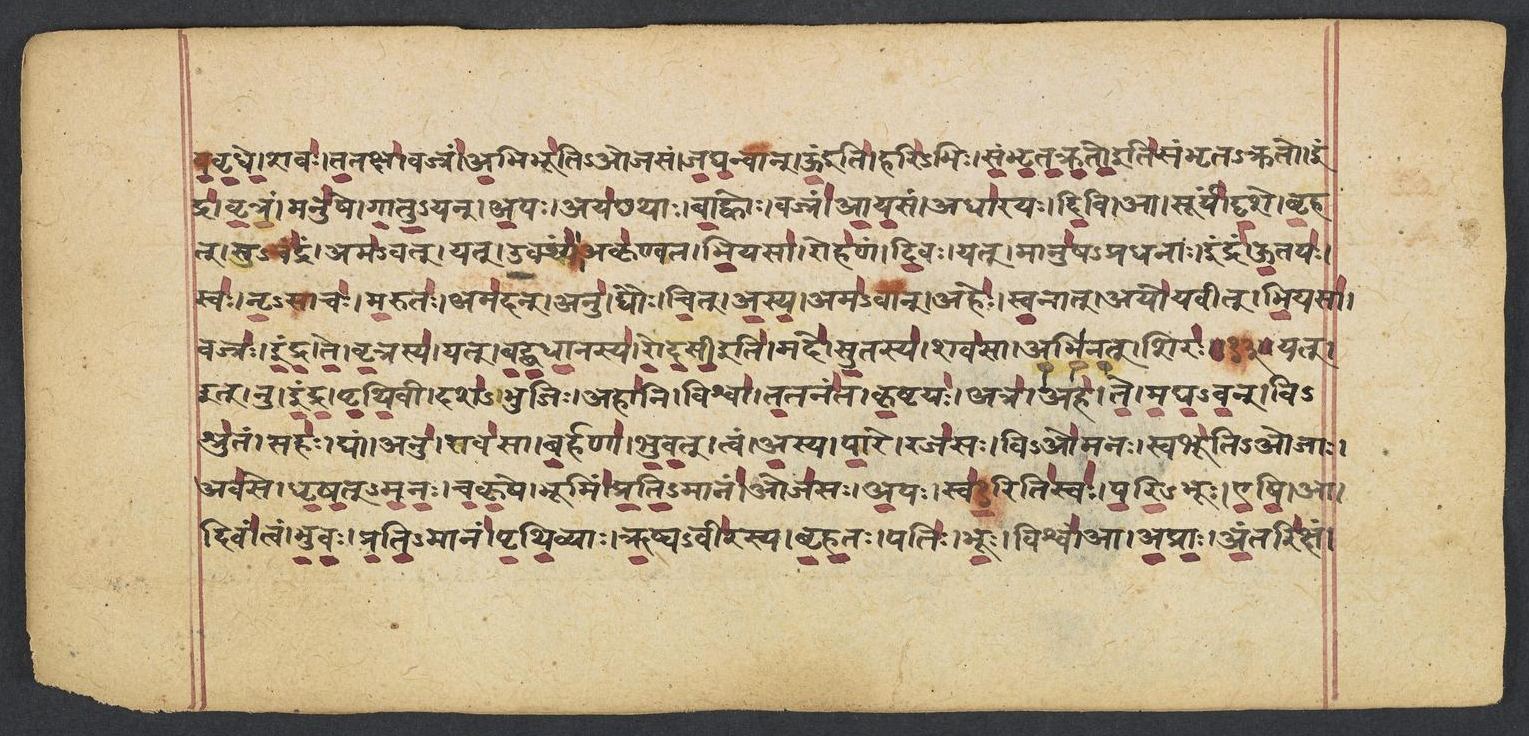
Where on the image
Penn Ms. Coll. 390 Item 41, fol. 37r (OPenn image 38, lower leaf). Checked on the image: the Rigveda text on this page begins in RV 1.52.7 ‹-vavṛdhe śavaḥ tatakṣa vajram›. The next page with Rigveda text, fol. 37v, begins in RV 1.52.13 ‹mahi-tvā satyam addhā nakiḥ›. Verses 1.52.7-12 end on this page; 1.52.7 begins on fol. 36v.
7hra̱daṁ na hi tvā̍ nyṛ̱ṣanty ū̱rmayo̱ brahmā̍ṇīndra̱ tava̱ yāni̱ vardha̍nā | tvaṣṭā̍ cit te̱ yujya̍ṁ vāvṛdhe̱ śava̍s ta̱takṣa̱ vajra̍m a̱bhibhū̍tyojasam ||
8ja̱gha̱nvām̐ u̱ hari̍bhiḥ sambhṛtakrata̱v indra̍ vṛ̱tram manu̍ṣe gātu̱yann a̱paḥ | aya̍cchathā bā̱hvor vajra̍m āya̱sam adhā̍rayo di̱vy ā sūrya̍ṁ dṛ̱śe ||
9bṛ̱hat svaśca̍ndra̱m ama̍va̱d yad u̱kthya1̱̍m akṛ̍ṇvata bhi̱yasā̱ roha̍ṇaṁ di̱vaḥ | yan mānu̍ṣapradhanā̱ indra̍m ū̱taya̱ḥ sva̍r nṛ̱ṣāco̍ ma̱ruto 'ma̍da̱nn anu̍ ||
10dyauś ci̍d a̱syāma̍vā̱m̐ ahe̍ḥ sva̱nād ayo̍yavīd bhi̱yasā̱ vajra̍ indra te | vṛ̱trasya̱ yad ba̍dbadhā̱nasya̍ rodasī̱ made̍ su̱tasya̱ śava̱sābhi̍na̱c chira̍ḥ ||
11yad in nv i̍ndra pṛthi̱vī daśa̍bhuji̱r ahā̍ni̱ viśvā̍ ta̱tana̍nta kṛ̱ṣṭaya̍ḥ | atrāha̍ te maghava̱n viśru̍ta̱ṁ saho̱ dyām anu̱ śava̍sā ba̱rhaṇā̍ bhuvat ||
12tvam a̱sya pā̱re raja̍so̱ vyo̍mana̱ḥ svabhū̍tyojā̱ ava̍se dhṛṣanmanaḥ | ca̱kṛ̱ṣe bhūmi̍m prati̱māna̱m oja̍so̱ 'paḥ sva̍ḥ pari̱bhūr e̱ṣy ā diva̍m ||
Compare: Padapāṭha (word-by-word text written in the manuscript; Sansknet e-text via GRETIL)
7hradam | na | hi | tvā | ni-ṛṣanti | ūrmayaḥ | brahmāṇi | indra | tava | yāni | vardhanā | tvaṣṭā | cit | te | yujyam | vavṛdhe | śavaḥ | tatakṣa | vajram | abhibhūti--ojasam
8jaghanvān | oṃ iti | hari-bhiḥ | sambhṛtakrato itisambhṛta-krato | indra | vṛtram | manuṣe | gātu-yan | apaḥ | ayacchathāḥ | bāhvoḥ | vajram | āyasam | adhārayaḥ | divi | ā | sūryam | dṛśe
9bṛhat | sva-candram | ama-vat | yat | ukthyam | akṛṇvata | bhiyasā | rohaṇam | di vaḥ | yat | mānuṣa-pradhanāḥ | indram | ūtayaḥ | svaḥ | nṛ-ṣācaḥ | marutaḥ | amadan | anu
10dyauḥ | cit | asya | ama-vān | aheḥ | svanāt | ayoyavīt | bhiyasā | vajraḥ | indra | te | vṛtrasya | yat | badbadhānasya | rodasī iti | made | sutasya | śavasā | abhinat | śiraḥ
11yat | it | nu | indra | pṛthivī | daśa-bhujiḥ | ahāni | viśvā | tatananta | kṛṣṭayaḥ | atra | aha | te | magha-van | vi-śrutam | sahaḥ | dyām | anu | śavasā barhaṇā | bhuvat
12tvam | asya | pāre | rajasaḥ | vi-omanaḥ | svabhūti-ojāḥ | avase | dhṛṣat-manaḥ | cakṛṣe | bhūmim | prati-mānam | ojasaḥ | apaḥ | [svar iti] svaḥ | pari-bhūḥ | eṣi | ā | divam
7The hymns which magnify thee, Indra, reach to thee even as water-brooks flow down and fill the lake. Tvashṭar gave yet more force to thine appropriate strength, and forged thy thunderbolt of overpowering might.
8When, Indra, thou whose power is linked with thy Bay Steeds hadst smitten Vr̥itra, causing floods to flow for man, Thou heldst in thine arms the metal thunderbolt, and settest in the heaven the Sun for all to see.
9In fear they raised the lofty self-resplendent hymn, praise giving and effectual, leading up to heaven, When Indra's helpers fighting for the good of men, the Maruts, faithful to mankind, joyed in the light.
10Then Heaven himself, the mighty, at that Dragon's roar reeled back in terror when, Indra, thy thunderbolt In the wild joy of Soma had struck off with might the head of Vr̥itra, tyrant of the earth and heaven.
11O Indra, were this earth extended forth tenfold, and men who dwell therein multiplied day by day, Still here thy conquering might, Maghavan, would be famed: it hath waxed vast as heaven in majesty and power.
12Thou, bold of heart, in thine own native might, for help, upon the limit of this mid-air and of heaven, Hast made the earth to be the pattern of thy strength: embracing flood and light thou reachest to the sky.
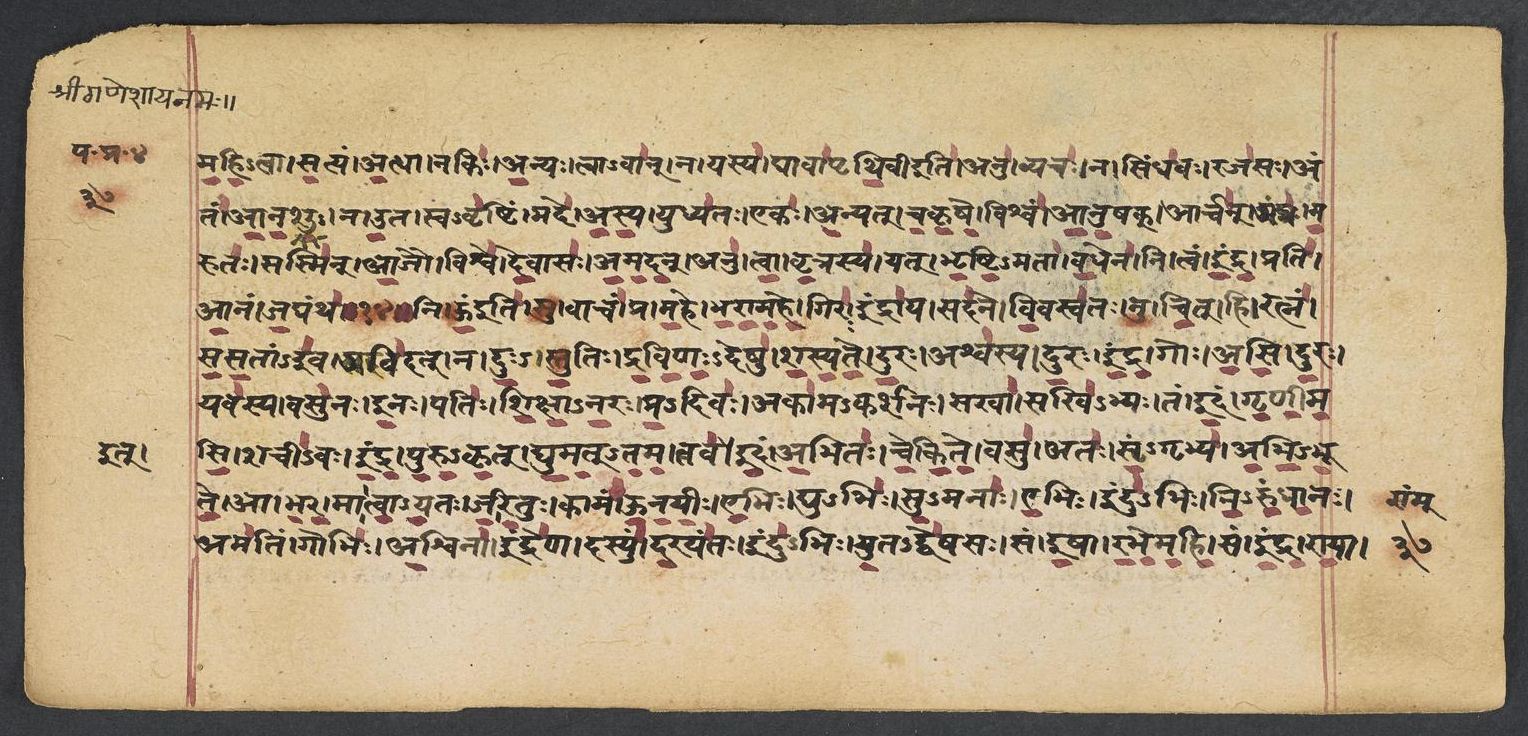
Where on the image
Penn Ms. Coll. 390 Item 41, fol. 37v (OPenn image 39, upper leaf). Checked on the image: the Rigveda text on this page begins in RV 1.52.13 ‹mahi-tvā satyam addhā nakiḥ›. The next page with Rigveda text, fol. 38r, begins in RV 1.53.4 ‹sam iṣā rabhemahi›. Verses 1.52.13-15 end on this page; 1.52.13 begins on fol. 37r.
13tvam bhu̍vaḥ prati̱māna̍m pṛthi̱vyā ṛ̱ṣvavī̍rasya bṛha̱taḥ pati̍r bhūḥ | viśva̱m āprā̍ a̱ntari̍kṣam mahi̱tvā sa̱tyam a̱ddhā naki̍r a̱nyas tvāvā̍n ||
14na yasya̱ dyāvā̍pṛthi̱vī anu̱ vyaco̱ na sindha̍vo̱ raja̍so̱ anta̍m āna̱śuḥ | nota svavṛ̍ṣṭi̱m made̍ asya̱ yudhya̍ta̱ eko̍ a̱nyac ca̍kṛṣe̱ viśva̍m ānu̱ṣak ||
15ārca̱nn atra̍ ma̱ruta̱ḥ sasmi̍nn ā̱jau viśve̍ de̱vāso̍ amada̱nn anu̍ tvā | vṛ̱trasya̱ yad bhṛ̍ṣṭi̱matā̍ va̱dhena̱ ni tvam i̍ndra̱ praty ā̱naṁ ja̱ghantha̍ ||
Compare: Padapāṭha (word-by-word text written in the manuscript; Sansknet e-text via GRETIL)
13tvam | bhuvaḥ | prati-mānam | pṛthivyāḥ | ṛṣva-vīrasya | bṛhataḥ | patiḥ | bhūḥ | viśvam | ā | aprāḥ | antarikṣam | mahi-tvā | satyam | addhā | nakiḥ | anyaḥ | tvāvān
14na | yasya | dyāvāpṛthivī iti | anu | vyacaḥ | na | sindhavaḥ | rajasaḥ | antam | ānaśuḥ | na | uta | sva-vṛṣṭim | made | asya | yudhyataḥ | ekaḥ | anyat | cakṛṣe | viśvam | ānuṣak
15ārcan | atra | marutaḥ | sasmin | ājau | viśve | devāsaḥ | amadan | anu | tvā | vṛtrasya | yat | bhṛṣṭi-matā | vadhena | ni | tvam | indra | prati | ānam | jaghantha
13Thou art the counterpart of earth, the Master of lofty heaven with all its mighty Heroes: Thou hast filled all the region with thy greatness: yea, of a truth there is none other like thee.
14Whose amplitude the heaven and earth have not attained, whose bounds the waters of mid-air have never reached,– Not, when in joy he fights the stayer of the rain: thou, and none else, hast made all things in order due.
15The Maruts sang thy praise in this encounter, and in thee all the Deities delighted, What time thou, Indra, with thy spiky weapon, thy deadly bolt, smotest the face of Vr̥itra.
Notes
- Sanskrit: Aufrecht's edition (1877) with the Vedic accents, as entered by van Nooten and Holland (GRETIL).
- English: Ralph T. H. Griffith, The Hymns of the Rigveda (1889-1892; 2nd ed. 1896-1897), from the VedaWeb digital text; OCR slips in that text were corrected against the printed 2nd edition (data/sources/rigveda/griffith_errata.json).
- Padapāṭha (edition text): Sansknet e-text via GRETIL (CC BY-NC-SA 4.0).
Cite
Sources
- Source: Penn Ms. Coll. 390 Item 41 (undated (catalogued with Penn's 18th-19th c. Vedic manuscripts)), OPenn, Public Domain Mark + Aufrecht's accented text (GRETIL) + Griffith's English (VedaWeb) (holding institution)
- Critical edition: Aufrecht (1877), accented e-text via GRETIL
← previous · → next · v cycle view · l back to library