Rigveda 1.53: To Indra
Introduction
Rigveda 1.53 is a hymn of 11 verses addressed to Indra. It stands in book (maṇḍala) 1, a collection of hymns by many families of poets. The Rigveda is the oldest collection of Sanskrit hymns, composed in the second half of the second millennium BCE and handed down orally for many centuries before it was written down.
The manuscript shown is Penn Ms. Coll. 390 Item 41 (University of Pennsylvania), an undated paper manuscript of the padapāṭha (the word-by-word recitation text, in which every word is written separately and compounds are split) of the whole Ṛgveda in Devanāgarī, 884 leaves in fascicles, 7-9 lines to the page, accents in red; this hymn stands on fol. 37v-38v. Each section below gives the verses that end on one page; the page boundaries were read on the images (the opening words of every page), not counted out. Where the manuscript is a padapāṭha (the word-by-word recitation text), the section shows Aufrecht's continuous (saṃhitā) text first and, as the edition text, the padapāṭha of the same verses, which is the form written on the page.
How was this verified? (Provenance)
Where on the image
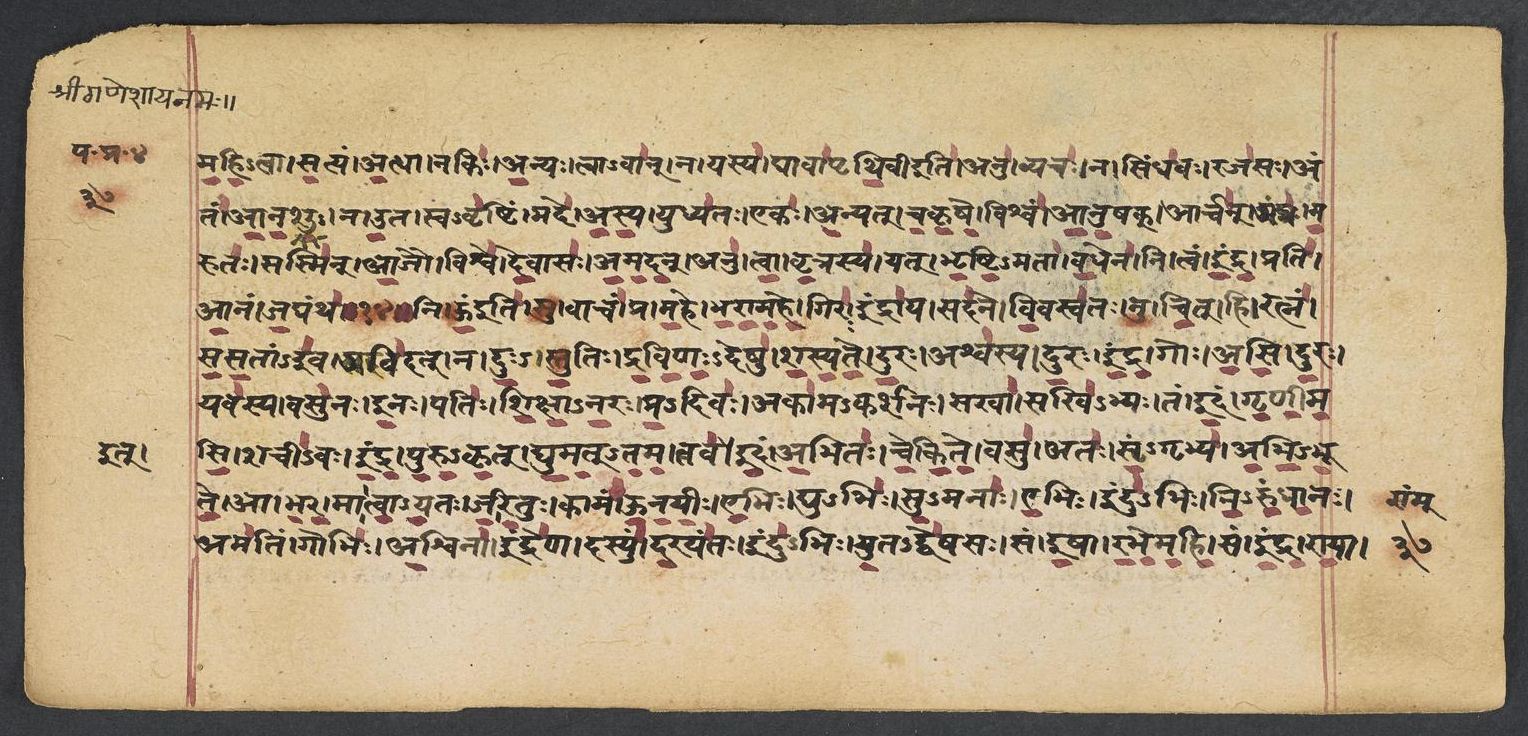
Penn Ms. Coll. 390 Item 41, fol. 37v (OPenn image 39, upper leaf). Checked on the image: the Rigveda text on this page begins in RV 1.52.13 ‹mahi-tvā satyam addhā nakiḥ›. The next page with Rigveda text, fol. 38r, begins in RV 1.53.4 ‹sam iṣā rabhemahi›. Verses 1.53.1-3 end on this page.
1ny ū̱3̱̍ ṣu vāca̱m pra ma̱he bha̍rāmahe̱ gira̱ indrā̍ya̱ sada̍ne vi̱vasva̍taḥ | nū ci̱d dhi ratna̍ṁ sasa̱tām i̱vāvi̍da̱n na du̍ṣṭu̱tir dra̍viṇo̱deṣu̍ śasyate ||
2du̱ro aśva̍sya du̱ra i̍ndra̱ gor a̍si du̱ro yava̍sya̱ vasu̍na i̱nas pati̍ḥ | śi̱kṣā̱na̱raḥ pra̱divo̱ akā̍makarśana̱ḥ sakhā̱ sakhi̍bhya̱s tam i̱daṁ gṛ̍ṇīmasi ||
3śacī̍va indra purukṛd dyumattama̱ taved i̱dam a̱bhita̍ś cekite̱ vasu̍ | ata̍ḥ sa̱ṁgṛbhyā̍bhibhūta̱ ā bha̍ra̱ mā tvā̍ya̱to ja̍ri̱tuḥ kāma̍m ūnayīḥ ||
Compare: Padapāṭha (word-by-word text written in the manuscript; Sansknet e-text via GRETIL)
1ni | oṃ iti | su | vācam | pra | mahe | bharāmahe | giraḥ | indrāya | sadane | vivasvataḥ | nu | cit | hi | ratnam | sasatām-iva | avidat | na | duḥ-stutiḥ | draviṇaḥ-deṣu | śasyate
2duraḥ | aśvasya | duraḥ | indra | goḥ | asi | duraḥ | yavasya | vasunaḥ | inaḥ | patiḥ | śikṣānaraḥ | pra-divaḥ | akāma-karśanaḥ | sakhā | sakhi-bhyaḥ | tam | idam | gṛṇīmasi
3śacī-vaḥ | indra | puru-kṛt | dyumat-tama | tava | it | idam | abhitaḥ | cekite | vasu | ataḥ | sam-gṛbhya | abhi-bhūte | ā | bhara | mā | tvāyataḥ | jarituḥ | kāmam | ūnayīḥ
1WE will present fair praise unto the Mighty One, our hymns to Indra in Vivasvân's dwelling-place; For he hath ne'er found wealth in those who seem to sleep: those who give wealth to men accept no paltry praise.
2Giver of horses, Indra, giver, thou, of kine, giver of barley, thou art Lord and guard of wealth: Man's helper from of old, not disappointing hope, Friend of our friends, to thee ,as such we sing this praise.
3Indra, most splendid, powerful, rich in mighty deeds, this treasure spread around is known to be thine own. Gather therefrom, O Conqueror, and bring to us: fail not the hope of him who loves and sings to thee.
Where on the image
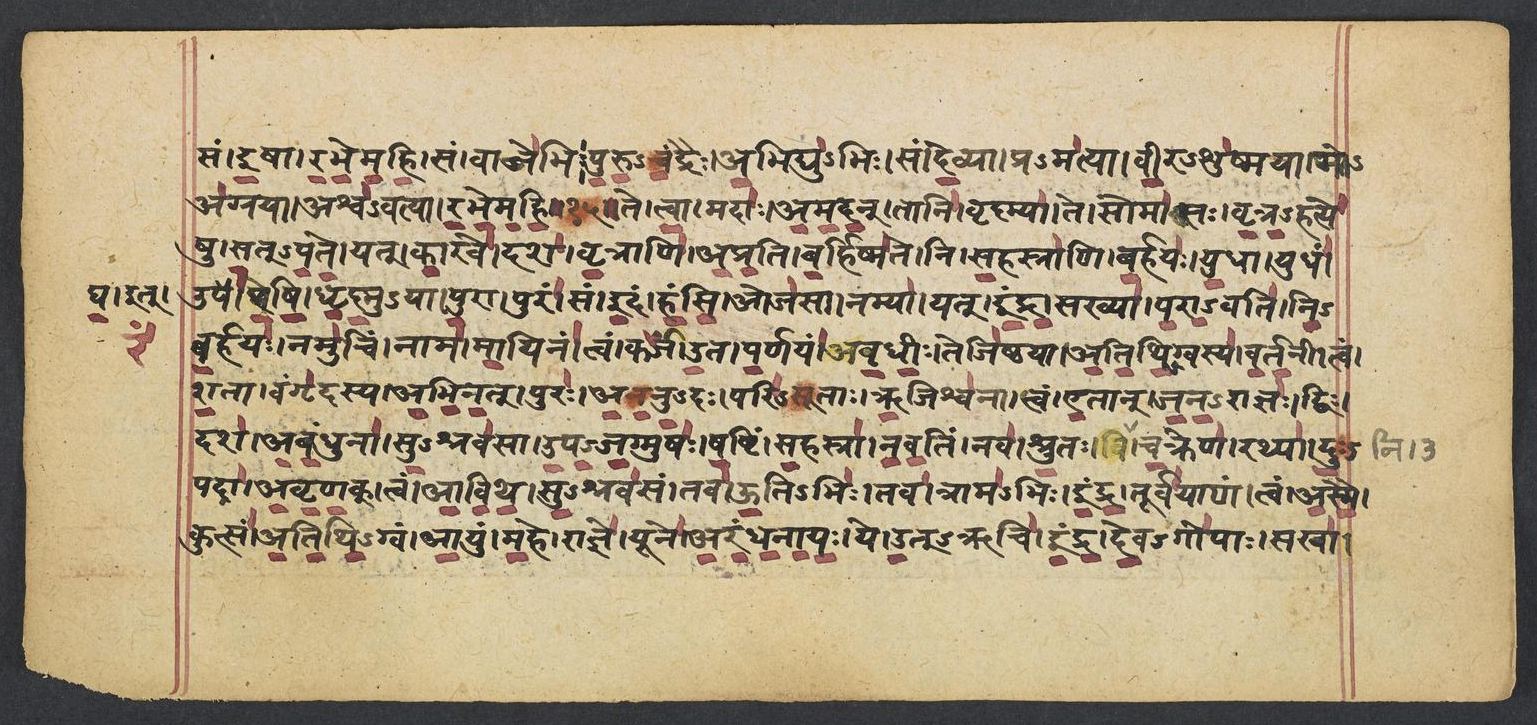
Penn Ms. Coll. 390 Item 41, fol. 38r (OPenn image 39, lower leaf). Checked on the image: the Rigveda text on this page begins in RV 1.53.4 ‹sam iṣā rabhemahi›. The next page with Rigveda text, fol. 38v, begins in RV 1.53.11 ‹-sakhāyaḥ te śiva-tamāḥ asāma›. Verses 1.53.4-10 end on this page; 1.53.4 begins on fol. 37v.
4e̱bhir dyubhi̍ḥ su̱manā̍ e̱bhir indu̍bhir nirundhā̱no ama̍ti̱ṁ gobhi̍r a̱śvinā̍ | indre̍ṇa̱ dasyu̍ṁ da̱raya̍nta̱ indu̍bhir yu̱tadve̍ṣasa̱ḥ sam i̱ṣā ra̍bhemahi ||
5sam i̍ndra rā̱yā sam i̱ṣā ra̍bhemahi̱ saṁ vāje̍bhiḥ puruśca̱ndrair a̱bhidyu̍bhiḥ | saṁ de̱vyā prama̍tyā vī̱raśu̍ṣmayā̱ goa̍gra̱yāśvā̍vatyā rabhemahi ||
6te tvā̱ madā̍ amada̱n tāni̱ vṛṣṇyā̱ te somā̍so vṛtra̱hatye̍ṣu satpate | yat kā̱rave̱ daśa̍ vṛ̱trāṇy a̍pra̱ti ba̱rhiṣma̍te̱ ni sa̱hasrā̍ṇi ba̱rhaya̍ḥ ||
7yu̱dhā yudha̱m upa̱ ghed e̍ṣi dhṛṣṇu̱yā pu̱rā pura̱ṁ sam i̱daṁ ha̱ṁsy oja̍sā | namyā̱ yad i̍ndra̱ sakhyā̍ parā̱vati̍ niba̱rhayo̱ namu̍ci̱ṁ nāma̍ mā̱yina̍m ||
8tvaṁ kara̍ñjam u̱ta pa̱rṇaya̍ṁ vadhī̱s teji̍ṣṭhayātithi̱gvasya̍ varta̱nī | tvaṁ śa̱tā vaṅgṛ̍dasyābhina̱t puro̍ 'nānu̱daḥ pari̍ṣūtā ṛ̱jiśva̍nā ||
9tvam e̱tāñ ja̍na̱rājño̱ dvir daśā̍ba̱ndhunā̍ su̱śrava̍sopaja̱gmuṣa̍ḥ | ṣa̱ṣṭiṁ sa̱hasrā̍ nava̱tiṁ nava̍ śru̱to ni ca̱kreṇa̱ rathyā̍ du̱ṣpadā̍vṛṇak ||
10tvam ā̍vitha su̱śrava̍sa̱ṁ tavo̱tibhi̱s tava̱ trāma̍bhir indra̱ tūrva̍yāṇam | tvam a̍smai̱ kutsa̍m atithi̱gvam ā̱yum ma̱he rājñe̱ yūne̍ arandhanāyaḥ ||
Compare: Padapāṭha (word-by-word text written in the manuscript; Sansknet e-text via GRETIL)
4ebhiḥ | dyubhiḥ | su-manāḥ | ebhiḥ | indu-bhiḥ | niḥ-undhānaḥ | amatim | gobhiḥ | aśvinā | indreṇa | dasyum | darayantaḥ | indu-bhiḥ | yuta-dveṣasaḥ | sam iṣā | rabhemahi
5sam | indra | rāyā | sam | iṣā | rabhemahi | sam | vājebhiḥ | puru-candraiḥ | abhidyu-bhiḥ | sam | devyā | pra-matyā | vīra-śuṣmayā | go--agrayā | aśva-vatyā | rabhemahi
6te | tvā | madāḥ | amadan | tāni | vṛṣṇyā | te | somāsaḥ | vṛtra-hatyeṣu | sat-pate | yat | kārave | daśa | vṛtrāṇi | aprati | barhiṣmate | ni | sahasrāṇi | barhayaḥ
7yudhā | yudham | upa | gha | it | eṣi | dhṛśṇu-yā | purā | puram | sam | idam | haṃsi | ojasā | namyā | yat | indra | sakhyā | parāvati | ni-barhayaḥ | namucm | nāma | māyinam
8tvam | karañjam | uta | parṇayam | vadhīḥ | tejiṣṭhayā | atithi-gvasya | vartanī | tvam | śatā | varṅgedasya | abhinat | puraḥ | ananu-daḥ | pari-sūtāḥ | ṛjiśvanā
9tvam | etān | jana-rājñaḥ | dviḥ | daśa | abandhunā | su-śravasā | upa-jagmuṣaḥ | ṣaṣṭim | sahasrā | navatim | nava | śrutaḥ | ni | cakreṇa | rathyā | duḥ-padā | avṛṇak
10tvam | āvitha | su-śravasam | tava | ūti-bhiḥ | tava | trāma-bhiḥ | indra | tūrvayāṇam | tvam | asmai | kutsam | atithi-gvam | āyum | mahe | rājñe | yūne | arandhanāyaḥ
4Well pleased with these bright flames and with these Soma drops, take thou away our poverty with seeds and kine. With Indra scattering the Dasyu through these drops, freed from their hate may we obtain abundant food.
5Let us obtain, O Indra, plenteous wealth and food, with strength exceeding glorious, shining to the sky: May we obtain the Goddess Providence, the strength of heroes, special source of cattle, rich in steeds.
6These our libations strength-inspiring, Soma draughts, gladdened thee in the fight with Vr̥itra, Hero Lord, What time thou slewest for the singer with trimmed grass ten thousand Vr̥itras, thou resistless in thy might.
7Thou goest on from fight to fight intrepidly, destroying castle after castle here with strength. Thou, Indra, with thy friend who makes the foe bow down, slewest from far away the guileful Namuci.
8Thou hast struck down in death Karanja, Parṇaya, in Âtithigva's very glorious going forth. Unyielding, when R̥ijiṣvan compassed them with siege, thou hast destroyed the hundred forts of Vangr̥ida.
9With all-outstripping chariot-wheel, O Indra, thou far-famed, hast overthrown the twice ten Kings of men, With sixty thousand nine-and-ninety followers, who came in arms to fight with friendless Suṣravâs.
10Thou hast protected Suṣravâs with succour, and Tûrvayâṇa with thine aid, O Indra. Thou madest Kutsa, Âtithigva, Âyu, subject unto this King, the young, the mighty.
Where on the image
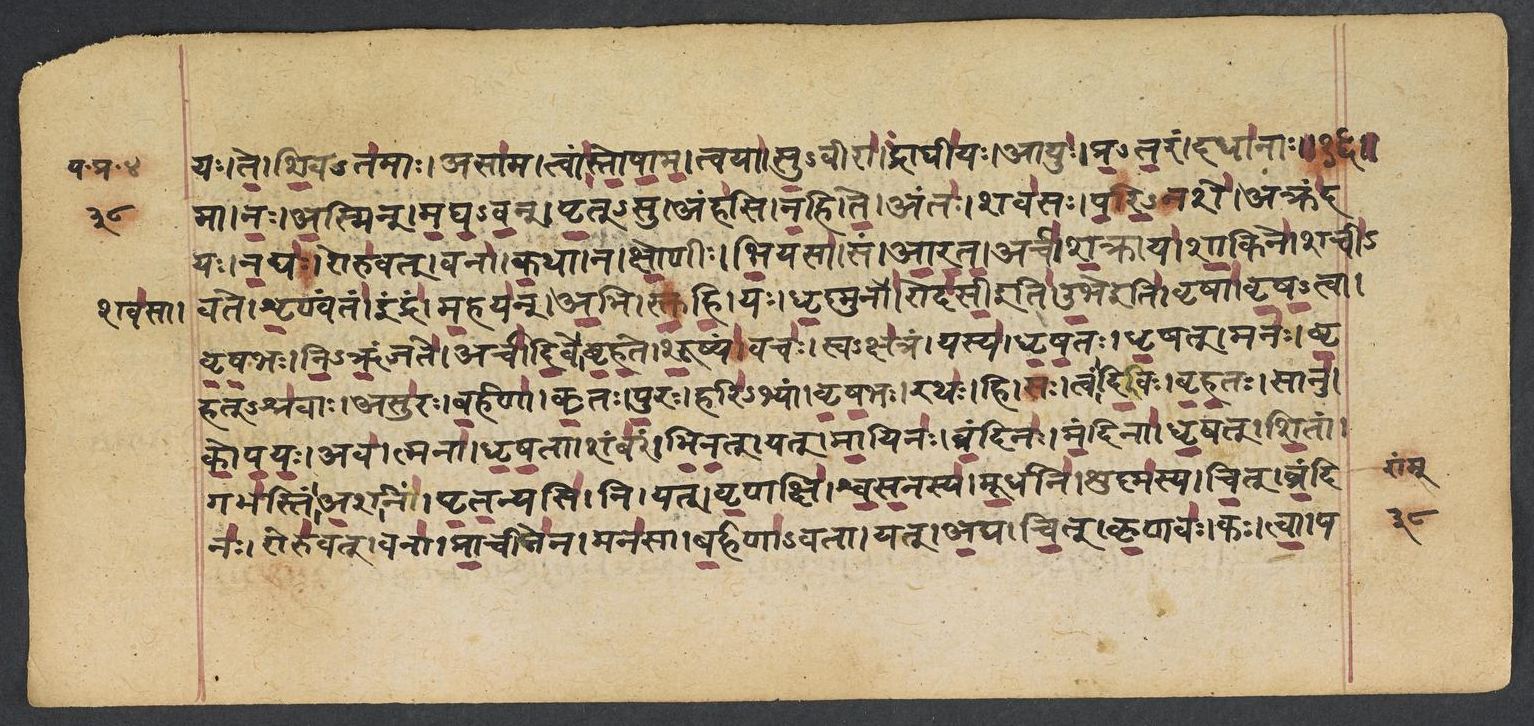
Penn Ms. Coll. 390 Item 41, fol. 38v (OPenn image 40, upper leaf). Checked on the image: the Rigveda text on this page begins in RV 1.53.11 ‹-sakhāyaḥ te śiva-tamāḥ asāma›. The next page with Rigveda text, fol. 39r, begins in RV 1.54.5 ‹-pari›. Verse 1.53.11 ends on this page; 1.53.11 begins on fol. 38r.
11ya u̱dṛcī̍ndra de̱vago̍pā̱ḥ sakhā̍yas te śi̱vata̍mā̱ asā̍ma | tvāṁ sto̍ṣāma̱ tvayā̍ su̱vīrā̱ drāghī̍ya̱ āyu̍ḥ prata̱raṁ dadhā̍nāḥ ||
Compare: Padapāṭha (word-by-word text written in the manuscript; Sansknet e-text via GRETIL)
11ye | ut-ṛci | indra | deva-gopāḥ | sakhāyaḥ | te | śiva-tamāḥ | asāma | tvām | stoṣāma | tvayā | su-vīrāḥ | drāghīyaḥ | āyuḥ | pra-taram | dadhānāḥ
11May we protected by the Gods hereafter remain thy very prosperous friends, O Indra. Thee we extol, enjoying through thy favour life long and joyful and with store of heroes.
Notes
- Sanskrit: Aufrecht's edition (1877) with the Vedic accents, as entered by van Nooten and Holland (GRETIL).
- English: Ralph T. H. Griffith, The Hymns of the Rigveda (1889-1892; 2nd ed. 1896-1897), from the VedaWeb digital text; OCR slips in that text were corrected against the printed 2nd edition (data/sources/rigveda/griffith_errata.json).
- Padapāṭha (edition text): Sansknet e-text via GRETIL (CC BY-NC-SA 4.0).
Cite
Sources
- Source: Penn Ms. Coll. 390 Item 41 (undated (catalogued with Penn's 18th-19th c. Vedic manuscripts)), OPenn, Public Domain Mark + Aufrecht's accented text (GRETIL) + Griffith's English (VedaWeb) (holding institution)
- Critical edition: Aufrecht (1877), accented e-text via GRETIL
← previous · → next · v cycle view · l back to library