Rigveda 1.54: To Indra
Introduction
Rigveda 1.54 is a hymn of 11 verses addressed to Indra. It stands in book (maṇḍala) 1, a collection of hymns by many families of poets. The Rigveda is the oldest collection of Sanskrit hymns, composed in the second half of the second millennium BCE and handed down orally for many centuries before it was written down.
The manuscript shown is Penn Ms. Coll. 390 Item 41 (University of Pennsylvania), an undated paper manuscript of the padapāṭha (the word-by-word recitation text, in which every word is written separately and compounds are split) of the whole Ṛgveda in Devanāgarī, 884 leaves in fascicles, 7-9 lines to the page, accents in red; this hymn stands on fol. 38v-39v. Each section below gives the verses that end on one page; the page boundaries were read on the images (the opening words of every page), not counted out. Where the manuscript is a padapāṭha (the word-by-word recitation text), the section shows Aufrecht's continuous (saṃhitā) text first and, as the edition text, the padapāṭha of the same verses, which is the form written on the page.
How was this verified? (Provenance)
Where on the image
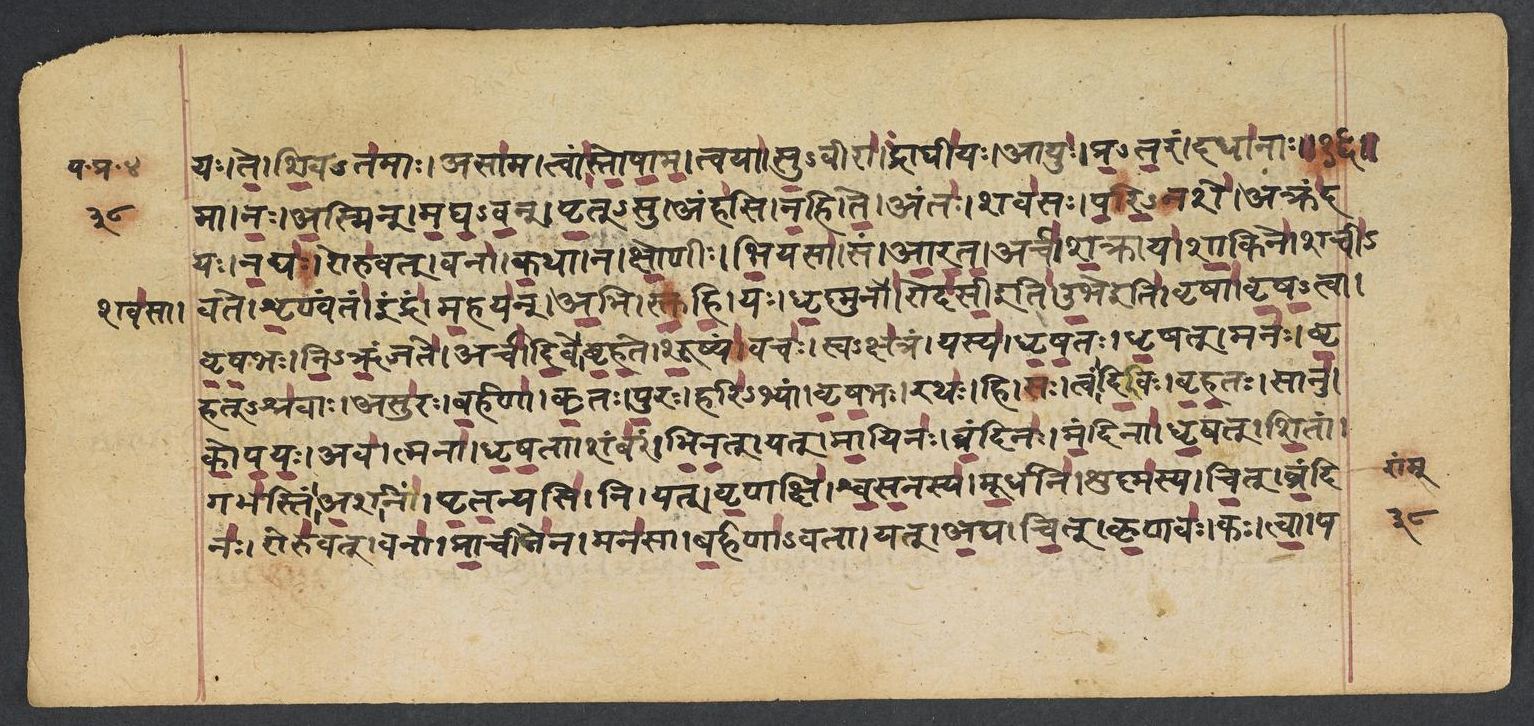
Penn Ms. Coll. 390 Item 41, fol. 38v (OPenn image 40, upper leaf). Checked on the image: the Rigveda text on this page begins in RV 1.53.11 ‹-sakhāyaḥ te śiva-tamāḥ asāma›. The next page with Rigveda text, fol. 39r, begins in RV 1.54.5 ‹-pari›. Verses 1.54.1-4 end on this page.
1mā no̍ a̱smin ma̍ghavan pṛ̱tsv aṁha̍si na̱hi te̱ anta̱ḥ śava̍saḥ parī̱ṇaśe̍ | akra̍ndayo na̱dyo̱3̱̍ roru̍va̱d vanā̍ ka̱thā na kṣo̱ṇīr bhi̱yasā̱ sam ā̍rata ||
2arcā̍ śa̱krāya̍ śā̱kine̱ śacī̍vate śṛ̱ṇvanta̱m indra̍m ma̱haya̍nn a̱bhi ṣṭu̍hi | yo dhṛ̱ṣṇunā̱ śava̍sā̱ roda̍sī u̱bhe vṛṣā̍ vṛṣa̱tvā vṛ̍ṣa̱bho nyṛ̱ñjate̍ ||
3arcā̍ di̱ve bṛ̍ha̱te śū̱ṣya1̱̍ṁ vaca̱ḥ svakṣa̍tra̱ṁ yasya̍ dhṛṣa̱to dhṛ̱ṣan mana̍ḥ | bṛ̱hacchra̍vā̱ asu̍ro ba̱rhaṇā̍ kṛ̱taḥ pu̱ro hari̍bhyāṁ vṛṣa̱bho ratho̱ hi ṣaḥ ||
4tvaṁ di̱vo bṛ̍ha̱taḥ sānu̍ kopa̱yo 'va̱ tmanā̍ dhṛṣa̱tā śamba̍ram bhinat | yan mā̱yino̍ vra̱ndino̍ ma̱ndinā̍ dhṛ̱ṣac chi̱tāṁ gabha̍stim a̱śani̍m pṛta̱nyasi̍ ||
Compare: Padapāṭha (word-by-word text written in the manuscript; Sansknet e-text via GRETIL)
1mā | naḥ | asmin | maghavan | pṛt-su | aṃhasi | nahi | te | antaḥ | śavasaḥ | pari-naśe | akrandayaḥ | nadyaḥ | roruvat | vanā | kathā | na | kṣoṇīḥ | bhiyasā | sam | ārata
2arca | akrāya | śākine | śacī-vate | śṛṇvantam | indram | mahayan | abhi | stuhi | yaḥ | dhṛṣṇunā | śavasā | rodasī iti | ubhe iti | vṛṣā | vṛṣa-tvā | vṛṣabhaḥ | ni-ṛñjate
3arca | dive | bṛhate | śūṣyam | vacaḥ | sva-kṣatram | yasya | dhṛṣataḥ | dhṛṣat | manaḥ | bṛhat-śravāḥ | asuraḥ | barhaṇā | kṛtaḥ | puraḥ | hari-bhyām | vṛṣabhaḥ | rathaḥ | hi | saḥ
4tvam | divaḥ | bṛhataḥ | sānu | kopayaḥ | ava | tmanā | dhṛṣatā | śambaram | bhinat | yat | māyinaḥ | vrandinaḥ | mandinā | dhṛṣat | śitām | gabhastim | aśanim | pṛtanyasi
1URGE us not, Maghavan, to this distressful fight, for none may comprehend the limit of thy strength. Thou with fierce shout hast made the woods and rivers roar: did not men run in crowds together in their fear?
2Sing hymns of praise to Ṣakra, Lord of power and might; laud thou and magnify Indra who hearcth thee, Who with his daring might, a Bull exceeding strong in strength, maketh him master of the heaven and earth.
3Sing forth to lofty Dyaus a strength-bestowing song, the Bold, whose resolute mind hath independent sway. High glory hath the Asura, compact of strength, drawn on by two Bay Steeds: a Bull, a Car is he.
4The ridges of the lofty heaven thou madest shake; thou, daring, of thyself smotest through Ṣambara, When bold with gladdening juice, thou warredst with thy bolt, sharp and twoedged, against the banded sorcerers.
Where on the image
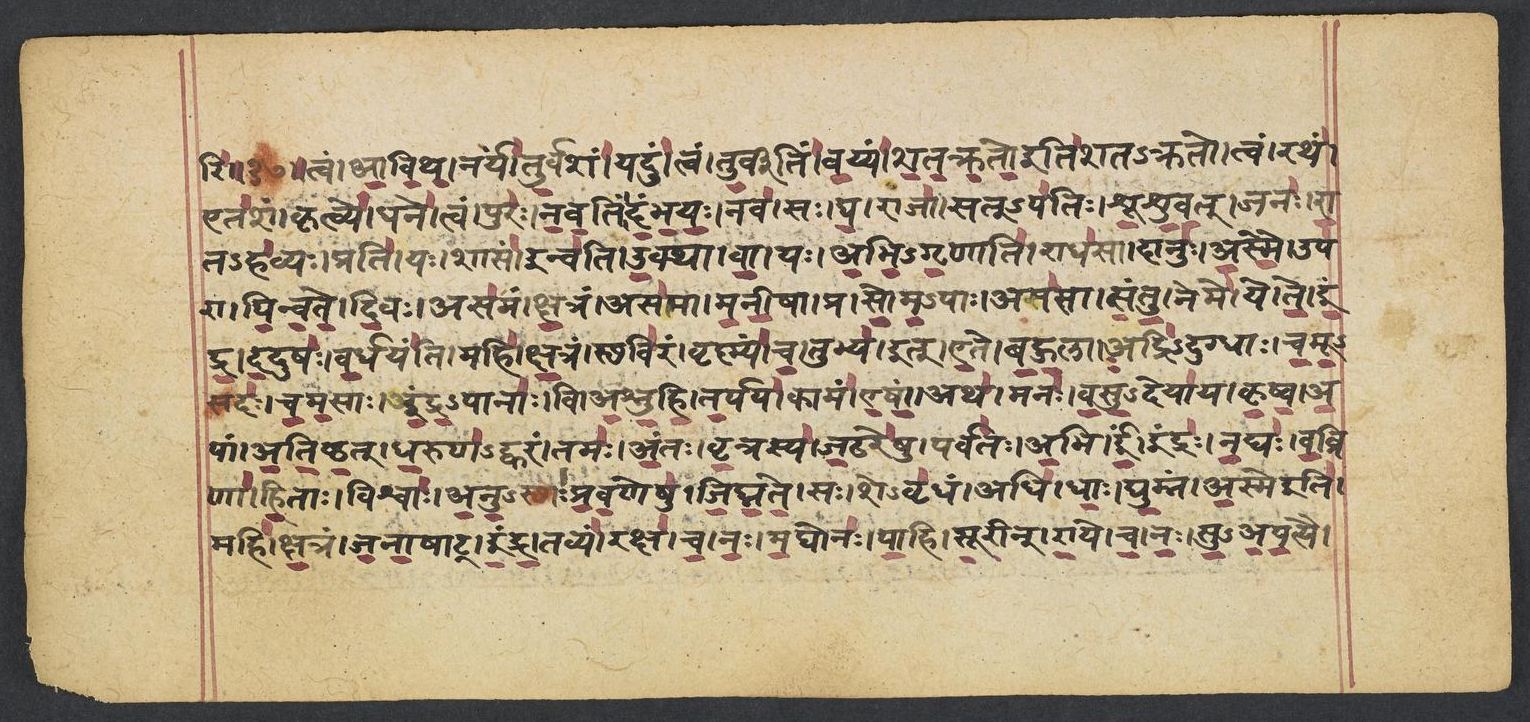
Penn Ms. Coll. 390 Item 41, fol. 39r (OPenn image 40, lower leaf). Checked on the image: the Rigveda text on this page begins in RV 1.54.5 ‹-pari›. The next page with Rigveda text, fol. 39v, begins in RV 1.54.11 ‹iṣe dhāḥ›. Verses 1.54.5-10 end on this page; 1.54.5 begins on fol. 38v.
5ni yad vṛ̱ṇakṣi̍ śvasa̱nasya̍ mū̱rdhani̱ śuṣṇa̍sya cid vra̱ndino̱ roru̍va̱d vanā̍ | prā̱cīne̍na̱ mana̍sā ba̱rhaṇā̍vatā̱ yad a̱dyā ci̍t kṛ̱ṇava̱ḥ kas tvā̱ pari̍ ||
6tvam ā̍vitha̱ narya̍ṁ tu̱rvaśa̱ṁ yadu̱ṁ tvaṁ tu̱rvīti̍ṁ va̱yya̍ṁ śatakrato | tvaṁ ratha̱m eta̍śa̱ṁ kṛtvye̱ dhane̱ tvam puro̍ nava̱tiṁ da̍mbhayo̱ nava̍ ||
7sa ghā̱ rājā̱ satpa̍tiḥ śūśuva̱j jano̍ rā̱taha̍vya̱ḥ prati̱ yaḥ śāsa̱m inva̍ti | u̱kthā vā̱ yo a̍bhigṛ̱ṇāti̱ rādha̍sā̱ dānu̍r asmā̱ upa̍rā pinvate di̱vaḥ ||
8asa̍maṁ kṣa̱tram asa̍mā manī̱ṣā pra so̍ma̱pā apa̍sā santu̱ neme̍ | ye ta̍ indra da̱duṣo̍ va̱rdhaya̍nti̱ mahi̍ kṣa̱traṁ sthavi̍ra̱ṁ vṛṣṇya̍ṁ ca ||
9tubhyed e̱te ba̍hu̱lā adri̍dugdhāś camū̱ṣada̍ś cama̱sā i̍ndra̱pānā̍ḥ | vy a̍śnuhi ta̱rpayā̱ kāma̍m eṣā̱m athā̱ mano̍ vasu̱deyā̍ya kṛṣva ||
10a̱pām a̍tiṣṭhad dha̱ruṇa̍hvara̱ṁ tamo̱ 'ntar vṛ̱trasya̍ ja̱ṭhare̍ṣu̱ parva̍taḥ | a̱bhīm indro̍ na̱dyo̍ va̱vriṇā̍ hi̱tā viśvā̍ anu̱ṣṭhāḥ pra̍va̱ṇeṣu̍ jighnate ||
Compare: Padapāṭha (word-by-word text written in the manuscript; Sansknet e-text via GRETIL)
5ni | yat | vṛṇakṣi | śvasanasya | mūrdhani | śuṣṇasya | cit | vrandinaḥ | roruvat | vanā | prācīnena | manasā | barhaṇāvatā | yat | adya | cit | kṛṇavaḥ | kaḥ | tvā | pari
6tvam | āvitha | naryam | turvaśam | yadum | tvam | turvītim | vayyam | śatakrato itiśata-krato | tvam | ratham | etaśam | kṛtvye | dhane | tvam | puraḥ | navatim | dambhayaḥ | nava
7saḥ | gha | rājā | sat-patiḥ | śūśuvat | janaḥ | rāta-havyaḥ | prati | yaḥ | śāsam | invati | ukthā | vā | yaḥ | abhi-gṛṇāti | rādhasā | dānuḥ | asmai | uparā | pinvate | d ivaḥ
8asamam | kṣatram | asamā | manīṣā | pra | soma-pāḥ | apasā | santu | neme | ye | te | indra | daduṣaḥ | vardhayanti | mahi | kṣatram | sthaviram | vṛṣṇyam | ca
9tubhya | it | ete | bahulāḥ | adri-dugdhāḥ | camū-sadaḥ | camasāḥ | indra-pānāḥ | vi | aśnuhi | tarpaya | kāmam | eṣām | atha | manaḥ | vasu-deyāya | kṛṣva
10apām | atiṣṭhat | dharuṇa-hvaram | tamaḥ | antaḥ | vṛtrasya | jaṭhareṣu | parvataḥ | abhi | īm | indraḥ | nadyaḥ | vavriṇā | hitāḥ | viśvāḥ | anu-sthāḥ | pravaṇeṣu | jighnate
5When with a roar that fills the woods, thou forcest down on wind's head the stores which 8usga kept confined, Who shall have power to stay thee firm and eager-souled from doing still this day what thou of old hast done?
6Thou helpest Narya, Turvaṣa, and Yadu, and Vayya's son Turvîti, Ṣatakratu! Thou helpest horse and car in final battle thou breakest down the nine-and-ninety castles.
7A hero-lord is he, King of a mighty folk, who offers free oblations and promotes the Law, Who with a bounteous guerdon welcomes hymns of praise: for him flows down the abundant stream below the sky.
8His power is matchless, matchless is his wisdom; chief, through their work, be some who drink the Soma, Those, Indra, who increase the lordly power, the firm heroic strength of thee the Giver.
9Therefore for thee are these abundant beakers Indra's drink, stone-pressed juices held in ladles. Quaff them and satisfy therewith thy longing; then fix thy mind upon bestowing treasure.
10There darkness stood, the vault that stayed the waters' flow: in Vr̥itra's hollow side the rain-cloud lay concealed. But Indra smote the rivers which the obstructer stayed, flood following after flood, down steep declivitics.
Where on the image
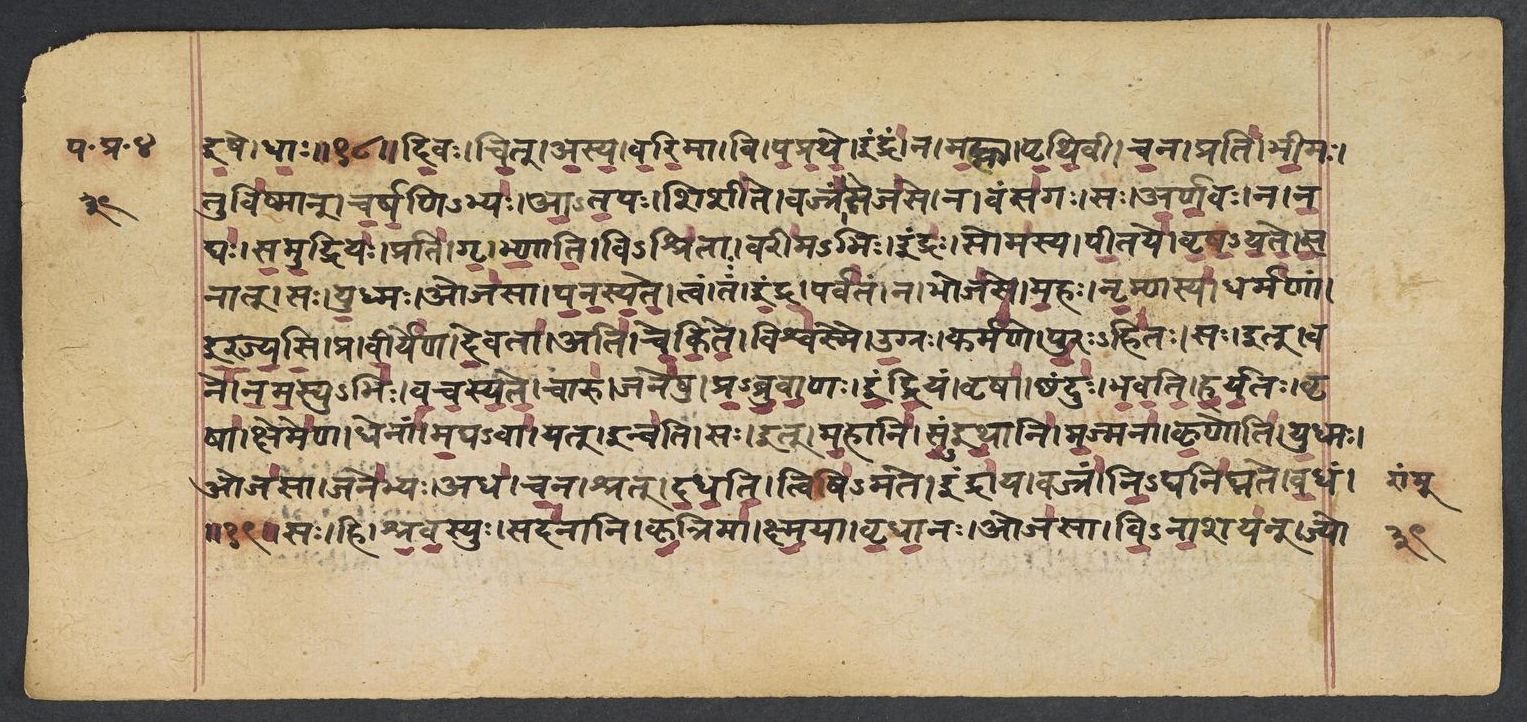
Penn Ms. Coll. 390 Item 41, fol. 39v (OPenn image 41, upper leaf). Checked on the image: the Rigveda text on this page begins in RV 1.54.11 ‹iṣe dhāḥ›. The next page with Rigveda text, fol. 40r, begins in RV 1.55.6 ‹-jyotīṃṣi kṛṇvan avṛkāṇi yajyave›. Verse 1.54.11 ends on this page; 1.54.11 begins on fol. 39r.
11sa śevṛ̍dha̱m adhi̍ dhā dyu̱mnam a̱sme mahi̍ kṣa̱traṁ ja̍nā̱ṣāḻ i̍ndra̱ tavya̍m | rakṣā̍ ca no ma̱ghona̍ḥ pā̱hi sū̱rīn rā̱ye ca̍ naḥ svapa̱tyā i̱ṣe dhā̍ḥ ||
Compare: Padapāṭha (word-by-word text written in the manuscript; Sansknet e-text via GRETIL)
11saḥ | śe--vṛdham | adhi | dhāḥ | dyumnam | asme iti | mahi | kṣatram | janāṣāṭ | indra | tavyam | rakṣa | ca | naḥ | maghonaḥ | pāh i | sūrīn | rāye | ca | naḥ | su-apatyai | iṣe | dhāḥ
11So give us, Indra, bliss-increasing glory give us great sway and strength that conquers people. Preserve our wealthy patrons, save our princes; vouchsafe us wealth and food with noble offspring.
Notes
- Sanskrit: Aufrecht's edition (1877) with the Vedic accents, as entered by van Nooten and Holland (GRETIL).
- English: Ralph T. H. Griffith, The Hymns of the Rigveda (1889-1892; 2nd ed. 1896-1897), from the VedaWeb digital text; OCR slips in that text were corrected against the printed 2nd edition (data/sources/rigveda/griffith_errata.json).
- Padapāṭha (edition text): Sansknet e-text via GRETIL (CC BY-NC-SA 4.0).
Cite
Sources
- Source: Penn Ms. Coll. 390 Item 41 (undated (catalogued with Penn's 18th-19th c. Vedic manuscripts)), OPenn, Public Domain Mark + Aufrecht's accented text (GRETIL) + Griffith's English (VedaWeb) (holding institution)
- Critical edition: Aufrecht (1877), accented e-text via GRETIL
← previous · → next · v cycle view · l back to library