Rigveda 1.55: To Indra
Introduction
Rigveda 1.55 is a hymn of 8 verses addressed to Indra. It stands in book (maṇḍala) 1, a collection of hymns by many families of poets. The Rigveda is the oldest collection of Sanskrit hymns, composed in the second half of the second millennium BCE and handed down orally for many centuries before it was written down.
The manuscript shown is Penn Ms. Coll. 390 Item 41 (University of Pennsylvania), an undated paper manuscript of the padapāṭha (the word-by-word recitation text, in which every word is written separately and compounds are split) of the whole Ṛgveda in Devanāgarī, 884 leaves in fascicles, 7-9 lines to the page, accents in red; this hymn stands on fol. 39v-40r. Each section below gives the verses that end on one page; the page boundaries were read on the images (the opening words of every page), not counted out. Where the manuscript is a padapāṭha (the word-by-word recitation text), the section shows Aufrecht's continuous (saṃhitā) text first and, as the edition text, the padapāṭha of the same verses, which is the form written on the page.
How was this verified? (Provenance)
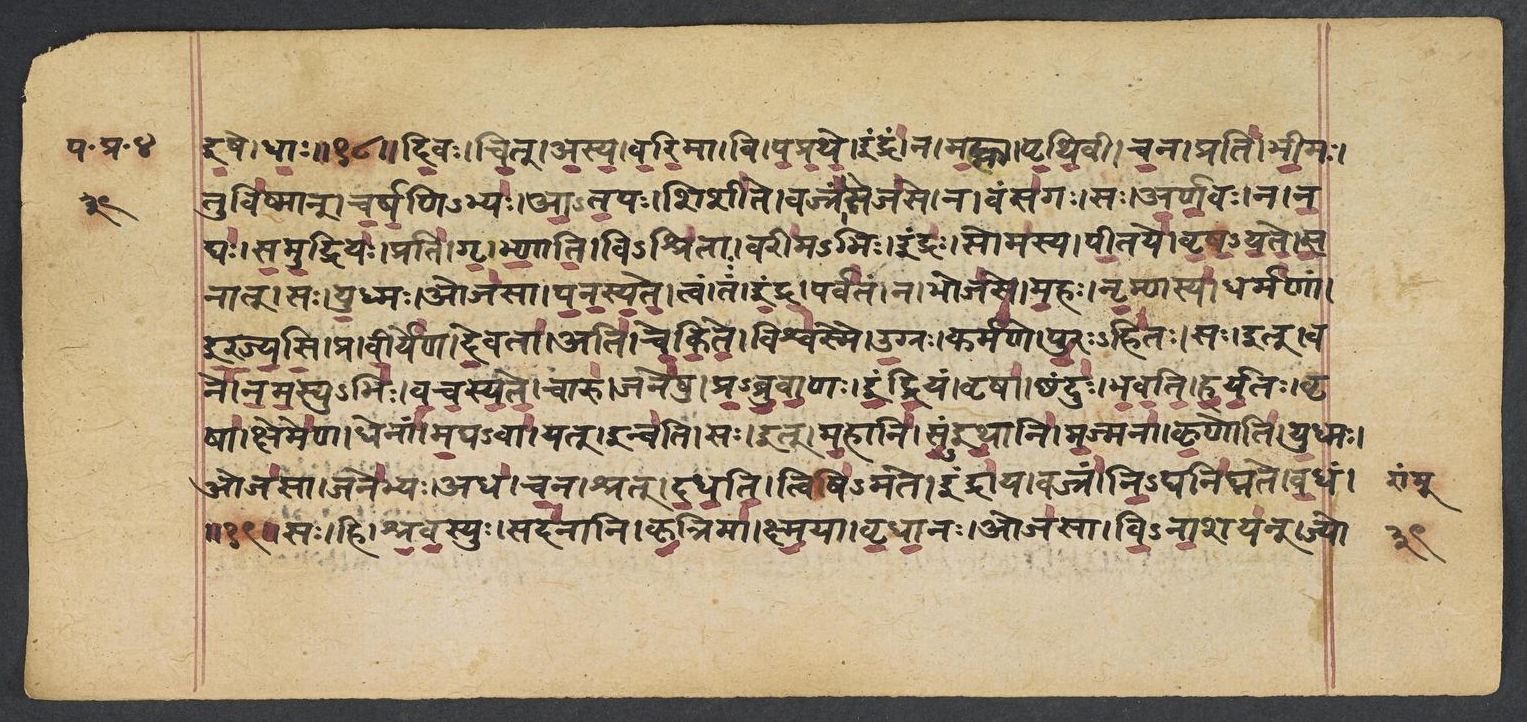
Where on the image
Penn Ms. Coll. 390 Item 41, fol. 39v (OPenn image 41, upper leaf). Checked on the image: the Rigveda text on this page begins in RV 1.54.11 ‹iṣe dhāḥ›. The next page with Rigveda text, fol. 40r, begins in RV 1.55.6 ‹-jyotīṃṣi kṛṇvan avṛkāṇi yajyave›. Verses 1.55.1-5 end on this page.
1di̱vaś ci̍d asya vari̱mā vi pa̍pratha̱ indra̱ṁ na ma̱hnā pṛ̍thi̱vī ca̱na prati̍ | bhī̱mas tuvi̍ṣmāñ carṣa̱ṇibhya̍ āta̱paḥ śiśī̍te̱ vajra̱ṁ teja̍se̱ na vaṁsa̍gaḥ ||
2so a̍rṇa̱vo na na̱dya̍ḥ samu̱driya̱ḥ prati̍ gṛbhṇāti̱ viśri̍tā̱ varī̍mabhiḥ | indra̱ḥ soma̍sya pī̱taye̍ vṛṣāyate sa̱nāt sa yu̱dhma oja̍sā panasyate ||
3tvaṁ tam i̍ndra̱ parva̍ta̱ṁ na bhoja̍se ma̱ho nṛ̱mṇasya̱ dharma̍ṇām irajyasi | pra vī̱rye̍ṇa de̱vatāti̍ cekite̱ viśva̍smā u̱graḥ karma̍ṇe pu̱rohi̍taḥ ||
4sa id vane̍ nama̱syubhi̍r vacasyate̱ cāru̱ jane̍ṣu prabruvā̱ṇa i̍ndri̱yam | vṛṣā̱ chandu̍r bhavati harya̱to vṛṣā̱ kṣeme̍ṇa̱ dhenā̍m ma̱ghavā̱ yad inva̍ti ||
5sa in ma̱hāni̍ sami̱thāni̍ ma̱jmanā̍ kṛ̱ṇoti̍ yu̱dhma oja̍sā̱ jane̍bhyaḥ | adhā̍ ca̱na śrad da̍dhati̱ tviṣī̍mata̱ indrā̍ya̱ vajra̍ṁ ni̱ghani̍ghnate va̱dham ||
Compare: Padapāṭha (word-by-word text written in the manuscript; Sansknet e-text via GRETIL)
1divaḥ | cit | asya | varimā | vi | papratha | indram | na | mahnā | pṛthivī | cana | prati | bhīmaḥ | tuviṣmān | carṣaṇi-bhyaḥ | ātapaḥ | śiśīte | vajram | tejase | na | vaṃsagaḥ
2saḥ | arṇavaḥ | na | nadyaḥ | samudriyaḥ | prati | gṛbhṇāti | vi-śritāḥ | varīma-bhiḥ | indraḥ | somasya | pītaye | vṛṣa-yate | sanāt | saḥ | yudhmaḥ | ojasā | panasyate
3tvam | tam | indra | parvatam | na | bhojase | mahaḥ | nṛmṇasya | dharmaṇām | irajyasi | pra | vīryeṇa | devatāti | cekite | viśvasmai | ugraḥ | karmaṇe | puraḥ-h itaḥ
4saḥ | it | vane | namasyu-bhiḥ | vacasyate | cāru | janeṣu | pra-bruvāṇaḥ | indri yam | vṛṣā | chanduḥ | bhavati | haryataḥ | vṛṣā | kṣemeṇa | dhenām | maghavā | yat | invati
5saḥ | it | mahāni | sam-ithāni | majmanā | kṛṇoti | yudhmaḥ | ojasā | janebhyaḥ | adha | cana | śrat | dadhati | tviṣi-mate | indrāya | vajram | ni-ghanighnate | vadham
1THOUGH e'en this heaven's wide space and earth have spread them out, nor heaven nor earth may be in greatness Indra's match. Awful and very mighty, causing woe to men, he whets his thunderbolt for sharpness, as a bull.
2Like as the watery ocean, so doth he receive the rivers spread on all sides in their ample width. He bears him like a bull to drink of Soma juice, and will, as Warrior from of old, be praised for might.
3Thou swayest, Indra, all kinds of great manly power, so as to bend, as't were, even that famed mountain down. Foremost among the Gods is he through hero might, set in the van, the Strong One, for each arduous deed.
4He only in the wood is praised by worshippers, when he shows forth to men his own fair Indrapower. A friendly Bull is he, a Bull to be desired when Maghavan auspiciously sends forth his voice.
5Yet verily the Warrior in his vigorous strength stirreth up with his might great battles for mankind; And men have faith in Indra, the resplendent One, what time he hurleth down his bolt, his dart of death.
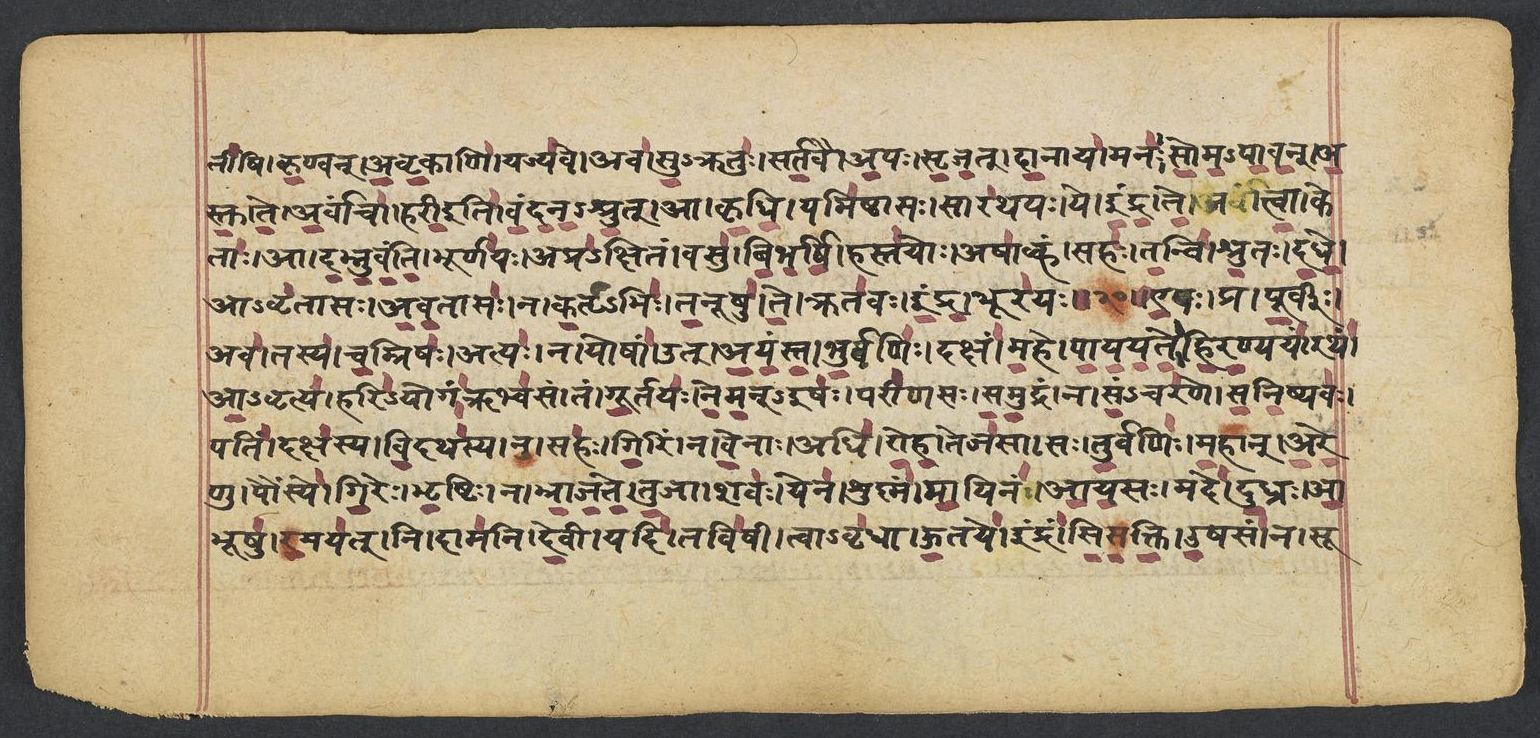
Where on the image
Penn Ms. Coll. 390 Item 41, fol. 40r (OPenn image 41, lower leaf). Checked on the image: the Rigveda text on this page begins in RV 1.55.6 ‹-jyotīṃṣi kṛṇvan avṛkāṇi yajyave›. The next page with Rigveda text, fol. 40v, begins in RV 1.56.4 ‹-śavasā bādhate tamaḥ iyarti›. Verses 1.55.6-8 end on this page; 1.55.6 begins on fol. 39v.
6sa hi śra̍va̱syuḥ sada̍nāni kṛ̱trimā̍ kṣma̱yā vṛ̍dhā̱na oja̍sā vinā̱śaya̍n | jyotī̍ṁṣi kṛ̱ṇvann a̍vṛ̱kāṇi̱ yajya̱ve 'va̍ su̱kratu̱ḥ sarta̱vā a̱paḥ sṛ̍jat ||
7dā̱nāya̱ mana̍ḥ somapāvann astu te̱ 'rvāñcā̱ harī̍ vandanaśru̱d ā kṛ̍dhi | yami̍ṣṭhāsa̱ḥ sāra̍thayo̱ ya i̍ndra te̱ na tvā̱ ketā̱ ā da̍bhnuvanti̱ bhūrṇa̍yaḥ ||
8apra̍kṣita̱ṁ vasu̍ bibharṣi̱ hasta̍yo̱r aṣā̍ḻha̱ṁ saha̍s ta̱nvi̍ śru̱to da̍dhe | āvṛ̍tāso 'va̱tāso̱ na ka̱rtṛbhi̍s ta̱nūṣu̍ te̱ krata̍va indra̱ bhūra̍yaḥ ||
Compare: Padapāṭha (word-by-word text written in the manuscript; Sansknet e-text via GRETIL)
6saḥ | hi | śravasyuḥ | sadanāni | kṛtrimā | kṣmayā | vṛdhānaḥ | ojasā | vi-nāśayan | jyotīṃṣi | kṛṇvan | avṛkāṇi | yajyave | ava | su-kratuḥ | sartavai | apaḥ | sṛjat
7dānāya | manaḥ | soma-pāvan | astu | te | arvāñcā | harī iti | vandana-śrut | ā | kṛdhi | yamiṣṭhāsaḥ | sārathayaḥ | ye | indrca | te | na | tvā | ketāḥ | ā | dabhnuvanti | bhūrṇayaḥ
8apra-kṣitam | vasu | bibharṣi | hastayoḥ | aṣāḷham | sahaḥ | tanvi | sṛutaḥ | dadhe | āvṛtāsaḥ | avatāsaḥ | na | kartṛ-bhiḥ | tanūṣu | te | kratavaḥ | indra | bhūrayaḥ
6Though, fain for glory, and with strength increased on earth, he with great might destroys the dwellings made with art, He makes the lights of heaven shine forth secure, he bids, exceeding wise, the floods flow for his worshipper.
7Drinker of Soma, let thy heart incline to give; bring thy Bays hitherward, O thou who hearest praise. Those charioteers of' thine, best skilled to draw the rein, the rapid sunbeams, Indra, lead thee not astray.
8Thou bearest in both hands treasure that never fails; the famed One in his body holds unvanquished might. O Indra, in thy members many powers abide, like wells surrounded by the ministering priests.
Notes
- Sanskrit: Aufrecht's edition (1877) with the Vedic accents, as entered by van Nooten and Holland (GRETIL).
- English: Ralph T. H. Griffith, The Hymns of the Rigveda (1889-1892; 2nd ed. 1896-1897), from the VedaWeb digital text; OCR slips in that text were corrected against the printed 2nd edition (data/sources/rigveda/griffith_errata.json).
- Padapāṭha (edition text): Sansknet e-text via GRETIL (CC BY-NC-SA 4.0).
Cite
Sources
- Source: Penn Ms. Coll. 390 Item 41 (undated (catalogued with Penn's 18th-19th c. Vedic manuscripts)), OPenn, Public Domain Mark + Aufrecht's accented text (GRETIL) + Griffith's English (VedaWeb) (holding institution)
- Critical edition: Aufrecht (1877), accented e-text via GRETIL
← previous · → next · v cycle view · l back to library