Rigveda 1.56: To Indra
Introduction
Rigveda 1.56 is a hymn of 6 verses addressed to Indra. It stands in book (maṇḍala) 1, a collection of hymns by many families of poets. The Rigveda is the oldest collection of Sanskrit hymns, composed in the second half of the second millennium BCE and handed down orally for many centuries before it was written down.
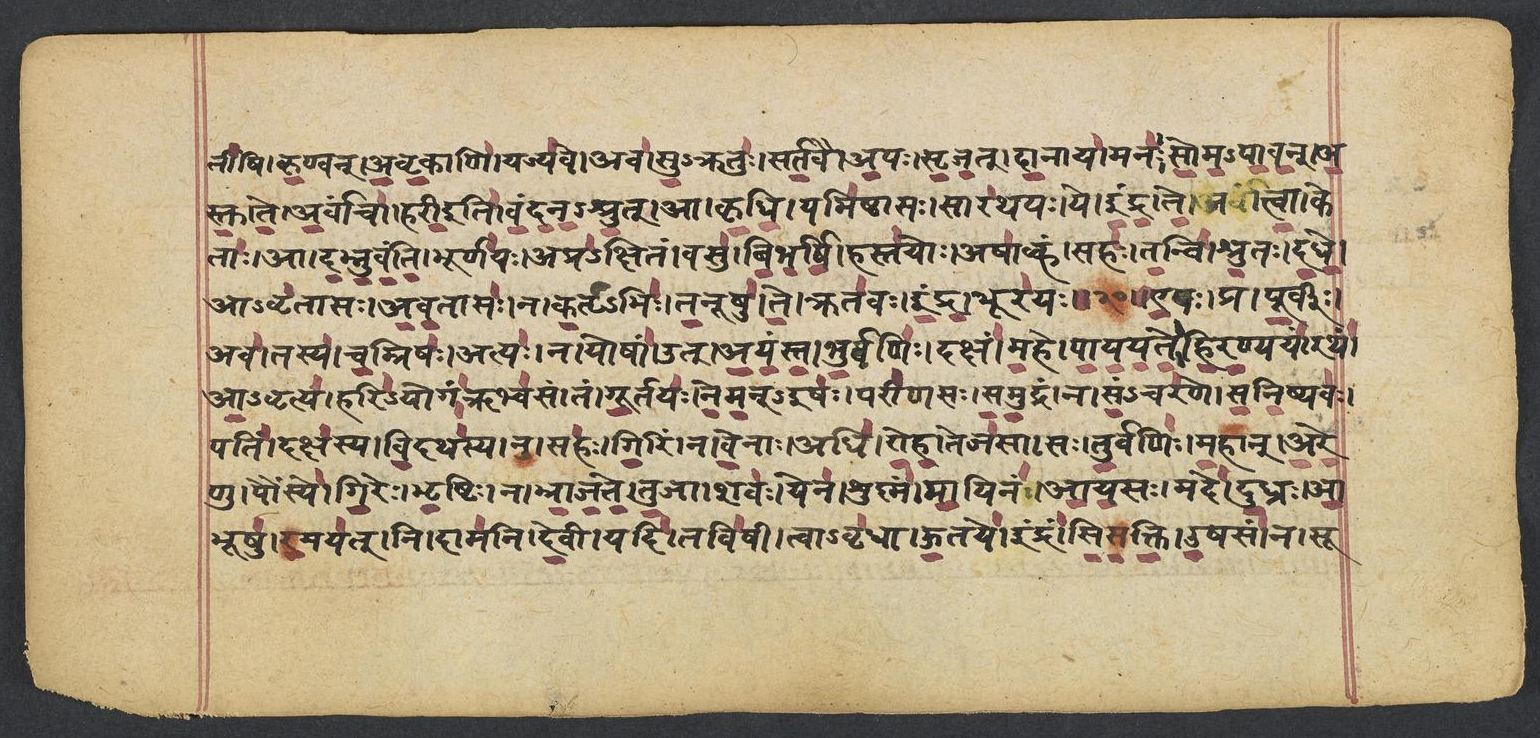
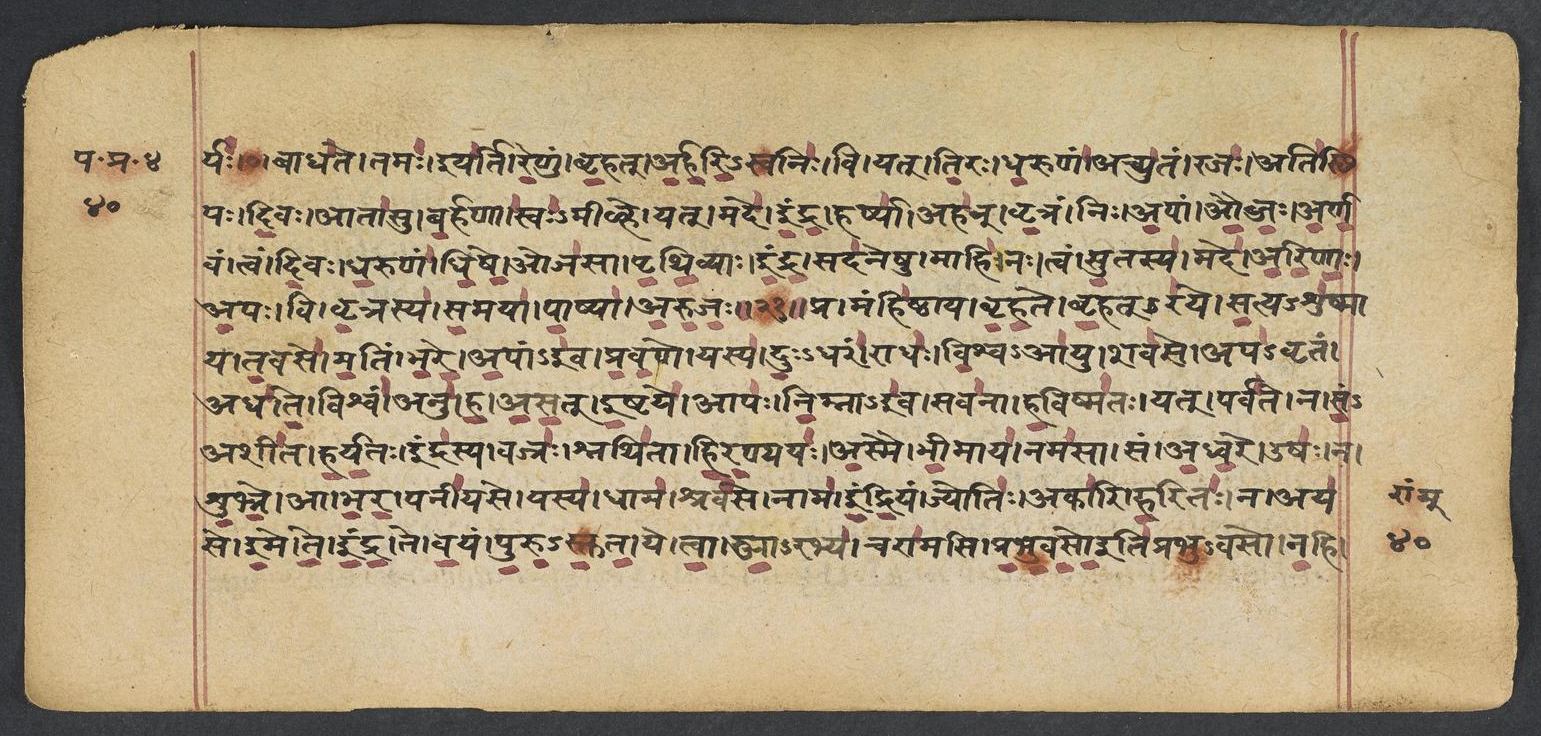
The manuscript shown is Penn Ms. Coll. 390 Item 41 (University of Pennsylvania), an undated paper manuscript of the padapāṭha (the word-by-word recitation text, in which every word is written separately and compounds are split) of the whole Ṛgveda in Devanāgarī, 884 leaves in fascicles, 7-9 lines to the page, accents in red; this hymn stands on fol. 40r-40v. Each section below gives the verses that end on one page; the page boundaries were read on the images (the opening words of every page), not counted out. Where the manuscript is a padapāṭha (the word-by-word recitation text), the section shows Aufrecht's continuous (saṃhitā) text first and, as the edition text, the padapāṭha of the same verses, which is the form written on the page.
How was this verified? (Provenance)
Where on the image
Penn Ms. Coll. 390 Item 41, fol. 40r (OPenn image 41, lower leaf). Checked on the image: the Rigveda text on this page begins in RV 1.55.6 ‹-jyotīṃṣi kṛṇvan avṛkāṇi yajyave›. The next page with Rigveda text, fol. 40v, begins in RV 1.56.4 ‹-śavasā bādhate tamaḥ iyarti›. Verses 1.56.1-3 end on this page.
1e̱ṣa pra pū̱rvīr ava̱ tasya̍ ca̱mriṣo 'tyo̱ na yoṣā̱m ud a̍yaṁsta bhu̱rvaṇi̍ḥ | dakṣa̍m ma̱he pā̍yayate hira̱ṇyaya̱ṁ ratha̍m ā̱vṛtyā̱ hari̍yoga̱m ṛbhva̍sam ||
2taṁ gū̱rtayo̍ nema̱nniṣa̱ḥ parī̍ṇasaḥ samu̱draṁ na sa̱ṁcara̍ṇe sani̱ṣyava̍ḥ | pati̱ṁ dakṣa̍sya vi̱datha̍sya̱ nū saho̍ gi̱riṁ na ve̱nā adhi̍ roha̱ teja̍sā ||
3sa tu̱rvaṇi̍r ma̱hām̐ a̍re̱ṇu pauṁsye̍ gi̱rer bhṛ̱ṣṭir na bhrā̍jate tu̱jā śava̍ḥ | yena̱ śuṣṇa̍m mā̱yina̍m āya̱so made̍ du̱dhra ā̱bhūṣu̍ rā̱maya̱n ni dāma̍ni ||
Compare: Padapāṭha (word-by-word text written in the manuscript; Sansknet e-text via GRETIL)
1eṣaḥ | pra | pūrvīḥ | ava | tasya | camriṣaḥ | atyaḥ | na | yoṣām | ut | ayaṃsta | bhurvaṇiḥ | dakṣam | mahe | pāyayate | hiraṇyayam | ratham | āvṛtya | hari-yogam | ṛbhvasam
2tam | gūrtayaḥ | neman-iṣaḥ | parīṇasaḥ | samudram | na | sam-caraṇe | san iṣyavaḥ | patim | dakṣasya | vidathasya | nu | sahāḥ | girim | na | venāḥ | adhi | roha | tejasā
3saḥ | turvaṇiḥ | mahān | areṇu | paiṃsye | gireḥ | bhṛṣṭiḥ | na | bhrājate | tujā | śavaḥ | yena | śuṣṇam | māyinam | āyasaḥ | made | dudhraḥ | ābhūṣu | rāmayat | ni | dāman i
1FOR this man's full libations held in ladles, he hath roused him, eager, as a horse to meet the mare. He stays his golden car, yoked with Bay Horses, swift, and drinks the Soma juice which strengthens for great deeds.
2To him the guidance-following songs of praise flow full, as those who seek gain go in company to the flood. To him the Lord of power, the holy synod's might, as to a hill, with speed, ascend the loving ones.
3Victorious, great is he; in manly battle shines, unstained with dust, his might, as shines a mountain peak; Wherewith the iron one, fierce e'en against the strong, in rapture, fettered wily Sushna fast in bonds.
Where on the image
Penn Ms. Coll. 390 Item 41, fol. 40v (OPenn image 42, upper leaf). Checked on the image: the Rigveda text on this page begins in RV 1.56.4 ‹-śavasā bādhate tamaḥ iyarti›. The next page with Rigveda text, fol. 41r, begins in RV 1.57.4 ‹tvat anyaḥ girvaṇaḥ giraḥ›. Verses 1.56.4-6 end on this page; 1.56.4 begins on fol. 40r.
4de̱vī yadi̱ tavi̍ṣī̱ tvāvṛ̍dho̱taya̱ indra̱ṁ siṣa̍kty u̱ṣasa̱ṁ na sūrya̍ḥ | yo dhṛ̱ṣṇunā̱ śava̍sā̱ bādha̍te̱ tama̱ iya̍rti re̱ṇum bṛ̱had a̍rhari̱ṣvaṇi̍ḥ ||
5vi yat ti̱ro dha̱ruṇa̱m acyu̍ta̱ṁ rajo 'ti̍ṣṭhipo di̱va ātā̍su ba̱rhaṇā̍ | sva̍rmīḻhe̱ yan mada̍ indra̱ harṣyāha̍n vṛ̱traṁ nir a̱pām au̍bjo arṇa̱vam ||
6tvaṁ di̱vo dha̱ruṇa̍ṁ dhiṣa̱ oja̍sā pṛthi̱vyā i̍ndra̱ sada̍neṣu̱ māhi̍naḥ | tvaṁ su̱tasya̱ made̍ ariṇā a̱po vi vṛ̱trasya̍ sa̱mayā̍ pā̱ṣyā̍rujaḥ ||
Compare: Padapāṭha (word-by-word text written in the manuscript; Sansknet e-text via GRETIL)
4devī | yadi | taviṣī | tvāvṛdhā | ūtaye | indram | siṣakti | uṣasam | na | sūryaḥ | yaḥ | dhṛṣṇunā | śavasā | bādhate | tamaḥ | iyarti | reṇum | bṛhat | arhari-svani ḥ
5vi | yat | tiraḥ | dharuṇam | acyutam | rajaḥ | atisthipaḥ | divaḥ | ātāsu | barhaṇā | svaḥ-mīḷhe | yat | made | indra | harṣyā | ahan | vṛtram | niḥ | apām | aubjaḥ | arṇavam
6tvam | divaḥ | dharuṇam | dhiṣe | ojasā | pṛthivyāḥ | indra | sadaneṣu | māhinaḥ | tvam | sutasya | made | ariṇāḥ | apaḥ | vi | vṛtrasya | samayā | pāṣyā | arujaḥ
4When Strength the Goddess, made more strong for help by thee, waits upon Indra as the Sun attends the Dawn, Then. he who with his might unflinching kills the gloom stirs up the dust aloft, with joy and triumphing.
5When thou with might, upon the framework of the heaven, didst fix, across, air's region firmly, unremoved, In the light-winning war, Indra, in rapturous joy, thou smotest Vr̥itra dead and broughtest floods of rain.
6Thou with thy might didst grasp,the holder-up of heaven, thou who art mighty also in the seats of earth. Thou, gladdened by the juice, hast set the waters free, and broken Vr̥itra's stony fences through and through.
Notes
- Sanskrit: Aufrecht's edition (1877) with the Vedic accents, as entered by van Nooten and Holland (GRETIL).
- English: Ralph T. H. Griffith, The Hymns of the Rigveda (1889-1892; 2nd ed. 1896-1897), from the VedaWeb digital text; OCR slips in that text were corrected against the printed 2nd edition (data/sources/rigveda/griffith_errata.json).
- Padapāṭha (edition text): Sansknet e-text via GRETIL (CC BY-NC-SA 4.0).
Cite
Sources
- Source: Penn Ms. Coll. 390 Item 41 (undated (catalogued with Penn's 18th-19th c. Vedic manuscripts)), OPenn, Public Domain Mark + Aufrecht's accented text (GRETIL) + Griffith's English (VedaWeb) (holding institution)
- Critical edition: Aufrecht (1877), accented e-text via GRETIL
← previous · → next · v cycle view · l back to library