Rigveda 1.63: To Indra
Introduction
Rigveda 1.63 is a hymn of 9 verses addressed to Indra. It stands in book (maṇḍala) 1, a collection of hymns by many families of poets. The Rigveda is the oldest collection of Sanskrit hymns, composed in the second half of the second millennium BCE and handed down orally for many centuries before it was written down.
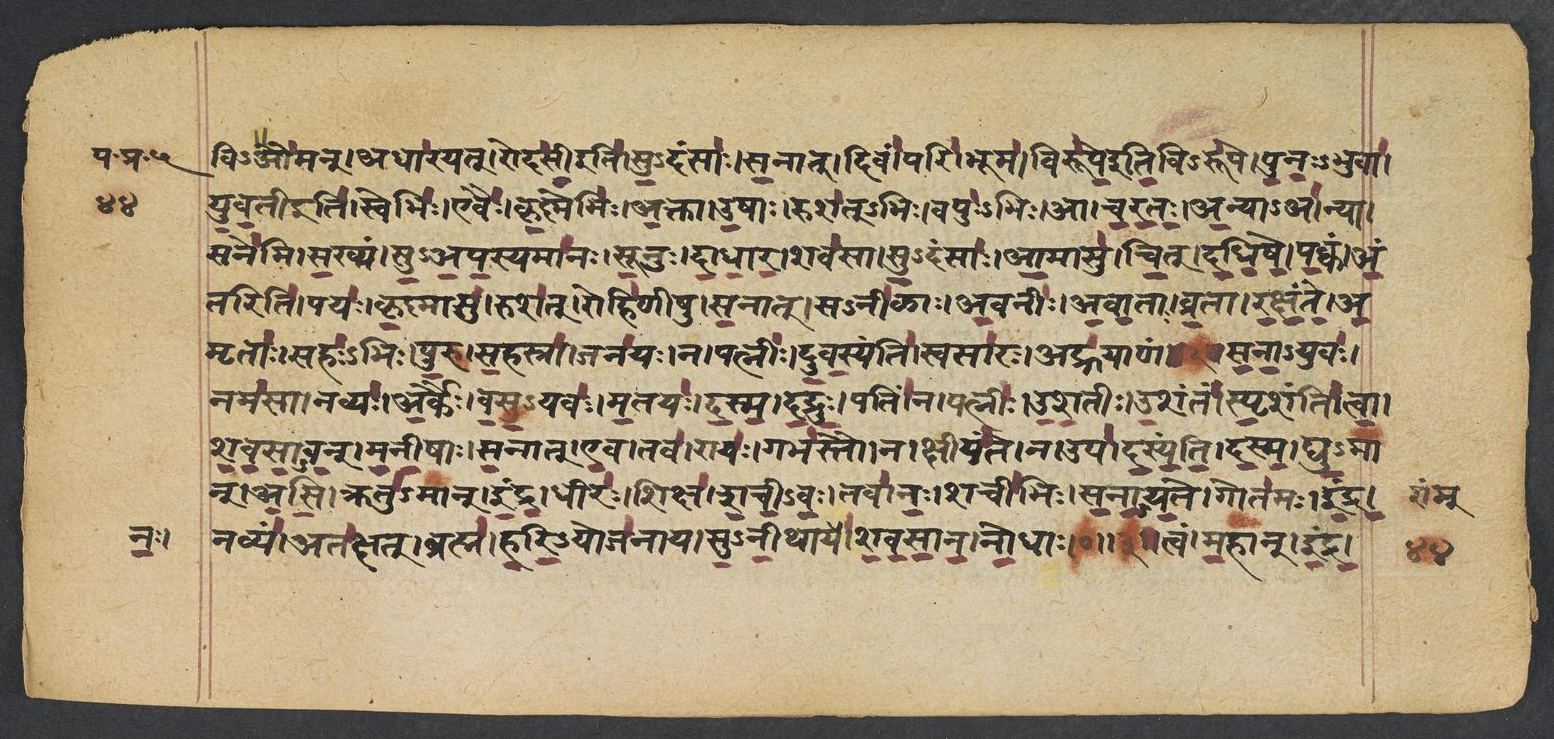
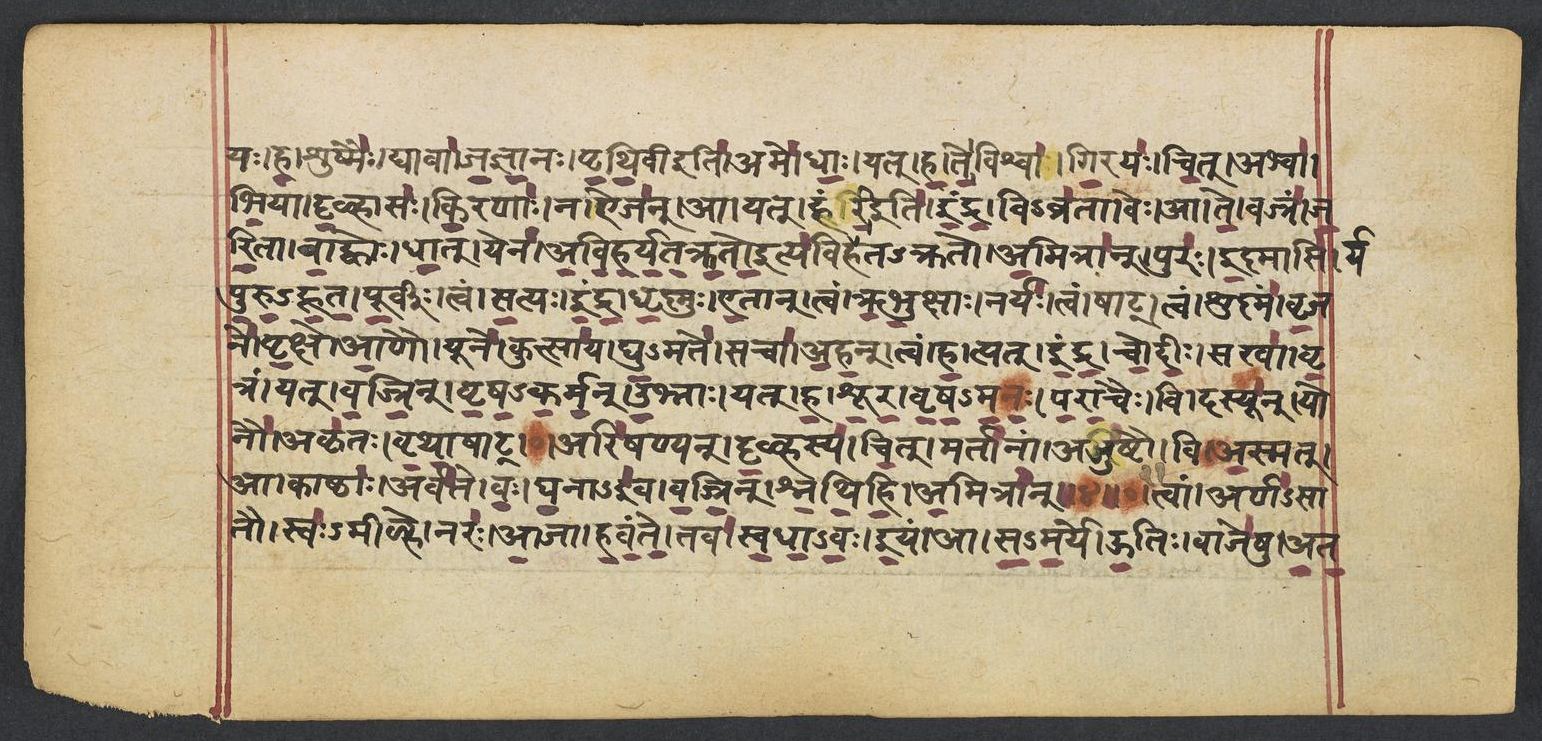
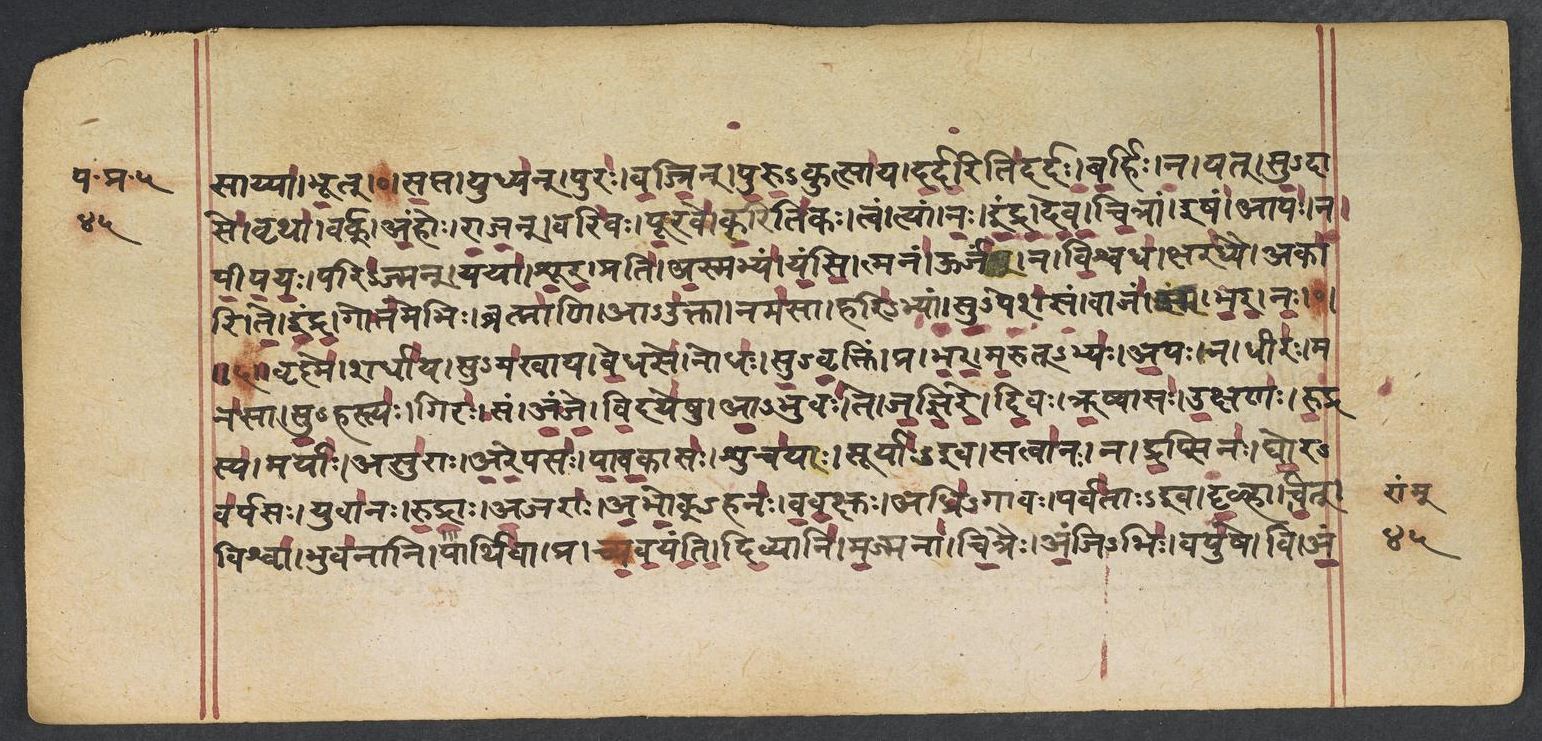
The manuscript shown is Penn Ms. Coll. 390 Item 41 (University of Pennsylvania), an undated paper manuscript of the padapāṭha (the word-by-word recitation text, in which every word is written separately and compounds are split) of the whole Ṛgveda in Devanāgarī, 884 leaves in fascicles, 7-9 lines to the page, accents in red; this hymn stands on fol. 44v-45v. Each section below gives the verses that end on one page; the page boundaries were read on the images (the opening words of every page), not counted out. Where the manuscript is a padapāṭha (the word-by-word recitation text), the section shows Aufrecht's continuous (saṃhitā) text first and, as the edition text, the padapāṭha of the same verses, which is the form written on the page.
How was this verified? (Provenance)
Where on the image
Penn Ms. Coll. 390 Item 41, fol. 45r (OPenn image 46, lower leaf). Checked on the image: the Rigveda text on this page begins in RV 1.63.1 ‹yaḥ ha śuṣmaiḥ dyāvā›. The next page with Rigveda text, fol. 45v, begins in RV 1.63.7 ‹-tyat indra sapta yudhyan›. Verses 1.63.1-6 end on this page; 1.63.1 begins on fol. 44v.
1tvam ma̱hām̐ i̍ndra̱ yo ha̱ śuṣmai̱r dyāvā̍ jajñā̱naḥ pṛ̍thi̱vī ame̍ dhāḥ | yad dha̍ te̱ viśvā̍ gi̱raya̍ś ci̱d abhvā̍ bhi̱yā dṛ̱ḻhāsa̍ḥ ki̱raṇā̱ naija̍n ||
2ā yad dharī̍ indra̱ vivra̍tā̱ ver ā te̱ vajra̍ṁ jari̱tā bā̱hvor dhā̍t | yenā̍viharyatakrato a̱mitrā̱n pura̍ i̱ṣṇāsi̍ puruhūta pū̱rvīḥ ||
3tvaṁ sa̱tya i̍ndra dhṛ̱ṣṇur e̱tān tvam ṛ̍bhu̱kṣā narya̱s tvaṁ ṣāṭ | tvaṁ śuṣṇa̍ṁ vṛ̱jane̍ pṛ̱kṣa ā̱ṇau yūne̱ kutsā̍ya dyu̱mate̱ sacā̍han ||
4tvaṁ ha̱ tyad i̍ndra codī̱ḥ sakhā̍ vṛ̱traṁ yad va̍jrin vṛṣakarmann u̱bhnāḥ | yad dha̍ śūra vṛṣamaṇaḥ parā̱cair vi dasyū̱m̐r yonā̱v akṛ̍to vṛthā̱ṣāṭ ||
5tvaṁ ha̱ tyad i̱ndrāri̍ṣaṇyan dṛ̱ḻhasya̍ ci̱n martā̍nā̱m aju̍ṣṭau | vy a1̱̍smad ā kāṣṭhā̱ arva̍te var gha̱neva̍ vajriñ chnathihy a̱mitrā̍n ||
6tvāṁ ha̱ tyad i̱ndrārṇa̍sātau̱ sva̍rmīḻhe̱ nara̍ ā̱jā ha̍vante | tava̍ svadhāva i̱yam ā sa̍ma̱rya ū̱tir vāje̍ṣv ata̱sāyyā̍ bhūt ||
Compare: Padapāṭha (word-by-word text written in the manuscript; Sansknet e-text via GRETIL)
1tvam | mahān | indra | yaḥ | ha | śuṣmaiḥ | dyāvā | jajñānaḥ | pṛthivī iti | ame | ghāḥ | yat | ha | te | viśvā | girayaḥ | cit | abhvā | bhiyā | dṛḷhāsaḥ | kiraṇāḥ | na | aijan
2ā | yat | harī iti | indra | vi-vratā | veḥ | ā | te | vajram | jaritā | bāhvoḥ | dhāt | yena | aviharyatakrato ity aviharyata-krato | amitrān | puraḥ | iṣṇāsi | puru-hūta | pūrvīḥ
3tvam | satyaḥ | indra | dhṛṣṇuḥ | etān | tvam | ṛbhukṣāḥ | naryaḥ | tvam | ṣāṭ | tvam | śuṣṇam vṛjane | pṛkṣe | āṇau | yūne | kutsāya | dyumate | sacā | ahan
4tvam | ha | tyat | indra | codīḥ | sakhā | vṛtram | yat | vajrin | vṛṣa-karman | ubhnāḥ | yat | ha | śūra | vṛṣa-maṇaḥ | parācaiḥ | vi | dasyūn | yonau | akṛtaḥ | vṛthāṣāṭ
5tvam | ha | tyat | indra | ariṣaṇyan | dṛḷhasya | cit | martānām | ajuṣṭau | vi | asmat | ā | kāṣṭhāḥ | arvate | vaḥ | ghanāiva | vajrin | śnathihi | amitrān
6tvām | ha | tyat | indra | arṇa-sātau | svaḥ-mīḷhe | naraḥ | ājā | havante | tava | svadhāvaḥ | iyam | ā | sa-marye | ūtiḥ | vājeṣu | atasāyyā | bhūt
1THOU art the Mighty One; when born, O Indra, with power thou tcrrifiedst earth and heaven – When, in their fear of thee, all firm-set mountains and monstrous creatures shook like dust before thee.
2When thy two wandering Bays thou dravest hither, thy praiser laid within thine arms the thunder, Wherewith, O Much-invoked, in will resistless, thou smitest foemen down and many a castle.
3Faithful art thou, these thou defiest, Indra; thou art the R̥ibhus' Lord, heroic, victor. Thou, by his side, for young and glorious Kutsa, with steed and car in battle slewest Ṣushṇa,
4That, as a friend, thou furtheredst, O Indra, when, Thunderer, strong in act, thou crushedst Vr̥itra; When, Hero, thou, great-souled, with easy conquest didst rend the Dasyus in their distant dwelling.
5This doest thou, and art not harmed, O Indra, e'en in the anger of the strongest mortal. Lay thou the race-course open for our horses: as with a club, slay, Thunderarmed! our foemen.
6Hence men invoke thee, Indra, in the tumult of battle, in the light-bestowing conflict. This aid of thine, O Godlike One, was ever to be implored in deeds of might in combat.
Where on the image
Penn Ms. Coll. 390 Item 41, fol. 45v (OPenn image 47, upper leaf). Checked on the image: the Rigveda text on this page begins in RV 1.63.7 ‹-tyat indra sapta yudhyan›. The next page with Rigveda text, fol. 46r, begins in RV 1.64.4 ‹-añjate vakṣaḥ-su rukmān adhi›. Verses 1.63.7-9 end on this page; 1.63.7 begins on fol. 45r.
7tvaṁ ha̱ tyad i̍ndra sa̱pta yudhya̱n puro̍ vajrin puru̱kutsā̍ya dardaḥ | ba̱rhir na yat su̱dāse̱ vṛthā̱ varg a̱ṁho rā̍ja̱n vari̍vaḥ pū̱rave̍ kaḥ ||
8tvaṁ tyāṁ na̍ indra deva ci̱trām iṣa̱m āpo̱ na pī̍paya̱ḥ pari̍jman | yayā̍ śūra̱ praty a̱smabhya̱ṁ yaṁsi̱ tmana̱m ūrja̱ṁ na vi̱śvadha̱ kṣara̍dhyai ||
9akā̍ri ta indra̱ gota̍mebhi̱r brahmā̱ṇy oktā̱ nama̍sā̱ hari̍bhyām | su̱peśa̍sa̱ṁ vāja̱m ā bha̍rā naḥ prā̱tar ma̱kṣū dhi̱yāva̍sur jagamyāt ||
Compare: Padapāṭha (word-by-word text written in the manuscript; Sansknet e-text via GRETIL)
7tvam | ha | tyat | indra | sapta | yudhyan | puraḥ | vajrin | puru-kutsāya | dardaḥ | barhiḥ | na | yat | su-dāse | vṛthā | varka | aṃhoḥ | rājan | varivaḥ | pūrave | kaḥ
8tvam | tyām | naḥ | indra | deva | citrām | iṣam | āpaḥ | na | pīpayaḥ | pari-jman | yayā | śūra | prati | asmabhyam | yaṃsi | tmanam | ūrjam | na | viśvadha | kṣaradhyai
9akāri | te | indra | gotamebhiḥ | brahmāṇi | āuktā | namasā | hari-bhyām | su-peśasam | vājam | ā | bhara | naḥ | prātaḥ | makṣu | dhiyāvasuḥ | jagamyāt
7Warring for Pûrukutsa thou, O Indra, Thunder-armed I breakest down the seven castles; Easily, for Sudis, like grass didst rend them, and out of need, King, broughtest gain to Pûru.
8O Indra, God who movest round about us, feed us with varied food plenteous as water- Food wherewithal, O Hero, thou bestowest vigour itself to flow to us for ever.
9Prayers have been made by Gotamas, O Indra, addressed to thee, with laud for thy Bay Horses. Bring us in noble shape abundant riches. May he, enriched with prayer, come soon and early.
Notes
- Sanskrit: Aufrecht's edition (1877) with the Vedic accents, as entered by van Nooten and Holland (GRETIL).
- English: Ralph T. H. Griffith, The Hymns of the Rigveda (1889-1892; 2nd ed. 1896-1897), from the VedaWeb digital text; OCR slips in that text were corrected against the printed 2nd edition (data/sources/rigveda/griffith_errata.json).
- Padapāṭha (edition text): Sansknet e-text via GRETIL (CC BY-NC-SA 4.0).
Cite
Sources
- Source: Penn Ms. Coll. 390 Item 41 (undated (catalogued with Penn's 18th-19th c. Vedic manuscripts)), OPenn, Public Domain Mark + Aufrecht's accented text (GRETIL) + Griffith's English (VedaWeb) (holding institution)
- Critical edition: Aufrecht (1877), accented e-text via GRETIL
← previous · → next · v cycle view · l back to library