Rigveda 1.64: To the Maruts
Introduction
Rigveda 1.64 is a hymn of 15 verses addressed to the Maruts. It stands in book (maṇḍala) 1, a collection of hymns by many families of poets. The Rigveda is the oldest collection of Sanskrit hymns, composed in the second half of the second millennium BCE and handed down orally for many centuries before it was written down.
The manuscript shown is Penn Ms. Coll. 390 Item 41 (University of Pennsylvania), an undated paper manuscript of the padapāṭha (the word-by-word recitation text, in which every word is written separately and compounds are split) of the whole Ṛgveda in Devanāgarī, 884 leaves in fascicles, 7-9 lines to the page, accents in red; this hymn stands on fol. 45v-47r. Each section below gives the verses that end on one page; the page boundaries were read on the images (the opening words of every page), not counted out. Where the manuscript is a padapāṭha (the word-by-word recitation text), the section shows Aufrecht's continuous (saṃhitā) text first and, as the edition text, the padapāṭha of the same verses, which is the form written on the page.
How was this verified? (Provenance)
Where on the image
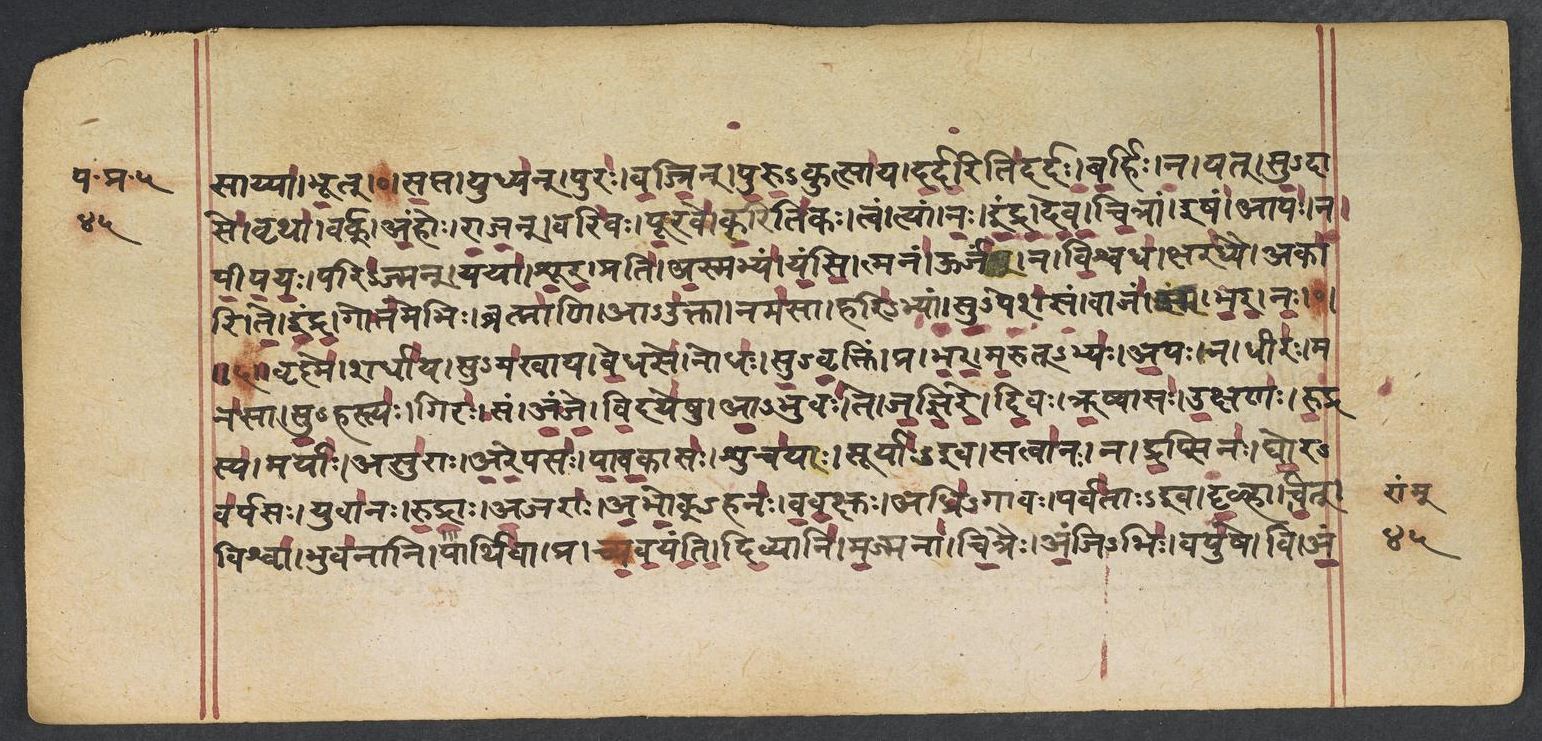
Penn Ms. Coll. 390 Item 41, fol. 45v (OPenn image 47, upper leaf). Checked on the image: the Rigveda text on this page begins in RV 1.63.7 ‹-tyat indra sapta yudhyan›. The next page with Rigveda text, fol. 46r, begins in RV 1.64.4 ‹-añjate vakṣaḥ-su rukmān adhi›. Verses 1.64.1-3 end on this page.
1vṛṣṇe̱ śardhā̍ya̱ suma̍khāya ve̱dhase̱ nodha̍ḥ suvṛ̱ktim pra bha̍rā ma̱rudbhya̍ḥ | a̱po na dhīro̱ mana̍sā su̱hastyo̱ gira̱ḥ sam a̍ñje vi̱dathe̍ṣv ā̱bhuva̍ḥ ||
2te ja̍jñire di̱va ṛ̱ṣvāsa̍ u̱kṣaṇo̍ ru̱drasya̱ maryā̱ asu̍rā are̱pasa̍ḥ | pā̱va̱kāsa̱ḥ śuca̍ya̱ḥ sūryā̍ iva̱ satvā̍no̱ na dra̱psino̍ gho̱rava̍rpasaḥ ||
3yuvā̍no ru̱drā a̱jarā̍ abho̱gghano̍ vava̱kṣur adhri̍gāva̱ḥ parva̍tā iva | dṛ̱ḻhā ci̱d viśvā̱ bhuva̍nāni̱ pārthi̍vā̱ pra cyā̍vayanti di̱vyāni̍ ma̱jmanā̍ ||
Compare: Padapāṭha (word-by-word text written in the manuscript; Sansknet e-text via GRETIL)
1vṛṣṇe | śardhāya | su-makhāya | vedhase | nodhaḥ | su-vṛktim | pra | bhara | marut-bhyaḥ | apaḥ | na | dhīraḥ | manasā | su-hastyaḥ | giraḥ | sam | añje | vidatheṣu | ābhuvaḥ
2te | jajñire | divaḥ | ṛṣvāsaḥ | ukṣaṇaḥ | rudrasya | maryā | asurāḥ | arepasaḥ | pāvakāsaḥ | śucayaḥ | sūryāḥ-iva | satvānaḥ | na | drapsinaḥ | ghora-varpasaḥ
3yuvānaḥ | rudrāḥ | ajarāḥ | abhok-hanaḥ | vavakṣuḥ | adhri-gāvaḥ | parvatāḥ-iva | dṛḷhā | cit | viśvā | bhuvanāni | pārthivā | pra | cyāvayanti | divyāni | majmanā
1BRING for the manly host, wise and majestical, O Nodhas, for the Maruts bring thou a pure gift. I deck my songs as one deft-handed, wise in mind prepares the water that hath power in solemn rites.
2They spring to birth, the lofty Ones, the Bulls of Heaven, divine, the youths of Rudra, free from spot and stain; The purifiers, shining brightly even as suns, awful of form like giants, scattering rain-drops down.
3Young Rudras, demon-slayers, never growing old, they have waxed, even as mountains, irresistible. They make all beings tremble with their mighty strength, even the very strongest, both of earth and heaven.
Where on the image
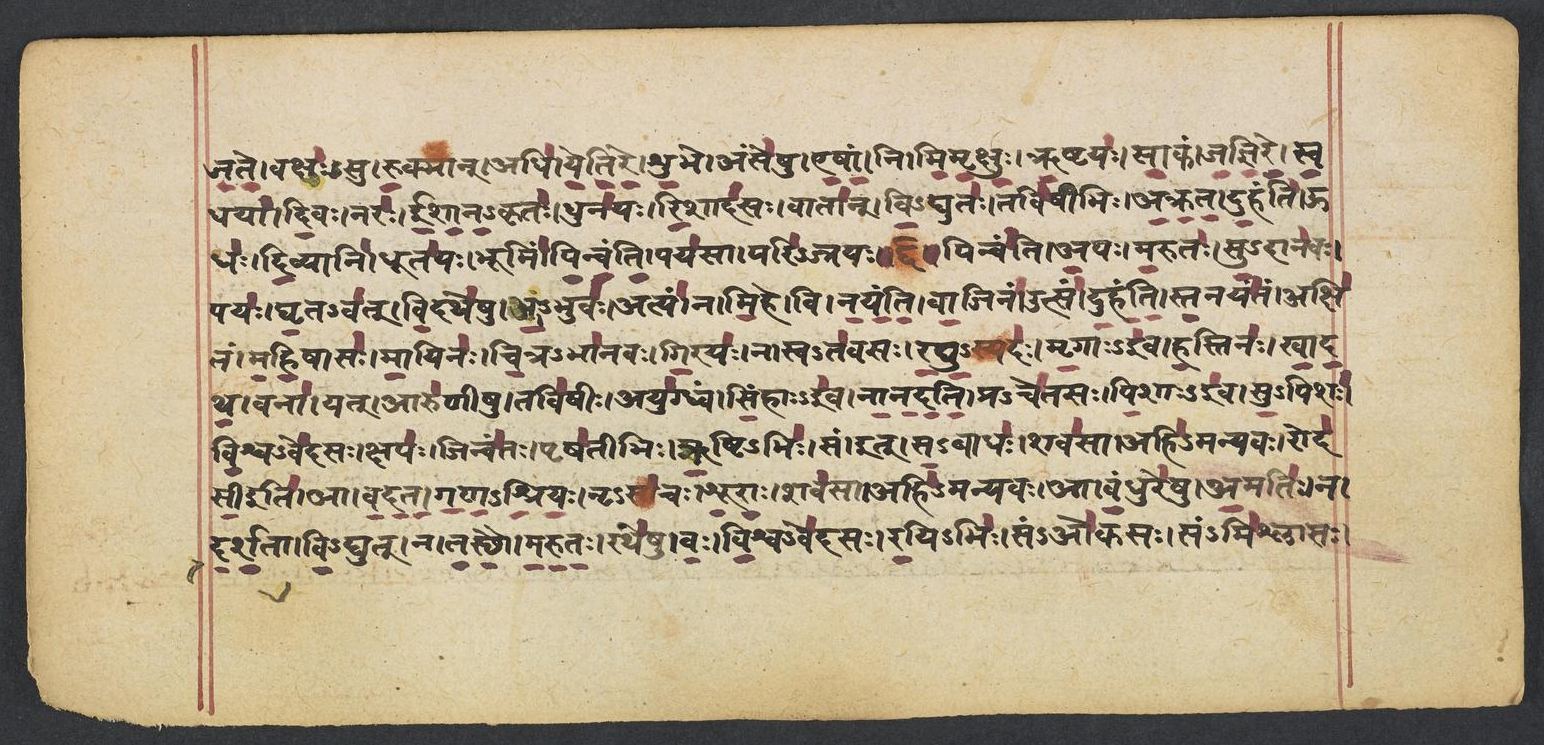
Penn Ms. Coll. 390 Item 41, fol. 46r (OPenn image 47, lower leaf). Checked on the image: the Rigveda text on this page begins in RV 1.64.4 ‹-añjate vakṣaḥ-su rukmān adhi›. The next page with Rigveda text, fol. 46v, begins in RV 1.64.10 ‹taviṣībhiḥ vi-rapśinaḥ astāraḥ iṣum›. Verses 1.64.4-9 end on this page; 1.64.4 begins on fol. 45v.
4ci̱trair a̱ñjibhi̱r vapu̍ṣe̱ vy a̍ñjate̱ vakṣa̍ḥsu ru̱kmām̐ adhi̍ yetire śu̱bhe | aṁse̍ṣv eṣā̱ṁ ni mi̍mṛkṣur ṛ̱ṣṭaya̍ḥ sā̱kaṁ ja̍jñire sva̱dhayā̍ di̱vo nara̍ḥ ||
5ī̱śā̱na̱kṛto̱ dhuna̍yo ri̱śāda̍so̱ vātā̍n vi̱dyuta̱s tavi̍ṣībhir akrata | du̱hanty ūdha̍r di̱vyāni̱ dhūta̍yo̱ bhūmi̍m pinvanti̱ paya̍sā̱ pari̍jrayaḥ ||
6pinva̍nty a̱po ma̱ruta̍ḥ su̱dāna̍va̱ḥ payo̍ ghṛ̱tava̍d vi̱dathe̍ṣv ā̱bhuva̍ḥ | atya̱ṁ na mi̱he vi na̍yanti vā̱jina̱m utsa̍ṁ duhanti sta̱naya̍nta̱m akṣi̍tam ||
7ma̱hi̱ṣāso̍ mā̱yina̍ś ci̱trabhā̍navo gi̱rayo̱ na svata̍vaso raghu̱ṣyada̍ḥ | mṛ̱gā i̍va ha̱stina̍ḥ khādathā̱ vanā̱ yad āru̍ṇīṣu̱ tavi̍ṣī̱r ayu̍gdhvam ||
8si̱ṁhā i̍va nānadati̱ prace̍tasaḥ pi̱śā i̍va su̱piśo̍ vi̱śvave̍dasaḥ | kṣapo̱ jinva̍nta̱ḥ pṛṣa̍tībhir ṛ̱ṣṭibhi̱ḥ sam it sa̱bādha̱ḥ śava̱sāhi̍manyavaḥ ||
9roda̍sī̱ ā va̍datā gaṇaśriyo̱ nṛṣā̍caḥ śūrā̱ḥ śava̱sāhi̍manyavaḥ | ā va̱ndhure̍ṣv a̱mati̱r na da̍rśa̱tā vi̱dyun na ta̍sthau maruto̱ rathe̍ṣu vaḥ ||
Compare: Padapāṭha (word-by-word text written in the manuscript; Sansknet e-text via GRETIL)
4citraiḥ | añji-bhiḥ | vapuṣe | vi | añjate | vakṣaḥ-su | rukmān | adhi | yetire | śubhe | aṃseṣu | eṣām | ni | mimṛkṣuḥ | ṛṣṭayaḥ | sākam | jajñire | svadhayā | divaḥ | naraḥ
5īśāna-kṛtaḥ | dhunayaḥ | riśādasaḥ | vātān | vi-dyutaḥ | taviṣībhiḥ | akrata | duhanti | ūdhaḥ | divyāni | dhūtayaḥ | bhūmim | pinvanti | payasā | pari-jrayaḥ
6pinvanti | apaḥ | marutaḥ | su-dānavaḥ | payaḥ | ghṛta-vat | vidatheṣu | ābhuvaḥ | atyam | na | mihe | vi | nayanti | vājinam | utsam | duhanti | stanayantam | akṣitam
7mahiṣāsaḥ | māyinaḥ | citra-bhānavaḥ | girayaḥ | na | sva-tavasaḥ | raghu-syadaḥ | mṛgāḥ-iva | hastinaḥ | svādatha | vanā | yat | āruṇīṣu | taviṣīḥ | ayugdhvam
8siṃhāḥ-iva | nānadati | pra-cetasaḥ | piśāḥ-iva | su-piśaḥ | viśva-vedasaḥ | kṣapaḥ | jinvantaḥ | pṛṣatībhiḥ | ṛṣṭi-bhiḥ | sam | it | sa-bādhaḥ | śavasā | ahi-manyavaḥ
9rodasī iti | ā | vadata | gaṇa-śriyaḥ | nṛ-sācaḥ | śūrāḥ | śavasā | ahi-manyavaḥ | ā | vandhureṣu | amatiḥ | na | darśatā | vidyut | na | tasthau | marutaḥ | ratheṣu | vaḥ
4With glittering ornaments they deck them forth for show; for beauty on their breasts they bind their chains of gold. The lances on their shoulders pound to pieces; they were born together, of themselves, the Men of Heaven.
5Loud roarers, giving strength, devourers of the foe, they make the winds, they make the lightnings with their powers. The restless shakers drain the udders of the sky, and ever wandering round fill the earth full with milk.
6The bounteous Maruts with the fatness dropping milk fill full the waters which avail in solemn rites. They lead, as 'twere, the Strong Horse forth, that it may rain: they milk the thundering, the neverfailing spring.
7Mighty, with wondrous power and marvellously bright, selfstrong like mountains, ye glide swiftly on your way. Like the wild elephants ye eat the forests up when ye assume your strength among the bright red flames.
8Exceeding wise they roar like lions mightily, they, all-possessing, are beauteous as antelopes; Stirring the darkness with lances and spotted deer, combined as priests, with serpents' fury through their might.
9Heroes who march in companies, befriending man, with serpents' ire through strength, ye greet the earth and heaven. Upon the seats, O Maruts, of your chariots, upon the cars stands lightning visible as light.
Where on the image
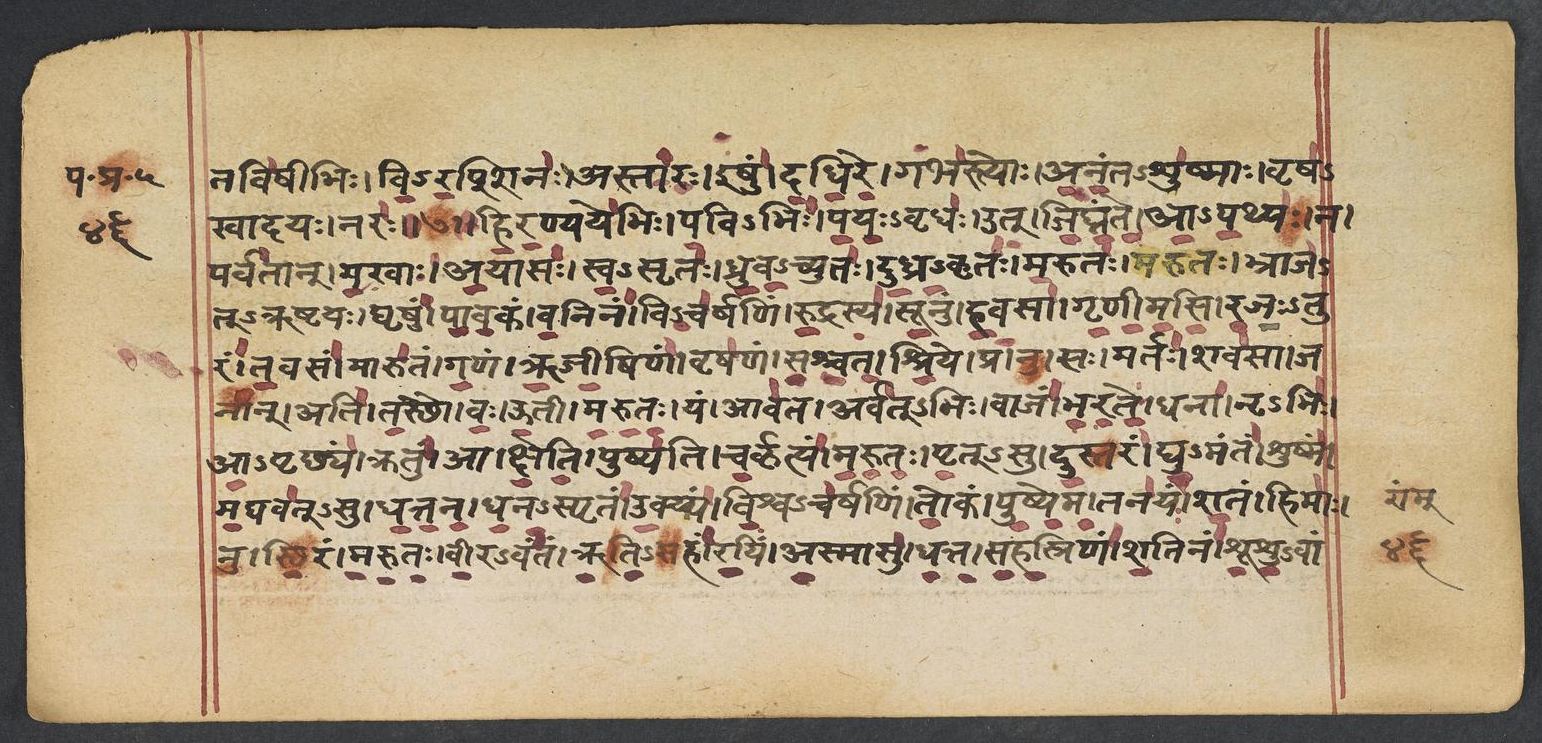
Penn Ms. Coll. 390 Item 41, fol. 46v (OPenn image 48, upper leaf). Checked on the image: the Rigveda text on this page begins in RV 1.64.10 ‹taviṣībhiḥ vi-rapśinaḥ astāraḥ iṣum›. The next page with Rigveda text, fol. 47r, begins in RV 1.64.15 ‹-jagamyāt›. Verses 1.64.10-14 end on this page; 1.64.10 begins on fol. 46r.
10vi̱śvave̍daso ra̱yibhi̱ḥ samo̍kasa̱ḥ sammi̍ślāsa̱s tavi̍ṣībhir vira̱pśina̍ḥ | astā̍ra̱ iṣu̍ṁ dadhire̱ gabha̍styor ana̱ntaśu̍ṣmā̱ vṛṣa̍khādayo̱ nara̍ḥ ||
11hi̱ra̱ṇyaye̍bhiḥ pa̱vibhi̍ḥ payo̱vṛdha̱ ujji̍ghnanta āpa̱thyo̱3̱̍ na parva̍tān | ma̱khā a̱yāsa̍ḥ sva̱sṛto̍ dhruva̱cyuto̍ dudhra̱kṛto̍ ma̱ruto̱ bhrāja̍dṛṣṭayaḥ ||
12ghṛṣu̍m pāva̱kaṁ va̱nina̱ṁ vica̍rṣaṇiṁ ru̱drasya̍ sū̱nuṁ ha̱vasā̍ gṛṇīmasi | ra̱ja̱stura̍ṁ ta̱vasa̱m māru̍taṁ ga̱ṇam ṛ̍jī̱ṣiṇa̱ṁ vṛṣa̍ṇaṁ saścata śri̱ye ||
13pra nū sa marta̱ḥ śava̍sā̱ janā̱m̐ ati̍ ta̱sthau va̍ ū̱tī ma̍ruto̱ yam āva̍ta | arva̍dbhi̱r vāja̍m bharate̱ dhanā̱ nṛbhi̍r ā̱pṛcchya̱ṁ kratu̱m ā kṣe̍ti̱ puṣya̍ti ||
14ca̱rkṛtya̍m marutaḥ pṛ̱tsu du̱ṣṭara̍ṁ dyu̱manta̱ṁ śuṣma̍m ma̱ghava̍tsu dhattana | dha̱na̱spṛta̍m u̱kthya̍ṁ vi̱śvaca̍rṣaṇiṁ to̱kam pu̍ṣyema̱ tana̍yaṁ śa̱taṁ himā̍ḥ ||
Compare: Padapāṭha (word-by-word text written in the manuscript; Sansknet e-text via GRETIL)
10viśva-vedasaḥ | rayi-bhiḥ | sam-okasaḥ | sam-miślāsaḥ | taviṣībhiḥ | vi-rapśinaḥ | astāraḥ | iṣum | dadhire | gabhastyoḥ | ananta-śuṣmāḥ | vṛṣa-khādayaḥ | naraḥ
11hiraṇyayebhiḥ | pavi-bhiḥ | payaḥ-vṛdhaḥ | ut | jighnante | āpathyaḥ | na | parvatān | makhāḥ | ayāsaḥ | sva-sṛtaḥ | dhruva-cyutaḥ | dudhra-kṛtaḥ | marutaḥ | bhrājat-ṛṣṭayaḥ
12ghṛṣum | pāvakam | vaninam | vi-carṣaṇim | rudrasya | sūnum | havasā | gṛṇīmas i | rajaḥ-turam | tavasam | mārutam | gaṇam | ṛjīṣiṇam | vṛṣaṇam | saścata | śriye
13pra | nu | saḥ | martaḥ | śavasā | janān | ati | tasthau | vaḥ | ūtī | marutaḥ | yam | āvata | arvat-bhiḥ | vājam | bharate | dhanā | nṛ-bhiḥ | āpṛcchyam | kratum | ā | kṣeti | puṣyati
14carkṛtyam | marutaḥ | pṛt-su | dustaram | dyu-mantam | śuṣmam | maghavat-su | dhattana | dhana-spṛtam | ukthyam | viśva-carṣaṇim | tokam | puṣyema | tanayam | śatam | himāḥ
10Lords of all riches, dwelling in the home of wealth, endowed with mighty vigour, singers loud of voice, Heroes, of powers infinite, armed with strong men's rings, the archers, they have laid the arrow on their arms.
11They who with golden fellies make the rain increase drive forward the big clouds like wanderers on the way. Self-moving, brisk, unwearied, they o'erthrow the firm; the Maruts with bright lances make all things to reel.
12The progeny of Rudra we invoke with prayer, the brisk, the bright, the worshipful, the active Ones To the strong band of Maruts cleave for happiness, the chasers of the sky, impetuous, vigorous.
13Maruts, the man whom ye have guarded with your help, he verily in strength surpasseth all mankind. Spoil with his steeds he gaineth, treasure with his men; he winneth honourable strength and prospereth.
14O Maruts, to the worshippers give glorious strength invincible in battle, brilliant, bringing wealth, Praiseworthy, known to all men. May we foster well, during a hundred winters, son and progeny.
Where on the image
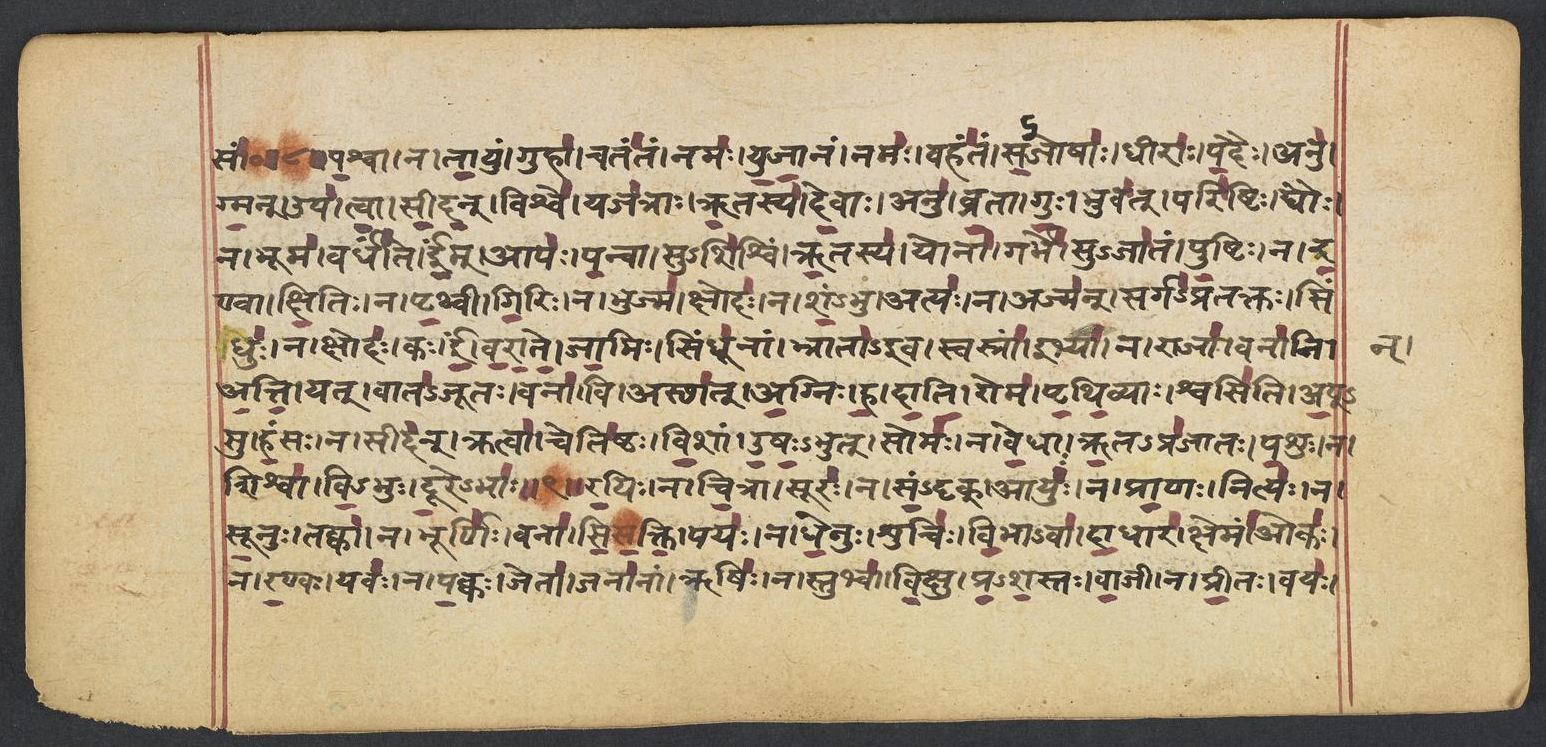
Penn Ms. Coll. 390 Item 41, fol. 47r (OPenn image 48, lower leaf). Checked on the image: the Rigveda text on this page begins in RV 1.64.15 ‹-jagamyāt›. The next page with Rigveda text, fol. 47v, begins in RV 1.66.4 ‹dadhāti›. Verse 1.64.15 ends on this page; 1.64.15 begins on fol. 46v.
15nū ṣṭhi̱ram ma̍ruto vī̱rava̍ntam ṛtī̱ṣāha̍ṁ ra̱yim a̱smāsu̍ dhatta | sa̱ha̱sriṇa̍ṁ śa̱tina̍ṁ śūśu̱vāṁsa̍m prā̱tar ma̱kṣū dhi̱yāva̍sur jagamyāt ||
Compare: Padapāṭha (word-by-word text written in the manuscript; Sansknet e-text via GRETIL)
15nu | sthiram | marutaḥ | vīra-vantam | ṛti-saham | rayim | asmāsu | dhatta | sahasriṇam | śatinam | śūśu-vāṃsam | prātaḥ | makṣu | dhiyāvasuḥ | jagamyāt
15Will ye then, O ye Maruts, grant us riches, durable, rich in men, defying onslaught. A hundred, thousandfold, ever increasing? May he, enriched with prayer, come soon and early.
Notes
- Sanskrit: Aufrecht's edition (1877) with the Vedic accents, as entered by van Nooten and Holland (GRETIL).
- English: Ralph T. H. Griffith, The Hymns of the Rigveda (1889-1892; 2nd ed. 1896-1897), from the VedaWeb digital text; OCR slips in that text were corrected against the printed 2nd edition (data/sources/rigveda/griffith_errata.json).
- Padapāṭha (edition text): Sansknet e-text via GRETIL (CC BY-NC-SA 4.0).
Cite
Sources
- Source: Penn Ms. Coll. 390 Item 41 (undated (catalogued with Penn's 18th-19th c. Vedic manuscripts)), OPenn, Public Domain Mark + Aufrecht's accented text (GRETIL) + Griffith's English (VedaWeb) (holding institution)
- Critical edition: Aufrecht (1877), accented e-text via GRETIL
← previous · → next · v cycle view · l back to library