Rigveda 1.69: To Agni
Introduction
Rigveda 1.69 is a hymn of 10 verses addressed to Agni. It stands in book (maṇḍala) 1, a collection of hymns by many families of poets. The Rigveda is the oldest collection of Sanskrit hymns, composed in the second half of the second millennium BCE and handed down orally for many centuries before it was written down.
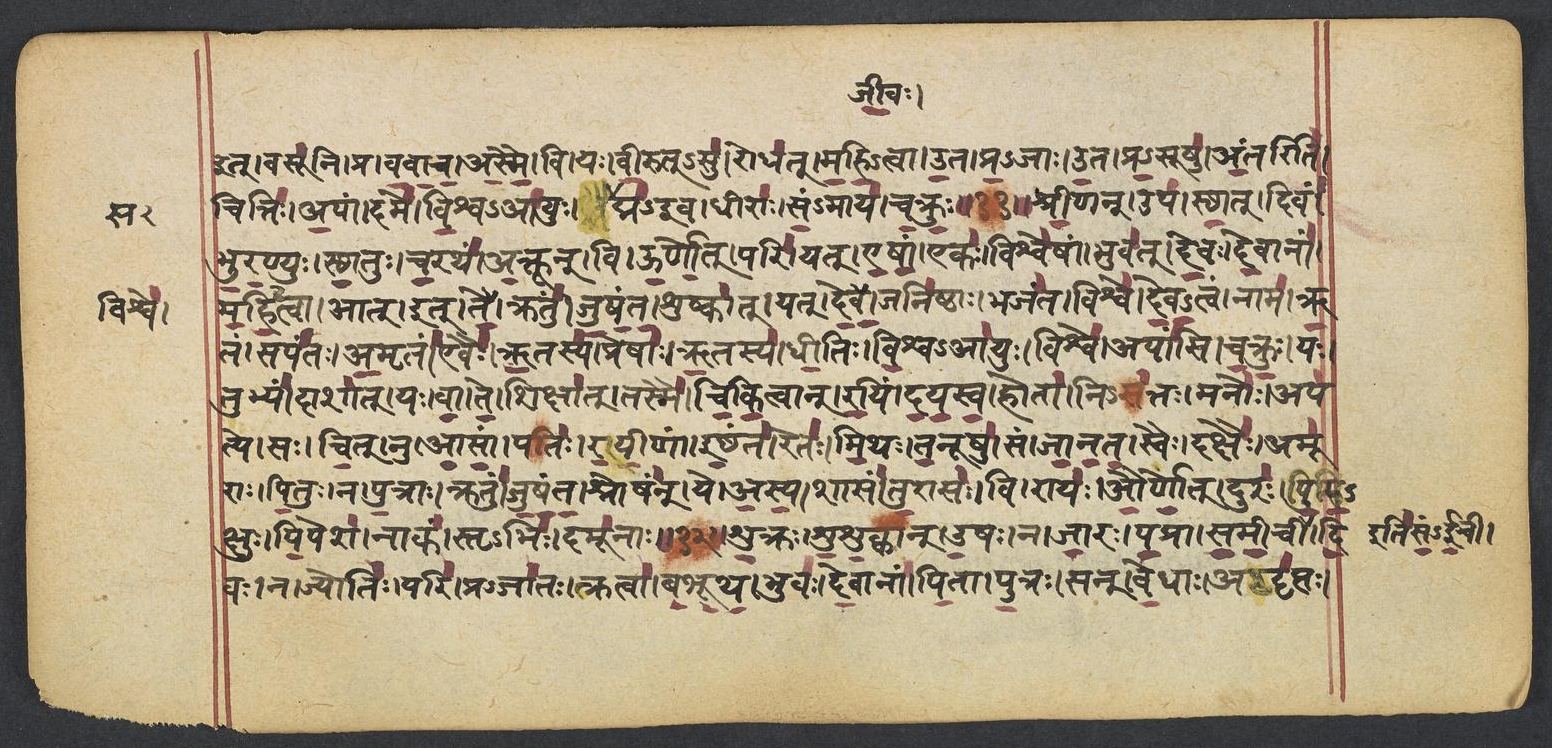
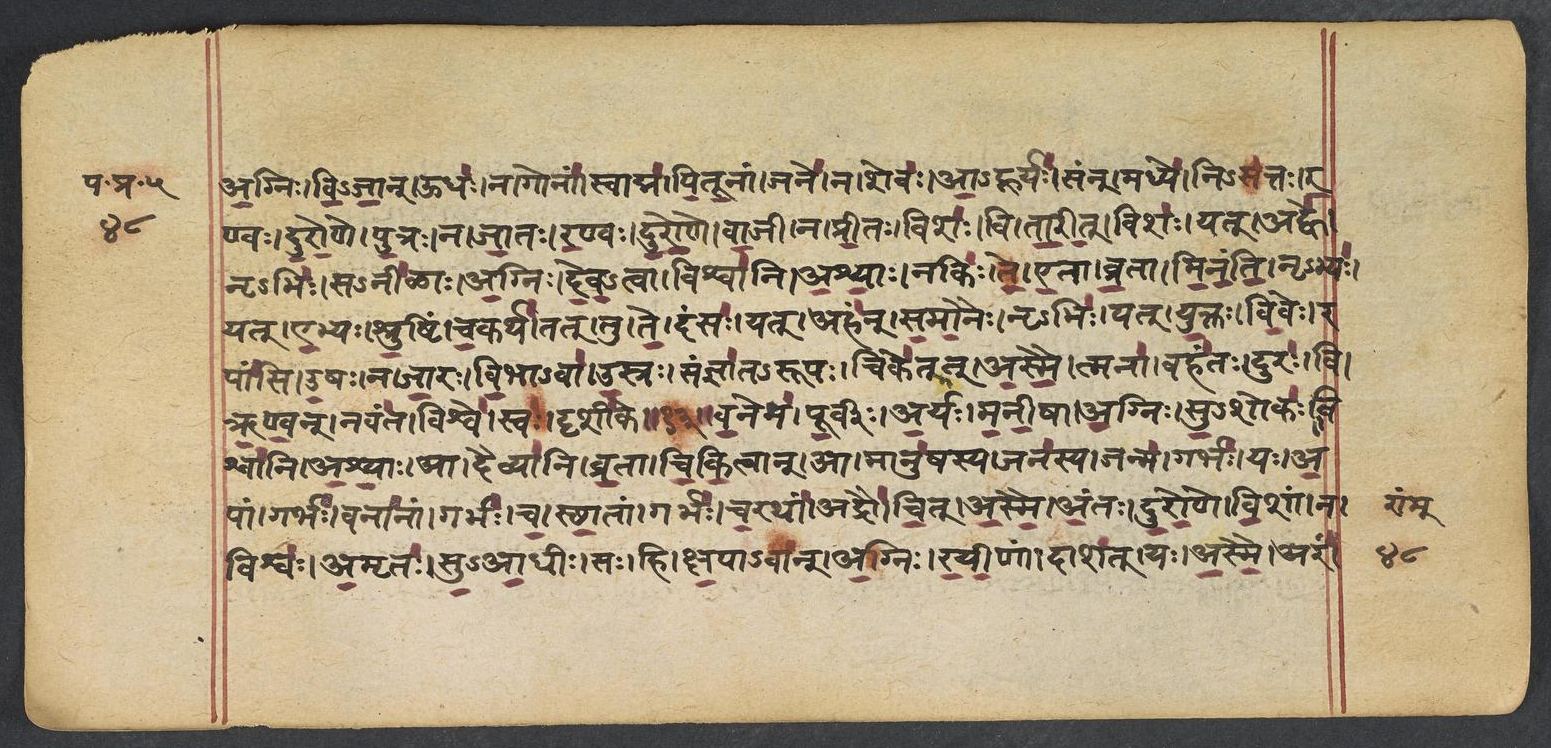
The manuscript shown is Penn Ms. Coll. 390 Item 41 (University of Pennsylvania), an undated paper manuscript of the padapāṭha (the word-by-word recitation text, in which every word is written separately and compounds are split) of the whole Ṛgveda in Devanāgarī, 884 leaves in fascicles, 7-9 lines to the page, accents in red; this hymn stands on fol. 48r-48v. Each section below gives the verses that end on one page; the page boundaries were read on the images (the opening words of every page), not counted out. Where the manuscript is a padapāṭha (the word-by-word recitation text), the section shows Aufrecht's continuous (saṃhitā) text first and, as the edition text, the padapāṭha of the same verses, which is the form written on the page.
How was this verified? (Provenance)
Where on the image
Penn Ms. Coll. 390 Item 41, fol. 48r (OPenn image 49, lower leaf). Checked on the image: the Rigveda text on this page begins in RV 1.67.8 ‹it vasūni pra vavāca›. The next page with Rigveda text, fol. 48v, begins in RV 1.69.3 ‹agniḥ vi-janan ūdhaḥ na›. Verses 1.69.1-2 end on this page.
1śu̱kraḥ śu̍śu̱kvām̐ u̱ṣo na jā̱raḥ pa̱prā sa̍mī̱cī di̱vo na jyoti̍ḥ ||
2pari̱ prajā̍ta̱ḥ kratvā̍ babhūtha̱ bhuvo̍ de̱vānā̍m pi̱tā pu̱traḥ san ||
Compare: Padapāṭha (word-by-word text written in the manuscript; Sansknet e-text via GRETIL)
1śukraḥ | śuśukvān | uṣaḥ | na | jāraḥ | paprā | samīcī itisam-īcī | divaḥ | na | jyotiḥ
2pari | pra-jātaḥ | kratvā | babhūtha | bhuvaḥ | devānām | pitā | putraḥ | san
1BRIGHT, splendid, like Dawn's lover, he hath filled the two joined worlds as with the light of heaven.
2When born, with might thou hast encompassed them: Father of Gods, and yet their Son wast thou.
Where on the image
Penn Ms. Coll. 390 Item 41, fol. 48v (OPenn image 50, upper leaf). Checked on the image: the Rigveda text on this page begins in RV 1.69.3 ‹agniḥ vi-janan ūdhaḥ na›. The next page with Rigveda text, fol. 49r, begins in RV 1.70.5 ‹su-uktaiḥ›. Verses 1.69.3-10 end on this page; 1.69.3 begins on fol. 48r.
3ve̱dhā adṛ̍pto a̱gnir vi̍jā̱nann ūdha̱r na gonā̱ṁ svādmā̍ pitū̱nām ||
4jane̱ na śeva̍ ā̱hūrya̱ḥ san madhye̱ niṣa̍tto ra̱ṇvo du̍ro̱ṇe ||
5pu̱tro na jā̱to ra̱ṇvo du̍ro̱ṇe vā̱jī na prī̱to viśo̱ vi tā̍rīt ||
6viśo̱ yad ahve̱ nṛbhi̱ḥ sanī̍ḻā a̱gnir de̍va̱tvā viśvā̍ny aśyāḥ ||
7naki̍ṣ ṭa e̱tā vra̱tā mi̍nanti̱ nṛbhyo̱ yad e̱bhyaḥ śru̱ṣṭiṁ ca̱kartha̍ ||
8tat tu te̱ daṁso̱ yad aha̍n samā̱nair nṛbhi̱r yad yu̱kto vi̱ve rapā̍ṁsi ||
9u̱ṣo na jā̱ro vi̱bhāvo̱sraḥ saṁjñā̍tarūpa̱ś cike̍tad asmai ||
10tmanā̱ vaha̍nto̱ duro̱ vy ṛ̍ṇva̱n nava̍nta̱ viśve̱ sva1̱̍r dṛśī̍ke ||
Compare: Padapāṭha (word-by-word text written in the manuscript; Sansknet e-text via GRETIL)
3vedhāḥ | adṛptaḥ | agniḥ | vi-janan | ūdhaḥ | na | gonām | svādma | pitūnām
4jane | na | śeva | āhūryaḥ | san | madhye | ni-sattaḥ | raṇvaḥ | duroṇe
5putraḥ | na | jātaḥ | raṇvaḥ | duroṇe | vājī | na | prītaḥ | viśaḥ | vi | tārīt
6viśaḥ | yat | ahve | nṛ-bhiḥ | sa-nīḷāḥ | agniḥ | deva-tvā | viśvāni | aśyāḥ
7nakiḥ | te | etā | vratā | minanti | nṛ-bhyaḥ | yat | ebhyaḥ | śruṣṭim | cakartha
8tat | tu | te | daṃsaḥ | yat | ahan | samānaiḥ | nṛ-bhiḥ | yat | yuktaḥ | viveḥ | rapāṃsi
9uṣaḥ | na | jāraḥ | vibhāvā | usraḥ | sañjñāta-rūpaḥ | ciketat | asmai
10tmanā | vahantaḥ | duraḥ | vi | ṛṇvan | navanta | viśve | svaḥ | dṛśīke
3Agni, the Sage, the humble, who discerns like the cow's udder, the sweet taste of food,
4Like a bliss-giver to be drawn to men, sits gracious in the middle of the house.
5Born in the dwelling like a lovely son, pleased, like a strong steed, he bears on the folk.
6What time the men and I, with heroes, call, may Agni then gain all through Godlike power.
7None breaks these holy laws of thine when thou hast granted audience to these chieftains here.
8This is thy boast, thou smotest with thy peers, and joined with heroes dravest off disgrace.
9Like the Dawn's lover, spreading light, well-known as hued like morn, may he remember me.
10They, bearing of themselves, unbar the doors: they all ascend to the fair place of heaven.
Notes
- Sanskrit: Aufrecht's edition (1877) with the Vedic accents, as entered by van Nooten and Holland (GRETIL).
- English: Ralph T. H. Griffith, The Hymns of the Rigveda (1889-1892; 2nd ed. 1896-1897), from the VedaWeb digital text; OCR slips in that text were corrected against the printed 2nd edition (data/sources/rigveda/griffith_errata.json).
- Padapāṭha (edition text): Sansknet e-text via GRETIL (CC BY-NC-SA 4.0).
Cite
Sources
- Source: Penn Ms. Coll. 390 Item 41 (undated (catalogued with Penn's 18th-19th c. Vedic manuscripts)), OPenn, Public Domain Mark + Aufrecht's accented text (GRETIL) + Griffith's English (VedaWeb) (holding institution)
- Critical edition: Aufrecht (1877), accented e-text via GRETIL
← previous · → next · v cycle view · l back to library