Rigveda 1.70: To Agni
Introduction
Rigveda 1.70 is a hymn of 11 verses addressed to Agni. It stands in book (maṇḍala) 1, a collection of hymns by many families of poets. The Rigveda is the oldest collection of Sanskrit hymns, composed in the second half of the second millennium BCE and handed down orally for many centuries before it was written down.
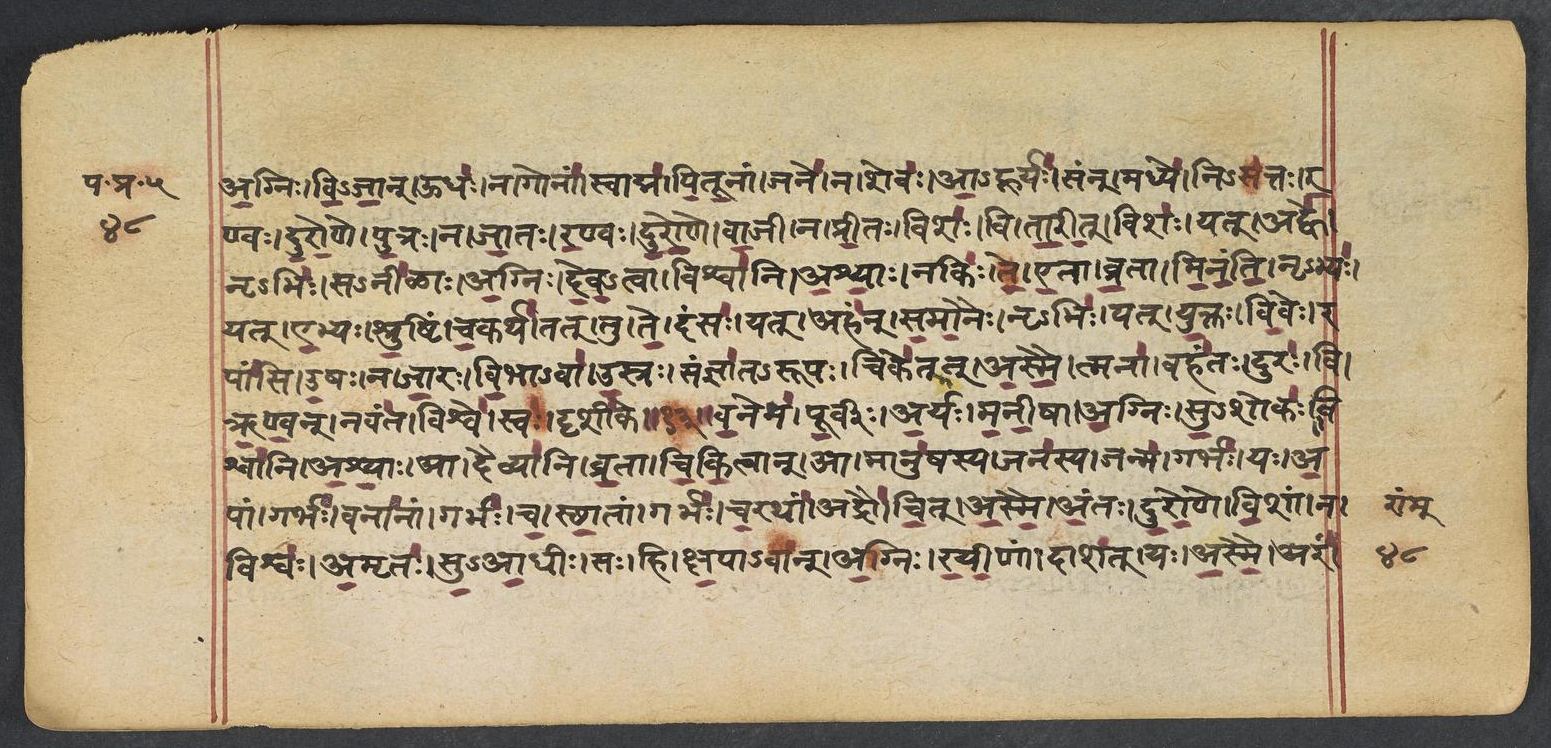
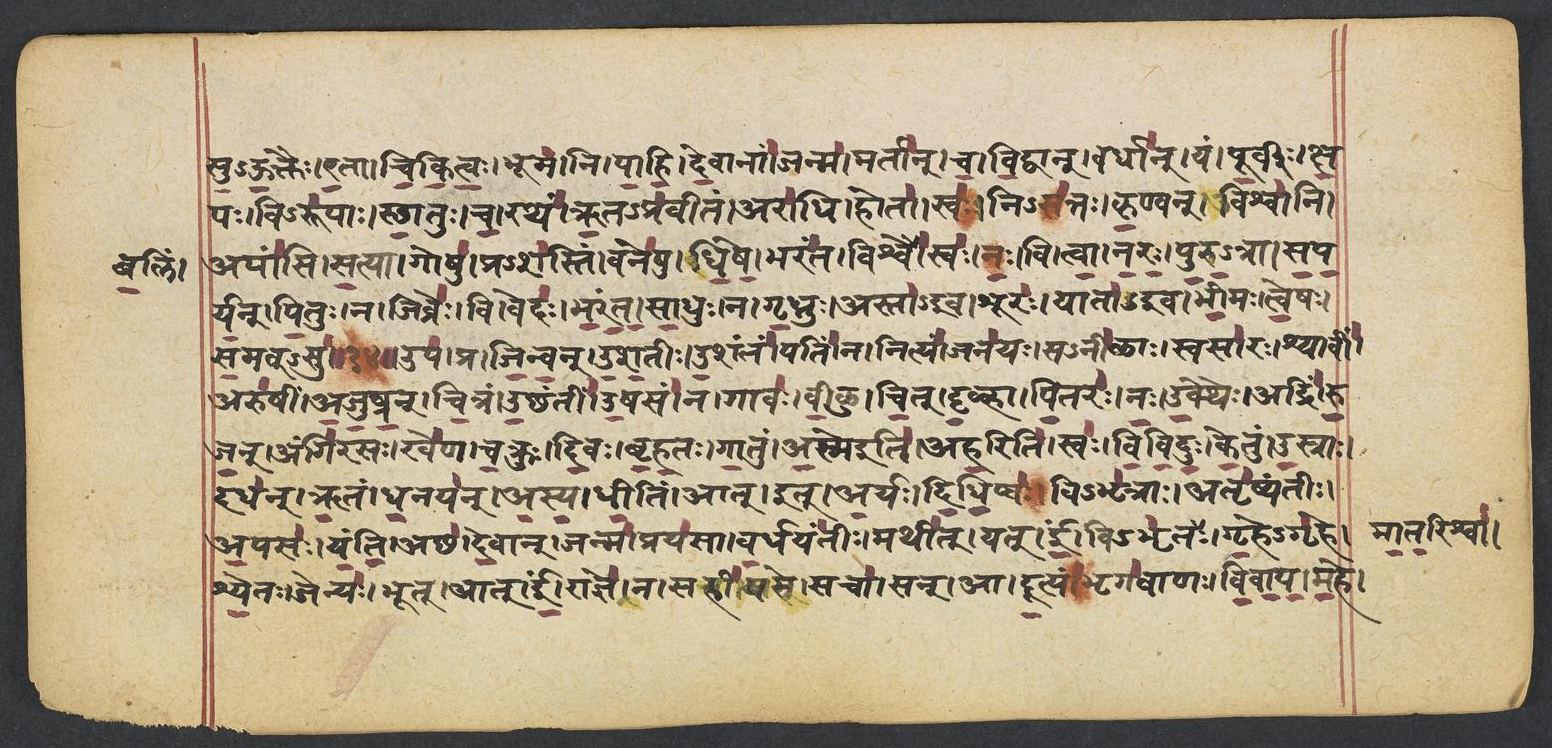
The manuscript shown is Penn Ms. Coll. 390 Item 41 (University of Pennsylvania), an undated paper manuscript of the padapāṭha (the word-by-word recitation text, in which every word is written separately and compounds are split) of the whole Ṛgveda in Devanāgarī, 884 leaves in fascicles, 7-9 lines to the page, accents in red; this hymn stands on fol. 48v-49r. Each section below gives the verses that end on one page; the page boundaries were read on the images (the opening words of every page), not counted out. Where the manuscript is a padapāṭha (the word-by-word recitation text), the section shows Aufrecht's continuous (saṃhitā) text first and, as the edition text, the padapāṭha of the same verses, which is the form written on the page.
How was this verified? (Provenance)
Where on the image
Penn Ms. Coll. 390 Item 41, fol. 48v (OPenn image 50, upper leaf). Checked on the image: the Rigveda text on this page begins in RV 1.69.3 ‹agniḥ vi-janan ūdhaḥ na›. The next page with Rigveda text, fol. 49r, begins in RV 1.70.5 ‹su-uktaiḥ›. Verses 1.70.1-4 end on this page.
1va̱nema̍ pū̱rvīr a̱ryo ma̍nī̱ṣā a̱gniḥ su̱śoko̱ viśvā̍ny aśyāḥ ||
2ā daivyā̍ni vra̱tā ci̍ki̱tvān ā mānu̍ṣasya̱ jana̍sya̱ janma̍ ||
3garbho̱ yo a̱pāṁ garbho̱ vanā̍nā̱ṁ garbha̍ś ca sthā̱tāṁ garbha̍ś ca̱rathā̍m ||
4adrau̍ cid asmā a̱ntar du̍ro̱ṇe vi̱śāṁ na viśvo̍ a̱mṛta̍ḥ svā̱dhīḥ ||
Compare: Padapāṭha (word-by-word text written in the manuscript; Sansknet e-text via GRETIL)
1vanema | pūrvīḥ | aryaḥ | manīṣā | agniḥ | suśokaḥ | viśvāni | aśyāḥ
2ā | daivyāni | vratā | cikitvān | ā | mānuṣasya | janasya | janma
3garbhaḥ | yaḥ | apām | garbhaḥ | vanānām | garbhaḥ | ca | sthātām | garbhaḥ | carathām
4adrau | cit | asmai | antaḥ | duroṇe | viśām | na | viśvaḥ | amṛtaḥ | su-ādhīḥ
1MAY we, the pious, win much food by prayer, may Agni with fair light pervade each act,–
2He the observer of the heavenly laws of Gods, and of the race of mortal man.
3He who is germ of waters, germ of woods, germ of all things that move not and that move,–
4To him even in the rock and in the house: Immortal One, he cares for all mankind.
Where on the image
Penn Ms. Coll. 390 Item 41, fol. 49r (OPenn image 50, lower leaf). Checked on the image: the Rigveda text on this page begins in RV 1.70.5 ‹su-uktaiḥ›. The next page with Rigveda text, fol. 49v, begins in RV 1.71.5 ‹yat pitre īm rasam›. Verses 1.70.5-11 end on this page; 1.70.5 begins on fol. 48v.
5sa hi kṣa̱pāvā̍m̐ a̱gnī ra̍yī̱ṇāṁ dāśa̱d yo a̍smā̱ ara̍ṁ sū̱ktaiḥ ||
6e̱tā ci̍kitvo̱ bhūmā̱ ni pā̍hi de̱vānā̱ṁ janma̱ martā̍m̐ś ca vi̱dvān ||
7vardhā̱n yam pū̱rvīḥ kṣa̱po virū̍pāḥ sthā̱tuś ca̱ ratha̍m ṛ̱tapra̍vītam ||
8arā̍dhi̱ hotā̱ sva1̱̍r niṣa̍ttaḥ kṛ̱ṇvan viśvā̱ny apā̍ṁsi sa̱tyā ||
9goṣu̱ praśa̍sti̱ṁ vane̍ṣu dhiṣe̱ bhara̍nta̱ viśve̍ ba̱liṁ sva̍r ṇaḥ ||
10vi tvā̱ nara̍ḥ puru̱trā sa̍paryan pi̱tur na jivre̱r vi vedo̍ bharanta ||
11sā̱dhur na gṛ̱dhnur aste̍va̱ śūro̱ yāte̍va bhī̱mas tve̱ṣaḥ sa̱matsu̍ ||
Compare: Padapāṭha (word-by-word text written in the manuscript; Sansknet e-text via GRETIL)
5saḥ | hi | kṣapāvān | agniḥ | rayīṇām | dāśat | yaḥ | asmai | aram | su-uktaiḥ
6etā | cikitvaḥ | bhūma | ni | pāhi | devānām | janma | martān | ca | vidvān
7vardhān | yam | pūrvīḥ | kṣapaḥ | vi-rūpāḥ | sthātuḥ | ca | ratham | ṛta-pravītam
8arādhi | hotā | svaḥ | ni-sattaḥ | kṛṇvan | viśvāni | apāṃsi | satyā
9goṣu | pra-śastim | vaneṣu | dhiṣe | bharanta | viśve | balim | svaḥ | naḥ
10vi | tvā | naraḥ | puru-trā | saparyan | pituḥ | na | jivreḥ | vi | vedī | bharanta
11sādhuḥ | na | gṛdhnuḥ | astāiva | śūraḥ | yātāiva | bhīmaḥ | tveṣaḥ | samat-su
5Agni is Lord of riches for the man who serves him readily with sacred songs.
6Protect these beings thou with careful thought, knowing the races both of Gods and men.
7Whom many dawns and nights, unlike, make strong, whom, born in Law, all things that move and stand,–
8He hath been won, Herald who sits in light, making effectual all our holy works.
9Thou settest value on our cows and woods: all shall bring tribute to us, to the light.
10Men have served thee in many and sundry spots, parting, as 'twere, an aged father's wealth.
11Like a brave archer, like one skilled and bold, a fierce avenger, so he shines in fight.
Notes
- Sanskrit: Aufrecht's edition (1877) with the Vedic accents, as entered by van Nooten and Holland (GRETIL).
- English: Ralph T. H. Griffith, The Hymns of the Rigveda (1889-1892; 2nd ed. 1896-1897), from the VedaWeb digital text; OCR slips in that text were corrected against the printed 2nd edition (data/sources/rigveda/griffith_errata.json).
- Padapāṭha (edition text): Sansknet e-text via GRETIL (CC BY-NC-SA 4.0).
Cite
Sources
- Source: Penn Ms. Coll. 390 Item 41 (undated (catalogued with Penn's 18th-19th c. Vedic manuscripts)), OPenn, Public Domain Mark + Aufrecht's accented text (GRETIL) + Griffith's English (VedaWeb) (holding institution)
- Critical edition: Aufrecht (1877), accented e-text via GRETIL
← previous · → next · v cycle view · l back to library