Rigveda 1.71: To Agni
Introduction
Rigveda 1.71 is a hymn of 10 verses addressed to Agni. It stands in book (maṇḍala) 1, a collection of hymns by many families of poets. The Rigveda is the oldest collection of Sanskrit hymns, composed in the second half of the second millennium BCE and handed down orally for many centuries before it was written down.
The manuscript shown is Penn Ms. Coll. 390 Item 41 (University of Pennsylvania), an undated paper manuscript of the padapāṭha (the word-by-word recitation text, in which every word is written separately and compounds are split) of the whole Ṛgveda in Devanāgarī, 884 leaves in fascicles, 7-9 lines to the page, accents in red; this hymn stands on fol. 49r-50r. Each section below gives the verses that end on one page; the page boundaries were read on the images (the opening words of every page), not counted out. Where the manuscript is a padapāṭha (the word-by-word recitation text), the section shows Aufrecht's continuous (saṃhitā) text first and, as the edition text, the padapāṭha of the same verses, which is the form written on the page.
How was this verified? (Provenance)
Where on the image
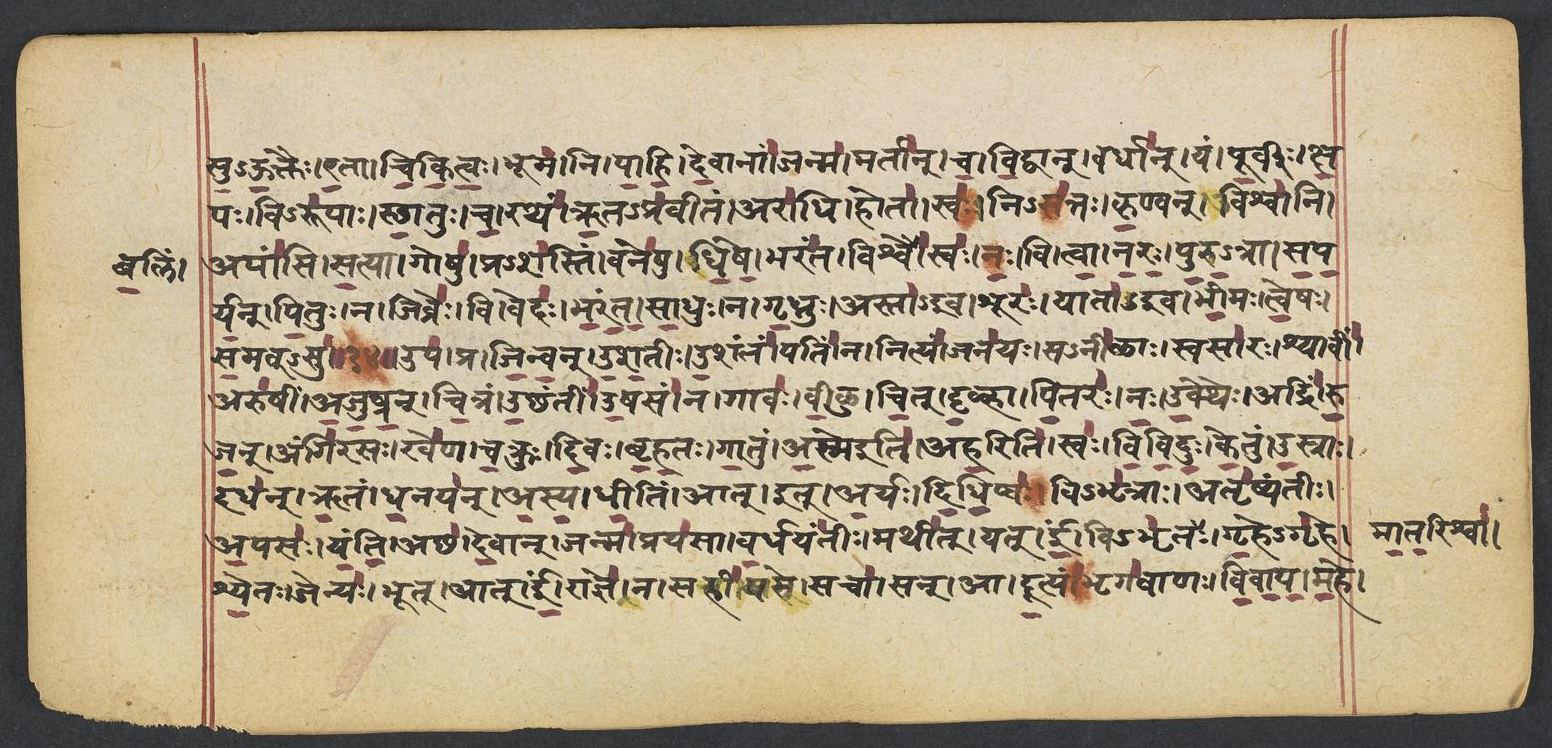
Penn Ms. Coll. 390 Item 41, fol. 49r (OPenn image 50, lower leaf). Checked on the image: the Rigveda text on this page begins in RV 1.70.5 ‹su-uktaiḥ›. The next page with Rigveda text, fol. 49v, begins in RV 1.71.5 ‹yat pitre īm rasam›. Verses 1.71.1-4 end on this page.
1upa̱ pra ji̍nvann uśa̱tīr u̱śanta̱m pati̱ṁ na nitya̱ṁ jana̍ya̱ḥ sanī̍ḻāḥ | svasā̍ra̱ḥ śyāvī̱m aru̍ṣīm ajuṣrañ ci̱tram u̱cchantī̍m u̱ṣasa̱ṁ na gāva̍ḥ ||
2vī̱ḻu ci̍d dṛ̱ḻhā pi̱taro̍ na u̱kthair adri̍ṁ ruja̱nn aṅgi̍raso̱ rave̍ṇa | ca̱krur di̱vo bṛ̍ha̱to gā̱tum a̱sme aha̱ḥ sva̍r vividuḥ ke̱tum u̱srāḥ ||
3dadha̍nn ṛ̱taṁ dha̱naya̍nn asya dhī̱tim ād id a̱ryo di̍dhi̱ṣvo̱3̱̍ vibhṛ̍trāḥ | atṛ̍ṣyantīr a̱paso̍ ya̱nty acchā̍ de̱vāñ janma̱ praya̍sā va̱rdhaya̍ntīḥ ||
4mathī̱d yad ī̱ṁ vibhṛ̍to māta̱riśvā̍ gṛ̱he-gṛ̍he śye̱to jenyo̱ bhūt | ād ī̱ṁ rājñe̱ na sahī̍yase̱ sacā̱ sann ā dū̱tya1̱̍m bhṛga̍vāṇo vivāya ||
Compare: Padapāṭha (word-by-word text written in the manuscript; Sansknet e-text via GRETIL)
1upa | pra | jinvan | uśatīḥ | uśantam | patim | na | nityam | janayaḥ | sa-nīḷāḥ | svasāraḥ | śyāvīm | aruṣīm | ajuṣran | citram | ucchantīm | uṣasam | na | gāvaḥ
2vīḷu | cit | dṛḷhā | pitaraḥ | naḥ | ukthaiḥ | adrim | rujan | aṅgirasaḥ | raveṇa | cakruḥ | divaḥ | bṛhataḥ | gātum | asme iti | ahariti | svaḥ | vividuḥ | ketum | usrāḥ
3dadhan | ṛtam | dhanayan | asya | dhītim | āt | it | aryaḥ | dadhiṣvaḥ | vi-bhṛtrāḥ | atṛṣyantīḥ | apasaḥ | yanti | accha | devān | janma | prayasā | vardhayantīḥ
4mathīt | yat | īm | vi-bhṛtaḥ | mātariśvā | gṛhe--gṛhe | śyetaḥ | jenyaḥ | bhūt | ādīm | rājñe | na | sahīyase | sacā | san | ā | dūtyam | bhṛgavāṇaḥ | vivāya
1LOVING the loving One, as wives their husband, the sisters of one home have urged him forward, Bright-coloured, even, as the cows love morning, dark, breaking forth to view, and redly beaming.
2Our sires with lauds burst e'en the firmset fortress, yea, the Angirases, with roar, the mountain. They made for us a way to reach high heaven, they found us day, light, day's sign, beams of morning.
3They stablished order, made his service fruitful; then parting them among the longing faithful, Not thirsting after aught, they come, most active, while with sweet food the race of Gods they strengthen.
4Since Mâtariṣvan, far-diffused, hath stirred him, and he in every house grown bright and noble, He, Bhr̥igu-like I hath gone as his companion, as on commission to a greater Sovran.
Where on the image
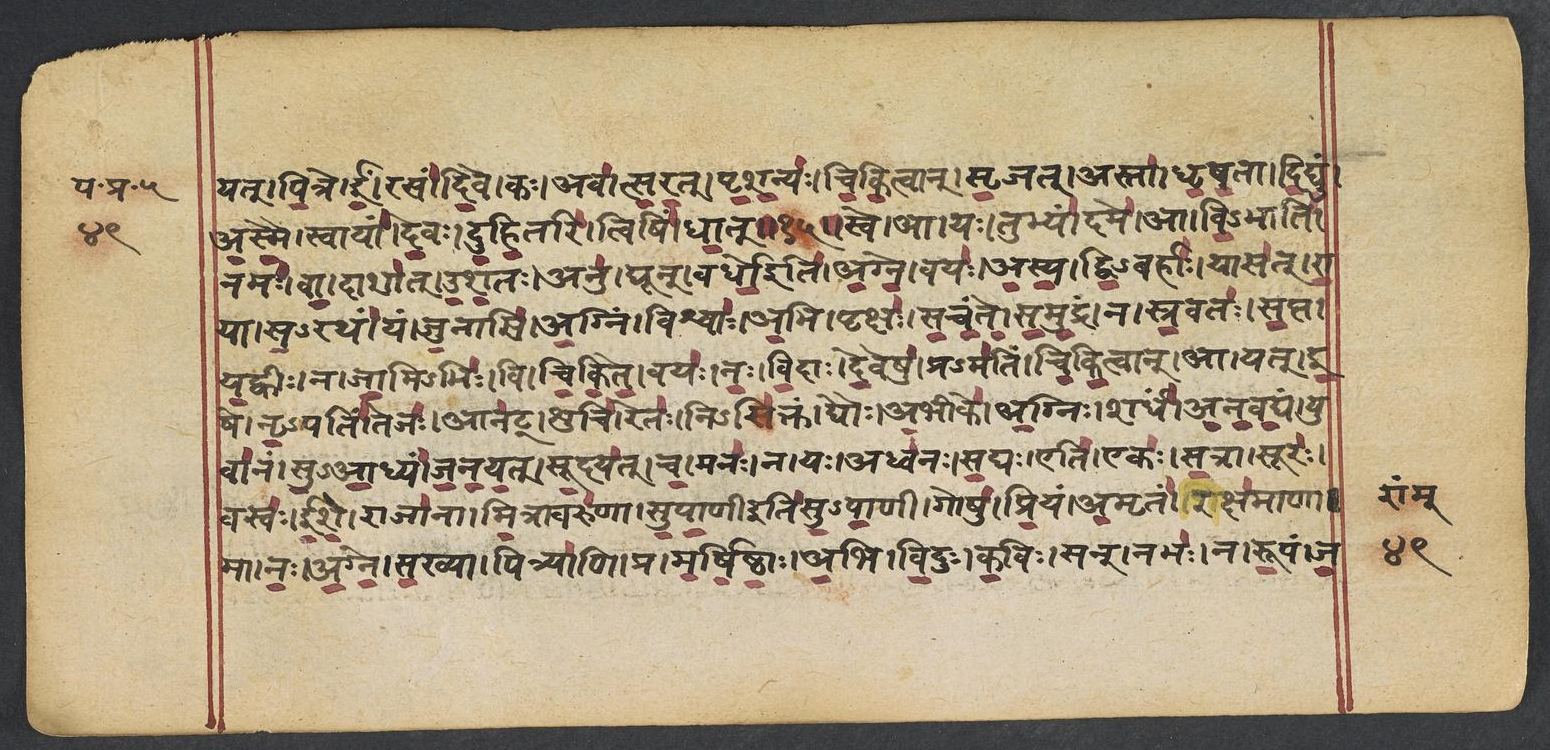
Penn Ms. Coll. 390 Item 41, fol. 49v (OPenn image 51, upper leaf). Checked on the image: the Rigveda text on this page begins in RV 1.71.5 ‹yat pitre īm rasam›. The next page with Rigveda text, fol. 50r, begins in RV 1.71.10 ‹-jarimā mināti purā tasyāḥ›. Verses 1.71.5-9 end on this page; 1.71.5 begins on fol. 49r.
5ma̱he yat pi̱tra ī̱ṁ rasa̍ṁ di̱ve kar ava̍ tsarat pṛśa̱nya̍ś ciki̱tvān | sṛ̱jad astā̍ dhṛṣa̱tā di̱dyum a̍smai̱ svāyā̍ṁ de̱vo du̍hi̱tari̱ tviṣi̍ṁ dhāt ||
6sva ā yas tubhya̱ṁ dama̱ ā vi̱bhāti̱ namo̍ vā̱ dāśā̍d uśa̱to anu̱ dyūn | vardho̍ agne̱ vayo̍ asya dvi̱barhā̱ yāsa̍d rā̱yā sa̱ratha̱ṁ yaṁ ju̱nāsi̍ ||
7a̱gniṁ viśvā̍ a̱bhi pṛkṣa̍ḥ sacante samu̱draṁ na sra̱vata̍ḥ sa̱pta ya̱hvīḥ | na jā̱mibhi̱r vi ci̍kite̱ vayo̍ no vi̱dā de̱veṣu̱ prama̍tiṁ ciki̱tvān ||
8ā yad i̱ṣe nṛ̱pati̱ṁ teja̱ āna̱ṭ chuci̱ reto̱ niṣi̍kta̱ṁ dyaur a̱bhīke̍ | a̱gniḥ śardha̍m anava̱dyaṁ yuvā̍naṁ svā̱dhya̍ṁ janayat sū̱daya̍c ca ||
9mano̱ na yo 'dhva̍naḥ sa̱dya ety eka̍ḥ sa̱trā sūro̱ vasva̍ īśe | rājā̍nā mi̱trāvaru̍ṇā supā̱ṇī goṣu̍ pri̱yam a̱mṛta̱ṁ rakṣa̍māṇā ||
Compare: Padapāṭha (word-by-word text written in the manuscript; Sansknet e-text via GRETIL)
5mahe | yat | pitre | īm | rasam | dive | kaḥ | ava | tsarat | pṛśanyaḥ | cikitvān | sṛjat | astā | dhṛṣatā | didyum | asmai | svāyām | devaḥ | duhitari | tviṣim | dhāt
6sve | ā | yaḥ | tubhyam | dame | ā | vi-bhāti | namaḥ | vā | dāśāt | uśataḥ | anu | dyūn | vardhaḥ | agne | vayaḥ | asya | dvi-barhāḥ | yāsat | rāyā | sa-ratham | yam | junāsi
7agnim | viśvāḥ | abhi | pṛkṣaḥ | sacante | samudram | na | sravataḥ | sapta | yahvīḥ | na | jāmibhiḥ | vi | cikite | vayaḥ | naḥ | vidāḥ | deveṣu | pra-matim | cikitvān
8ā | yat | iṣe | nṛ-patim | tejaḥ | ānaṭ | śuci | retaḥ | ni-siktam | dyauḥ | abhīke | agniḥ | śardham | anavadyam | yuvānam | su-ādhyam | janayat | sūdayat | ca
9manaḥ | na | yaḥ | adhvanaḥ | sadyaḥ | eti | ekaḥ | satrā | sūraḥ | vasvaḥ | īśe | rājānā | mitrāvaruṇā | supāṇī itisu-pāṇī | goṣu | priyam | amṛtam | rakṣamāṇā
5When man poured juice to Heaven, the mighty Father, he knew and freed himself from close embracement. The archer boldly shot at him his arrow, and the God threw his splendour on his Daughter.
6Whoso, hath flames for thee within his dwelling, or brings the worship which thou lovest daily, Do thou of double might increase his substance: may he whom thou incitest meet with riches.
7All sacrificial viands wait on Agni as the Seven mighty Rivers seek the ocean. Not by our brethren was our food discovered: find with the Gods care for us, thou who knowest.
8When light hath filled the Lord of men for increase, straight from the heaven descends the limpid moisture. Agni hath brought to light and filled with spirit the youthful host blameless and well providing.
9He who like thought goes swiftly on his journey, the Sun, alone is ever Lord of riches. The Kings with fair hands, Varuṇa and Mitra, protect the precious nectar in our cattle.
Where on the image
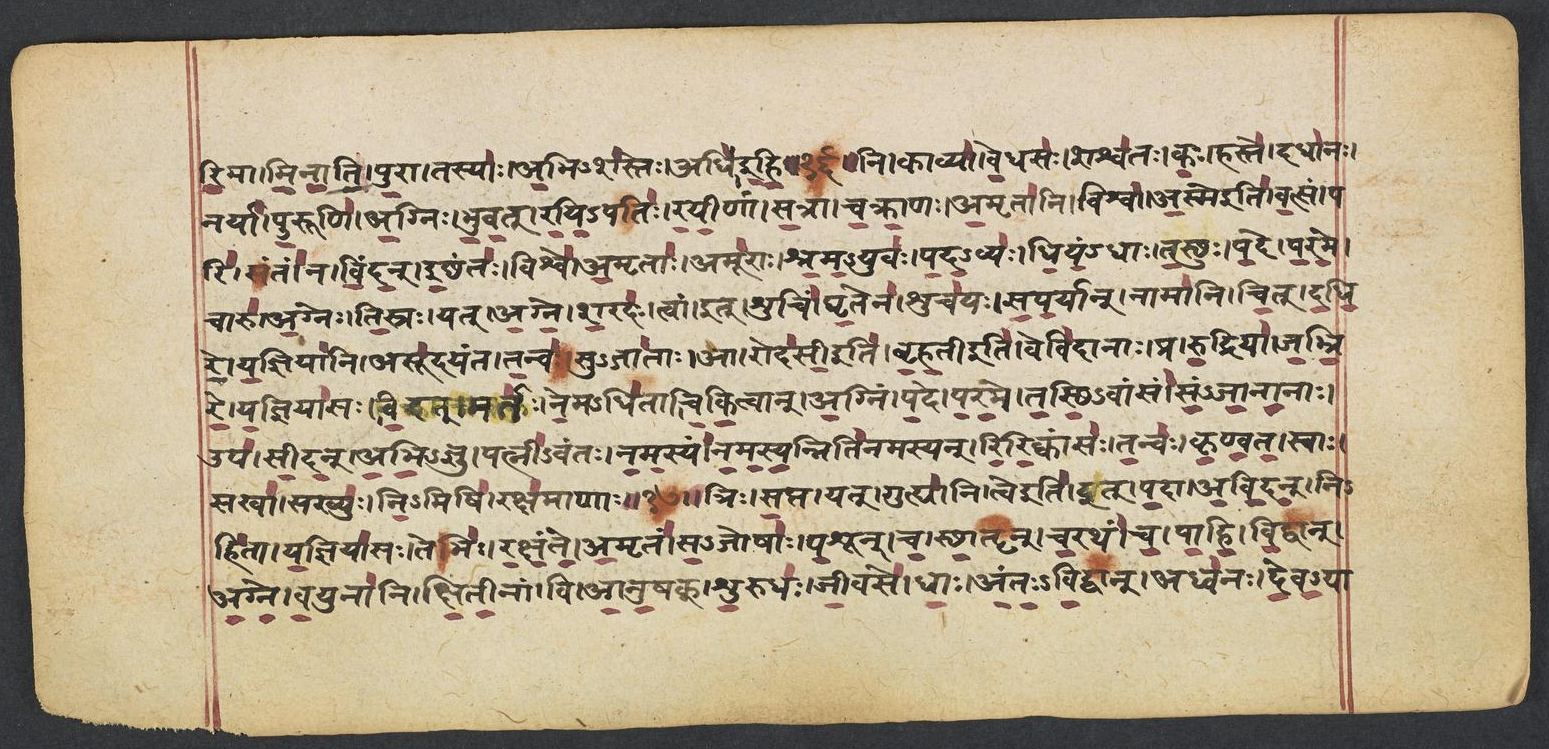
Penn Ms. Coll. 390 Item 41, fol. 50r (OPenn image 51, lower leaf). Checked on the image: the Rigveda text on this page begins in RV 1.71.10 ‹-jarimā mināti purā tasyāḥ›. The next page with Rigveda text, fol. 50v, begins in RV 1.72.7 ‹-deva-yānān atandraḥ dūtaḥ abhavaḥ›. Verse 1.71.10 ends on this page; 1.71.10 begins on fol. 49v.
10mā no̍ agne sa̱khyā pitryā̍ṇi̱ pra ma̍rṣiṣṭhā a̱bhi vi̱duṣ ka̱viḥ san | nabho̱ na rū̱paṁ ja̍ri̱mā mi̍nāti pu̱rā tasyā̍ a̱bhiśa̍ste̱r adhī̍hi ||
Compare: Padapāṭha (word-by-word text written in the manuscript; Sansknet e-text via GRETIL)
10mā | naḥ | agne | sakhyā | pitryāṇi | pra | marṣiṣṭhāḥ | abhi | viduḥ | kaviḥ | san | nabhaḥ | na | rūpam | jarimā | mināti | purā | tasyāḥ | abhi-śasteḥ | adhi | ihi
10O Agni, break not our ancestral friendship, Sage as thou art, endowed with deepest knowledge. Old age, like gathering cloud, impairs the body: before that evil be come nigh protect me.
Notes
- Sanskrit: Aufrecht's edition (1877) with the Vedic accents, as entered by van Nooten and Holland (GRETIL).
- English: Ralph T. H. Griffith, The Hymns of the Rigveda (1889-1892; 2nd ed. 1896-1897), from the VedaWeb digital text; OCR slips in that text were corrected against the printed 2nd edition (data/sources/rigveda/griffith_errata.json).
- Padapāṭha (edition text): Sansknet e-text via GRETIL (CC BY-NC-SA 4.0).
Cite
Sources
- Source: Penn Ms. Coll. 390 Item 41 (undated (catalogued with Penn's 18th-19th c. Vedic manuscripts)), OPenn, Public Domain Mark + Aufrecht's accented text (GRETIL) + Griffith's English (VedaWeb) (holding institution)
- Critical edition: Aufrecht (1877), accented e-text via GRETIL
← previous · → next · v cycle view · l back to library