Rigveda 1.72: To Agni
Introduction
Rigveda 1.72 is a hymn of 10 verses addressed to Agni. It stands in book (maṇḍala) 1, a collection of hymns by many families of poets. The Rigveda is the oldest collection of Sanskrit hymns, composed in the second half of the second millennium BCE and handed down orally for many centuries before it was written down.
The manuscript shown is Penn Ms. Coll. 390 Item 41 (University of Pennsylvania), an undated paper manuscript of the padapāṭha (the word-by-word recitation text, in which every word is written separately and compounds are split) of the whole Ṛgveda in Devanāgarī, 884 leaves in fascicles, 7-9 lines to the page, accents in red; this hymn stands on fol. 50r-50v. Each section below gives the verses that end on one page; the page boundaries were read on the images (the opening words of every page), not counted out. Where the manuscript is a padapāṭha (the word-by-word recitation text), the section shows Aufrecht's continuous (saṃhitā) text first and, as the edition text, the padapāṭha of the same verses, which is the form written on the page.
How was this verified? (Provenance)
Where on the image
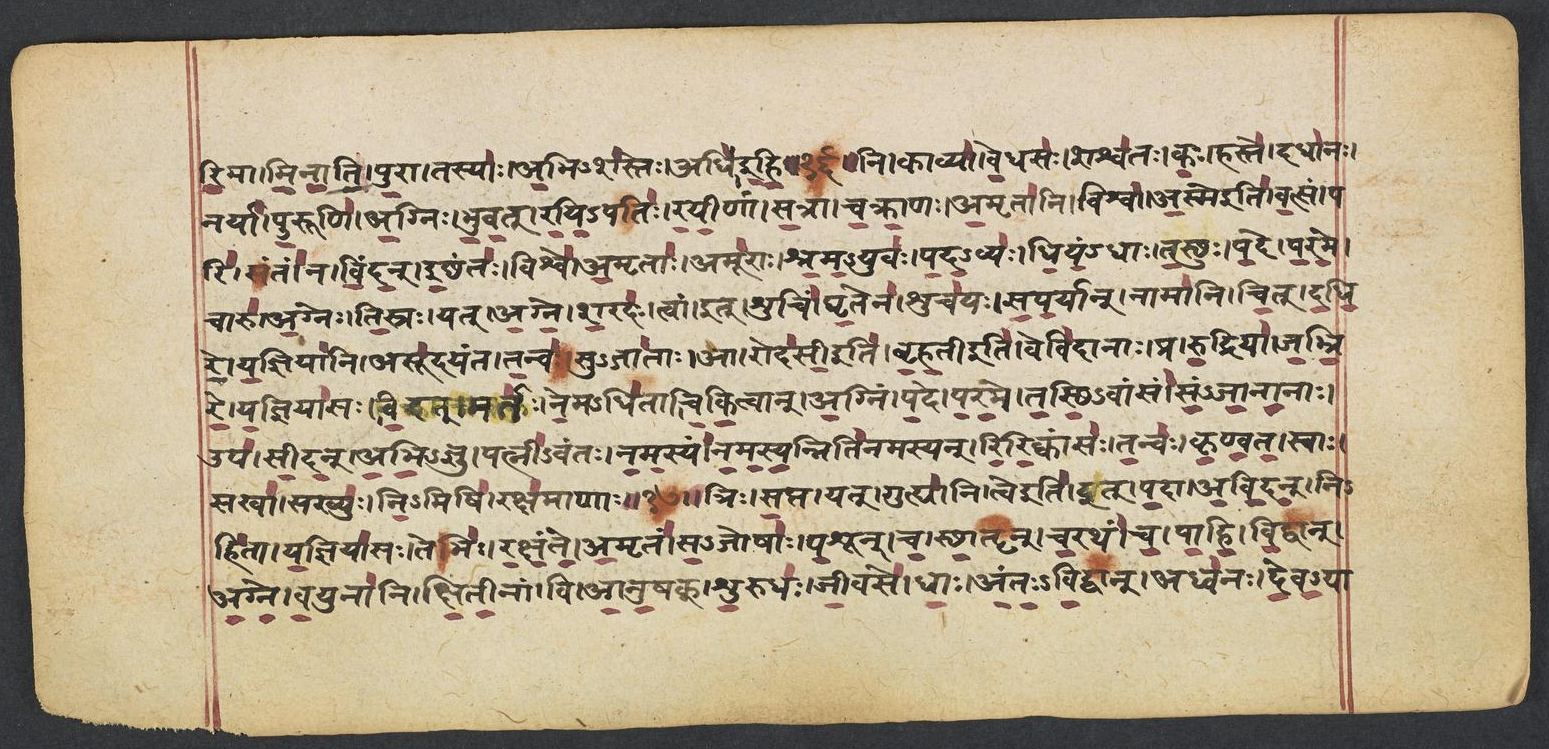
Penn Ms. Coll. 390 Item 41, fol. 50r (OPenn image 51, lower leaf). Checked on the image: the Rigveda text on this page begins in RV 1.71.10 ‹-jarimā mināti purā tasyāḥ›. The next page with Rigveda text, fol. 50v, begins in RV 1.72.7 ‹-deva-yānān atandraḥ dūtaḥ abhavaḥ›. Verses 1.72.1-6 end on this page.
1ni kāvyā̍ ve̱dhasa̱ḥ śaśva̍tas ka̱r haste̱ dadhā̍no̱ naryā̍ pu̱rūṇi̍ | a̱gnir bhu̍vad rayi̱patī̍ rayī̱ṇāṁ sa̱trā ca̍krā̱ṇo a̱mṛtā̍ni̱ viśvā̍ ||
2a̱sme va̱tsam pari̱ ṣanta̱ṁ na vi̍ndann i̱cchanto̱ viśve̍ a̱mṛtā̱ amū̍rāḥ | śra̱ma̱yuva̍ḥ pada̱vyo̍ dhiya̱ṁdhās ta̱sthuḥ pa̱de pa̍ra̱me cārv a̱gneḥ ||
3ti̱sro yad a̍gne śa̱rada̱s tvām ic chuci̍ṁ ghṛ̱tena̱ śuca̍yaḥ sapa̱ryān | nāmā̍ni cid dadhire ya̱jñiyā̱ny asū̍dayanta ta̱nva1̱̍ḥ sujā̍tāḥ ||
4ā roda̍sī bṛha̱tī vevi̍dānā̱ḥ pra ru̱driyā̍ jabhrire ya̱jñiyā̍saḥ | vi̱dan marto̍ ne̱madhi̍tā ciki̱tvān a̱gnim pa̱de pa̍ra̱me ta̍sthi̱vāṁsa̍m ||
5sa̱ṁjā̱nā̱nā upa̍ sīdann abhi̱jñu patnī̍vanto nama̱sya̍ṁ namasyan | ri̱ri̱kvāṁsa̍s ta̱nva̍ḥ kṛṇvata̱ svāḥ sakhā̱ sakhyu̍r ni̱miṣi̱ rakṣa̍māṇāḥ ||
6triḥ sa̱pta yad guhyā̍ni̱ tve it pa̱dāvi̍da̱n nihi̍tā ya̱jñiyā̍saḥ | tebhī̍ rakṣante a̱mṛta̍ṁ sa̱joṣā̍ḥ pa̱śūñ ca̍ sthā̱tṝñ ca̱ratha̍ṁ ca pāhi ||
Compare: Padapāṭha (word-by-word text written in the manuscript; Sansknet e-text via GRETIL)
1ni | kāvyā | vedhasaḥ | śaśvataḥ | kaḥ | haste | dadhānaḥ | naryā | purūṇi | agniḥ | bhuvat | rayi-patiḥ | rayīṇām | satrā | cakrāṇaḥ | amṛtāni | viśvā
2asme iti | vatsam | pari | santam | na | vindan | icchantaḥ | viśve | amṛtāḥ | amūrāḥ | śrama-yuvaḥ | padavyaḥ | dhiyam-dhāḥ | tasthuḥ | pade | parame | cāru | agneḥ
3tisraḥ | yat | agne | śaradaḥ | tvām | it | śucim | ghṛtena | śucayaḥ | saparyān | nāmāni | cit | dadhire | yajñiyāni | asūdayanta | tanvaḥ | su-jātāḥ
4ā | rodasī iti | bṛhatī iti | vevidānāḥ | pra | rudriyā | jabhrire | yajñiyāsaḥ | vidat | martaḥ | nema-dhitā | cikitvān | agnim | pade | parame | tasthi-vāṃsam
5sam-jānānāḥ | upa | sīdan | abhi-jñu | patnī-vantaḥ | namasyam | namasyannitinamasyan | ririkvāṃsaḥ | tanvaḥ | kṛṇvata | svāḥ | sakhā | sakhyuḥ | n i-miṣi | rakṣamāṇāḥ
6triḥ | sapta | yat | guhyāni | tveiti | it | padā | avidan | ni-hitāḥ | yajñiyāsaḥ | tebhiḥ | rakṣante | amṛtam | sa-joṣāḥ | paśūn | ca | sthātṝn | caratham | ca | pāhi
1THOUGH holding many gifts for men, he humbleth the higher powers of each wise ordainer. Agni is now the treasure-lord of treasures, for ever granting all immortal bounties.
2The Gods infallible all searching found not him, the dear Babe who still is round about us. Worn weary, following his track, devoted, they reached the lovely highest home of Agni.
3Because with holy oil the pure Ones, Agni, served thee the very pure three autumn seasons, Therefore they won them holy names for worship, and nobly born they dignified their bodies.
4Making them known to spacious earth and heaven, the holy Ones revealed the powers of Rudra. The mortal band, discerning in the distance, found Agni standing in the loftiest station.
5Nigh they approached, one-minded, with their spouses, kneeling to him adorable paid worship. Friend finding in his own friend's eye protection, they made their own the bodies which they chastened.
6Soon as the holy beings had discovered the thrice-seven mystic things contained within thee, With these, one-minded., they preserve the Amrit: guard thou the life of all their plants and cattle.
Where on the image
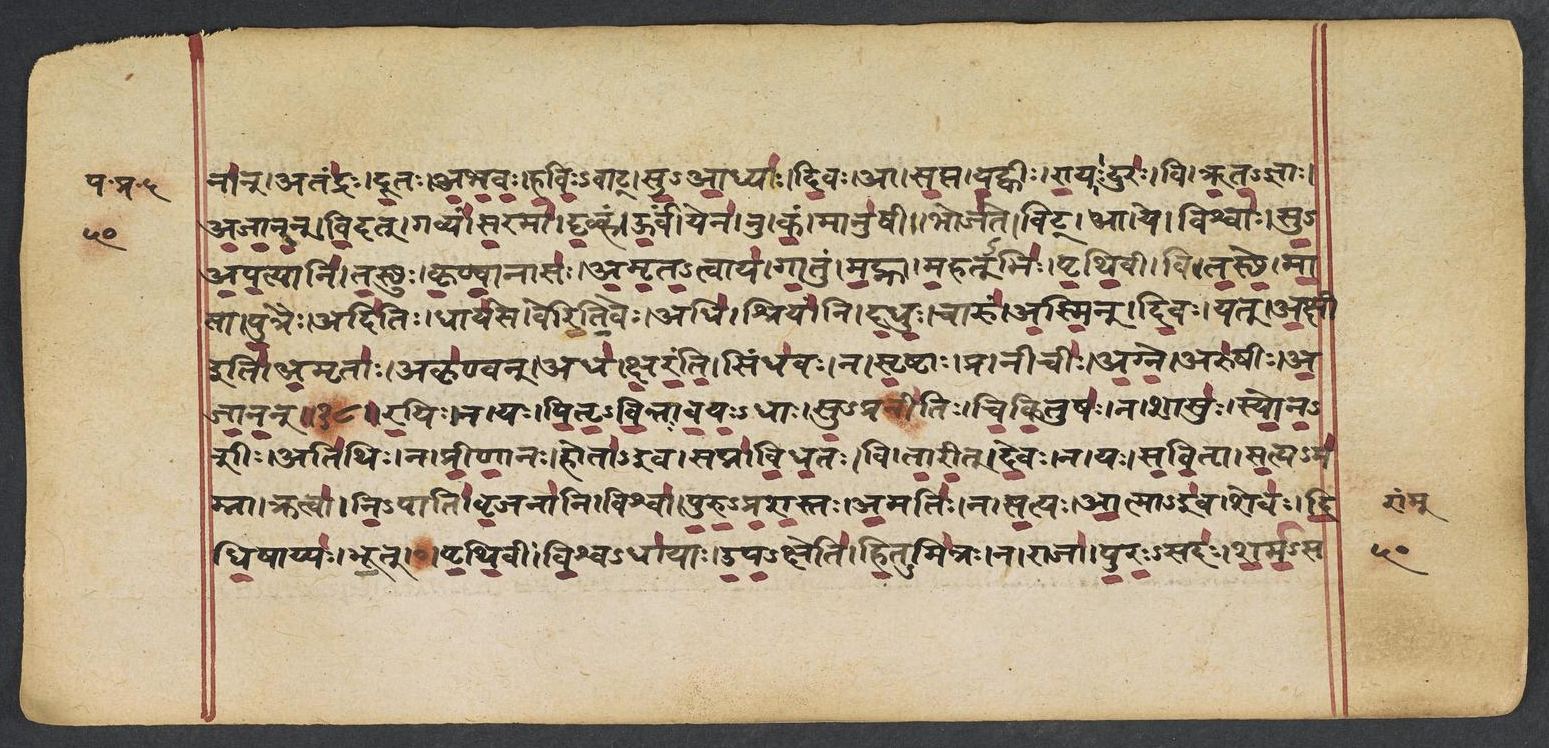
Penn Ms. Coll. 390 Item 41, fol. 50v (OPenn image 52, upper leaf). Checked on the image: the Rigveda text on this page begins in RV 1.72.7 ‹-deva-yānān atandraḥ dūtaḥ abhavaḥ›. The next page with Rigveda text, fol. 51r, begins in RV 1.73.3 ‹-śarma-sadaḥ na vīrāḥ anavadyā›. Verses 1.72.7-10 end on this page; 1.72.7 begins on fol. 50r.
7vi̱dvām̐ a̍gne va̱yunā̍ni kṣitī̱nāṁ vy ā̍nu̱ṣak chu̱rudho̍ jī̱vase̍ dhāḥ | a̱nta̱rvi̱dvām̐ adhva̍no deva̱yānā̱n ata̍ndro dū̱to a̍bhavo havi̱rvāṭ ||
8svā̱dhyo̍ di̱va ā sa̱pta ya̱hvī rā̱yo duro̱ vy ṛ̍ta̱jñā a̍jānan | vi̱dad gavya̍ṁ sa̱ramā̍ dṛ̱ḻham ū̱rvaṁ yenā̱ nu ka̱m mānu̍ṣī̱ bhoja̍te̱ viṭ ||
9ā ye viśvā̍ svapa̱tyāni̍ ta̱sthuḥ kṛ̍ṇvā̱nāso̍ amṛta̱tvāya̍ gā̱tum | ma̱hnā ma̱hadbhi̍ḥ pṛthi̱vī vi ta̍sthe mā̱tā pu̱trair adi̍ti̱r dhāya̍se̱ veḥ ||
10adhi̱ śriya̱ṁ ni da̍dhu̱ś cāru̍m asmin di̱vo yad a̱kṣī a̱mṛtā̱ akṛ̍ṇvan | adha̍ kṣaranti̱ sindha̍vo̱ na sṛ̱ṣṭāḥ pra nīcī̍r agne̱ aru̍ṣīr ajānan ||
Compare: Padapāṭha (word-by-word text written in the manuscript; Sansknet e-text via GRETIL)
7vidvān | agne | vayunāni | kṣitīnām | vi | ānuṣak | śurudhaḥ | jīvase | dhāḥ | antaḥ-vidvān | adhvanaḥ | deva-yānān | atandraḥ | dūtaḥ | abhavaḥ | haviḥ-vāṭ
8svu-ādhyaḥ | divaḥ | ā | sapta | yahvīḥ | rāyaḥ | duraḥ | vi | ṛta-jñāḥ | ajānan | vidat | gavyam | saramā | dṛḷham | ūrvam | yena | nu | kam | mānuṣī | bhojate | viṭ
9ā | ye | viśvā | su-apatyāni | tasthuḥ | kṛṇvānāsaḥ | amṛta-tvāya | gātum | mahnā | mahat-bhiḥ | pṛthivī | vi | tasthe | mātā | putraiḥ | aditiḥ | dhāyase | veḥ
10adhi | śriyam | ni | dadhuḥ | cārum | asmin | divaḥ | yat | akṣī iti | amṛtāḥ | akṛṇvan | adha | kṣaranti | sindhavaḥ | na | sṛṣṭāḥ | pra | nīcīḥ | agne | aruṣīḥ | ajānan
7Thou, Agni, knower of men's works, hast sent us good food in constant course for our subsistence: Thou deeply skilled in paths of Gods becamest an envoy never wearied, offeringbearer.
8Knowing the Law, the seven strong floods from heaven, full of good thought, discerned the doors of riches. Saramâ found the cattle's firm-built prison whereby the race of man is still supported.
9They who approached all noble operations making a path that leads to life immortal, To be the Bird's support, the spacious mother, Aditi, and her great Sons stood in power.
10When Gods immortal made both eyes of heaven, they gave to him the gift of beauteous glory. Now they flow forth like rivers set in motion: they knew the Red Steeds coming down, O Agni.
Notes
- Sanskrit: Aufrecht's edition (1877) with the Vedic accents, as entered by van Nooten and Holland (GRETIL).
- English: Ralph T. H. Griffith, The Hymns of the Rigveda (1889-1892; 2nd ed. 1896-1897), from the VedaWeb digital text; OCR slips in that text were corrected against the printed 2nd edition (data/sources/rigveda/griffith_errata.json).
- Padapāṭha (edition text): Sansknet e-text via GRETIL (CC BY-NC-SA 4.0).
Cite
Sources
- Source: Penn Ms. Coll. 390 Item 41 (undated (catalogued with Penn's 18th-19th c. Vedic manuscripts)), OPenn, Public Domain Mark + Aufrecht's accented text (GRETIL) + Griffith's English (VedaWeb) (holding institution)
- Critical edition: Aufrecht (1877), accented e-text via GRETIL
← previous · → next · v cycle view · l back to library