Rigveda 1.73: To Agni
Introduction
Rigveda 1.73 is a hymn of 10 verses addressed to Agni. It stands in book (maṇḍala) 1, a collection of hymns by many families of poets. The Rigveda is the oldest collection of Sanskrit hymns, composed in the second half of the second millennium BCE and handed down orally for many centuries before it was written down.
The manuscript shown is Penn Ms. Coll. 390 Item 41 (University of Pennsylvania), an undated paper manuscript of the padapāṭha (the word-by-word recitation text, in which every word is written separately and compounds are split) of the whole Ṛgveda in Devanāgarī, 884 leaves in fascicles, 7-9 lines to the page, accents in red; this hymn stands on fol. 50v-51r. Each section below gives the verses that end on one page; the page boundaries were read on the images (the opening words of every page), not counted out. Where the manuscript is a padapāṭha (the word-by-word recitation text), the section shows Aufrecht's continuous (saṃhitā) text first and, as the edition text, the padapāṭha of the same verses, which is the form written on the page.
How was this verified? (Provenance)
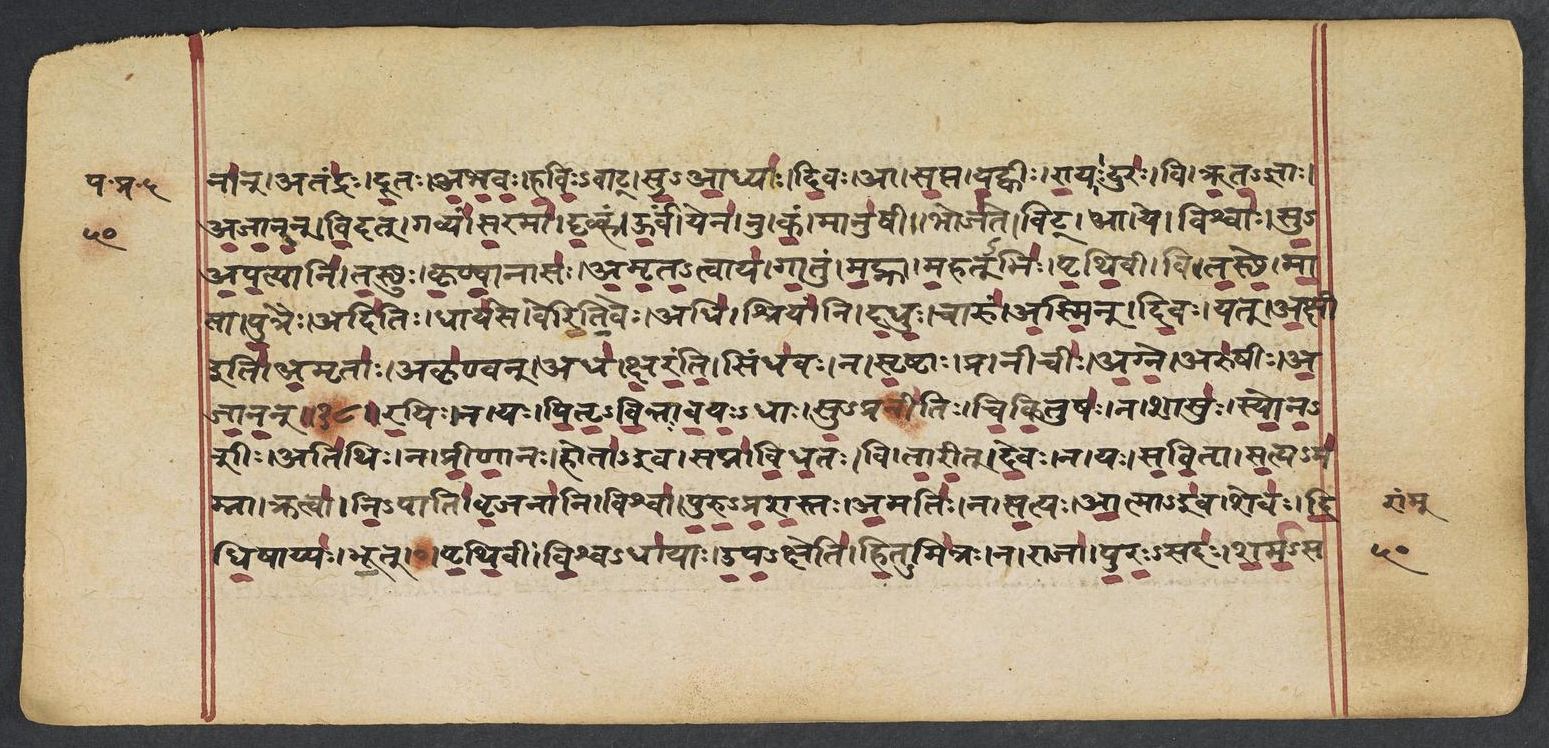
Where on the image
Penn Ms. Coll. 390 Item 41, fol. 50v (OPenn image 52, upper leaf). Checked on the image: the Rigveda text on this page begins in RV 1.72.7 ‹-deva-yānān atandraḥ dūtaḥ abhavaḥ›. The next page with Rigveda text, fol. 51r, begins in RV 1.73.3 ‹-śarma-sadaḥ na vīrāḥ anavadyā›. Verses 1.73.1-2 end on this page.
1ra̱yir na yaḥ pi̍tṛvi̱tto va̍yo̱dhāḥ su̱praṇī̍tiś ciki̱tuṣo̱ na śāsu̍ḥ | syo̱na̱śīr ati̍thi̱r na prī̍ṇā̱no hote̍va̱ sadma̍ vidha̱to vi tā̍rīt ||
2de̱vo na yaḥ sa̍vi̱tā sa̱tyama̍nmā̱ kratvā̍ ni̱pāti̍ vṛ̱janā̍ni̱ viśvā̍ | pu̱ru̱pra̱śa̱sto a̱mati̱r na sa̱tya ā̱tmeva̱ śevo̍ didhi̱ṣāyyo̍ bhūt ||
Compare: Padapāṭha (word-by-word text written in the manuscript; Sansknet e-text via GRETIL)
1rayiḥ | na | yaḥ | pitṛ-vittaḥ | vayaḥ-dhāḥ | su-pranītiḥ | cikituṣaḥ | na | śāsuḥ | syona-śīḥ | atithiḥ | na | prīṇānaḥ | hotāiva | sadma | vidhataḥ | vi | tārīt
2devaḥ | na | yaḥ | savitā | satya-manmā | kratvā | ni-pāti | vṛjanāni | viśvā | puru-praśastaḥ | amatiḥ | na | satyaḥ | ātmāiva | śevaḥ | didhiṣāyyaḥ | bhūt
1HE who gives food, like patrimonial riches and guides aright like some wise man's instruction, Loved like a guest who lies in pleasant lodging, – may he, as Priest, prosper his servant's dwelling.
2He who like Savitar the God, true-minded protecteth with his power. all acts of vigour, Truthful, like splendour, glorified by many, like breath joy-giving,– all must strive to win him.
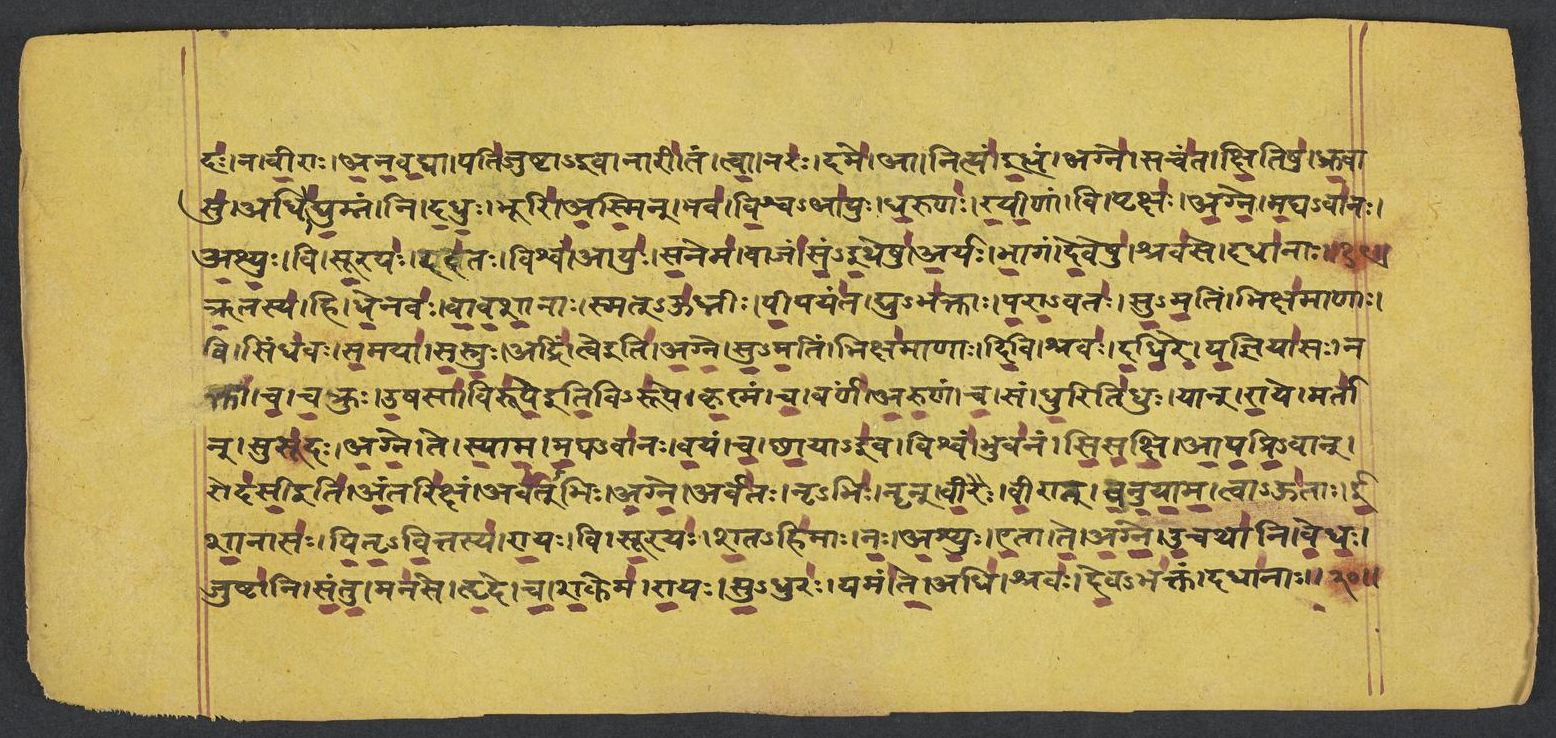
Where on the image
Penn Ms. Coll. 390 Item 41, fol. 51r (OPenn image 52, lower leaf). Checked on the image: the Rigveda text on this page begins in RV 1.73.3 ‹-śarma-sadaḥ na vīrāḥ anavadyā›. The next page with Rigveda text, fol. 51v, begins in RV 1.74.1 ‹upa-prayantaḥ adhvaram mantram vocema›. Verses 1.73.3-10 end on this page; 1.73.3 begins on fol. 50v.
3de̱vo na yaḥ pṛ̍thi̱vīṁ vi̱śvadhā̍yā upa̱kṣeti̍ hi̱tami̍tro̱ na rājā̍ | pu̱ra̱ḥsada̍ḥ śarma̱sado̱ na vī̱rā a̍nava̱dyā pati̍juṣṭeva̱ nārī̍ ||
4taṁ tvā̱ naro̱ dama̱ ā nitya̍m i̱ddham agne̱ saca̍nta kṣi̱tiṣu̍ dhru̱vāsu̍ | adhi̍ dyu̱mnaṁ ni da̍dhu̱r bhūry a̍smi̱n bhavā̍ vi̱śvāyu̍r dha̱ruṇo̍ rayī̱ṇām ||
5vi pṛkṣo̍ agne ma̱ghavā̍no aśyu̱r vi sū̱rayo̱ dada̍to̱ viśva̱m āyu̍ḥ | sa̱nema̱ vāja̍ṁ sami̱theṣv a̱ryo bhā̱gaṁ de̱veṣu̱ śrava̍se̱ dadhā̍nāḥ ||
6ṛ̱tasya̱ hi dhe̱navo̍ vāvaśā̱nāḥ smadū̍dhnīḥ pī̱paya̍nta̱ dyubha̍ktāḥ | pa̱rā̱vata̍ḥ suma̱tim bhikṣa̍māṇā̱ vi sindha̍vaḥ sa̱mayā̍ sasru̱r adri̍m ||
7tve a̍gne suma̱tim bhikṣa̍māṇā di̱vi śravo̍ dadhire ya̱jñiyā̍saḥ | naktā̍ ca ca̱krur u̱ṣasā̱ virū̍pe kṛ̱ṣṇaṁ ca̱ varṇa̍m aru̱ṇaṁ ca̱ saṁ dhu̍ḥ ||
8yān rā̱ye martā̱n suṣū̍do agne̱ te syā̍ma ma̱ghavā̍no va̱yaṁ ca̍ | chā̱yeva̱ viśva̱m bhuva̍naṁ sisakṣy āpapri̱vān roda̍sī a̱ntari̍kṣam ||
9arva̍dbhir agne̱ arva̍to̱ nṛbhi̱r nṝn vī̱rair vī̱rān va̍nuyāmā̱ tvotā̍ḥ | ī̱śā̱nāsa̍ḥ pitṛvi̱ttasya̍ rā̱yo vi sū̱raya̍ḥ śa̱tahi̍mā no aśyuḥ ||
10e̱tā te̍ agna u̱cathā̍ni vedho̱ juṣṭā̍ni santu̱ mana̍se hṛ̱de ca̍ | śa̱kema̍ rā̱yaḥ su̱dhuro̱ yama̱ṁ te 'dhi̱ śravo̍ de̱vabha̍kta̱ṁ dadhā̍nāḥ ||
Compare: Padapāṭha (word-by-word text written in the manuscript; Sansknet e-text via GRETIL)
3devaḥ | na | yaḥ | pṛthivīm | viśva-dhāyāḥ | upa-kṣeti | hita-mitraḥ | na | rājā | puraḥ-sadaḥ | śarma-sadaḥ | na | vīrāḥ | anavadyā | patijuṣṭāiva | nārī
4tam | tvā | naraḥ | dame | ā | nityam | iddham | agne | sacanta | kṣitiṣu | dhruvāsu | adhi | dyumnam | ni | dadhuḥ | bhūri | asmin | bhava | viśva-āyuḥ | dharuṇaḥ | rayīṇām
5vi | pṛkṣaḥ | agne | magha-vānaḥ | aśyuḥ | vi | sūrayaḥ | dadataḥ | viśvam | āyuḥ | sanema | vājam | sam-itheṣu | aryaḥ | bhāgam | deveṣu | śravase | dadhānāḥ
6ṛtasya | hi | dhenavaḥ | vāvaśānāḥ | smat-ūdhnīḥ | pīpayanta | dyu-bhaktāḥ | parāvataḥ | su-matim | bhikṣamāṇāḥ | vi | sindhavaḥ | samayā | sasruḥ | adrim
7tve | agne | su-matim | bhikṣamāṇāḥ | divi | śravaḥ | dadhire | yajñiyāḥ | naktā | ca | cakruḥ | uṣasā | virūpeitivi-rūpe | kṛṣṇam | ca | varṇam | aruṇam | ca | sam | dhurit idhuḥ
8yān | rāye | martān | susūdaḥ | agne | te | syāma | magha-vānaḥ | vayam | ca | chāyāiva | viśvam | bhuvanam | sisakṣi | āpapri-vān | rodasī iti | antarikṣam
9arvat-bhiḥ | agne | arvataḥ | nṛbhiḥ | nṝn vīrair vīrān vanuyāmā tvotāḥ | īśānāsaḥ | pitṛ-vittasyar | yaḥ | vi | sūrayaḥ | śata-himāḥ | naḥ | aśyuḥ
10etā | te | agne | ucathāni | vedhaḥ | juṣṭāni | santu | manase | hṛde | ca | śakema | rāyaḥ | su-dhuraḥ | yamam | te | adhi | śravaḥ | deva-bhaktam | dadhānāḥ
3He who on earth dwells like a king surrounded by faithful friends, like a God all-sustaining, Like heroes who preside, who sit in safety: like as a blameless dame dear to her husband.
4Thee, such, in settlements secure, O Agni, our men serve ever kindled in each dwelling. On him have they laid splendour in abundance: dear to all men, bearer be he of riches.
5May thy rich worshippers win food, O Agni, and princes gain long life who bring oblation. May we get booty from our foe in battle, presenting to the Gods their share for glory.
6The cows of holy law, sent us by Heaven, have swelled with laden udders, loudly lowing; Soliciting his favour, from a distance the rivers to the rock have flowed together.
7Agni, with thee, soliciting thy favour, the holy Ones have gained glory in heaven. They made the Night and Dawn of different colours, and set the black and purple hues together.
8May we and those who worship be the mortals whom thou, O Agni, leadest on to riches. Thou hast filled earth and heaven and air's mid-region, and followest the whole world like a shadow.
9Aided by thee, O Agni, may we conquer steeds with steeds, men with men, heroes with heroes, Lords of the wealth transmitted by our fathers: and may our princes live a hundred winters.
10May these our hymns of praise, Agni, Ordainer, be pleasant to thee in thy heart and spirit. May we have power to hold thy steeds of riches, laying on thee the God-sent gift of glory.
Notes
- Sanskrit: Aufrecht's edition (1877) with the Vedic accents, as entered by van Nooten and Holland (GRETIL).
- English: Ralph T. H. Griffith, The Hymns of the Rigveda (1889-1892; 2nd ed. 1896-1897), from the VedaWeb digital text; OCR slips in that text were corrected against the printed 2nd edition (data/sources/rigveda/griffith_errata.json).
- Padapāṭha (edition text): Sansknet e-text via GRETIL (CC BY-NC-SA 4.0).
Cite
Sources
- Source: Penn Ms. Coll. 390 Item 41 (undated (catalogued with Penn's 18th-19th c. Vedic manuscripts)), OPenn, Public Domain Mark + Aufrecht's accented text (GRETIL) + Griffith's English (VedaWeb) (holding institution)
- Critical edition: Aufrecht (1877), accented e-text via GRETIL
← previous · → next · v cycle view · l back to library