Rigveda 1.79: To Agni
Introduction
Rigveda 1.79 is a hymn of 12 verses addressed to Agni. It stands in book (maṇḍala) 1, a collection of hymns by many families of poets. The Rigveda is the oldest collection of Sanskrit hymns, composed in the second half of the second millennium BCE and handed down orally for many centuries before it was written down.
The manuscript shown is Penn Ms. Coll. 390 Item 41 (University of Pennsylvania), an undated paper manuscript of the padapāṭha (the word-by-word recitation text, in which every word is written separately and compounds are split) of the whole Ṛgveda in Devanāgarī, 884 leaves in fascicles, 7-9 lines to the page, accents in red; this hymn stands on fol. 53r-53v. Each section below gives the verses that end on one page; the page boundaries were read on the images (the opening words of every page), not counted out. Where the manuscript is a padapāṭha (the word-by-word recitation text), the section shows Aufrecht's continuous (saṃhitā) text first and, as the edition text, the padapāṭha of the same verses, which is the form written on the page.
How was this verified? (Provenance)
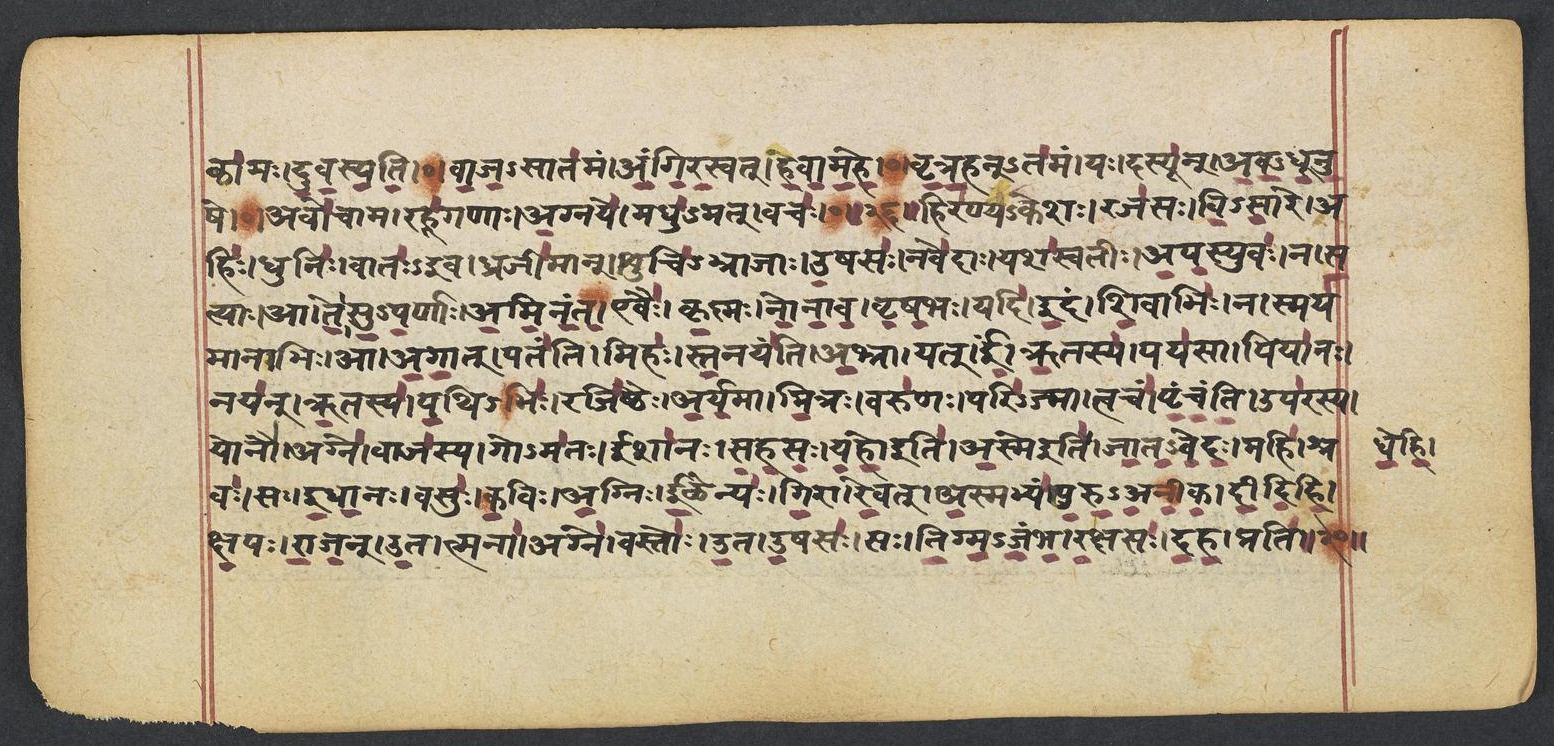
Where on the image
Penn Ms. Coll. 390 Item 41, fol. 53r (OPenn image 54, lower leaf). Checked on the image: the Rigveda text on this page begins in RV 1.78.2 ‹-rāyaḥ-kāmaḥ duvasyati dyumnaiḥ abhi›. The next page with Rigveda text, fol. 53v, begins in RV 1.79.7 ‹ava naḥ agne ūti-bhiḥ›. Verses 1.79.1-6 end on this page.
1hira̍ṇyakeśo̱ raja̍so visā̱re 'hi̱r dhuni̱r vāta̍ iva̱ dhrajī̍mān | śuci̍bhrājā u̱ṣaso̱ nave̍dā̱ yaśa̍svatīr apa̱syuvo̱ na sa̱tyāḥ ||
2ā te̍ supa̱rṇā a̍minanta̱m̐ evai̍ḥ kṛ̱ṣṇo no̍nāva vṛṣa̱bho yadī̱dam | śi̱vābhi̱r na smaya̍mānābhi̱r āgā̱t pata̍nti̱ miha̍ḥ sta̱naya̍nty a̱bhrā ||
3yad ī̍m ṛ̱tasya̱ paya̍sā̱ piyā̍no̱ naya̍nn ṛ̱tasya̍ pa̱thibhī̱ raji̍ṣṭhaiḥ | a̱rya̱mā mi̱tro varu̍ṇa̱ḥ pari̍jmā̱ tvaca̍m pṛñca̱nty upa̍rasya̱ yonau̍ ||
4agne̱ vāja̍sya̱ goma̍ta̱ īśā̍naḥ sahaso yaho | a̱sme dhe̍hi jātavedo̱ mahi̱ śrava̍ḥ ||
5sa i̍dhā̱no vasu̍ṣ ka̱vir a̱gnir ī̱ḻenyo̍ gi̱rā | re̱vad a̱smabhya̍m purvaṇīka dīdihi ||
6kṣa̱po rā̍jann u̱ta tmanāgne̱ vasto̍r u̱toṣasa̍ḥ | sa ti̍gmajambha ra̱kṣaso̍ daha̱ prati̍ ||
Compare: Padapāṭha (word-by-word text written in the manuscript; Sansknet e-text via GRETIL)
1hiraṇya-keśaḥ | rajasaḥ | vi-sāre | ahiḥ | dhuniḥ | vātaḥ-iva | dhrajīmān | śuci-bhrājāḥ | uṣasaḥ | navedāḥ | yaśasvatīḥ | apasyuvaḥ | na | satyāḥ
2ā | te | su-parṇāḥ | aminanta | evaiḥ | kṛṣṇaḥ | nonāva | vṛṣabhaḥ | yadi | idam | śivābhiḥ | na | smayamānābhiḥ | ā | agāt | patanti | mihaḥ | stanayanti | abhṛā
3yat īm | ṛtasya | payasā | piyānaḥ | nayan | ṛtasya | pathi-bhiḥ | rajiṣṭhaiḥ | ayarmā | mitraḥ | varuṇaḥ | pari-jmā | tvacam | pṛñcanti | uparasya | yonau
4agne | vājasya | gomataḥ | īśānaḥ | sahasaḥ | yaho iti | asme iti | dhehi | jāta-vedaḥ | mahi | śravaḥ
5saḥ | idhānaḥ | vasuḥ | kaviḥ | agniḥ | īḷenyaḥ | girā | revat | asmabhyam | puru-aṇīka | dīdihi
6kṣapaḥ | rājan | uta | tmanā | agne | vastoḥ | uta | uṣasaḥ | saḥ | tigma-jambha | rakṣasaḥ | daha | prati
1HE in mid-air's expanse hath golden tresses; a raging serpent, like the rushing tempest: Purely refulgent, knowing well the morn. ing; like honourable dames, true, active workers.
2Thy well-winged flashes strengthen in their manner, when the black Bull hath bellowed round about us. With drops that bless and seem to smile he cometh: the waters fall, the clouds utter their thunder.
3When he comes streaming with the milk of worship, conducting by directest paths of Order Aryaman, Mitra, Varuṇa, Parijman fill the hide full where lies the nether press-stone.
4O Agni, thou who art the lord of wealth in kine, thou Son of Strength, Vouchsafe to us, O Jâtavedas, high renown.
5He, Agni, kindled, good and wise, must be exalted in our song: Shine, thou of many forms, shine radiantly on us.
6O Agni, shining of thyself by night and when the morning breaks, Burn, thou whose teeth are sharp, against the Raksasas.
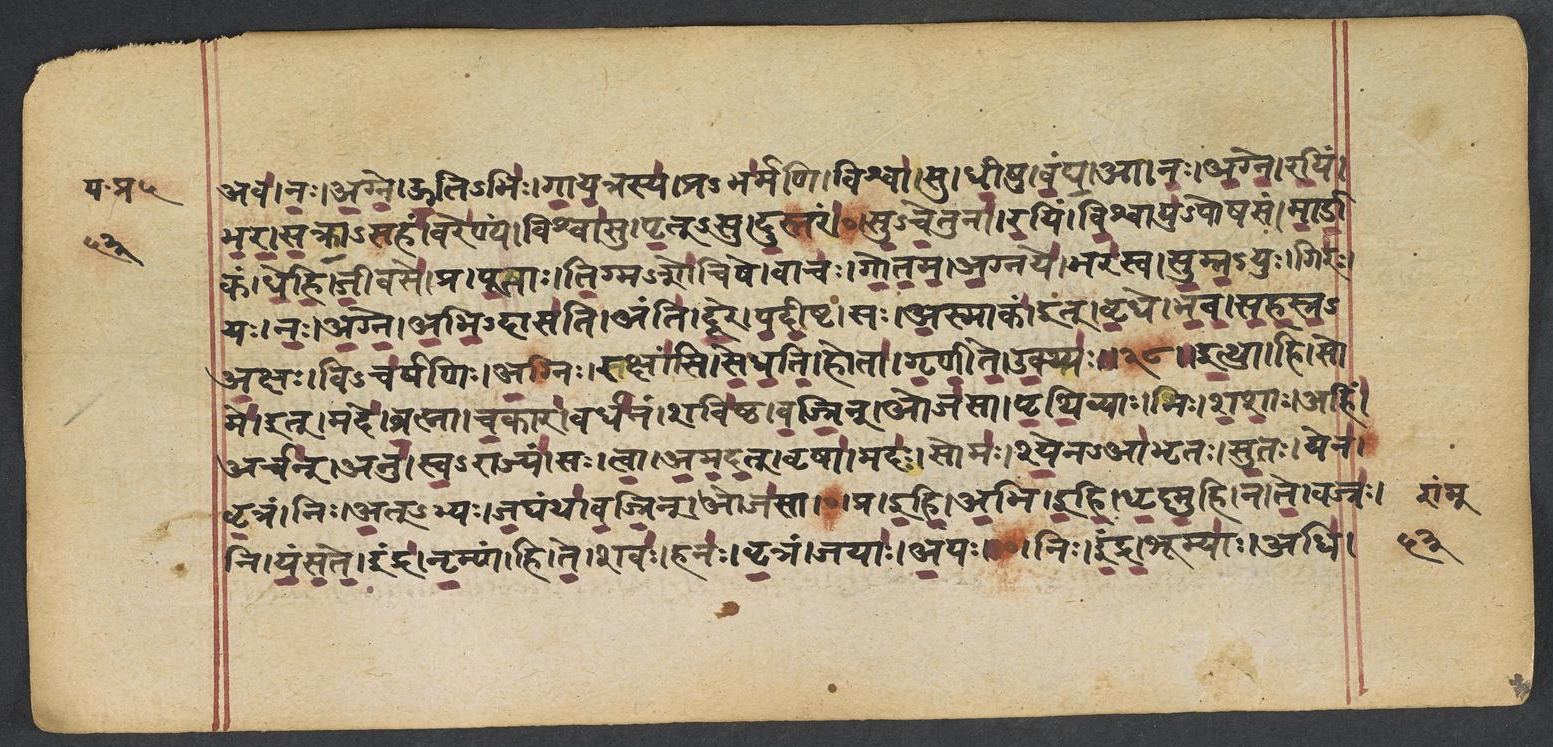
Where on the image
Penn Ms. Coll. 390 Item 41, fol. 53v (OPenn image 55, upper leaf). Checked on the image: the Rigveda text on this page begins in RV 1.79.7 ‹ava naḥ agne ūti-bhiḥ›. The next page with Rigveda text, fol. 54r, begins in RV 1.80.4 ‹vṛtram jaghantha niḥ divaḥ›. Verses 1.79.7-12 end on this page.
7avā̍ no agna ū̱tibhi̍r gāya̱trasya̱ prabha̍rmaṇi | viśvā̍su dhī̱ṣu va̍ndya ||
8ā no̍ agne ra̱yim bha̍ra satrā̱sāha̱ṁ vare̍ṇyam | viśvā̍su pṛ̱tsu du̱ṣṭara̍m ||
9ā no̍ agne suce̱tunā̍ ra̱yiṁ vi̱śvāyu̍poṣasam | mā̱rḍī̱kaṁ dhe̍hi jī̱vase̍ ||
10pra pū̱tās ti̱gmaśo̍ciṣe̱ vāco̍ gotamā̱gnaye̍ | bhara̍sva sumna̱yur gira̍ḥ ||
11yo no̍ agne 'bhi̱dāsa̱ty anti̍ dū̱re pa̍dī̱ṣṭa saḥ | a̱smāka̱m id vṛ̱dhe bha̍va ||
12sa̱ha̱srā̱kṣo vica̍rṣaṇir a̱gnī rakṣā̍ṁsi sedhati | hotā̍ gṛṇīta u̱kthya̍ḥ ||
Compare: Padapāṭha (word-by-word text written in the manuscript; Sansknet e-text via GRETIL)
7ava | naḥ | agne | ūti-bhiḥ | gāyatrasya | pra-bharmaṇi | viśvāsu | dhīṣu | vandya
8ā | naḥ | agne | rayim | bhara | satrāsaham | vareṇyam | viśvāsu | pṛt-su | dustaram
9ā | naḥ | agne | su-cetunā | rayim | viśvāyu-poṣasam | mārḍīkam | dhehi | jīvase
10pra | pūtāḥ | tigma-śociṣe | vācaḥ | gotama | agnaye | bharasva | sumna-yuḥ | giraḥ
11yaḥ | naḥ | agne | abhi-dāsati | anti | dūre | padīṣṭa | saḥ | asmākam | it | vṛdhe | bhava
12sahasra-akṣaḥ | vi-carṣaṇiḥ | agniḥ | rakṣāṃsi | sedhati | hotā | gṛṇīte | ukthyaḥ
7Adorable in all our rites, favour us, Agni, with thine.aid, When the great hymn is chanted forth.
8Bring to us ever-conquering wealth, wealth, Agni, worthy of our choice, In all our frays invincible.
9Give us, O Agni, through thy grace wealth that supporteth all our life, Thy favour so that we may live.
10O Gotama, desiring bliss present thy songs composed with care To Agni of the pointed flames.
11May the man fall, O Agni, who near or afar assaileth us: Do thou increase and prosper us.
12Keen and swift Agni, thousand-eyed, chaseth the Raksasas afar: He singeth, herald meet for lauds.
Notes
- Sanskrit: Aufrecht's edition (1877) with the Vedic accents, as entered by van Nooten and Holland (GRETIL).
- English: Ralph T. H. Griffith, The Hymns of the Rigveda (1889-1892; 2nd ed. 1896-1897), from the VedaWeb digital text; OCR slips in that text were corrected against the printed 2nd edition (data/sources/rigveda/griffith_errata.json).
- Padapāṭha (edition text): Sansknet e-text via GRETIL (CC BY-NC-SA 4.0).
Cite
Sources
- Source: Penn Ms. Coll. 390 Item 41 (undated (catalogued with Penn's 18th-19th c. Vedic manuscripts)), OPenn, Public Domain Mark + Aufrecht's accented text (GRETIL) + Griffith's English (VedaWeb) (holding institution)
- Critical edition: Aufrecht (1877), accented e-text via GRETIL
← previous · → next · v cycle view · l back to library