Rigveda 1.80: To Indra
Introduction
Rigveda 1.80 is a hymn of 16 verses addressed to Indra. It stands in book (maṇḍala) 1, a collection of hymns by many families of poets. The Rigveda is the oldest collection of Sanskrit hymns, composed in the second half of the second millennium BCE and handed down orally for many centuries before it was written down.
The manuscript shown is Penn Ms. Coll. 390 Item 41 (University of Pennsylvania), an undated paper manuscript of the padapāṭha (the word-by-word recitation text, in which every word is written separately and compounds are split) of the whole Ṛgveda in Devanāgarī, 884 leaves in fascicles, 7-9 lines to the page, accents in red; this hymn stands on fol. 53v-54v. Each section below gives the verses that end on one page; the page boundaries were read on the images (the opening words of every page), not counted out. Where the manuscript is a padapāṭha (the word-by-word recitation text), the section shows Aufrecht's continuous (saṃhitā) text first and, as the edition text, the padapāṭha of the same verses, which is the form written on the page.
How was this verified? (Provenance)
Where on the image
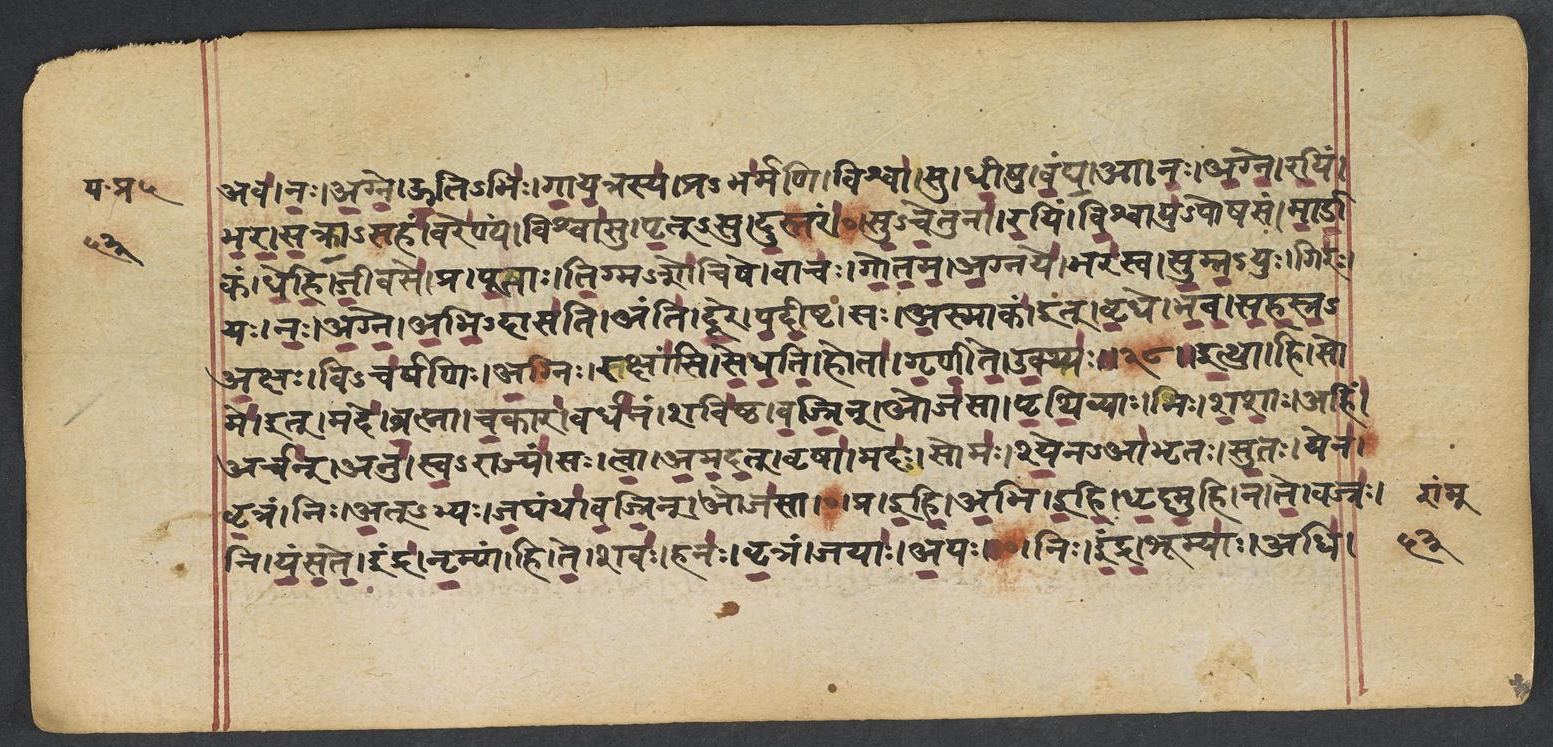
Penn Ms. Coll. 390 Item 41, fol. 53v (OPenn image 55, upper leaf). Checked on the image: the Rigveda text on this page begins in RV 1.79.7 ‹ava naḥ agne ūti-bhiḥ›. The next page with Rigveda text, fol. 54r, begins in RV 1.80.4 ‹vṛtram jaghantha niḥ divaḥ›. Verses 1.80.1-3 end on this page.
1i̱tthā hi soma̱ in made̍ bra̱hmā ca̱kāra̱ vardha̍nam | śavi̍ṣṭha vajri̱nn oja̍sā pṛthi̱vyā niḥ śa̍śā̱ ahi̱m arca̱nn anu̍ sva̱rājya̍m ||
2sa tvā̍mada̱d vṛṣā̱ mada̱ḥ soma̍ḥ śye̱nābhṛ̍taḥ su̱taḥ | yenā̍ vṛ̱traṁ nir a̱dbhyo ja̱ghantha̍ vajri̱nn oja̱sārca̱nn anu̍ sva̱rājya̍m ||
3prehy a̱bhī̍hi dhṛṣṇu̱hi na te̱ vajro̱ ni ya̍ṁsate | indra̍ nṛ̱mṇaṁ hi te̱ śavo̱ hano̍ vṛ̱traṁ jayā̍ a̱po 'rca̱nn anu̍ sva̱rājya̍m ||
Compare: Padapāṭha (word-by-word text written in the manuscript; Sansknet e-text via GRETIL)
1itthā | hi | some | it | made | brahmā | cakāra | vardhanam | śaviṣṭha | vajrin ojasā | pṛthivyāḥ | niḥ | śaśāḥ | ahim | arcan | anu | sva-rājyam
2saḥ | tvā | amadat | vṛṣā | madaḥ | somaḥ | śyena-ābhṛtaḥ | sutaḥ | yena | vṛtram | niḥ | at-bhyaḥ | jaghantha | vajrin | ojasā | arcan | anu | sva-rājyam
3pra | ihi | abhi | ihi | dhṛṣṇuhi | na | te | vajraḥ | ni | yaṃsate | indra | nṛmṇam | h i | te | śavaḥ | hanaḥ | vṛtram | jayāḥ | apaḥ | arcan | anu | sva-rājyam
1THUS in the Soma, in wild joy the Brahman hath exalted thee: Thou, mightiest It thunder-armed, hast driven by force he Dragon from the earth, lauding thine own imperial sway.
2The mighty flowing Soma-draught, brought by the Hawk, hath gladdened thee, That in thy strength, O Thunderer, thou hast struck down Vr̥itra from the floods, lauding thine own imperial sway.
3Go forward, meet the foe, be bold; thy bolt of thunder is not checked. Manliness, Indra, is thy might: stay Vr̥itra, make the waters thine, lauding thine own imperial sway.
Where on the image
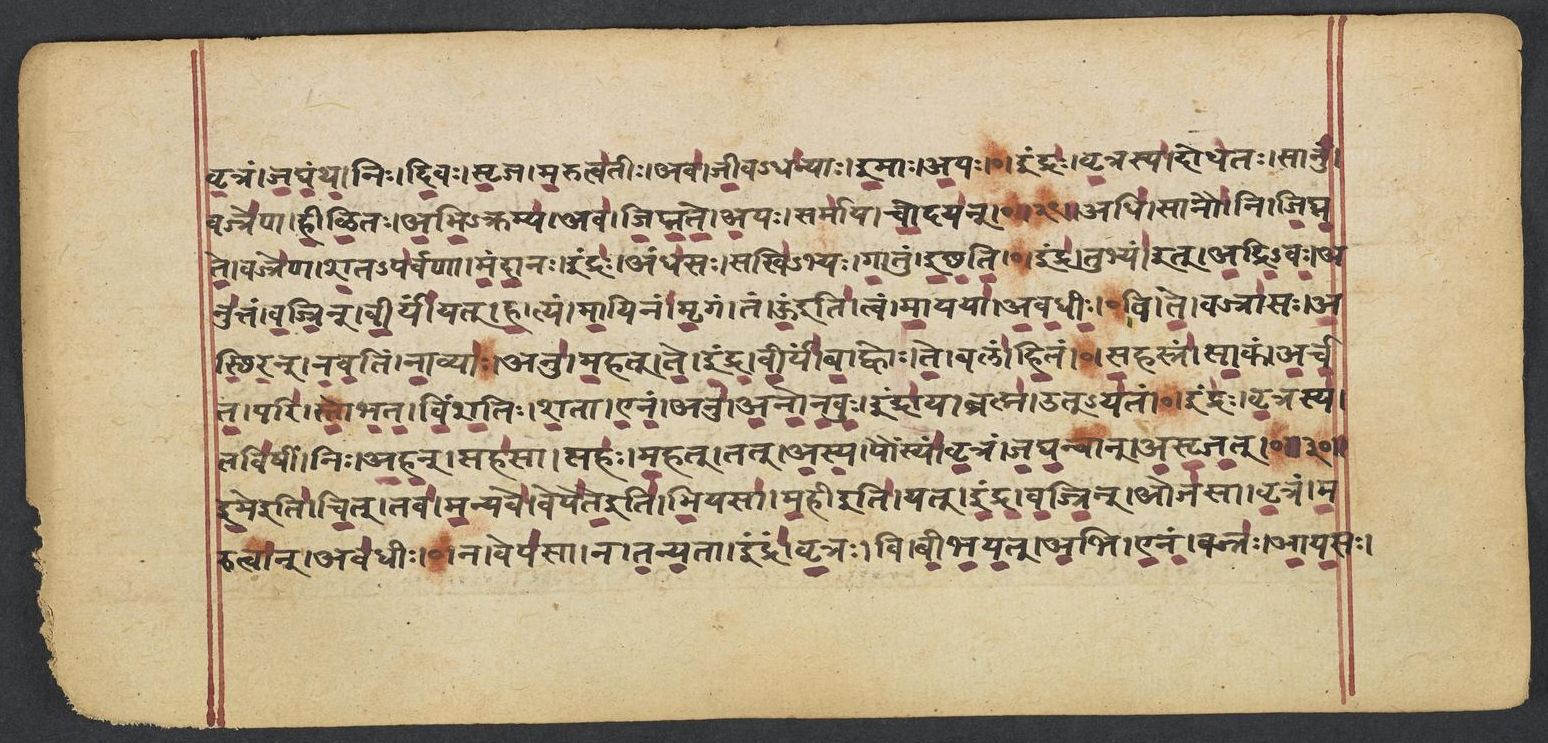
Penn Ms. Coll. 390 Item 41, fol. 54r (OPenn image 55, lower leaf). Checked on the image: the Rigveda text on this page begins in RV 1.80.4 ‹vṛtram jaghantha niḥ divaḥ›. The next page with Rigveda text, fol. 54v, begins in RV 1.80.12 ‹sahasra-bhṛṣṭiḥ āyāta arcan anu›. Verses 1.80.4-11 end on this page; 1.80.4 begins on fol. 53v.
4nir i̍ndra̱ bhūmyā̱ adhi̍ vṛ̱traṁ ja̍ghantha̱ nir di̱vaḥ | sṛ̱jā ma̱rutva̍tī̱r ava̍ jī̱vadha̍nyā i̱mā a̱po 'rca̱nn anu̍ sva̱rājya̍m ||
5indro̍ vṛ̱trasya̱ dodha̍ta̱ḥ sānu̱ṁ vajre̍ṇa hīḻi̱taḥ | a̱bhi̱kramyāva̍ jighnate̱ 'paḥ sarmā̍ya co̱daya̱nn arca̱nn anu̍ sva̱rājya̍m ||
6adhi̱ sānau̱ ni ji̍ghnate̱ vajre̍ṇa śa̱tapa̍rvaṇā | ma̱ndā̱na indro̱ andha̍sa̱ḥ sakhi̍bhyo gā̱tum i̍ccha̱ty arca̱nn anu̍ sva̱rājya̍m ||
7indra̱ tubhya̱m id a̍dri̱vo 'nu̍ttaṁ vajrin vī̱rya̍m | yad dha̱ tyam mā̱yina̍m mṛ̱gaṁ tam u̱ tvam mā̱yayā̍vadhī̱r arca̱nn anu̍ sva̱rājya̍m ||
8vi te̱ vajrā̍so asthiran nava̱tiṁ nā̱vyā̱3̱̍ anu̍ | ma̱hat ta̍ indra vī̱rya̍m bā̱hvos te̱ bala̍ṁ hi̱tam arca̱nn anu̍ sva̱rājya̍m ||
9sa̱hasra̍ṁ sā̱kam a̍rcata̱ pari̍ ṣṭobhata viṁśa̱tiḥ | śa̱taina̱m anv a̍nonavu̱r indrā̍ya̱ brahmodya̍ta̱m arca̱nn anu̍ sva̱rājya̍m ||
10indro̍ vṛ̱trasya̱ tavi̍ṣī̱ṁ nir a̍ha̱n saha̍sā̱ saha̍ḥ | ma̱hat tad a̍sya̱ pauṁsya̍ṁ vṛ̱traṁ ja̍gha̱nvām̐ a̍sṛja̱d arca̱nn anu̍ sva̱rājya̍m ||
11i̱me ci̱t tava̍ ma̱nyave̱ vepe̍te bhi̱yasā̍ ma̱hī | yad i̍ndra vajri̱nn oja̍sā vṛ̱tram ma̱rutvā̱m̐ ava̍dhī̱r arca̱nn anu̍ sva̱rājya̍m ||
Compare: Padapāṭha (word-by-word text written in the manuscript; Sansknet e-text via GRETIL)
4niḥ | indra | bhūmyāḥ | adhi | vṛtram | jaghantha | niḥ | divaḥ | sṛja | marutvatīḥ | ava | jīva-dhanyāḥ | imāḥ | apaḥ | arcan | anu | sva-rājyam
5indraḥ | vṛtrasya | dodhataḥ | sānum | vajreṇa | hīḷitaḥ | abhi-kramya | ava | ji ghnate | apaḥ | sarmāya | codayan | arcan | anu | sva-rājyam
6adhi | sānau | ni | jighnīate | vajreṇa | śata-parvaṇā | mandānaḥ | indraḥ | andhasaḥ | sakhi-bhyaḥ | gātum | icchati | arcan | anu | sva-rājyam
7indra | tubhyam | it | adri-vaḥ | anuttam | vajrin | vīryam | yat | ha | tyam | māy inam | mṛgam | tam | oṃ iti | tvam | māyayā | avadhīḥ | arcan | anu | sva-rājyam
8vi | te | vajrāsaḥ | asthiran | navatim | nāvyāḥ | anu | mahat | te | indra | vīryam | bāhvoḥ | te | balam | hitam | arcan | anu | sva-rājyam
9sahasram | sākam | arcata | pari | stobhata | viṃśatiḥ | śatā | enam | anu | anonavuḥ | indrāya | brahma | ut-yatam | arcan | anu | sva-rājyam
10indraḥ | vṛtrasya | taviṣīm | niḥ | ahan | sahasā | sahaḥ | mahat | tat | asya | paiṃsyam | vṛtram | jaghanvān | asṛjat | arcan | anu | sva-rājyam
11ime | cit | tava | manyave | vepeteiti | bhiyasā | mahī | yat | indra | vajrin | ojasā | vṛtram | marutvān | avadhīḥ | arcan | anu | sva-rājyam
4Thou smotest Vr̥itra from the earth, smotest him, Indra, from the sky. Let these life-fostering waters flow attended by the Marut host, lauding thine own imperial sway.
5The wrathful Indra with his bolt of thunder rushing on the foe, Smote fierce on trembling Vr̥itra's back, and loosed the waters free to run, lauding his own imperial sway.
6With hundred-jointed thunderbolt Indra hath struck him on the back, And, while rejoicing in the juice, seeketh prosperity for friends, lauding his own imperial sway.
7Indra, unconquered might is thine, Thunderer, Caster of the Stone; For thou with thy surpassing power smotest to death the guileful beast, lauding thine own imperial sway.
8Far over ninety spacious floods thy thunderbolts were cast abroad: Great, Indra, is thy hero might, and strength is seated in thine arms, lauding thine own imperial sway.
9Laud him a thousand all at once, shout twenty forth the hymn of praise. Hundreds have sung aloud to him, to Indra hath the prayer been raised, lauding his own imperial sway.
10Indra hath smitten down the power of Vr̥itra,– might with stronger might. This was his manly exploit, he slew Vr̥itra and let loose the floods, lauding his own imperial sway.
11Yea, even this great Pair of Worlds trembled in terror at thy wrath, When, Indra, Thunderer, Marut-girt, thou slewest Vr̥itra in thy strength, lauding thine own imperial sway.
Where on the image
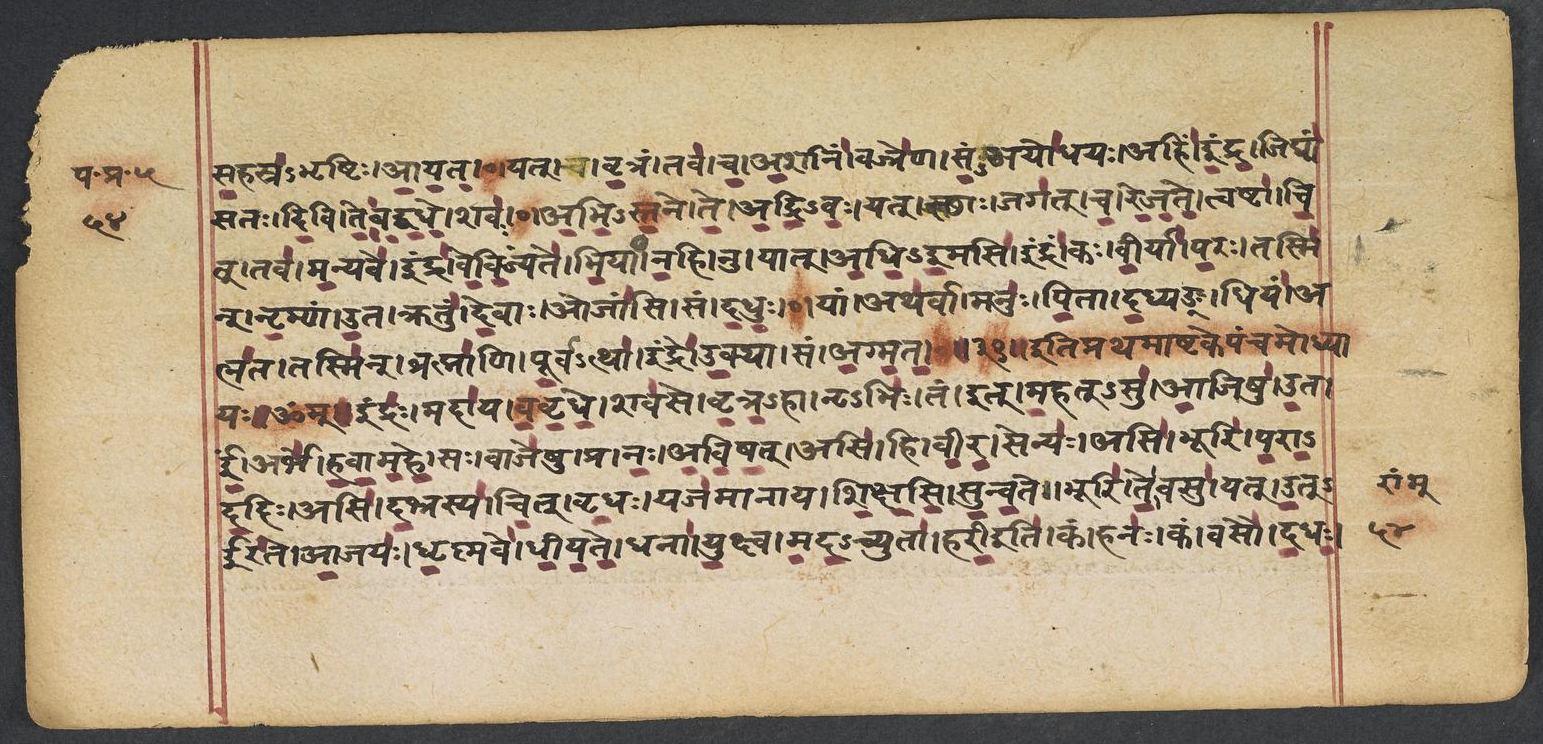
Penn Ms. Coll. 390 Item 41, fol. 54v (OPenn image 56, upper leaf). Checked on the image: the Rigveda text on this page begins in RV 1.80.12 ‹sahasra-bhṛṣṭiḥ āyāta arcan anu›. The next page with Rigveda text, fol. 55r, begins in RV 1.81.3 ‹asmān indra vasau dadhaḥ›. Verses 1.80.12-16 end on this page; 1.80.12 begins on fol. 54r.
12na vepa̍sā̱ na ta̍nya̱tendra̍ṁ vṛ̱tro vi bī̍bhayat | a̱bhy e̍na̱ṁ vajra̍ āya̱saḥ sa̱hasra̍bhṛṣṭir āya̱tārca̱nn anu̍ sva̱rājya̍m ||
13yad vṛ̱traṁ tava̍ cā̱śani̱ṁ vajre̍ṇa sa̱mayo̍dhayaḥ | ahi̍m indra̱ jighā̍ṁsato di̱vi te̍ badbadhe̱ śavo 'rca̱nn anu̍ sva̱rājya̍m ||
14a̱bhi̱ṣṭa̱ne te̍ adrivo̱ yat sthā jaga̍c ca rejate | tvaṣṭā̍ ci̱t tava̍ ma̱nyava̱ indra̍ vevi̱jyate̍ bhi̱yārca̱nn anu̍ sva̱rājya̍m ||
15na̱hi nu yād a̍dhī̱masīndra̱ṁ ko vī̱ryā̍ pa̱raḥ | tasmi̍n nṛ̱mṇam u̱ta kratu̍ṁ de̱vā ojā̍ṁsi̱ saṁ da̍dhu̱r arca̱nn anu̍ sva̱rājya̍m ||
16yām atha̍rvā̱ manu̍ṣ pi̱tā da̱dhyaṅ dhiya̱m atna̍ta | tasmi̱n brahmā̍ṇi pū̱rvathendra̍ u̱kthā sam a̍gma̱tārca̱nn anu̍ sva̱rājya̍m ||
Compare: Padapāṭha (word-by-word text written in the manuscript; Sansknet e-text via GRETIL)
12na | vepasā | na | tanyatā | indram | vṛtraḥ | vi | bībhayat | abhi | enam | vajraḥ | āyasaḥ | sahasra-bhṛṣṭiḥ | āyāta | arcan | anu | sva-rājyam
13yat | vṛtram | tava | ca | aśanim | vajreṇa | sam-ayodhayaḥ | ahim | indra | jighāṃsataḥ | divi | te | badbadhe | śavaḥ | arcan | anu | sva-rājyam
14abhi-stane | te | adri-vaḥ | yat | sthāḥ | jagat | ca | rejate | tvaṣṭā | cit | tava | manyave | indra | vevijyate | bhiyā | arcan | anu | sva-rājyam
15nahi | nu | yāt | adhi-imasi | indram | kaḥ | vīryā | paraḥ | tasmin | nṛmṇam | uta | kratum | devāḥ | ojāṃsi | sam | dadhuḥ | arcan | anu | sva-rājyam
16yām | atharvā | manuḥ | pitā | dadhyaṅ | dhiyam | atnata | tasmin | brahmāṇi | pūrva-thā | indre | ukthā | sam | agmata | arcan | anu | sva-rājyam
12But Vr̥itra scared not Indra with his shaking or his thunder roar. On him that iron thunderbolt fell fiercely with its thousand points, lauding his own imperial sway.
13Whenwith the thunder thou didst make thy dart and Vr̥itra meet in war, Thy might, O Indra, fain to slay the Dragon, was set firm in heaven, lauding thine own imperial sway.
14When at thy shout, O Thunder-armed, each thing both fixed and moving shook, E'en Tvashṭar trembled at thy wrath and quaked with fear because of thee, lauding thine own imperial sway.
15There is not, in our knowledge, one who passeth Indra in his strength: In him the Deities have stored manliness, insight, power and might, lauding his own imperial sway.
16Still as of old, whatever rite Atharvan, Manus sire of all, Dadhyach performed, their prayer and praise united in that Indra meet, lauding his own imperial sway.
Notes
- Sanskrit: Aufrecht's edition (1877) with the Vedic accents, as entered by van Nooten and Holland (GRETIL).
- English: Ralph T. H. Griffith, The Hymns of the Rigveda (1889-1892; 2nd ed. 1896-1897), from the VedaWeb digital text; OCR slips in that text were corrected against the printed 2nd edition (data/sources/rigveda/griffith_errata.json).
- Padapāṭha (edition text): Sansknet e-text via GRETIL (CC BY-NC-SA 4.0).
Cite
Sources
- Source: Penn Ms. Coll. 390 Item 41 (undated (catalogued with Penn's 18th-19th c. Vedic manuscripts)), OPenn, Public Domain Mark + Aufrecht's accented text (GRETIL) + Griffith's English (VedaWeb) (holding institution)
- Critical edition: Aufrecht (1877), accented e-text via GRETIL
← previous · → next · v cycle view · l back to library