Rigveda 1.8: To Indra
Introduction
Rigveda 1.8 is a hymn of 10 verses addressed to Indra. It stands in book (maṇḍala) 1, a collection of hymns by many families of poets. The Rigveda is the oldest collection of Sanskrit hymns, composed in the second half of the second millennium BCE and handed down orally for many centuries before it was written down.
The manuscript shown is Penn Ms. Coll. 390 Item 41 (University of Pennsylvania), an undated paper manuscript of the padapāṭha (the word-by-word recitation text, in which every word is written separately and compounds are split) of the whole Ṛgveda in Devanāgarī, 884 leaves in fascicles, 7-9 lines to the page, accents in red; this hymn stands on fol. 4v-5r. Each section below gives the verses that end on one page; the page boundaries were read on the images (the opening words of every page), not counted out. Where the manuscript is a padapāṭha (the word-by-word recitation text), the section shows Aufrecht's continuous (saṃhitā) text first and, as the edition text, the padapāṭha of the same verses, which is the form written on the page.
How was this verified? (Provenance)
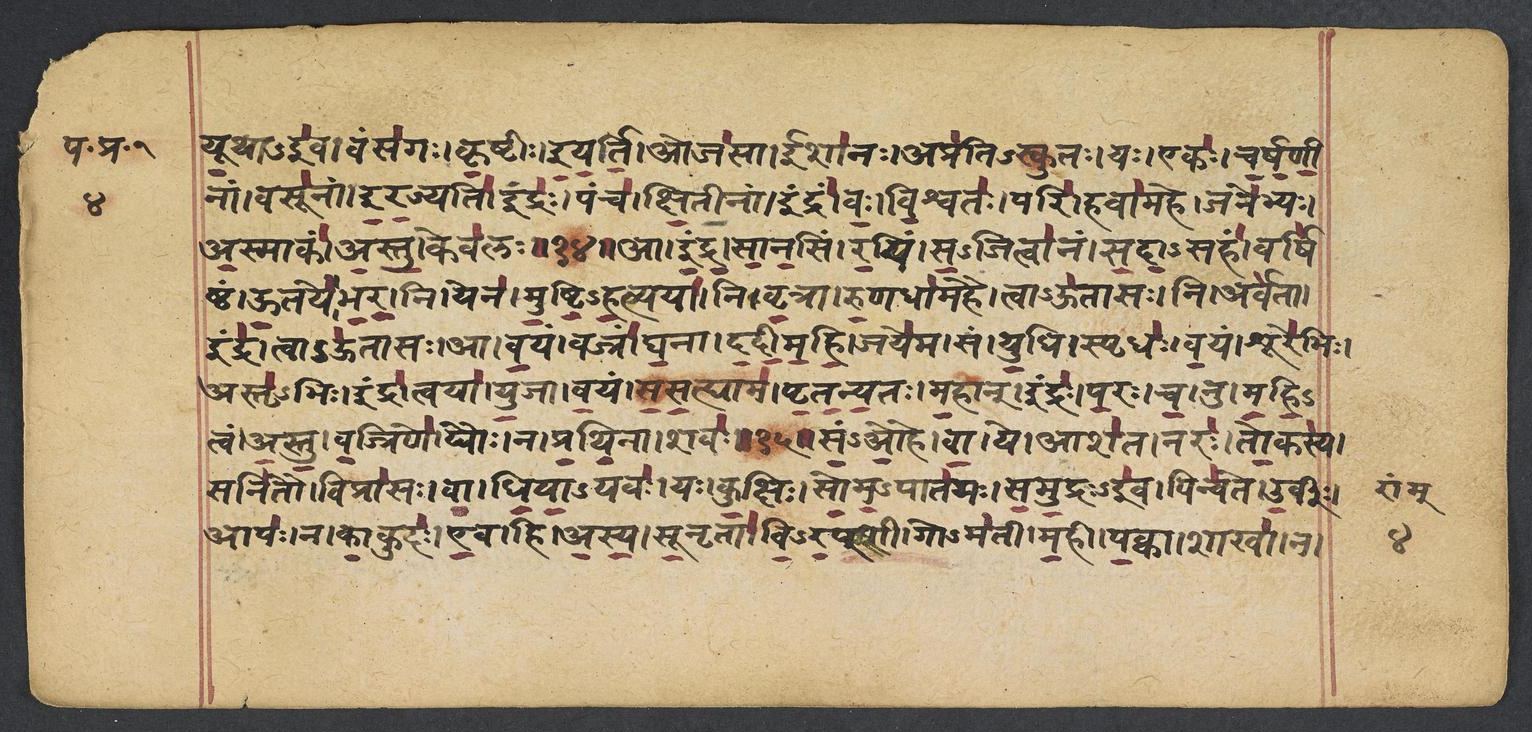
Where on the image
Penn Ms. Coll. 390 Item 41, fol. 4v (OPenn image 6, upper leaf). Checked on the image: the Rigveda text on this page begins in RV 1.7.8 ‹yūthāiva vaṃsagaḥ kṛṣṭīḥ iyarti›. The next page with Rigveda text, fol. 5r, begins in RV 1.8.8 ‹dāśuṣe›. Verses 1.8.1-7 end on this page.
1endra̍ sāna̱siṁ ra̱yiṁ sa̱jitvā̍naṁ sadā̱saha̍m | varṣi̍ṣṭham ū̱taye̍ bhara ||
2ni yena̍ muṣṭiha̱tyayā̱ ni vṛ̱trā ru̱ṇadhā̍mahai | tvotā̍so̱ ny arva̍tā ||
3indra̱ tvotā̍sa̱ ā va̱yaṁ vajra̍ṁ gha̱nā da̍dīmahi | jaye̍ma̱ saṁ yu̱dhi spṛdha̍ḥ ||
4va̱yaṁ śūre̍bhi̱r astṛ̍bhi̱r indra̱ tvayā̍ yu̱jā va̱yam | sā̱sa̱hyāma̍ pṛtanya̱taḥ ||
5ma̱hām̐ indra̍ḥ pa̱raś ca̱ nu ma̍hi̱tvam a̍stu va̱jriṇe̍ | dyaur na pra̍thi̱nā śava̍ḥ ||
6sa̱mo̱he vā̱ ya āśa̍ta̱ nara̍s to̱kasya̱ sani̍tau | viprā̍so vā dhiyā̱yava̍ḥ ||
7yaḥ ku̱kṣiḥ so̍ma̱pāta̍maḥ samu̱dra i̍va̱ pinva̍te | u̱rvīr āpo̱ na kā̱kuda̍ḥ ||
Compare: Padapāṭha (word-by-word text written in the manuscript; Sansknet e-text via GRETIL)
1ā | indra | sānasim | rayim | sa-jitvānam | sadāsaham | varṣiṣṭham | ūtaye | bhara
2ni | yena | muṣṭi-hatyayā | ni | vṛtrā | ruṇadhāmahai | tvāūtāsaḥ | ni | arvatā
3indra | tvāūtāsaḥ | ā | vayam | vajram | ghanā | dadīmahi | jayema | sam | yudhi | spṛdhaḥ
4vayam | śūrebhiḥ | astṛ-bhiḥ | indra | tvayā | yujā | vayam | sāsahyāmapṛtanyataḥ
5mahān | indraḥ | paraḥ | ca | nu | mahi-tvam | astu | vajriṇe | dyauḥ | na | prathinā | śavaḥ
6sam-ohe | vā | ye | āśata | naraḥ | tokasya | sanitau | viprāsaḥ | vā | dhiyāyavaḥ
7yaḥ | kukṣiḥ | soma-pātamaḥ | samudraḥ-iva | pinvate | urvīḥ | āpaḥ | na | kākudaḥ
1INDRA, bring wealth that gives delight, the victor's ever-conquering wealth, Most excellent, to be our aid;
2By means of which we may repel our foes in battle hand to hand, By thee assisted with the car.
3Aided by thee, the thunder-armed, Indra, may we lift up the bolt, And conquer all our foes in fight.
4With thee, O Indra, for ally with missile-darting heroes, may We conquer our embattled foes.
5Mighty is Indra, yea supreme; greatness be his, the Thunderer: Wide as the heaven extends his power
6Which aideth those to win them sons, who come as heroes to the fight, Or singers loving holy thoughts.
7His belly, drinking deepest draughts of Soma, like an ocean swells, Like wide streams from the cope of heaven.
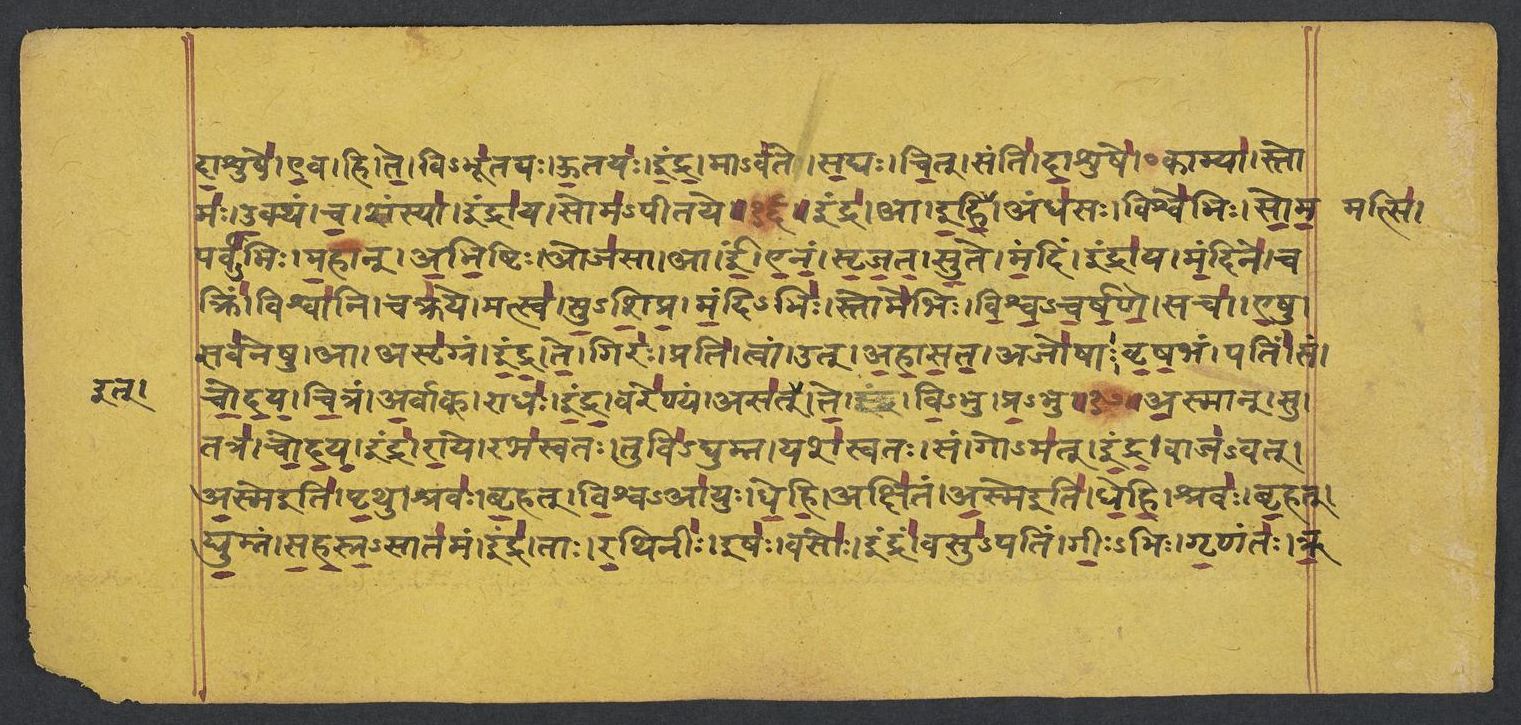
Where on the image
Penn Ms. Coll. 390 Item 41, fol. 5r (OPenn image 6, lower leaf). Checked on the image: the Rigveda text on this page begins in RV 1.8.8 ‹dāśuṣe›. The next page with Rigveda text, fol. 5v, begins in RV 1.9.9 ‹-ṛgmiyam homa gantāram ūtaye›. Verses 1.8.8-10 end on this page; 1.8.8 begins on fol. 4v.
8e̱vā hy a̍sya sū̱nṛtā̍ vira̱pśī goma̍tī ma̱hī | pa̱kvā śākhā̱ na dā̱śuṣe̍ ||
9e̱vā hi te̱ vibhū̍taya ū̱taya̍ indra̱ māva̍te | sa̱dyaś ci̱t santi̍ dā̱śuṣe̍ ||
10e̱vā hy a̍sya̱ kāmyā̱ stoma̍ u̱kthaṁ ca̱ śaṁsyā̍ | indrā̍ya̱ soma̍pītaye ||
Compare: Padapāṭha (word-by-word text written in the manuscript; Sansknet e-text via GRETIL)
8eva | hi | asya | sūnṛtā | vi-rapśī | go--matī | mahī | pakvā | śākhā | na | dāśuṣe
9eva | hi | te | vi-bhūtayaḥ | ūtayaḥ | indra | māvate | sadyaḥ | cit | santi | dāśuṣe
10eva | hi | asya | kāmyā | stomaḥ | uktham | ca | śaṃsyā | indrāya | soma-pītaye
8So also is his excellence, great, vigorous, rich in cattle, like A ripe branch to the worshipper.
9For verily thy mighty powers, Indra, are saving helps at once Unto a worshipper like me.
10So are his lovely gifts; let lauds and praises be to Indra sung, That he may drink the Soma juice.
Notes
- Sanskrit: Aufrecht's edition (1877) with the Vedic accents, as entered by van Nooten and Holland (GRETIL).
- English: Ralph T. H. Griffith, The Hymns of the Rigveda (1889-1892; 2nd ed. 1896-1897), from the VedaWeb digital text; OCR slips in that text were corrected against the printed 2nd edition (data/sources/rigveda/griffith_errata.json).
- Padapāṭha (edition text): Sansknet e-text via GRETIL (CC BY-NC-SA 4.0).
Cite
Sources
- Source: Penn Ms. Coll. 390 Item 41 (undated (catalogued with Penn's 18th-19th c. Vedic manuscripts)), OPenn, Public Domain Mark + Aufrecht's accented text (GRETIL) + Griffith's English (VedaWeb) (holding institution)
- Critical edition: Aufrecht (1877), accented e-text via GRETIL
← previous · → next · v cycle view · l back to library