Rigveda 1.81: To Indra
Introduction
Rigveda 1.81 is a hymn of 9 verses addressed to Indra. It stands in book (maṇḍala) 1, a collection of hymns by many families of poets. The Rigveda is the oldest collection of Sanskrit hymns, composed in the second half of the second millennium BCE and handed down orally for many centuries before it was written down.
The manuscript shown is Penn Ms. Coll. 390 Item 41 (University of Pennsylvania), an undated paper manuscript of the padapāṭha (the word-by-word recitation text, in which every word is written separately and compounds are split) of the whole Ṛgveda in Devanāgarī, 884 leaves in fascicles, 7-9 lines to the page, accents in red; this hymn stands on fol. 54v-55r. Each section below gives the verses that end on one page; the page boundaries were read on the images (the opening words of every page), not counted out. Where the manuscript is a padapāṭha (the word-by-word recitation text), the section shows Aufrecht's continuous (saṃhitā) text first and, as the edition text, the padapāṭha of the same verses, which is the form written on the page.
How was this verified? (Provenance)
Where on the image
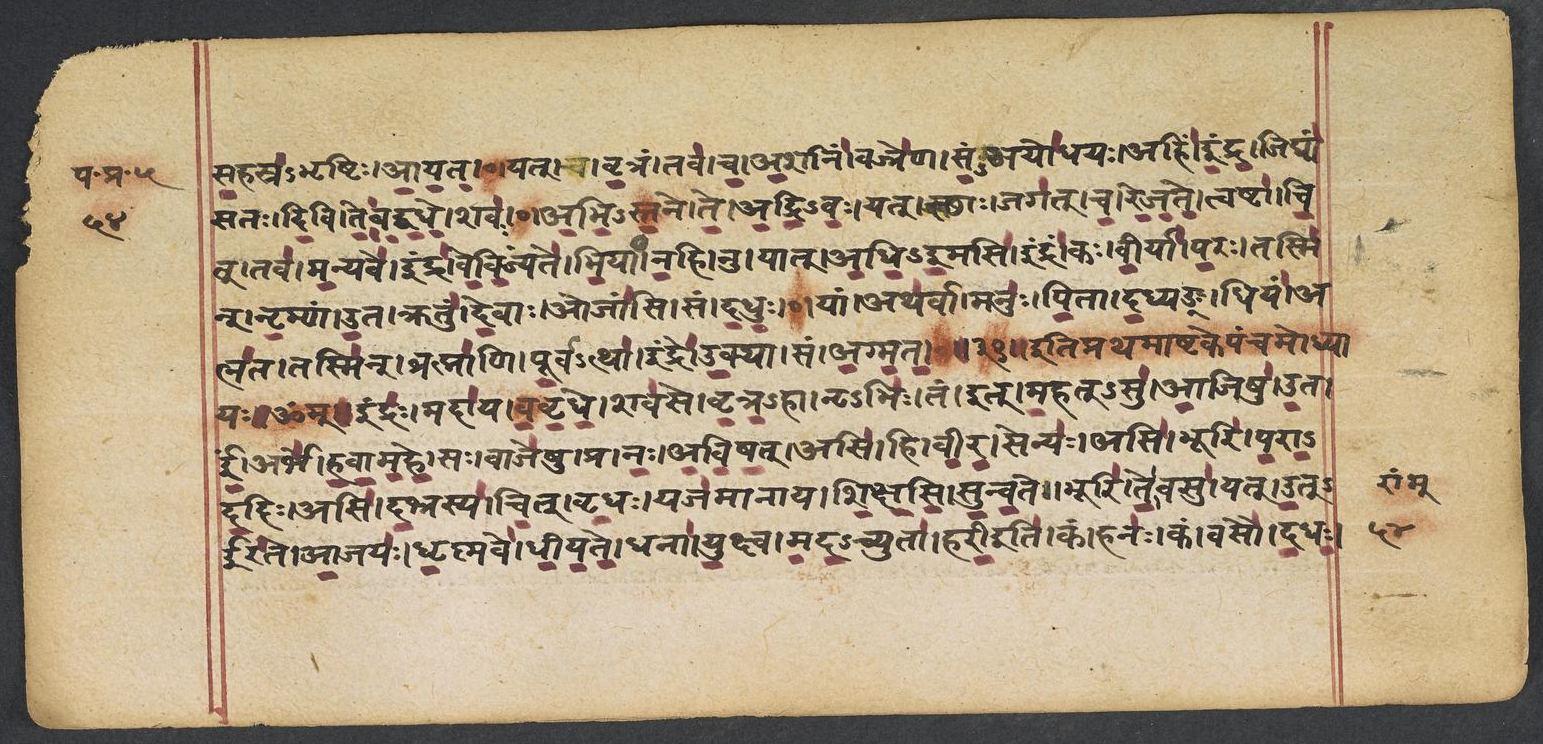
Penn Ms. Coll. 390 Item 41, fol. 54v (OPenn image 56, upper leaf). Checked on the image: the Rigveda text on this page begins in RV 1.80.12 ‹sahasra-bhṛṣṭiḥ āyāta arcan anu›. The next page with Rigveda text, fol. 55r, begins in RV 1.81.3 ‹asmān indra vasau dadhaḥ›. Verses 1.81.1-2 end on this page.
1indro̱ madā̍ya vāvṛdhe̱ śava̍se vṛtra̱hā nṛbhi̍ḥ | tam in ma̱hatsv ā̱jiṣū̱tem arbhe̍ havāmahe̱ sa vāje̍ṣu̱ pra no̍ 'viṣat ||
2asi̱ hi vī̍ra̱ senyo 'si̱ bhūri̍ parāda̱diḥ | asi̍ da̱bhrasya̍ cid vṛ̱dho yaja̍mānāya śikṣasi sunva̱te bhūri̍ te̱ vasu̍ ||
Compare: Padapāṭha (word-by-word text written in the manuscript; Sansknet e-text via GRETIL)
1indraḥ | madāya | vavṛdhe | śavase | vṛtra-hā | nṛ-bhiḥ | tam | it | mahat-su | ājiṣu | uta | īm | arbhe | havāmahe | saḥ | vājeṣu | pra | naḥ | aviṣat
2asi | hi | vīra | senyaḥ | asi | bhūri | parādadiḥ | asi | dabhrasya | cit | vṛdhaḥ | yajamānāya | śikṣasi | sunvate | bhūri | te | vasu
1THE men have lifted Indra up, the Vr̥itra slayer, to joy and strength: Him, verily, we invocate in battles whether great or small: be he our aid in deeds of might.
2Thou, Hero, art a warrior, thou art giver of abundant spoil. Strengthening e'en the feeble, thou aidest the sacrificer, thou givest the offerer ample wealth.
Where on the image
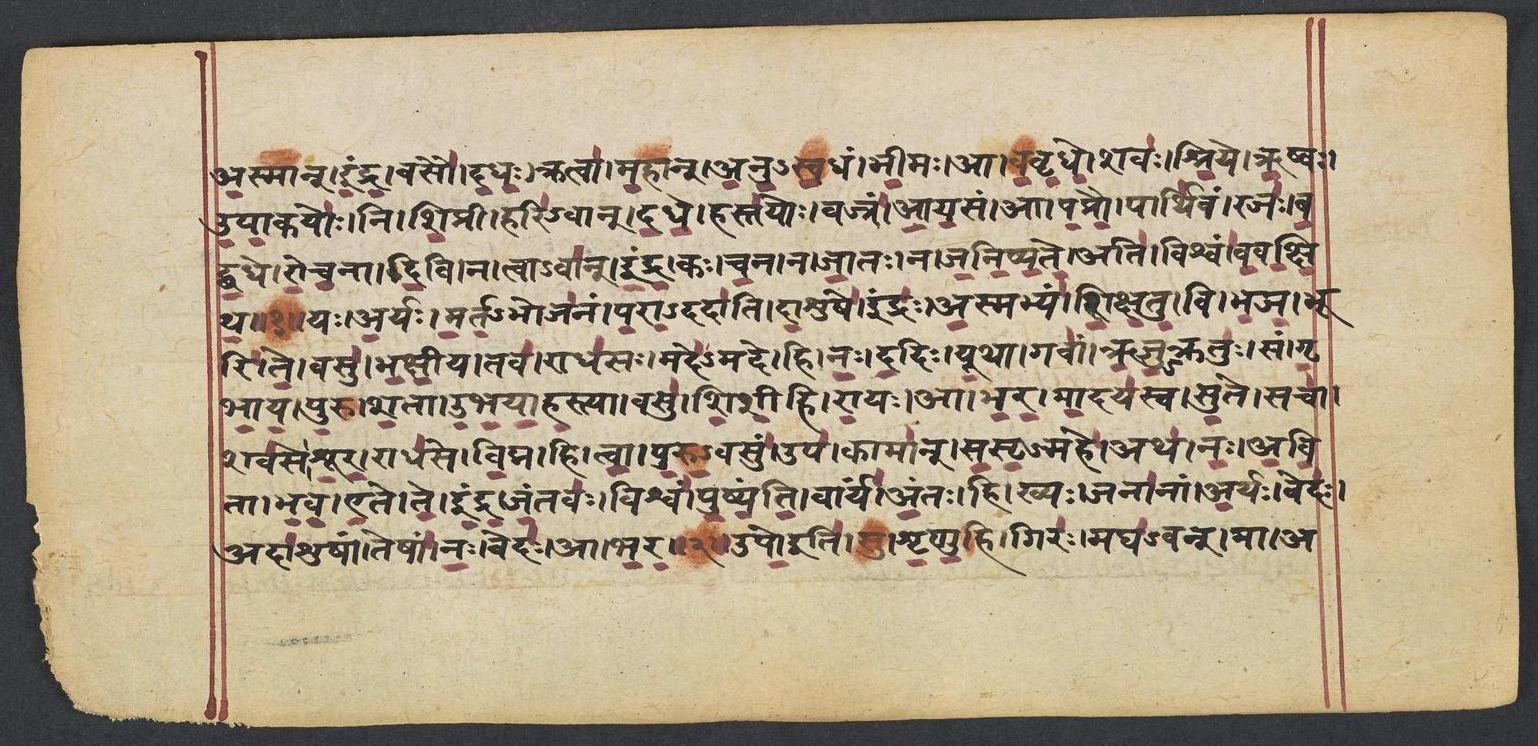
Penn Ms. Coll. 390 Item 41, fol. 55r (OPenn image 56, lower leaf). Checked on the image: the Rigveda text on this page begins in RV 1.81.3 ‹asmān indra vasau dadhaḥ›. The next page with Rigveda text, fol. 55v, begins in RV 1.82.1 ‹-atathāḥ-iva yadā naḥ sūnṛtāvataḥ›. Verses 1.81.3-9 end on this page; 1.81.3 begins on fol. 54v.
3yad u̱dīra̍ta ā̱jayo̍ dhṛ̱ṣṇave̍ dhīyate̱ dhanā̍ | yu̱kṣvā ma̍da̱cyutā̱ harī̱ kaṁ hana̱ḥ kaṁ vasau̍ dadho̱ 'smām̐ i̍ndra̱ vasau̍ dadhaḥ ||
4kratvā̍ ma̱hām̐ a̍nuṣva̱dham bhī̱ma ā vā̍vṛdhe̱ śava̍ḥ | śri̱ya ṛ̱ṣva u̍pā̱kayo̱r ni śi̱prī hari̍vān dadhe̱ hasta̍yo̱r vajra̍m āya̱sam ||
5ā pa̍prau̱ pārthi̍va̱ṁ rajo̍ badba̱dhe ro̍ca̱nā di̱vi | na tvāvā̍m̐ indra̱ kaś ca̱na na jā̱to na ja̍niṣya̱te 'ti̱ viśva̍ṁ vavakṣitha ||
6yo a̱ryo ma̍rta̱bhoja̍nam parā̱dadā̍ti dā̱śuṣe̍ | indro̍ a̱smabhya̍ṁ śikṣatu̱ vi bha̍jā̱ bhūri̍ te̱ vasu̍ bhakṣī̱ya tava̱ rādha̍saḥ ||
7made̍-made̱ hi no̍ da̱dir yū̱thā gavā̍m ṛju̱kratu̍ḥ | saṁ gṛ̍bhāya pu̱rū śa̱tobha̍yāha̱styā vasu̍ śiśī̱hi rā̱ya ā bha̍ra ||
8mā̱daya̍sva su̱te sacā̱ śava̍se śūra̱ rādha̍se | vi̱dmā hi tvā̍ purū̱vasu̱m upa̱ kāmā̍n sasṛ̱jmahe 'thā̍ no 'vi̱tā bha̍va ||
9e̱te ta̍ indra ja̱ntavo̱ viśva̍m puṣyanti̱ vārya̍m | a̱ntar hi khyo janā̍nām a̱ryo vedo̱ adā̍śuṣā̱ṁ teṣā̍ṁ no̱ veda̱ ā bha̍ra ||
Compare: Padapāṭha (word-by-word text written in the manuscript; Sansknet e-text via GRETIL)
3yat | ut-īrate | ājayaḥ | dhṛṣṇave | dhīyate | dhanā | yukṣva | mada-cyutā | harī iti | kam | hanaḥ | kam | vasau | dadhaḥ | asmān | indra | vasau | dadhaḥ
4kratvā | mahān | anu-svadham | bhīmaḥ | ā | vavṛdhe | śavaḥ | śriye | ṛṣvaḥ | upākayoḥ | ni | śiprī | hari-vān | dadhe | hastayoḥ | vajram | āyasam
5ā | paprau | pārthivam | rajaḥ | badbadhe | rocanā | divi | na | tvāvān | indra | kaḥ | cana | na | jātaḥ | na | janiṣyate | ati | viśvam | vavakṣitha
6yaḥ | aryaḥ | marta-bhojanam | parādadāti | dāśuṣe | indraḥ | asmabhyam | śikṣatu | vi | bhaja | bhūri | te | vasu | bhakṣīya | tava | rādhasaḥ
7made--made | hi | naḥ | dadiḥ | yūthā | gavām | ṛju-kratuḥ | sam | gṛbhāya | puru | śatā | ubhayāhastyā | vasu | śiśīhi | rāyaḥ | ā | bhara
8mādayasva | sute | sacā | śavase | śūra | rādhase | vidma | hi | tvā | puru-vasum | upa | kāmān | sasṛjmahe | atha | naḥ | avitā | bhava
9ete | te | indra | jantavaḥ | viśvam | puṣyanti | vāryam | antaḥ | hi | khyaḥ | janānām | aryaḥ | vedaḥ | adāśuṣām | teṣām | naḥ | vedaḥ | ā | bhara
3When war and battles are on foot, booty is laid before the bold. Yoke thou thy wildly-rushing Bays. Whom wilt thou slay and whom enrich? Do thou, O Indra, make us rich.
4Mighty through wisdom, as he lists, terrible, he hath waxed in strength. Lord of Bay Steeds, strong-jawed, sublime, he in joined hands for glory's sake hath grasped his iron thunderbolt.
5He filled the earthly atmosphere and pressed against the lights in heaven. None like thee ever hath been born, none, Indra, will be born like thee. Thou hast waxed mighty over all.
6May he who to the offerer gives the foeman's man-sustaining food, May Indra lend his aid to us. Deal forth-abundant is thy wealth-that in thy bounty I may share.
7He, righteous-hearted, at each time of rapture gives us herds of kine. Gather in both thy hands for us treasures of many hundred sorts. Sharpen thou us, and bring us wealth.
8Refresh thee, Hero, with the juice outpoured for bounty and for strength. We know thee Lord of ample store, to thee have sent our hearts' desires: be therefore our Protector thou.
9These people, Indra, keep for thee all that is worthy of thy choice. Discover thou, as Lord, the wealth of men who offer up no gifts: bring thou to us this wealth of theirs.
Notes
- Sanskrit: Aufrecht's edition (1877) with the Vedic accents, as entered by van Nooten and Holland (GRETIL).
- English: Ralph T. H. Griffith, The Hymns of the Rigveda (1889-1892; 2nd ed. 1896-1897), from the VedaWeb digital text; OCR slips in that text were corrected against the printed 2nd edition (data/sources/rigveda/griffith_errata.json).
- Padapāṭha (edition text): Sansknet e-text via GRETIL (CC BY-NC-SA 4.0).
Cite
Sources
- Source: Penn Ms. Coll. 390 Item 41 (undated (catalogued with Penn's 18th-19th c. Vedic manuscripts)), OPenn, Public Domain Mark + Aufrecht's accented text (GRETIL) + Griffith's English (VedaWeb) (holding institution)
- Critical edition: Aufrecht (1877), accented e-text via GRETIL
← previous · → next · v cycle view · l back to library