Rigveda 1.82: To Indra
Introduction
Rigveda 1.82 is a hymn of 6 verses addressed to Indra. It stands in book (maṇḍala) 1, a collection of hymns by many families of poets. The Rigveda is the oldest collection of Sanskrit hymns, composed in the second half of the second millennium BCE and handed down orally for many centuries before it was written down.
The manuscript shown is Penn Ms. Coll. 390 Item 41 (University of Pennsylvania), an undated paper manuscript of the padapāṭha (the word-by-word recitation text, in which every word is written separately and compounds are split) of the whole Ṛgveda in Devanāgarī, 884 leaves in fascicles, 7-9 lines to the page, accents in red; this hymn stands on fol. 55r-55v. Each section below gives the verses that end on one page; the page boundaries were read on the images (the opening words of every page), not counted out. Where the manuscript is a padapāṭha (the word-by-word recitation text), the section shows Aufrecht's continuous (saṃhitā) text first and, as the edition text, the padapāṭha of the same verses, which is the form written on the page.
How was this verified? (Provenance)
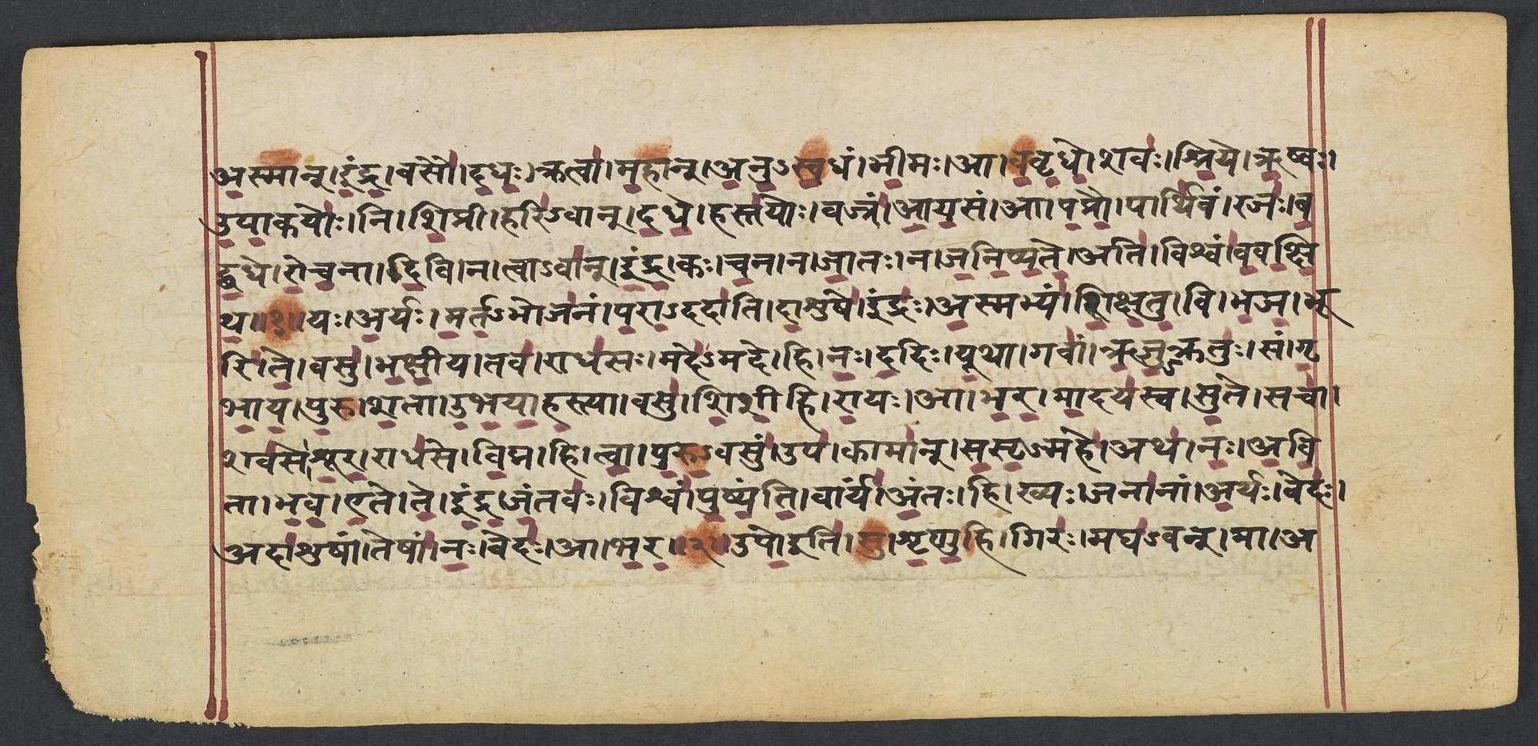
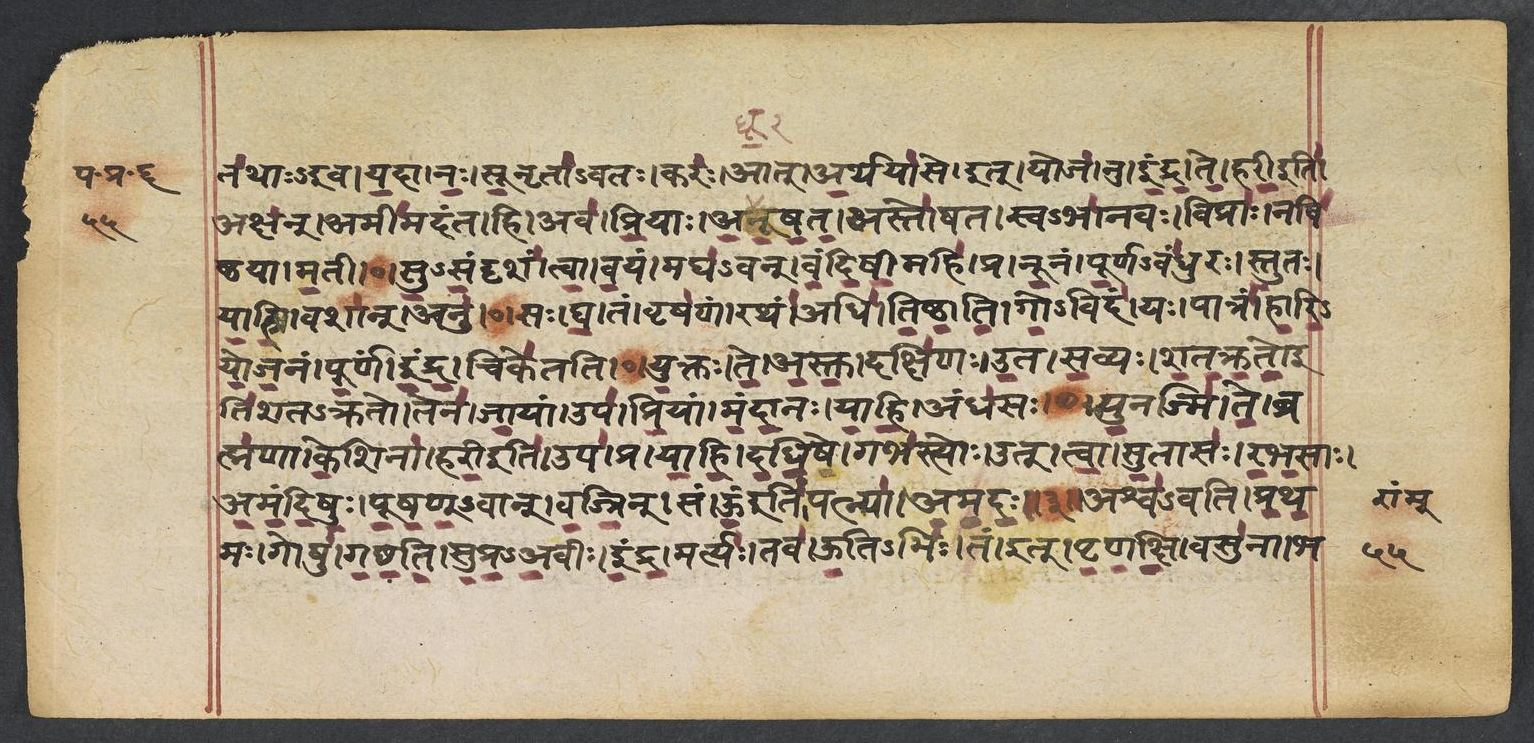
Where on the image
Penn Ms. Coll. 390 Item 41, fol. 55v (OPenn image 57, upper leaf). Checked on the image: the Rigveda text on this page begins in RV 1.82.1 ‹-atathāḥ-iva yadā naḥ sūnṛtāvataḥ›. The next page with Rigveda text, fol. 56r, begins in RV 1.83.1 ‹-bhavīyasā sindhum āpaḥ yathā›. Verses 1.82.1-6 end on this page; 1.82.1 begins on fol. 55r.
1upo̱ ṣu śṛ̍ṇu̱hī giro̱ magha̍va̱n māta̍thā iva | ya̱dā na̍ḥ sū̱nṛtā̍vata̱ḥ kara̱ ād a̱rthayā̍sa̱ id yojā̱ nv i̍ndra te̱ harī̍ ||
2akṣa̱nn amī̍madanta̱ hy ava̍ pri̱yā a̍dhūṣata | asto̍ṣata̱ svabhā̍navo̱ viprā̱ navi̍ṣṭhayā ma̱tī yojā̱ nv i̍ndra te̱ harī̍ ||
3su̱sa̱ṁdṛśa̍ṁ tvā va̱yam magha̍van vandiṣī̱mahi̍ | pra nū̱nam pū̱rṇava̍ndhuraḥ stu̱to yā̍hi̱ vaśā̱m̐ anu̱ yojā̱ nv i̍ndra te̱ harī̍ ||
4sa ghā̱ taṁ vṛṣa̍ṇa̱ṁ ratha̱m adhi̍ tiṣṭhāti go̱vida̍m | yaḥ pātra̍ṁ hāriyoja̱nam pū̱rṇam i̍ndra̱ cike̍tati̱ yojā̱ nv i̍ndra te̱ harī̍ ||
5yu̱ktas te̍ astu̱ dakṣi̍ṇa u̱ta sa̱vyaḥ śa̍takrato | tena̍ jā̱yām upa̍ pri̱yām ma̍ndā̱no yā̱hy andha̍so̱ yojā̱ nv i̍ndra te̱ harī̍ ||
6yu̱najmi̍ te̱ brahma̍ṇā ke̱śinā̱ harī̱ upa̱ pra yā̍hi dadhi̱ṣe gabha̍styoḥ | ut tvā̍ su̱tāso̍ rabha̱sā a̍mandiṣuḥ pūṣa̱ṇvān va̍jri̱n sam u̱ patnyā̍madaḥ ||
Compare: Padapāṭha (word-by-word text written in the manuscript; Sansknet e-text via GRETIL)
1upo iti | su | śṛṇuhi | giraḥ | magha-van | mā | atathāḥ-iva | yadā | naḥ | sūnṛtāvataḥ | karaḥ | āt | arthayāse | it | yoja | nu | indra | te | harī iti
2akṣan | amīmadanta | hi | ava | priyāḥ | adhūṣata | astoṣata | sva-bhānavaḥ | viprāḥ | naviṣṭhayā | matī | yoja | nu | indra | te | harī iti
3su-sandṛśam | tvā | vayam | magha-van | vandiṣīmahi | pra | nūnam | pūrṇa-vandhuraḥ | stutaḥ | yāhi | vaśān | anu | yoja | nu | indra | te | harī iti
4saḥ | gha | tam | vṛṣaṇam | ratham | adhi | tiṣṭhāti | govidam | yaḥ | pātram | hāri-yojanam | pūrṇam | indra | ciketati | yoja | nu | indra | te | harī iti
5yuktaḥ | te | astu | dakṣiṇaḥ | uta | savyaḥ | śatakrato itiśata-krato | tena | jāyām | upa | priyām | mandānaḥ | yāhi | andhasaḥ | yoja | nu | indra | te | harī iti
6yunajmi | te | brahmaṇā | keśinā | harī iti | upa | pra | yāhi | dadhiṣe | gabhastyoḥ | ut | tvā | sutāsaḥ | rabhasāḥ | amandiṣuḥ | pūṣaṇ-vān | vajrin | sam | oṃ iti | patnyā | amadaḥ
1GRACIOUSLY listen to our songs, Maghavan, be not negligent. As thou hast made us full of joy and lettest us solicit thee, now, Indra, yoke thy two Bay Steeds.
2Well have they eaten and rejoiced; the friends have risen and passed away. The sages luminous in themselves have. praised thee with their latest hymn. Now, Indra, yoke thy two Bay Steeds.
3Maghavan, we will reverence thee who art so fair to look upon. Thus praised, according to our wish come now with richly laden car. Now, Indra, yoke thy two Bay Steeds.
4He will in very truth ascend the powerful car that finds the kine, Who thinks upon the well-filled bowl, the Tawny Coursers' harnesser. Now, Indra, yoke thy two Bay Steeds.
5Let, Lord of Hundred Powers, thy Steeds be harnessed on the right and left. Therewith in rapture of the juice, draw near to thy beloved Spouse. Now, Indra, yoke thy two Bay Steeds.
6With holy prayer I yoke thy long-maned pair of Bays: come hitherward; thou holdest them in both thy hands. The stirring draughts of juice outpoured have made thee glad: thou, Thunderer, hast rejoiced with Pûshan and thy Spouse.
Notes
- Sanskrit: Aufrecht's edition (1877) with the Vedic accents, as entered by van Nooten and Holland (GRETIL).
- English: Ralph T. H. Griffith, The Hymns of the Rigveda (1889-1892; 2nd ed. 1896-1897), from the VedaWeb digital text; OCR slips in that text were corrected against the printed 2nd edition (data/sources/rigveda/griffith_errata.json).
- Padapāṭha (edition text): Sansknet e-text via GRETIL (CC BY-NC-SA 4.0).
Cite
Sources
- Source: Penn Ms. Coll. 390 Item 41 (undated (catalogued with Penn's 18th-19th c. Vedic manuscripts)), OPenn, Public Domain Mark + Aufrecht's accented text (GRETIL) + Griffith's English (VedaWeb) (holding institution)
- Critical edition: Aufrecht (1877), accented e-text via GRETIL
← previous · → next · v cycle view · l back to library