Rigveda 1.83: To Indra
Introduction
Rigveda 1.83 is a hymn of 6 verses addressed to Indra. It stands in book (maṇḍala) 1, a collection of hymns by many families of poets. The Rigveda is the oldest collection of Sanskrit hymns, composed in the second half of the second millennium BCE and handed down orally for many centuries before it was written down.
The manuscript shown is Penn Ms. Coll. 390 Item 41 (University of Pennsylvania), an undated paper manuscript of the padapāṭha (the word-by-word recitation text, in which every word is written separately and compounds are split) of the whole Ṛgveda in Devanāgarī, 884 leaves in fascicles, 7-9 lines to the page, accents in red; this hymn stands on fol. 55v-56v. Each section below gives the verses that end on one page; the page boundaries were read on the images (the opening words of every page), not counted out. Where the manuscript is a padapāṭha (the word-by-word recitation text), the section shows Aufrecht's continuous (saṃhitā) text first and, as the edition text, the padapāṭha of the same verses, which is the form written on the page.
How was this verified? (Provenance)
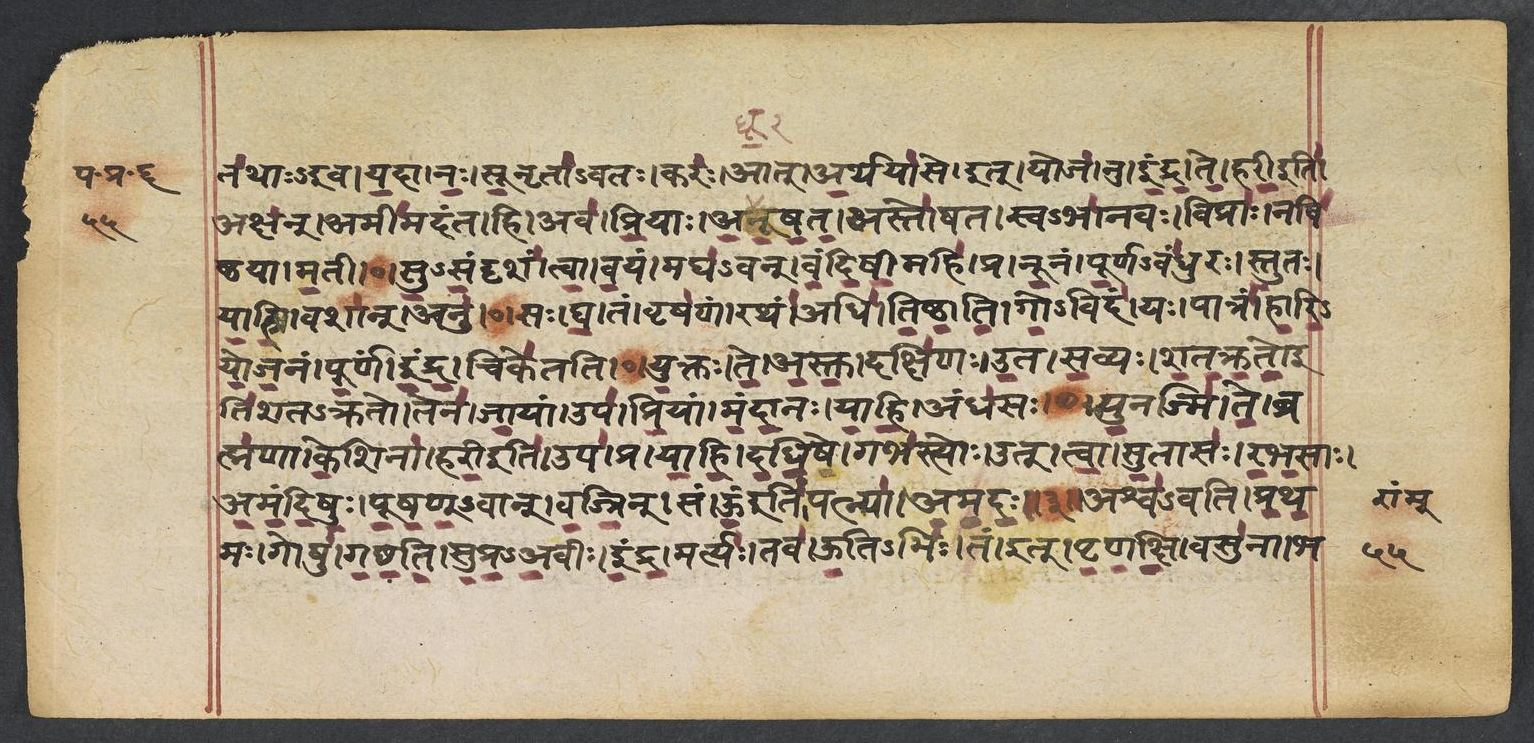
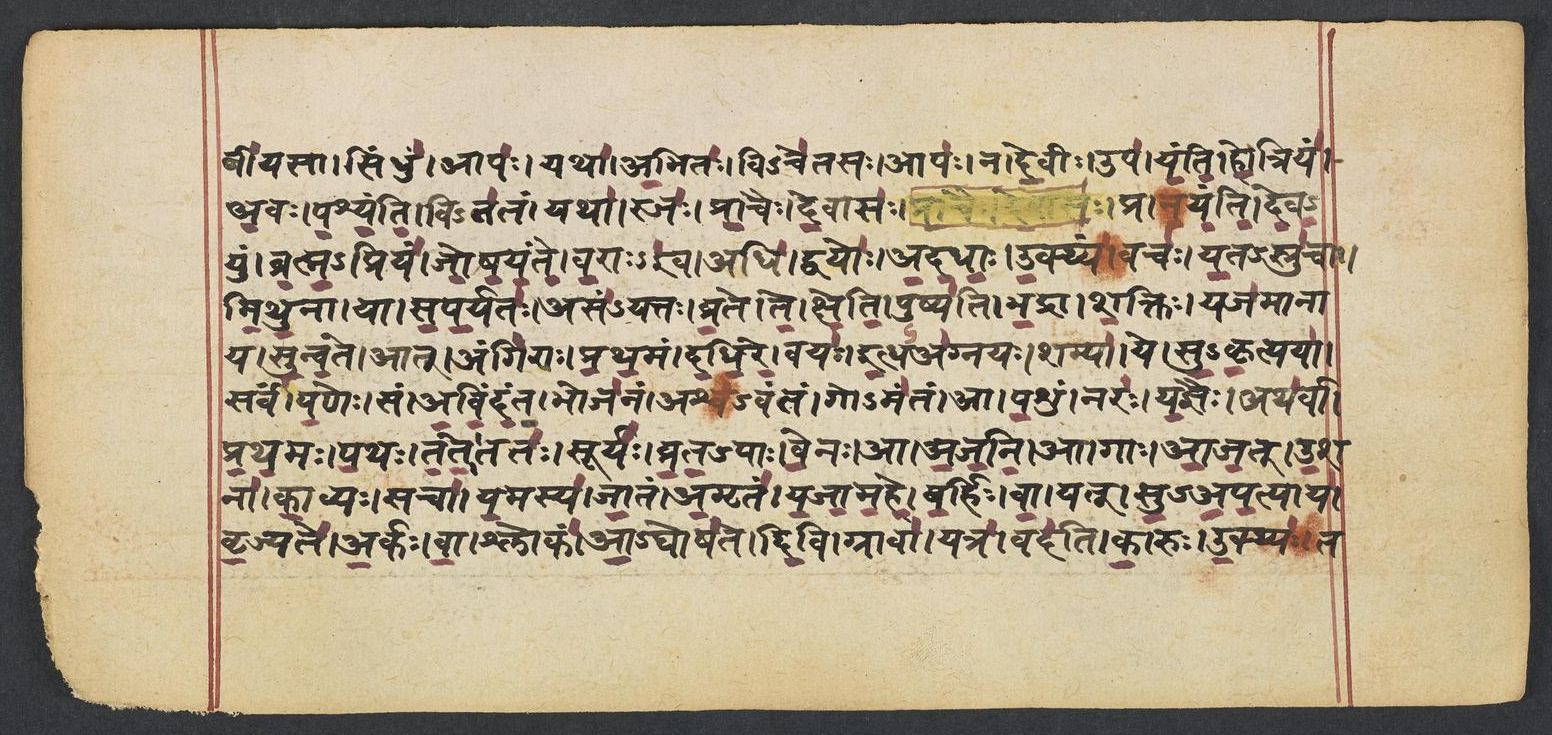
Where on the image
Penn Ms. Coll. 390 Item 41, fol. 56r (OPenn image 57, lower leaf). Checked on the image: the Rigveda text on this page begins in RV 1.83.1 ‹-bhavīyasā sindhum āpaḥ yathā›. The next page with Rigveda text, fol. 56v, begins in RV 1.83.6 ‹-tasya it indraḥ abhi-pitveṣu›. Verses 1.83.1-5 end on this page; 1.83.1 begins on fol. 55v.
1aśvā̍vati pratha̱mo goṣu̍ gacchati suprā̱vīr i̍ndra̱ martya̱s tavo̱tibhi̍ḥ | tam it pṛ̍ṇakṣi̱ vasu̍nā̱ bhavī̍yasā̱ sindhu̱m āpo̱ yathā̱bhito̱ vice̍tasaḥ ||
2āpo̱ na de̱vīr upa̍ yanti ho̱triya̍m a̱vaḥ pa̍śyanti̱ vita̍ta̱ṁ yathā̱ raja̍ḥ | prā̱cair de̱vāsa̱ḥ pra ṇa̍yanti deva̱yum bra̍hma̱priya̍ṁ joṣayante va̱rā i̍va ||
3adhi̱ dvayo̍r adadhā u̱kthya1̱̍ṁ vaco̍ ya̱tasru̍cā mithu̱nā yā sa̍pa̱ryata̍ḥ | asa̍ṁyatto vra̱te te̍ kṣeti̱ puṣya̍ti bha̱drā śa̱ktir yaja̍mānāya sunva̱te ||
4ād aṅgi̍rāḥ pratha̱maṁ da̍dhire̱ vaya̍ i̱ddhāgna̍ya̱ḥ śamyā̱ ye su̍kṛ̱tyayā̍ | sarva̍m pa̱ṇeḥ sam a̍vindanta̱ bhoja̍na̱m aśvā̍vanta̱ṁ goma̍nta̱m ā pa̱śuṁ nara̍ḥ ||
5ya̱jñair atha̍rvā pratha̱maḥ pa̱thas ta̍te̱ tata̱ḥ sūryo̍ vrata̱pā ve̱na āja̍ni | ā gā ā̍jad u̱śanā̍ kā̱vyaḥ sacā̍ ya̱masya̍ jā̱tam a̱mṛta̍ṁ yajāmahe ||
Compare: Padapāṭha (word-by-word text written in the manuscript; Sansknet e-text via GRETIL)
1aśva-vati | prathamaḥ | goṣu | gacchati | supra-āvīḥ | indra | martyaḥ | tava | ūti-bhiḥ | tam | it | pṛṇakṣi | vasunā | bhavīyasā | sindhum | āpaḥ | yathā | abhitaḥ | vi-cetasaḥ
2āpaḥ | na | devīḥ | upa | yanti | hotriyam | avaḥ | paśyanti | vi-tatam | yathā | rajaḥ | prācaiḥ | devāsaḥ | pra | nayanti | deva-yum | brahma-priyam | joṣayante | varāḥ-iva
3adhi | dvayoḥ | adadhāḥ | ukthyam | vacaḥ | yata-srucā | mithunā | yā | saparyataḥ | asam-yattaḥ | vrate | te | kṣeti | puṣyati | bhadrā | śaktiḥ | yajamānāya | sunvate
4āt | aṅgirāḥ | prathamam | dadhire | vayaḥ | iddha-agnayaḥ | śamyā | ye | su-kṛtyayā | sarvam | paṇeḥ | sam | avindanta | bhojanam | aśva-vantam | go--mantam | ā | paśum | naraḥ
5yajñaiḥ | atharvā | prathamaḥ | pathaḥ | tate | tataḥ | sūryaḥ | vrata-pāḥ | venaḥ | ā | ajani | ā | gāḥ | ājat | uśanā | kavyaḥ | sacā | yamasya | jātam | amṛtam | yajāmahe
1INDRA, the mortal man well guarded by thine aid goes foremost in the wealth of horses and of kine. With amplest wealth thou fillest him, as round about the waters clearly seen afar fill Sindhu full.
2The heavenly Waters come not nigh the priestly bowl: they but look down and see how far mid-air is spread: The Deities conduct the pious man to them: like suitors they delight in him who loveth prayer.
3Praiseworthy blessing hast thou laid upon the pair who with uplifted ladle serve thee, man and wife. Unchecked he dwells and prospers in thy law: thy power brings blessing to the sacrificer pouring gifts.
4First the Angirases won themselves vital power, whose fires were kindled through good deeds and sacrifice. The men together found the Paṇi's hoarded wealth, the cattle, and the wealth in horses and in kine.
5Atharvan first by sacrifices laid the paths then, guardian of the Law, sprang up the loving Sun. Uṣanâ Kâvya straightway hither drove the kine. Let us with offerings honour Yama's deathless birth.
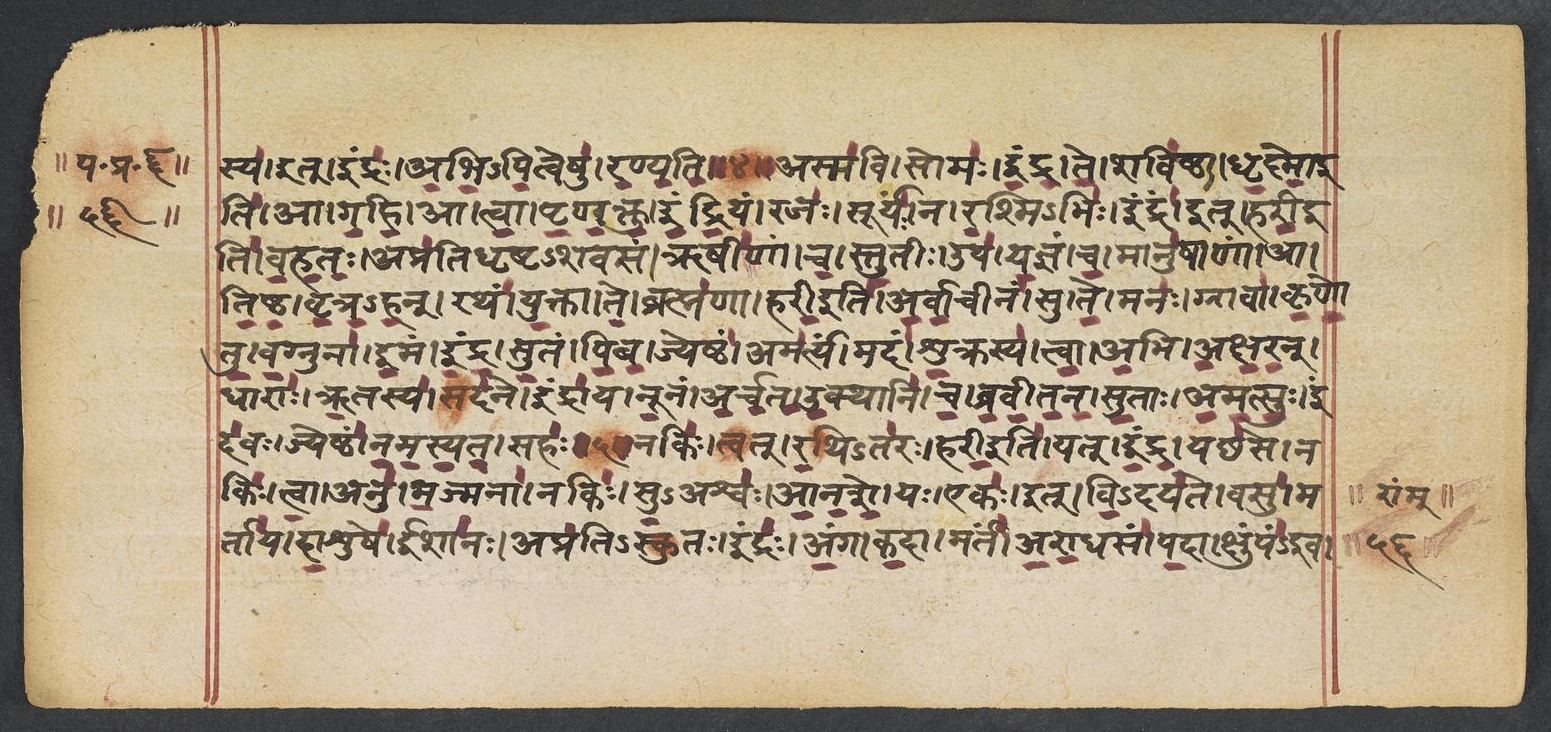
Where on the image
Penn Ms. Coll. 390 Item 41, fol. 56v (OPenn image 58, upper leaf). Checked on the image: the Rigveda text on this page begins in RV 1.83.6 ‹-tasya it indraḥ abhi-pitveṣu›. The next page with Rigveda text, fol. 57r, begins in RV 1.84.8 ‹sphurat kadā naḥ śuśravat›. Verse 1.83.6 ends on this page; 1.83.6 begins on fol. 56r.
6ba̱rhir vā̱ yat sva̍pa̱tyāya̍ vṛ̱jyate̱ 'rko vā̱ śloka̍m ā̱ghoṣa̍te di̱vi | grāvā̱ yatra̱ vada̍ti kā̱rur u̱kthya1̱̍s tasyed indro̍ abhipi̱tveṣu̍ raṇyati ||
Compare: Padapāṭha (word-by-word text written in the manuscript; Sansknet e-text via GRETIL)
6barhiḥ | vā | yat | su-apatyāya | vṛjyate | arkaḥ | vā | ślokam | āghoṣate | divi | grāvā | yatra | vadati | kāruḥ | ukthyaḥ | tasya | it | indraḥ | abhi-pitveṣu | raṇyati
6When sacred grass is trimmed to aid the auspicious work, or the hymn makes its voice of praise sound to the sky. Where the stone rings as'twere a singer skilled in laud, --Indra in truth delights when these come near to him.
Notes
- Sanskrit: Aufrecht's edition (1877) with the Vedic accents, as entered by van Nooten and Holland (GRETIL).
- English: Ralph T. H. Griffith, The Hymns of the Rigveda (1889-1892; 2nd ed. 1896-1897), from the VedaWeb digital text; OCR slips in that text were corrected against the printed 2nd edition (data/sources/rigveda/griffith_errata.json).
- Padapāṭha (edition text): Sansknet e-text via GRETIL (CC BY-NC-SA 4.0).
Cite
Sources
- Source: Penn Ms. Coll. 390 Item 41 (undated (catalogued with Penn's 18th-19th c. Vedic manuscripts)), OPenn, Public Domain Mark + Aufrecht's accented text (GRETIL) + Griffith's English (VedaWeb) (holding institution)
- Critical edition: Aufrecht (1877), accented e-text via GRETIL
← previous · → next · v cycle view · l back to library