Rigveda 10.10: Yama and Yami
Introduction
Rigveda 10.10 is a hymn of 14 verses addressed to Yama and Yami. It stands in book (maṇḍala) 10, the last and latest book. The Rigveda is the oldest collection of Sanskrit hymns, composed in the second half of the second millennium BCE and handed down orally for many centuries before it was written down.
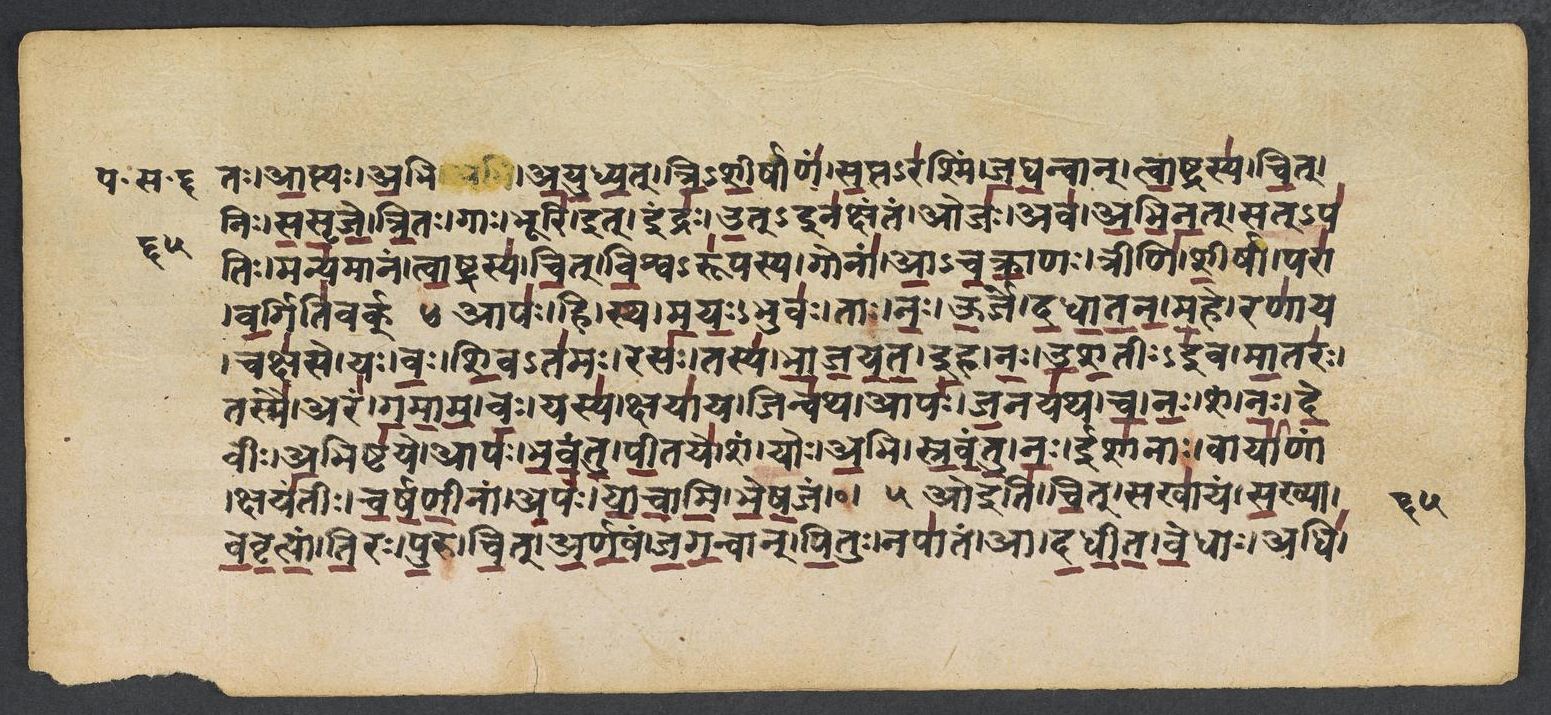
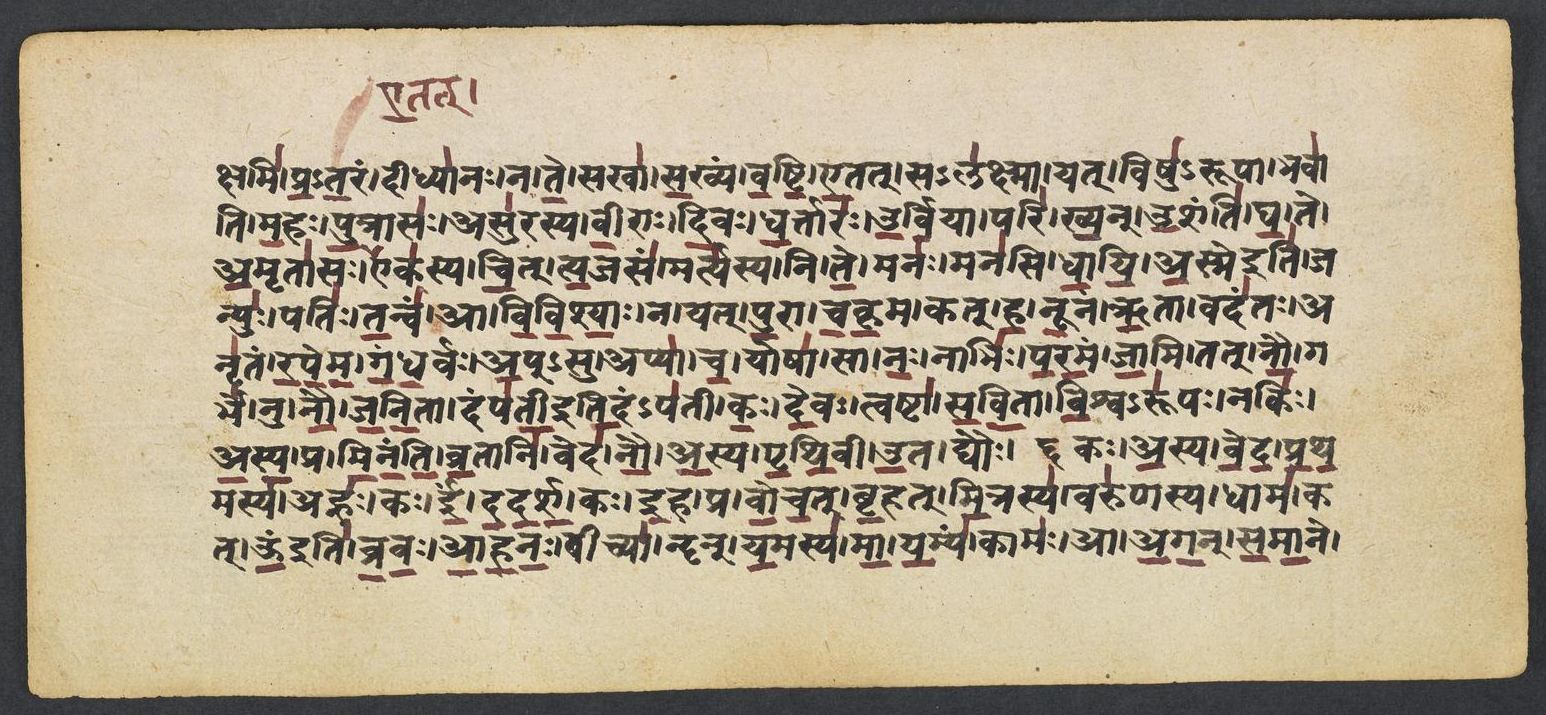
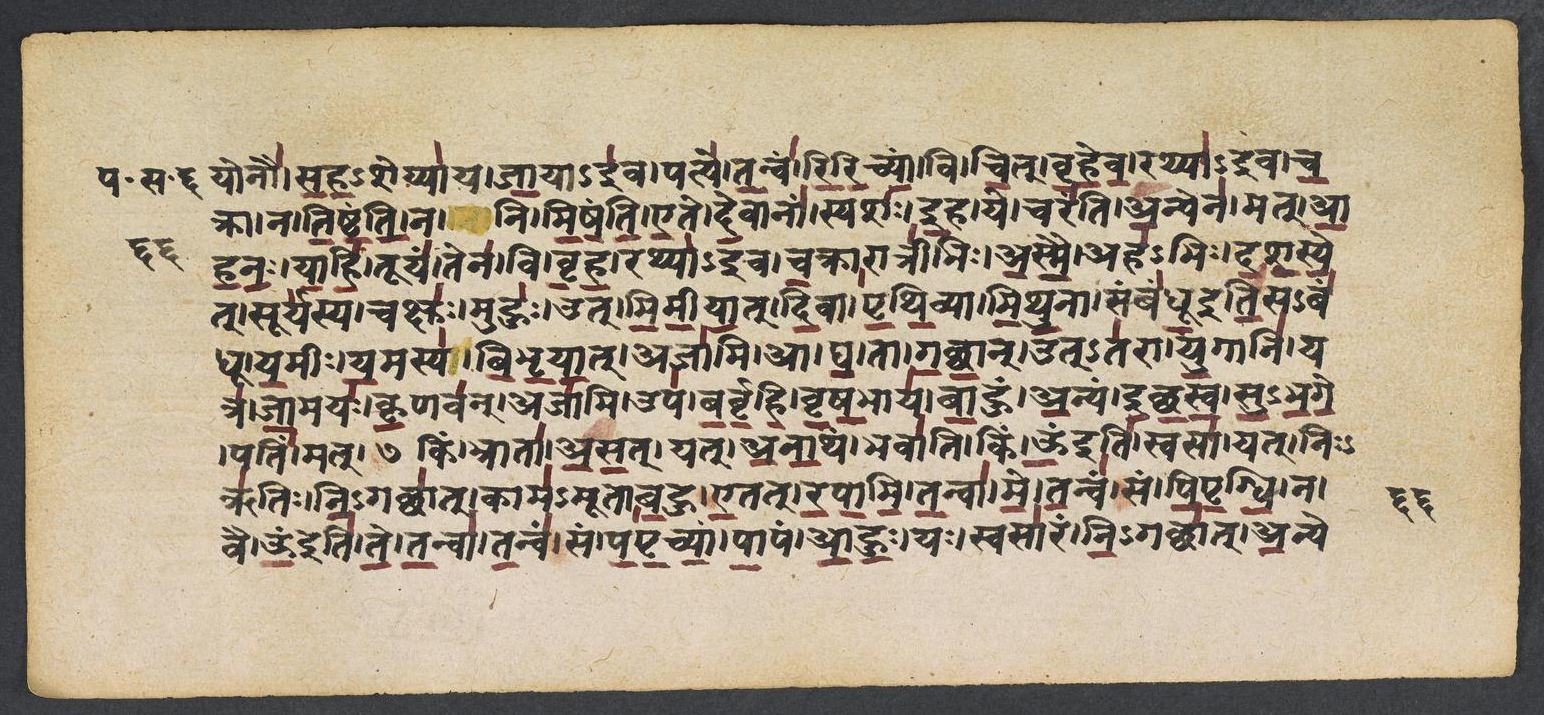
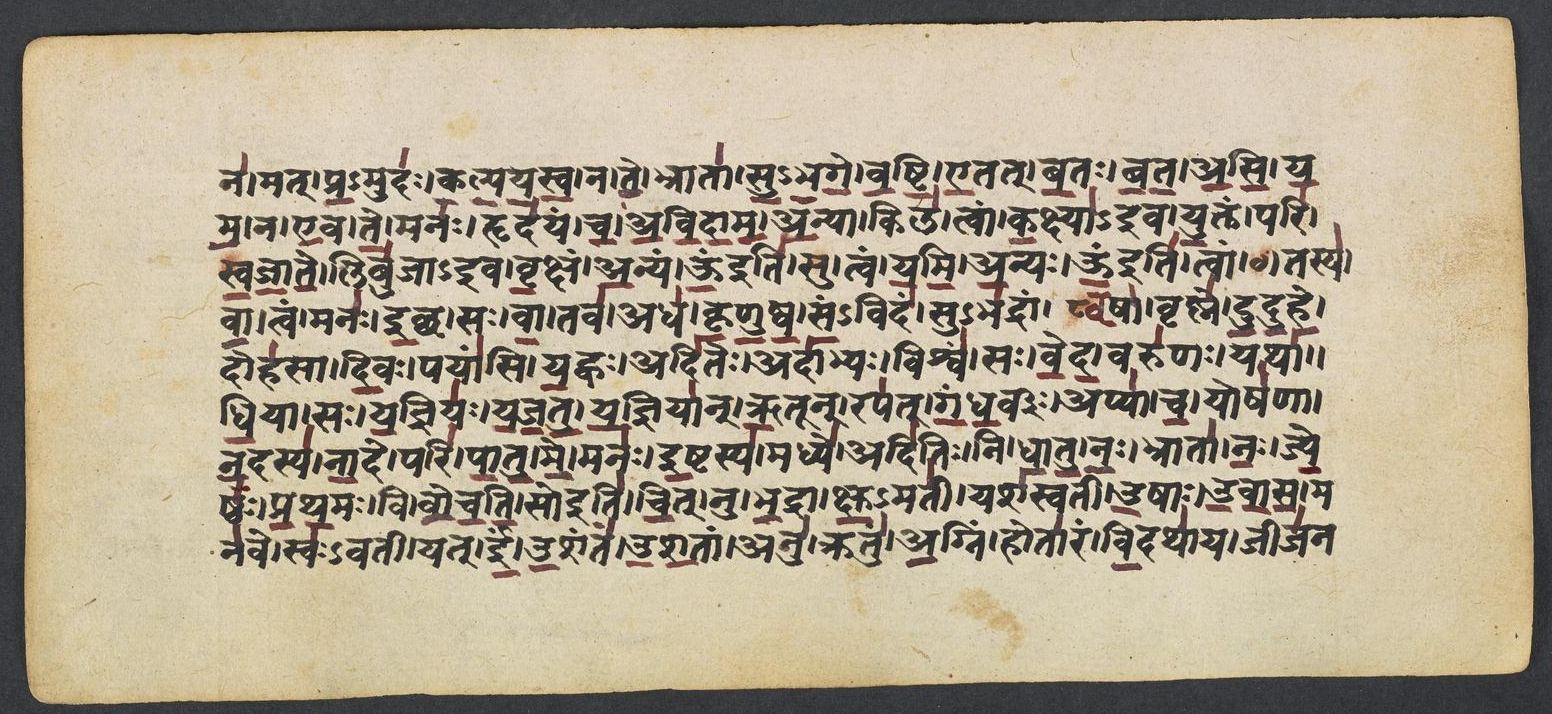
The manuscript shown is Penn Ms. Coll. 390 Item 41 (University of Pennsylvania), an undated paper manuscript of the padapāṭha (the word-by-word recitation text, in which every word is written separately and compounds are split) of the whole Ṛgveda in Devanāgarī, 884 leaves in fascicles, 7-9 lines to the page, accents in red; this hymn stands on fol. 748v-750r. Each section below gives the verses that end on one page; the page boundaries were read on the images (the opening words of every page), not counted out. Where the manuscript is a padapāṭha (the word-by-word recitation text), the section shows Aufrecht's continuous (saṃhitā) text first and, as the edition text, the padapāṭha of the same verses, which is the form written on the page.
How was this verified? (Provenance)
Where on the image
Penn Ms. Coll. 390 Item 41, fol. 749r (numbered 66r by the scribe) (OPenn image 749, lower leaf). Checked on the image: the Rigveda text on this page begins in RV 10.10.1 ‹kṣami pra-taram dīdhyānaḥ›. The next page with Rigveda text, fol. 749v (numbered 66v by the scribe), begins in RV 10.10.7 ‹yonau saha-śeyyāya jāyāiva patye›. Verses 10.10.1-6 end on this page; 10.10.1 begins on fol. 748v (numbered 65v by the scribe).
1o ci̱t sakhā̍yaṁ sa̱khyā va̍vṛtyāṁ ti̱raḥ pu̱rū ci̍d arṇa̱vaṁ ja̍ga̱nvān | pi̱tur napā̍ta̱m ā da̍dhīta ve̱dhā adhi̱ kṣami̍ prata̱raṁ dīdhyā̍naḥ ||
2na te̱ sakhā̍ sa̱khyaṁ va̍ṣṭy e̱tat sala̍kṣmā̱ yad viṣu̍rūpā̱ bhavā̍ti | ma̱has pu̱trāso̱ asu̍rasya vī̱rā di̱vo dha̱rtāra̍ urvi̱yā pari̍ khyan ||
3u̱śanti̍ ghā̱ te a̱mṛtā̍sa e̱tad eka̍sya cit tya̱jasa̱m martya̍sya | ni te̱ mano̱ mana̍si dhāyy a̱sme janyu̱ḥ pati̍s ta̱nva1̱̍m ā vi̍viśyāḥ ||
4na yat pu̱rā ca̍kṛ̱mā kad dha̍ nū̱nam ṛ̱tā vada̍nto̱ anṛ̍taṁ rapema | ga̱ndha̱rvo a̱psv apyā̍ ca̱ yoṣā̱ sā no̱ nābhi̍ḥ para̱maṁ jā̱mi tan nau̍ ||
5garbhe̱ nu nau̍ jani̱tā dampa̍tī kar de̱vas tvaṣṭā̍ savi̱tā vi̱śvarū̍paḥ | naki̍r asya̱ pra mi̍nanti vra̱tāni̱ veda̍ nāv a̱sya pṛ̍thi̱vī u̱ta dyauḥ ||
6ko a̱sya ve̍da pratha̱masyāhna̱ḥ ka ī̍ṁ dadarśa̱ ka i̱ha pra vo̍cat | bṛ̱han mi̱trasya̱ varu̍ṇasya̱ dhāma̱ kad u̍ brava āhano̱ vīcyā̱ nṝn ||
Compare: Padapāṭha (word-by-word text written in the manuscript; Sansknet e-text via GRETIL)
1o iti | cit | sakhāyam | sakhyā | vavṛtyām | tiraḥ | puru | cit | arṇavam | jaganvān | pituḥ | napātam | ā | dadhīta | vedhāḥ | adhi | kṣami | pra-taram | dīdhyānaḥ
2na | te | sakhā | sakhyam | vaṣti | etat | sa-lakṣmā | yat | viṣu-rūpā | bhavāti | mahaḥ | putrāsaḥ | asurasya | vīrāḥ | divaḥ | dhartāraḥ | urviyā | pari | khyan
3uśanti | gha | te | amṛtāsaḥ | etat | ekasya | cit | tyajasam | martyasya | ni | te | manaḥ | manasi | dhāyi | asme iti | janyuḥ | patiḥ | tanvam | ā | viviśyāḥ
4na | yat | purā | cakṛma | kat | ha | nūnam | ṛtā | vadantaḥ | anṛtam | rapema | gandharvaḥ | ap-su | apyā | ca | yoṣā | sā | naḥ | nābhiḥ | paramam | jāmi | tat | nau
5garbhe | nu | nau | janitā | dampatī itidam-patī | kaḥ | devaḥ | tvaṣṭā | savitā | viśva-rūpaḥ | nakiḥ | asya | pra | minanti | vratāni | veda | nau | asya | pṛthivī | uta | dyauḥ
6kaḥ | asya | veda | prathamasya | ahnaḥ | kaḥ | īm | dṛrśa | kaḥ | iha | pra | vocat | bṛhat | mitrasya | varuṇasya | dhāma | kat | oṃ iti | bravaḥ | āhanaḥ | vīcyā | nṝn
1FAIN would I win my friend to kindly friendship. So may the Sage, come through the air's wide ocean, Remembering the earth and days to follow, obtain a son, the issue of his father.
2Thy friend loves not the friendship which considers her who is near in kindred as stranger. Sons of the mighty Asura, the Heroes, supporters of the heavens, see far around them.
3Yea, this the Immortals seek of thee with longing, progeny of the sole existing mortal. Then let thy soul and mine be knit together, and as a loving husband take thy consort.
4Shall we do now what we ne'er did aforetime? we who spake righteously now talk impurely? Gandharva in the floods, the Dame of Waters-such is our bond, such our most lofty kinship.
5Even in the womb God Tvashṭar, Vivifier, shaping all forms, Creator, made us consorts. None violates his holy ordinances: that we are his the heavens and earth acknowledge.
6Who knows that earliest day whereof thou speakest? Who hath beheld it? Who can here declare it? Great is the Law of Varuṇa and Mitra. What, wanton! wilt thou say to men to tempt them?
Where on the image
Penn Ms. Coll. 390 Item 41, fol. 749v (numbered 66v by the scribe) (OPenn image 750, upper leaf). Checked on the image: the Rigveda text on this page begins in RV 10.10.7 ‹yonau saha-śeyyāya jāyāiva patye›. The next page with Rigveda text, fol. 750r (numbered 67r by the scribe), begins in RV 10.10.12 ‹-anyena mat pra-mudaḥ kalpayasva›. Verses 10.10.7-11 end on this page; 10.10.7 begins on fol. 749r (numbered 66r by the scribe).
7ya̱masya̍ mā ya̱mya1̱̍ṁ kāma̱ āga̍n samā̱ne yonau̍ saha̱śeyyā̍ya | jā̱yeva̱ patye̍ ta̱nva̍ṁ riricyā̱ṁ vi ci̍d vṛheva̱ rathye̍va ca̱krā ||
8na ti̍ṣṭhanti̱ na ni mi̍ṣanty e̱te de̱vānā̱ṁ spaśa̍ i̱ha ye cara̍nti | a̱nyena̱ mad ā̍hano yāhi̱ tūya̱ṁ tena̱ vi vṛ̍ha̱ rathye̍va ca̱krā ||
9rātrī̍bhir asmā̱ aha̍bhir daśasye̱t sūrya̍sya̱ cakṣu̱r muhu̱r un mi̍mīyāt | di̱vā pṛ̍thi̱vyā mi̍thu̱nā saba̍ndhū ya̱mīr ya̱masya̍ bibhṛyā̱d ajā̍mi ||
10ā ghā̱ tā ga̍cchā̱n utta̍rā yu̱gāni̱ yatra̍ jā̱maya̍ḥ kṛ̱ṇava̱nn ajā̍mi | upa̍ barbṛhi vṛṣa̱bhāya̍ bā̱hum a̱nyam i̍cchasva subhage̱ pati̱m mat ||
11kim bhrātā̍sa̱d yad a̍nā̱tham bhavā̍ti̱ kim u̱ svasā̱ yan nirṛ̍tir ni̱gacchā̍t | kāma̍mūtā ba̱hv e̱3̱̍tad ra̍pāmi ta̱nvā̍ me ta̱nva1̱̍ṁ sam pi̍pṛgdhi ||
Compare: Padapāṭha (word-by-word text written in the manuscript; Sansknet e-text via GRETIL)
7yamasya | mā | yamyam | kāmaḥ | ā | agan | samāne | yonau | saha-śeyyāya | jāyāiva | patye | tanvam | riricyām | vi | cit | vṛheva | rathyāiva | cakrā
8na | tiṣṭhanti | na | ni | miṣanti | ete | devānām | spaśaḥ | iha | ye | caranti | anyena | mat | āhanaḥ | yāhi | tūyam | tena | vi | vṛheva | rathyāiva | cakrā
9rātrībhiḥ | asmai | aha-bhiḥ | daśasyet | sūryasya | cakṣuḥ | muhuḥ | ut | mimīyāt | divā | pṛthivyā | mithunā | sabandhūitisa-bandhū | yamīḥ | yamasya | bibhṛyāt | ajāmi
10ā | gha | tā | gacchān | ut-tarā | yugāni | yatra | jāmayaḥ | kṛṇavan | ajāmi | upa | barbṛhi | vṛṣabhāya | bāhum | anyam | icchasva | su-bhage | patim | mat
11kim | bhrātā | asat | yat | anātham | bhavāti | kim | oṃ iti | svasā | yat | niḥ-ṛtiḥ | ni-gacchāt | kāma-mūtā | bahu | etat | rapāmi | tanvā | me | tanvam | sam | pipṛgdhi
7I, Yamî, am possessed by love of Yama, that I may rest on the same couch beside him. I as a wife would yield me to my husband. Like car-wheels let us speed to meet each other.
8They stand not still, they never close their eyelids, those sentinels of Gods who wander round us. Not me-go quickly, wanton, with another, and hasten like a chariot wheel to meet him.
9May Sûrya's eye with days and nights endow him, and ever may his light spread out before him. In heaven and earth the kindred Pair commingle. On Yam! be the unbrotherly act of Yama.
10Sure there will come succeeding times when brothers and sisters will do acts unmeet for kinsfolk. Not me, O fair one,– seek another husband, and make thine arm a pillow for thy consort.
11Is he a brother when no lord is left her? Is she a sister when Destruction cometh? Forced by my love these many words I utter. Come near, and hold me in thy close embraces.
Where on the image
Penn Ms. Coll. 390 Item 41, fol. 750r (numbered 67r by the scribe) (OPenn image 750, lower leaf). Checked on the image: the Rigveda text on this page begins in RV 10.10.12 ‹-anyena mat pra-mudaḥ kalpayasva›. The next page with Rigveda text, fol. 750v (numbered 67v by the scribe), begins in RV 10.11.3 ‹-jījanan›. Verses 10.10.12-14 end on this page; 10.10.12 begins on fol. 749v (numbered 66v by the scribe).
12na vā u̍ te ta̱nvā̍ ta̱nva1̱̍ṁ sam pa̍pṛcyām pā̱pam ā̍hu̱r yaḥ svasā̍raṁ ni̱gacchā̍t | a̱nyena̱ mat pra̱muda̍ḥ kalpayasva̱ na te̱ bhrātā̍ subhage vaṣṭy e̱tat ||
13ba̱to ba̍tāsi yama̱ naiva te̱ mano̱ hṛda̍yaṁ cāvidāma | a̱nyā kila̱ tvāṁ ka̱kṣye̍va yu̱ktam pari̍ ṣvajāte̱ libu̍jeva vṛ̱kṣam ||
14a̱nyam ū̱ ṣu tvaṁ ya̍my a̱nya u̱ tvām pari̍ ṣvajāte̱ libu̍jeva vṛ̱kṣam | tasya̍ vā̱ tvam mana̍ i̱cchā sa vā̱ tavādhā̍ kṛṇuṣva sa̱ṁvida̱ṁ subha̍drām ||
Compare: Padapāṭha (word-by-word text written in the manuscript; Sansknet e-text via GRETIL)
12na | vai | oṃ iti | te | tanvā | tanvam | sam | papṛcyām | pāpam | āhuḥ | yaḥ | svasāram | ni-gacchāt | anyena | mat | pra-mudaḥ | kalpayasva | na | te | bhrātā | su-bhage | vaṣṭi | etat
13bataḥ | bata | asi | yama | na | eva | te | manaḥ | hṛdayam | ca | avidāma | anyā | k ila | tvām | kakṣyāiva | yuktam | pari | svajāte | libujāiva | vṛkṣam
14anyam | oṃ iti | su | tvam | yami | anyaḥ | oṃ iti | tvām | pari | svajāte | libujāiva | vṛkṣam | tasya | vā | tvam | manaḥ | icchā | saḥ | vā | tava | adha | kṛṇuṣva | sam-vidam | su-bhadrām
12I will not fold mine arms about thy body: they call it sin when one comes near his sister. Not me,– prepare thy pleasures with another: thy brother seeks not this from thee, O fair one.
13Alas! thou art indeed a weakling, Yama we find in thee no trace of heart or spirit. As round the tree the woodbine clings, another will cling about thee girt as with a girdle.
14Embrace another, Yamî; let another, even as the woodbine rings the tree, enfold thee. Win thou his heart and let him win thy fancy, and he shall form with thee a blest alliance.
Notes
- Sanskrit: Aufrecht's edition (1877) with the Vedic accents, as entered by van Nooten and Holland (GRETIL).
- English: Ralph T. H. Griffith, The Hymns of the Rigveda (1889-1892; 2nd ed. 1896-1897), from the VedaWeb digital text; OCR slips in that text were corrected against the printed 2nd edition (data/sources/rigveda/griffith_errata.json).
- Padapāṭha (edition text): Sansknet e-text via GRETIL (CC BY-NC-SA 4.0).
Cite
Sources
- Source: Penn Ms. Coll. 390 Item 41 (undated (catalogued with Penn's 18th-19th c. Vedic manuscripts)), OPenn, Public Domain Mark + Aufrecht's accented text (GRETIL) + Griffith's English (VedaWeb) (holding institution)
- Critical edition: Aufrecht (1877), accented e-text via GRETIL
← previous · → next · v cycle view · l back to library