Rigveda 10.11: To Agni
Introduction
Rigveda 10.11 is a hymn of 9 verses addressed to Agni. It stands in book (maṇḍala) 10, the last and latest book. The Rigveda is the oldest collection of Sanskrit hymns, composed in the second half of the second millennium BCE and handed down orally for many centuries before it was written down.
The manuscript shown is Penn Ms. Coll. 390 Item 41 (University of Pennsylvania), an undated paper manuscript of the padapāṭha (the word-by-word recitation text, in which every word is written separately and compounds are split) of the whole Ṛgveda in Devanāgarī, 884 leaves in fascicles, 7-9 lines to the page, accents in red; this hymn stands on fol. 750r-751r. Each section below gives the verses that end on one page; the page boundaries were read on the images (the opening words of every page), not counted out. Where the manuscript is a padapāṭha (the word-by-word recitation text), the section shows Aufrecht's continuous (saṃhitā) text first and, as the edition text, the padapāṭha of the same verses, which is the form written on the page.
How was this verified? (Provenance)
Where on the image
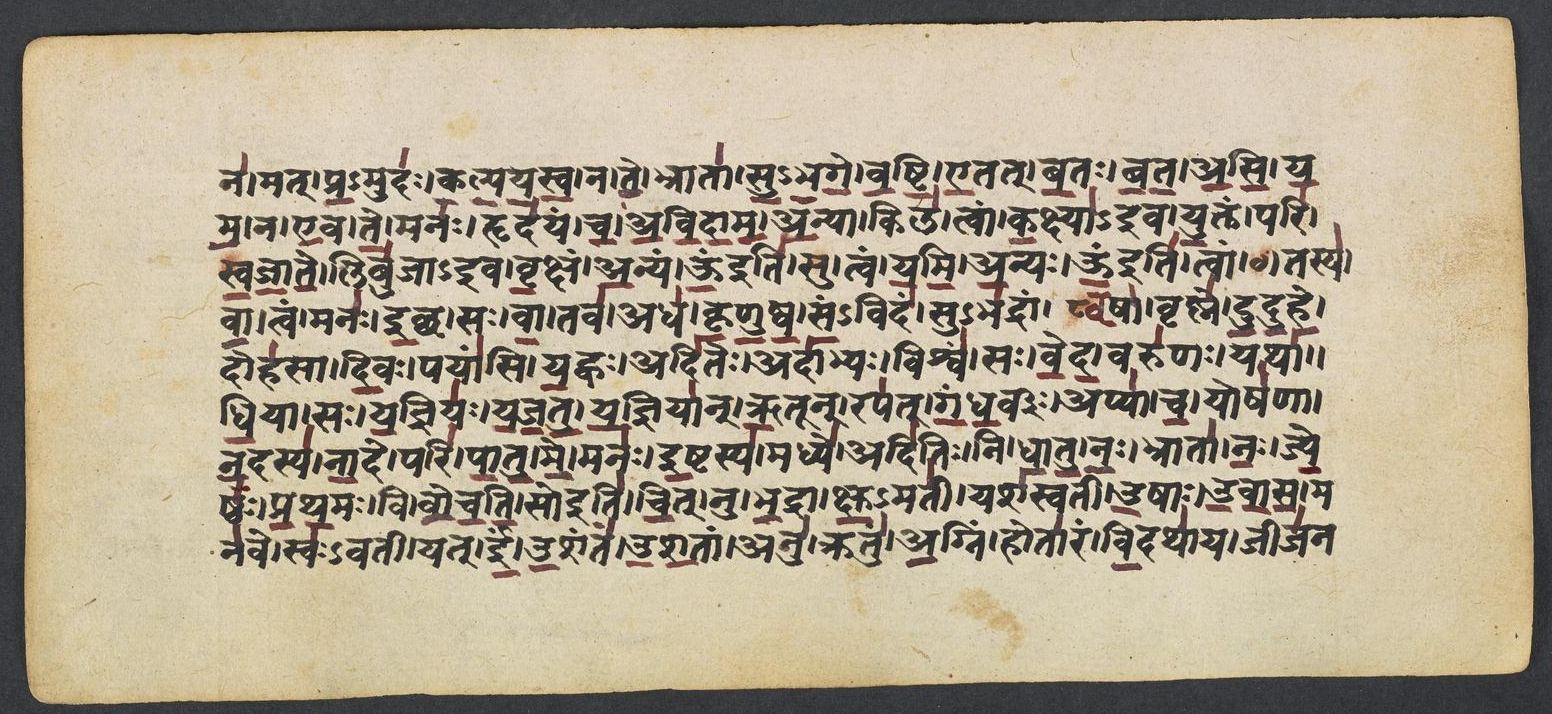
Penn Ms. Coll. 390 Item 41, fol. 750r (numbered 67r by the scribe) (OPenn image 750, lower leaf). Checked on the image: the Rigveda text on this page begins in RV 10.10.12 ‹-anyena mat pra-mudaḥ kalpayasva›. The next page with Rigveda text, fol. 750v (numbered 67v by the scribe), begins in RV 10.11.3 ‹-jījanan›. Verses 10.11.1-2 end on this page.
1vṛṣā̱ vṛṣṇe̍ duduhe̱ doha̍sā di̱vaḥ payā̍ṁsi ya̱hvo adi̍te̱r adā̍bhyaḥ | viśva̱ṁ sa ve̍da̱ varu̍ṇo̱ yathā̍ dhi̱yā sa ya̱jñiyo̍ yajatu ya̱jñiyā̍m̐ ṛ̱tūn ||
2rapa̍d gandha̱rvīr apyā̍ ca̱ yoṣa̍ṇā na̱dasya̍ nā̱de pari̍ pātu me̱ mana̍ḥ | i̱ṣṭasya̱ madhye̱ adi̍ti̱r ni dhā̍tu no̱ bhrātā̍ no jye̱ṣṭhaḥ pra̍tha̱mo vi vo̍cati ||
Compare: Padapāṭha (word-by-word text written in the manuscript; Sansknet e-text via GRETIL)
1vṛṣā | vṛṣṇe | duduhe | dohasā | divaḥ | payāṃsi | yahvaḥ | aditeḥ | adābhyaḥ | viśvam | saḥ | veda | varuṇaḥ | yathā | dhiyā | saḥ | yajñiyaḥ | yajatu | yajñiyān | ṛtūn
2rapat | gandharvīḥ | apyā | ca | yoṣaṇā | nadasya | nāde | pari | pātu | me | manaḥ | iṣṭasya | madhye | aditiḥ | ni | dhātu | naḥ | bhrātā | naḥ | jyeṣṭhaḥ | prathamaḥ | v i | vocati
1THE Bull hath yielded for the Bull the milk of heaven: the Son of Aditi can never be deceived. According to his wisdom Varuṇa knoweth all: may he, the Holy, hallow times for sacrifice.
2Gandharvi spake: may she, the Lady of the flood, amid the river's roaring leave my heart untouched. May Aditi accomplish all that we desire, and may our eldest Brother tell us this as Chief.
Where on the image
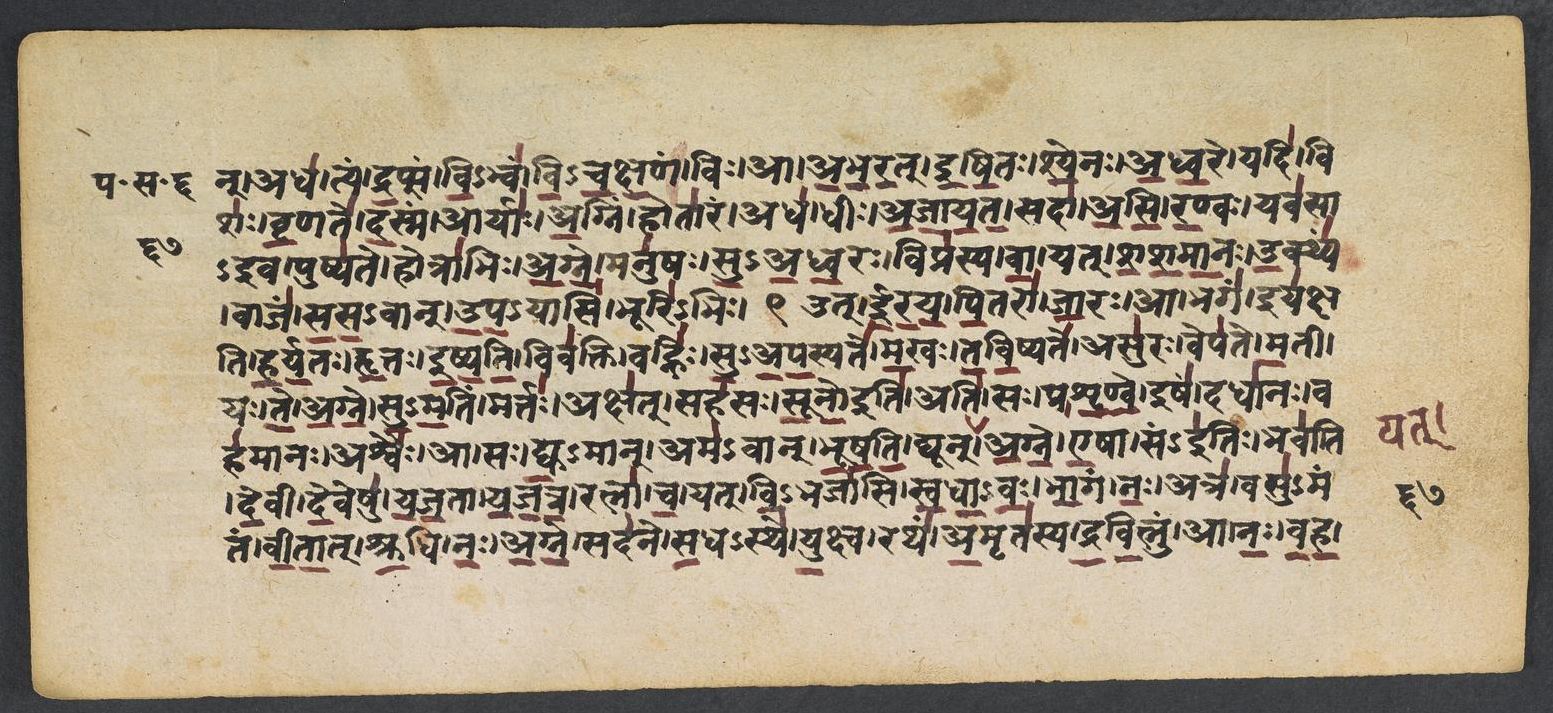
Penn Ms. Coll. 390 Item 41, fol. 750v (numbered 67v by the scribe) (OPenn image 751, upper leaf). Checked on the image: the Rigveda text on this page begins in RV 10.11.3 ‹-jījanan›. The next page with Rigveda text, fol. 751r (numbered 68r by the scribe), begins in RV 10.11.9 ‹rodasī iti devaputreitideva-putre mākiḥ›. Verses 10.11.3-8 end on this page; 10.11.3 begins on fol. 750r (numbered 67r by the scribe).
3so ci̱n nu bha̱drā kṣu̱matī̱ yaśa̍svaty u̱ṣā u̍vāsa̱ mana̍ve̱ sva̍rvatī | yad ī̍m u̱śanta̍m uśa̱tām anu̱ kratu̍m a̱gniṁ hotā̍raṁ vi̱dathā̍ya̱ jīja̍nan ||
4adha̱ tyaṁ dra̱psaṁ vi̱bhva̍ṁ vicakṣa̱ṇaṁ vir ābha̍rad iṣi̱taḥ śye̱no a̍dhva̱re | yadī̱ viśo̍ vṛ̱ṇate̍ da̱smam āryā̍ a̱gniṁ hotā̍ra̱m adha̱ dhīr a̍jāyata ||
5sadā̍si ra̱ṇvo yava̍seva̱ puṣya̍te̱ hotrā̍bhir agne̱ manu̍ṣaḥ svadhva̱raḥ | vipra̍sya vā̱ yac cha̍śamā̱na u̱kthya1̱̍ṁ vāja̍ṁ sasa̱vām̐ u̍pa̱yāsi̱ bhūri̍bhiḥ ||
6ud ī̍raya pi̱tarā̍ jā̱ra ā bhaga̱m iya̍kṣati harya̱to hṛ̱tta i̍ṣyati | viva̍kti̱ vahni̍ḥ svapa̱syate̍ ma̱khas ta̍vi̱ṣyate̱ asu̍ro̱ vepa̍te ma̱tī ||
7yas te̍ agne suma̱tim marto̱ akṣa̱t saha̍saḥ sūno̱ ati̱ sa pra śṛ̍ṇve | iṣa̱ṁ dadhā̍no̱ vaha̍māno̱ aśvai̱r ā sa dyu̱mām̐ ama̍vān bhūṣati̱ dyūn ||
8yad a̍gna e̱ṣā sami̍ti̱r bhavā̍ti de̱vī de̱veṣu̍ yaja̱tā ya̍jatra | ratnā̍ ca̱ yad vi̱bhajā̍si svadhāvo bhā̱gaṁ no̱ atra̱ vasu̍mantaṁ vītāt ||
Compare: Padapāṭha (word-by-word text written in the manuscript; Sansknet e-text via GRETIL)
3so iti | cit | nu | bhadrā | kṣu-matī | yaśasvatī | uṣāḥ | uvāsa | manave | svaḥ-vatī | yat | īm | uśantam | uśatām | anu | ṛtum | agnim | hotāram | vidathāya | jījanan
4adha | tyam | drapsam | vibhvam | vi-cakṣaṇam | viḥ | ā | abharat | iṣitaḥ | śyenaḥ | adhvare | yadi | viśaḥ | vṛṇate | dasmam | āryāḥ | agnim | hotāram | adha | dhīḥ | ajāyata
5sadā | asi | raṇvaḥ | yavasāiva | puṣyate | hotrābhiḥ | agne | manuṣaḥ | su-adhvaraḥ | viprasya | vā | yat | śaśamānaḥ | ukthyam | vājam | sasa-vān | upa-yāsi | bhūri-bhiḥ
6ut | īraya | pitarā | jāraḥ | ā | bhagam | iyakṣati | haryataḥ | hṛttaḥ | iṣyati | v ivakti | vahniḥ | su-apasyate | makhaḥ | taviṣyate | asuraḥ | vepate | matī
7yaḥ | te | agne | su-matim | martaḥ | akṣat | sahasaḥ | sūno iti | ati | saḥ | pra | śṛṇve | iṣam | dadhānaḥ | vahamānaḥ | aśvaiḥ | ā | saḥ | dyu-mān | ama-vān | bhūṣati | dyūn
8yat | agne | eṣā | sam-itiḥ | bhavāti | devī | deveṣu | yajatā | yajatra | ratnā | ca | yat | vi-bhajāsi | svadhāvaḥ | bhāgam | naḥ | atra | vasu-mantam | vītāt
3Yea, even this blessed Morning, rich in store of food, splendid, with heavenly lustre, hath shone out for man, Since they, as was the wish of yearning Gods, brought forth that yearning Agni for the assembly as the Priest.
4And the fleet Falcon brought for sacrifice from afar this flowing Drop most excellent and keen of sight, Then when the Aryan tribes chose as Invoking Priest Agni the Wonder-Worker, and the hymn rose up.
5Still art thou kind to him who feeds thee as with grass, and, skilled in sacrifice, offers thee holy gifts. When thou, having received the sage's strengthening food with lauds, after long toil, comest with many more.
6Urge thou thy Parents, as a lover ' to delight: the Lovely One desires and craves it from his heart. The priest calls out, the sacrificer shows his skill, the Asura tries his strength, and with the hymn is stirred.
7Far-famed is he, the mortal man, O Agni, thou Son of Strength, who hath obtained thy favour. He, gathering power, borne onward by his horses, makes his days lovely in his might and splendour.
8When, Holy Agni, the divine assembly, the sacred synod mid the Gods, is gathered, And when thou, Godlike One, dealest forth treasures, vouchsafe us, too, our portion of the riches.
Where on the image
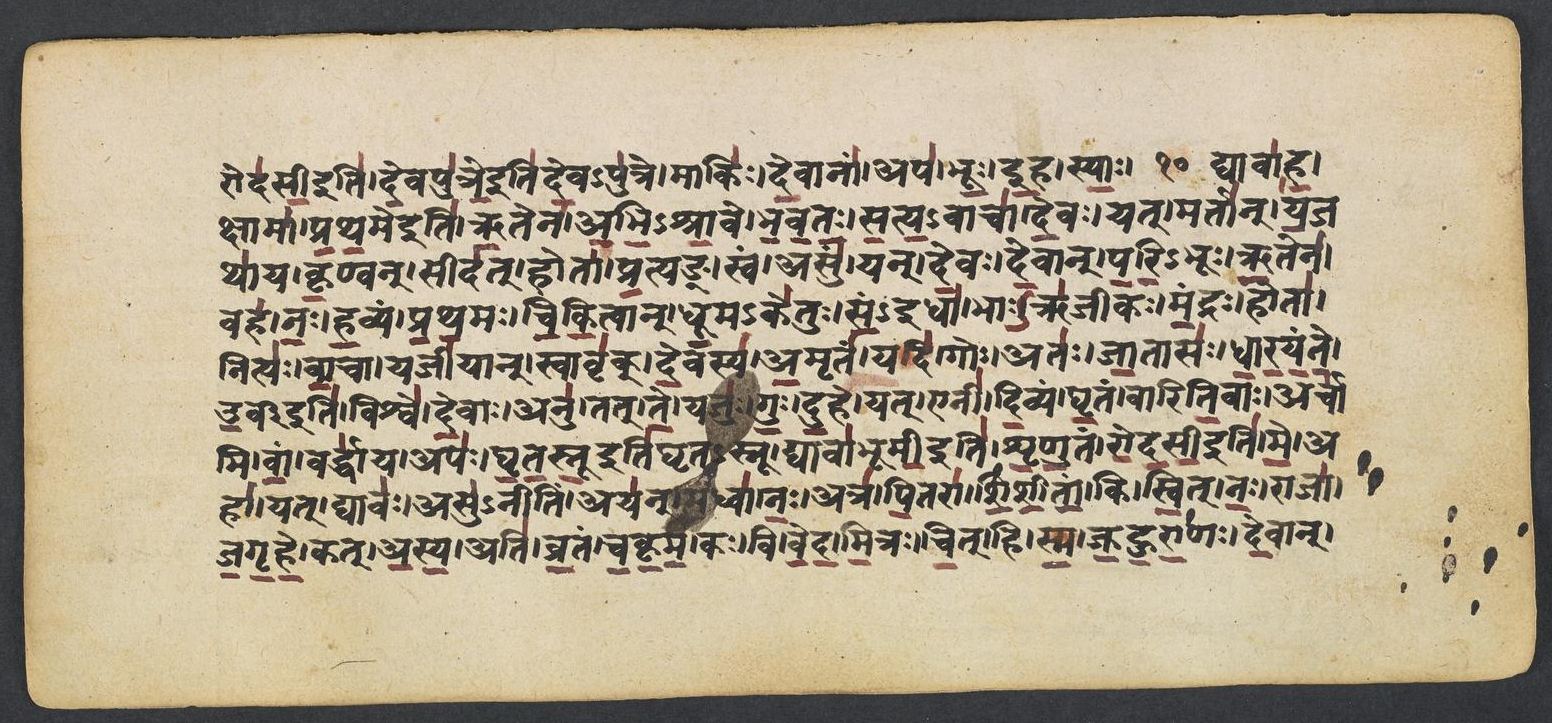
Penn Ms. Coll. 390 Item 41, fol. 751r (numbered 68r by the scribe) (OPenn image 751, lower leaf). Checked on the image: the Rigveda text on this page begins in RV 10.11.9 ‹rodasī iti devaputreitideva-putre mākiḥ›. The next page with Rigveda text, fol. 751v (numbered 68v by the scribe), begins in RV 10.12.5 ‹ślokaḥ na yātām api›. Verse 10.11.9 ends on this page; 10.11.9 begins on fol. 750v (numbered 67v by the scribe).
9śru̱dhī no̍ agne̱ sada̍ne sa̱dhasthe̍ yu̱kṣvā ratha̍m a̱mṛta̍sya dravi̱tnum | ā no̍ vaha̱ roda̍sī de̱vapu̍tre̱ māki̍r de̱vānā̱m apa̍ bhūr i̱ha syā̍ḥ ||
Compare: Padapāṭha (word-by-word text written in the manuscript; Sansknet e-text via GRETIL)
9śrudhi | naḥ | agne | sadane | sadha-sthe | yukṣva | ratham | amṛtasya | dravitnum | ā | naḥ | vaha | rodasī iti | devaputreitideva-putre | mākiḥ | devānām | apa | bhūḥ | iha | syāḥ
9Hear us, O Agni, in your common dwelling: harness thy rapid car of Amrit. Bring Heaven and Earth, the Deities' Parents, hither: stay with us here, nor from the Gods be distant.
Notes
- Sanskrit: Aufrecht's edition (1877) with the Vedic accents, as entered by van Nooten and Holland (GRETIL).
- English: Ralph T. H. Griffith, The Hymns of the Rigveda (1889-1892; 2nd ed. 1896-1897), from the VedaWeb digital text; OCR slips in that text were corrected against the printed 2nd edition (data/sources/rigveda/griffith_errata.json).
- Padapāṭha (edition text): Sansknet e-text via GRETIL (CC BY-NC-SA 4.0).
Cite
Sources
- Source: Penn Ms. Coll. 390 Item 41 (undated (catalogued with Penn's 18th-19th c. Vedic manuscripts)), OPenn, Public Domain Mark + Aufrecht's accented text (GRETIL) + Griffith's English (VedaWeb) (holding institution)
- Critical edition: Aufrecht (1877), accented e-text via GRETIL
← previous · → next · v cycle view · l back to library