Rigveda 10.104: To Indra
Introduction
Rigveda 10.104 is a hymn of 11 verses addressed to Indra. It stands in book (maṇḍala) 10, the last and latest book. The Rigveda is the oldest collection of Sanskrit hymns, composed in the second half of the second millennium BCE and handed down orally for many centuries before it was written down.
The manuscript shown is Penn Ms. Coll. 390 Item 48 (University of Pennsylvania), a paper manuscript of the eighth aṣṭaka (RV 10.46-10.191) of the Ṛgveda Saṃhitā in Devanāgarī, 158 leaves, 6 lines to the page, with the accents marked in red; the scribe's colophon on fol. 158 gives Saṃvat 1768 (1711 CE); this hymn stands on fol. 88v-90r. Each section below gives the verses that end on one page; the page boundaries were read on the images (the opening words of every page), not counted out. Like most Rigveda manuscripts, Penn Ms. Coll. 390 Item 48 writes a repeated refrain in short form after its first occurrence (for example kasmai° for kasmai devāya haviṣā vidhema); the Sanskrit shown is the full text of Aufrecht's edition.
How was this verified? (Provenance)
Where on the image
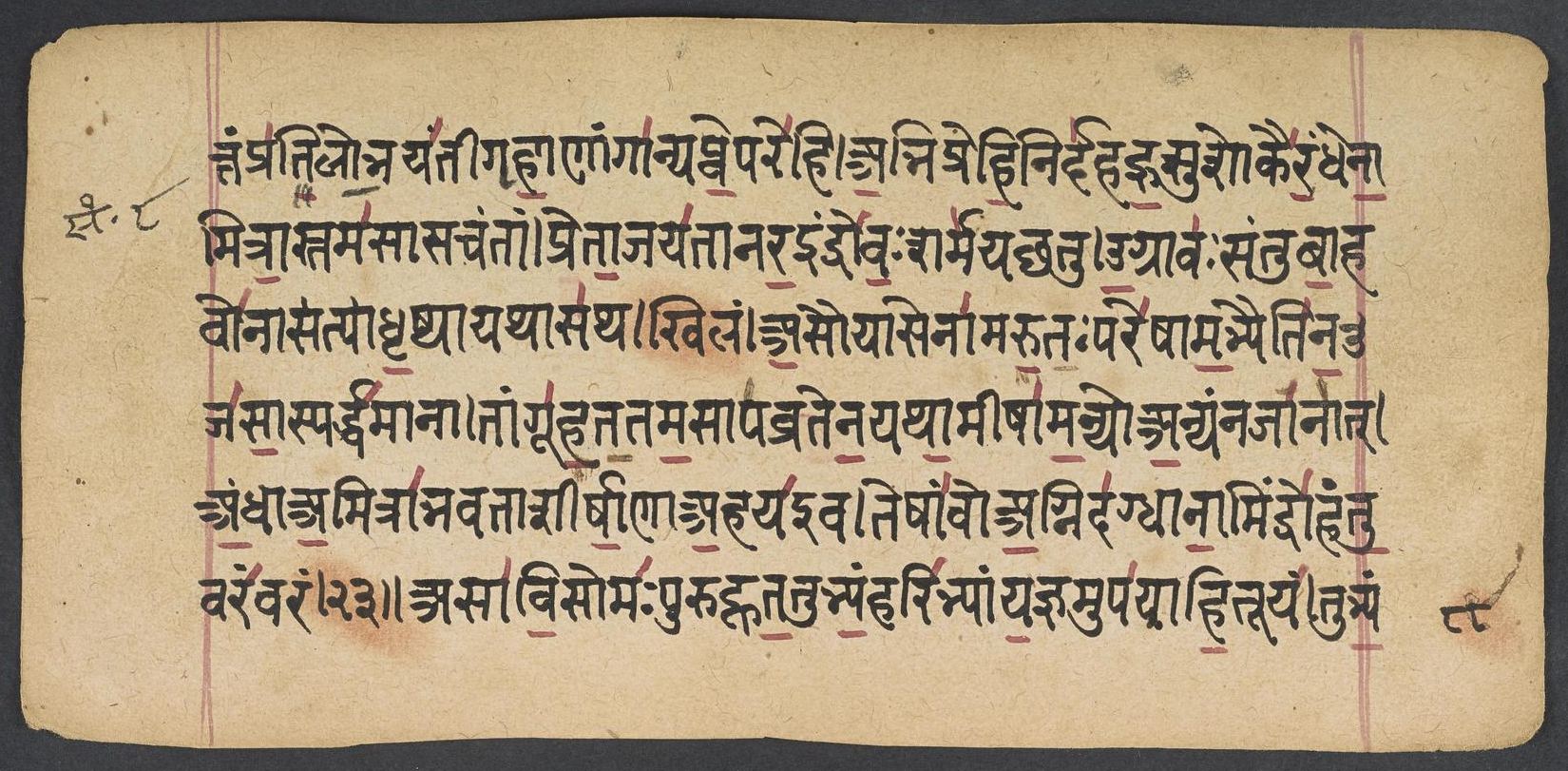
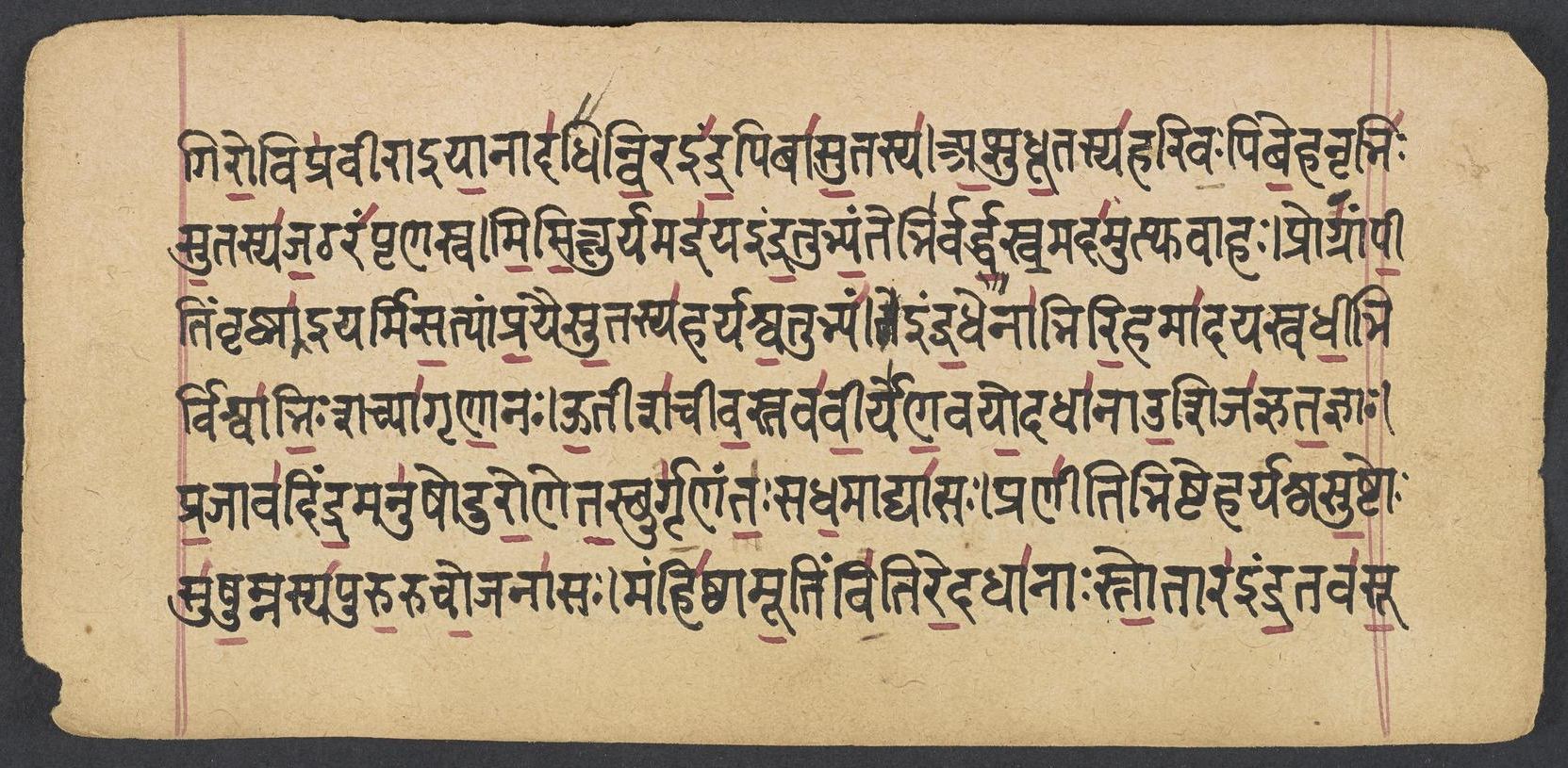
Penn Ms. Coll. 390 Item 48, fol. 89r (OPenn image 88, lower leaf). Checked on the image: the Rigveda text on this page begins in RV 10.104.1 ‹giro vipravīrā iyānā dadhanvira›. The next page with Rigveda text, fol. 89v, begins in RV 10.104.5 ‹-sūnṛtābhiḥ›. Verses 10.104.1-4 end on this page; 10.104.1 begins on fol. 88v.
1asā̍vi̱ soma̍ḥ puruhūta̱ tubhya̱ṁ hari̍bhyāṁ ya̱jñam upa̍ yāhi̱ tūya̍m | tubhya̱ṁ giro̱ vipra̍vīrā iyā̱nā da̍dhanvi̱ra i̍ndra̱ pibā̍ su̱tasya̍ ||
2a̱psu dhū̱tasya̍ hariva̱ḥ pibe̱ha nṛbhi̍ḥ su̱tasya̍ ja̱ṭhara̍m pṛṇasva | mi̱mi̱kṣur yam adra̍ya indra̱ tubhya̱ṁ tebhi̍r vardhasva̱ mada̍m ukthavāhaḥ ||
3progrām pī̱tiṁ vṛṣṇa̍ iyarmi sa̱tyām pra̱yai su̱tasya̍ haryaśva̱ tubhya̍m | indra̱ dhenā̍bhir i̱ha mā̍dayasva dhī̱bhir viśvā̍bhi̱ḥ śacyā̍ gṛṇā̱naḥ ||
4ū̱tī śa̍cīva̱s tava̍ vī̱rye̍ṇa̱ vayo̱ dadhā̍nā u̱śija̍ ṛta̱jñāḥ | pra̱jāva̍d indra̱ manu̍ṣo duro̱ṇe ta̱sthur gṛ̱ṇanta̍ḥ sadha̱mādyā̍saḥ ||
1Soma hath flowed for thee, Invoked of mat Speed to our sacrifice with both thy Coursers. To thee have streamed the songs or mighty singers, imploring, Indra, drink of our libation.
2Drink of the juice which men have washed in waters, and fill thee full, O Lord of Tawny Horses. O Indra, hearer of the laud, with Soma which stones have mixed for thee enhance thy rapture.
3To make thee start, a strong true draught I offer to thee, the Bull, O thou whom Bay Steeds carry. Here take delight, O Indra, in our voices while thou art hymned with power and all our spirit.
4O Mighty Indra, through thine aid, thy prowess, obtaining life, zealous, and skilled in Order, Men in the house who share the sacred banquet stand singing praise that brings them store of children.
Where on the image
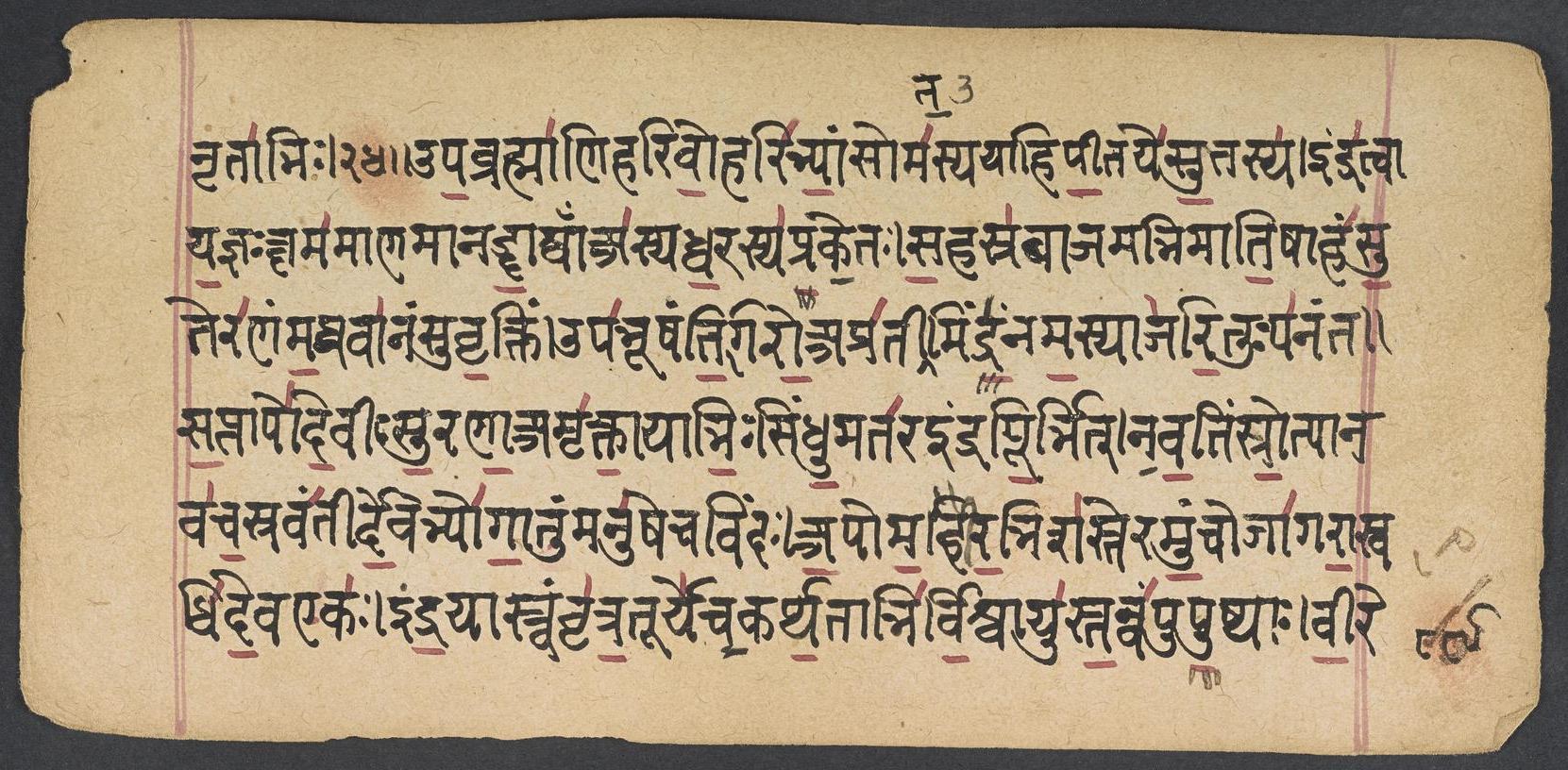
Penn Ms. Coll. 390 Item 48, fol. 89v (OPenn image 89, upper leaf). Checked on the image: the Rigveda text on this page begins in RV 10.104.5 ‹-sūnṛtābhiḥ›. The next page with Rigveda text, fol. 90r, begins in RV 10.104.10 ‹-vīreṇyaḥ kratur indraḥ suśastir›. Verses 10.104.5-9 end on this page; 10.104.5 begins on fol. 89r.
5praṇī̍tibhiṣ ṭe haryaśva su̱ṣṭoḥ su̍ṣu̱mnasya̍ puru̱ruco̱ janā̍saḥ | maṁhi̍ṣṭhām ū̱tiṁ vi̱tire̱ dadhā̍nāḥ sto̱tāra̍ indra̱ tava̍ sū̱nṛtā̍bhiḥ ||
6upa̱ brahmā̍ṇi harivo̱ hari̍bhyā̱ṁ soma̍sya yāhi pī̱taye̍ su̱tasya̍ | indra̍ tvā ya̱jñaḥ kṣama̍māṇam ānaḍ dā̱śvām̐ a̍sy adhva̱rasya̍ prake̱taḥ ||
7sa̱hasra̍vājam abhimāti̱ṣāha̍ṁ su̱tera̍ṇam ma̱ghavā̍naṁ suvṛ̱ktim | upa̍ bhūṣanti̱ giro̱ apra̍tīta̱m indra̍ṁ nama̱syā ja̍ri̱tuḥ pa̍nanta ||
8sa̱ptāpo̍ de̱vīḥ su̱raṇā̱ amṛ̍ktā̱ yābhi̱ḥ sindhu̱m ata̍ra indra pū̱rbhit | na̱va̱tiṁ sro̱tyā nava̍ ca̱ srava̍ntīr de̱vebhyo̍ gā̱tum manu̍ṣe ca vindaḥ ||
9a̱po ma̱hīr a̱bhiśa̍ster amu̱ñco 'jā̍gar ā̱sv adhi̍ de̱va eka̍ḥ | indra̱ yās tvaṁ vṛ̍tra̱tūrye̍ ca̱kartha̱ tābhi̍r vi̱śvāyu̍s ta̱nva̍m pupuṣyāḥ ||
5Through thy directions, Lord of Tawny Coursers, thine who art firm, splendid, and blest, the people Obtain most liberal aid for their salvation, and praise thee, Indra, through thine excellencies.
6Lord of the Bays, come with thy two Bay Horses, come to our prayers, to drink the juice of Soma. To thee comes sacrifice which thou acceptest: thou, skilled in holy rites, art he who giveth.
7Him of a thousand powers, subduing foemen, Maghavan praised with hymns and pleased with Soma,– Even him our songs approach, resistless Indra: the adorations of the singer laud him.
8The way to bliss for Gods and man thou foundest, Indra, seven lovely floods, divine, untroubled, Wherewith thou, rending forts, didst move the ocean, and nine-and-ninety flowing streams of water.
9Thou from the curse didst free the mighty Waters, and as their only God didst watch and guard them. O Indra, cherish evermore thy body with those which thou hast won in quelling Vr̥itra.
Where on the image
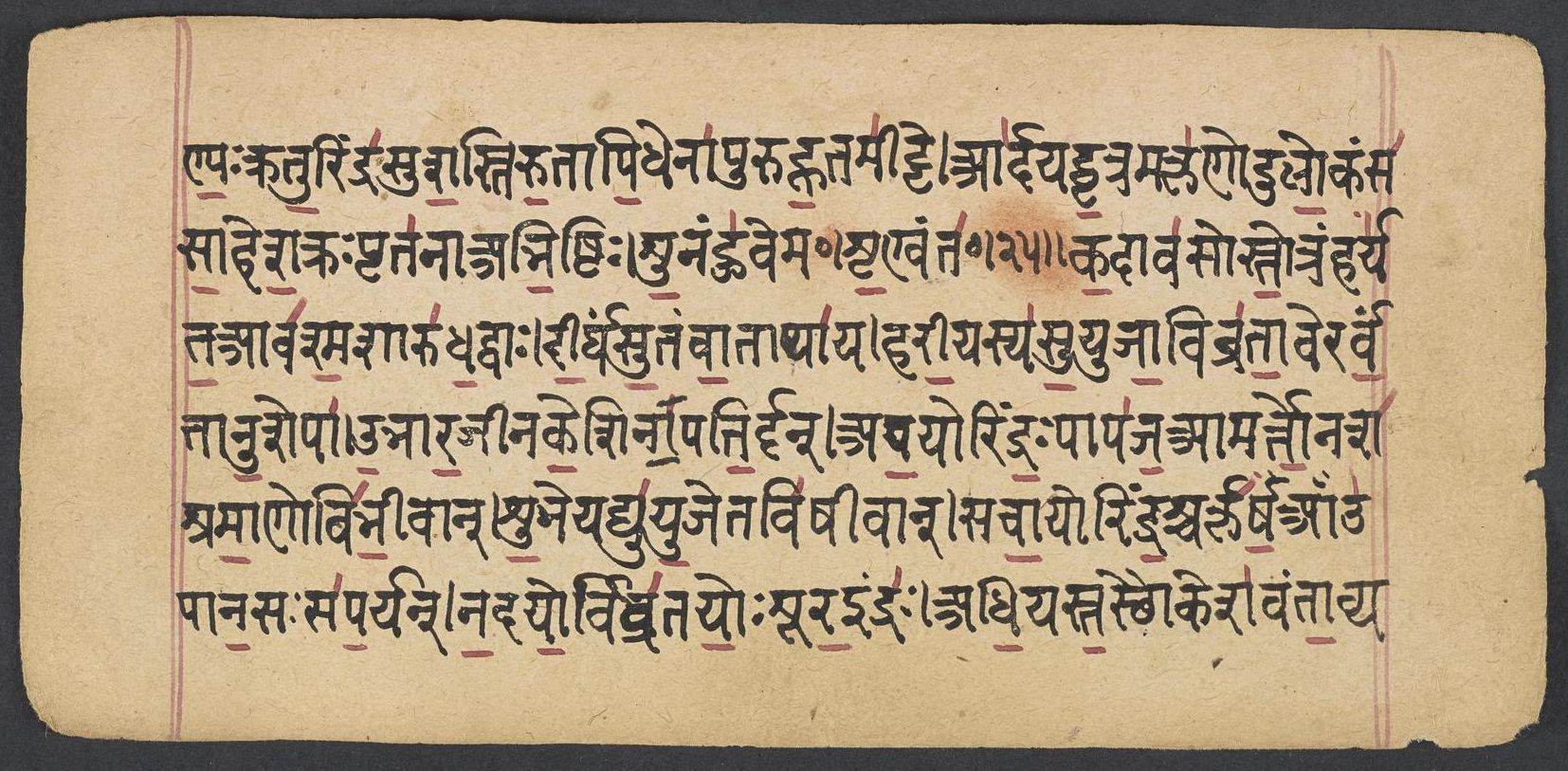
Penn Ms. Coll. 390 Item 48, fol. 90r (OPenn image 89, lower leaf). Checked on the image: the Rigveda text on this page begins in RV 10.104.10 ‹-vīreṇyaḥ kratur indraḥ suśastir›. The next page with Rigveda text, fol. 90v, begins in RV 10.105.5 ‹-vyacasvantā na puṣṭyai›. Verses 10.104.10-11 end on this page; 10.104.10 begins on fol. 89v.
10vī̱reṇya̱ḥ kratu̱r indra̍ḥ suśa̱stir u̱tāpi̱ dhenā̍ puruhū̱tam ī̍ṭṭe | ārda̍yad vṛ̱tram akṛ̍ṇod u lo̱kaṁ sa̍sā̱he śa̱kraḥ pṛta̍nā abhi̱ṣṭiḥ ||
11śu̱naṁ hu̍vema ma̱ghavā̍na̱m indra̍m a̱smin bhare̱ nṛta̍ma̱ṁ vāja̍sātau | śṛ̱ṇvanta̍m u̱gram ū̱taye̍ sa̱matsu̱ ghnanta̍ṁ vṛ̱trāṇi̍ sa̱ṁjita̱ṁ dhanā̍nām ||
10Heroic power and noble praise is Indra yea, the song worships him invoked of many. Vr̥itra he quelled, and gave men room and freedom: gakra, victorious, hath conquered armies.
11Call we on Maghavan, auspicious Indra, best Hero in this fight where spoil is gathered, The Strong, who listens, who gives aid in battles, who slays the Vr̥itras, wins and gathers riches.
Notes
- Sanskrit: Aufrecht's edition (1877) with the Vedic accents, as entered by van Nooten and Holland (GRETIL).
- English: Ralph T. H. Griffith, The Hymns of the Rigveda (1889-1892; 2nd ed. 1896-1897), from the VedaWeb digital text; OCR slips in that text were corrected against the printed 2nd edition (data/sources/rigveda/griffith_errata.json).
Cite
Sources
- Source: Penn Ms. Coll. 390 Item 48 (1711 CE (colophon: Saṃvat 1768)), OPenn, Public Domain Mark + Aufrecht's accented text (GRETIL) + Griffith's English (VedaWeb) (holding institution)
- Critical edition: Aufrecht (1877), accented e-text via GRETIL
← previous · → next · v cycle view · l back to library