Rigveda 10.105: To Indra
Introduction
Rigveda 10.105 is a hymn of 11 verses addressed to Indra. It stands in book (maṇḍala) 10, the last and latest book. The Rigveda is the oldest collection of Sanskrit hymns, composed in the second half of the second millennium BCE and handed down orally for many centuries before it was written down.
The manuscript shown is Penn Ms. Coll. 390 Item 48 (University of Pennsylvania), a paper manuscript of the eighth aṣṭaka (RV 10.46-10.191) of the Ṛgveda Saṃhitā in Devanāgarī, 158 leaves, 6 lines to the page, with the accents marked in red; the scribe's colophon on fol. 158 gives Saṃvat 1768 (1711 CE); this hymn stands on fol. 90r-91r. Each section below gives the verses that end on one page; the page boundaries were read on the images (the opening words of every page), not counted out. Like most Rigveda manuscripts, Penn Ms. Coll. 390 Item 48 writes a repeated refrain in short form after its first occurrence (for example kasmai° for kasmai devāya haviṣā vidhema); the Sanskrit shown is the full text of Aufrecht's edition.
How was this verified? (Provenance)
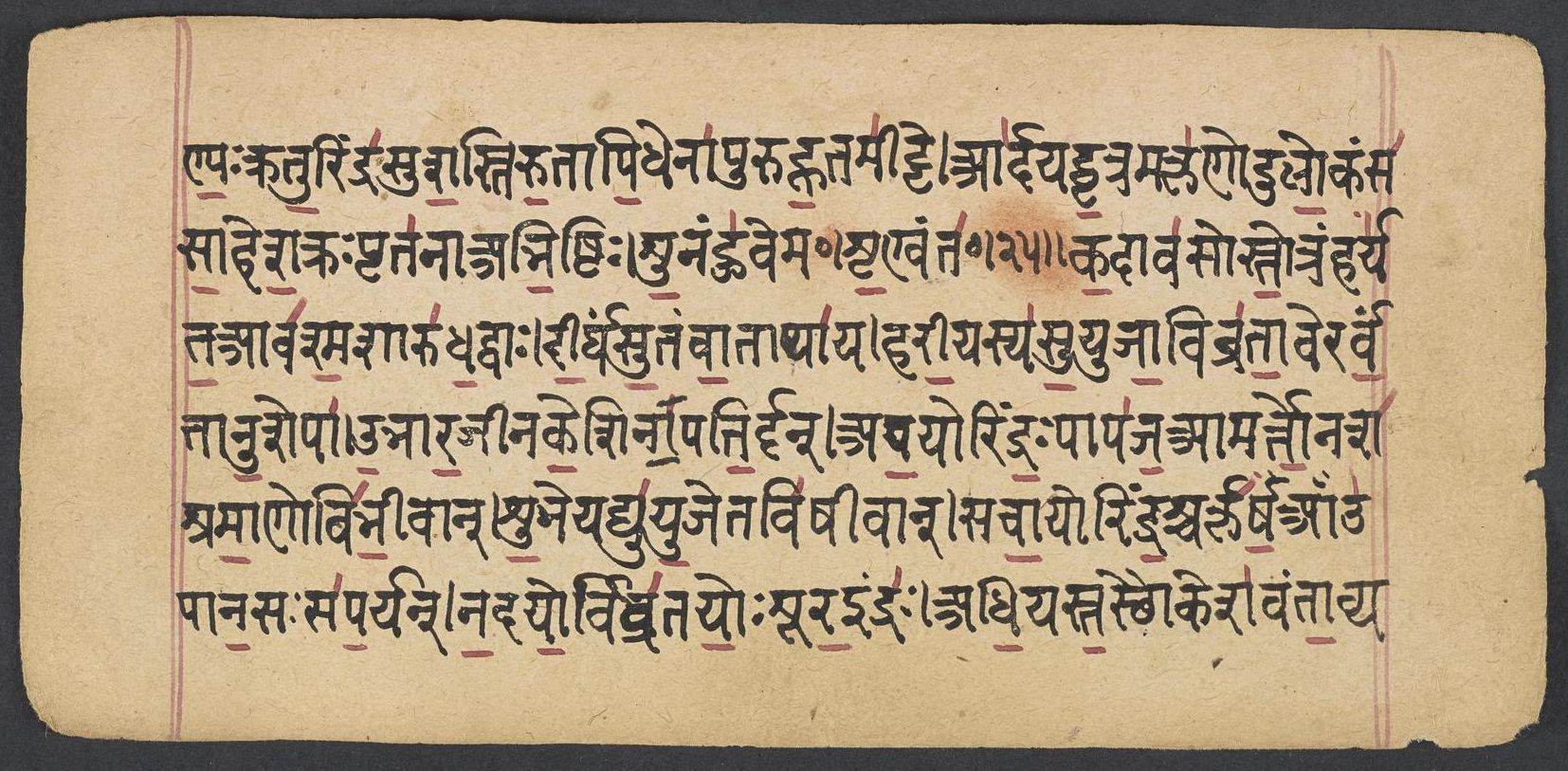
Where on the image
Penn Ms. Coll. 390 Item 48, fol. 90r (OPenn image 89, lower leaf). Checked on the image: the Rigveda text on this page begins in RV 10.104.10 ‹-vīreṇyaḥ kratur indraḥ suśastir›. The next page with Rigveda text, fol. 90v, begins in RV 10.105.5 ‹-vyacasvantā na puṣṭyai›. Verses 10.105.1-4 end on this page.
1ka̱dā va̍so sto̱traṁ harya̍ta̱ āva̍ śma̱śā ru̍dha̱d vāḥ | dī̱rghaṁ su̱taṁ vā̱tāpyā̍ya ||
2harī̱ yasya̍ su̱yujā̱ vivra̍tā̱ ver arva̱ntānu̱ śepā̍ | u̱bhā ra̱jī na ke̱śinā̱ pati̱r dan ||
3apa̱ yor indra̱ḥ pāpa̍ja̱ ā marto̱ na śa̍śramā̱ṇo bi̍bhī̱vān | śu̱bhe yad yu̍yu̱je tavi̍ṣīvān ||
4sacā̱yor indra̱ś carkṛ̍ṣa̱ ām̐ u̍pāna̱saḥ sa̍pa̱ryan | na̱dayo̱r vivra̍tayo̱ḥ śūra̱ indra̍ḥ ||
1WHEN, Vasu, wilt thou love the laud? Now let the channel bring the stream. The juice is ready to ferment.
2He whose two Bay Steeds harnessed well, swerving, pursue the Bird's tail-plumes, With Rowing manes, like heaven and earth, he is the Lord with power to give.
3Bereft of skill is Indra, if, like some outwearied man he fears The sinner, when the Mighty hath prepared himself for victory.
4Indra with these drives round, until he meets with one to worship him: Indra is Master of the pair who snort and swerve upon their way.
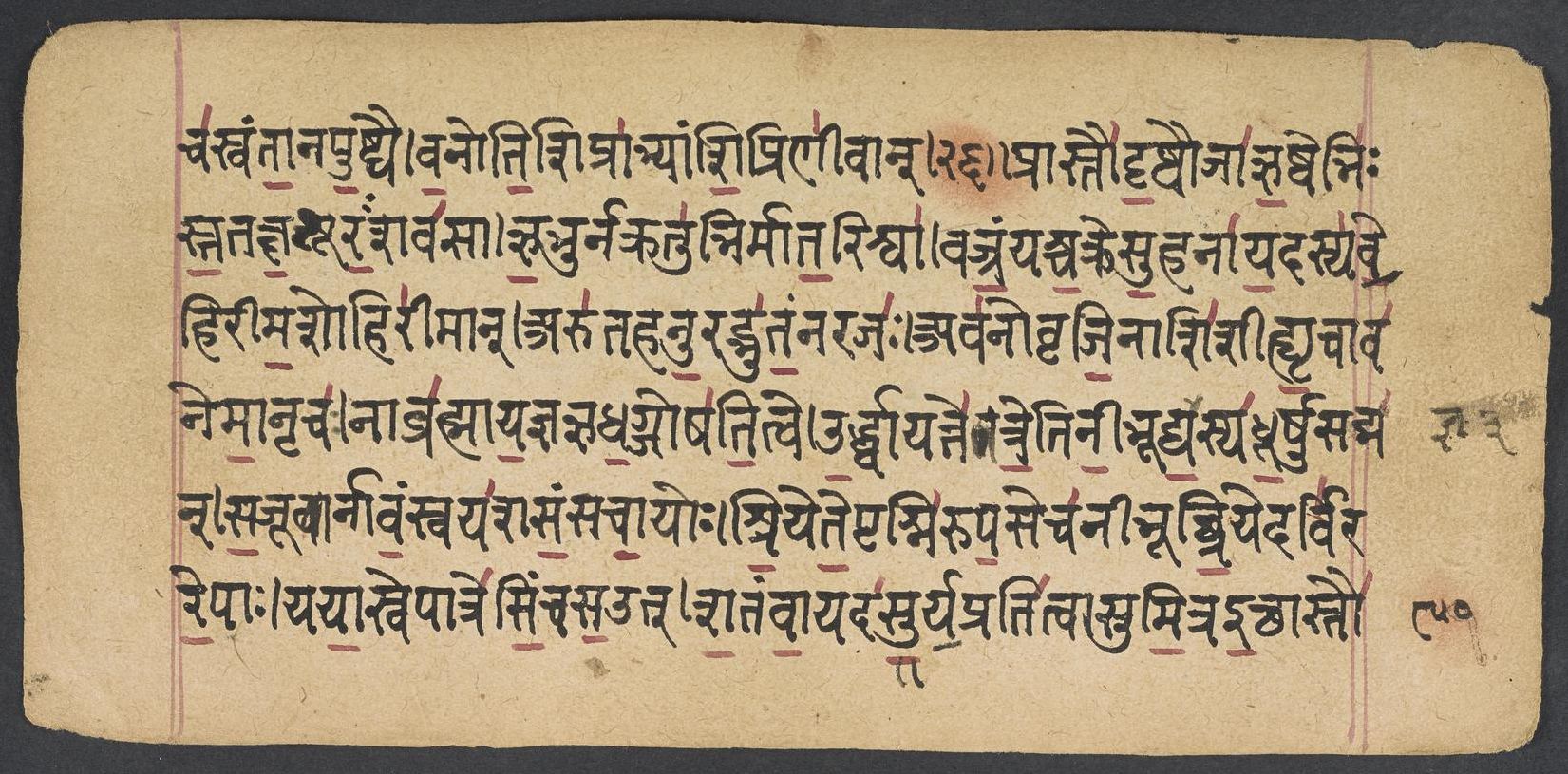
Where on the image
Penn Ms. Coll. 390 Item 48, fol. 90v (OPenn image 90, upper leaf). Checked on the image: the Rigveda text on this page begins in RV 10.105.5 ‹-vyacasvantā na puṣṭyai›. The next page with Rigveda text, fol. 91r, begins in RV 10.105.11 ‹-itthāstaud durmitra itthāstaut›. Verses 10.105.5-10 end on this page; 10.105.5 begins on fol. 90r.
5adhi̱ yas ta̱sthau keśa̍vantā̱ vyaca̍svantā̱ na pu̱ṣṭyai | va̱noti̱ śiprā̍bhyāṁ śi̱priṇī̍vān ||
6prāstau̍d ṛ̱ṣvaujā̍ ṛ̱ṣvebhi̍s ta̱takṣa̱ śūra̱ḥ śava̍sā | ṛ̱bhur na kratu̍bhir māta̱riśvā̍ ||
7vajra̱ṁ yaś ca̱kre su̱hanā̍ya̱ dasya̍ve hirīma̱śo hirī̍mān | aru̍tahanu̱r adbhu̍ta̱ṁ na raja̍ḥ ||
8ava̍ no vṛji̱nā śi̍śīhy ṛ̱cā va̍nemā̱nṛca̍ḥ | nābra̍hmā ya̱jña ṛdha̱g joṣa̍ti̱ tve ||
9ū̱rdhvā yat te̍ tre̱tinī̱ bhūd ya̱jñasya̍ dhū̱rṣu sadma̍n | sa̱jūr nāva̱ṁ svaya̍śasa̱ṁ sacā̱yoḥ ||
10śri̱ye te̱ pṛśni̍r upa̱seca̍nī bhūc chri̱ye darvi̍r are̱pāḥ | yayā̱ sve pātre̍ si̱ñcasa̱ ut ||
5Borne onward by the long-maned Steeds who stretch themselves as 'twere for food, The God who wears the helm defends them with his jaws.
6The Mighty sang with Lofty Ones: the Hero fashioned with his strength, Like skilful Mâtariṣvan with his power and might,
7The bolt, which pierced at once the vitals of the Dasyu easy to be slain, With jaw uninjured like the wondrous firmament.
8Grind off our sins: with song will we conquer the men who sing no hymns: Not easily art thou pleased with prayerless sacrifice.
9When threefold flame burns high for thee, to rest on poles of sacrifice, Thou with the living joyest in the self-bright Ship.
10Thy glory was the speckled cup, thy glory was the flawless scoop. Wherewith thou pourest into thy receptacle.
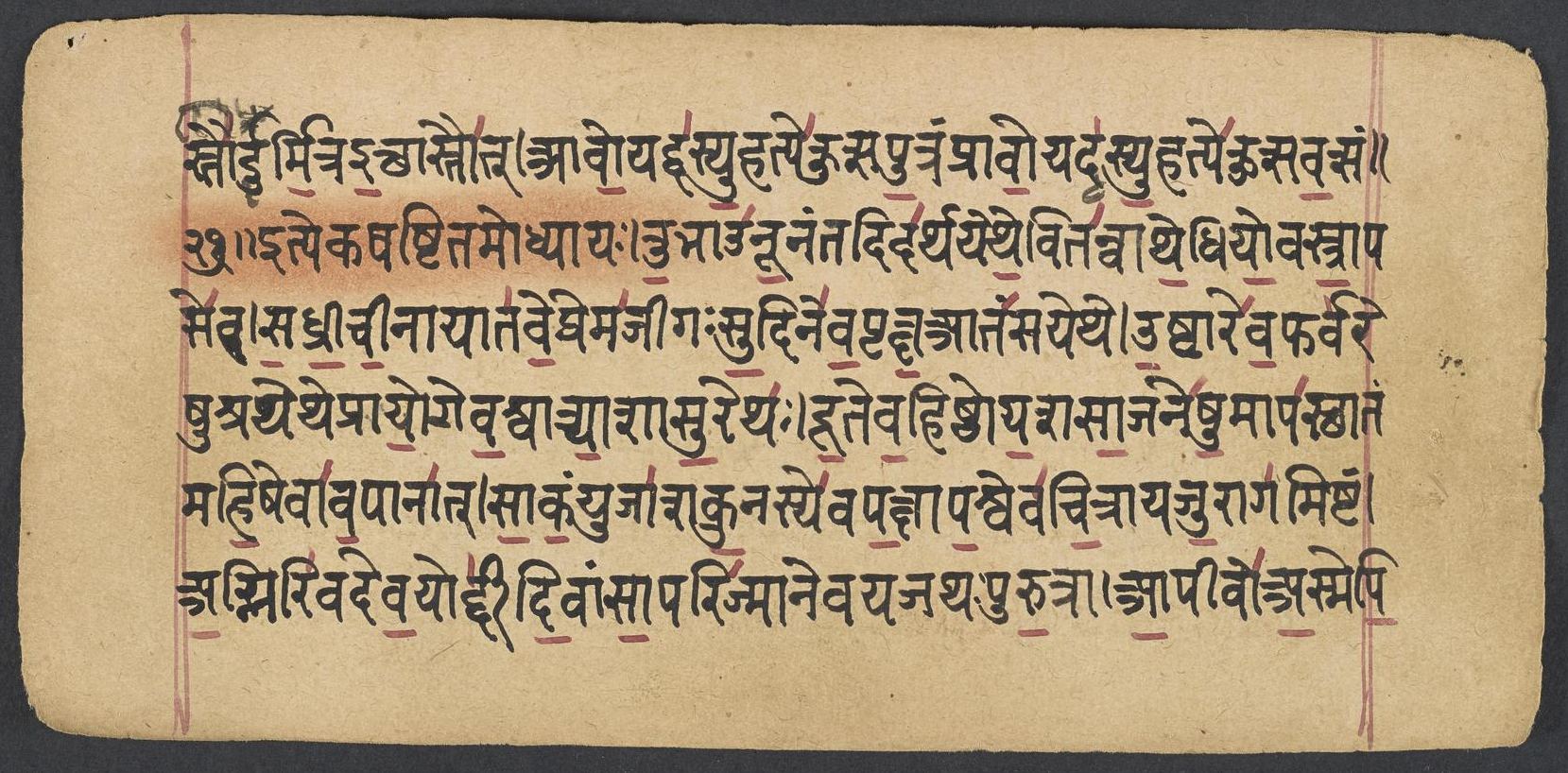
Where on the image
Penn Ms. Coll. 390 Item 48, fol. 91r (OPenn image 90, lower leaf). Checked on the image: the Rigveda text on this page begins in RV 10.105.11 ‹-itthāstaud durmitra itthāstaut›. The next page with Rigveda text, fol. 91v, begins in RV 10.106.4 ‹-pitareva putrogreva rucā nṛpatīva›. Verse 10.105.11 ends on this page; 10.105.11 begins on fol. 90v.
11śa̱taṁ vā̱ yad a̍surya̱ prati̍ tvā sumi̱tra i̱tthāstau̍d durmi̱tra i̱tthāstau̍t | āvo̱ yad da̍syu̱hatye̍ kutsapu̱tram prāvo̱ yad da̍syu̱hatye̍ kutsava̱tsam ||
11As hundreds, O Immortal God, have sung to thee, so hath Sumitra, yea, Durmitra praised thee here, What time thou holpest Kutsa's son, when Dasyus fell, yea, holpest Kutsa's darling when the Dasyus died.
Notes
- Sanskrit: Aufrecht's edition (1877) with the Vedic accents, as entered by van Nooten and Holland (GRETIL).
- English: Ralph T. H. Griffith, The Hymns of the Rigveda (1889-1892; 2nd ed. 1896-1897), from the VedaWeb digital text; OCR slips in that text were corrected against the printed 2nd edition (data/sources/rigveda/griffith_errata.json).
Cite
Sources
- Source: Penn Ms. Coll. 390 Item 48 (1711 CE (colophon: Saṃvat 1768)), OPenn, Public Domain Mark + Aufrecht's accented text (GRETIL) + Griffith's English (VedaWeb) (holding institution)
- Critical edition: Aufrecht (1877), accented e-text via GRETIL
← previous · → next · v cycle view · l back to library