Rigveda 10.12: To Agni
Introduction
Rigveda 10.12 is a hymn of 9 verses addressed to Agni. It stands in book (maṇḍala) 10, the last and latest book. The Rigveda is the oldest collection of Sanskrit hymns, composed in the second half of the second millennium BCE and handed down orally for many centuries before it was written down.
The manuscript shown is Penn Ms. Coll. 390 Item 41 (University of Pennsylvania), an undated paper manuscript of the padapāṭha (the word-by-word recitation text, in which every word is written separately and compounds are split) of the whole Ṛgveda in Devanāgarī, 884 leaves in fascicles, 7-9 lines to the page, accents in red; this hymn stands on fol. 751r-751v. Each section below gives the verses that end on one page; the page boundaries were read on the images (the opening words of every page), not counted out. Where the manuscript is a padapāṭha (the word-by-word recitation text), the section shows Aufrecht's continuous (saṃhitā) text first and, as the edition text, the padapāṭha of the same verses, which is the form written on the page.
How was this verified? (Provenance)
Where on the image
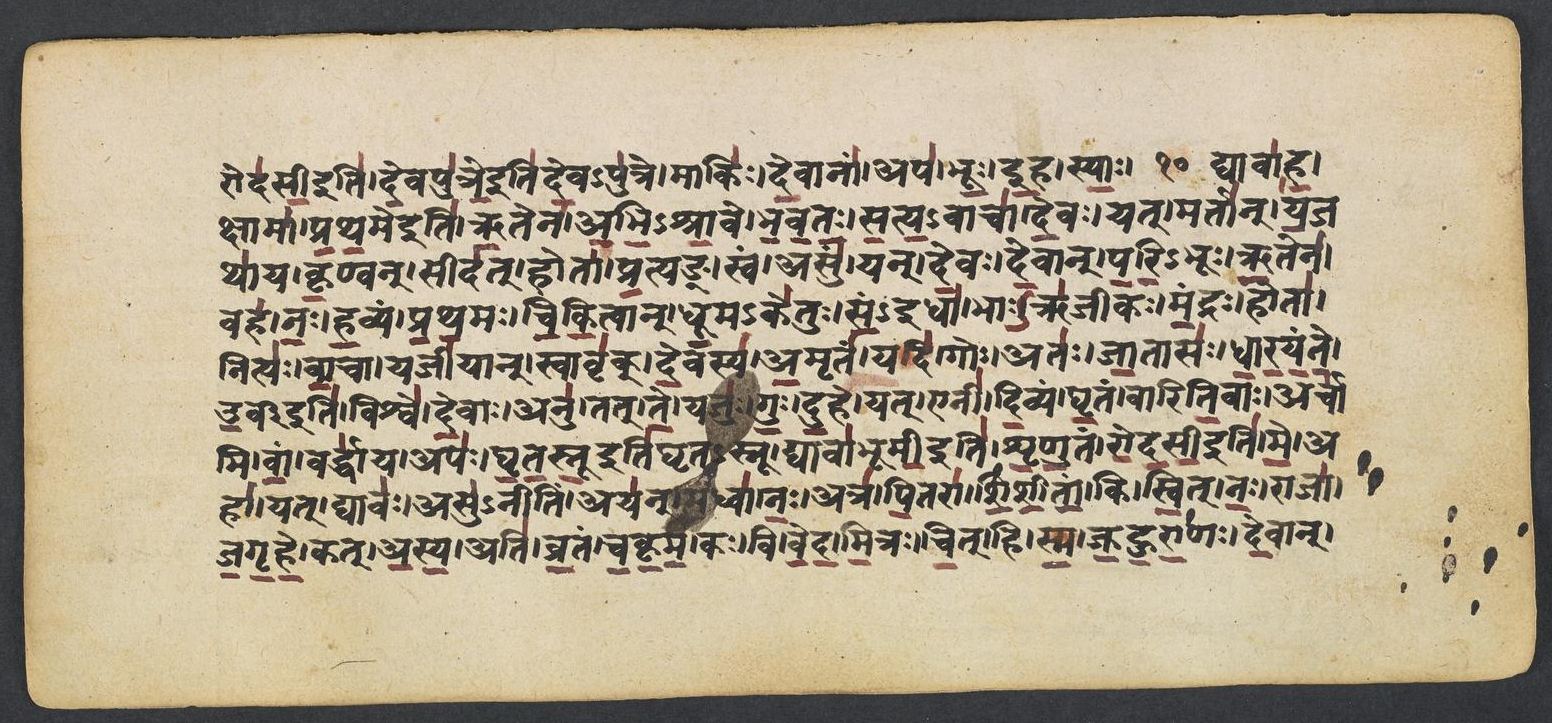
Penn Ms. Coll. 390 Item 41, fol. 751r (numbered 68r by the scribe) (OPenn image 751, lower leaf). Checked on the image: the Rigveda text on this page begins in RV 10.11.9 ‹rodasī iti devaputreitideva-putre mākiḥ›. The next page with Rigveda text, fol. 751v (numbered 68v by the scribe), begins in RV 10.12.5 ‹ślokaḥ na yātām api›. Verses 10.12.1-4 end on this page.
1dyāvā̍ ha̱ kṣāmā̍ pratha̱me ṛ̱tenā̍bhiśrā̱ve bha̍vataḥ satya̱vācā̍ | de̱vo yan martā̍n ya̱jathā̍ya kṛ̱ṇvan sīda̱d dhotā̍ pra̱tyaṅ svam asu̱ṁ yan ||
2de̱vo de̱vān pa̍ri̱bhūr ṛ̱tena̱ vahā̍ no ha̱vyam pra̍tha̱maś ci̍ki̱tvān | dhū̱make̍tuḥ sa̱midhā̱ bhāṛ̍jīko ma̱ndro hotā̱ nityo̍ vā̱cā yajī̍yān ||
3svāvṛ̍g de̱vasyā̱mṛta̱ṁ yadī̱ gor ato̍ jā̱tāso̍ dhārayanta u̱rvī | viśve̍ de̱vā anu̱ tat te̱ yaju̍r gur du̱he yad enī̍ di̱vyaṁ ghṛ̱taṁ vāḥ ||
4arcā̍mi vā̱ṁ vardhā̱yāpo̍ ghṛtasnū̱ dyāvā̍bhūmī śṛṇu̱taṁ ro̍dasī me | ahā̱ yad dyāvo 'su̍nīti̱m aya̱n madhvā̍ no̱ atra̍ pi̱tarā̍ śiśītām ||
Compare: Padapāṭha (word-by-word text written in the manuscript; Sansknet e-text via GRETIL)
1dyāvā | ha | kṣāmā | prathame iti | ṛtena | abhi-śrāve | bhavataḥ | satya-vācā | devaḥ | yat | martān | yajathāya | kṛṇvan | sīdat | hotā | pratyaṅ | svam | asum | yan
2devaḥ | devān | pari-bhūḥ | ṛtena | vaha | naḥ | havyam | prathamaḥ | cikitvān | dhūma-ketuḥ | sam-idhā | bhāḥ-ṛjīkaḥ | mandraḥ | hotā | nityaḥ | vācā | yajīyān
3svāvṛk | devasya | amṛtam | yadi | goḥ | ataḥ | jātāsaḥ | dhārayante | urvī iti | viśve | devāḥ | anu | tat | te | yajuḥ | guḥ | duhe | yat | enī | divyam | ghṛtam | vārit ivāḥ
4arcāmi | vām | vardhāya | apaḥ | ghṛtasnūitighṛta-snū | dyāvābhūmī iti | śṛṇutam | rodasī iti | me | ahā | yat | dyāvaḥ | asu-nītim | ayan | madhvā | naḥ | atra | pitarā | śiśītām
1HEAVEN and Earth, first by everlasting Order, speakers of truth, are near enough to hear us, When the God, urging men to worship. sitteth as Priest, assuming all his vital vigour.
2As God comprising Gods by Law Eternal, bear, as the Chief who knoweth, our oblation, Smoke-bannered with the fuel, radiant, joyous, better to praise and worship, Priest for ever.
3When the cow's nectar wins the God completely, men here below are heaven's sustainers. All the Gods came to this thy heavenly Yajus which from the motley Pair milked oil and water.
4I praise your work that ye may make me prosper: hear, Heaven and Earth, Twain Worlds that drop with fatness. While days and nights go to the world of spirits, here let the Parents with sweet meath refresh us
Where on the image
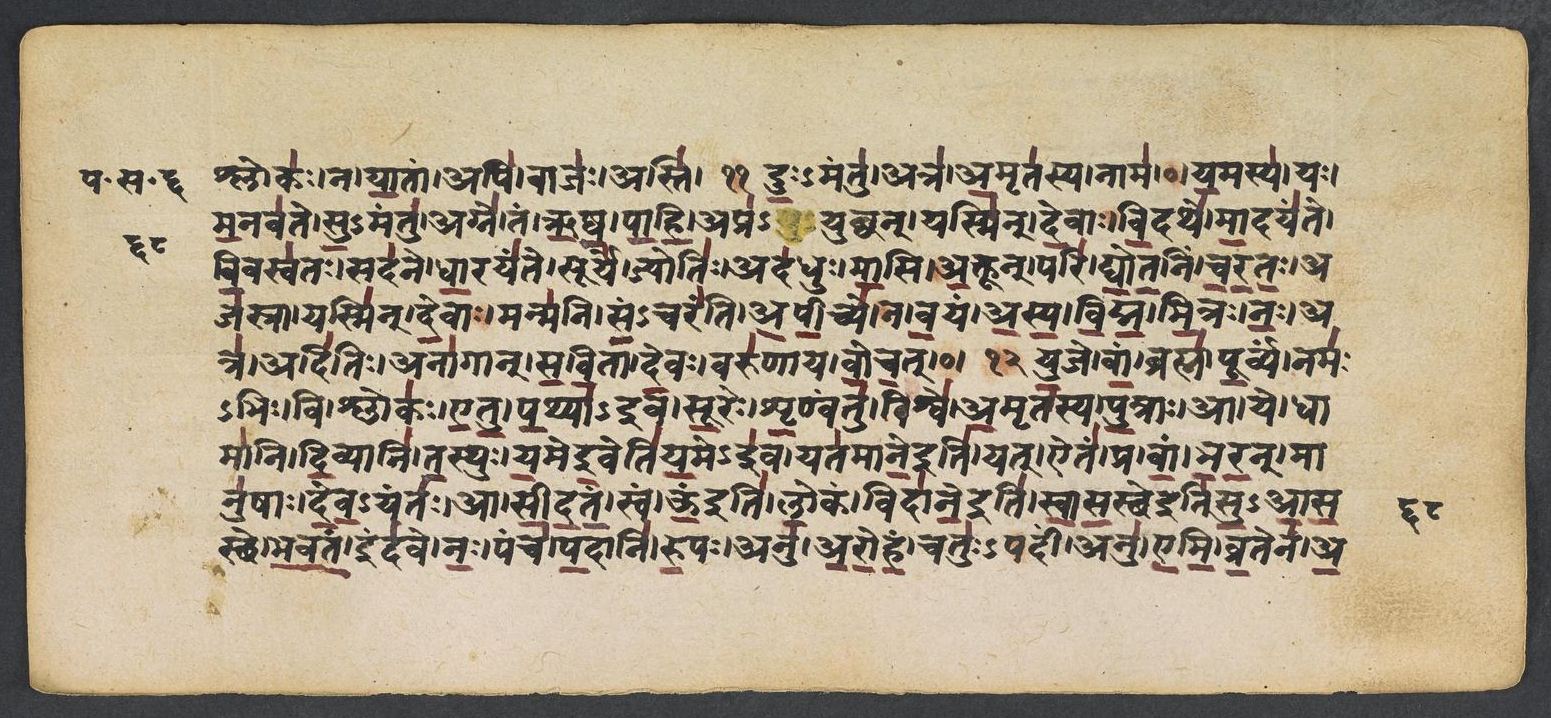
Penn Ms. Coll. 390 Item 41, fol. 751v (numbered 68v by the scribe) (OPenn image 752, upper leaf). Checked on the image: the Rigveda text on this page begins in RV 10.12.5 ‹ślokaḥ na yātām api›. The next page with Rigveda text, fol. 752r (numbered 69r by the scribe), begins in RV 10.13.3 ‹-akṣareṇa prati mime etām›. Verses 10.12.5-9 end on this page; 10.12.5 begins on fol. 751r (numbered 68r by the scribe).
5kiṁ svi̍n no̱ rājā̍ jagṛhe̱ kad a̱syāti̍ vra̱taṁ ca̍kṛmā̱ ko vi ve̍da | mi̱traś ci̱d dhi ṣmā̍ juhurā̱ṇo de̱vāñ chloko̱ na yā̱tām api̱ vājo̱ asti̍ ||
6du̱rmantv atrā̱mṛta̍sya̱ nāma̱ sala̍kṣmā̱ yad viṣu̍rūpā̱ bhavā̍ti | ya̱masya̱ yo ma̱nava̍te su̱mantv agne̱ tam ṛ̍ṣva pā̱hy apra̍yucchan ||
7yasmi̍n de̱vā vi̱dathe̍ mā̱daya̍nte vi̱vasva̍ta̱ḥ sada̍ne dhā̱raya̍nte | sūrye̱ jyoti̱r ada̍dhur mā̱sy a1̱̍ktūn pari̍ dyota̱niṁ ca̍rato̱ aja̍srā ||
8yasmi̍n de̱vā manma̍ni sa̱ṁcara̍nty apī̱cye̱3̱̍ na va̱yam a̍sya vidma | mi̱tro no̱ atrādi̍ti̱r anā̍gān savi̱tā de̱vo varu̍ṇāya vocat ||
9śru̱dhī no̍ agne̱ sada̍ne sa̱dhasthe̍ yu̱kṣvā ratha̍m a̱mṛta̍sya dravi̱tnum | ā no̍ vaha̱ roda̍sī de̱vapu̍tre̱ māki̍r de̱vānā̱m apa̍ bhūr i̱ha syā̍ḥ ||
Compare: Padapāṭha (word-by-word text written in the manuscript; Sansknet e-text via GRETIL)
5kim | svit | naḥ | rājā | jagṛhe | kat | asya | ati | vratam | cakṛma | kaḥ | vi | veda | mi traḥ | cit | hi | sma | juhurāṇaḥ | devān | ślokaḥ | na | yātām | api | vājaḥ | asti
6duḥ-mantu | atra | amṛtasya | nāma | sa-lakṣmā | yat | viṣu-rūpā | bhavāti | yamasya | yaḥ | manavate | su-mantu | agne | tam | ṛṣva | pāhi | apra-yucchan
7yasmin | devāḥ | vidathe | mādayante | vivasvataḥ | sadane | dhārayante | sūrye | jyotiḥ | adadhuḥ | māsi | aktūn | pari | dyotanim | carataḥ | ajasrā
8yasmin | devāḥ | manmani | sam-caranti | apīcye | na | vayam | asya | vidma | mitraḥ | naḥ | atra | aditiḥ | anāgān | savitā | devaḥ | varuṇāya | vocat
9śrudhi | naḥ | agne | sadane | sadha-sthe | yukṣva | ratham | amṛtasya | dravitnum | ā | naḥ | vaha | rodasī iti | devaputreitideva-putre | mākiḥ | devānām | apa | bhūḥ | iha | syāḥ
5Hath the King siezed us? How have we offended against his holy ordinance? Who knoweth? For even Mitra mid the Gods is angry there are both song and strength for those who come not.
6'Tis hard to understand the Immortal's nature, where she who is akin becomes astranger. Guard ceaselessly, great Agni, him who ponders Yama's name, easy to be comprehended.
7They in the synod where the Gods rejoice them, where they are seated in Vivasvan's dwelling, Have given the Moon his beams, the Sun his splendour-the Two unweariedly maintain their brightness.
8The counsel which the Gods meet to consider, their secret plan,– of that we have no knowledge. There let God Savitar, Aditi, and Mitra proclaim to Varuṇa that we are sinless.
9Hear us, O Agni, in your common dwell ing: harness thy rapid car, the car of Amrit. Bring Heaven and Earth, the Deities' Parents, hither: stay with us here, nor from the Gods be distant.
Notes
- Sanskrit: Aufrecht's edition (1877) with the Vedic accents, as entered by van Nooten and Holland (GRETIL).
- English: Ralph T. H. Griffith, The Hymns of the Rigveda (1889-1892; 2nd ed. 1896-1897), from the VedaWeb digital text; OCR slips in that text were corrected against the printed 2nd edition (data/sources/rigveda/griffith_errata.json).
- Padapāṭha (edition text): Sansknet e-text via GRETIL (CC BY-NC-SA 4.0).
Cite
Sources
- Source: Penn Ms. Coll. 390 Item 41 (undated (catalogued with Penn's 18th-19th c. Vedic manuscripts)), OPenn, Public Domain Mark + Aufrecht's accented text (GRETIL) + Griffith's English (VedaWeb) (holding institution)
- Critical edition: Aufrecht (1877), accented e-text via GRETIL
← previous · → next · v cycle view · l back to library