Rigveda 10.112: To Indra
Introduction
Rigveda 10.112 is a hymn of 10 verses addressed to Indra. It stands in book (maṇḍala) 10, the last and latest book. The Rigveda is the oldest collection of Sanskrit hymns, composed in the second half of the second millennium BCE and handed down orally for many centuries before it was written down.
The manuscript shown is Penn Ms. Coll. 390 Item 48 (University of Pennsylvania), a paper manuscript of the eighth aṣṭaka (RV 10.46-10.191) of the Ṛgveda Saṃhitā in Devanāgarī, 158 leaves, 6 lines to the page, with the accents marked in red; the scribe's colophon on fol. 158 gives Saṃvat 1768 (1711 CE); this hymn stands on fol. 98v-99v. Each section below gives the verses that end on one page; the page boundaries were read on the images (the opening words of every page), not counted out. Like most Rigveda manuscripts, Penn Ms. Coll. 390 Item 48 writes a repeated refrain in short form after its first occurrence (for example kasmai° for kasmai devāya haviṣā vidhema); the Sanskrit shown is the full text of Aufrecht's edition.
How was this verified? (Provenance)
Where on the image
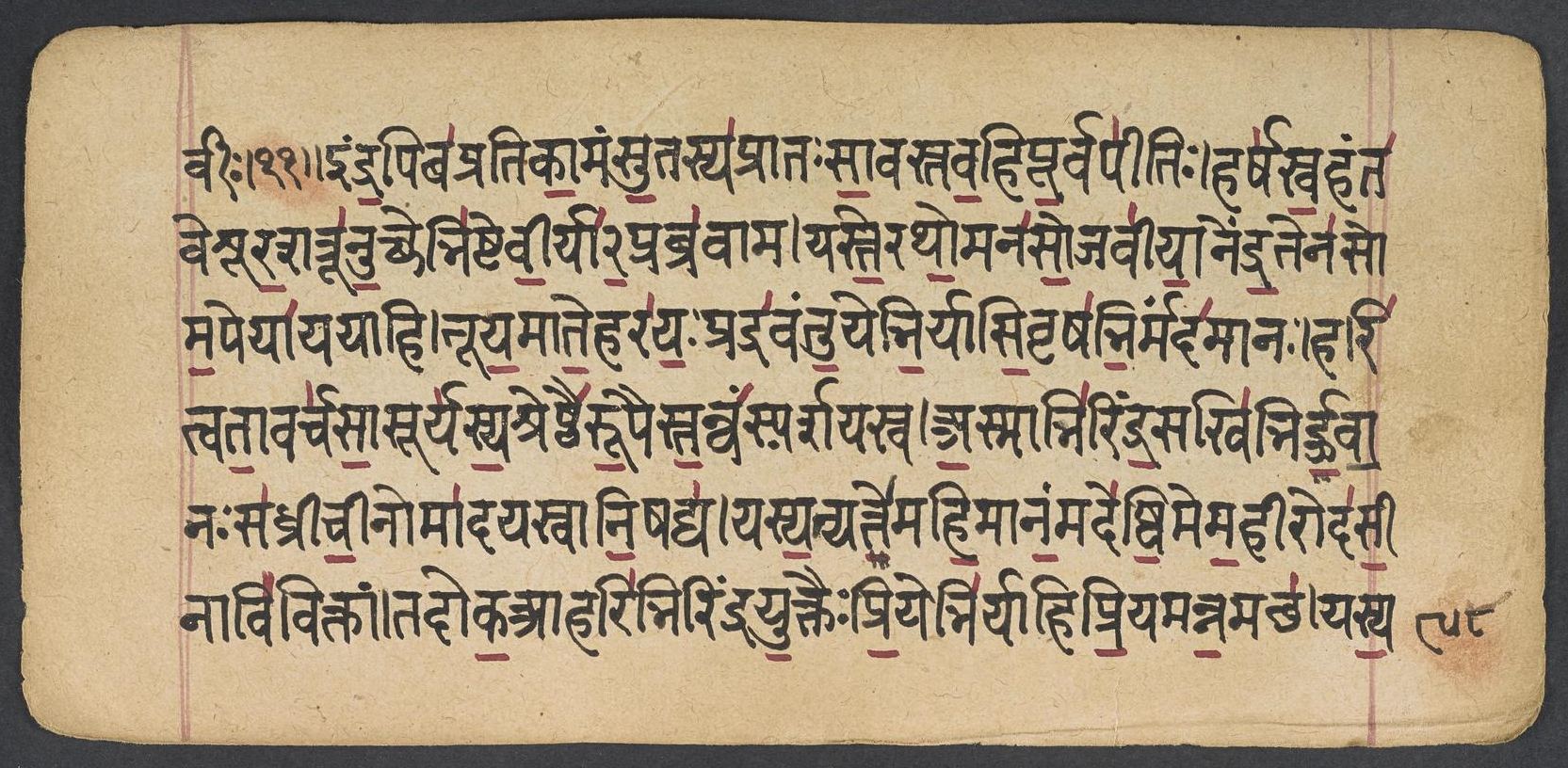
Penn Ms. Coll. 390 Item 48, fol. 98v (OPenn image 98, upper leaf). Checked on the image: the Rigveda text on this page begins in RV 10.111.10 ‹-pūrvīḥ›. The next page with Rigveda text, fol. 99r, begins in RV 10.112.5 ‹-śaśvat papivām̐ indra śatrūn›. Verses 10.112.1-4 end on this page.
1indra̱ piba̍ pratikā̱maṁ su̱tasya̍ prātaḥsā̱vas tava̱ hi pū̱rvapī̍tiḥ | harṣa̍sva̱ hanta̍ve śūra̱ śatrū̍n u̱kthebhi̍ṣ ṭe vī̱ryā̱3̱̍ pra bra̍vāma ||
2yas te̱ ratho̱ mana̍so̱ javī̍yā̱n endra̱ tena̍ soma̱peyā̍ya yāhi | tūya̱m ā te̱ hara̍ya̱ḥ pra dra̍vantu̱ yebhi̱r yāsi̱ vṛṣa̍bhi̱r manda̍mānaḥ ||
3hari̍tvatā̱ varca̍sā̱ sūrya̍sya̱ śreṣṭhai̍ rū̱pais ta̱nva̍ṁ sparśayasva | a̱smābhi̍r indra̱ sakhi̍bhir huvā̱naḥ sa̍dhrīcī̱no mā̍dayasvā ni̱ṣadya̍ ||
4yasya̱ tyat te̍ mahi̱māna̱m made̍ṣv i̱me ma̱hī roda̍sī̱ nāvi̍viktām | tad oka̱ ā hari̍bhir indra yu̱ktaiḥ pri̱yebhi̍r yāhi pri̱yam anna̱m accha̍ ||
1DRINK of the juice, O Indra, at thy plea. sure, for thy first draught is early morn's libation. Rejoice, that thou mayst slay our foes, O Hero, and we with lauds will tell thy mighty exploits.
2Thou hast a car more swift than thought, O Indra; thercon come hither, come to drink the Soma. Let thy Bay Steeds, thy Stallions, hasten hither, with whom thou cornest nigh and art delighted.
3Deck out thy body with the fairest colours, with golden splendour of the Sun adorn it. O Indra, turn thee hitherward invited by us thy friends; be seated and be joyful.
4O thou whose grandeur in thy festive transports not even these two great worlds have comprehended. Come, Indra, with thy dear Bay Horses harnessed, come to our dwelling and the food thou lovest.
Where on the image
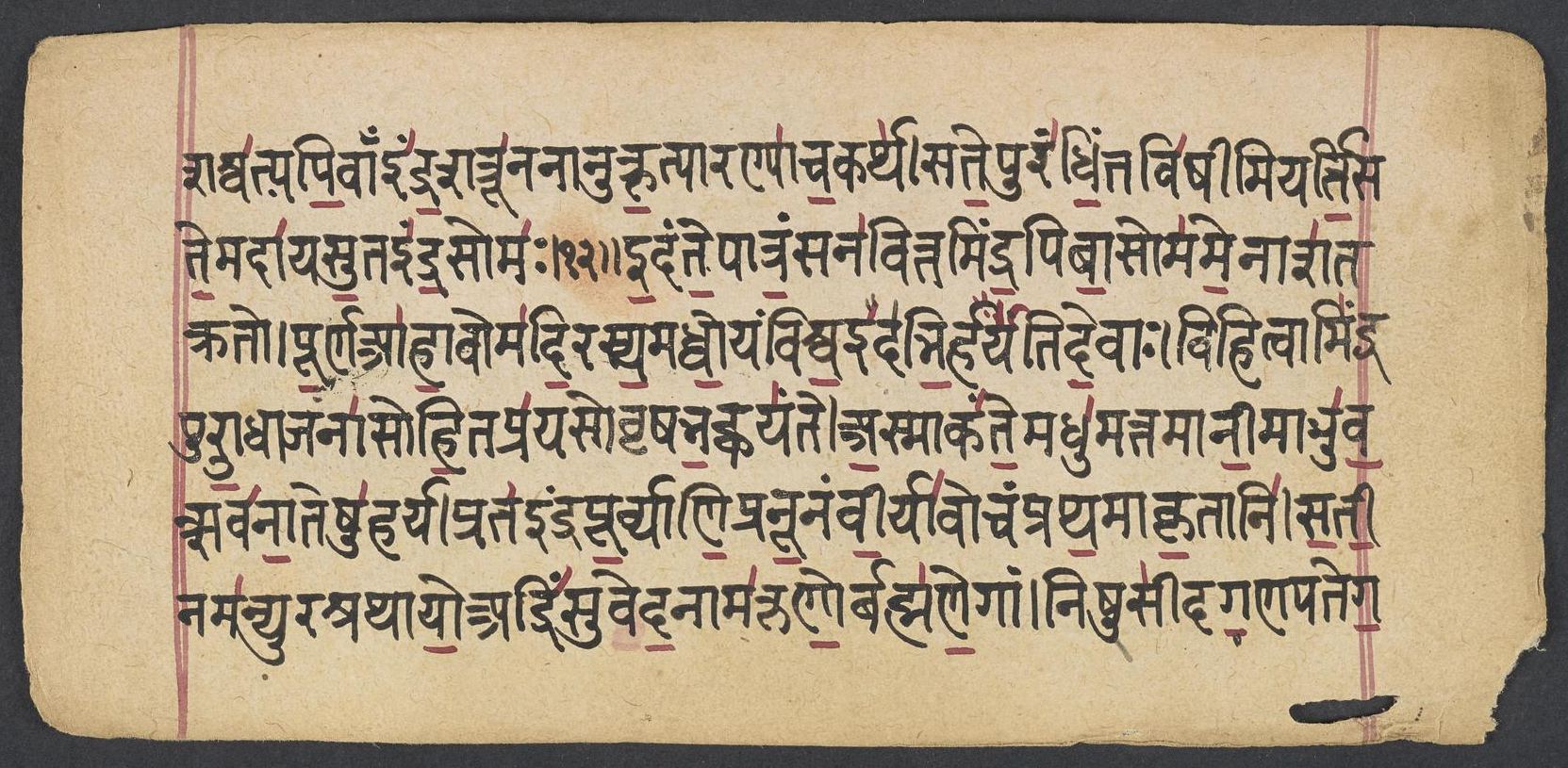
Penn Ms. Coll. 390 Item 48, fol. 99r (OPenn image 98, lower leaf). Checked on the image: the Rigveda text on this page begins in RV 10.112.5 ‹-śaśvat papivām̐ indra śatrūn›. The next page with Rigveda text, fol. 99v, begins in RV 10.112.9 ‹-gaṇeṣu tvām āhur vipratamaṁ›. Verses 10.112.5-8 end on this page; 10.112.5 begins on fol. 98v.
5yasya̱ śaśva̍t papi̱vām̐ i̍ndra̱ śatrū̍n anānukṛ̱tyā raṇyā̍ ca̱kartha̍ | sa te̱ pura̍ṁdhi̱ṁ tavi̍ṣīm iyarti̱ sa te̱ madā̍ya su̱ta i̍ndra̱ soma̍ḥ ||
6i̱daṁ te̱ pātra̱ṁ sana̍vittam indra̱ pibā̱ soma̍m e̱nā śa̍takrato | pū̱rṇa ā̍hā̱vo ma̍di̱rasya̱ madhvo̱ yaṁ viśva̱ id a̍bhi̱harya̍nti de̱vāḥ ||
7vi hi tvām i̍ndra puru̱dhā janā̍so hi̱tapra̍yaso vṛṣabha̱ hvaya̍nte | a̱smāka̍ṁ te̱ madhu̍mattamānī̱mā bhu̍va̱n sava̍nā̱ teṣu̍ harya ||
8pra ta̍ indra pū̱rvyāṇi̱ pra nū̱naṁ vī̱ryā̍ vocam pratha̱mā kṛ̱tāni̍ | sa̱tī̱nama̍nyur aśrathāyo̱ adri̍ṁ suveda̱nām a̍kṛṇo̱r brahma̍ṇe̱ gām ||
5Pressed for thy joyous banquet is the Soma, Soma whereof thou, Indra, ever drinking, Hast waged unequalled battles with thy foemen, which prompts the mighty flow of thine abundance.
6Found from of old is this thy cup, O Indra: Ṣatakratu, drink therefrom the Soma. Filled is the beaker with the meath that gladdens, the beaker which all Deities delight in.
7From many a side with proffered entertainment the folk are calling thee, O Mighty Indra. These our libations shall for thee be richest in sweet meath: dvink thereof and find them pleasant.
8I will declare thy deeds of old, O Indra, the mighty acts which thou hast first accomplished. In genuine wrath thou loosenedst the mountain so that the Brahman easily found the cattle.
Where on the image
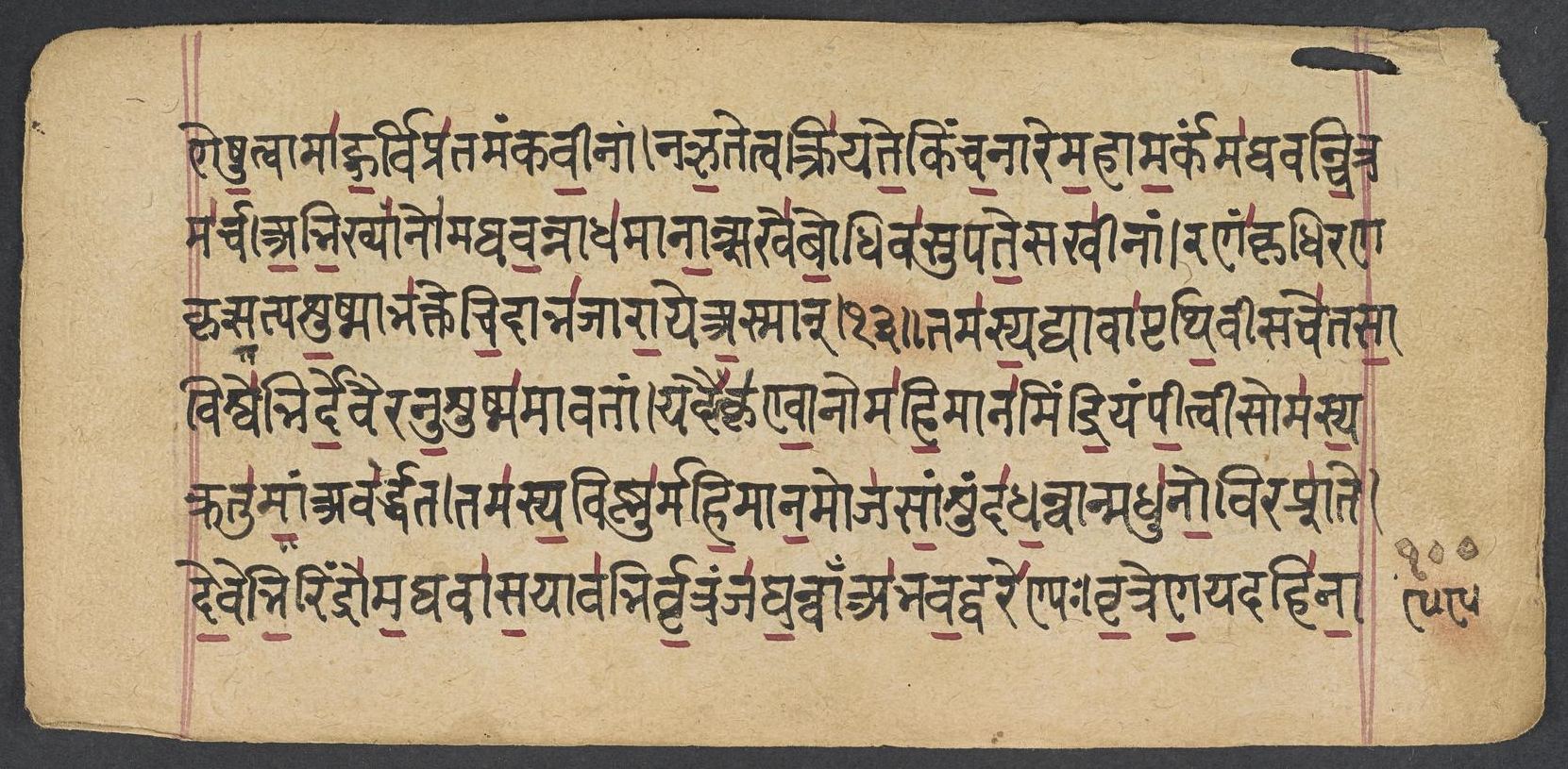
Penn Ms. Coll. 390 Item 48, fol. 99v (OPenn image 99, upper leaf). Checked on the image: the Rigveda text on this page begins in RV 10.112.9 ‹-gaṇeṣu tvām āhur vipratamaṁ›. The next page with Rigveda text, fol. 100r, begins in RV 10.113.3 ‹-ahinā bibhrad āyudhā samasthithā›. Verses 10.112.9-10 end on this page; 10.112.9 begins on fol. 99r.
9ni ṣu sī̍da gaṇapate ga̱ṇeṣu̱ tvām ā̍hu̱r vipra̍tamaṁ kavī̱nām | na ṛ̱te tvat kri̍yate̱ kiṁ ca̱nāre ma̱hām a̱rkam ma̍ghavañ ci̱tram a̍rca ||
10a̱bhi̱khyā no̍ maghava̱n nādha̍mānā̱n sakhe̍ bo̱dhi va̍supate̱ sakhī̍nām | raṇa̍ṁ kṛdhi raṇakṛt satyaśu̱ṣmābha̍kte ci̱d ā bha̍jā rā̱ye a̱smān ||
9Lord of the hosts, amid our bands be seated: they call thee greatest Sage among the sages. Nothing is done, even far away, without thee: great, wondrous, Maghavan, is the hymn I sing thee.
10Aim of our eyes be thou, for we implore thee, O Maghavan, Friend of friends and Lord of treasures. Fight, Warrior strong in truth, fight thou the battle: give us our share of undivided riches.
Notes
- Sanskrit: Aufrecht's edition (1877) with the Vedic accents, as entered by van Nooten and Holland (GRETIL).
- English: Ralph T. H. Griffith, The Hymns of the Rigveda (1889-1892; 2nd ed. 1896-1897), from the VedaWeb digital text; OCR slips in that text were corrected against the printed 2nd edition (data/sources/rigveda/griffith_errata.json).
Cite
Sources
- Source: Penn Ms. Coll. 390 Item 48 (1711 CE (colophon: Saṃvat 1768)), OPenn, Public Domain Mark + Aufrecht's accented text (GRETIL) + Griffith's English (VedaWeb) (holding institution)
- Critical edition: Aufrecht (1877), accented e-text via GRETIL
← previous · → next · v cycle view · l back to library