Rigveda 10.113: To Indra
Introduction
Rigveda 10.113 is a hymn of 10 verses addressed to Indra. It stands in book (maṇḍala) 10, the last and latest book. The Rigveda is the oldest collection of Sanskrit hymns, composed in the second half of the second millennium BCE and handed down orally for many centuries before it was written down.
The manuscript shown is Penn Ms. Coll. 390 Item 48 (University of Pennsylvania), a paper manuscript of the eighth aṣṭaka (RV 10.46-10.191) of the Ṛgveda Saṃhitā in Devanāgarī, 158 leaves, 6 lines to the page, with the accents marked in red; the scribe's colophon on fol. 158 gives Saṃvat 1768 (1711 CE); this hymn stands on fol. 99v-100v. Each section below gives the verses that end on one page; the page boundaries were read on the images (the opening words of every page), not counted out. Like most Rigveda manuscripts, Penn Ms. Coll. 390 Item 48 writes a repeated refrain in short form after its first occurrence (for example kasmai° for kasmai devāya haviṣā vidhema); the Sanskrit shown is the full text of Aufrecht's edition.
How was this verified? (Provenance)
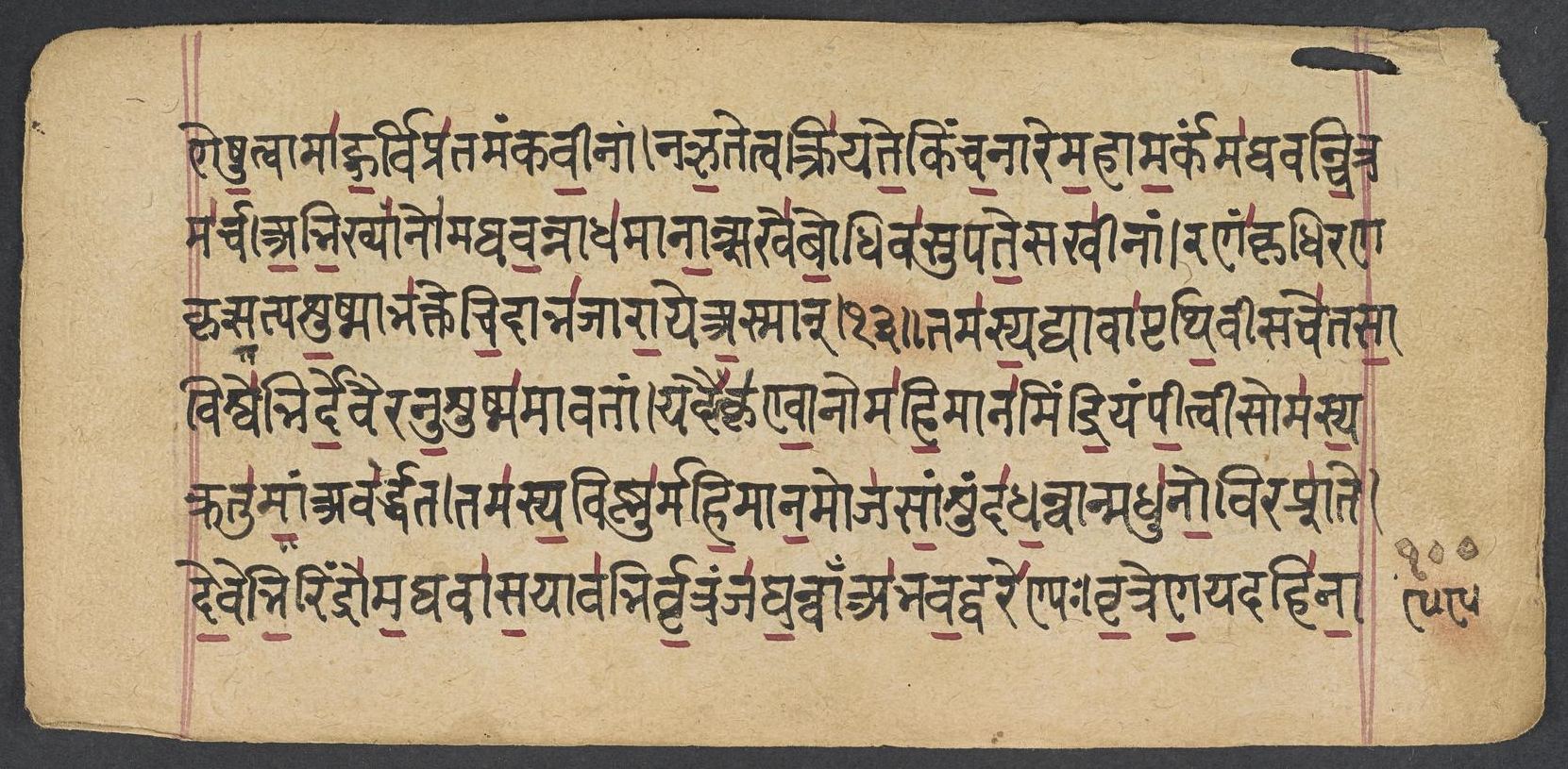
Where on the image
Penn Ms. Coll. 390 Item 48, fol. 99v (OPenn image 99, upper leaf). Checked on the image: the Rigveda text on this page begins in RV 10.112.9 ‹-gaṇeṣu tvām āhur vipratamaṁ›. The next page with Rigveda text, fol. 100r, begins in RV 10.113.3 ‹-ahinā bibhrad āyudhā samasthithā›. Verses 10.113.1-2 end on this page.
1tam a̍sya̱ dyāvā̍pṛthi̱vī sace̍tasā̱ viśve̍bhir de̱vair anu̱ śuṣma̍m āvatām | yad ait kṛ̍ṇvā̱no ma̍hi̱māna̍m indri̱yam pī̱tvī soma̍sya̱ kratu̍mām̐ avardhata ||
2tam a̍sya̱ viṣṇu̍r mahi̱māna̱m oja̍sā̱ṁśuṁ da̍dha̱nvān madhu̍no̱ vi ra̍pśate | de̱vebhi̱r indro̍ ma̱ghavā̍ sa̱yāva̍bhir vṛ̱traṁ ja̍gha̱nvām̐ a̍bhava̱d vare̍ṇyaḥ ||
1THE Heavens and the Earth accordant with all Gods encouraged graciously that vigorous might of his. When he came showing forth his majesty and power, he drank of Soma juice and waxed exceeding strong.
2This majesty of his Vishṇu extols and lauds, making the stalCthat gives the meath flow forth with might. When Indra Maghavan with those who followed him had smitten Vr̥itra he deserved the choice of Gods.
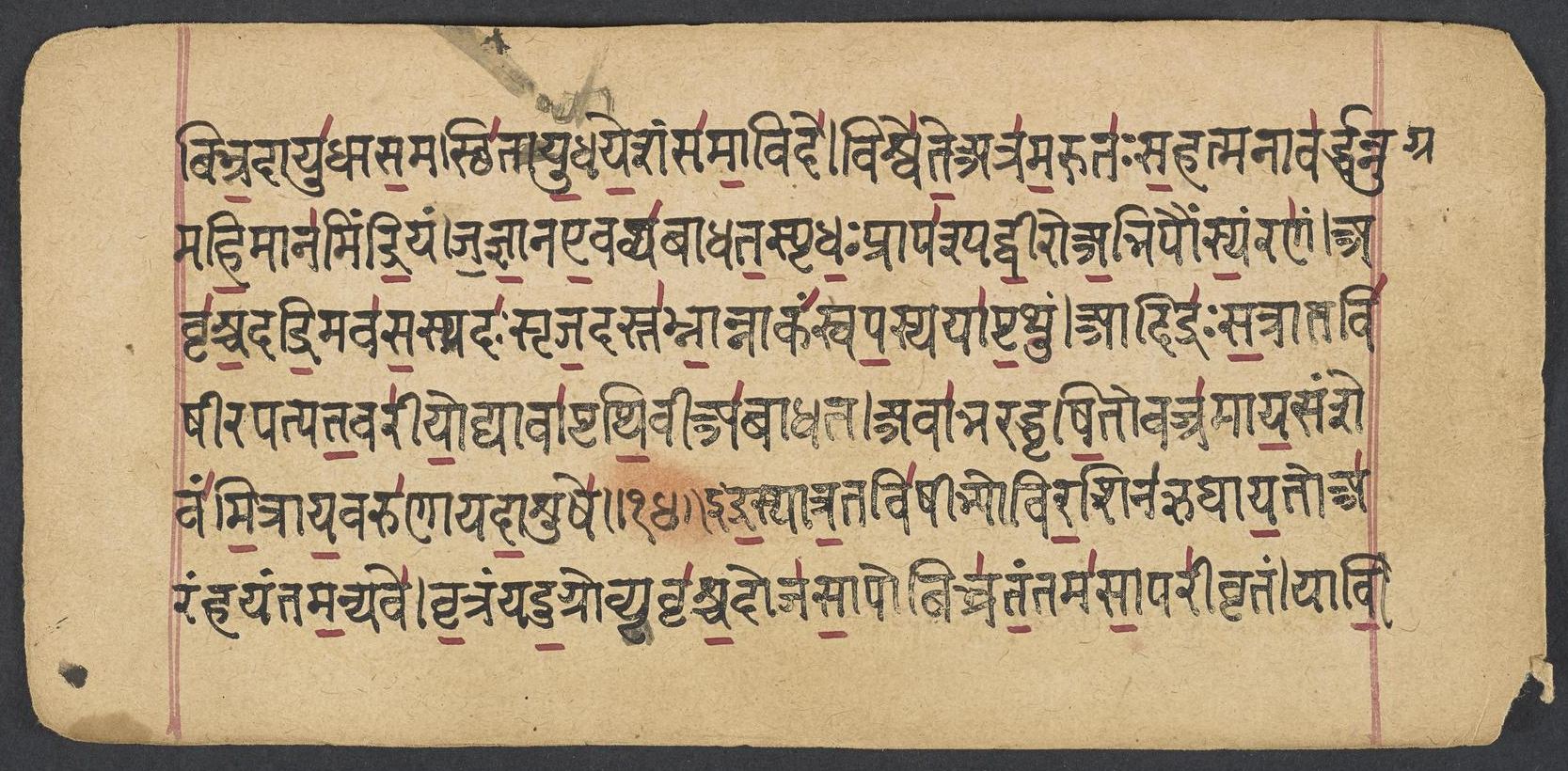
Where on the image
Penn Ms. Coll. 390 Item 48, fol. 100r (OPenn image 99, lower leaf). Checked on the image: the Rigveda text on this page begins in RV 10.113.3 ‹-ahinā bibhrad āyudhā samasthithā›. The next page with Rigveda text, fol. 100v, begins in RV 10.113.7 ‹-vīryāṇi prathamāni kartvā mahitvebhir›. Verses 10.113.3-6 end on this page; 10.113.3 begins on fol. 99v.
3vṛ̱treṇa̱ yad ahi̍nā̱ bibhra̱d āyu̍dhā sa̱masthi̍thā yu̱dhaye̱ śaṁsa̍m ā̱vide̍ | viśve̍ te̱ atra̍ ma̱ruta̍ḥ sa̱ha tmanāva̍rdhann ugra mahi̱māna̍m indri̱yam ||
4ja̱jñā̱na e̱va vy a̍bādhata̱ spṛdha̱ḥ prāpa̍śyad vī̱ro a̱bhi pauṁsya̱ṁ raṇa̍m | avṛ̍śca̱d adri̱m ava̍ sa̱syada̍ḥ sṛja̱d asta̍bhnā̱n nāka̍ṁ svapa̱syayā̍ pṛ̱thum ||
5ād indra̍ḥ sa̱trā tavi̍ṣīr apatyata̱ varī̍yo̱ dyāvā̍pṛthi̱vī a̍bādhata | avā̍bharad dhṛṣi̱to vajra̍m āya̱saṁ śeva̍m mi̱trāya̱ varu̍ṇāya dā̱śuṣe̍ ||
6indra̱syātra̱ tavi̍ṣībhyo vira̱pśina̍ ṛghāya̱to a̍raṁhayanta ma̱nyave̍ | vṛ̱traṁ yad u̱gro vy avṛ̍śca̱d oja̍sā̱po bibhra̍ta̱ṁ tama̍sā̱ parī̍vṛtam ||
3When, bearing warlike weapons, fain to win thee praise, thou mettest Vr̥itra, yea, the Dragon, for the fight, Then all the Maruts who were gathered with dice there extolled, O Mighty One, thy powerful majesty.
4Soon as he sprang to life he forced asun. der hosts: forward the Hero looked to manly deed and war. He cleft the rock, he let concurrent streams flow forth, and with his skilful art stablished the heavens' wide vault.
5Indra hath evermore possessed surpassing power: he forced, far from each other, heaven and earth apart. He hurled impetuous down his iron thunderbolt, a joy to Varuṇa's and Mitra's worshipper.
6Then to the mighty powers of Indra, to his wrath, his the fierce Stormer, loud of voice, they came with speed; What time the Potent One rent Vr̥itra with his strength, who held the waters back, whom darkness compassed round.
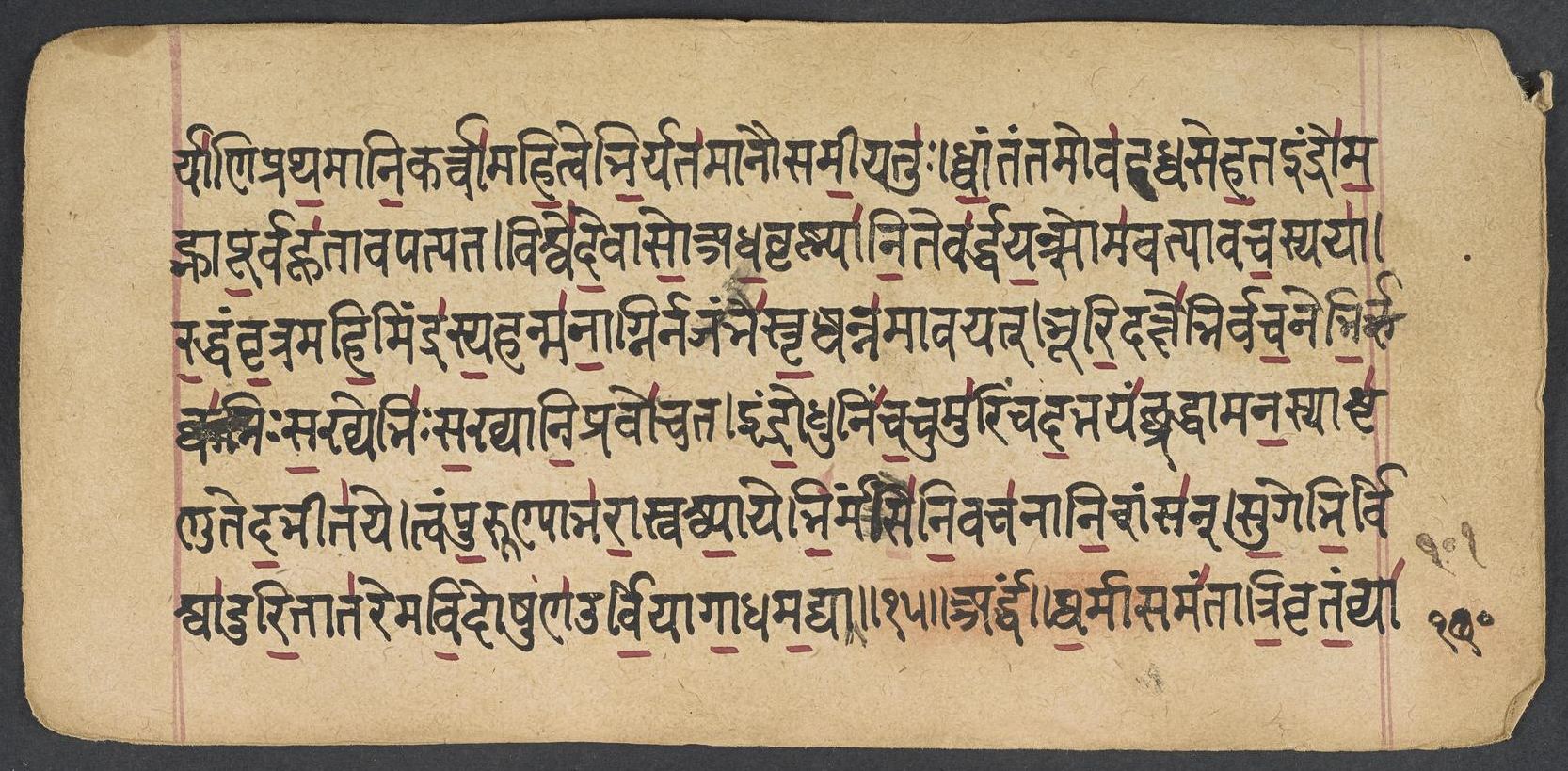
Where on the image
Penn Ms. Coll. 390 Item 48, fol. 100v (OPenn image 100, upper leaf). Checked on the image: the Rigveda text on this page begins in RV 10.113.7 ‹-vīryāṇi prathamāni kartvā mahitvebhir›. The next page with Rigveda text, fol. 101r, begins in RV 10.114.1 ‹mātariśvā jagāma›. Verses 10.113.7-10 end on this page; 10.113.7 begins on fol. 100r.
7yā vī̱ryā̍ṇi pratha̱māni̱ kartvā̍ mahi̱tvebhi̱r yata̍mānau samī̱yatu̍ḥ | dhvā̱ntaṁ tamo 'va̍ dadhvase ha̱ta indro̍ ma̱hnā pū̱rvahū̍tāv apatyata ||
8viśve̍ de̱vāso̱ adha̱ vṛṣṇyā̍ni̱ te 'va̍rdhaya̱n soma̍vatyā vaca̱syayā̍ | ra̱ddhaṁ vṛ̱tram ahi̱m indra̍sya̱ hanma̍nā̱gnir na jambhai̍s tṛ̱ṣv anna̍m āvayat ||
9bhūri̱ dakṣe̍bhir vaca̱nebhi̱r ṛkva̍bhiḥ sa̱khyebhi̍ḥ sa̱khyāni̱ pra vo̍cata | indro̱ dhuni̍ṁ ca̱ cumu̍riṁ ca da̱mbhaya̍ñ chraddhāmana̱syā śṛ̍ṇute da̱bhīta̍ye ||
10tvam pu̱rūṇy ā bha̍rā̱ svaśvyā̱ yebhi̱r maṁsai̍ ni̱vaca̍nāni̱ śaṁsa̍n | su̱gebhi̱r viśvā̍ duri̱tā ta̍rema vi̱do ṣu ṇa̍ urvi̱yā gā̱dham a̱dya ||
7Even in the first of those heroic acts which they who strove together came with might to execute, Deep darkness fell upon the slain, and Indra won by victory the right of being first invoked.
8Then all the Gods extolled, with eloquence inspired by draughts of Soma juice, thy deeds of manly might. As Agni eats the dry food with his tcetlv, he ate Vr̥itra, the Dragon, maimed by Indra's deadly dart.
9Proclaim his many friendships, met with friendship, made with singers, with the skilful and the eloquent. Indra, when he subdues Dhuni and Chumuri, lists to Dabhîti for his faithful spirit's sake.
10Give riches manifold with noble horses, to be remembered while my songs address thee. May we by easy paths pass all our troubles: find us this day a ford wide and extensive.
Notes
- Sanskrit: Aufrecht's edition (1877) with the Vedic accents, as entered by van Nooten and Holland (GRETIL).
- English: Ralph T. H. Griffith, The Hymns of the Rigveda (1889-1892; 2nd ed. 1896-1897), from the VedaWeb digital text; OCR slips in that text were corrected against the printed 2nd edition (data/sources/rigveda/griffith_errata.json).
Cite
Sources
- Source: Penn Ms. Coll. 390 Item 48 (1711 CE (colophon: Saṃvat 1768)), OPenn, Public Domain Mark + Aufrecht's accented text (GRETIL) + Griffith's English (VedaWeb) (holding institution)
- Critical edition: Aufrecht (1877), accented e-text via GRETIL
← previous · → next · v cycle view · l back to library