Rigveda 10.128: To all the gods
Introduction
Rigveda 10.128 is a hymn of 9 verses addressed to all the gods. It stands in book (maṇḍala) 10, the last and latest book. The Rigveda is the oldest collection of Sanskrit hymns, composed in the second half of the second millennium BCE and handed down orally for many centuries before it was written down.
The manuscript shown is Penn Ms. Coll. 390 Item 48 (University of Pennsylvania), a paper manuscript of the eighth aṣṭaka (RV 10.46-10.191) of the Ṛgveda Saṃhitā in Devanāgarī, 158 leaves, 6 lines to the page, with the accents marked in red; the scribe's colophon on fol. 158 gives Saṃvat 1768 (1711 CE); this hymn stands on fol. 116r-117r. Each section below gives the verses that end on one page; the page boundaries were read on the images (the opening words of every page), not counted out. Like most Rigveda manuscripts, Penn Ms. Coll. 390 Item 48 writes a repeated refrain in short form after its first occurrence (for example kasmai° for kasmai devāya haviṣā vidhema); the Sanskrit shown is the full text of Aufrecht's edition.
How was this verified? (Provenance)
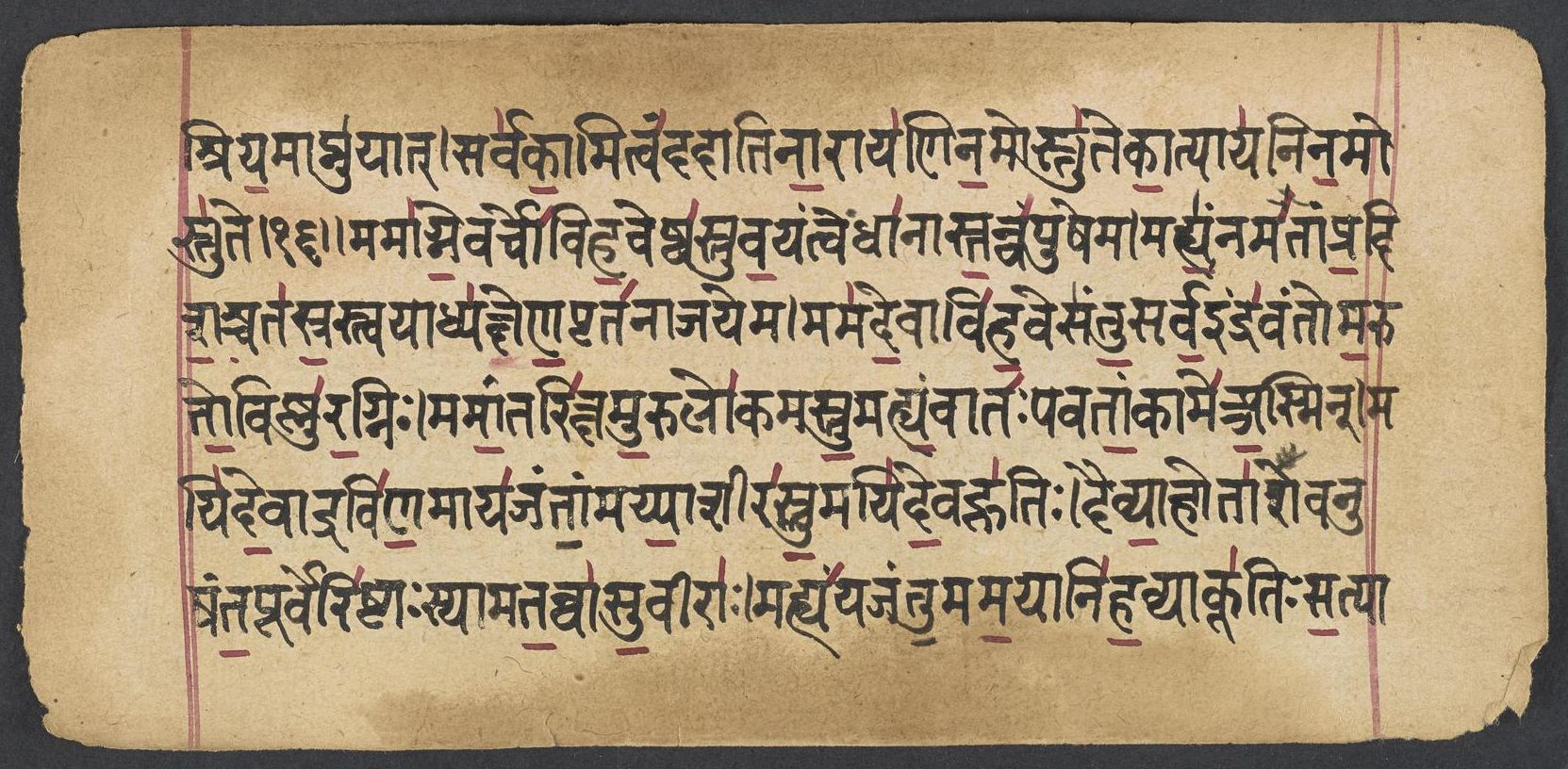
Where on the image
Penn Ms. Coll. 390 Item 48, fol. 116r (OPenn image 115, lower leaf). Checked on the image: the Rigveda text on this page begins in RV 10.128.1 ‹mamāgne varco vihaveṣv astu›. Line 1 ends a khila (nārāyaṇi namo 'stu te kātyāyani namo 'stu te) with a varga number; 10.128.1 begins in line 2. The next page with Rigveda text, fol. 116v, begins in RV 10.128.4 ‹manaso me astu›. Verses 10.128.1-3 end on this page.
1mamā̍gne̱ varco̍ viha̱veṣv a̍stu va̱yaṁ tvendhā̍nās ta̱nva̍m puṣema | mahya̍ṁ namantām pra̱diśa̱ś cata̍sra̱s tvayādhya̍kṣeṇa̱ pṛta̍nā jayema ||
2mama̍ de̱vā vi̍ha̱ve sa̍ntu̱ sarva̱ indra̍vanto ma̱ruto̱ viṣṇu̍r a̱gniḥ | mamā̱ntari̍kṣam u̱rulo̍kam astu̱ mahya̱ṁ vāta̍ḥ pavatā̱ṁ kāme̍ a̱smin ||
3mayi̍ de̱vā dravi̍ṇa̱m ā ya̍jantā̱m mayy ā̱śīr a̍stu̱ mayi̍ de̱vahū̍tiḥ | daivyā̱ hotā̍ro vanuṣanta̱ pūrve 'ri̍ṣṭāḥ syāma ta̱nvā̍ su̱vīrā̍ḥ ||
1LET me win glory, Agni, in our battles: enkindling thee, may we support our bodies. May the four regions bend and bow before me: with thee for guardian may we win in combat.
2May all the Gods be on my side in battle, the Maruts led by Indra, Vishṇu, Agni. Mine be the middle air's extended region, and may the wind blow favouring these my wishes.
3May the Gods grant me riches; may the blessing and invocation of the Gods assist me. Foremost in fight be the divine Invokers: may we, unwounded, have brave heroes round us.
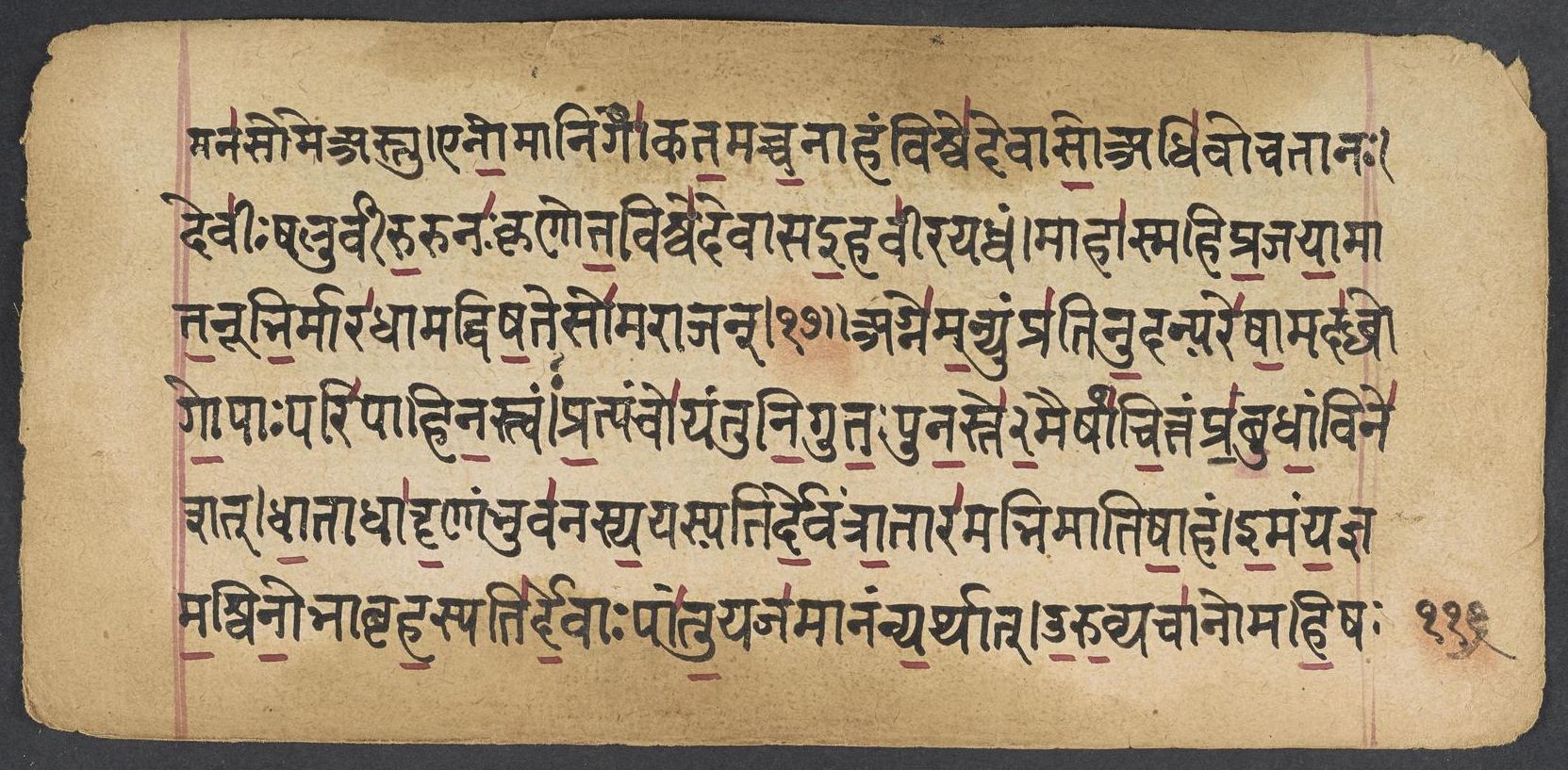
Where on the image
Penn Ms. Coll. 390 Item 48, fol. 116v (OPenn image 116, upper leaf). Checked on the image: the Rigveda text on this page begins in RV 10.128.4 ‹manaso me astu›. The next page with Rigveda text, fol. 117r, begins in RV 10.128.8 ‹śarma yaṁsad asmin have›. Verses 10.128.4-7 end on this page; 10.128.4 begins on fol. 116r.
4mahya̍ṁ yajantu̱ mama̱ yāni̍ ha̱vyākū̍tiḥ sa̱tyā mana̍so me astu | eno̱ mā ni gā̍ṁ kata̱mac ca̱nāhaṁ viśve̍ devāso̱ adhi̍ vocatā naḥ ||
5devī̍ḥ ṣaḻ urvīr u̱ru na̍ḥ kṛṇota̱ viśve̍ devāsa i̱ha vī̍rayadhvam | mā hā̍smahi pra̱jayā̱ mā ta̱nūbhi̱r mā ra̍dhāma dviṣa̱te so̍ma rājan ||
6agne̍ ma̱nyum pra̍tinu̱dan pare̍ṣā̱m ada̍bdho go̱pāḥ pari̍ pāhi na̱s tvam | pra̱tyañco̍ yantu ni̱guta̱ḥ puna̱s te̱3̱̍ 'maiṣā̍ṁ ci̱ttam pra̱budhā̱ṁ vi ne̍śat ||
7dhā̱tā dhā̍tṝ̱ṇām bhuva̍nasya̱ yas pati̍r de̱vaṁ trā̱tāra̍m abhimātiṣā̱ham | i̱maṁ ya̱jñam a̱śvino̱bhā bṛha̱spati̍r de̱vāḥ pā̍ntu̱ yaja̍mānaṁ nya̱rthāt ||
4For me let them present all mine oblations, and let my mind's intention be accomplished. May I he guiltless of the least transgression: and, all ye Gods, do ye combine to bless us.
5Ye six divine Expanses, grant us freedom: here, all ye Gods, acquit yourselves like heroes. Let us not lose our children or our bodies: let us not benefit the foe, King Soma!
6Baffling the wrath of our opponents, Agni, guard us as our infallible Protector. Let these thy foes turn back and seek their houses, and let their thought who watch at home be ruined.
7Lord of the world, Creator of creators the saviour God who overcomes the foeman. May Gods, Br̥ihaspati, both Aṣvins shelter from ill thii sacrifice and sacrificer.
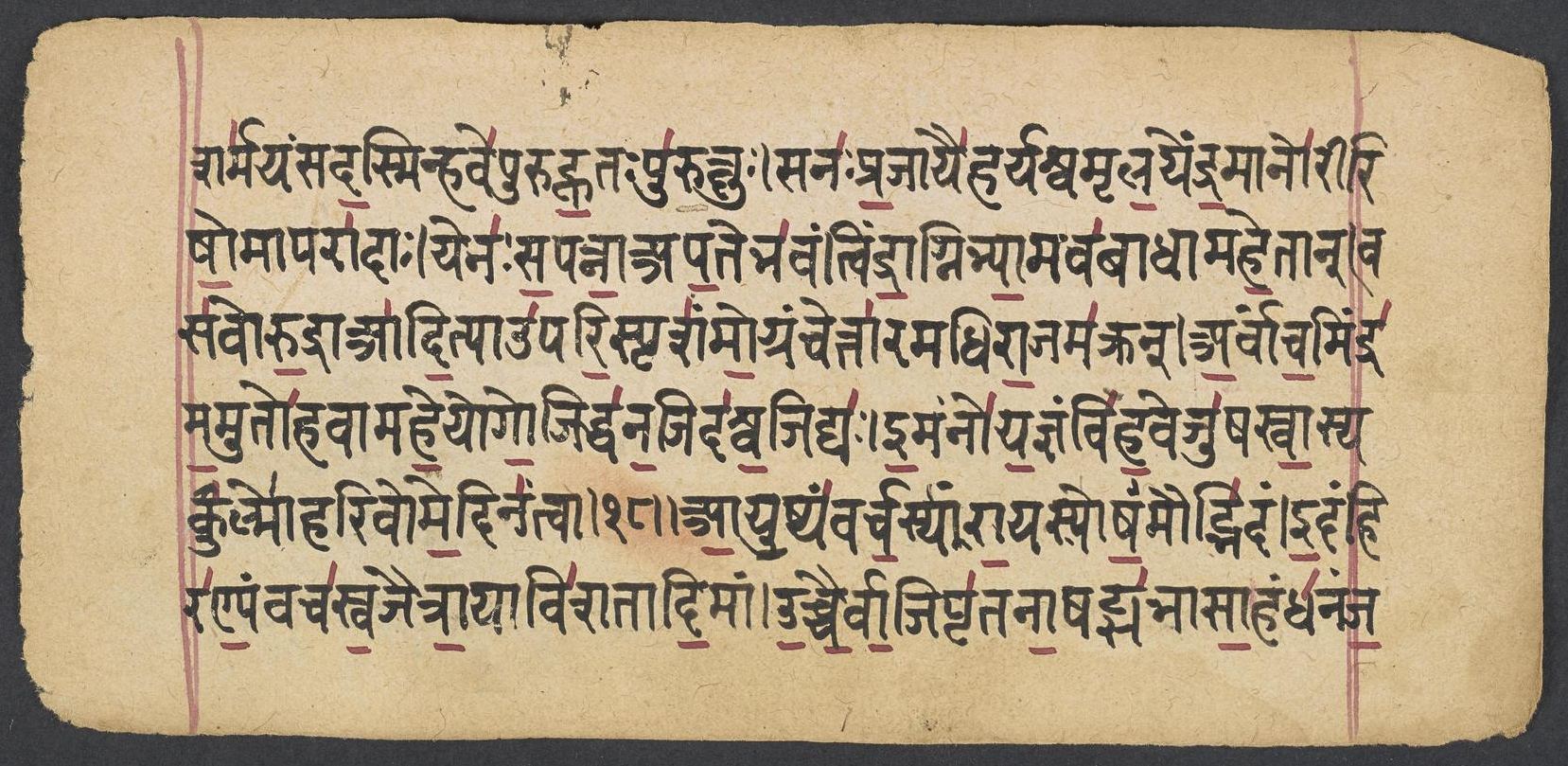
Where on the image
Penn Ms. Coll. 390 Item 48, fol. 117r (OPenn image 116, lower leaf). Checked on the image: the Rigveda text on this page begins in RV 10.128.8 ‹śarma yaṁsad asmin have›. After 10.128.9 this page continues with khila verses. The next page with Rigveda text, fol. 118v, begins in RV 10.129.1 ‹nāsad āsīn no sad›. Verses 10.128.8-9 end on this page; 10.128.8 begins on fol. 116v.
8u̱ru̱vyacā̍ no mahi̱ṣaḥ śarma̍ yaṁsad a̱smin have̍ puruhū̱taḥ pu̍ru̱kṣuḥ | sa na̍ḥ pra̱jāyai̍ haryaśva mṛḻa̱yendra̱ mā no̍ rīriṣo̱ mā parā̍ dāḥ ||
9ye na̍ḥ sa̱patnā̱ apa̱ te bha̍vantv indrā̱gnibhyā̱m ava̍ bādhāmahe̱ tān | vasa̍vo ru̱drā ā̍di̱tyā u̍pari̱spṛśa̍m mo̱graṁ cettā̍ram adhirā̱jam a̍kran ||
8Foodful, and much-invoked, at this our calling may the great Bull vouchsafe us wide protection. Lord of Bay Coursers, Indra, bless our children: harm us not, give us riot as prey to others.
9Let those who are our foemen stay. afar from us: with Indra and with Agni we will drive them off. Vasus, Âdityas, Rudras have exalted me, made me far-reaching, inighty, thinker, sovran lord.
Notes
- Sanskrit: Aufrecht's edition (1877) with the Vedic accents, as entered by van Nooten and Holland (GRETIL).
- English: Ralph T. H. Griffith, The Hymns of the Rigveda (1889-1892; 2nd ed. 1896-1897), from the VedaWeb digital text; OCR slips in that text were corrected against the printed 2nd edition (data/sources/rigveda/griffith_errata.json).
- This manuscript inserts khila verses (supplementary hymns outside Aufrecht's text) at some hymn ends; they are noted in the section notes and not reproduced.
Cite
Sources
- Source: Penn Ms. Coll. 390 Item 48 (1711 CE (colophon: Saṃvat 1768)), OPenn, Public Domain Mark + Aufrecht's accented text (GRETIL) + Griffith's English (VedaWeb) (holding institution)
- Critical edition: Aufrecht (1877), accented e-text via GRETIL
← previous · → next · v cycle view · l back to library