Rigveda 10.129: Nasadiya Sukta, the hymn of creation
Introduction
Rigveda 10.129 is a hymn of 7 verses addressed to the origin of things. It stands in book (maṇḍala) 10, the last and latest book. The Rigveda is the oldest collection of Sanskrit hymns, composed in the second half of the second millennium BCE and handed down orally for many centuries before it was written down.
The manuscript shown is Penn Ms. Coll. 390 Item 48 (University of Pennsylvania), a paper manuscript of the eighth aṣṭaka (RV 10.46-10.191) of the Ṛgveda Saṃhitā in Devanāgarī, 158 leaves, 6 lines to the page, with the accents marked in red; the scribe's colophon on fol. 158 gives Saṃvat 1768 (1711 CE); this hymn stands on fol. 118v-119v. Each section below gives the verses that end on one page; the page boundaries were read on the images (the opening words of every page), not counted out. Like most Rigveda manuscripts, Penn Ms. Coll. 390 Item 48 writes a repeated refrain in short form after its first occurrence (for example kasmai° for kasmai devāya haviṣā vidhema); the Sanskrit shown is the full text of Aufrecht's edition.
How was this verified? (Provenance)
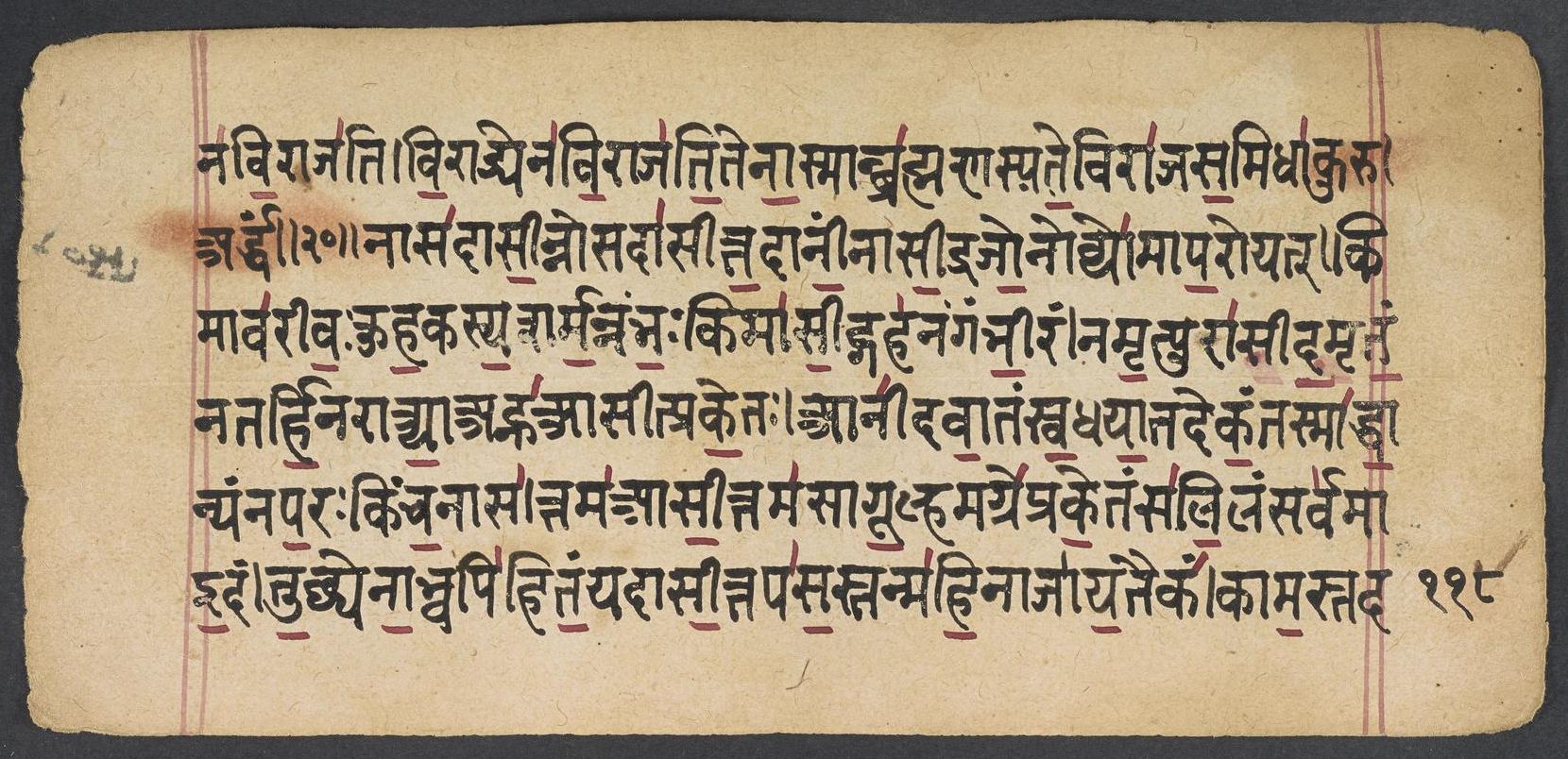
Where on the image
Penn Ms. Coll. 390 Item 48, fol. 118v (OPenn image 118, upper leaf). Checked on the image: the Rigveda text on this page begins in RV 10.129.1 ‹nāsad āsīn no sad›. Line 1 ends a khila (virāḍ yena virājati ... virājaṃ samidhaṃ kuru) with a varga number; 10.129.1 begins in line 2. The next page with Rigveda text, fol. 119r, begins in RV 10.129.4 ‹agre sam avartatādhi manaso›. Verses 10.129.1-3 end on this page.
1nāsa̍d āsī̱n no sad ā̍sīt ta̱dānī̱ṁ nāsī̱d rajo̱ no vyo̍mā pa̱ro yat | kim āva̍rīva̱ḥ kuha̱ kasya̱ śarma̱nn ambha̱ḥ kim ā̍sī̱d gaha̍naṁ gabhī̱ram ||
2na mṛ̱tyur ā̍sīd a̱mṛta̱ṁ na tarhi̱ na rātryā̱ ahna̍ āsīt prake̱taḥ | ānī̍d avā̱taṁ sva̱dhayā̱ tad eka̱ṁ tasmā̍d dhā̱nyan na pa̱raḥ kiṁ ca̱nāsa̍ ||
3tama̍ āsī̱t tama̍sā gū̱ḻham agre̍ 'prake̱taṁ sa̍li̱laṁ sarva̍m ā i̱dam | tu̱cchyenā̱bhv api̍hita̱ṁ yad āsī̱t tapa̍sa̱s tan ma̍hi̱nājā̍ya̱taika̍m ||
1THEN was not non-existent nor existent: there was no realm of air, no sky beyond it. What covered in, and where? and what gave shelter? Was water there, unfathomed depth of water?
2Death was not then, nor was there aught immortal: no sign was there, the day's and night's divider. That One Thing, breathless, breathed by its own nature: apart from it was nothing whatsoever.
3Darkness there was: at first concealed in darkness this All was indiscriminated chaos. All that existed then was void and form less: by the great power of Warmth was born that Unit.
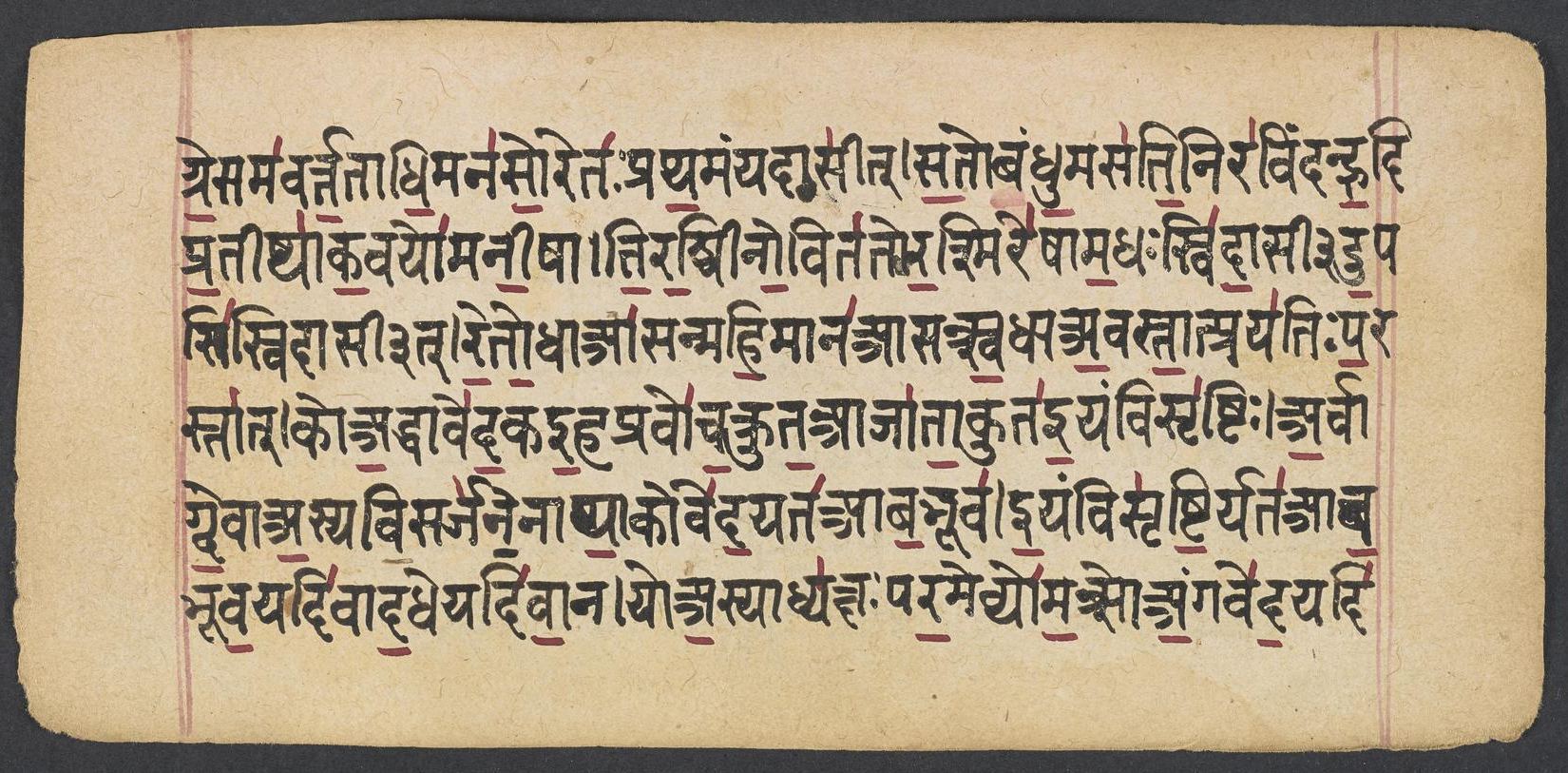
Where on the image
Penn Ms. Coll. 390 Item 48, fol. 119r (OPenn image 118, lower leaf). Checked on the image: the Rigveda text on this page begins in RV 10.129.4 ‹agre sam avartatādhi manaso›. The next page with Rigveda text, fol. 119v, begins in RV 10.129.7 ‹vā na veda›. Verses 10.129.4-6 end on this page; 10.129.4 begins on fol. 118v.
4kāma̱s tad agre̱ sam a̍varta̱tādhi̱ mana̍so̱ reta̍ḥ pratha̱maṁ yad āsī̍t | sa̱to bandhu̱m asa̍ti̱ nir a̍vindan hṛ̱di pra̱tīṣyā̍ ka̱vayo̍ manī̱ṣā ||
5ti̱ra̱ścīno̱ vita̍to ra̱śmir e̍ṣām a̱dhaḥ svi̍d ā̱sī3d u̱pari̍ svid āsī3t | re̱to̱dhā ā̍san mahi̱māna̍ āsan sva̱dhā a̱vastā̱t praya̍tiḥ pa̱rastā̍t ||
6ko a̱ddhā ve̍da̱ ka i̱ha pra vo̍ca̱t kuta̱ ājā̍tā̱ kuta̍ i̱yaṁ visṛ̍ṣṭiḥ | a̱rvāg de̱vā a̱sya vi̱sarja̍ne̱nāthā̱ ko ve̍da̱ yata̍ āba̱bhūva̍ ||
4Thereafter rose Desire in the beginning, Desire, the primal seed and germ of Spirit. Sages who searched with their heart's thought discovered the existent's kinship in the non-existent.
5Transversely was their severing line extended: what was above it then, and what below it? There were begetters, there were mighty forces, free action here and energy up yonder
6Who verily knows and who can here declare it, whence it was born and whence comes this creation? TheGods are later than this world's production. Who knows then whence it first came into being?
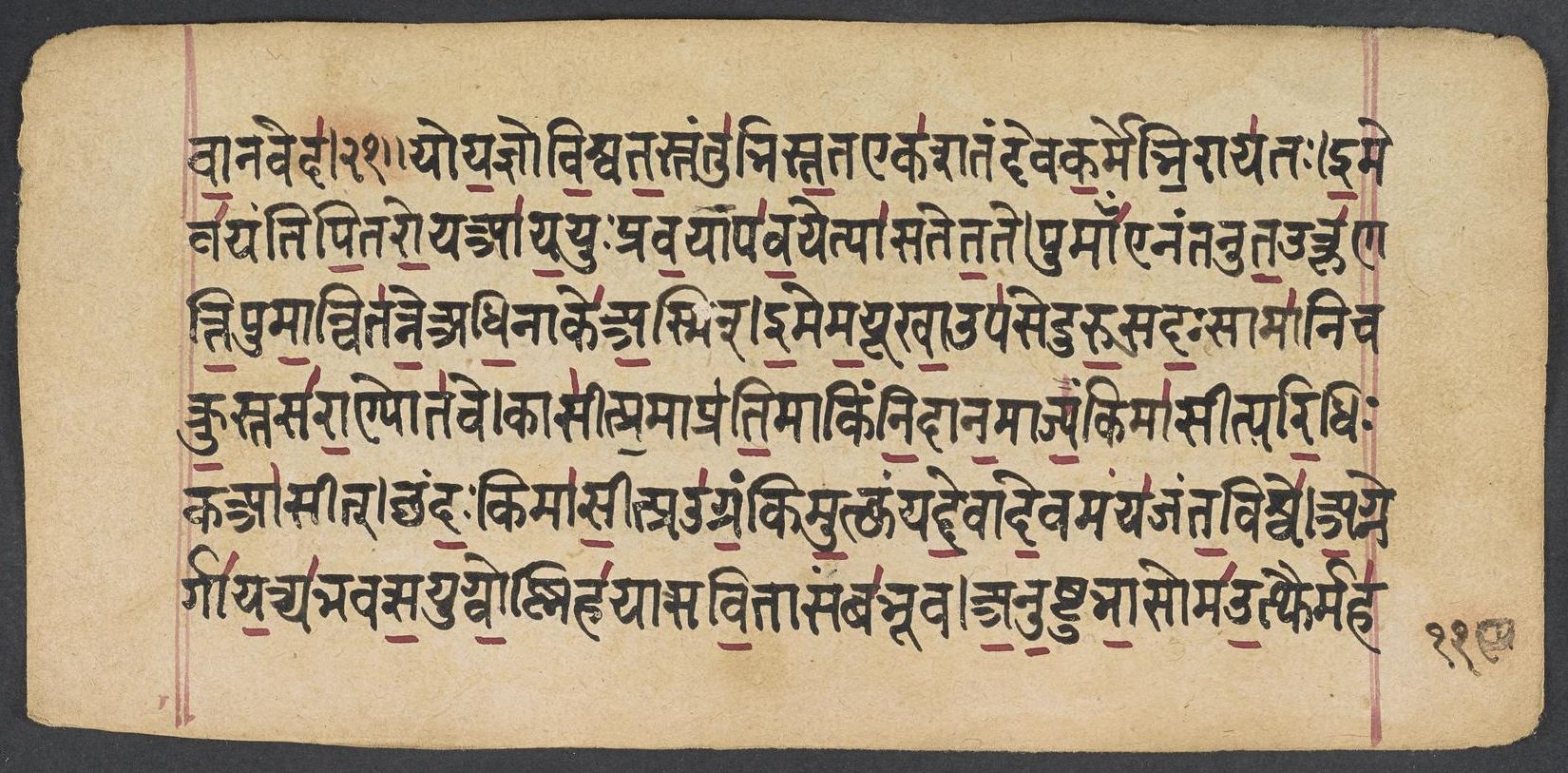
Where on the image
Penn Ms. Coll. 390 Item 48, fol. 119v (OPenn image 119, upper leaf). Checked on the image: the Rigveda text on this page begins in RV 10.129.7 ‹vā na veda›. The next page with Rigveda text, fol. 120r, begins in RV 10.130.4 ‹-mahasvān bṛhaspater bṛhatī vācam›. Verse 10.129.7 ends on this page; 10.129.7 begins on fol. 119r.
7i̱yaṁ visṛ̍ṣṭi̱r yata̍ āba̱bhūva̱ yadi̍ vā da̱dhe yadi̍ vā̱ na | yo a̱syādhya̍kṣaḥ para̱me vyo̍ma̱n so a̱ṅga ve̍da̱ yadi̍ vā̱ na veda̍ ||
7He, the first origin of this creation, whether he formed it all or did not form it, Whose eye controls this world in highest heaven, he verily knows it, or perhaps he knows not.
Notes
- Sanskrit: Aufrecht's edition (1877) with the Vedic accents, as entered by van Nooten and Holland (GRETIL).
- English: Ralph T. H. Griffith, The Hymns of the Rigveda (1889-1892; 2nd ed. 1896-1897), from the VedaWeb digital text; OCR slips in that text were corrected against the printed 2nd edition (data/sources/rigveda/griffith_errata.json).
- This manuscript inserts khila verses (supplementary hymns outside Aufrecht's text) at some hymn ends; they are noted in the section notes and not reproduced.
Cite
Sources
- Source: Penn Ms. Coll. 390 Item 48 (1711 CE (colophon: Saṃvat 1768)), OPenn, Public Domain Mark + Aufrecht's accented text (GRETIL) + Griffith's English (VedaWeb) (holding institution)
- Critical edition: Aufrecht (1877), accented e-text via GRETIL
← previous · → next · v cycle view · l back to library