Rigveda 10.14: To Yama
Introduction
Rigveda 10.14 is a hymn of 16 verses addressed to Yama. It stands in book (maṇḍala) 10, the last and latest book. The Rigveda is the oldest collection of Sanskrit hymns, composed in the second half of the second millennium BCE and handed down orally for many centuries before it was written down.
The manuscript shown is Penn Ms. Coll. 390 Item 41 (University of Pennsylvania), an undated paper manuscript of the padapāṭha (the word-by-word recitation text, in which every word is written separately and compounds are split) of the whole Ṛgveda in Devanāgarī, 884 leaves in fascicles, 7-9 lines to the page, accents in red; this hymn stands on fol. 752r-753v. Each section below gives the verses that end on one page; the page boundaries were read on the images (the opening words of every page), not counted out. Where the manuscript is a padapāṭha (the word-by-word recitation text), the section shows Aufrecht's continuous (saṃhitā) text first and, as the edition text, the padapāṭha of the same verses, which is the form written on the page.
How was this verified? (Provenance)
Where on the image
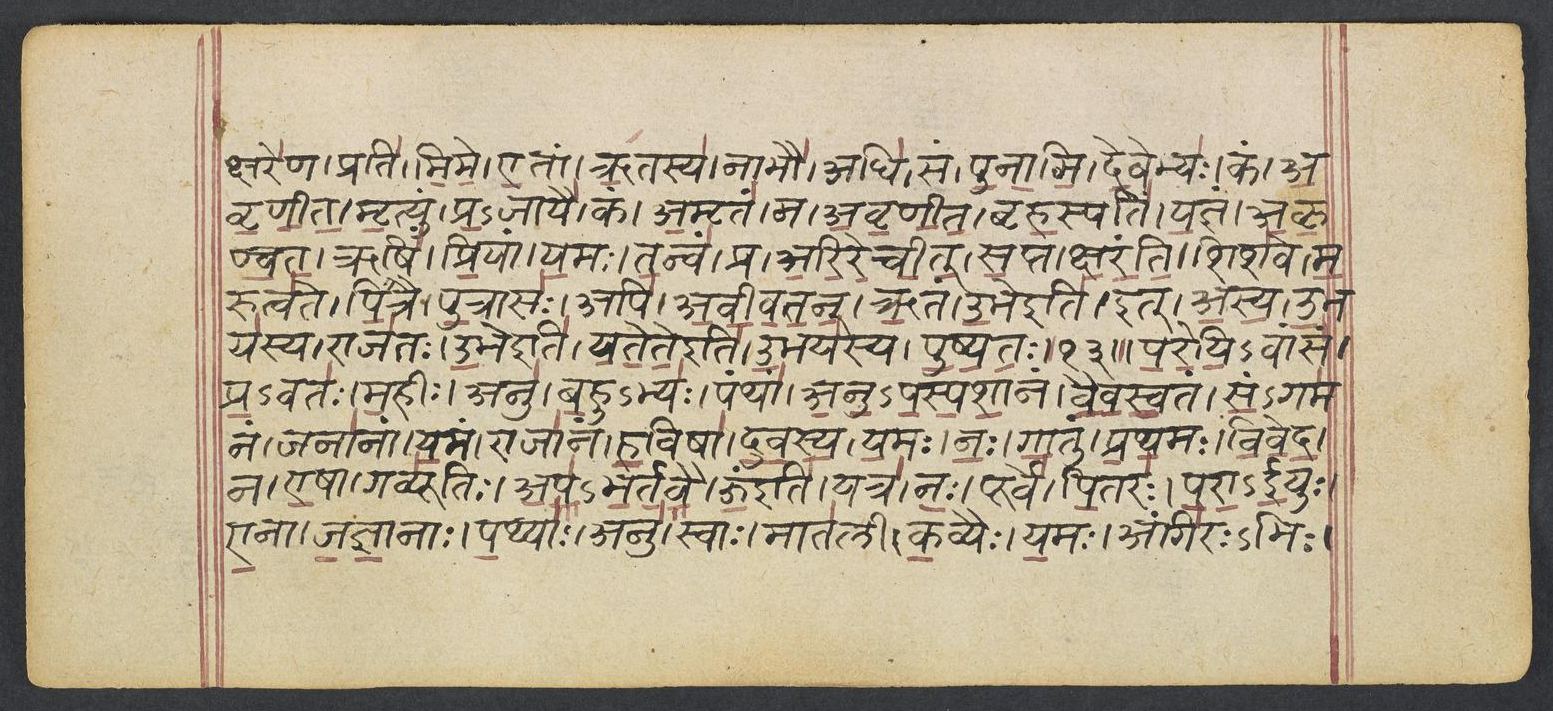
Penn Ms. Coll. 390 Item 41, fol. 752r (numbered 69r by the scribe) (OPenn image 752, lower leaf). Checked on the image: the Rigveda text on this page begins in RV 10.13.3 ‹-akṣareṇa prati mime etām›. The next page with Rigveda text, fol. 752v (numbered 69v by the scribe), begins in RV 10.14.3 ‹bṛhaspatiḥ ṛkva-bhiḥ vavṛdhānaḥ yān›. Verses 10.14.1-2 end on this page.
1pa̱re̱yi̱vāṁsa̍m pra̱vato̍ ma̱hīr anu̍ ba̱hubhya̱ḥ panthā̍m anupaspaśā̱nam | vai̱va̱sva̱taṁ sa̱ṁgama̍na̱ṁ janā̍nāṁ ya̱maṁ rājā̍naṁ ha̱viṣā̍ duvasya ||
2ya̱mo no̍ gā̱tum pra̍tha̱mo vi̍veda̱ naiṣā gavyū̍ti̱r apa̍bharta̱vā u̍ | yatrā̍ na̱ḥ pūrve̍ pi̱tara̍ḥ pare̱yur e̱nā ja̍jñā̱nāḥ pa̱thyā̱3̱̍ anu̱ svāḥ ||
Compare: Padapāṭha (word-by-word text written in the manuscript; Sansknet e-text via GRETIL)
1pareyi-vāṃsam | pra-vataḥ | mahīḥ | anu | bahu-bhyaḥ | panthām | anu-paspaśānam | vaivasvatam | sam-gamanam | janānām | yamam | rājānam | haviṣā | duvasya
2yamaḥ | naḥ | gātum | prathamaḥ | viveda | na | eṣā | gavyūtir apa-bhartavai | oṃ iti | yatra | naḥ | pūrve | pitaraḥ | parāīyuḥ | enā | jajñānāḥ | pathyāḥ | anu | svāḥ
1HONOUR the King with thine oblations, Yama, Vivasvan's Son, who gathers men together, Who travelled to the lofty heights above us, who searcbes out and shows the path to many.
2Yama first found for us a place to dwell in: this pasture never can be taken from Us. Men born on earth tread their own paths that lead them whither our ancient Fathers have departed.
Where on the image
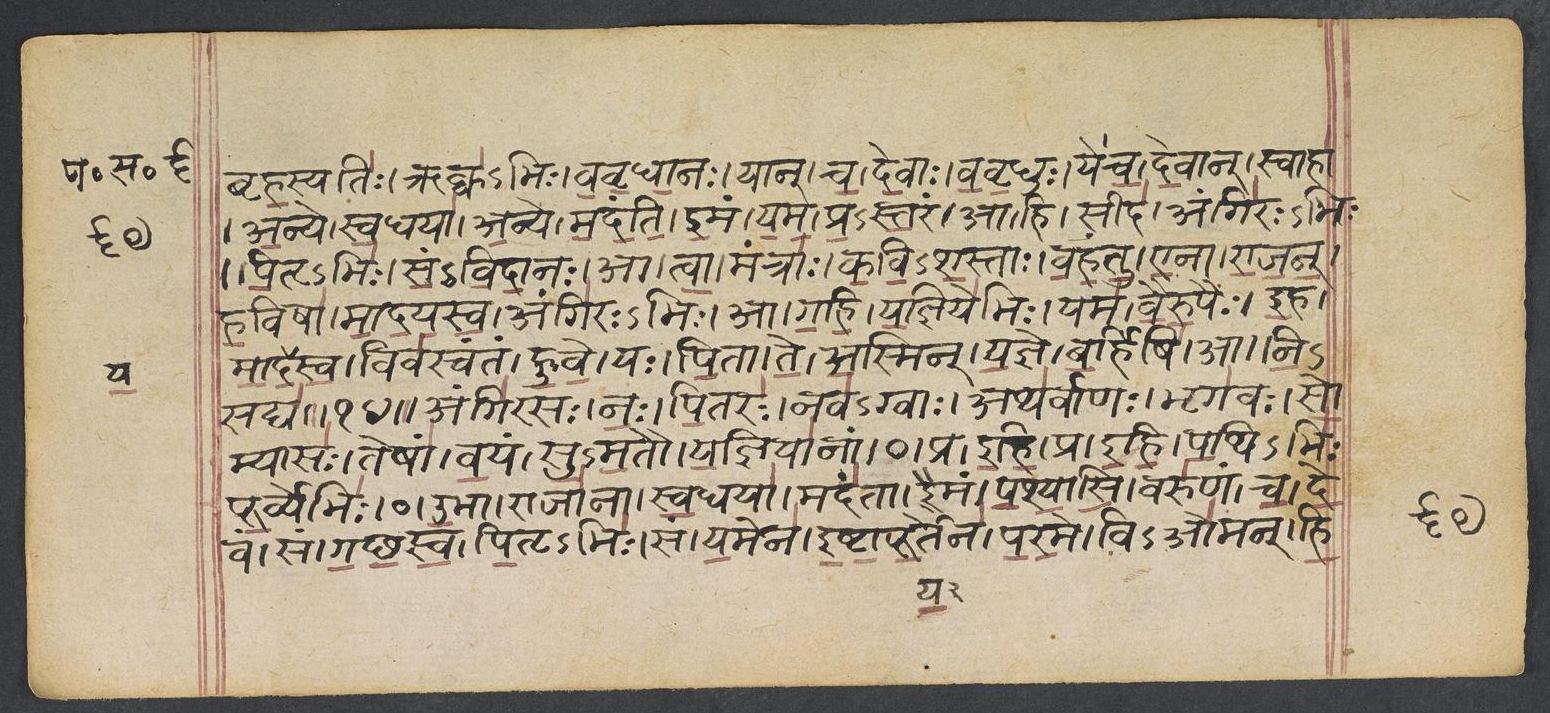
Penn Ms. Coll. 390 Item 41, fol. 752v (numbered 69v by the scribe) (OPenn image 753, upper leaf). Checked on the image: the Rigveda text on this page begins in RV 10.14.3 ‹bṛhaspatiḥ ṛkva-bhiḥ vavṛdhānaḥ yān›. The next page with Rigveda text, fol. 753r (numbered 70r by the scribe), begins in RV 10.14.8 ‹-itvāya avadyam punaḥ astam›. Verses 10.14.3-7 end on this page; 10.14.3 begins on fol. 752r (numbered 69r by the scribe).
3māta̍lī ka̱vyair ya̱mo aṅgi̍robhi̱r bṛha̱spati̱r ṛkva̍bhir vāvṛdhā̱naḥ | yām̐ś ca̍ de̱vā vā̍vṛ̱dhur ye ca̍ de̱vān svāhā̱nye sva̱dhayā̱nye ma̍danti ||
4i̱maṁ ya̍ma prasta̱ram ā hi sīdāṅgi̍robhiḥ pi̱tṛbhi̍ḥ saṁvidā̱naḥ | ā tvā̱ mantrā̍ḥ kaviśa̱stā va̍hantv e̱nā rā̍jan ha̱viṣā̍ mādayasva ||
5aṅgi̍robhi̱r ā ga̍hi ya̱jñiye̍bhi̱r yama̍ vairū̱pair i̱ha mā̍dayasva | viva̍svantaṁ huve̱ yaḥ pi̱tā te̱ 'smin ya̱jñe ba̱rhiṣy ā ni̱ṣadya̍ ||
6aṅgi̍raso naḥ pi̱taro̱ nava̍gvā̱ atha̍rvāṇo̱ bhṛga̍vaḥ so̱myāsa̍ḥ | teṣā̍ṁ va̱yaṁ su̍ma̱tau ya̱jñiyā̍nā̱m api̍ bha̱dre sau̍mana̱se syā̍ma ||
7prehi̱ prehi̍ pa̱thibhi̍ḥ pū̱rvyebhi̱r yatrā̍ na̱ḥ pūrve̍ pi̱tara̍ḥ pare̱yuḥ | u̱bhā rājā̍nā sva̱dhayā̱ mada̍ntā ya̱mam pa̍śyāsi̱ varu̍ṇaṁ ca de̱vam ||
Compare: Padapāṭha (word-by-word text written in the manuscript; Sansknet e-text via GRETIL)
3mātalī | kavyaiḥ | yamaḥ | aṅgiraḥ-bhiḥ | bṛhaspatiḥ | ṛkva-bhiḥ | vavṛdhānaḥ | yān | ca | devāḥ | vavṛdhuḥ | ye | ca | devān | svāhā | anye | svadhayā | anye | madanti
4imam | yama | pra-staram | ā | hi | sīda | aṅgiraḥ-bhiḥ | pitṛ-bhiḥ | sam-vidānaḥ | ā | tvā | mantrāḥ | kavi-śastāḥ | vahantu | enā | rājan | haviṣā | mādayasva
5aṅgiraḥ-bhiḥ | ā | gahi | yajñiyebhiḥ | yama | vairūpaiḥ | iha | mādayasva | vivasvantam | huve | yaḥ | pitā | te | asmin | yajñe | barhiṣi | ā | ni-sadya
6aṅgirasaḥ | naḥ | pitaraḥ | nava-gvāḥ | atharvāṇaḥ | bhṛgavaḥ | somyāsaḥ | teṣām | vayam | su-matau | yajñiyānām | api | bhadre | saumanase | syāma
7pra | ihi | pra | ihi | pathi-bhiḥ | pūrvyebhiḥ | yatra | naḥ | pūrve | pitaraḥ | parāīyuḥ | ubhā | rājānā | svadhayā | madantā | yamam | paśyāsi | varuṇam | ca | devam
3Mitali prospers there with Kâvyas, Yama with Angiras' sons, Br̥ihaspati with Rkvans: Exalters of the Gods, by Gods exalted, some joy in praise and some in our oblation.
4Come, seat thee on this bed of grass, O Yama, in company with Angirases and Fathers. Let texts recited by the sages bring thee O King, let this oblation make thee joyful.
5Come, Yama, with the Angirases the Holy, rejoice thee here with children of Virûpa. To sit on sacred grass at this our worship, I call Vivasvan, too, thy Father hither.
6Our Fathers are Angirases, Navagvas, Atharvans, Bhr̥igus who deserve the Soma. May these, the Holy, look on us with favour, may we enjoy their gracious loving-kindness.
7Go forth, go forth upon the ancient pathways whereon our sires of old have gone before us. 'Mere shalt thou look on both the Kings enjoying their sacred food, God Varuṇa and Yama.
Where on the image
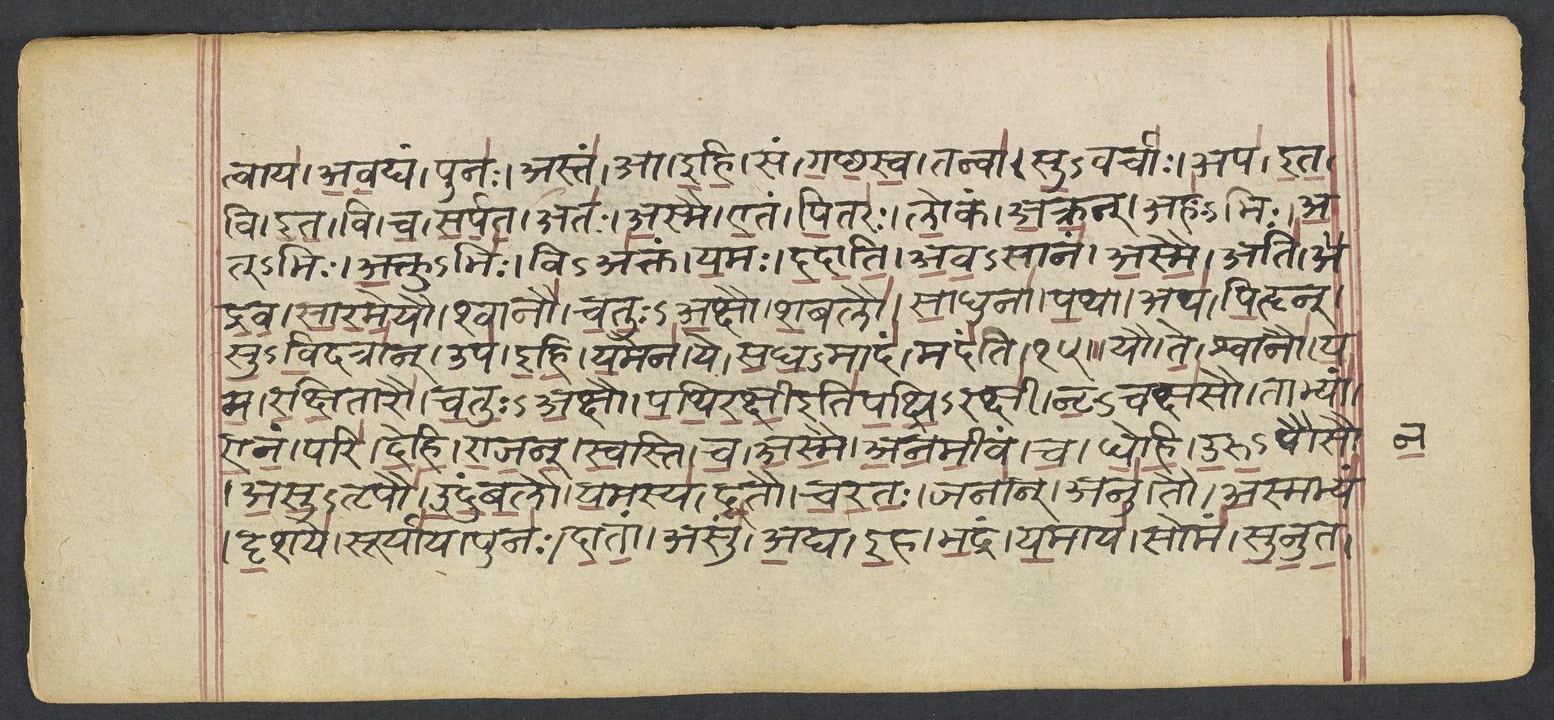
Penn Ms. Coll. 390 Item 41, fol. 753r (numbered 70r by the scribe) (OPenn image 753, lower leaf). Checked on the image: the Rigveda text on this page begins in RV 10.14.8 ‹-itvāya avadyam punaḥ astam›. The next page with Rigveda text, fol. 753v (numbered 70v by the scribe), begins in RV 10.14.13 ‹yamāya juhuta haviḥ yamam›. Verses 10.14.8-12 end on this page; 10.14.8 begins on fol. 752v (numbered 69v by the scribe).
8saṁ ga̍cchasva pi̱tṛbhi̱ḥ saṁ ya̱mene̍ṣṭāpū̱rtena̍ para̱me vyo̍man | hi̱tvāyā̍va̱dyam puna̱r asta̱m ehi̱ saṁ ga̍cchasva ta̱nvā̍ su̱varcā̍ḥ ||
9ape̍ta̱ vī̍ta̱ vi ca̍ sarpa̱tāto̱ 'smā e̱tam pi̱taro̍ lo̱kam a̍kran | aho̍bhir a̱dbhir a̱ktubhi̱r vya̍ktaṁ ya̱mo da̍dāty ava̱sāna̍m asmai ||
10ati̍ drava sārame̱yau śvānau̍ catura̱kṣau śa̱balau̍ sā̱dhunā̍ pa̱thā | athā̍ pi̱tṝn su̍vi̱datrā̱m̐ upe̍hi ya̱mena̱ ye sa̍dha̱māda̱m mada̍nti ||
11yau te̱ śvānau̍ yama rakṣi̱tārau̍ catura̱kṣau pa̍thi̱rakṣī̍ nṛ̱cakṣa̍sau | tābhyā̍m ena̱m pari̍ dehi rājan sva̱sti cā̍smā anamī̱vaṁ ca̍ dhehi ||
12u̱rū̱ṇa̱sāv a̍su̱tṛpā̍ udumba̱lau ya̱masya̍ dū̱tau ca̍rato̱ janā̱m̐ anu̍ | tāv a̱smabhya̍ṁ dṛ̱śaye̱ sūryā̍ya̱ puna̍r dātā̱m asu̍m a̱dyeha bha̱dram ||
Compare: Padapāṭha (word-by-word text written in the manuscript; Sansknet e-text via GRETIL)
8sam | gacchasva | pitṛ-bhiḥ | sam | yamena | iṣṭāpūrtena | parame | vi-oman | h itvāya | avadyam | punaḥ | astam | ā | ihi | sam | gacchasva | tanvā | su-varcāḥ
9apa | ita | vi | ita | vi | ca | sarpata | ataḥ | asmai | etam | pitaraḥ | lokam | akran | ahaḥ-bhiḥ | at-bhiḥ | aktu-bhiḥ | vi-aktam | yamaḥ | dadāti | ava-sānam | asmai
10ati | drava | sārameyau | śvānau | catuḥ-akṣau | śabalau | sādhunā | pathā | atha | pitṝn | su-vidatrān | upa | ihi | yamena | ye | sadha-mādam | madanti
11yau | te | śvānau | yama | rakṣitārau | catuḥ-akṣau | pathirakṣī itipathi-rakṣī | nṛ-cakṣasau | tābhyām | enam | pari | dehi | rājan | svasti | ca | asmai | anamīvam | ca | dhehi
12uru-nasau | asu-tṛpau | udumbalau | yamasya | dūtau | carataḥ | janān | anu | tau | asmabhyam | dṛśaye | sūryāya | punaḥ | dātām | asum | adya | iha | bhadram
8Meet Yama, meet the Fathers, meet the merit of free or ordered acts, in highest heaven. Leave sin and evil, seek anew thy dwelling, and bright with glory wear another body.
9Go hence, depart ye, fly in all directions: this place for him the Fathers have provided. Yama bestows on him a place to rest in adorned with days and beams of light and waters.
10Run and outspeed the two dogs, Saramâ's offspring, brindled, four-eyed, upon thy happy pathway. Draw nigh then to the gracious-minded Fathers where they rejoice in company with Yama.
11And those two dogs of thine, Yama, the watchers, four-eyed, who look on men and guard the pathway,– Entrust this man, O King, to their protection, and with prosperity and health endow him.
12Dark-hued, insatiate, with distended nostrils, Yama's two envoys roam among the People; May they restore to us a fair existence here and to-day, that we may see the sunlight.
Where on the image
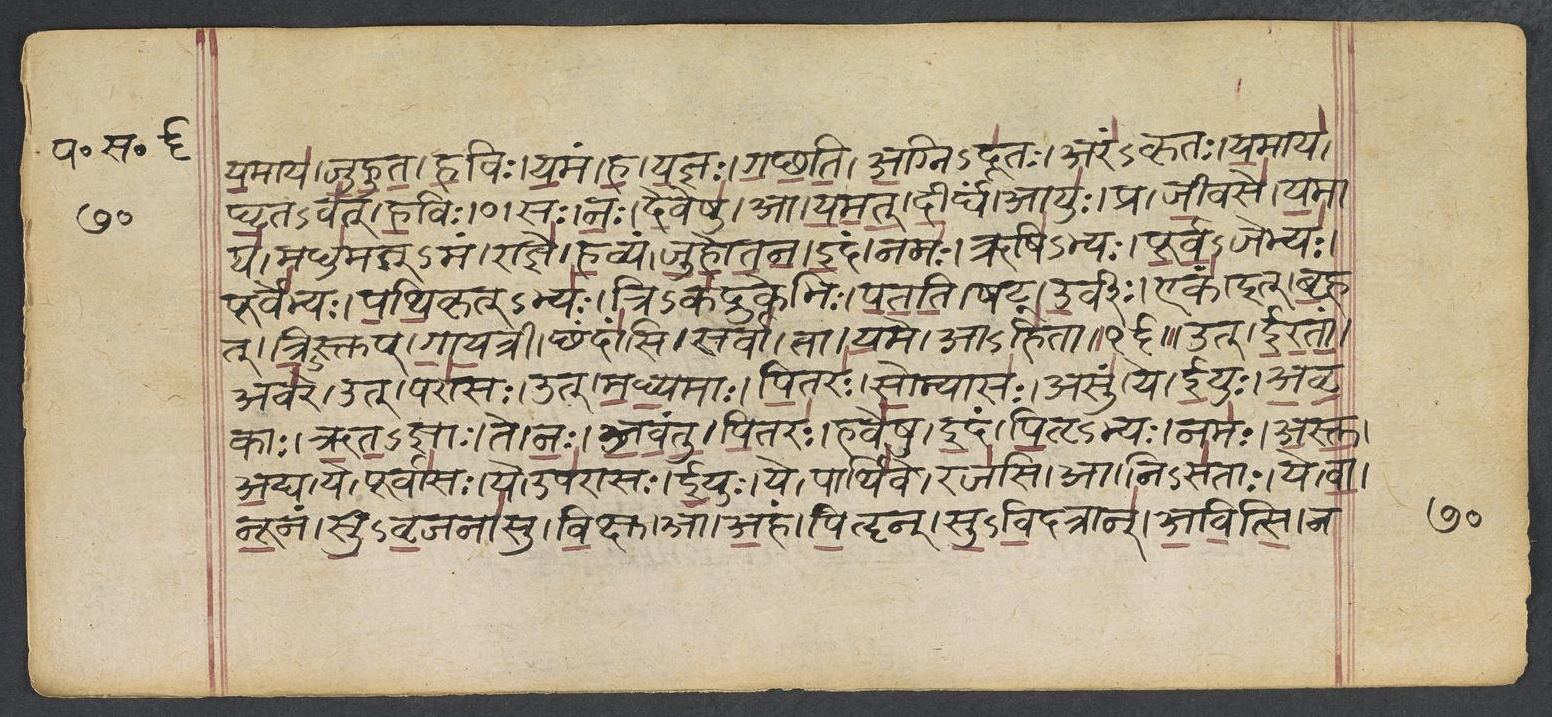
Penn Ms. Coll. 390 Item 41, fol. 753v (numbered 70v by the scribe) (OPenn image 754, upper leaf). Checked on the image: the Rigveda text on this page begins in RV 10.14.13 ‹yamāya juhuta haviḥ yamam›. The next page with Rigveda text, fol. 754r (numbered 71r by the scribe), begins in RV 10.15.3 ‹-napātam ca vi-kramaṇam ca›. Verses 10.14.13-16 end on this page; 10.14.13 begins on fol. 753r (numbered 70r by the scribe).
13ya̱māya̱ soma̍ṁ sunuta ya̱māya̍ juhutā ha̱viḥ | ya̱maṁ ha̍ ya̱jño ga̍cchaty a̱gnidū̍to̱ ara̍ṁkṛtaḥ ||
14ya̱māya̍ ghṛ̱tava̍d dha̱vir ju̱hota̱ pra ca̍ tiṣṭhata | sa no̍ de̱veṣv ā ya̍mad dī̱rgham āyu̱ḥ pra jī̱vase̍ ||
15ya̱māya̱ madhu̍mattama̱ṁ rājñe̍ ha̱vyaṁ ju̍hotana | i̱daṁ nama̱ ṛṣi̍bhyaḥ pūrva̱jebhya̱ḥ pūrve̍bhyaḥ pathi̱kṛdbhya̍ḥ ||
16trika̍drukebhiḥ patati̱ ṣaḻ u̱rvīr eka̱m id bṛ̱hat | tri̱ṣṭub gā̍ya̱trī chandā̍ṁsi̱ sarvā̱ tā ya̱ma āhi̍tā ||
Compare: Padapāṭha (word-by-word text written in the manuscript; Sansknet e-text via GRETIL)
13yamāya | somam | sunuta | yamāya | juhuta | haviḥ | yamam | ha | yajñaḥ | gacchat i | agni-dūtaḥ | aram-kṛtaḥ
14yamāya | ghṛta-vat | haviḥ | juhota | pra | ca | tiṣṭhata | saḥ | naḥ | deveṣu | ā | yamat | dīrgham | āyuḥ | pra | jīvase
15yamāya | madhumat-tamam | rājñe | havyam | juhotana | idam | namaḥ | ṛṣi-bhyaḥ | pūrva-jebhyaḥ | pūrvebhyaḥ | pathikṛt-bhyaḥ
16tri-kadrukebhiḥ | patati | ṣaṭ | urvīḥ | ekam | it | bṛhat | tri-stup | gāyatrī | chandāṃsi | sarvā | tā | yame | āhitā
13To Yama pour the Soma, bring to Yama consecrated gifts: To Yama sacrifice prepared and heralded by Agni goes.
14Offer to Yama holy gifts enriched with butter, and draw near: So may he grant that we may live long days of life among the Gods.
15Offer to Yama, to the King, oblation very rich in meath: Bow down before the R̥ishis of the ancient times, who made this path in days of old.
16Into the six Expanses flies the Great One in Trikadrukas. The Gâyatrî, the Trishṭup, all metres in Yama are contained.
Notes
- Sanskrit: Aufrecht's edition (1877) with the Vedic accents, as entered by van Nooten and Holland (GRETIL).
- English: Ralph T. H. Griffith, The Hymns of the Rigveda (1889-1892; 2nd ed. 1896-1897), from the VedaWeb digital text; OCR slips in that text were corrected against the printed 2nd edition (data/sources/rigveda/griffith_errata.json).
- Padapāṭha (edition text): Sansknet e-text via GRETIL (CC BY-NC-SA 4.0).
Cite
Sources
- Source: Penn Ms. Coll. 390 Item 41 (undated (catalogued with Penn's 18th-19th c. Vedic manuscripts)), OPenn, Public Domain Mark + Aufrecht's accented text (GRETIL) + Griffith's English (VedaWeb) (holding institution)
- Critical edition: Aufrecht (1877), accented e-text via GRETIL
← previous · → next · v cycle view · l back to library