Rigveda 10.15: To the ancestors
Introduction
Rigveda 10.15 is a hymn of 14 verses addressed to the ancestors. It stands in book (maṇḍala) 10, the last and latest book. The Rigveda is the oldest collection of Sanskrit hymns, composed in the second half of the second millennium BCE and handed down orally for many centuries before it was written down.
The manuscript shown is Penn Ms. Coll. 390 Item 41 (University of Pennsylvania), an undated paper manuscript of the padapāṭha (the word-by-word recitation text, in which every word is written separately and compounds are split) of the whole Ṛgveda in Devanāgarī, 884 leaves in fascicles, 7-9 lines to the page, accents in red; this hymn stands on fol. 753v-755r. Each section below gives the verses that end on one page; the page boundaries were read on the images (the opening words of every page), not counted out. Where the manuscript is a padapāṭha (the word-by-word recitation text), the section shows Aufrecht's continuous (saṃhitā) text first and, as the edition text, the padapāṭha of the same verses, which is the form written on the page.
How was this verified? (Provenance)
Where on the image
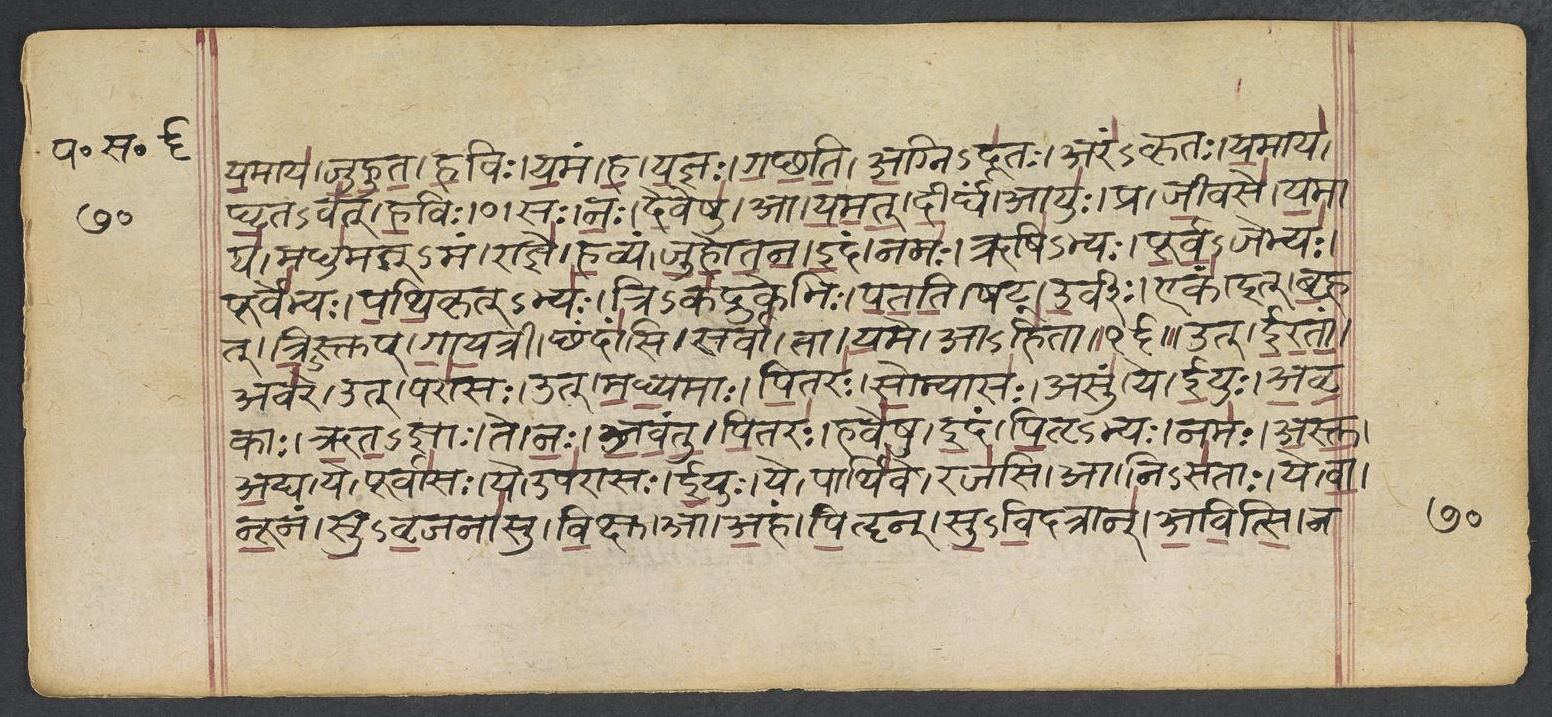
Penn Ms. Coll. 390 Item 41, fol. 753v (numbered 70v by the scribe) (OPenn image 754, upper leaf). Checked on the image: the Rigveda text on this page begins in RV 10.14.13 ‹yamāya juhuta haviḥ yamam›. The next page with Rigveda text, fol. 754r (numbered 71r by the scribe), begins in RV 10.15.3 ‹-napātam ca vi-kramaṇam ca›. Verses 10.15.1-2 end on this page.
1ud ī̍ratā̱m ava̍ra̱ ut parā̍sa̱ un ma̍dhya̱māḥ pi̱tara̍ḥ so̱myāsa̍ḥ | asu̱ṁ ya ī̱yur a̍vṛ̱kā ṛ̍ta̱jñās te no̍ 'vantu pi̱taro̱ have̍ṣu ||
2i̱dam pi̱tṛbhyo̱ namo̍ astv a̱dya ye pūrvā̍so̱ ya upa̍rāsa ī̱yuḥ | ye pārthi̍ve̱ raja̱sy ā niṣa̍ttā̱ ye vā̍ nū̱naṁ su̍vṛ̱janā̍su vi̱kṣu ||
Compare: Padapāṭha (word-by-word text written in the manuscript; Sansknet e-text via GRETIL)
1ut | īratām | avare | ut | parāsaḥ | ut | madhyamāḥ | pitaraḥ | somyāsaḥ | asum | ye | īyuḥ | avṛkāḥ | ṛta-jñāḥ | te | naḥ | avantu | pitaraḥ | haveṣu
2idam | pitṛ-bhyaḥ | namaḥ | astu | adya | ye | pūrvāsaḥ | ye | uparāsaḥ | īyuḥ | ye | pārthive | rajasi | ā | ni-sattāḥ | ye | vā | nūnam | su-vṛjanāsu | vikṣu
1MAY they ascend, the lowest, highest, midmost, the Fathers who deserve a share of Soma- May they who have attained the life of spirits, gentle and righteous, aid us when we call them.
2Now let us pay this homage to the Fathers, to those who passed of old and those who followed, Those who have rested in the earthly region, and those who dwell among the Mighty Races.
Where on the image
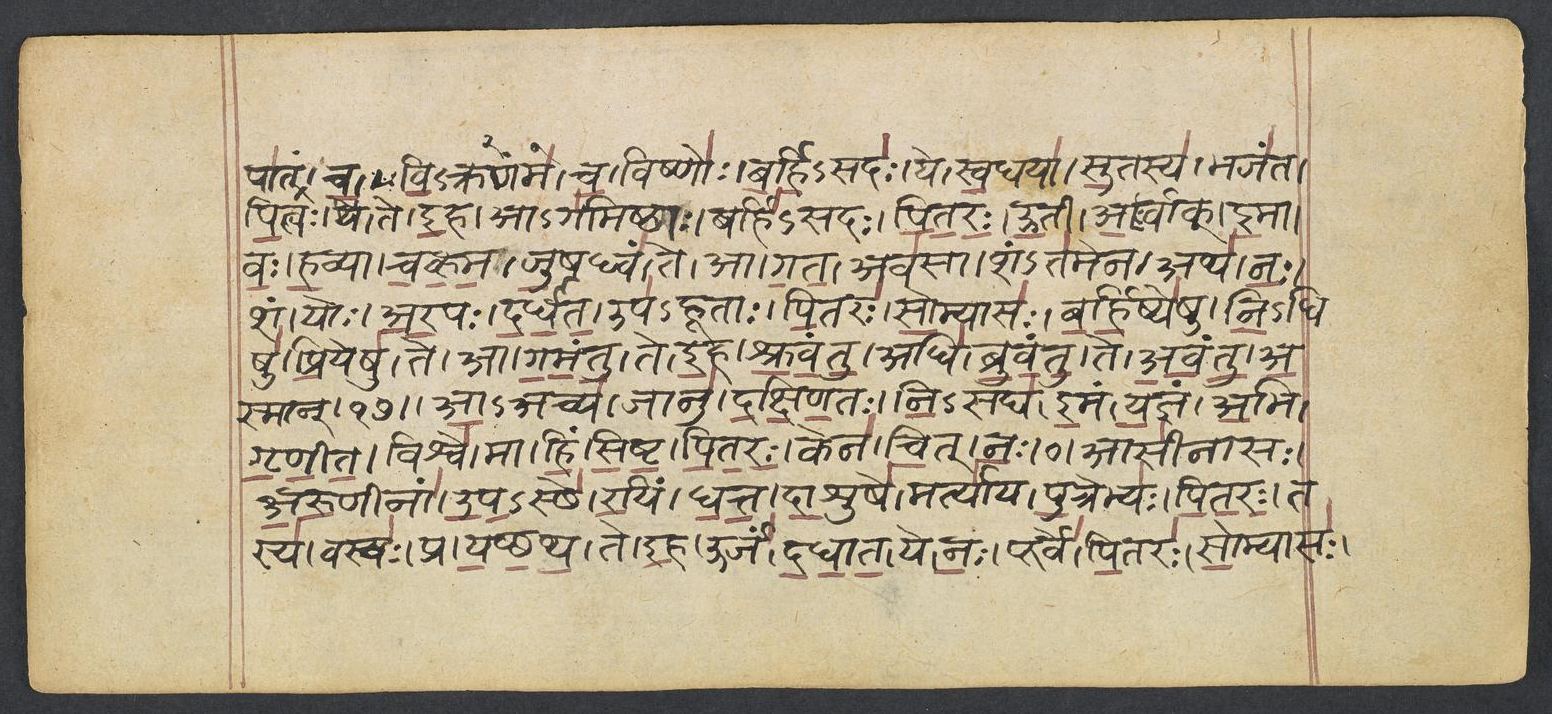
Penn Ms. Coll. 390 Item 41, fol. 754r (numbered 71r by the scribe) (OPenn image 754, lower leaf). Checked on the image: the Rigveda text on this page begins in RV 10.15.3 ‹-napātam ca vi-kramaṇam ca›. The next page with Rigveda text, fol. 754v (numbered 71v by the scribe), begins in RV 10.15.8 ‹anu-ūhire soma-pītham vasiṣṭhāḥ tebhiḥ›. Verses 10.15.3-7 end on this page; 10.15.3 begins on fol. 753v (numbered 70v by the scribe).
3āham pi̱tṝn su̍vi̱datrā̍m̐ avitsi̱ napā̍taṁ ca vi̱krama̍ṇaṁ ca̱ viṣṇo̍ḥ | ba̱rhi̱ṣado̱ ye sva̱dhayā̍ su̱tasya̱ bhaja̍nta pi̱tvas ta i̱hāga̍miṣṭhāḥ ||
4barhi̍ṣadaḥ pitara ū̱ty a1̱̍rvāg i̱mā vo̍ ha̱vyā ca̍kṛmā ju̱ṣadhva̍m | ta ā ga̱tāva̍sā̱ śaṁta̍me̱nāthā̍ na̱ḥ śaṁ yor a̍ra̱po da̍dhāta ||
5upa̍hūtāḥ pi̱tara̍ḥ so̱myāso̍ barhi̱ṣye̍ṣu ni̱dhiṣu̍ pri̱yeṣu̍ | ta ā ga̍mantu̱ ta i̱ha śru̍va̱ntv adhi̍ bruvantu̱ te̍ 'vantv a̱smān ||
6ācyā̱ jānu̍ dakṣiṇa̱to ni̱ṣadye̱maṁ ya̱jñam a̱bhi gṛ̍ṇīta̱ viśve̍ | mā hi̍ṁsiṣṭa pitara̱ḥ kena̍ cin no̱ yad va̱ āga̍ḥ puru̱ṣatā̱ karā̍ma ||
7āsī̍nāso aru̱ṇīnā̍m u̱pasthe̍ ra̱yiṁ dha̍tta dā̱śuṣe̱ martyā̍ya | pu̱trebhya̍ḥ pitara̱s tasya̱ vasva̱ḥ pra ya̍cchata̱ ta i̱horja̍ṁ dadhāta ||
Compare: Padapāṭha (word-by-word text written in the manuscript; Sansknet e-text via GRETIL)
3ā | aham | pitṝn | su-vidatrān | avitsi | napātam | ca | vi-kramaṇam | ca | viṣṇoḥ | barhi-sadaḥ | ye | svadhayā | sutasya | bhajanta | pitvaḥ | te | iha | āgamiṣṭhāḥ
4barhi-sadaḥ | pitaraḥ | ūtī | arvāk | imā | vaḥ | havyā | cakṛma | juṣadhvam | te | ā | gata | avasā | śam-tamena | atha | naḥ | śam | yoḥ | arapaḥ | dadhāta
5upa-hūtāḥ | pitaraḥ | somyāsaḥ | barhiṣyeṣu | ni-dhiṣu | priyeṣu | te | ā | gamantu | te | iha | śrivantu | adhi | bruvantu | te | avantu | asmān
6ācya | jānu | dakṣiṇataḥ | ni-sadya | imam | yajñam | abhi | gṛṇīta | viśve | mā | hi ṃsiṣṭa | pitaraḥ | kena | cit | naḥ | yat | vaḥ | āgaḥ | puruṣatā | karāma
7āsīnāsaḥ | aruṇīnām | upa-sthe | rayim | dhatta | dāśuṣe | martyāya | putrebhyaḥ | pitaraḥ | tasya | vasvaḥ | pra | yacchata | te | iha | ūrjam | dadhāta
3I have attained the gracious-minded Fathers, I have gained son and progeny from Vishṇu. They who enjoy pressed juices with oblation seated on sacred grass, come oftenest hither.
4Fathers who sit on sacred grass, come, help us: these offerings have we made for you; accept them. So come to us with most auspicious favour, and give us health and strength without a trouble.
5May they, the Fathers, worthy of the Soma, invited to their favourite oblations. Laid on the sacred grass, come nigh and listen: may they be gracious unto us and bless us.
6Bowing your bended knees and seated southward, accept this sacrifice of ours with favour. Punish us not for any sin, O Fathers, which we through human frailty have committed.
7Lapped in the bosom of the purple Mornings, give riches to the man who brings oblations. Grant to your sons a portion of that treasure, and, present, give them energy, ye Fathers.
Where on the image
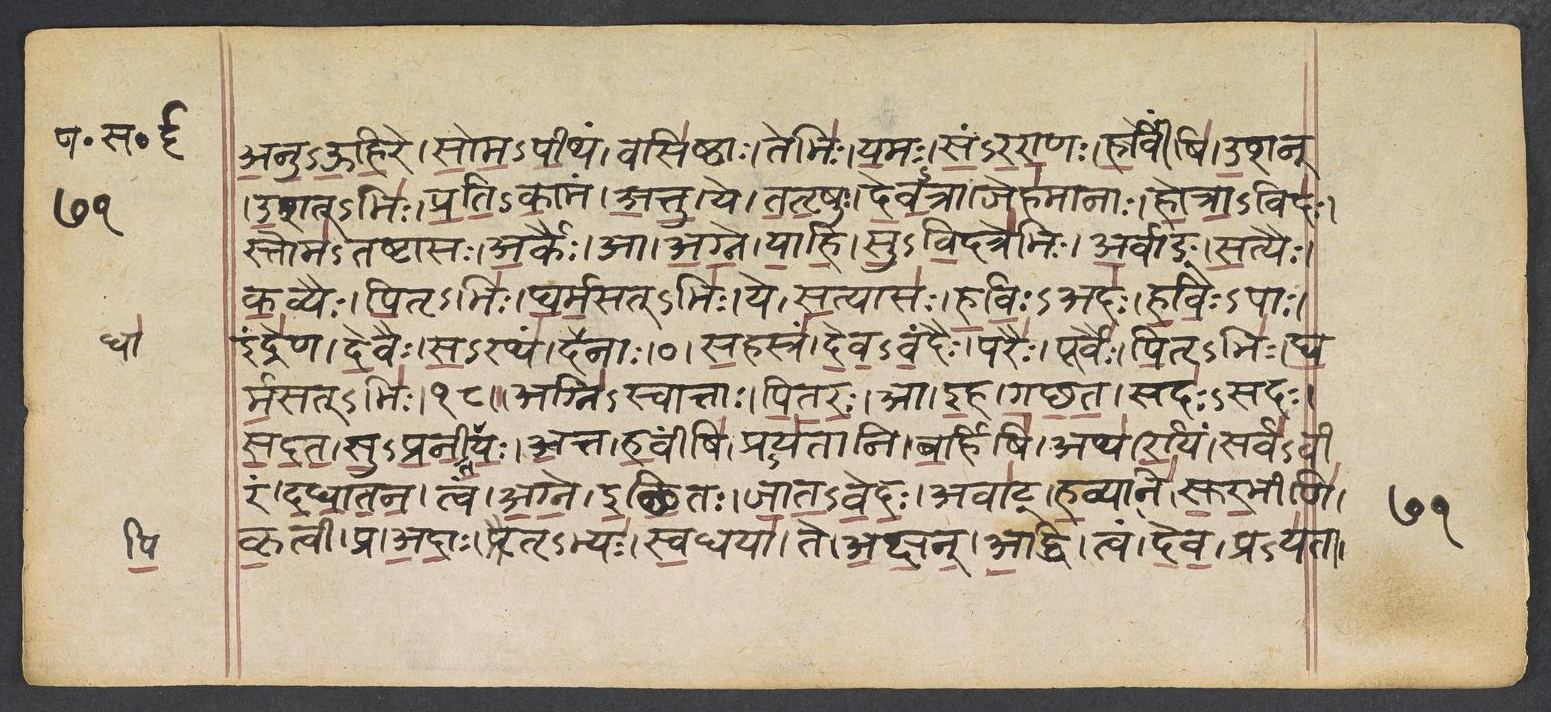
Penn Ms. Coll. 390 Item 41, fol. 754v (numbered 71v by the scribe) (OPenn image 755, upper leaf). Checked on the image: the Rigveda text on this page begins in RV 10.15.8 ‹anu-ūhire soma-pītham vasiṣṭhāḥ tebhiḥ›. The next page with Rigveda text, fol. 755r (numbered 72r by the scribe), begins in RV 10.15.12 ‹havīṃṣi›. Verses 10.15.8-11 end on this page; 10.15.8 begins on fol. 754r (numbered 71r by the scribe).
8ye na̱ḥ pūrve̍ pi̱tara̍ḥ so̱myāso̍ 'nūhi̱re so̍mapī̱thaṁ vasi̍ṣṭhāḥ | tebhi̍r ya̱maḥ sa̍ṁrarā̱ṇo ha̱vīṁṣy u̱śann u̱śadbhi̍ḥ pratikā̱mam a̍ttu ||
9ye tā̍tṛ̱ṣur de̍va̱trā jeha̍mānā hotrā̱vida̱ḥ stoma̍taṣṭāso a̱rkaiḥ | āgne̍ yāhi suvi̱datre̍bhir a̱rvāṅ sa̱tyaiḥ ka̱vyaiḥ pi̱tṛbhi̍r gharma̱sadbhi̍ḥ ||
10ye sa̱tyāso̍ havi̱rado̍ havi̱ṣpā indre̍ṇa de̱vaiḥ sa̱ratha̱ṁ dadhā̍nāḥ | āgne̍ yāhi sa̱hasra̍ṁ devava̱ndaiḥ parai̱ḥ pūrvai̍ḥ pi̱tṛbhi̍r gharma̱sadbhi̍ḥ ||
11agni̍ṣvāttāḥ pitara̱ eha ga̍cchata̱ sada̍ḥ-sadaḥ sadata supraṇītayaḥ | a̱ttā ha̱vīṁṣi̱ praya̍tāni ba̱rhiṣy athā̍ ra̱yiṁ sarva̍vīraṁ dadhātana ||
Compare: Padapāṭha (word-by-word text written in the manuscript; Sansknet e-text via GRETIL)
8ye | naḥ | pūrve | pitaraḥ | somyāsaḥ | anu-ūhire | soma-pītham | vasiṣṭhāḥ | tebhiḥ | yamaḥ | sam-rarāṇaḥ | havīṃṣi | uśan | eśat-bhiḥ | prati-kāmam | attu
9ye | tatṛṣuḥ | devatrā | jehamānāḥ | hotrāvidaḥ | stoma-taṣṭāsaḥ | arkaiḥ | ā | agne | yāhi | su-vidatrebhiḥ | arvāṅ | satyaiḥ | kavyaiḥ | pitṛ-bhiḥ | gharmasat-bhiḥ
10ye | satyāsaḥ | haviḥ-adaḥ | haviḥ-pāḥ | indreṇa | devaiḥ | sa-ratham | dadhānāḥ | ā | agne | yāhi | sahasram | deva-vandaiḥ | paraiḥ | pūrvaiḥ | pitṛ-bhiḥ | gharmasat-bhiḥ
11agni-svāttāḥ | pitaraḥ | ā | iha | gacchata | sadaḥ-sadaḥ | sadata | su-pranītayaḥ | atta | havīṃṣi | pra-yatāni | barhiṣi | atha | rayim | sarva-vīram | dadhātana
8Our ancient Fathers who deserve the Soma, who came, most noble, to our Soma banquet,– With these let Yama, yearning with the yearning, rejoicing eat our offerings at his pleasure.
9Come to us, Agni, with the gracious Fathers who dwell in glowing light, the very Kâvyas, Who thirsted mid the Gods, who hasten hither, oblation winners, theme of singers' praises.
10Come, Agni, come with countless ancient Fathers, dwellers in light, primeval, God-adorers, Eaters and drinkers of oblations, truthful, who travel with the Deities and Indra.
11Fathers whom Agni's flames have tasted, come ye nigh: ye kindly leaders, take ye each your proper place. Eat sacrificial food presented on the grass: grant riches with a multitude of hero sons.
Where on the image
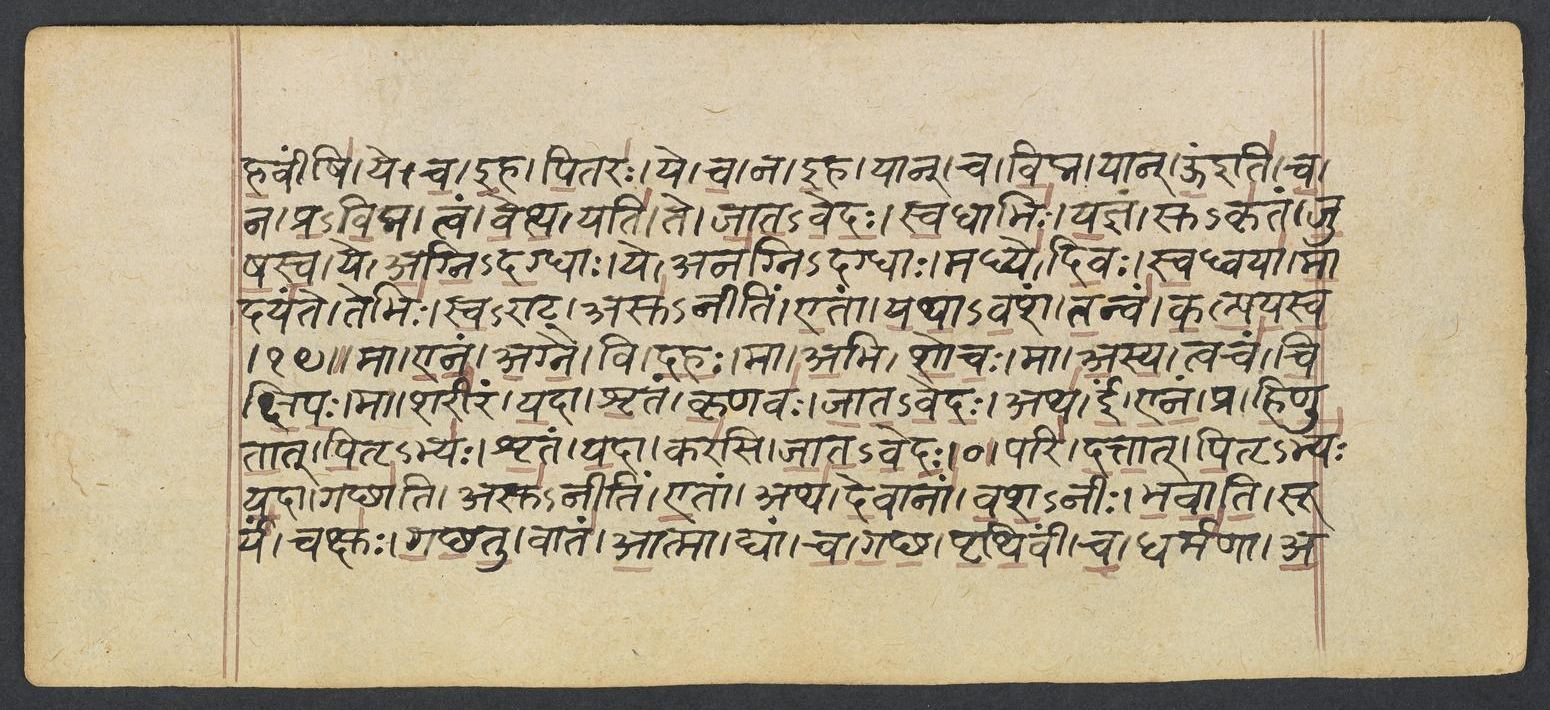
Penn Ms. Coll. 390 Item 41, fol. 755r (numbered 72r by the scribe) (OPenn image 755, lower leaf). Checked on the image: the Rigveda text on this page begins in RV 10.15.12 ‹havīṃṣi›. The next page with Rigveda text, fol. 755v (numbered 72v by the scribe), begins in RV 10.16.3 ‹-apaḥ vā gaccha yadi›. Verses 10.15.12-14 end on this page; 10.15.12 begins on fol. 754v (numbered 71v by the scribe).
12tvam a̍gna īḻi̱to jā̍tave̱do 'vā̍ḍ ḍha̱vyāni̍ sura̱bhīṇi̍ kṛ̱tvī | prādā̍ḥ pi̱tṛbhya̍ḥ sva̱dhayā̱ te a̍kṣann a̱ddhi tvaṁ de̍va̱ praya̍tā ha̱vīṁṣi̍ ||
13ye ce̱ha pi̱taro̱ ye ca̱ neha yām̐ś ca̍ vi̱dma yām̐ u̍ ca̱ na pra̍vi̱dma | tvaṁ ve̍ttha̱ yati̱ te jā̍tavedaḥ sva̱dhābhi̍r ya̱jñaṁ sukṛ̍taṁ juṣasva ||
14ye a̍gnida̱gdhā ye ana̍gnidagdhā̱ madhye̍ di̱vaḥ sva̱dhayā̍ mā̱daya̍nte | tebhi̍ḥ sva̱rāḻ asu̍nītim e̱tāṁ ya̍thāva̱śaṁ ta̱nva̍ṁ kalpayasva ||
Compare: Padapāṭha (word-by-word text written in the manuscript; Sansknet e-text via GRETIL)
12tvam | agne | īḷitaḥ | jāta-vedaḥ | avāṭ | havyāni | surabhīṇi | kṛtvī | pra | adāḥ | p itṛ-bhyaḥ | svadhayā | te | akṣan | addhi | tvam | deva | pra-yatā | havīṃṣi
13ye | ca | iha | pitaraḥ | ye | ca | na | iha | yān | ca | vidma | yān | oṃ iti | ca | na | pra-vidma | tvam | vettha | yati | te | jāta-vedaḥ | svadhābhiḥ | yajñam | su-kṛtam | juṣasva
14ye | agni-dagdhāḥ | ye | anagni-dagdhāḥ | madhye | divaḥ | svadhayā | mādayante | tebhiḥ | sva-rāṭ | asu-nītim | etām | yathāvaśam | tanvam | kalpayasva
12Thou, Agni Jâtavedas, when entreated, didst bear the offerings which thou madest fragrant, And give them to the Fathers who did eat them with Svadha. Eat, thou God, the gifts we bring thee.
13Thou, Jâtavedas, knowest well the number of Fathers who are here and who are absent, Of Fathers whom we know and whom we know not: accept the sacrifice wellprepared with portions.
14They who, consumed by fire or not cremated, joy in their offering in the midst of heaven,– Grant them, O Sovran Lord, the world of spirits and their own body, as thy pleasure wills it.
Notes
- Sanskrit: Aufrecht's edition (1877) with the Vedic accents, as entered by van Nooten and Holland (GRETIL).
- English: Ralph T. H. Griffith, The Hymns of the Rigveda (1889-1892; 2nd ed. 1896-1897), from the VedaWeb digital text; OCR slips in that text were corrected against the printed 2nd edition (data/sources/rigveda/griffith_errata.json).
- Padapāṭha (edition text): Sansknet e-text via GRETIL (CC BY-NC-SA 4.0).
Cite
Sources
- Source: Penn Ms. Coll. 390 Item 41 (undated (catalogued with Penn's 18th-19th c. Vedic manuscripts)), OPenn, Public Domain Mark + Aufrecht's accented text (GRETIL) + Griffith's English (VedaWeb) (holding institution)
- Critical edition: Aufrecht (1877), accented e-text via GRETIL
← previous · → next · v cycle view · l back to library