Rigveda 10.143: To Asvins
Introduction
Rigveda 10.143 is a hymn of 6 verses addressed to Asvins. It stands in book (maṇḍala) 10, the last and latest book. The Rigveda is the oldest collection of Sanskrit hymns, composed in the second half of the second millennium BCE and handed down orally for many centuries before it was written down.
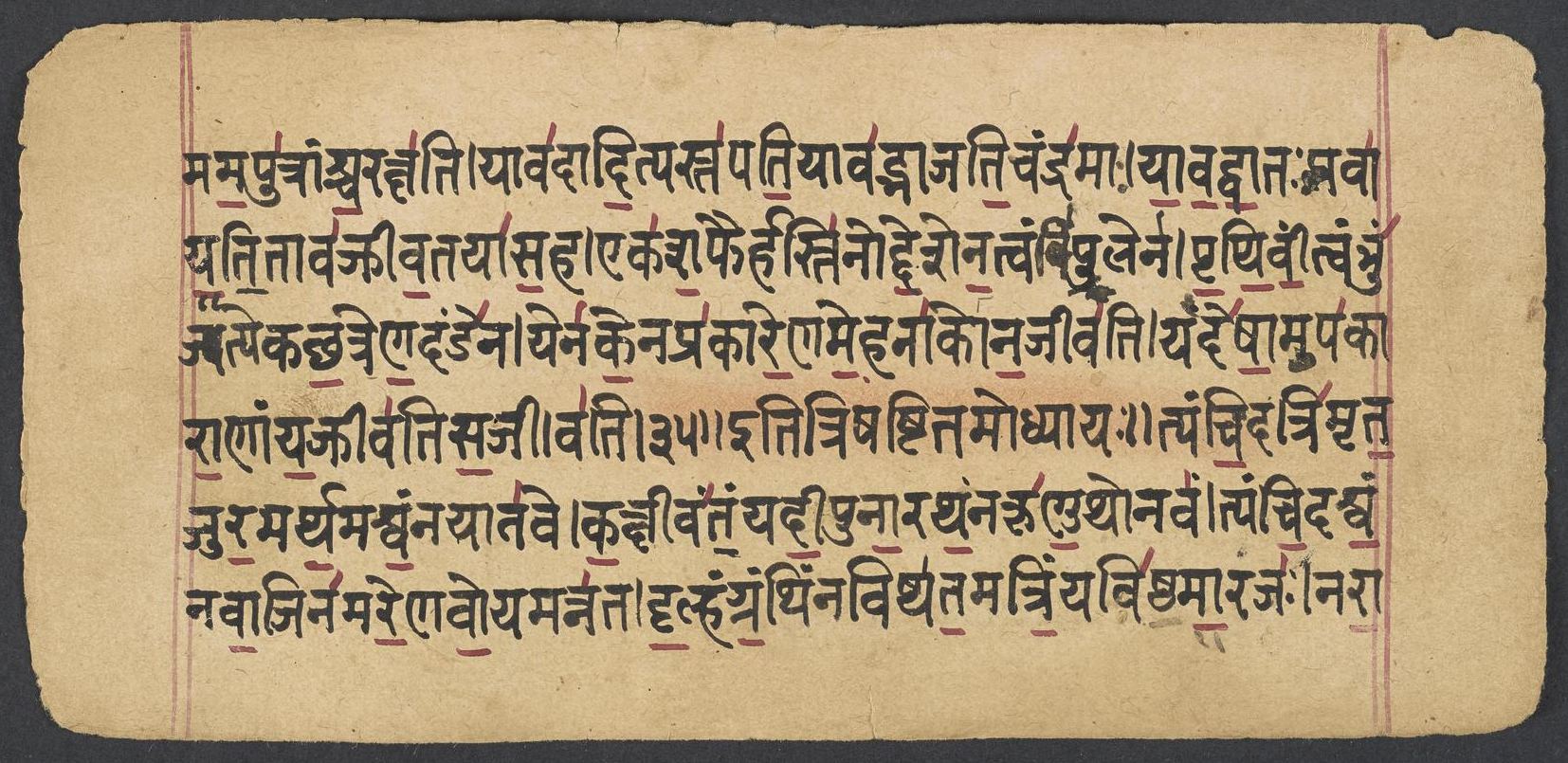
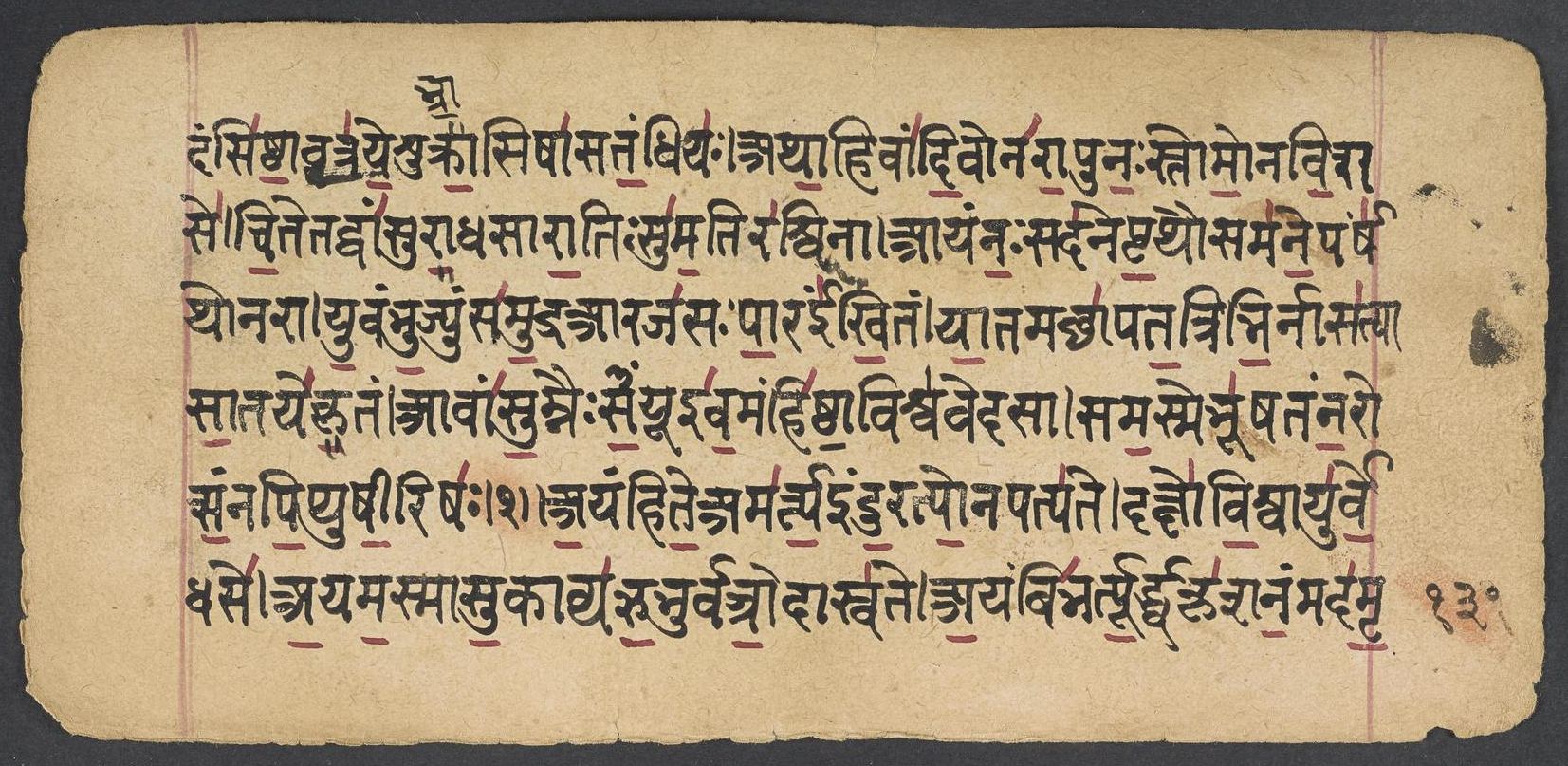
The manuscript shown is Penn Ms. Coll. 390 Item 48 (University of Pennsylvania), a paper manuscript of the eighth aṣṭaka (RV 10.46-10.191) of the Ṛgveda Saṃhitā in Devanāgarī, 158 leaves, 6 lines to the page, with the accents marked in red; the scribe's colophon on fol. 158 gives Saṃvat 1768 (1711 CE); this hymn stands on fol. 130r-130v. Each section below gives the verses that end on one page; the page boundaries were read on the images (the opening words of every page), not counted out. Like most Rigveda manuscripts, Penn Ms. Coll. 390 Item 48 writes a repeated refrain in short form after its first occurrence (for example kasmai° for kasmai devāya haviṣā vidhema); the Sanskrit shown is the full text of Aufrecht's edition.
How was this verified? (Provenance)
Where on the image
Penn Ms. Coll. 390 Item 48, fol. 130r (OPenn image 129, lower leaf). Checked on the image: the Rigveda text on this page begins in RV 10.143.1 ‹tyaṁ cid atrim ṛtajuram›. Lines 1-4 end the khila and carry the colophon iti triṣaṣṭitamo 'dhyāyaḥ; 10.143.1 begins in line 4. The next page with Rigveda text, fol. 130v, begins in RV 10.143.3 ‹siṣāsataṁ dhiyaḥ›. Verses 10.143.1-2 end on this page.
1tyaṁ ci̱d atri̍m ṛta̱jura̱m artha̱m aśva̱ṁ na yāta̍ve | ka̱kṣīva̍nta̱ṁ yadī̱ punā̱ ratha̱ṁ na kṛ̍ṇu̱tho nava̍m ||
2tyaṁ ci̱d aśva̱ṁ na vā̱jina̍m are̱ṇavo̱ yam atna̍ta | dṛ̱ḻhaṁ gra̱nthiṁ na vi ṣya̍ta̱m atri̱ṁ yavi̍ṣṭha̱m ā raja̍ḥ ||
1YE made that Atri, worn with eld, free as a horse to win the goal. When ye restored to youth and strength Kakshîvân like a car renewed,
2Ye freed that Atri like a horse, and brought him newly-born to earth. Ye loosed him like a firm-tied knot which Gods unsoiled by dust had bound.
Where on the image
Penn Ms. Coll. 390 Item 48, fol. 130v (OPenn image 130, upper leaf). Checked on the image: the Rigveda text on this page begins in RV 10.143.3 ‹siṣāsataṁ dhiyaḥ›. The next page with Rigveda text, fol. 131r, begins in RV 10.144.2 ‹-ṛbhur na kṛtvyam madam›. Verses 10.143.3-6 end on this page; 10.143.3 begins on fol. 130r.
3narā̱ daṁsi̍ṣṭhā̱v atra̍ye̱ śubhrā̱ siṣā̍sata̱ṁ dhiya̍ḥ | athā̱ hi vā̍ṁ di̱vo na̍rā̱ puna̱ḥ stomo̱ na vi̱śase̍ ||
4ci̱te tad vā̍ṁ surādhasā rā̱tiḥ su̍ma̱tir a̍śvinā | ā yan na̱ḥ sada̍ne pṛ̱thau sama̍ne̱ parṣa̍tho narā ||
5yu̱vam bhu̱jyuṁ sa̍mu̱dra ā raja̍saḥ pā̱ra ī̍ṅkhi̱tam | yā̱tam acchā̍ pata̱tribhi̱r nāsa̍tyā sā̱taye̍ kṛtam ||
6ā vā̍ṁ su̱mnaiḥ śa̱ṁyū i̍va̱ maṁhi̍ṣṭhā̱ viśva̍vedasā | sam a̱sme bhū̍ṣataṁ na̱rotsa̱ṁ na pi̱pyuṣī̱r iṣa̍ḥ ||
3Heroes who showed most wondrous power to Atri, strive to win fair songs; For then, O Heroes of the sky, your hymn of praise shall cease no more.
4This claims your notice, Bounteous Gods! – oblation, Aṣvins! and our love, That ye, O Heroes, in the fight may bring us safe to ample room.
5Ye Twain to Bhujyu tossed about in ocean at the region's end, Nâsatyas, with your winged steeds came nigh, and gave him strength to win.
6Come with your joys, most liberal Gods, Lords of all treasures, bringing weal. Like fresh full waters to a well, so, Heroes come and be with us.
Notes
- Sanskrit: Aufrecht's edition (1877) with the Vedic accents, as entered by van Nooten and Holland (GRETIL).
- English: Ralph T. H. Griffith, The Hymns of the Rigveda (1889-1892; 2nd ed. 1896-1897), from the VedaWeb digital text; OCR slips in that text were corrected against the printed 2nd edition (data/sources/rigveda/griffith_errata.json).
- This manuscript inserts khila verses (supplementary hymns outside Aufrecht's text) at some hymn ends; they are noted in the section notes and not reproduced.
Cite
Sources
- Source: Penn Ms. Coll. 390 Item 48 (1711 CE (colophon: Saṃvat 1768)), OPenn, Public Domain Mark + Aufrecht's accented text (GRETIL) + Griffith's English (VedaWeb) (holding institution)
- Critical edition: Aufrecht (1877), accented e-text via GRETIL
← previous · → next · v cycle view · l back to library