Rigveda 10.16: Fire of cremation
Introduction
Rigveda 10.16 is a hymn of 14 verses addressed to fire of cremation. It stands in book (maṇḍala) 10, the last and latest book. The Rigveda is the oldest collection of Sanskrit hymns, composed in the second half of the second millennium BCE and handed down orally for many centuries before it was written down.
The manuscript shown is Penn Ms. Coll. 390 Item 41 (University of Pennsylvania), an undated paper manuscript of the padapāṭha (the word-by-word recitation text, in which every word is written separately and compounds are split) of the whole Ṛgveda in Devanāgarī, 884 leaves in fascicles, 7-9 lines to the page, accents in red; this hymn stands on fol. 755r-756v. Each section below gives the verses that end on one page; the page boundaries were read on the images (the opening words of every page), not counted out. Where the manuscript is a padapāṭha (the word-by-word recitation text), the section shows Aufrecht's continuous (saṃhitā) text first and, as the edition text, the padapāṭha of the same verses, which is the form written on the page.
How was this verified? (Provenance)
Where on the image
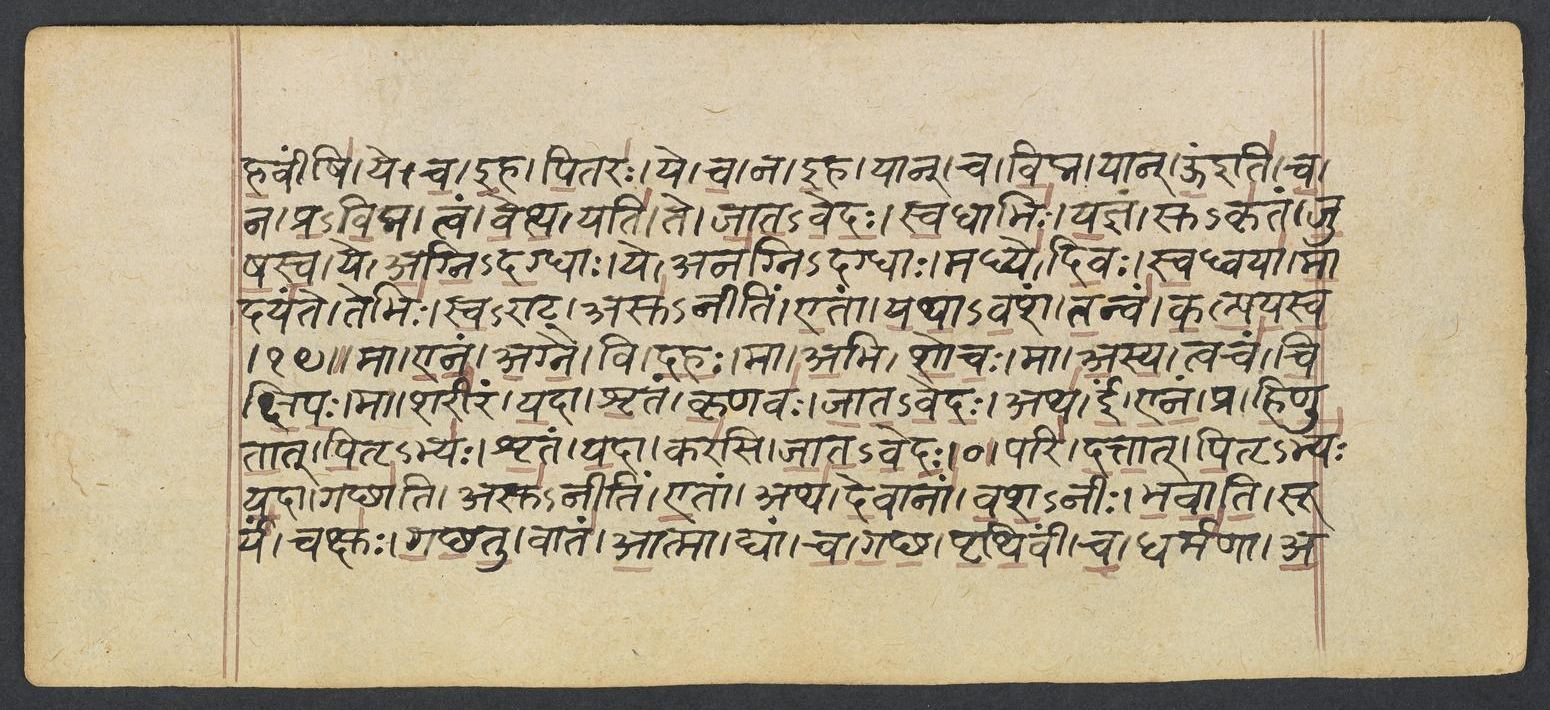
Penn Ms. Coll. 390 Item 41, fol. 755r (numbered 72r by the scribe) (OPenn image 755, lower leaf). Checked on the image: the Rigveda text on this page begins in RV 10.15.12 ‹havīṃṣi›. The next page with Rigveda text, fol. 755v (numbered 72v by the scribe), begins in RV 10.16.3 ‹-apaḥ vā gaccha yadi›. Verses 10.16.1-2 end on this page.
1maina̍m agne̱ vi da̍ho̱ mābhi śo̍co̱ māsya̱ tvaca̍ṁ cikṣipo̱ mā śarī̍ram | ya̱dā śṛ̱taṁ kṛ̱ṇavo̍ jātave̱do 'the̍m ena̱m pra hi̍ṇutāt pi̱tṛbhya̍ḥ ||
2śṛ̱taṁ ya̱dā kara̍si jātave̱do 'the̍m ena̱m pari̍ dattāt pi̱tṛbhya̍ḥ | ya̱dā gacchā̱ty asu̍nītim e̱tām athā̍ de̱vānā̍ṁ vaśa̱nīr bha̍vāti ||
Compare: Padapāṭha (word-by-word text written in the manuscript; Sansknet e-text via GRETIL)
1mā | enam | agne | vi | dahaḥ | mā | abhi | śocaḥ | mā | asya | tvacam | cikṣipaḥ | mā | śarīram | yadā | śṛtam | kṛṇavaḥ | jāta-vedaḥ | atha | īm | enam | pra | hiṇutāt | pitṛ-bhyaḥ
2śṛtam | yadā | karasi | jāta-vedaḥ | atha | īm | enam | pari | dattāt | pitṛ-bhyaḥ | yadā | gacchāti | asu-nītim | etām | atha | devānām | vaśa-nīḥ | bhavāti
1Burn him not up, nor quite consume him, Agni: let not his body or his skin be scattered. O Jâtavedas, when thou hast matured him, then send him on his way unto the Fathers.
2When thou hast made him ready, Jâtavedas, then do thou give him over to the Fathers. When he attains unto the life that waits him, he shall become the Deities' controller.
Where on the image
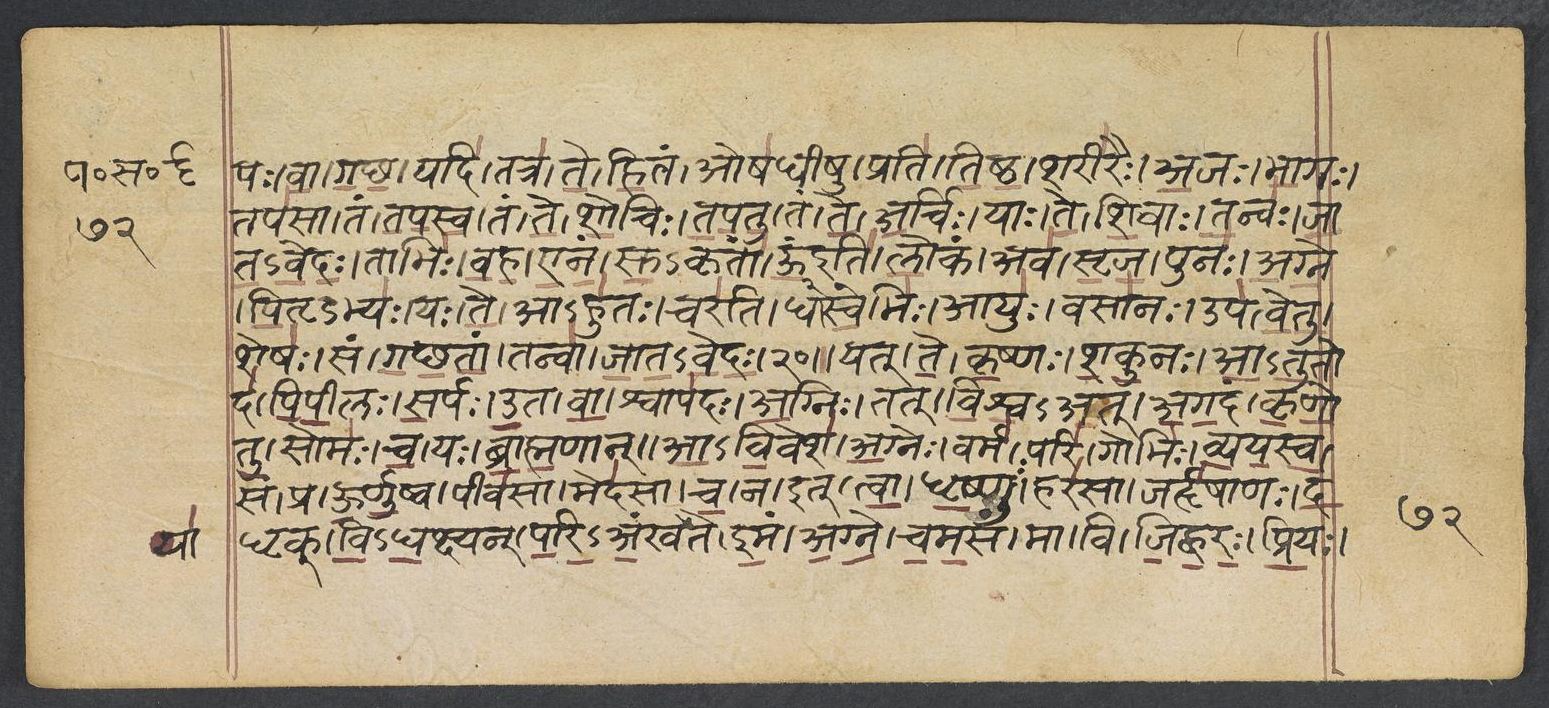
Penn Ms. Coll. 390 Item 41, fol. 755v (numbered 72v by the scribe) (OPenn image 756, upper leaf). Checked on the image: the Rigveda text on this page begins in RV 10.16.3 ‹-apaḥ vā gaccha yadi›. The next page with Rigveda text, fol. 756r (numbered 73r by the scribe), begins in RV 10.16.8 ‹devānām uta somyānām eṣaḥ›. Verses 10.16.3-7 end on this page; 10.16.3 begins on fol. 755r (numbered 72r by the scribe).
3sūrya̱ṁ cakṣu̍r gacchatu̱ vāta̍m ā̱tmā dyāṁ ca̍ gaccha pṛthi̱vīṁ ca̱ dharma̍ṇā | a̱po vā̍ gaccha̱ yadi̱ tatra̍ te hi̱tam oṣa̍dhīṣu̱ prati̍ tiṣṭhā̱ śarī̍raiḥ ||
4a̱jo bhā̱gas tapa̍sā̱ taṁ ta̍pasva̱ taṁ te̍ śo̱cis ta̍patu̱ taṁ te̍ a̱rciḥ | yās te̍ śi̱vās ta̱nvo̍ jātaveda̱s tābhi̍r vahainaṁ su̱kṛtā̍m u lo̱kam ||
5ava̍ sṛja̱ puna̍r agne pi̱tṛbhyo̱ yas ta̱ āhu̍ta̱ś cara̍ti sva̱dhābhi̍ḥ | āyu̱r vasā̍na̱ upa̍ vetu̱ śeṣa̱ḥ saṁ ga̍cchatāṁ ta̱nvā̍ jātavedaḥ ||
6yat te̍ kṛ̱ṣṇaḥ śa̍ku̱na ā̍tu̱toda̍ pipī̱laḥ sa̱rpa u̱ta vā̱ śvāpa̍daḥ | a̱gniṣ ṭad vi̱śvād a̍ga̱daṁ kṛ̍ṇotu̱ soma̍ś ca̱ yo brā̍hma̱ṇām̐ ā̍vi̱veśa̍ ||
7a̱gner varma̱ pari̱ gobhi̍r vyayasva̱ sam prorṇu̍ṣva̱ pīva̍sā̱ meda̍sā ca | net tvā̍ dhṛ̱ṣṇur hara̍sā̱ jarhṛ̍ṣāṇo da̱dhṛg vi̍dha̱kṣyan pa̍rya̱ṅkhayā̍te ||
Compare: Padapāṭha (word-by-word text written in the manuscript; Sansknet e-text via GRETIL)
3sūryam | cakṣuḥ | gacchatu | vātam | ātmā | dyām | ca | gaccha | pṛthivīm | ca | dharmaṇā | apaḥ | vā | gaccha | yadi | tatra | te | hitam | oṣadhīṣu | prati | tiṣṭha | śarīraiḥ
4ajaḥ | bhāgaḥ | tapasā | tam | tapasva | tam | te | śociḥ | tapatu | tam | te | arciḥ | yāḥ | te | śivāḥ | tanvaḥ | jāta-vedaḥ | tābhiḥ | vaha | enam | su-kṛtām | oṃ iti | lokam
5ava | sṛja | punaḥ | agne | pitṛ-bhyaḥ | yaḥ | te | āhutaḥ | carati | svadhābhiḥ | āyuḥ | vasānaḥ | upa | vetu | śeṣaḥ | sam | gacchatām | tanvā | jāta-vedaḥ
6yat | te | kṛṣṇaḥ | śakunaḥ | ātutoda | pipīlaḥ | sarpaḥ | uta | vā | śvāpadaḥ | agniḥ | tat | viśva-at | agadam | kṛṇotu | somaḥ | ca | yaḥ | brāhmaṇān | āviveśa
7agneḥ | varma | pari | gobhiḥ | vyayasva | sam | pra | ūṇuṣva | pīvasā | medasā | ca | na | it | tvā | dhṛṣṇuḥ | harasā | jarhṛṣāṇaḥ | dadhṛk | vi-dhakṣyan | pari-aṅkhayāte
3The Sun receive thine eye, the Wind thy spirit; go, as thy merit is, to earth or heaven. Go, if it be thy lot, unto the waters; go, make thine home in plants with all thy members.
4Thy portion is the goat: with heat consume him: let thy fierce flame, thy glowing splendour, burn him With thine auspicious forms, o Jâtavedas, bear this man to the region of the pious.
5Again, O Agni, to the Fathers send him who, offered in thee, goes with our oblations. Wearing new life let him increase his offspring: let him rejoin a body, Jâtavedas.
6What wound soe'er the dark bird hath inflicted, the emmet, or the serpent, or the jackal, May Agni who devoureth all things heal it and Soma who hath passed into the Brahmans.
7Shield thee with flesh against the flames of Agni, encompass thee about with fat and marrow, So will the Bold One, eager to attack thee with fierce glow fail to girdle and consume thee.
Where on the image
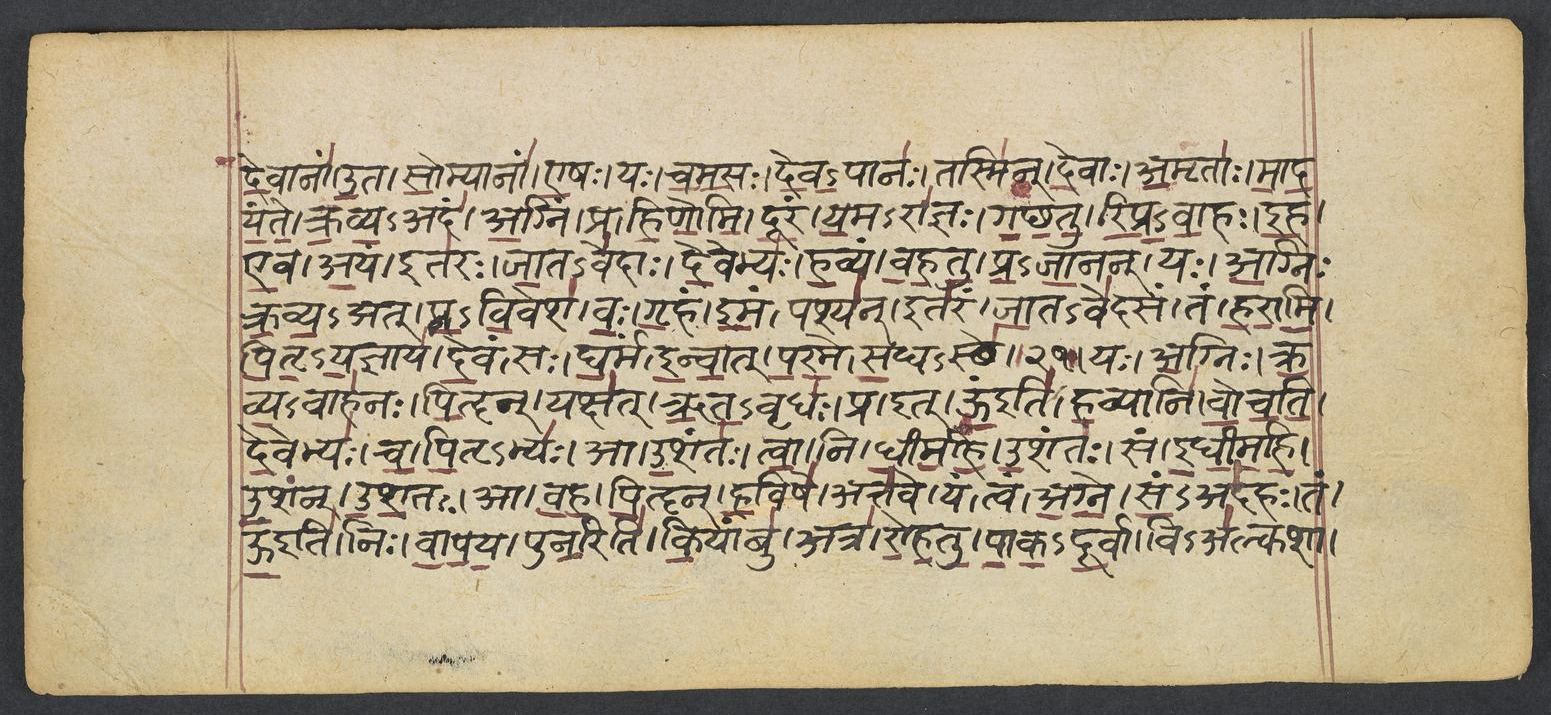
Penn Ms. Coll. 390 Item 41, fol. 756r (numbered 73r by the scribe) (OPenn image 756, lower leaf). Checked on the image: the Rigveda text on this page begins in RV 10.16.8 ‹devānām uta somyānām eṣaḥ›. The next page with Rigveda text, fol. 756v (numbered 73v by the scribe), begins in RV 10.16.14 ‹śītike śītikāvati hrādike hrādikāvati›. Verses 10.16.8-13 end on this page; 10.16.8 begins on fol. 755v (numbered 72v by the scribe).
8i̱mam a̍gne cama̱sam mā vi ji̍hvaraḥ pri̱yo de̱vānā̍m u̱ta so̱myānā̍m | e̱ṣa yaś ca̍ma̱so de̍va̱pāna̱s tasmi̍n de̱vā a̱mṛtā̍ mādayante ||
9kra̱vyāda̍m a̱gnim pra hi̍ṇomi dū̱raṁ ya̱marā̍jño gacchatu ripravā̱haḥ | i̱haivāyam ita̍ro jā̱tave̍dā de̱vebhyo̍ ha̱vyaṁ va̍hatu prajā̱nan ||
10yo a̱gniḥ kra̱vyāt pra̍vi̱veśa̍ vo gṛ̱ham i̱mam paśya̱nn ita̍raṁ jā̱tave̍dasam | taṁ ha̍rāmi pitṛya̱jñāya̍ de̱vaṁ sa gha̱rmam i̍nvāt para̱me sa̱dhasthe̍ ||
11yo a̱gniḥ kra̍vya̱vāha̍naḥ pi̱tṝn yakṣa̍d ṛtā̱vṛdha̍ḥ | pred u̍ ha̱vyāni̍ vocati de̱vebhya̍ś ca pi̱tṛbhya̱ ā ||
12u̱śanta̍s tvā̱ ni dhī̍mahy u̱śanta̱ḥ sam i̍dhīmahi | u̱śann u̍śa̱ta ā va̍ha pi̱tṝn ha̱viṣe̱ atta̍ve ||
13yaṁ tvam a̍gne sa̱mada̍ha̱s tam u̱ nir vā̍payā̱ puna̍ḥ | ki̱yāmbv atra̍ rohatu pākadū̱rvā vya̍lkaśā ||
Compare: Padapāṭha (word-by-word text written in the manuscript; Sansknet e-text via GRETIL)
8imam | agne | camasam | mā | vi | jihvaraḥ | priyaḥ | devānām | uta | somyānām | eṣaḥ | yaḥ | camasaḥ | deva-pānaḥ | tasmin | devāḥ | amṛtāḥ | mādayante
9kravya-adam | agnim | pra | hiṇomi | dūram | yama-rājñaḥ | gacchatu | ripra-vāhaḥ | iha | eva | ayam | itaraḥ | jāta-vedāḥ | devebhyaḥ | havyam | vahatu | pra-jānan
10yaḥ | agniḥ | kravya-at | pra-viveśa | vaḥ | gṛham | imam | paśyan | itaram | jāta-vedasam | tam | harāmi | pitṛ-yajñāya | devam | saḥ | gharmam | invāt | parame | sadha-sthe
11yaḥ | agniḥ | kravya-vāhanaḥ | pitṝn | yakṣat | ṛta-vṛdhaḥ | pra | it | oṃ iti | havyāni | vocati | devebhyaḥ | ca | pitṛ-bhyaḥ | ā
12uśantaḥ | tvā | ni | dhīmahi | uśantaḥ | sam | idhīmahi | uśan | uśataḥ | ā | vaha | pitṝn | haviṣe | attave
13yam | tvam | agne | sam-adahaḥ | tam | oṃ iti | niḥ | vāpaya | punariti | kiyāmbu | atra | rohatu | pāka-dūrvā | vi-alkaśā
8Forbear, O Agni, to upset this ladle: the Gods and they who merit Soma love it. This ladle, this which serves the Gods to drink from, in this the Immortal Deities rejoice them.
9I send afar flesh eating Agni, bearing off stains may he depart to Yama's subjects. But let this other Jâtavedas carry oblation to the Gods, for he is skilful.
10I choose as God for Father-worship Agni, flesh-eater, who hath past within your dwelling, While looking on this other Jâtavedas. Let him light flames in the supreme assembly.
11With offerings meet let Agni bring the Fathers who support the Law. Let him announce oblations paid to Fathers and to Deities.
12Right gladly would we set thee down, right gladly make thee burn and glow. Gladly bring yearning Fathers nigh to eat the food of sacrifice.
13Cool, Agni, and again refresh the spot which thou hast scorched and burnt. Here let the water-lily grow, and tender grass and leafy herb.
Where on the image
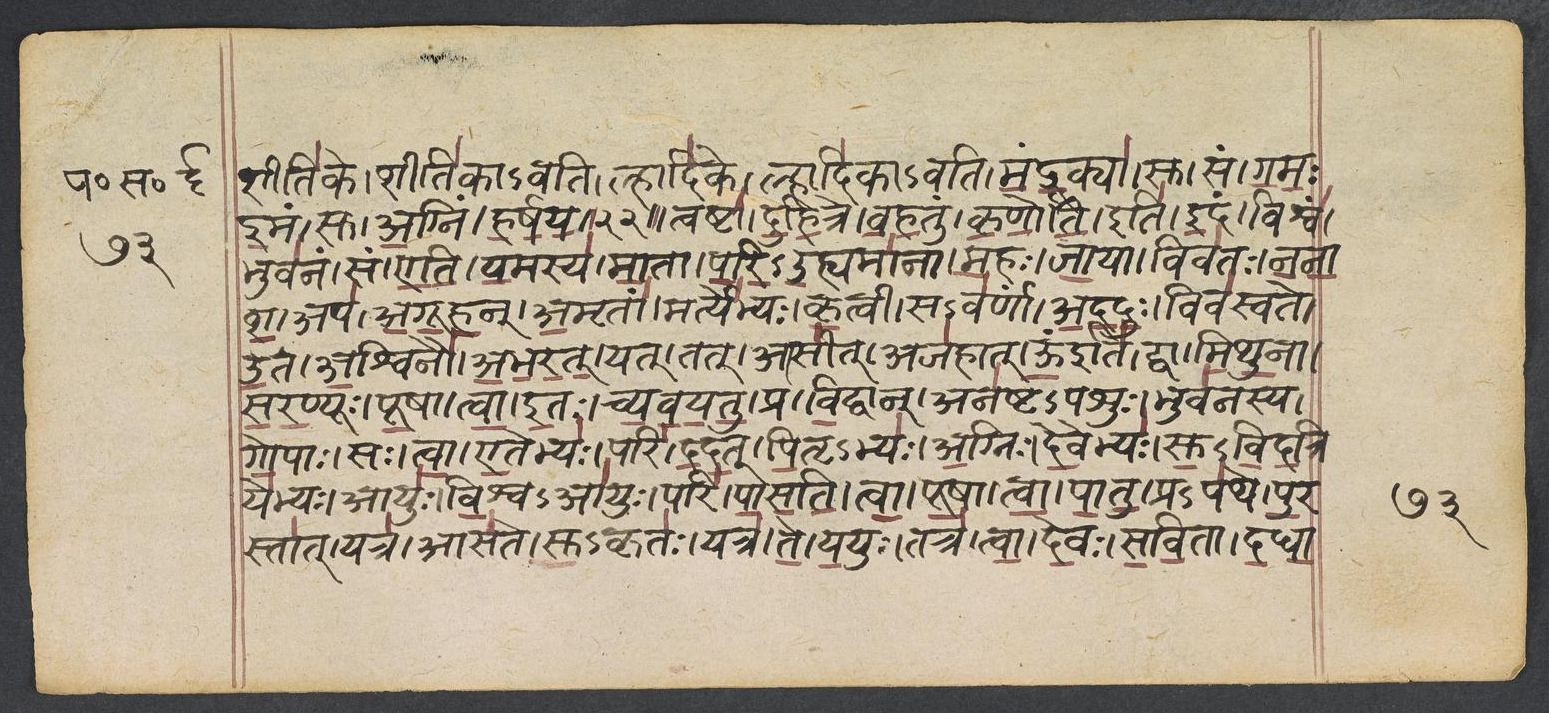
Penn Ms. Coll. 390 Item 41, fol. 756v (numbered 73v by the scribe) (OPenn image 757, upper leaf). Checked on the image: the Rigveda text on this page begins in RV 10.16.14 ‹śītike śītikāvati hrādike hrādikāvati›. The next page with Rigveda text, fol. 757r (numbered 74r by the scribe), begins in RV 10.17.4 ‹-dadhātu›. Verse 10.16.14 ends on this page.
14śīti̍ke̱ śīti̍kāvati̱ hlādi̍ke̱ hlādi̍kāvati | ma̱ṇḍū̱kyā̱3̱̍ su saṁ ga̍ma i̱maṁ sv a1̱̍gniṁ ha̍rṣaya ||
Compare: Padapāṭha (word-by-word text written in the manuscript; Sansknet e-text via GRETIL)
14śītike | śītikāvati | hrādike | hrādikāvati | maṇḍūkyā | su | sam | gamaḥ | imam | su | agnim | harṣaya
14O full of coolness, thou cool Plant, full of fresh moisture, freshening Herb, Come hither with the female frog: fill with delight this Agni here.
Notes
- Sanskrit: Aufrecht's edition (1877) with the Vedic accents, as entered by van Nooten and Holland (GRETIL).
- English: Ralph T. H. Griffith, The Hymns of the Rigveda (1889-1892; 2nd ed. 1896-1897), from the VedaWeb digital text; OCR slips in that text were corrected against the printed 2nd edition (data/sources/rigveda/griffith_errata.json).
- Padapāṭha (edition text): Sansknet e-text via GRETIL (CC BY-NC-SA 4.0).
Cite
Sources
- Source: Penn Ms. Coll. 390 Item 41 (undated (catalogued with Penn's 18th-19th c. Vedic manuscripts)), OPenn, Public Domain Mark + Aufrecht's accented text (GRETIL) + Griffith's English (VedaWeb) (holding institution)
- Critical edition: Aufrecht (1877), accented e-text via GRETIL
← previous · → next · v cycle view · l back to library