Rigveda 10.17: Diverse gods
Introduction
Rigveda 10.17 is a hymn of 14 verses addressed to diverse gods. It stands in book (maṇḍala) 10, the last and latest book. The Rigveda is the oldest collection of Sanskrit hymns, composed in the second half of the second millennium BCE and handed down orally for many centuries before it was written down.
The manuscript shown is Penn Ms. Coll. 390 Item 41 (University of Pennsylvania), an undated paper manuscript of the padapāṭha (the word-by-word recitation text, in which every word is written separately and compounds are split) of the whole Ṛgveda in Devanāgarī, 884 leaves in fascicles, 7-9 lines to the page, accents in red; this hymn stands on fol. 756v-757v. Each section below gives the verses that end on one page; the page boundaries were read on the images (the opening words of every page), not counted out. Where the manuscript is a padapāṭha (the word-by-word recitation text), the section shows Aufrecht's continuous (saṃhitā) text first and, as the edition text, the padapāṭha of the same verses, which is the form written on the page.
How was this verified? (Provenance)
Where on the image
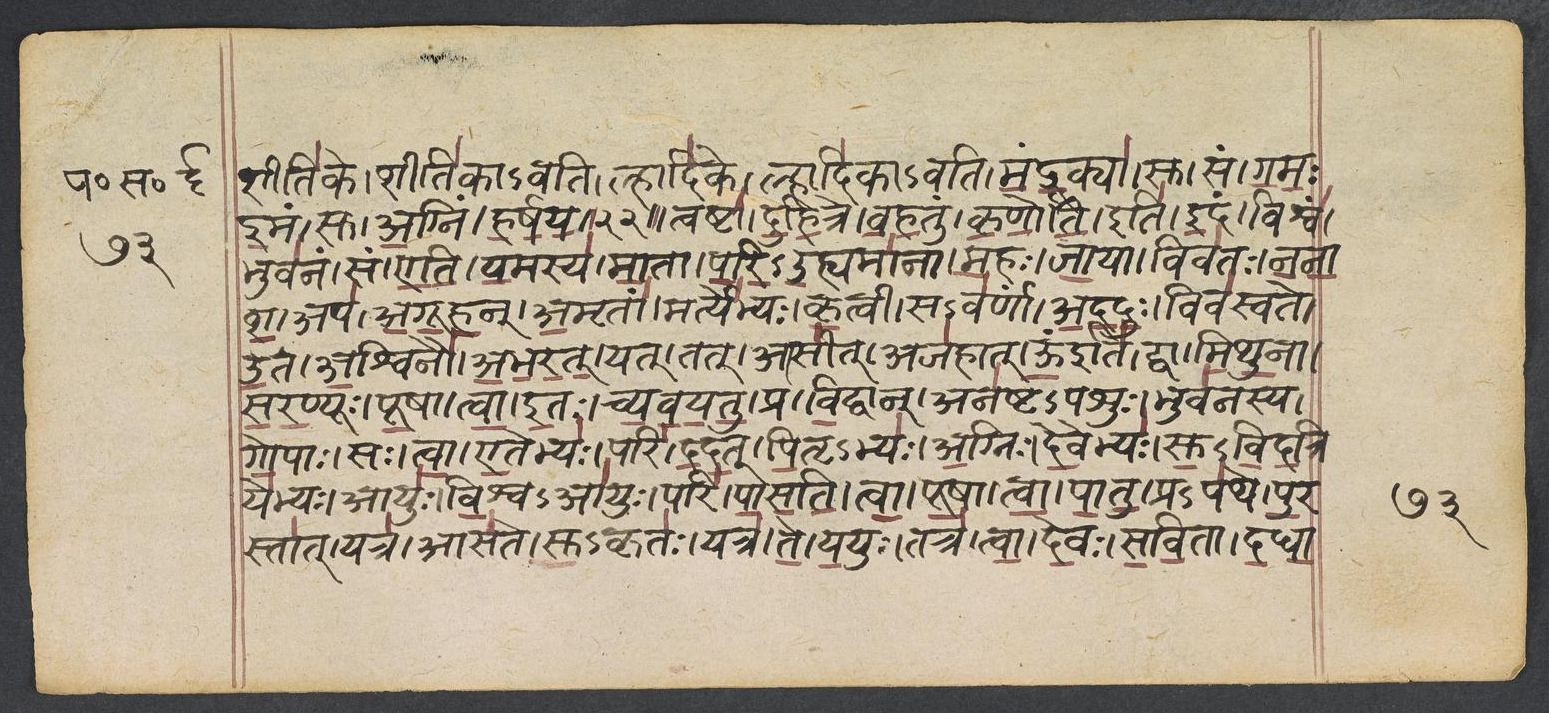
Penn Ms. Coll. 390 Item 41, fol. 756v (numbered 73v by the scribe) (OPenn image 757, upper leaf). Checked on the image: the Rigveda text on this page begins in RV 10.16.14 ‹śītike śītikāvati hrādike hrādikāvati›. The next page with Rigveda text, fol. 757r (numbered 74r by the scribe), begins in RV 10.17.4 ‹-dadhātu›. Verses 10.17.1-3 end on this page.
1tvaṣṭā̍ duhi̱tre va̍ha̱tuṁ kṛ̍ṇo̱tītī̱daṁ viśva̱m bhuva̍na̱ṁ sam e̍ti | ya̱masya̍ mā̱tā pa̍ryu̱hyamā̍nā ma̱ho jā̱yā viva̍svato nanāśa ||
2apā̍gūhann a̱mṛtā̱m martye̍bhyaḥ kṛ̱tvī sava̍rṇām adadu̱r viva̍svate | u̱tāśvinā̍v abhara̱d yat tad āsī̱d aja̍hād u̱ dvā mi̍thu̱nā sa̍ra̱ṇyūḥ ||
3pū̱ṣā tve̱taś cyā̍vayatu̱ pra vi̱dvān ana̍ṣṭapaśu̱r bhuva̍nasya go̱pāḥ | sa tvai̱tebhya̱ḥ pari̍ dadat pi̱tṛbhyo̱ 'gnir de̱vebhya̍ḥ suvida̱triye̍bhyaḥ ||
Compare: Padapāṭha (word-by-word text written in the manuscript; Sansknet e-text via GRETIL)
1tvaṣṭā | duhitre | vahatum | kṛṇoti | iti | idam | viśvam | bhuvanam | sam | eti | yamasya | mātā | pari-uhyamānā | mahaḥ | jāyā | vivavasvataḥ | nanāśa
2apa | agūhan | amṛtām | martyebhyaḥ | kṛtvī | sa-varṇām | adaduḥ | vivasvate | uta | aśvinau | abharat | yat | tat | āsīt | ajahāt | oṃ iti | dvā | mithunā | saraṇyūḥ
3pūṣā | tvā | itaḥ | cyavayatu | pra | vidvān | anaṣṭa-paśuḥ | bhuvanasya | gopāḥ | saḥ | tvā | etebhyaḥ | pari | dadat | pitṛ-bhyaḥ | agniḥ | devebhyaḥ | su-vidatr iyebhyaḥ
1Tvashṭar prepares the bridal of his Daughter: all the world hears the tidings and assembles. But Yama's Mother, Spouse of great Vivasvan, vanished as she was carried to her dwelling.
2From mortal men they hid the Immortal Lady, made one like her and gave her to Vivasvan. Saraṇyû brought to him the Aṣvin brothers, and then deserted both twinned pairs of children.
3Guard of the world, whose cattle ne'er are injured, may Pûshan bear thee hence, for he hath knowledge. May he consign thee to these Fathers' keeping, and to the gracious Gods let Agni give thee.
Where on the image
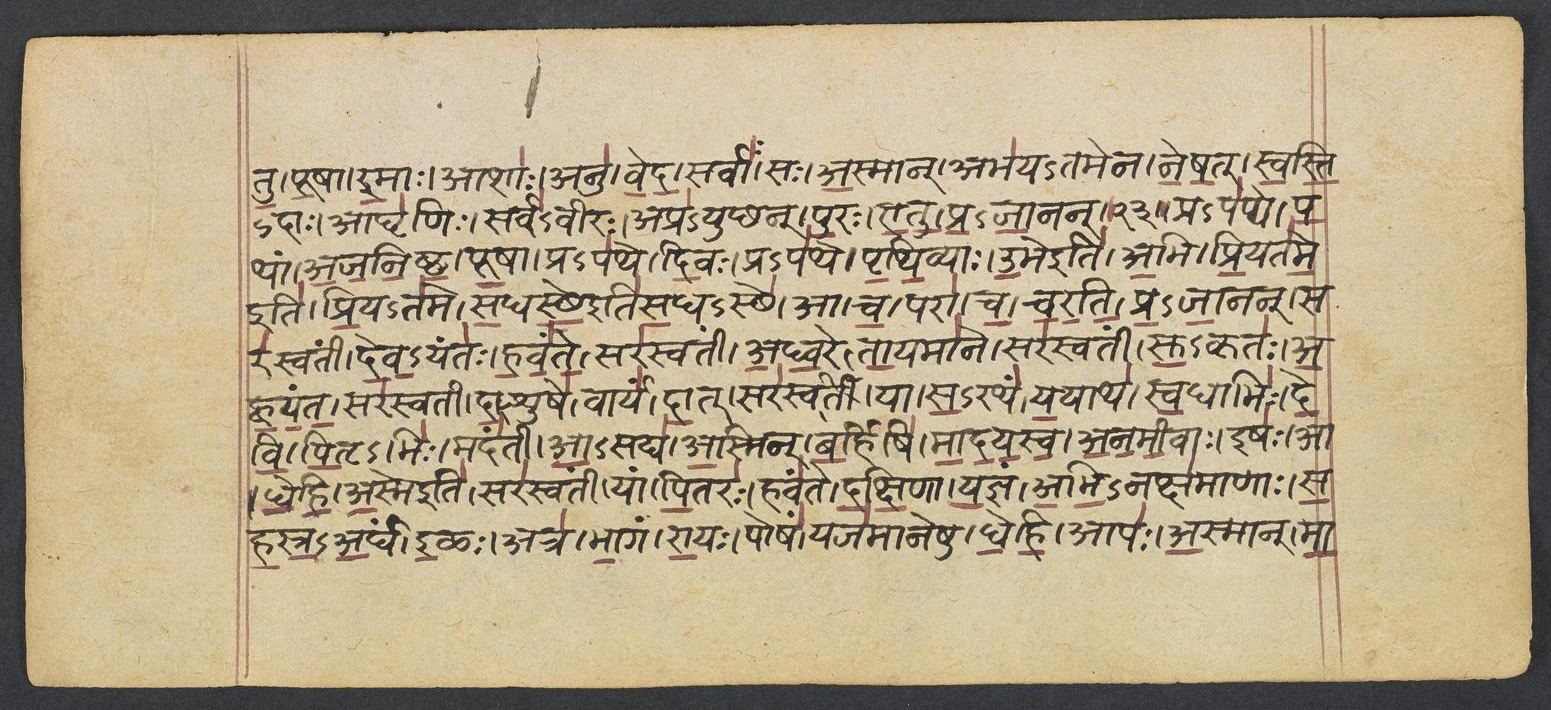
Penn Ms. Coll. 390 Item 41, fol. 757r (numbered 74r by the scribe) (OPenn image 757, lower leaf). Checked on the image: the Rigveda text on this page begins in RV 10.17.4 ‹-dadhātu›. The next page with Rigveda text, fol. 757v (numbered 74v by the scribe), begins in RV 10.17.10 ‹-mātaraḥ śundhayantu ghṛtena naḥ›. Verses 10.17.4-9 end on this page; 10.17.4 begins on fol. 756v (numbered 73v by the scribe).
4āyu̍r vi̱śvāyu̱ḥ pari̍ pāsati tvā pū̱ṣā tvā̍ pātu̱ prapa̍the pu̱rastā̍t | yatrāsa̍te su̱kṛto̱ yatra̱ te ya̱yus tatra̍ tvā de̱vaḥ sa̍vi̱tā da̍dhātu ||
5pū̱ṣemā āśā̱ anu̍ veda̱ sarvā̱ḥ so a̱smām̐ abha̍yatamena neṣat | sva̱sti̱dā āghṛ̍ṇi̱ḥ sarva̍vī̱ro 'pra̍yucchan pu̱ra e̍tu prajā̱nan ||
6prapa̍the pa̱thām a̍janiṣṭa pū̱ṣā prapa̍the di̱vaḥ prapa̍the pṛthi̱vyāḥ | u̱bhe a̱bhi pri̱yata̍me sa̱dhasthe̱ ā ca̱ parā̍ ca carati prajā̱nan ||
7sara̍svatīṁ deva̱yanto̍ havante̱ sara̍svatīm adhva̱re tā̱yamā̍ne | sara̍svatīṁ su̱kṛto̍ ahvayanta̱ sara̍svatī dā̱śuṣe̱ vārya̍ṁ dāt ||
8sara̍svati̱ yā sa̱ratha̍ṁ ya̱yātha̍ sva̱dhābhi̍r devi pi̱tṛbhi̱r mada̍ntī | ā̱sadyā̱smin ba̱rhiṣi̍ mādayasvānamī̱vā iṣa̱ ā dhe̍hy a̱sme ||
9sara̍svatī̱ṁ yām pi̱taro̱ hava̍nte dakṣi̱ṇā ya̱jñam a̍bhi̱nakṣa̍māṇāḥ | sa̱ha̱srā̱rgham i̱ḻo atra̍ bhā̱gaṁ rā̱yas poṣa̱ṁ yaja̍māneṣu dhehi ||
Compare: Padapāṭha (word-by-word text written in the manuscript; Sansknet e-text via GRETIL)
4āyuḥ | viśva-āyuḥ | pari | pāsati | tvā | pūṣā | tvā | pātu | pra-pathe | purastāt | yatra | āsate | su-kṛtaḥ | yatra | te | yayuḥ | tatra | tvā | devaḥ | savitā | dadhātu
5pūṣā | imāḥ | āśāḥ | anu | veda | sarvāḥ | saḥ | asmān | abhaya-tamena | neṣat | svasti-dāḥ | āghṛṇiḥ | sarva-vīraḥ | apra-yucchan | puraḥ | etu | pra-jānan
6pra-pathe | pathām | ajaniṣṭa | pūṣā | pra-pathe | divaḥ | pra-pathe | pṛthivyāḥ | ubhe iti | abhi | priya-tame | sadha-sthe | ā | ca | parā | ca | carati | pra-jānan
7sarasvatīm | deva-yantaḥ | havante | sarasvatīm | adhvare | tāyamāne | sarasvatīm | su-kṛtaḥ | ahvayanta | sarasvatī | dāśuṣe | vāryam | dāt
8sarasvati | yā | sa-ratham | yayātha | svadhābhiḥ | devi | pitṛ-bhiḥ | madantī | āsadya | asmin | barhiṣi | mādayasva | anamīvāḥ | iṣaḥ | ā | dhehi | asme iti
9sarasvatīm | yām | pitaraḥ | havante | dakṣiṇā | yajñam | abhi-nakṣamāṇāḥ | sahasra-argham | iḷaḥ | atra | bhāgam | rāyaḥ | poṣam | yajamāneṣu | dhehi
4May Âyu, giver of all life, protect thee, and bear thee forward on the distant pathway. Thither let Savitar the God transport thee, where dwell the pious who have passed-before thee.
5Pûshan knows all these realms: may he conduct us by ways that are most free from fear and danger. Giver of blessings, glowing, all-heroic, may he, thewise and watchful, go before us.
6Pûshan was born to move on distant pathways, on the road far from earth and far from heaven. To both most wonted places of assembly he travels and returns with perfect knowledge.
7The pious call Sarasvatî, they worship Sarasvatî while sacrifice proceedeth. The pious called Sarasvatî aforetime. Sarasvatî send bliss to him who giveth.
8Sarasvatî, who camest with the Fathers, with them rejoicing thee in our oblations, Seated upon this sacred grass be joyful, and give us strengthening food that brings no sickness.
9Thou, called on as Sarasvatî by Fathers who come right forward to our solemn service, Give food and wealth to present sacrificers, a portion, worth a thousand, of refreshment.
Where on the image
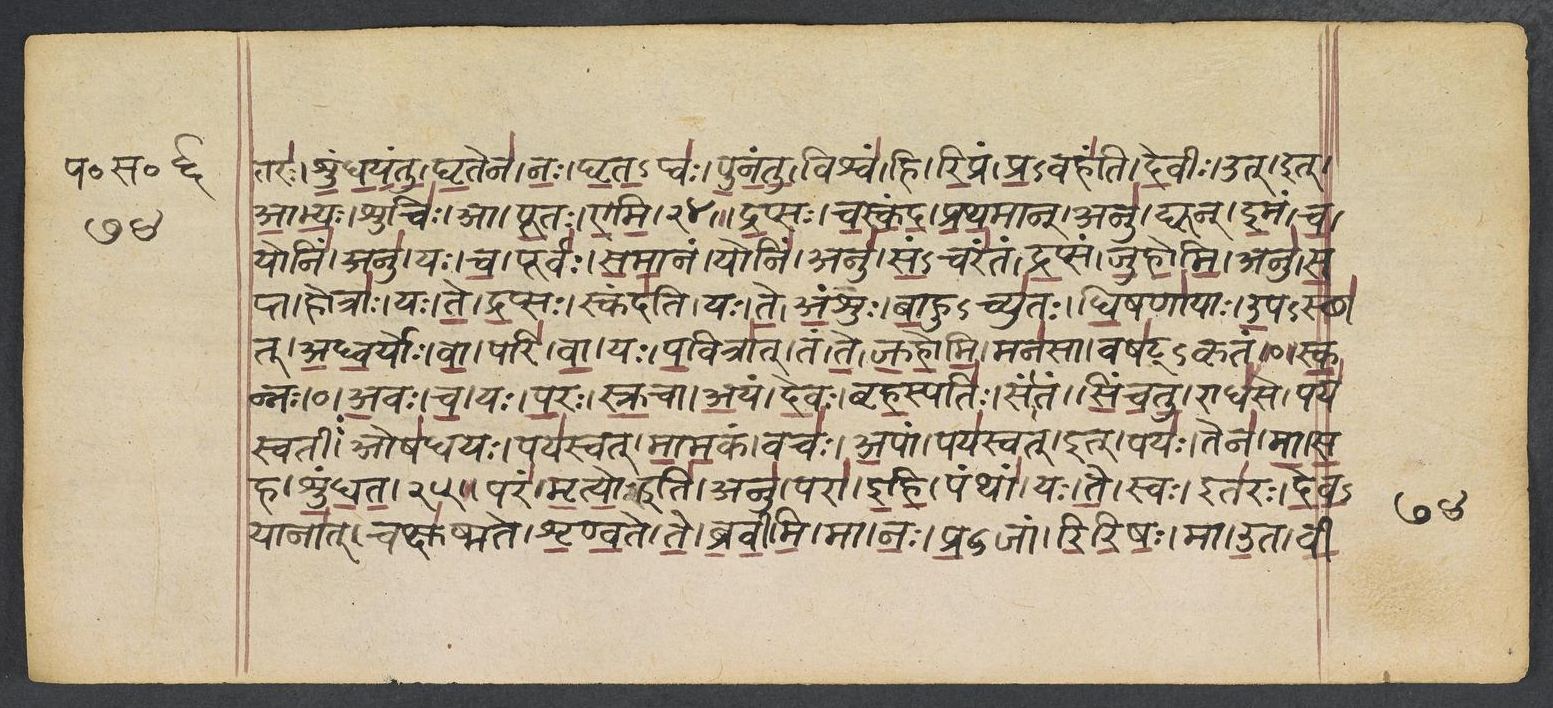
Penn Ms. Coll. 390 Item 41, fol. 757v (numbered 74v by the scribe) (OPenn image 758, upper leaf). Checked on the image: the Rigveda text on this page begins in RV 10.17.10 ‹-mātaraḥ śundhayantu ghṛtena naḥ›. The next page with Rigveda text, fol. 758r (numbered 75r by the scribe), begins in RV 10.18.1 ‹-vīrān›. Verses 10.17.10-14 end on this page; 10.17.10 begins on fol. 757r (numbered 74r by the scribe).
10āpo̍ a̱smān mā̱tara̍ḥ śundhayantu ghṛ̱tena̍ no ghṛta̱pva̍ḥ punantu | viśva̱ṁ hi ri̱pram pra̱vaha̍nti de̱vīr ud id ā̍bhya̱ḥ śuci̱r ā pū̱ta e̍mi ||
11dra̱psaś ca̍skanda pratha̱mām̐ anu̱ dyūn i̱maṁ ca̱ yoni̱m anu̱ yaś ca̱ pūrva̍ḥ | sa̱mā̱naṁ yoni̱m anu̍ sa̱ṁcara̍ntaṁ dra̱psaṁ ju̍ho̱my anu̍ sa̱pta hotrā̍ḥ ||
12yas te̍ dra̱psaḥ skanda̍ti̱ yas te̍ a̱ṁśur bā̱hucyu̍to dhi̱ṣaṇā̍yā u̱pasthā̍t | a̱dhva̱ryor vā̱ pari̍ vā̱ yaḥ pa̱vitrā̱t taṁ te̍ juhomi̱ mana̍sā̱ vaṣa̍ṭkṛtam ||
13yas te̍ dra̱psaḥ ska̱nno yas te̍ a̱ṁśur a̱vaś ca̱ yaḥ pa̱raḥ sru̱cā | a̱yaṁ de̱vo bṛha̱spati̱ḥ saṁ taṁ si̍ñcatu̱ rādha̍se ||
14paya̍svatī̱r oṣa̍dhaya̱ḥ paya̍svan māma̱kaṁ vaca̍ḥ | a̱pām paya̍sva̱d it paya̱s tena̍ mā sa̱ha śu̍ndhata ||
Compare: Padapāṭha (word-by-word text written in the manuscript; Sansknet e-text via GRETIL)
10āpaḥ | asmān | mātaraḥ | śundhayantu | ghṛtena | naḥ | ghṛta-pvaḥ | punantu | vi śvam | hi | ripram | pra-vahanti | devīḥ | ut | it | ābhyaḥ | śuciḥ | ā | pūtaḥ | emi
11drapsaḥ | caskanda | prathamām | anu | dyūn | imam | ca | yonim | anu | yaḥ | ca | pūrvaḥ | samānam | yonim | anu | sam-carantam | drapsam | juhomi | anu | sapta | hotrāḥ
12yaḥ | te | drapsaḥ | skandati | yaḥ | te | aṃśuḥ | bāhu-cyutaḥ | dhiṣaṇāyāḥ | upa-sthāt | adhvaryoḥ | vā | pari | vā | yaḥ | pavitrāt | tam | te | juhomi | manasā | vaṣaṭ-kṛtam
13yaḥ | te | drapsaḥ | skannaḥ | yaḥ | te | aṃśuḥ | avaḥ | ca | yaḥ | paraḥ | srucā | ayam | devaḥ | bṛhaspatiḥ | sam | tam | siñcatu | rādhase
14payasvatīḥ | oṣadhayaḥ | payasvat | māmakam | vacaḥ | apām | payasvat | it | payaḥ | tena | mā | saha | śundhata
10The Mother Floods shall make us bright and shining, cleansers of holy oil, with oil shall cleanse us: For, Goddesses, they bear off all defilement: I, rise up from them purified and brightened.
11Through days of earliest date the Drop descended on this place and on that which was before it. I offer up, throughout the seven oblations, the Drop which still to one same place is moving.
12The Drop that falls, thy stalk which arms have shaken, which from the bosom of the press hath fallen, Or from the Adhvaryu's purifying filter, I offer thee with heart and cry of Vashaṭ!
13That fallen Drop of thine, the stalk which from the ladle fell away, This present God Br̥ihaspati shall pour it forth to make us rich.
14The plants of earth are rich in milk, and rich in milk is this my speech; And rich in milk the essence of the Waters: make me pure therewith.
Notes
- Sanskrit: Aufrecht's edition (1877) with the Vedic accents, as entered by van Nooten and Holland (GRETIL).
- English: Ralph T. H. Griffith, The Hymns of the Rigveda (1889-1892; 2nd ed. 1896-1897), from the VedaWeb digital text; OCR slips in that text were corrected against the printed 2nd edition (data/sources/rigveda/griffith_errata.json).
- Padapāṭha (edition text): Sansknet e-text via GRETIL (CC BY-NC-SA 4.0).
Cite
Sources
- Source: Penn Ms. Coll. 390 Item 41 (undated (catalogued with Penn's 18th-19th c. Vedic manuscripts)), OPenn, Public Domain Mark + Aufrecht's accented text (GRETIL) + Griffith's English (VedaWeb) (holding institution)
- Critical edition: Aufrecht (1877), accented e-text via GRETIL
← previous · → next · v cycle view · l back to library