Rigveda 10.164: Absolution of sins
Introduction
Rigveda 10.164 is a hymn of 5 verses addressed to absolution of sins. It stands in book (maṇḍala) 10, the last and latest book. The Rigveda is the oldest collection of Sanskrit hymns, composed in the second half of the second millennium BCE and handed down orally for many centuries before it was written down.
The manuscript shown is Penn Ms. Coll. 390 Item 48 (University of Pennsylvania), a paper manuscript of the eighth aṣṭaka (RV 10.46-10.191) of the Ṛgveda Saṃhitā in Devanāgarī, 158 leaves, 6 lines to the page, with the accents marked in red; the scribe's colophon on fol. 158 gives Saṃvat 1768 (1711 CE); this hymn stands on fol. 141v-142r. Each section below gives the verses that end on one page; the page boundaries were read on the images (the opening words of every page), not counted out. Like most Rigveda manuscripts, Penn Ms. Coll. 390 Item 48 writes a repeated refrain in short form after its first occurrence (for example kasmai° for kasmai devāya haviṣā vidhema); the Sanskrit shown is the full text of Aufrecht's edition.
How was this verified? (Provenance)
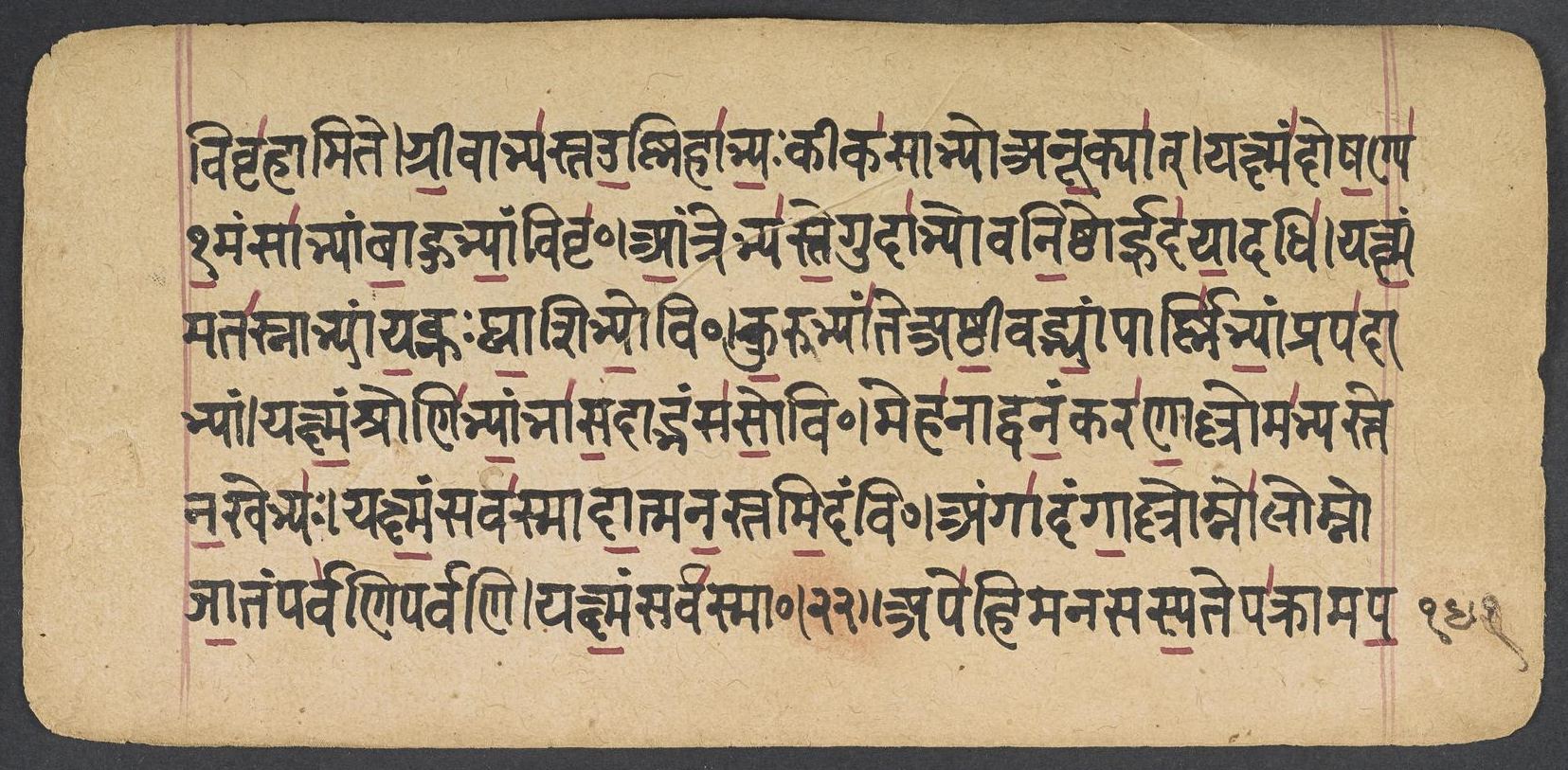
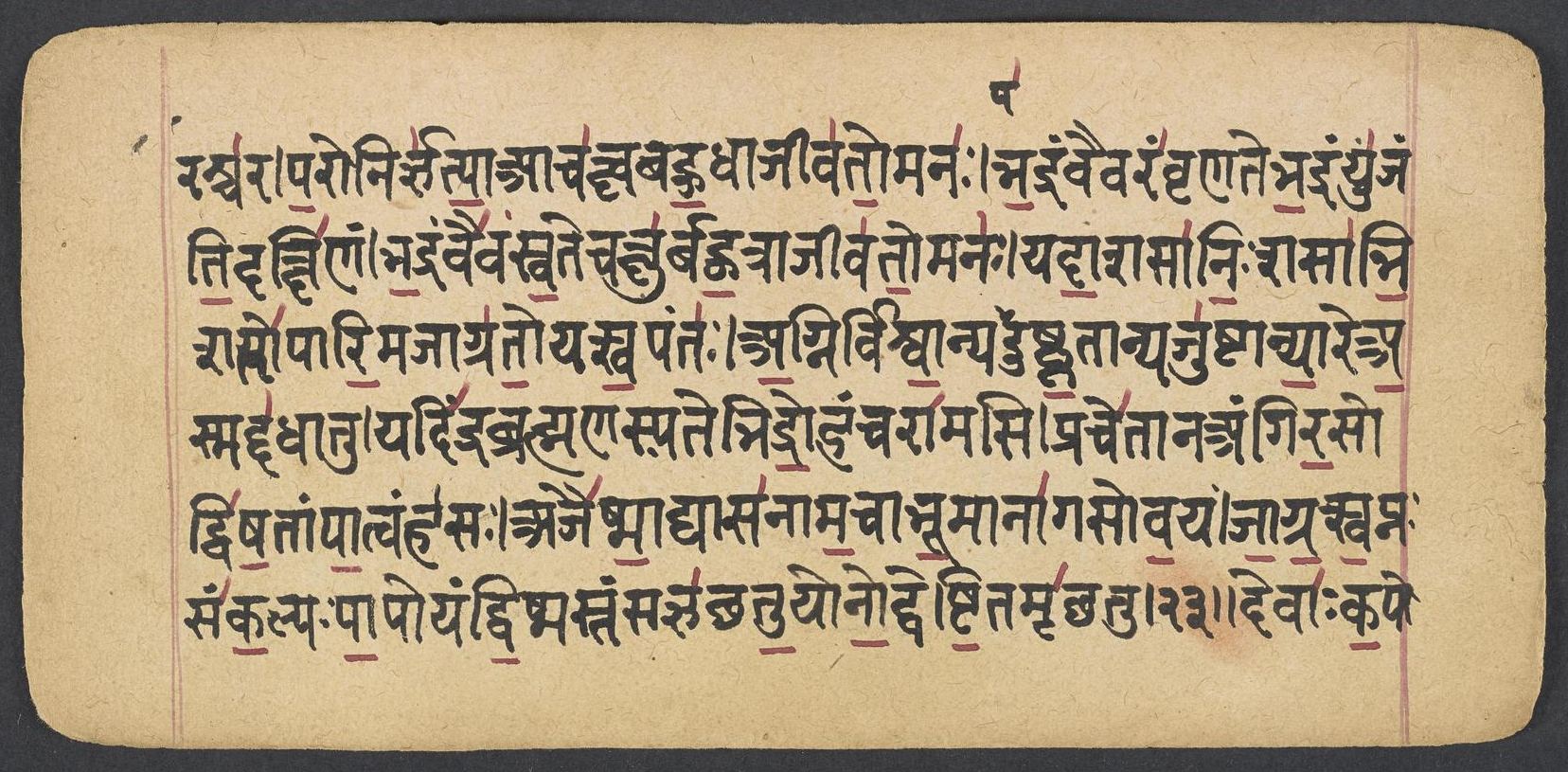
Where on the image
Penn Ms. Coll. 390 Item 48, fol. 142r (OPenn image 141, lower leaf). Checked on the image: the Rigveda text on this page begins in RV 10.164.1 ‹-paraś cara›. The next page with Rigveda text, fol. 142v, begins in RV 10.165.1 ‹-kapota iṣito yad icchan›. Verses 10.164.1-5 end on this page; 10.164.1 begins on fol. 141v.
1ape̍hi manasas pa̱te 'pa̍ krāma pa̱raś ca̍ra | pa̱ro nirṛ̍tyā̱ ā ca̍kṣva bahu̱dhā jīva̍to̱ mana̍ḥ ||
2bha̱draṁ vai vara̍ṁ vṛṇate bha̱draṁ yu̍ñjanti̱ dakṣi̍ṇam | bha̱draṁ vai̍vasva̱te cakṣu̍r bahu̱trā jīva̍to̱ mana̍ḥ ||
3yad ā̱śasā̍ ni̱ḥśasā̍bhi̱śaso̍pāri̱ma jāgra̍to̱ yat sva̱panta̍ḥ | a̱gnir viśvā̱ny apa̍ duṣkṛ̱tāny aju̍ṣṭāny ā̱re a̱smad da̍dhātu ||
4yad i̍ndra brahmaṇas pate 'bhidro̱haṁ carā̍masi | prace̍tā na āṅgira̱so dvi̍ṣa̱tām pā̱tv aṁha̍saḥ ||
5ajai̍ṣmā̱dyāsa̍nāma̱ cābhū̱mānā̍gaso va̱yam | jā̱gra̱tsva̱pnaḥ sa̍ṁka̱lpaḥ pā̱po yaṁ dvi̱ṣmas taṁ sa ṛ̍cchatu̱ yo no̱ dveṣṭi̱ tam ṛ̍cchatu ||
1AVAUNT, thou Master of the mind Depart, and vanish far away. Look on Destruction far from hence. The live man's mind is manifold.
2A happy boon do men elect, a mighty blessing they obtain. Bliss with Vaivasvata they see. The live man's mind seeks many a place.
3If by address, by blame, by imprecation we have committed sin, awake or sleeping, All hateful acts of ours, all evil doings may Agni bear away to distant places.
4When, Indra, Brahmaṇaspati, our deeds are wrongful and unjust, May provident Ângirasa prevent our foes from troubling, us.
5We have prevailed this day and won: we are made free from sin and guilt. Ill thoughts, that visit us awake or sleeping, seize the man we hate, yea, seize the man who hateth us.
Notes
- Sanskrit: Aufrecht's edition (1877) with the Vedic accents, as entered by van Nooten and Holland (GRETIL).
- English: Ralph T. H. Griffith, The Hymns of the Rigveda (1889-1892; 2nd ed. 1896-1897), from the VedaWeb digital text; OCR slips in that text were corrected against the printed 2nd edition (data/sources/rigveda/griffith_errata.json).
Cite
Sources
- Source: Penn Ms. Coll. 390 Item 48 (1711 CE (colophon: Saṃvat 1768)), OPenn, Public Domain Mark + Aufrecht's accented text (GRETIL) + Griffith's English (VedaWeb) (holding institution)
- Critical edition: Aufrecht (1877), accented e-text via GRETIL
← previous · → next · v cycle view · l back to library