Rigveda 10.18: Funeral hymn
Introduction
Rigveda 10.18 is a hymn of 14 verses addressed to for the burial rite. It stands in book (maṇḍala) 10, the last and latest book. The Rigveda is the oldest collection of Sanskrit hymns, composed in the second half of the second millennium BCE and handed down orally for many centuries before it was written down.
The manuscript shown is Penn Ms. Coll. 390 Item 41 (University of Pennsylvania), an undated paper manuscript of the padapāṭha (the word-by-word recitation text, in which every word is written separately and compounds are split) of the whole Ṛgveda in Devanāgarī, 884 leaves in fascicles, 7-9 lines to the page, accents in red; this hymn stands on fol. 757v-758v. Each section below gives the verses that end on one page; the page boundaries were read on the images (the opening words of every page), not counted out. Where the manuscript is a padapāṭha (the word-by-word recitation text), the section shows Aufrecht's continuous (saṃhitā) text first and, as the edition text, the padapāṭha of the same verses, which is the form written on the page.
How was this verified? (Provenance)
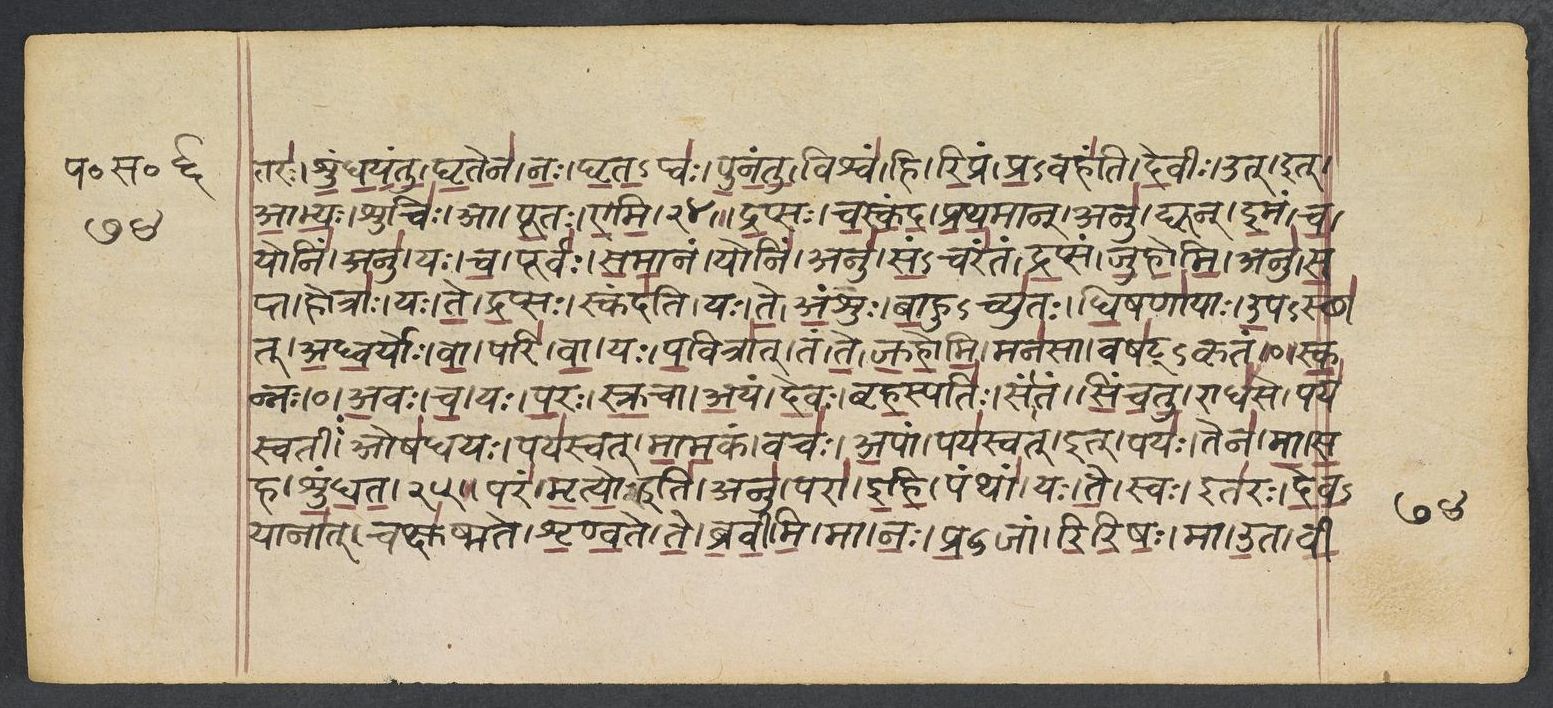
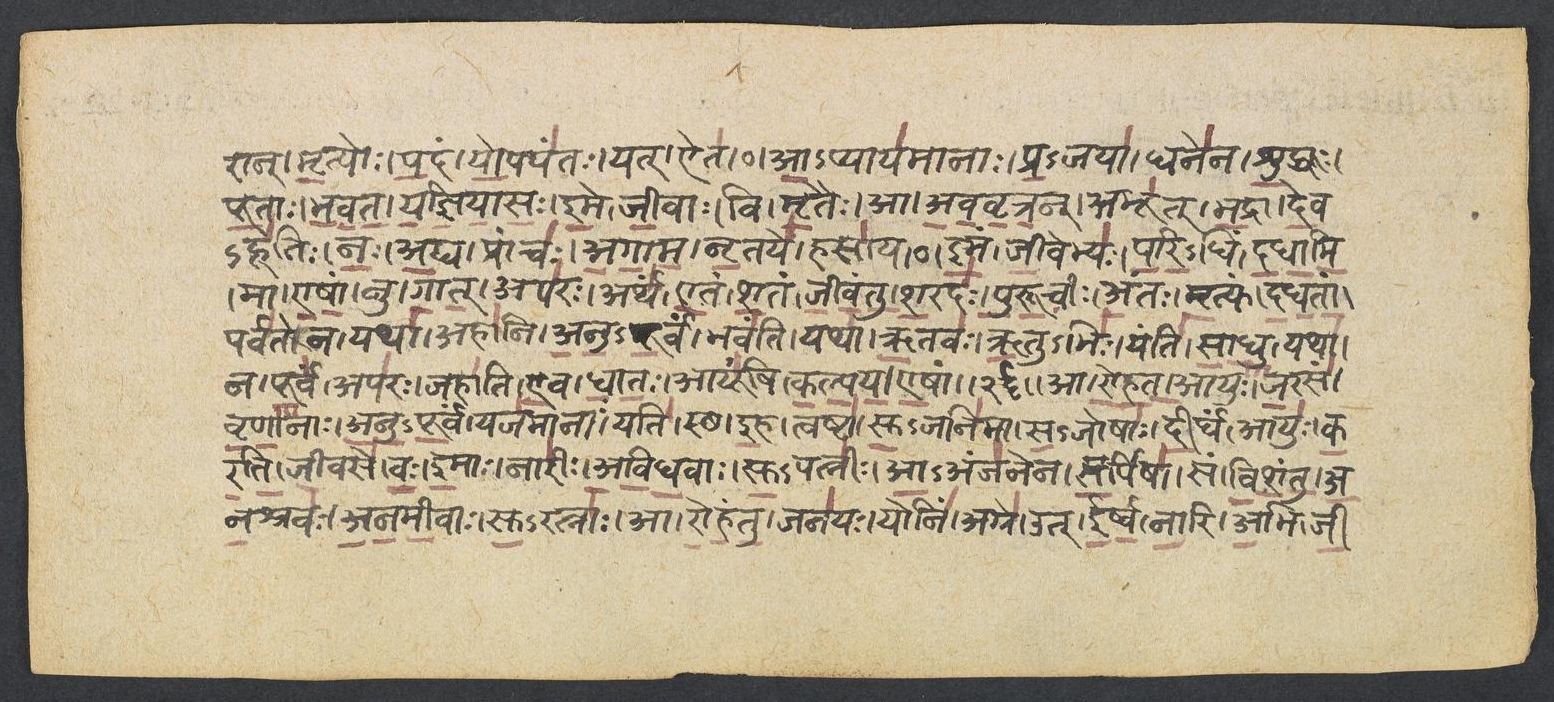
Where on the image
Penn Ms. Coll. 390 Item 41, fol. 758r (numbered 75r by the scribe) (OPenn image 758, lower leaf). Checked on the image: the Rigveda text on this page begins in RV 10.18.1 ‹-vīrān›. The next page with Rigveda text, fol. 758v (numbered 75v by the scribe), begins in RV 10.18.8 ‹-jīva-lokam gata-asum etam upa›. Verses 10.18.1-7 end on this page; 10.18.1 begins on fol. 757v (numbered 74v by the scribe).
1para̍m mṛtyo̱ anu̱ pare̍hi̱ panthā̱ṁ yas te̱ sva ita̍ro deva̱yānā̍t | cakṣu̍ṣmate śṛṇva̱te te̍ bravīmi̱ mā na̍ḥ pra̱jāṁ rī̍riṣo̱ mota vī̱rān ||
2mṛ̱tyoḥ pa̱daṁ yo̱paya̍nto̱ yad aita̱ drāghī̍ya̱ āyu̍ḥ prata̱raṁ dadhā̍nāḥ | ā̱pyāya̍mānāḥ pra̱jayā̱ dhane̍na śu̱ddhāḥ pū̱tā bha̍vata yajñiyāsaḥ ||
3i̱me jī̱vā vi mṛ̱tair āva̍vṛtra̱nn abhū̍d bha̱drā de̱vahū̍tir no a̱dya | prāñco̍ agāma nṛ̱taye̱ hasā̍ya̱ drāghī̍ya̱ āyu̍ḥ prata̱raṁ dadhā̍nāḥ ||
4i̱maṁ jī̱vebhya̍ḥ pari̱dhiṁ da̍dhāmi̱ maiṣā̱ṁ nu gā̱d apa̍ro̱ artha̍m e̱tam | śa̱taṁ jī̍vantu śa̱rada̍ḥ purū̱cīr a̱ntar mṛ̱tyuṁ da̍dhatā̱m parva̍tena ||
5yathāhā̍ny anupū̱rvam bhava̍nti̱ yatha̍ ṛ̱tava̍ ṛ̱tubhi̱r yanti̍ sā̱dhu | yathā̱ na pūrva̱m apa̍ro̱ jahā̍ty e̱vā dhā̍ta̱r āyū̍ṁṣi kalpayaiṣām ||
6ā ro̍ha̱tāyu̍r ja̱rasa̍ṁ vṛṇā̱nā a̍nupū̱rvaṁ yata̍mānā̱ yati̱ ṣṭha | i̱ha tvaṣṭā̍ su̱jani̍mā sa̱joṣā̍ dī̱rgham āyu̍ḥ karati jī̱vase̍ vaḥ ||
7i̱mā nārī̍r avidha̱vāḥ su̱patnī̱r āñja̍nena sa̱rpiṣā̱ saṁ vi̍śantu | a̱na̱śravo̍ 'namī̱vāḥ su̱ratnā̱ ā ro̍hantu̱ jana̍yo̱ yoni̱m agre̍ ||
Compare: Padapāṭha (word-by-word text written in the manuscript; Sansknet e-text via GRETIL)
1param | mṛtyo iti | anu | parā | ihi | panthām | yaḥ | te | svaḥ | itaraḥ | deva-yānāt | cakṣuṣmate | śṛṇvate | te | bravīmi | mā | naḥ | pra-jām | ririṣaḥ | mā | uta | vīrān
2mṛtyoḥ | padam | yopayantaḥ | yat | aita | drāghīyaḥ | āyuḥ | pra-taram | dadhānāḥ | āpyāyamānāḥ | pra-jayā | dhanena | śuddhāḥ | pūtāḥ | bhavata | yajñiyāsaḥ
3ime | jīvāḥ | vi | mṛtaiḥ | ā | avavṛtran | abhūt | bhadrā | deva-hūtiḥ | naḥ | adya | prāñcaḥ | agāma | nṛtaye | hasāya | drāghīyaḥ | āyuḥ | pra-taram | dadhānāḥ
4imam | jīvebhyaḥ | pari-dhim | dādhāmi | mā | eṣām | nu | gāt | aparaḥ | artham | etam | śatam | jīvantu | śaradaḥ | purūcīḥ | antaḥ | mṛtyum | dadhatām | parvatena
5yathā | ahāni | anu-pūrvam | bhavanti | yathā | ṛtavaḥ | ṛtu-bhiḥ | yanti | sādhu | yathā | na | pūrvam | aparaḥ | jahāti | eva | dhātaḥ | āyūṃṣi | kalpaya | eṣām
6ā | rahata | āyuḥ | jarasam | vṛṇānāḥ | anu-pūrvam | yatamānāḥ | yati | stha | iha | tvaṣṭā | su-janimā | sa-joṣāḥ | dīrgham | āyuḥ | karati | jīvase | vaḥ
7imāḥ | nārīḥ | avidhavāḥ | su-patnīḥ | āñjanena | sarpiṣā | sam | viśantu | anaśravaḥ | anamīvāḥ | su-ratnāḥ | ā | rohantu | janayaḥ | yonim | agre
1Go hence, O Death, pursue thy special pathway apart from that which Gods are wont to travel. To thee I say it who hast eyes and hearest: Touch not our offspring, injure not our heroes.
2As ye have come effacing Mrtyu's footstep, to further times prolonging your existence, May ye be rich in children and possessions. cleansed, purified, and meet for sacrificing.
3Divided from the dead are these, the living: now be our calling on the Gods successful. We have gone forth for dancing and for laughter, tofurther times prolonging our existence.
4Here I erect this rampart for the living; let none of these, none other, reach this limit. May they survive a hundred lengthened autumns, and may they bury Death beneath this mountain.
5As the days follow days in close succession, as with the seasons duly come the seasons, As each successor fails not his foregoer, so form the lives of these, O great Ordainer.
6Live your full lives ap! find old age delightful, all of you striving one behind the other. May Tvashṭar, maker of fair things, be gracious and lengthen out the days of your existence.
7Let these unwidowed dames with noble husbands adorn themselves with fragrant balm and unguent. Decked with fair jewels, tearless, free from sorrow, first let the dames go up to where he lieth.
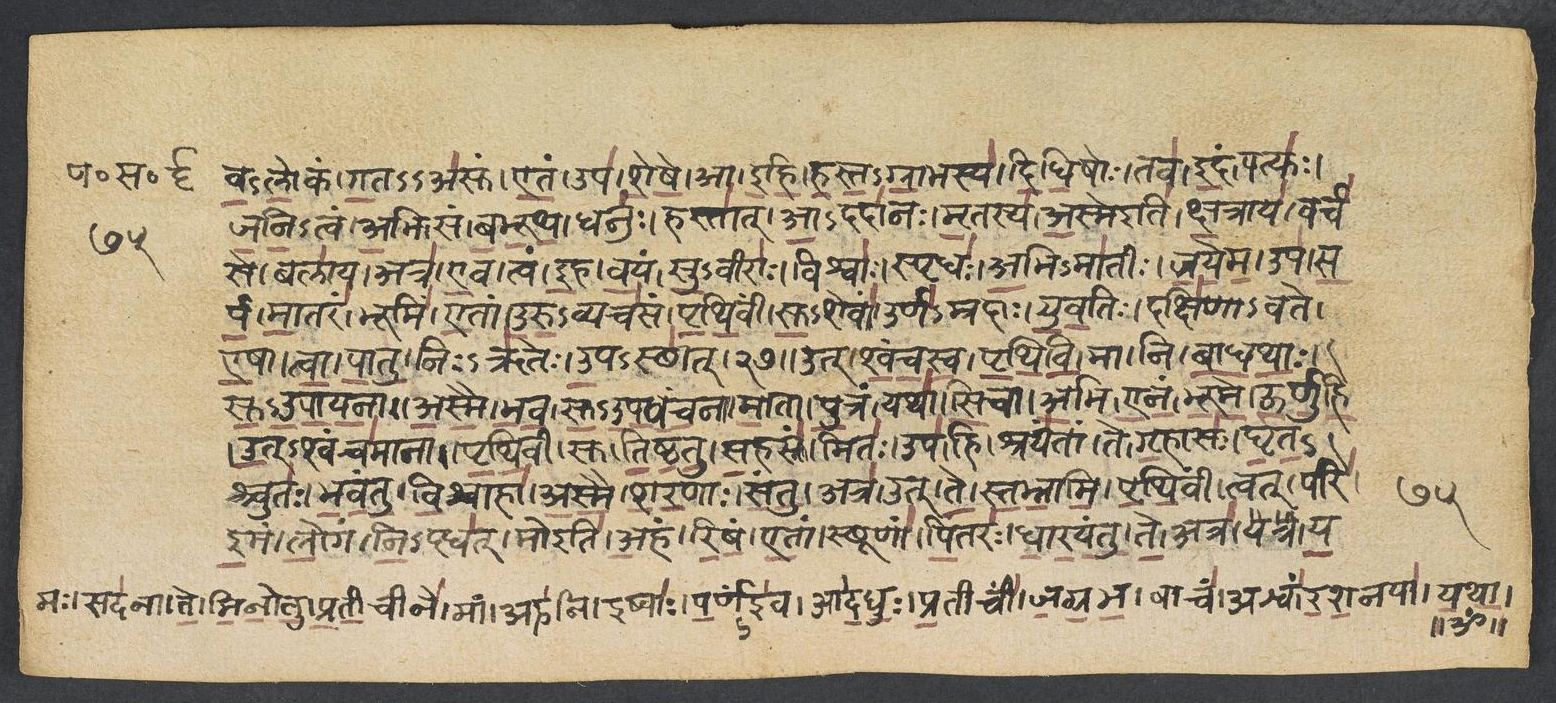
Where on the image
Penn Ms. Coll. 390 Item 41, fol. 758v (numbered 75v by the scribe) (OPenn image 759, upper leaf). Checked on the image: the Rigveda text on this page begins in RV 10.18.8 ‹-jīva-lokam gata-asum etam upa›. The next page with Rigveda text, fol. 759v (numbered 75v by the scribe), begins in RV 10.19.1 ‹ni vartadhvam mā anu›. Verses 10.18.8-14 end on this page; 10.18.8 begins on fol. 758r (numbered 75r by the scribe).
8ud ī̍rṣva nāry a̱bhi jī̍valo̱kaṁ ga̱tāsu̍m e̱tam upa̍ śeṣa̱ ehi̍ | ha̱sta̱grā̱bhasya̍ didhi̱ṣos tave̱dam patyu̍r jani̱tvam a̱bhi sam ba̍bhūtha ||
9dhanu̱r hastā̍d ā̱dadā̍no mṛ̱tasyā̱sme kṣa̱trāya̱ varca̍se̱ balā̍ya | atrai̱va tvam i̱ha va̱yaṁ su̱vīrā̱ viśvā̱ḥ spṛdho̍ a̱bhimā̍tīr jayema ||
10upa̍ sarpa mā̱tara̱m bhūmi̍m e̱tām u̍ru̱vyaca̍sam pṛthi̱vīṁ su̱śevā̍m | ūrṇa̍mradā yuva̱tir dakṣi̍ṇāvata e̱ṣā tvā̍ pātu̱ nirṛ̍ter u̱pasthā̍t ||
11uc chva̍ñcasva pṛthivi̱ mā ni bā̍dhathāḥ sūpāya̱nāsmai̍ bhava sūpavañca̱nā | mā̱tā pu̱traṁ yathā̍ si̱cābhy e̍nam bhūma ūrṇuhi ||
12u̱cchvañca̍mānā pṛthi̱vī su ti̍ṣṭhatu sa̱hasra̱m mita̱ upa̱ hi śraya̍ntām | te gṛ̱hāso̍ ghṛta̱ścuto̍ bhavantu vi̱śvāhā̍smai śara̱ṇāḥ sa̱ntv atra̍ ||
13ut te̍ stabhnāmi pṛthi̱vīṁ tvat parī̱maṁ lo̱gaṁ ni̱dadha̱n mo a̱haṁ ri̍ṣam | e̱tāṁ sthūṇā̍m pi̱taro̍ dhārayantu̱ te 'trā̍ ya̱maḥ sāda̍nā te minotu ||
14pra̱tī̱cīne̱ mām aha̱nīṣvā̍ḥ pa̱rṇam i̱vā da̍dhuḥ | pra̱tīcī̍ṁ jagrabhā̱ vāca̱m aśva̍ṁ raśa̱nayā̍ yathā ||
Compare: Padapāṭha (word-by-word text written in the manuscript; Sansknet e-text via GRETIL)
8ut | īrṣva | nāri | abhi | jīva-lokam | gata-asum | etam | upa | śeṣe | ā | ihi | hasta-grābhasya | didhiṣoḥ | tava | idam | patyuḥ | jani-tvam | abhi | sam | babhūtha
9dhanuḥ | hastāt | ādadānaḥ | mṛtasya | asme iti | kṣatrāya | varcase | balāya | atra | eva | tvam | iha | vayam | su-vīrāḥ | viśvāḥ | spṛdhaḥ | abhi-mātīḥ | jayema
10upa | sarpa | mātaram | bhūmim | etām | uru-vyacasam | pṛthivīm | su-śevām | ūrṇa-mradāḥ | yuvatiḥ | dakṣiṇāvate | eṣā | tvā | pātu | niḥ-ṛteḥ | upa-sthāt
11ut | śvañcasva | pṛthivi | mā | ni | bādhathāḥ | su-upāyanā | asmai | bhava | su-upavañcanā | mātā | putram | yathā | sicā | abhi | enam | bhūme | ūrṇuhi
12ut-śvañcamānā | pṛthivī | su | tiṣṭhatu | sahasram | mitaḥ | upa | hi | śrayantām | te | gṛhāsaḥ | ghṛta-ścutaḥ | bhavantu | viśvāhā | asmai | śaraṇāḥ | santu | atra
13ut | te | stabhnāmi | pṛthivīm | tvat | pari | imam | logam | ni-dadhat | mo iti | aham | riṣam | etām | sthūṇām | pitaraḥ | dhārayantu | te | atra | yamaḥ | sadanā | te | minotu
14pratīcīne | mām | ahani | iṣvāḥ | parṇam-iva | ā | dadhuḥ | pratīcīm | jagrabha | vācam | aśvam | raśanayā | yathā
8Rise, come unto the world of life, O woman: come, he is lifeless by whose side thou liest. Wifehood with this thy husband was thy portion, who took thy hand and wooed thee as a lover.
9From his dead hand I take the bow be carried, that it may be our power and might and glory. There art thou, there; and here with noble heroes may we o'ercome all hosts that fight against us.
10Betake thee to the Iap of Earth the Mother, of Earth far-spreading, very kind and gracious. Young Dame, wool-soft unto the guerdongiver, may she preserve thee from Destruction's bosom.
11Heave thyself, Earth, nor press thee downward heavily: afford him easy access, gently tending him. Cover him, as a mother wraps her skirt about her child, O Earth.
12Now let the heaving earth be free from motion: yea,– let a thousand clods remain above him. Be they to him a home distilling fatness, here let them ever be his place of refuge.
13I stay the earth from thee, while over thee I place this piece of earth. May I be free from injury. Here let the Fathers keep this pillar firm for thee, and there let Yama make thee an abiding-place.
14Even as an arrow's feathers, they have set me on a fitting day. The fit word have I caught and held as 'twere a courser with the rein.
Notes
- Sanskrit: Aufrecht's edition (1877) with the Vedic accents, as entered by van Nooten and Holland (GRETIL).
- English: Ralph T. H. Griffith, The Hymns of the Rigveda (1889-1892; 2nd ed. 1896-1897), from the VedaWeb digital text; OCR slips in that text were corrected against the printed 2nd edition (data/sources/rigveda/griffith_errata.json).
- Padapāṭha (edition text): Sansknet e-text via GRETIL (CC BY-NC-SA 4.0).
Cite
Sources
- Source: Penn Ms. Coll. 390 Item 41 (undated (catalogued with Penn's 18th-19th c. Vedic manuscripts)), OPenn, Public Domain Mark + Aufrecht's accented text (GRETIL) + Griffith's English (VedaWeb) (holding institution)
- Critical edition: Aufrecht (1877), accented e-text via GRETIL
← previous · → next · v cycle view · l back to library